As easy as…mastery
If I had to choose one game from my times as captain of the England team which had a deep impression on me, in my short list would certainly be Nigel Short's win over Liu, in Calvia, 2004. Nigel made a passing comment to me at the end that for a long part of the game he had effectively been a pawn up. I had not noticed it, mis-understanding the game, and thinking Nigel's advantage might be slight or nil.
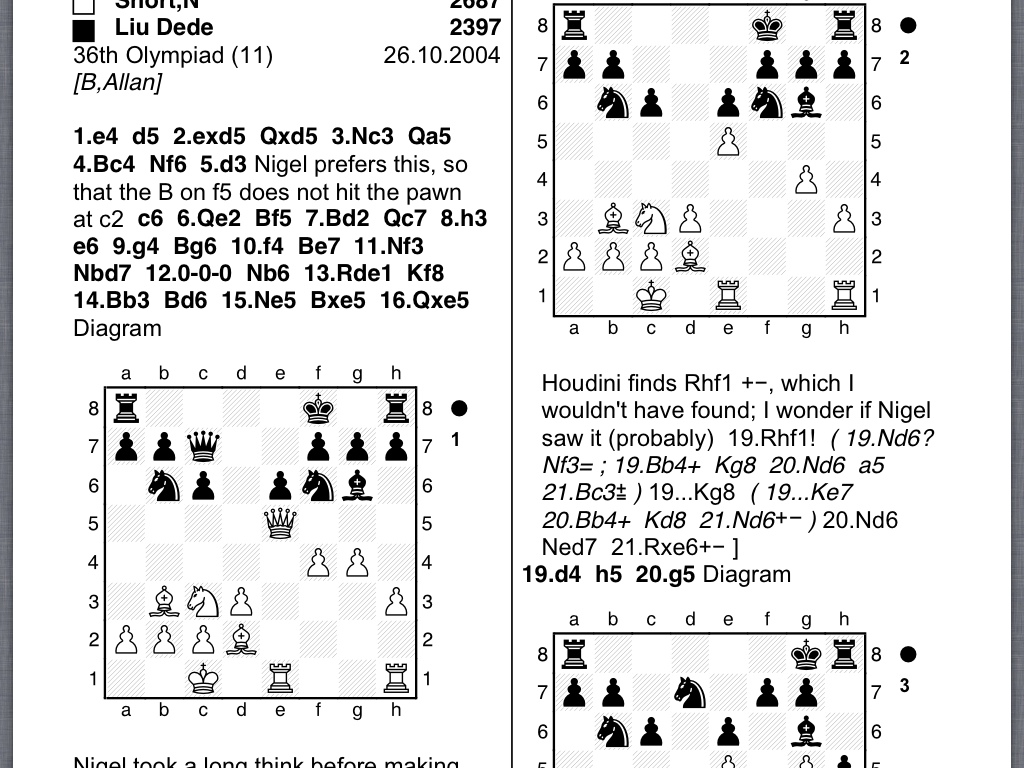
Aside from a trivial point that because of this game, and how Nigel explained his fifth move, I always play d3 and not d4 against Scandanavian systems; and with good results. There is less for black's pieces, especially his whit squared bishop, to bite on with the pawn only on d3.
However, it was Nigel's 16th move, and his comment that after exchange of queens he is effectively a pawn up on the king side, which struck me. Furthermore, he told me such consequences were common in Caro Kann systems: since he told me that, I have seen its truth numerous times. This is for me a clear example of the insight of such a great player as Nigel. The top right diagram shows it best, with 3 v 4 pawns.
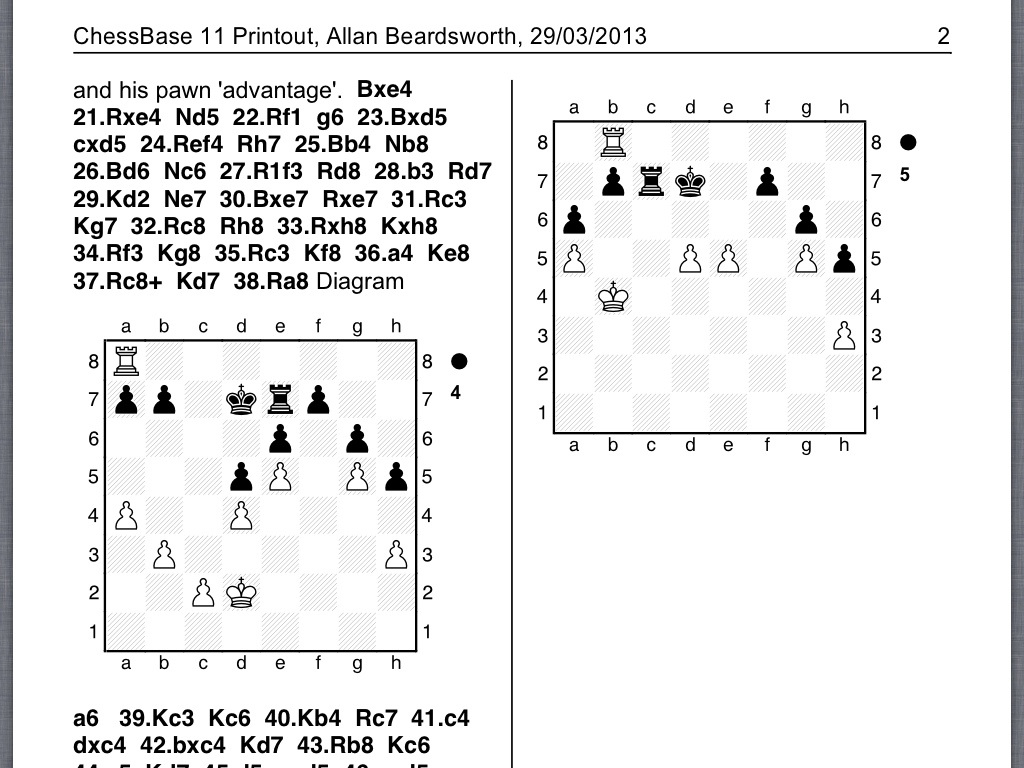
Nigel rattled off the rest of the game a tempo. I was surprised that he wasn't fussed about exchanging of the pieces, and his body language gave confidence: yet, I, as the watching captain, couldn't see much more Jan a slight plus for my player.
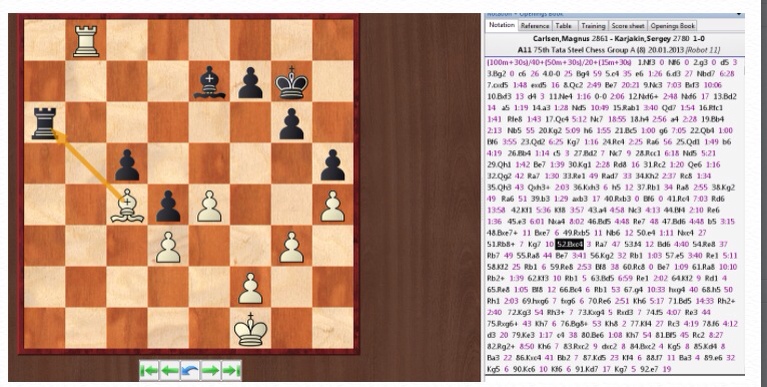
Hopefully I have learned the lesson. My most recent example was from Carlsen-Karjakin where the placement of the pawns, and anchoring of the white bishop gives white an effective pawn majority on the king side: advance, just like Nigel did, and [with Magnus, add a sprinkling of Nordic calculating genius] and 1-0.
 Posted with Blogsy
 allanbeardsworth