Cordingley puzzle 4
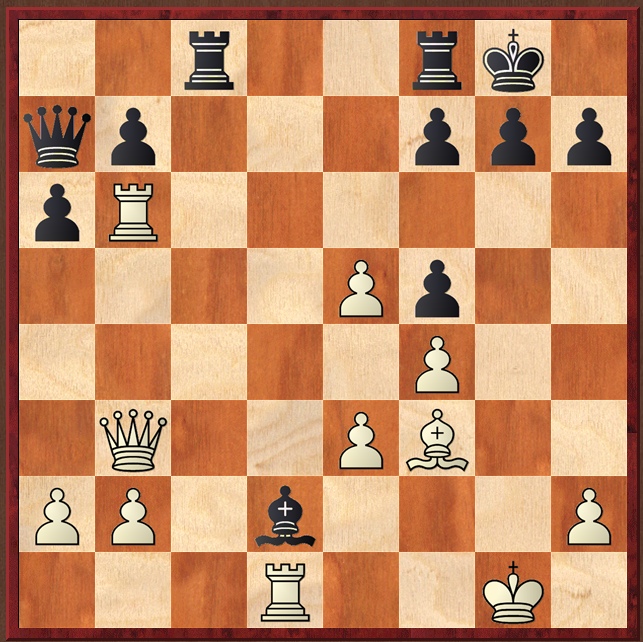
Black to play
Solution
This problem is more interesting, but in the sense flawed. It is flawed in two senses: one which was obvious to me, and one which Houdini then surprised me with.
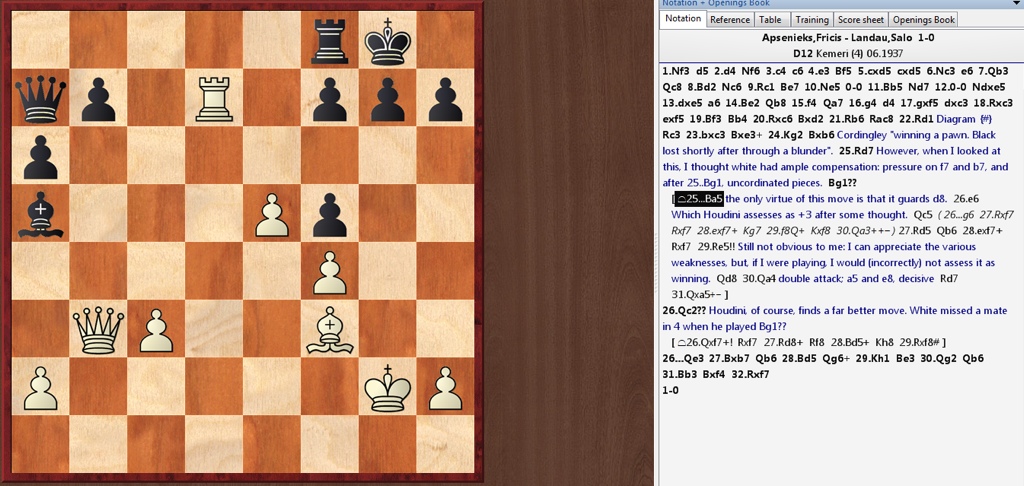
The idea behind the so-called solution is pretty obvious. Black is in a tight position, with his bishop attacked, b7 pawn under pressure, and Q shut out. His only hope is the combined pressure of Q and B on e3, so Rc3 was a fairly straightforward find. But all it is really is a mini-combination, and to me it was fairly obvious that at the end, with bishop on b6, R on d7, white has strong and well coordinated pieces, with an attack on the white squares. What was surprising was that a moment later, black's attempt for activity with Bg1, permits a surprise mate in four: I can't tell whether I would have found it, with such things as clock pressure and match nerves playing their part, but I could well have done: white's action as I say is all white squared. Cordingley's comment that black's Rc3 would have won, but for a later blunder, is incorrect, for both human and silicon reasons.
 Posted with Blogsy
 allanbeardsworth