Cordingley puzzle 7
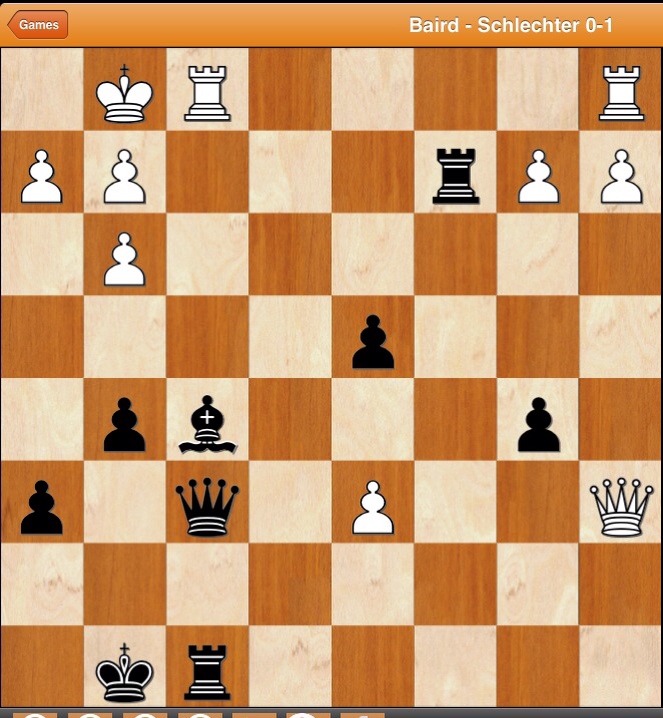
Black to win, after white’s last move f2*g3.
Solution
I think the solution is straightforward, though I goofed it. Part of my reason for starting on this daily puzzle blog is to try to learn what mistakes I make, in the hope of learning to make fewer of them. The most upsetting of the mistakes I have identified so far is #1: not seeing the winning idea at all, despite trying, especially when the solution, once revealed should have been obvious. Mistake #2 is not seeing the toughest defence, and #3 is spotting a good enough move, but not looking for an even better one.
Here, I made mistake #3 (by the way, I commit plenty of others, just that I haven’t enumerated them all yet). 1…Be4 was the second move I looked at (1…Rg2+ being the first, with the idea of then Be4+, but this is insufficient, so therefore I tried the standard, near automatic, technique of reversing the order of the moves, and it was clear that this was right….clear because the ‘sacrifice’ of the queen is a typical motif for inclusion in a puzzle book. My mistake was playing (after 2 Rf6) 2…Rg2+, and after 3 Kf1 (3 Kh1 Rg3+ mates next move) Rf6+ 4 Ke1 finding a move which wins, and checking that white’s checks don’t cause a LPDO or perpetual (they don’t, after 4…d3).
Alas, Schlechter avoided the need for such computation by 2…Rf6. The a8 and c8 checking squares are therefore controlled, as is the h1-a8 diagonal, so it will shortly be mate, with no difficulty.
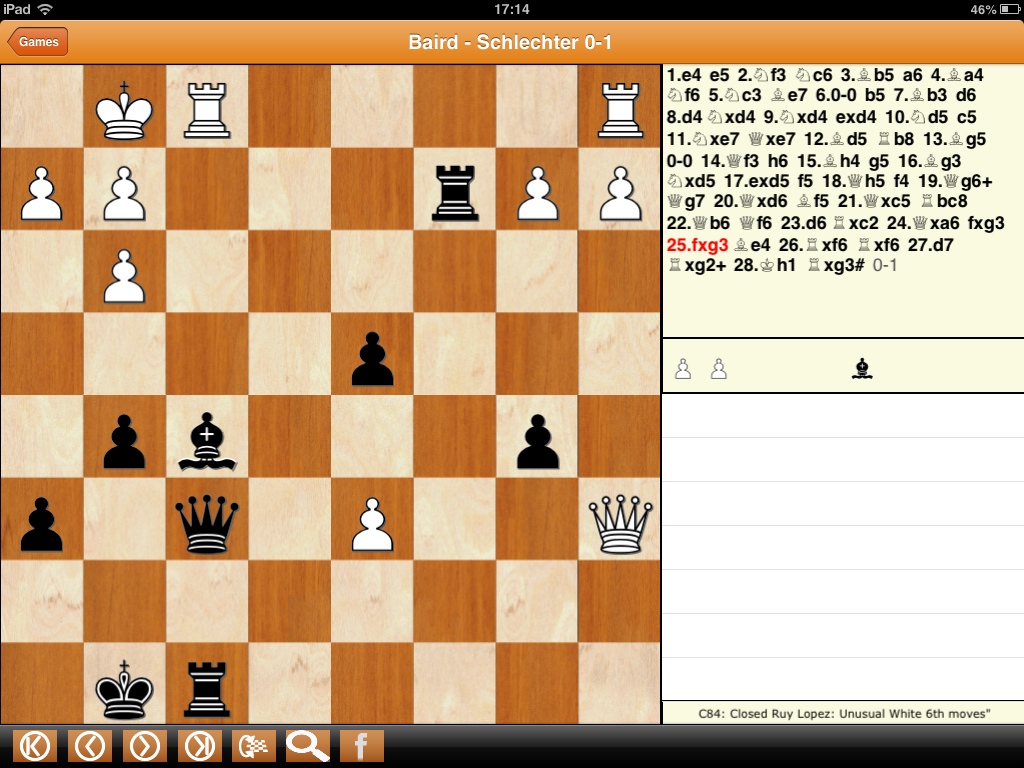
In an actual game, maybe I would have found 2…Rf6, especially if I had some time to think; but maybe I wouldn’t; hopefully I would have found 1…Be4.
 Posted with Blogsy
 allanbeardsworth