Cordingley: something about the person, and more about the book
I was recently asked by a friend 'why did you choose 'The Next Move' by EGR Cordingley for your project, rather than a better or more modern puzzle book.
Firstly, it is not that I don't have any other puzzle books: at last count, I had forty four others (I catalogue my chess books using the excellent My Library app). (Small print for the number of books, in case Jane happens to read this blog: for a further discussion, see my blogs about the maths of handbags and chess books)
I picked up The Next Move is at a second hand book stall for a very few pounds. I liked the fact that it was published during WWII, and that it was given as a gift to someone in 1944:
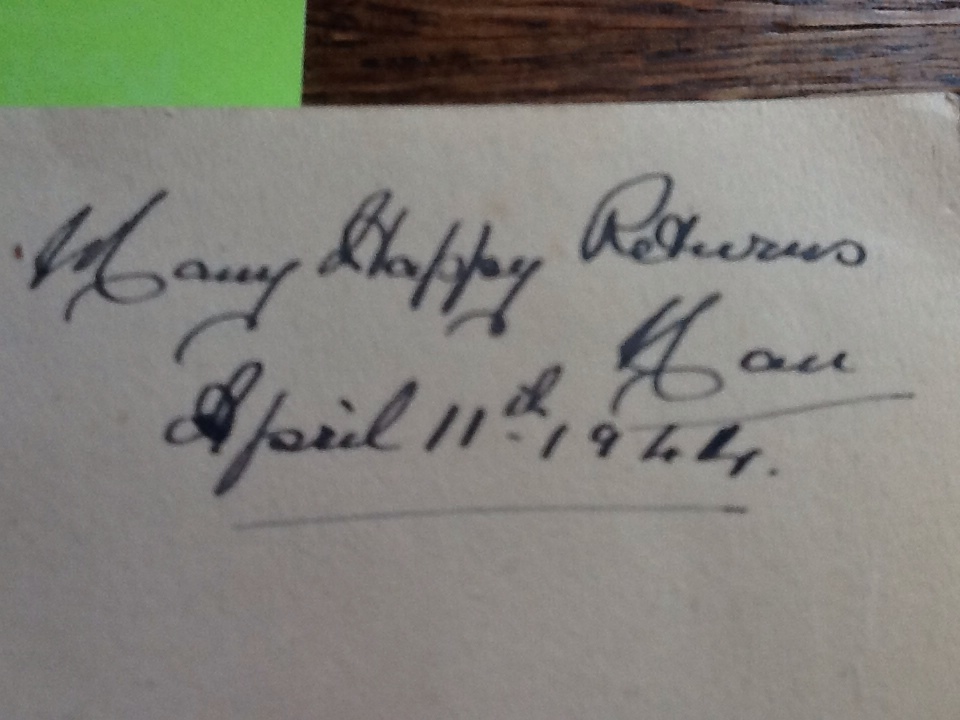
I can't read the recipient's name, perhaps Stan or Alan, but it touched me that someone hoped this book would give pleasure. No-one could possibly have know that shy under seventy years later, it would again give pleasure.
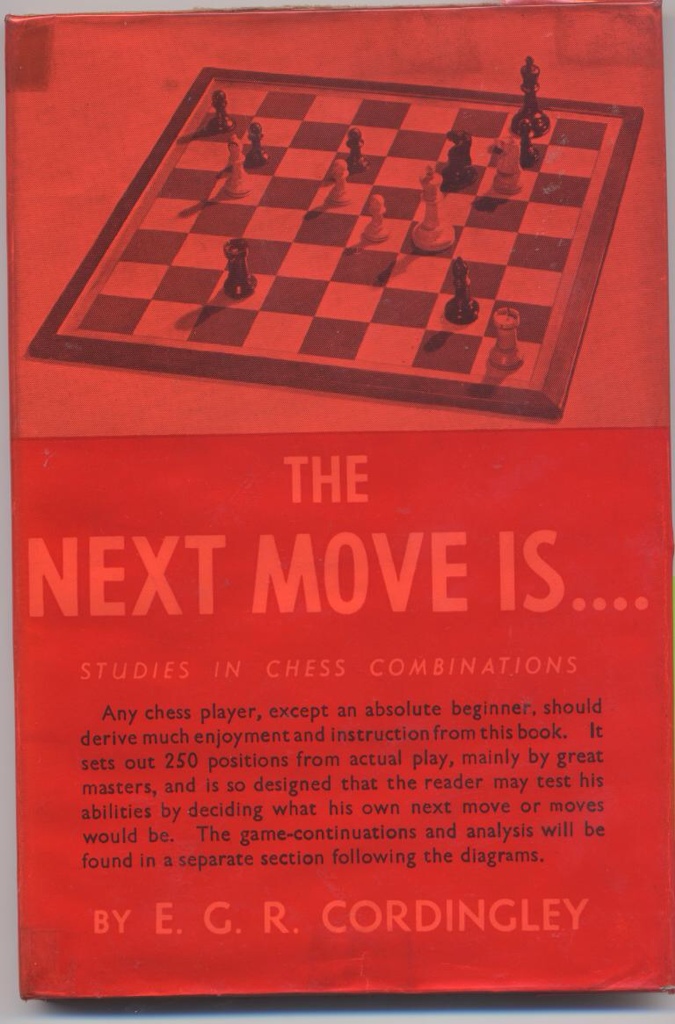
Secondly, someone, perhaps the first owner, had covered the book in a red plastic type cover, to protect it. The cover puzzle is also quite a special one, and one where there is still some mystery (see a previous blog)- no-one to date has been able to find the game score.
Thirdly, the book is dedicated to the National Chess Centre and to the John Lewis Partnership- which apparently hosted the centre, until it was bombed by the Germans, never to be reopened. John Lewis is one of my favourite shops, and it pleased me to learn that they once had an association with chess, I think through the eponymous Mr Lewis.
One of my other hobbies is family history, and through some of the programs I have, and websites I subscribe to, I decided to find out something about EGR Cordingley: little seems to be available through google. I had hoped to find that he had a child or grandchild who was alive, whom I could contact, to let them know about the project, on the off chance (perhaps very off chance) that they would be interested in chess.
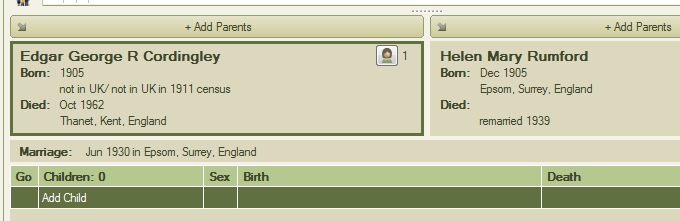
Alas, Edgar's marriage didn't last, and was childless: so he probably had no survivors; there are also two minor mysteries, what 'R' means, and also where and precisely when he was born: he was born outside the UK, and came to England after the 1911 census. We will have to wait until 2021 when the 1921 census comes out, before we can perhaps answer these points (though I will be doing some more googling on this when I have time).
To end with an aside, the 1921 census is the last I will see unless I live to a ripe old age: the 1931 census was destroyed by the Germans in the blitz, and no census was taken in 1941. Expect genealogists to be very excited in early 2021 and a boom in business for ancestry sites at that time.
 Posted with Blogsy
 allanbeardsworth