Thoughts on how to get promoted
I recently took a colleague out to lunch: he had asked me for career guidance, and is hoping for promotion. I would lay good odds, better than evens, that he will get promoted not one step up the ladder, but several, to partner: since he has many of the core attributes that are needed. I was surprised, though, that he hadn't thought through what he needs to do is to play the promotion game.
People who know me, know that I often think by drawing: maybe it is the engineer in me, maybe the chess player in me, but I think in pictures, often trying to draw analogies. I imagine my firm is no different from countless other organisations: merit is by no means the sole requirement for promotion, and is no guarantee of promotion. It is a necessary but not sufficient condition.
During our lunch, my first thought, and the scribble I drew, was of Snakes and Ladders.
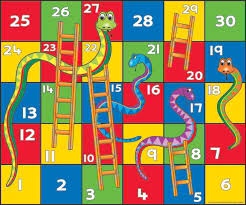
Doing the right things, impressing the right people, are ladders: but there are plenty of ways to slip on a snake. This game, is not though a good enough representation: there is no skill in snakes and ladders.
Instead, I think the nearest analogy is Trivial Pursuit.

This analogy shows that getting promotion is a trial, a quest, a journey. Luck is needed- the right dice have to be thrown, and poor numbers have to be avoided-it can often be a race-sometimes there can be only one person promoted- and various skills/attributes/cheeses have to be obtained.
So, what follows is the Trivial Pursuit guide to promotion.
Want to be promoted: no point playing TP when drunk, not concentrating on the questions: you may only have one chance; think about what cheeses you need to acquire; keep a notebook of your thoughts; record your successes; actively collate feedback, as if on a mission- 'as if' because you are on a mission, or should be;
Know the rules: you have to get all the cheeses, then go to the centre. Whilst the criteria for promotion will be fluffy, and vary by person and over time, there will be some core factors: financial, such as fees; people skills, both internal and external, business demand for particular services (no point in specialising now in capital transfer tax, that legislation went long ago: look to the future), attitude or cultural fit ('look the part')
Collect the right cheeses: work for the right partners, on the right projects; who will determine promotion? It is wrong to think that only one person can decide, it will almost certainly be a group decision; as with all group dynamics, there may not be equality in the decision making process, so make sure you garner support from sufficient quarters;
When you get chances, take them: there might be a seminar to speak at, an internal event to organise, an article to write (maybe in your own name, maybe co-authored with your boss, maybe in his name); some travelling to do: many such things you would rather not do, but chances to earn cheeses should be taken. It could be a long while before the dice give you another chance;
Avoid trick questions: avoid the traps: try to manage your client finances well, ensuring appropriate recoveries; avoid technical clangers, avoid falling into risk issues, play the gossip/politics game right. On the latter, there is a spectrum, as with all things, from being naive and out of touch, through aware and connected, through to busy body and gossip.
Collect all cheeses: points are earned by cross referring to other departments, by being known throughout the office, by being seen around, by helping more junior staff progress.
Decide the order of getting cheeses: better to be known as good in your current job, of being a good people developer, of being good with clients, before cultivating too many internal contacts.
Throw the right dice. Alas, luck plays a part in all aspects of life, and by no means everyone who deserves to be promoted will be. Someone else might throw a string of doubles: have a major client win, be in a discipline which is on the up, be ready for promotion just at the right time, e.g. a gap opens for him when his colleague leaves. In chess though, there is a saying about the more practice one does, the luckier one gets in practice. The same holds for Trivial Pursuit.
Get your set out, and start playing.
Whilst the above is written from my own experience, where I have been at my firm for my whole career, I would reckon it near certain that the same rules apply for other jobs: the Archbishop of XX won't have got his bishopric from being the most pious, the most learned; the Chief Constable of YY won't be the top nicker; the left winger for Manchester United might not be the best left winger in the squad: they will all have played the game, impressed the boss, trained hard, handled team mates well; and had a bit of luck.
 Posted with Blogsy
 allanbeardsworth