Mickey Adams: winner, Dortmund 2013: my first captaincy
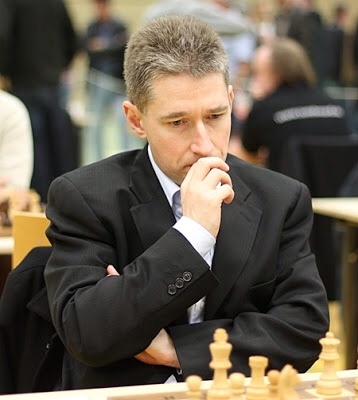
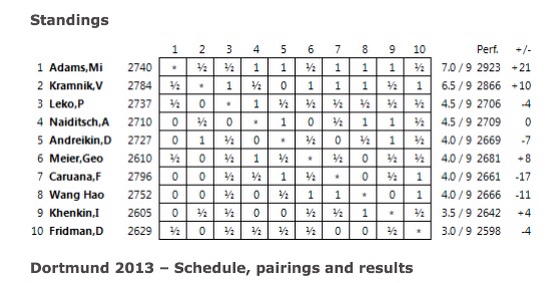
It has been an absolute pleasure, sheer delight, to watch Mickey Adams' games over the last couple of weeks, which resulted in him winning the 2013 Dortmund event ahead of Vladimir Kramnik.
I first met Mickey at the 2004 Olympiad in Calvia, the first time I captained the England men's team.
Right from the start, I knew Mickey was different: a true professional, professional in everything he did concerning chess. That is not to slight others, particularly my lifelong friend Nigel Short, who also reached the very pinnacles of chess, but by 2004 Nigel had passed his playing peak, was interested in the politics of chess, and was interested in enjoying the companionship and spirit of the Olympiad: he remained, and remains a great player, but Mickey was more of a professional sportsman.
I could write a lot about this, from his daily regime, timetable, support of Tara, attitude at the board, all manner of things but right from the start I put Mickey in a class apart.
One of the pleasures of being captain was to be up close throughout the five, six, seven or how ever long the team's matches were on. Whilst some captains wandered off, weren't around, or were in the bar, I took the decision that captaincy was a job and I had been asked to do the role to bring -using the same word- professionalism into the role. So for substantially every minute of every round I was with my players, ready to attend to their needs (from simple things such as fetching coffees, or something to eat, to looking after players who had lost and needed help to leave the arena, to arranging them to sign autographs for fans etc). To make this interesting for me, I also took the opportunity to study chess, both during the games, and where possible, sitting in on post mortems.
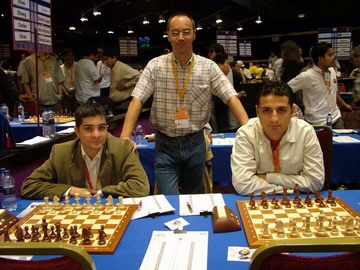
I thought it timely to blog about Mickey because of Dortmund, and thought it might be of interest to look at his very first game in Calvia, playing white against GM Kivanc Haznedaroglu of Turkey (from where, by chance, I am writing this blog).
By chance, searching google images brings up a picture of Kivanc, the player on the left, from a later round.
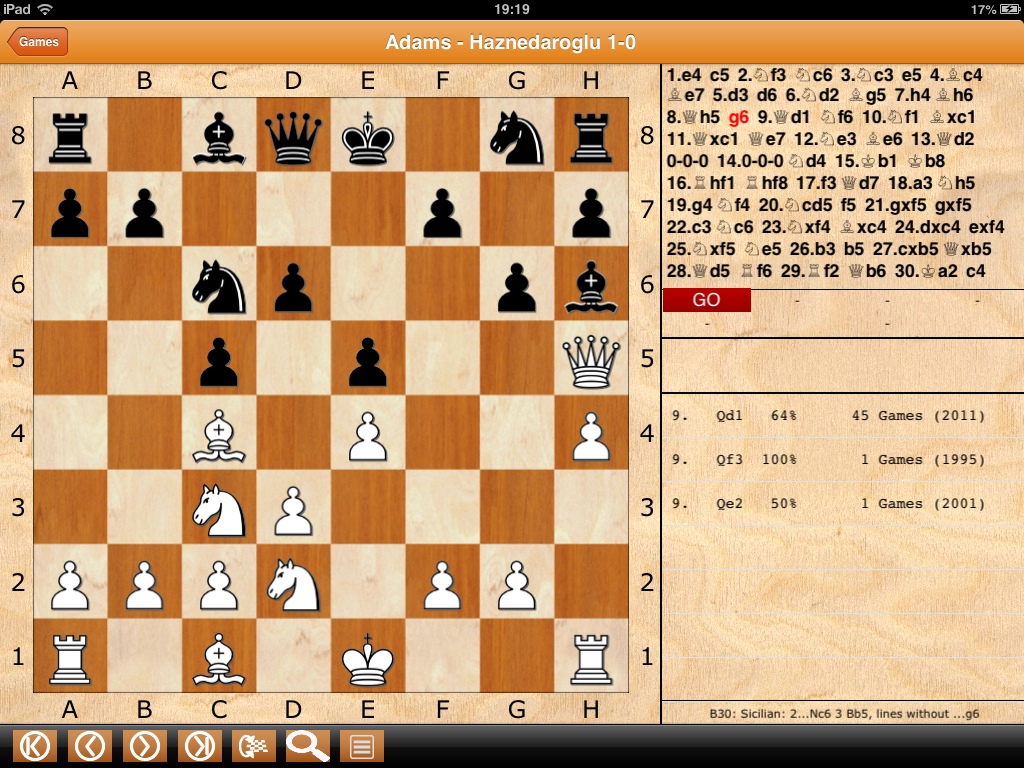
I had of course played over many of Mickey's games over the years, and had some understanding of his play. It was the position below, from a quiet line against the Sicilian, which led me to coin a phrase 'a Micklet' for the tiniest of advantages which somehow, frequently, Mickey could exploit in a way which only th elite can: here, I thought his Qh5 manoeuvre, tempting g6, caused black to have black square weaknesses.
Later, as I got to know the ropes, and know what captaincy required, I started to keep personal notes in my notebook of how I felt my players' games were going, trying to predict the results, trying to assess the positions: this practice, was a boon to my development as a player, and I still carry on this technique, when watching live games on Playchess.com or ICC: no engines, just brain, engaged, and trying to predict moves and outcomes.
Whenever I perceived a micklet, my assessment of likelihood of Mickey winning rose.
Later:
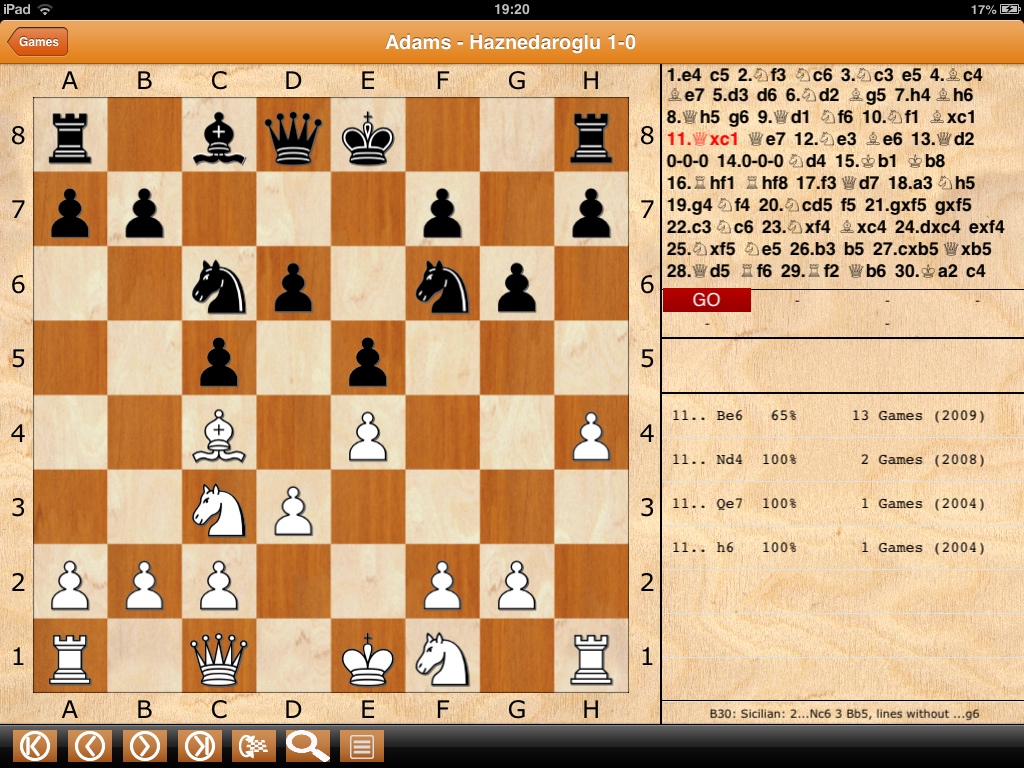
Perhaps, this game is a poor example of micklets, or perhaps it is instead really a story about control of d5.
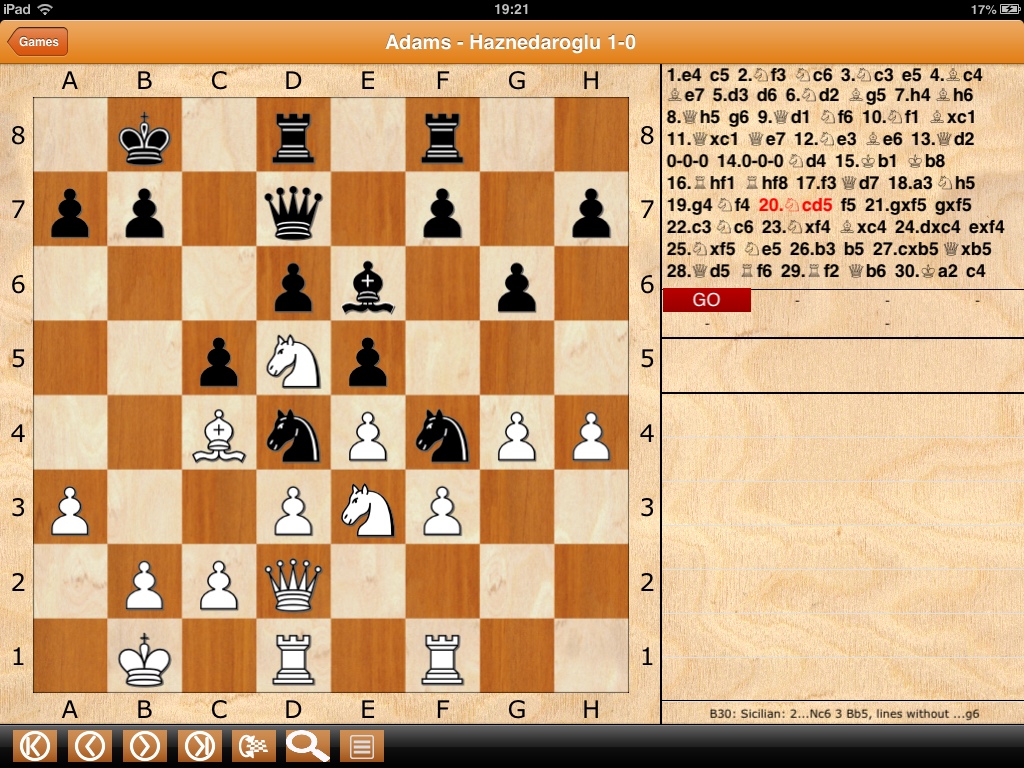
Here was the critical moment, when black's f5 resulted in a tactical sequence from which Mickey emerges a pawn up.
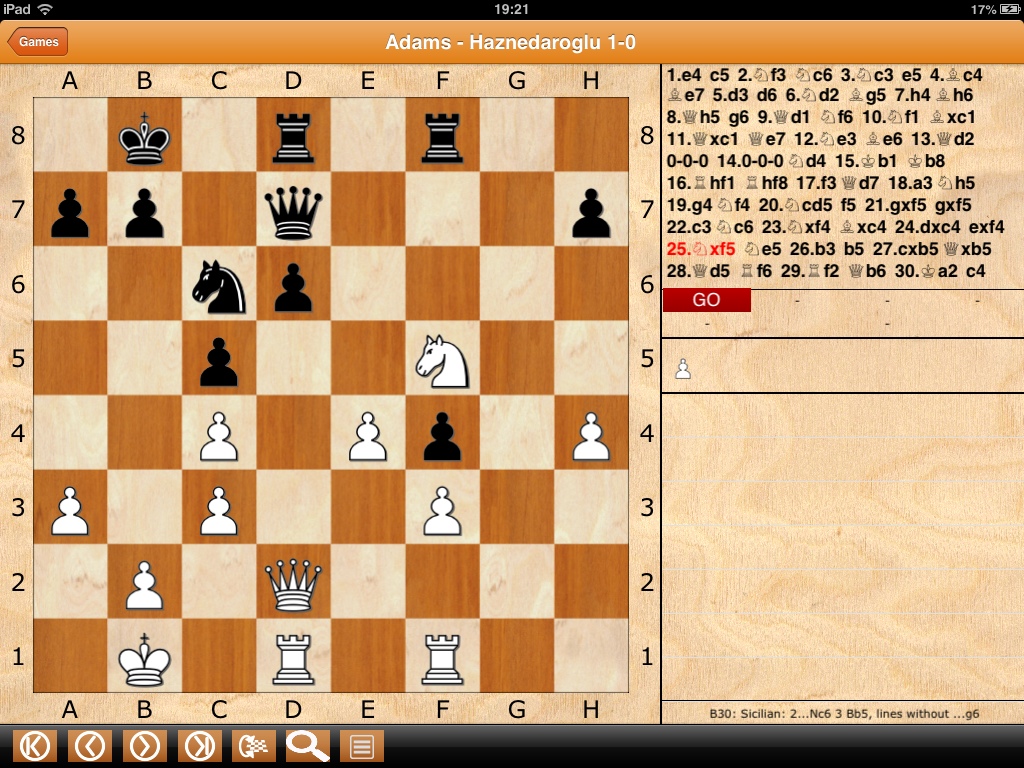
And here, Mickey has a strategically won position. Mickey's play impressed me in two ways: getting here, and then keeping control, and not being phased by black's desperate counter play which …b5 started: a lesser player (for which read me) could easily have fluffed the game by panic.
This game will never feature in a best games collection, but I will always remember it, just as I will always remember Dortmund 2013.
 Posted with Blogsy
 allanbeardsworth