Playing Tigran Petrosian
During my holiday this year, one of the books I read was Genna Sosonko's The World Champions I knew. It made me think 'which world champions have I met'.
The first was the Armenian Tigran Petrosian (1929-1984) (world champion 1963-1969 between Botwinnik and Spassky) who I played in a simultaneous display he played against the England Junior Squad in London on 15th January 1978. I was fifteen, and had been playing chess for around six years.
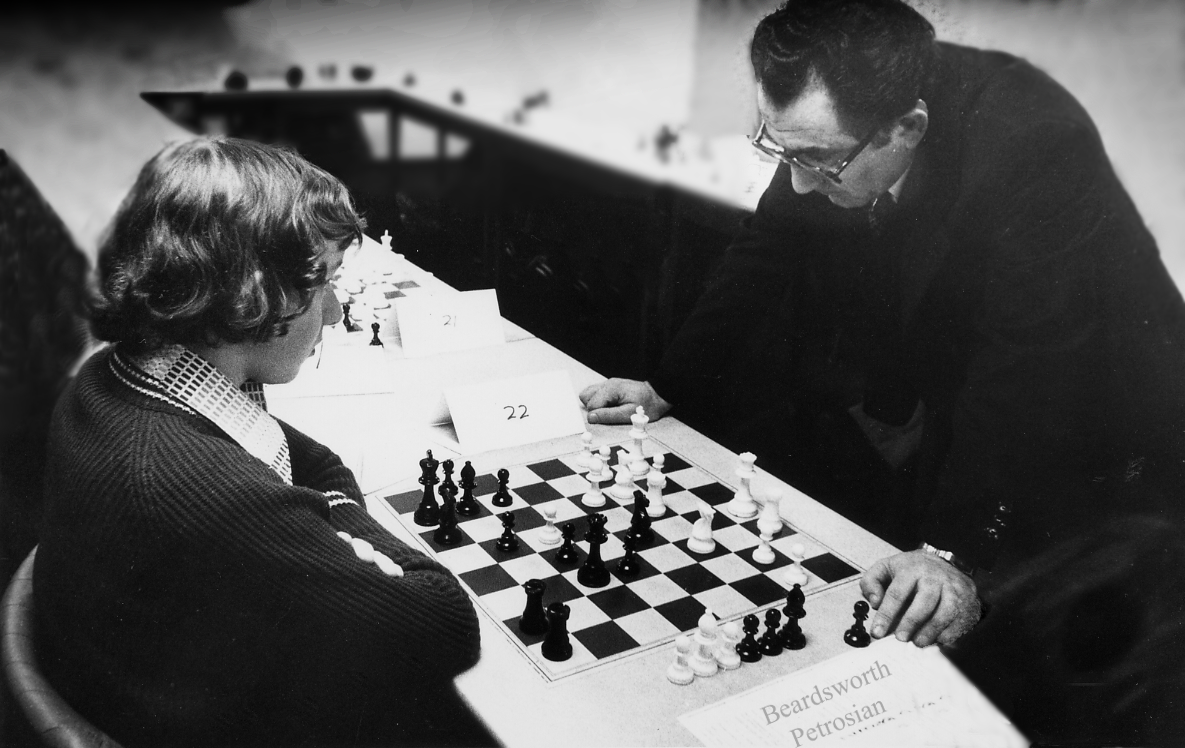
Remarkably, I had a head full of hair in those days. Equally remarkably, I had the better of a draw against him, having played the then very fashionable Benko Gambit against him. Even more remarkably, I can still clearly recall the smile he gave me when we shook hands to agree the draw: such things last a lifetime.
The event was held, if I recall correctly, at the YMCA in London. I can't picture the room, except that I can clearly recall that Tigran was accompanied by some burly, suited, men, and I can even picture one of them dictating with a finger direction which way, clockwise or anti-, he should go round the boards. Fantasy perhaps, from an over exaggerated childhood imagination, but would you put it past the KGB?
Looked at dispassionately from the distance of the best part of forty years, maybe I only had the slightest of advantages, if any: I have only relatively recently begun to appreciate the 'drawing margin', the tolerance or range within which advantages are not good enough to amount to anything. Or so I thought until today, thirty five years later, when I ran it through an engine for the first time, and- should I be happy or sad?- Houdini shows me that I was clearly winning.
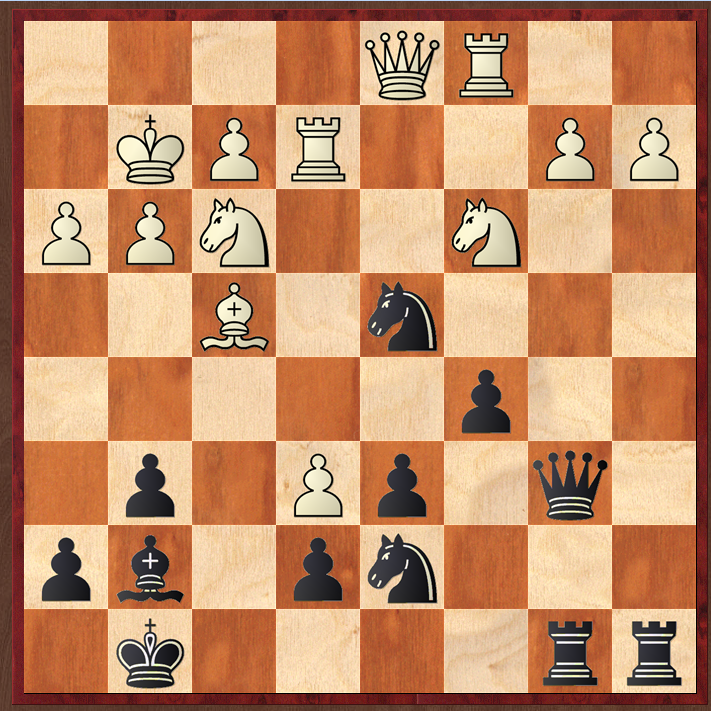
Around here the game became in my favour. Tigran had opened the position too hastily with Pe4-e5-e6: the opening was too my advantage, particularly since with the white squared bishops coming off in the opening (on f1: Ba6*f1) and white having played g3, the key diagonal is h1-a8.
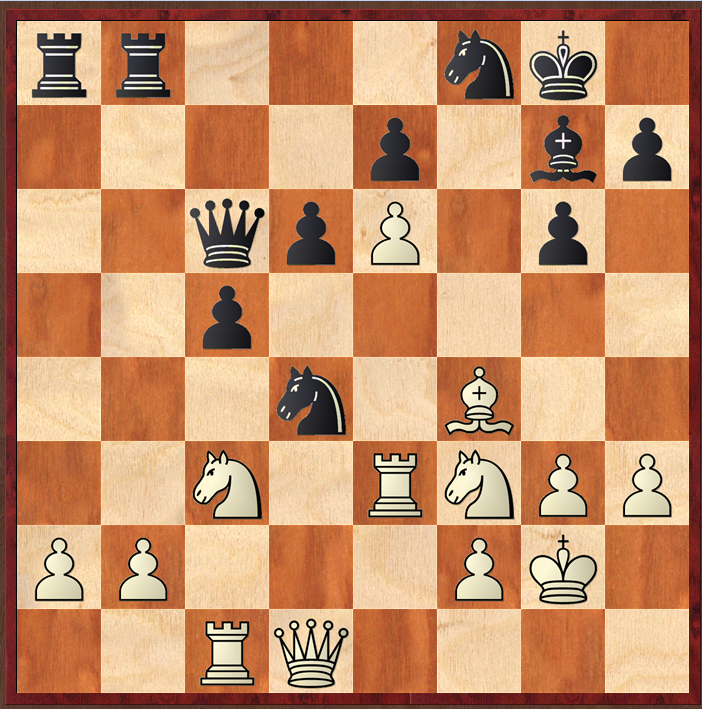
This is the position Tigran is contemplating in the photo: he is about to play Kg1, trying to ease the pressure on the long white diagonal. Alas, looking at myself thirty five years back, I wish I could say 'why are you staring at your opponent' 'concentrate on the board'. Of course. I was in awe of Petrosian and no doubt was hoping for magic rays of learning by staring.
Has this game a GM one I was watching in 2013 on Playchess.com or ICC, the merest of glances would give me the assessment 'black is much better'. I would realise now the long squared diagonal is under my control, the better placement of my rooks, the activity of my minor pieces. If I were playing now, such assessments would lead to 'keep the pressure on'. But I didn't know such things: didn't know Makagonov's worst placed piece principle , didn't know Aagaard's 'bring all pieces to the party', had never heard of a fortress…I did have some understanding of the tenets of Alexander Kotov's Think Like a Grandmaster, and had devoured Horowitz's and Mott-Smith's Point Count Chess, but I think my thinking was quite one dimensional, tactical, with an innate ability to place pieces on good squares…but not the technique to work hard and maximise positions.
So the game slipped away. Or, is that fair when I didn't know it was in my grasp?
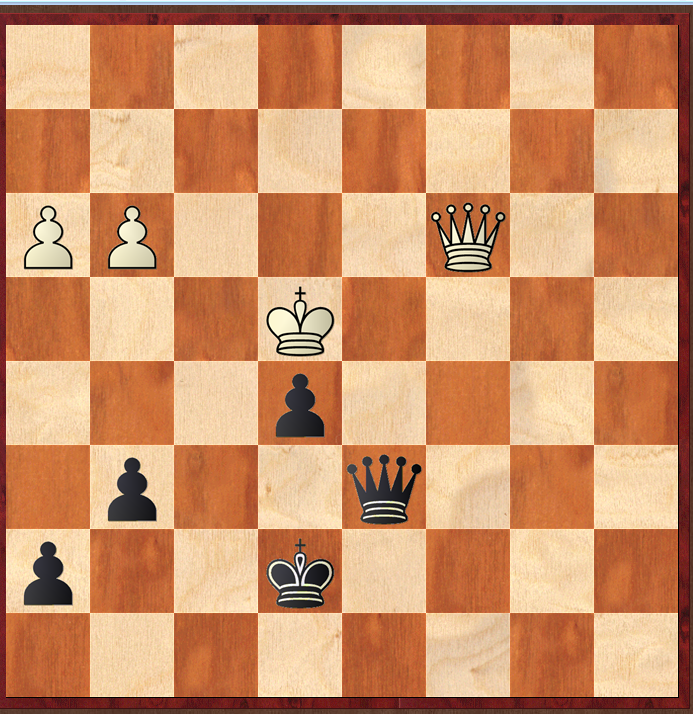
The attached PDF contains a lot of analysis, including showing how I could have maximised my pieces: with some fantastic silicon lines.
Am I happier or sadder now I know I could have won but didn't? Neither: sadder because the great shame of my chess life was that for whatever reason I was never taken under the wing of a trainer- just how good could I have been?-but the great pleasure is that there are always things to learn. And maybe now, for the first time, I have a better understanding of Tigran's handshake smile.
 Posted with Blogsy
 allanbeardsworth