Magnus Carlsen v Lev Aronian
Not for the first time, Magnus astounded me yesterday, beating world number 2 from a 'drawn' position, in which he was even a pawn down (albeit doubled pawns) against World no 2 Lev Aronian.
I was particularly mystified by the following position, Magnus being white.
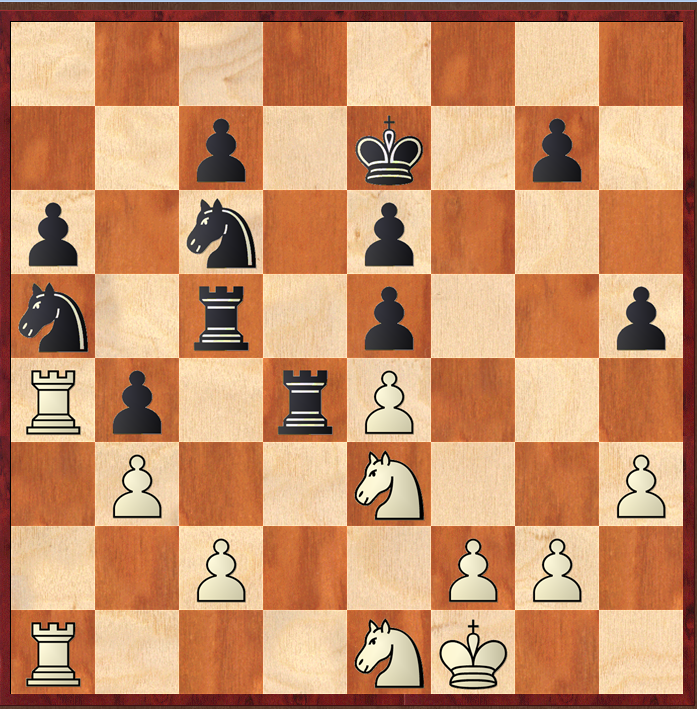
By chance, this was the position which the game had reached when I switched on my computer having arrived at home, having had a weekend in the Lakes, the game being played on Sunday evening. Since we had to unpack and make dinner, I couldn't watch the game: a quick inspection anyway made me think it would soon be a draw, which was sufficient for Magnus to win the tournament, with Kamsky-Nakamura already having finished.
My glance was too fast to notice what white's last move was (31 Nf3-e1) but something jarred: was the e4 pawn en prise?; so I looked again at the position, and saw both white's last move, and that the pawn was indeed en prise: and a move earlier, white could have taken the rook on d4: I was intrigued; but still expected a draw.
'Of course', Magnus won: I looked at the game after it had finished. I could see that his 51st move was venomous:
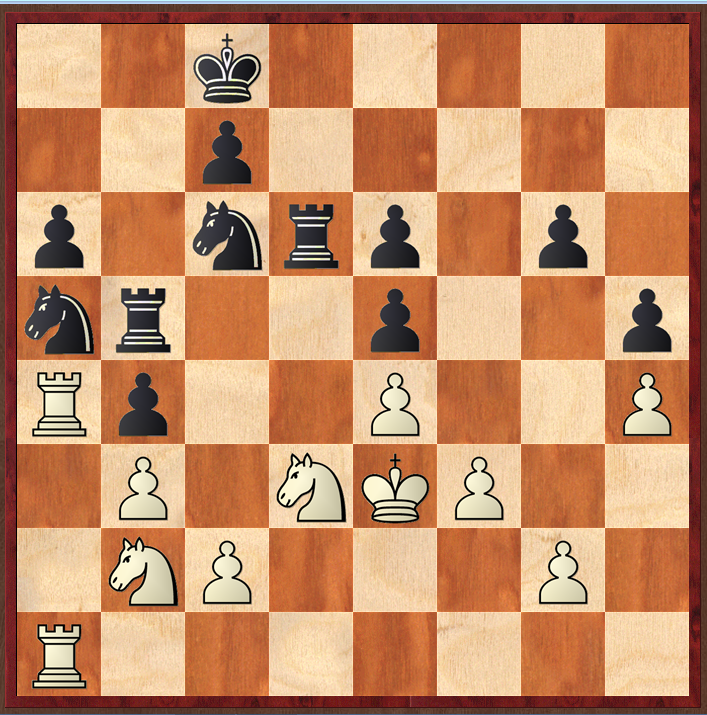
See with hindsight, that is: the fact that 51 Ra1 threatens tactics with Nc4 because a later ..b3 doesn't hit the rook.
What puzzled me most, though, was what happens if black takes the e4 pawn after 31 Ne1? This really puzzled me, and I tried hard to find out. The first report of the game was on chessvibes.com (Chessbase did a flash report) but it didn't give much analysis; so I thought more, and earlier this evening, saw the Chessbase fuller report, hoping for the answer, but it skipped over the move. I got the pieces out, set the position up, and revisited it: mainly wondering if the rook was trapped, but realising that that couldn't be the solution, since it could always return to d4. Then, it hit me: the Re4 is LPDO and in horizontal alignment with the Ra4, so the b4 pawn is pinned. So 31…Re5 32 Nd3! Rb5[] 33 c4!! must be the idea, with the resultant position being below.
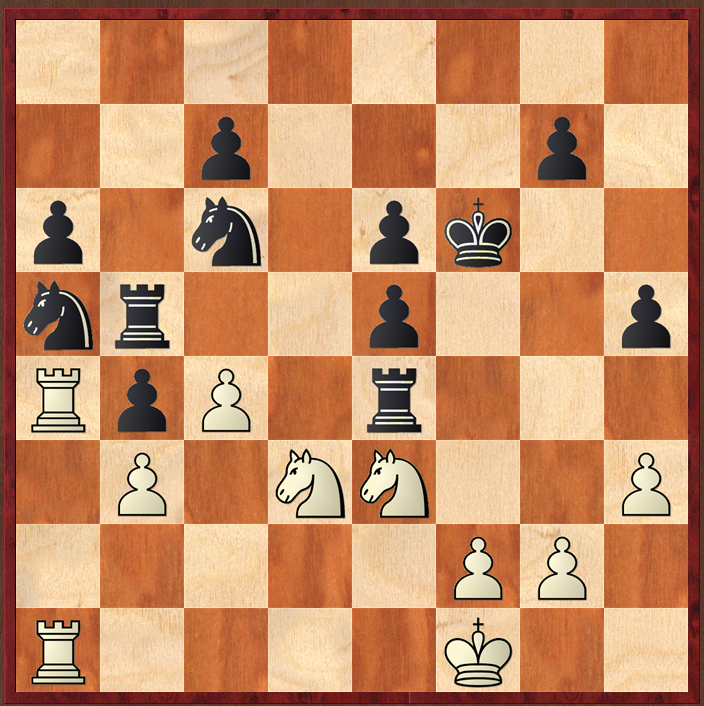
There are a few messy lines, which I have only skirted so far. 33…Nb3 is possible, but I think black's best is 33 …bc 34 Re4 Nb3 when there is another cute point: both white's rooks are LPDO, and the Re4 is in forking distance of the king: Nd2+ is a threat. I suspect white is better after 35 Ra2 but at my level, any result is possible after 35…Nd2+ 36 Rd2 cd 37 Ke2.
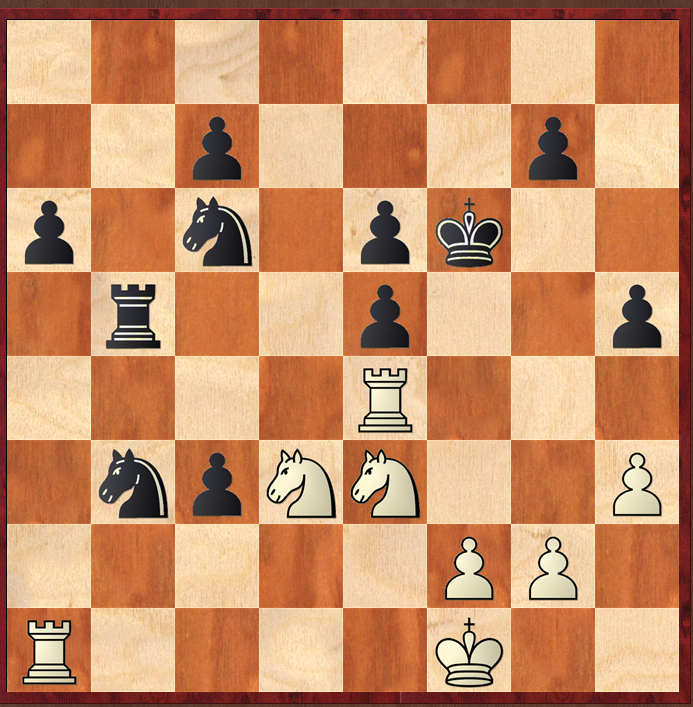
Whilst presently black has several pawns for the piece, they are separated, and I suspect will fall off one by one, and white will win.
Simply amazing what the top players see: I would have been assessing white's position as in jeopardy, a pawn down with just the ability to shuffle his king: of course, black's knights are tangled, and I couldn't see how black could untie himself, but I presumed a draw by repetition would have been the result. I would not have guessed black would quickly collapse.
 Posted with Blogsy
 allanbeardsworth