Cordingley puzzle 175 #chess
White to play and win
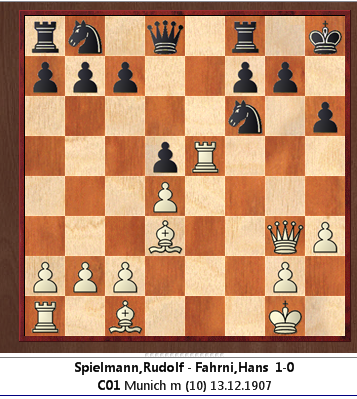
Solution
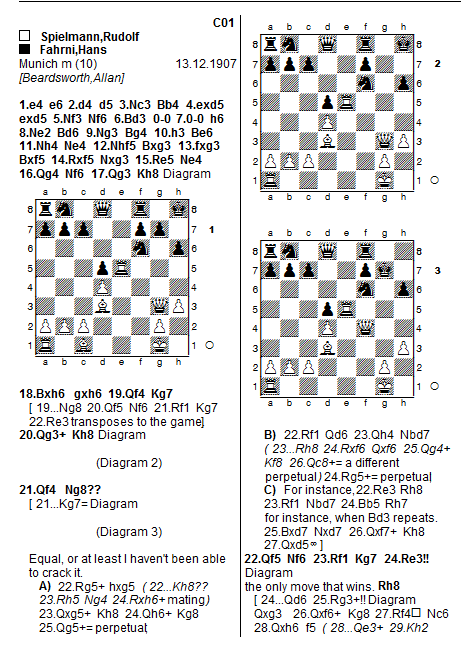
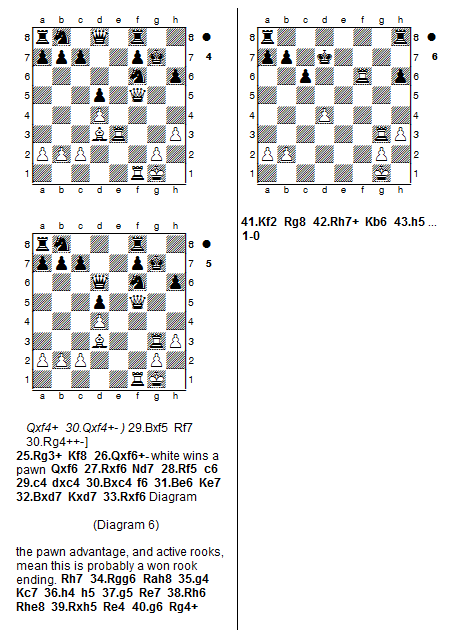
This puzzle shows, for me, the difference between trying to solve a set puzzle, and playing the game in practice. I saw the first two moves, 1 Bh6 gh 2 Qf4 more or less instantly, but couldn't get them to work to my entire satisfaction.
However, in practice I am sure I would play the above moves, for two reasons. Firstly, for want of better; secondly because they should be at least a draw. I would see what Black did, and then decide. Moves like Rf1-f3 or Rf1-f4 or Re3-g3 abound, and if the black rook leaves f8, then Rd5 is sometimes possible.
One of the points I had to appreciate was that if 2..Kg7, then 3 Rg5+, and the rook has to be taken, leading to a perpetual, since if 3…Kh8 then 4 Rh5 mates. The fact that there was at least a perpetual in this line gave me the comfort to know this is how I would play in practice, since, with the position after 2…Kg7 on the board, 'there might be more'. I then looked as much as I could to find that 'more', without success.
I solved this puzzle in a cafe, and only had my iPhone with me. So I checked it first with Stockfish, and, since I was puzzled by what it told me, also with Hiarcs. Both give 1 Qh4 as their preference, evaluating it as level or slightly worse, even after the exchange of queens. But I knew that 1 Qh4 wasn't the solution, and despite these engines giving 1 Bh6 as 0.0- their main lines leading to a repetition- I checked it at home with Houdini, and it too finds no more than a draw after Kg7: black's Ng8 was the losing move.
The correct, full, evaluation after 2…Kg7 might be different: maybe deep engine analysis would show that there is a precise line which overcomes black, perhaps leading to an ending with a clutch of pawns and a too disorganised opponent: but my intuition, having looked at a few lines, is that the problem is cooked, and that it is a draw with best play.
 Posted with Blogsy
 allanbeardsworth