An alternative for a bad Cordingley day #chess
Today's puzzle was not good, so the following should be of more interest.
White to play and win
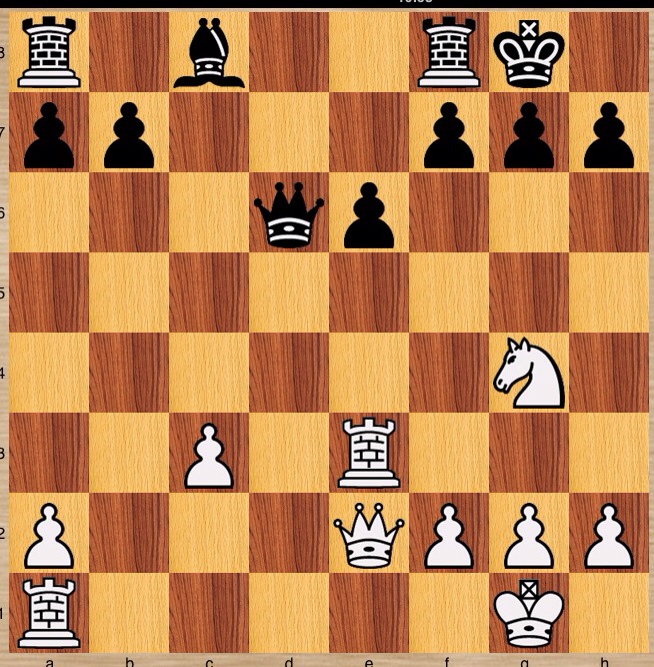
S Williams-R Weaving, Torquay 2013
Source: Chess magazine, September 2013 'harder puzzle for the club player'
Solution
The first move, 1 Nf6+, is obvious, as is the best reply, 1…Kh8. It is simple to discount 1…gf 2 Qg4+ Kh8 3 Rg3 when black must sacrifice his queen, 3…Qg3, when white is simply better. Material is level, nominally, but black's kingside/ black square weakness must win through. I'd give myself 2:1 odds on beating Magnus Carlsen from that position [maybe I am being optimistic, but I can dream].
But what after 1…Kh8?
A diversion, now. I looked at this problem when on a family walk from Buttermere up to the summit or Haystacks in the English Lake District.

Charlie at Innominate tarn, near Haystacks
La famille Beardsworth walk at different paces, so whilst sometimes we stick together, often we stretch out, and sometimes we str-e-t-c-h out. So there is plenty of thinking time, and this time I took a photocopy of the 'harder puzzles' page with me, to think about both when walking along and when waiting. (A wonderful thing about chess: you can be thinking about it when no-one knows; ideal for walks, interminable meetings, and dull conference calls…)
I found this month's harder puzzles not easy: solving eight of the nine more or less by inspection, though this one really troubled me. How to land the knock out blow? I spent most of my time on 2 Qh5, especially 2…h6 3 Rg3 and 3 Rd1. There are some nice variations. For instance 3 Rd1 Qf4 4 Rf3 Qg5 5 Qg5 hg 6 Rh3 mate; or in this line, 4…Qc4 5 Qf7!!, a beguiling theme in several variations. If 3 Rd1 Qb6 (defending d8, so the Qf7 trick doesn't work, then 4 Rg3 and black is pretty trussed up, and 5 Qg4 is threatened. But I am mindful of 'long variation, bad variation' and then saw the black queen is far better on e7, when white's attack fizzles out.
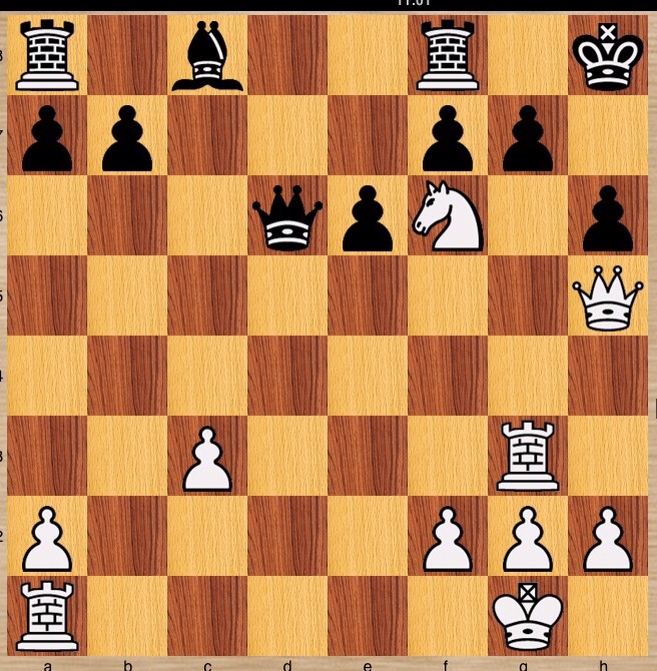
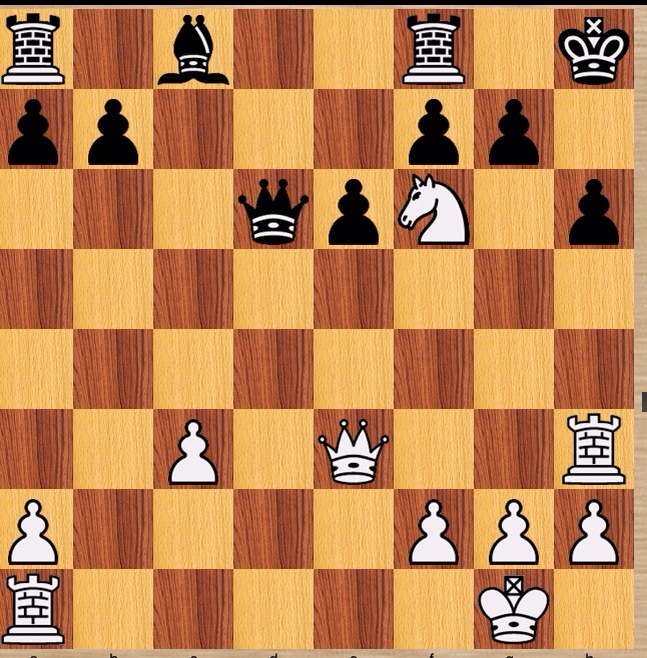
So, what to do? Reverse the move order: 2 Rh3! when everything works. 2…h6 3 Qe3!! is game over. I am not sure whether there is a general theme here, but by moving the less flexible piece first, reserving the greater option, the queen can go either to g4, h5 or somewhere new, e3: it is probably too much to say 'and e3 is a black square'. Whilst black is without his black squared bishop, his black squares don't look particularly weak in the first position, but maybe they do after he has committed to …h6.
A final point to ponder: whilst the Chess magazine page is headed harder puzzles for club players, would the GMs or Super GM's find the puzzles hard? If not, why not? It would be great to know if any of the GMs who follow my blog found this puzzle hard, and if not, why not: what techniques do they use?
 Posted with Blogsy
 allanbeardsworth