Cordingley puzzle 215 #chess
White to play and win (perhaps)
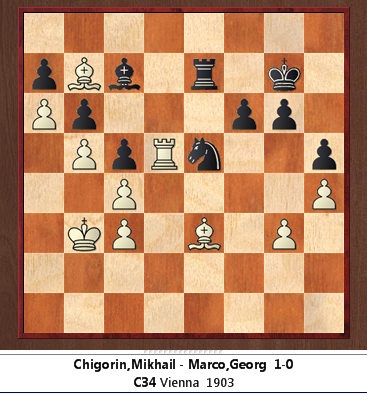
Comment: a good exercise, despite some imperfections. It is a good one to spend time on, looking both at how white can seek to win, and how black might best defend.
Solution
Knowing it is a puzzle, I instantly looked at 1 Rc5: whether I would have considered it in a game, I do not know. I knew it was the likely solution, but also looked for other possibilities, found now, and so returned to 1 Rc5. If Black doesn't capture the rook, then it is game over, perhaps long windedly, so the starting position is really after 2 Bc5.
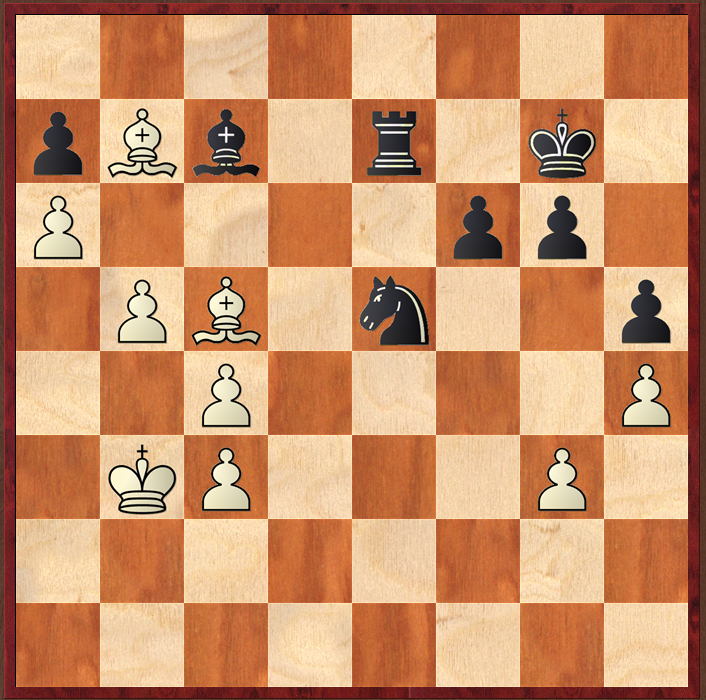
Firstly, it is worth noting that the sacrifice succeeds (if if does succeed) by the fact that the Bc5 now attacks two LPDOs- for the Pa7 is a LPDO, and black's last move, Rde7 made the rook a LPDO too. So 2….Rf7 3 Ba7 and then I had to make an assessment of whether the pawns could be stopped; and similarly if 2…Kf7 3 Ba7 when one of the minor pieces will be exchanged for one of the pawns…but I could see that the remaining pawn(s) were unstoppable. And this is how the game proceeded, and white won.
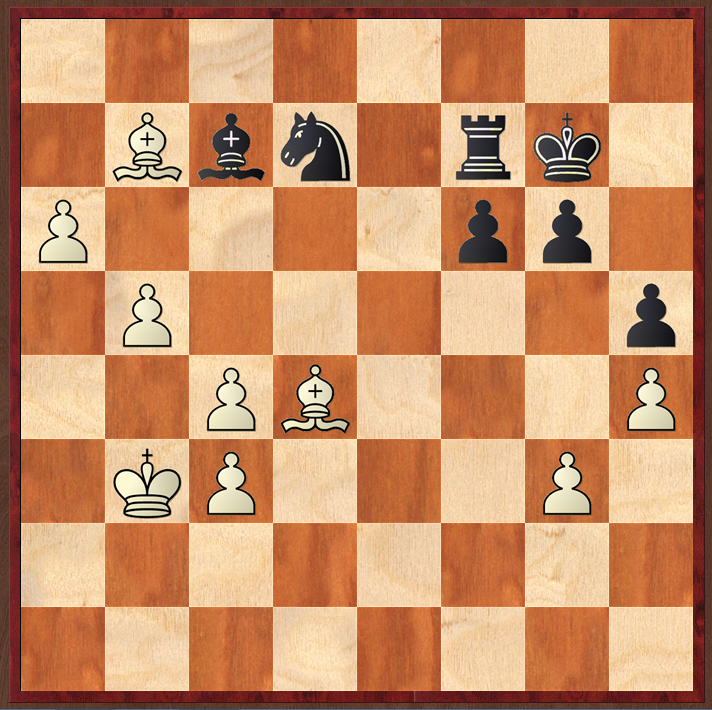
But Houdini found a problem. Not Harry Houdini (1874-1926), who would have been in his late twenties when the game was played, but the engine Houdini, aged 3, who suggested instead the great defence 2…Re6! 3 Ba7[] Rb6!! which might just hold.
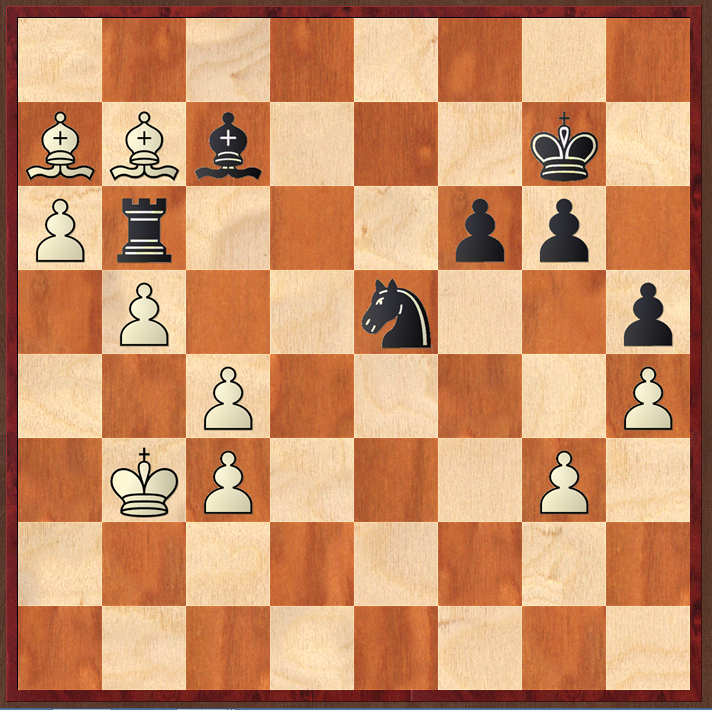
Black now has defensive possibilities based on control of the a7-g1 diagonal, if white takes the rook, and also the move Nd3+ in response to Kb4, keeping the king out. When I played it on, I exchanged the pieces on b6, and then played Bd5 in order to retreat the bishop, so as to be able to advance the pawns, and to place the bishop on a stable square, where it also restricts black's king from coming to the centre. However, Houdini tells me Bd5 is a mistake for subtle but instructive reasons: and that Bg2 is better. On d5, the bishop also blocks the white king from advancing, and it slows his own king down more than black's, who is then able to reach e7/d7 in time. Really instructive: it shows a lazy, seemingly safe (in fact unnecessarily safe) move can ruin an ending. Chess is of course the game of a single tempo.
White may be able to win after Bg2, but only Karsten Mueller could tell us for sure.
I give a lot more analysis in the attached PDF, but below is the final position after white's last move in the game, Kd5c6. Houdini, good to the very last, says this is weaker than Ke6! which has the same effect, but also blocks black's king into a mating net: it is mate in eleven, apparently.
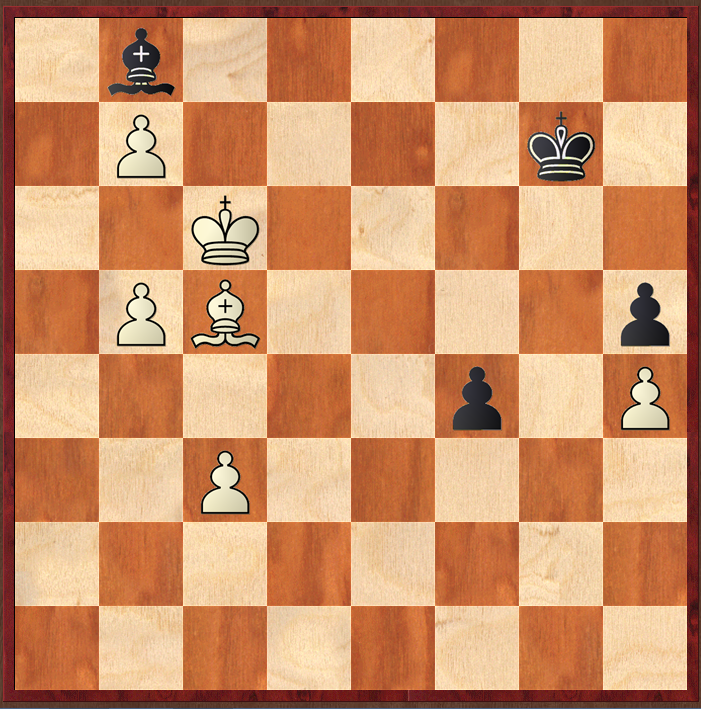
A really interesting puzzle: the alleged solution is fairly obvious but the defensive possibilities and white's way to make progress are highly interesting.
 Posted with Blogsy
 allanbeardsworth