A hidden tactic in Radjabov-Karjakin
As I post this blog, round six of the Gashimov memorial is underway. The games are two and a half hours in, and thanks to the best suggestion I received last year, I can be busy doing useful/necessary things whilst also keeping an eye on the chess.
The best suggestion was simply to have two screens on my home PC: I have had a PC for nearly two decades now, but was a slow convert to having two screens, but having upgraded my PC last year, I took a friend's advice, and haven't looked back. So today I have been able to do my wife's tax return, a family trust's tax return, and other necessary financial things, catching up on a backlog of emails, all whilst keeping an eye on the chess. Perfect.
Mamedyarov-Carlsen will of course be the game of the day: and at the time of writing, move 17, it is building up to be an interesting game. Caruana-Nakamura is an interesting Open Spanish, now at move 25, and the board has simplified: I can't really assess if white has a significant enough advantage, or whether it will be a draw.
The 'dullest' game of the day is Radjabov-Karjakin. Sergey seems to have sucked the life out of the game from the start/kept everything under control as you prefer, and after 25 moves, it is a one rook plus symmetrical pawns ending, close to a draw, unless Teimour can exploit whatever slight advantage he has (better rook, black's being passive, and better pawn structure.
If Radjabov-Karjakin ends in a draw as I suspect it will do, it will probably be regarded as not a game to remember. There was one interesting hidden tactic a few moves back.
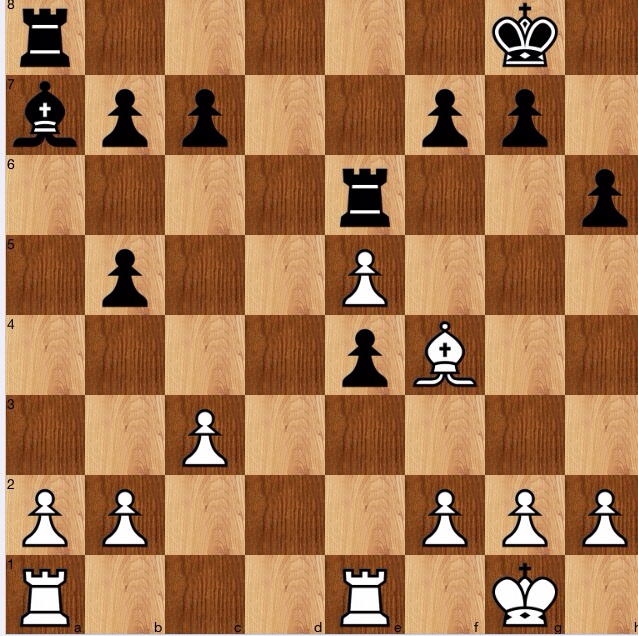
White to move: should he play 1 Re4?
Solution
White actually played 20 h4!, a move which at first blush I thought was showing black he could take on e4 at any time. I noted that if (after 20h4) 20…f5, trying to protect e4, then after 21 ef gf, the c7 pawn is en prise.
Then I noticed why white can't take on e4.
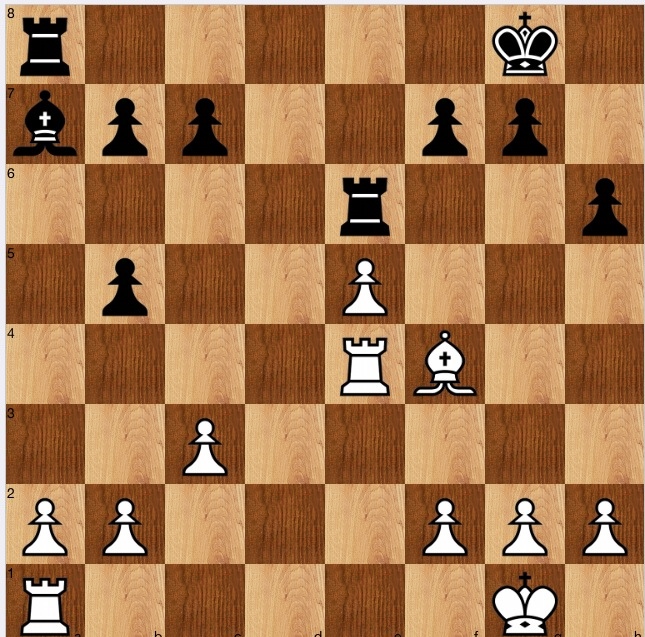
Position after Re4
Black plays 1…g5! biffing the Bishop, which has no good square to go. The place it would like go to is g3, from where it protects the e5 pawn, but (2 Bg3??) 2…f5! wins: the Re4 is LPDO so taking en passant is not possible, so the rook must move, and the bishop is in a net and is lost after 3…f4.
Secondly, the bishop's next best square, e3, is also unavailable for a similar reason: 2 Be3? f5! and here the B is not lost, but white's structure is ruined after 3 Rb4[] Be3 4 fe[] Re5: black is somewhat better.
So,white must retreat to say d2, when 2…f5! again upsets white: the e pawn will fall, and white is not better. (Or, maybe, instead biff the bishop, 2…Rd8!, which also improves the rook, and then perhaps play 3…f6 getting the pawn back immediately).
What happens after 20 h4?
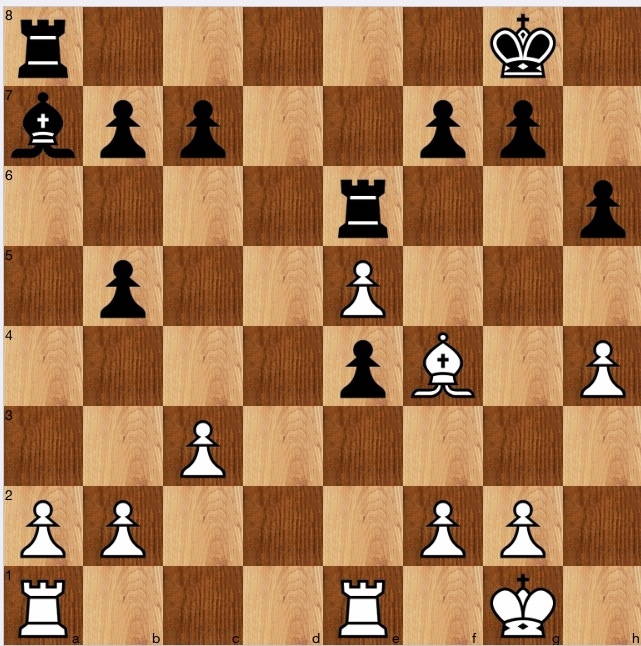
Sergey played the nice, and not obvious, tactic, 20…e3!, not losing a pawn, and simplifying down to an endgame. It just shows how there a little tactics everywhere, and how great these players really all are.
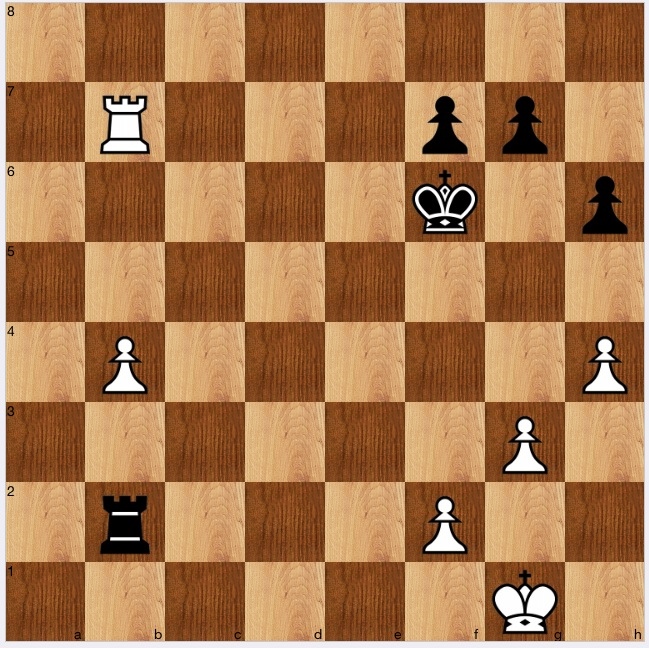
In the time taken to write this blog, Sergey has (I am sure correctly) simplified, sacrificing one of his pawns, but freeing his rook, and getting to a standard rook+4 v rook+3 ending, which I think is here a theoretical draw. I hope my judgement is correct, else I will have some embarrassment.
 Posted with Blogsy
 allanbeardsworth