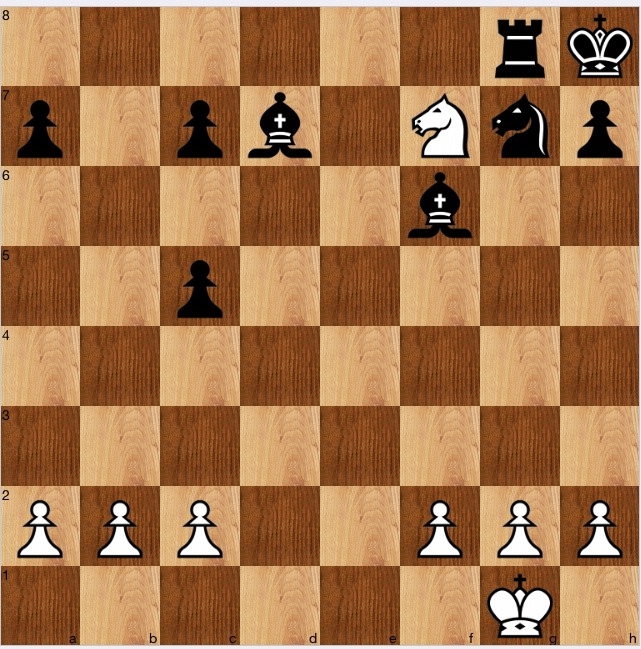
Test your chess: Reitstein problem 149
White to play and win
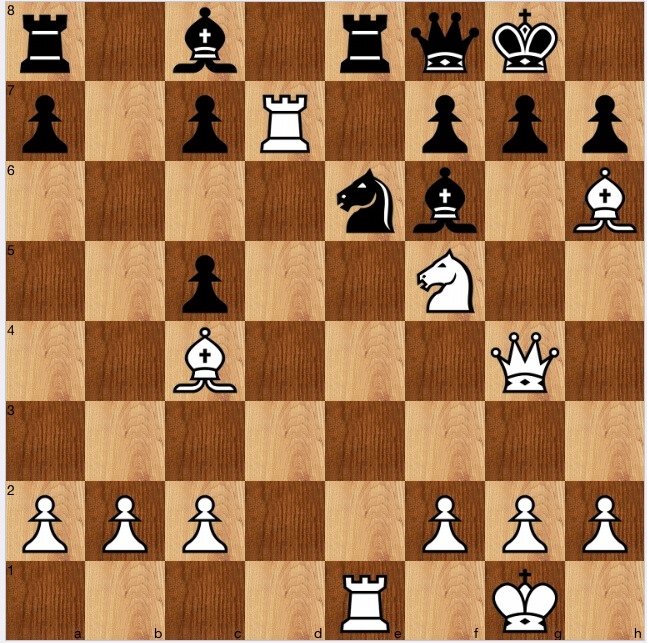
(A tough exercise: watch for Bg4, Re1, defences)
AN Rubinsztein v KF Kirby 1969
Solution
I got there in the end, but I find such positions, with lots of pieces flying around, hard to work through. I have to keep focussed and calm, and work things through line by line, and try to avoid confusion. I wonder if GMs find such calculations easy?
So, 1 Ng7 and 1 Bg7 are natural tries, and of the two, and as it turns out rightly, 1 Bg7! is the more natural: the N could be more useful than the B. Then there are two branches: 1..Bg7 and 1…Ng7. Against the former, which intuitively seems weaker, because neither the e file or c8-g4 diagonal are opened, 2 Nh6+ Kh8[] 3 Nf7+ is at least a perpetual, so can provide a stepping stone to look further with confidence. It (3 Nf7) is indeed no more than a perpetual, but 3 Rf7! Qd6[] 4 Rg7! wins, because 4…Ng7 5 Nf7+ forks king and queen! and takes the queen either with discovered check or, as you wish, after Re8+.
Therefore. 1…Ng7, when not 2 Nh6+ Kh8[] 3 Re8 Qe8 4 Nf7+ because 4…Qf7! 5 Rf7 Bg4 which, alas, opens up the eighth rank so that the Ra8 prevents Rf8! When I saw this, I panicked, and it took a while to regroup and find 2 Re8! Qe8 3 Bf7+! Qf7 4 Nh6+ Kh8 5 Nf7+ etc.
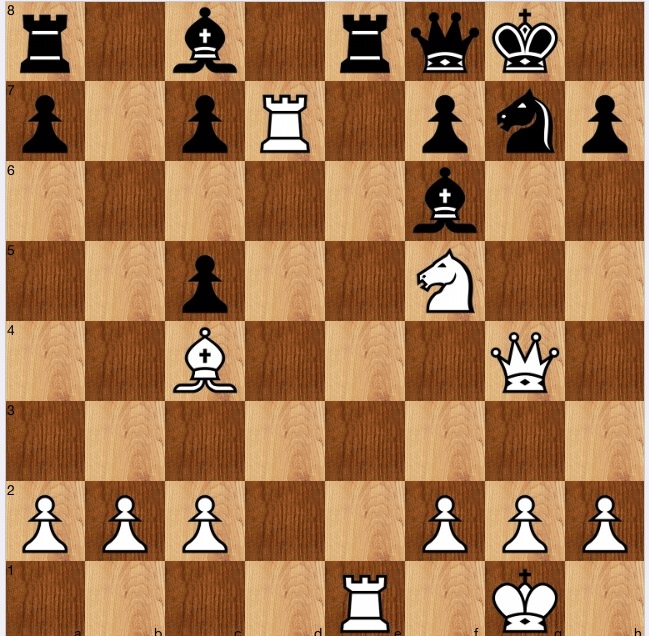
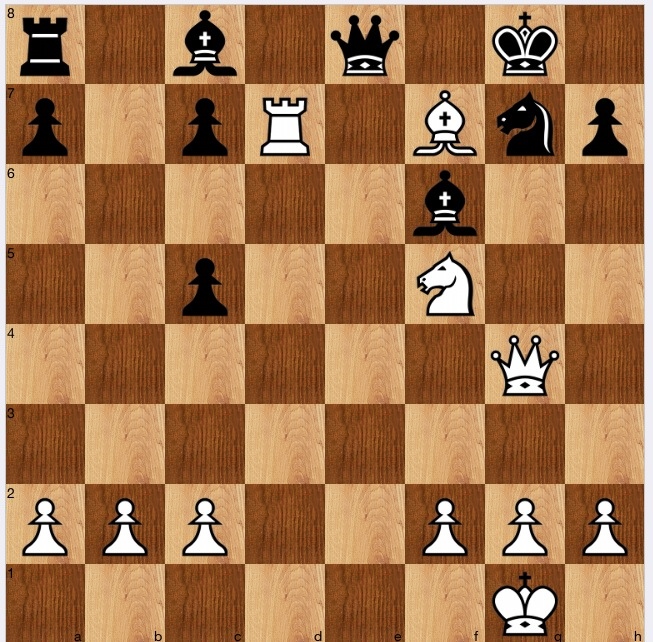
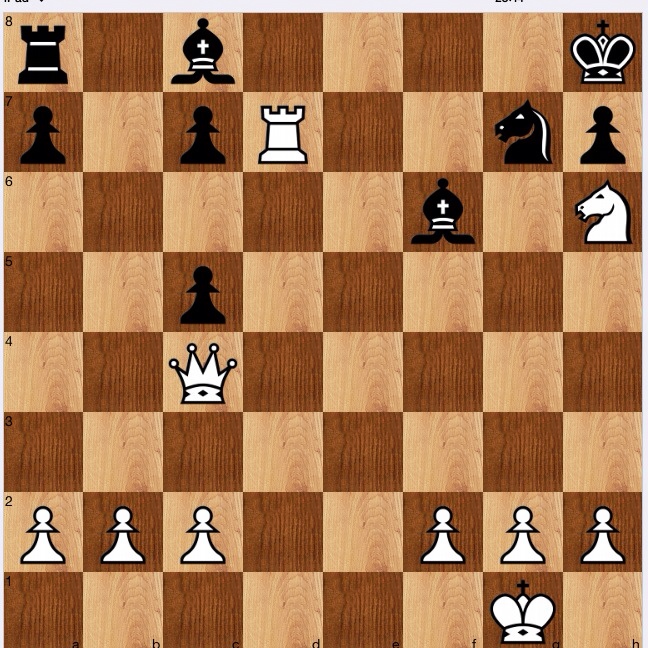
The toughest puzzle for a while, or at least I think it is.
To end with a smile, in the final position, there is a smothered mate after Bd7 Qg8+ Rg8 Nf7: it is time to give up chess when this doesn't result in a smile, playing either colour.
 Posted with Blogsy
 allanbeardsworth