Test your chess: Reitstein problem 225
Black to play and win
Reitstein says that on this correspondence game black announced a mate in 9 (with the rider that there were ways white could throw ruinous material away to drag the game on). It is actually quite a nice exercise to find the main lines.
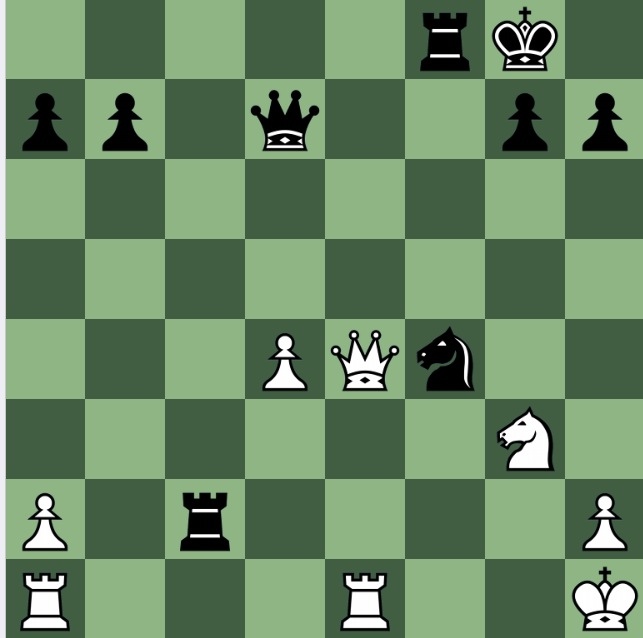
GW McElhinny v J Martins 1957
Solution
The first moves are obvious: 1…Rh2+ 2 Kg1[] (2 Kg1 Qh3 is trivial) Qg3+
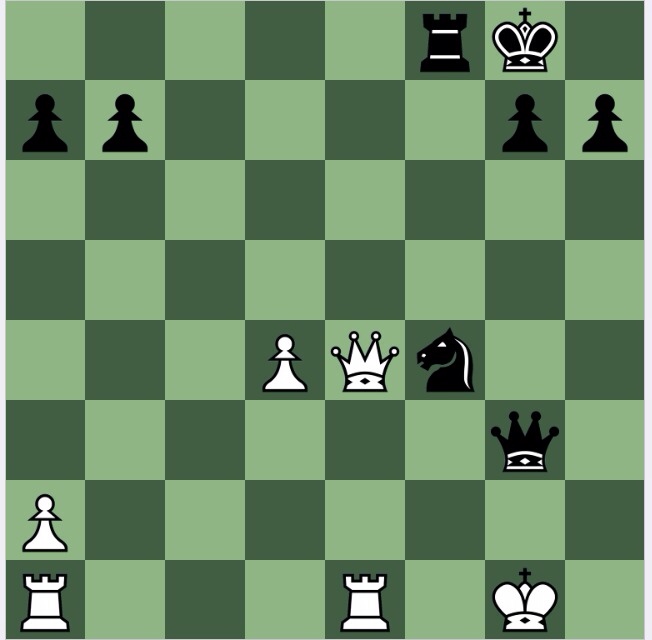
White has two moves now.
3 Kf1
I found a very pretty mate here, and was pleased I could see such a long line. (Alas, Stockfish prefers a different move, but confirms mine line wins)
3…Nd3+ 4 Ke2[] Rf2+ 5 Kd1[] Nb2+ 6 Kc1[] Qc3+ 7 Kb1[]
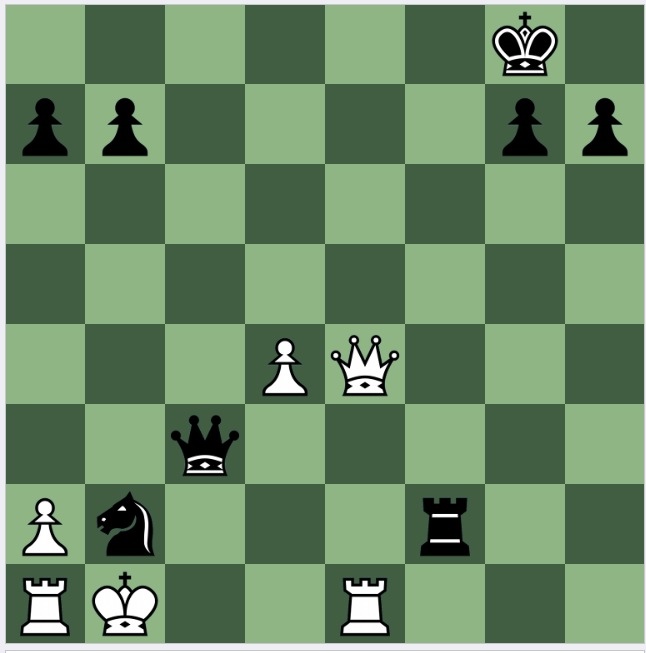
Here, I saw ( from the original position, quite hard, but white's moves are forced, so it is a single branch) 7…Qd3+! 8 Qd3 (8 Kc1 holds out longer, but the same thing happens: 8…Qc4+! 9 Kb1 Nd3 10 Qe8+ Rf8 11 Qe6+ Qe6 12 Re6 Rf2 and mates, as in the main line: I don't get full marks in my analysis, since I didn't see 8…Qc4+!, and thought 8…Rc2+ 9 Kb1[] Rd2+[] won, but it doesn't since 10 Kc1[] biffs the Rd2, which will be LPDO after 10…Qe4 11 Re4; in a game. Black can win by 10… Rd1+ 11 Rd1 Qe4 12 Kb2, but it will be a long game, with RRN v Q and pawns. Note that 11 Kb2 loses to a nice mate 11..Rd2+ and mates: with the Nb2 gone, Qb2 mate ensues.
However, 3…Nd5+! is better: for the simple reason that when the king lands on e2, a Nc3+ fork wins the queen.
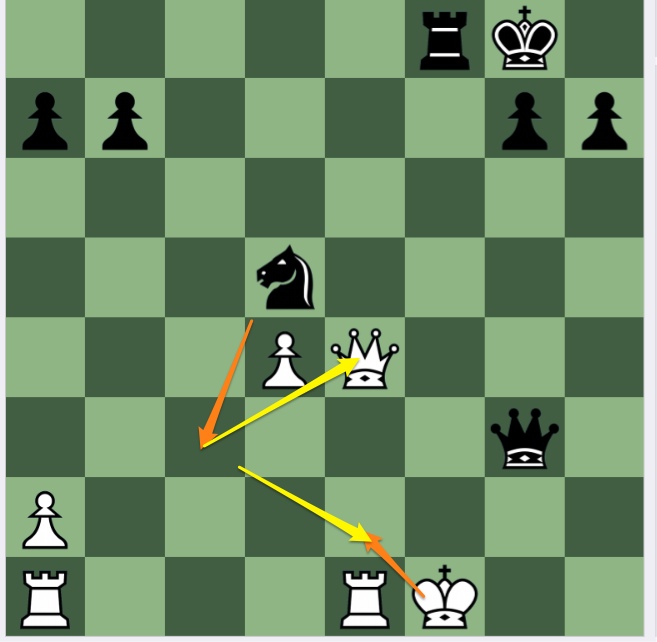
3 Kh1

The main line, and optically harder. Eventually I saw 3…Qh4+ 4 Kg1 Nh3+
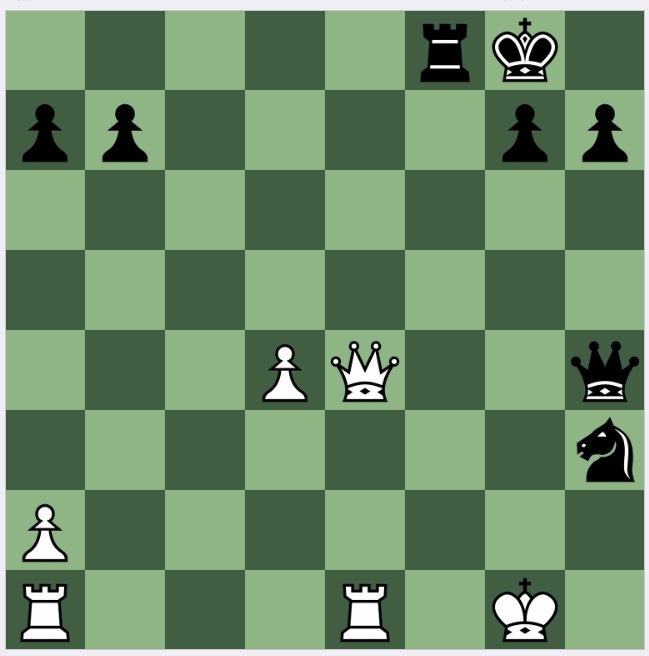
Noting that 5 Kh2 is met by the entry of the rook, 5…Rf2+, when mate (this is the mate in nine 7 Qg2 Nf4+, 8…Rg2+, 9…Qh1 mate) follows by Qh2 (6 Kh1 Nf4+ and 7…Qh2 mate), and that 5 Kh1 loses to 5…Nf2+ forking the king and queen.
So, overall, I don't really see this puzzle as a mate in nine one, but more as an example in calculation.
 Posted with Blogsy
 allanbeardsworth
Reblogged this on Chess Musings.