Another puzzle from Dragoslav Andric’s 1981 book “Matni Udar”.
White to play and mate Black
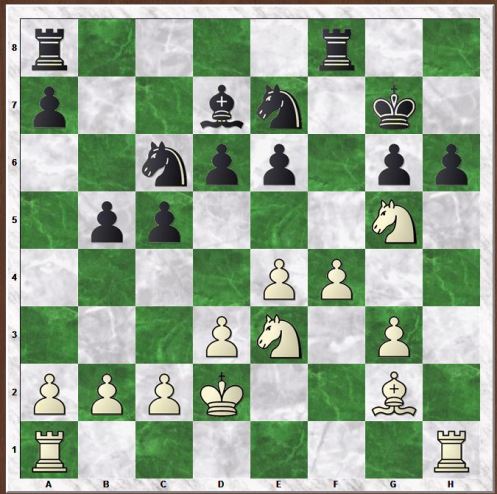
Jaselette v Kumur, correspondence 1966
Solution
1 Rh6! has to be played, and it isn’t too hard, since the line is fairly linear, to calculate the mate. 1…Kh6[] 2 Rh1+ Kg7[] 3 Rh7+
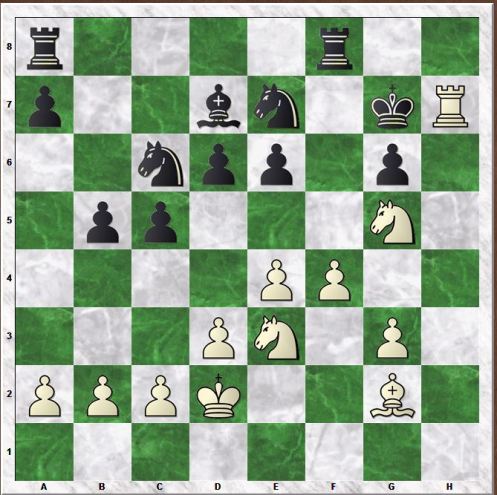
3…Kf6? 4 Ng4 mate, so 3…Kg8[] 4 Ng4 and White mates.
FEN
r4r2/p2bn1k1/2npp1pp/1pp3N1/4PP2/3PN1P1/PPPK2B1/R6R w – – 0 1
Another puzzle from Dragoslav Andric’s 1981 book “Matni Udar”.
White to play and mate Black
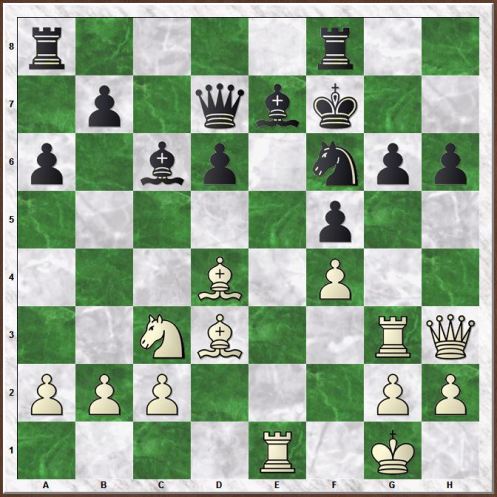
Suta v Kotoman, correspondence 1966
Solution
1 Rg6! has to be the move (though Komodo says 1 Qh6 is also +-) 1…Kg6[] 2 Re7! Qe7
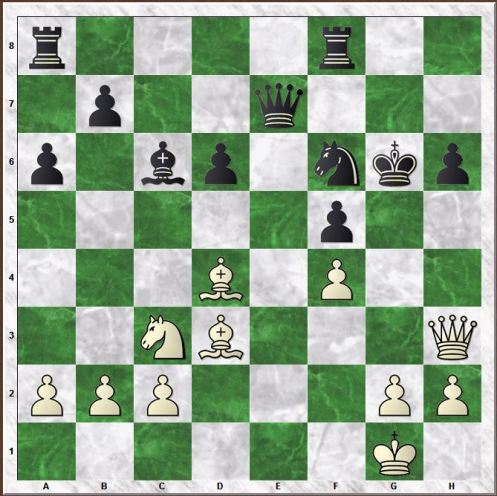
3 Qf5+ Kg7 4 Qh7mate is an optically hard, but pleasing, mate.]
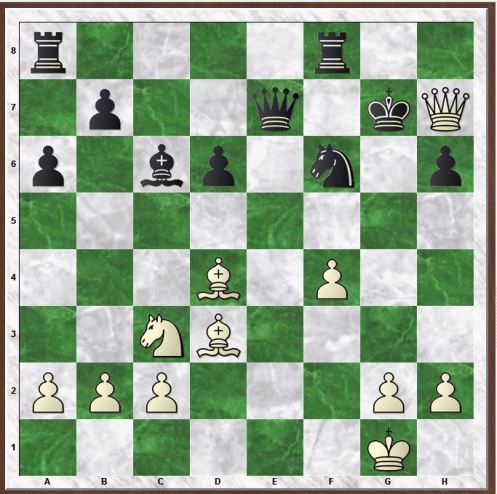
Black has other defences, but White is winning easily against all.
FEN
r4r2/1p1qbk2/p1bp1npp/5p2/3B1P2/2NB2RQ/PPP3PP/4R1K1 w – – 0 1
Another puzzle from Dragoslav Andric’s 1981 book “Matni Udar”.
White to play and mate Black
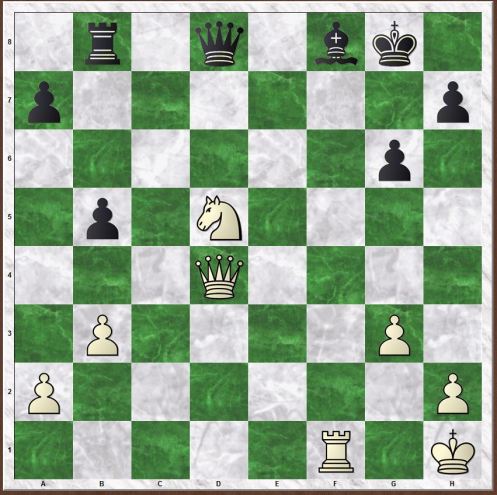
Bronstein v unknown, simul 1966
Solution
The hardest ones for days. I did the previous seven (there are eight per page, and I photocopied the page) on a walk in the Lake District, but, try as I might, I couldn’t solve this one in my head.
I had to put the pieces on the board, and think, until, suddenly!!, the solution came to me, and very nice it is.
- Nf6+ Kh8 2 Ne8+ Kg8 is where I often got to in my thoughts:
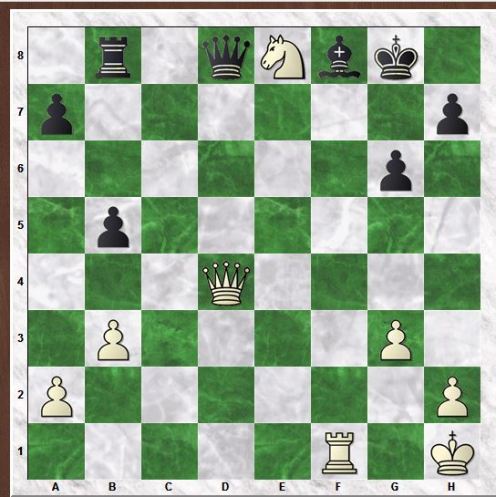
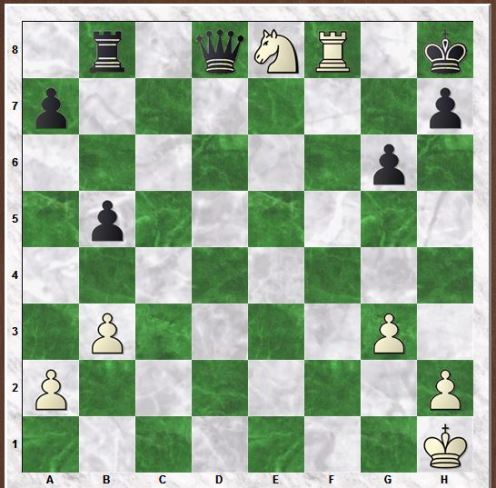
Only after stuggling did 3Qh8+!! occur to me, and it is mate after 3…Kh8[] 4Rf8 mate.
FEN
1r1q1bk1/p6p/6p1/1p1N4/3Q4/1P4P1/P6P/5R1K w – – 0 1
Another puzzle from Dragoslav Andric’s 1981 book “Matni Udar”.
White to play and mate Black
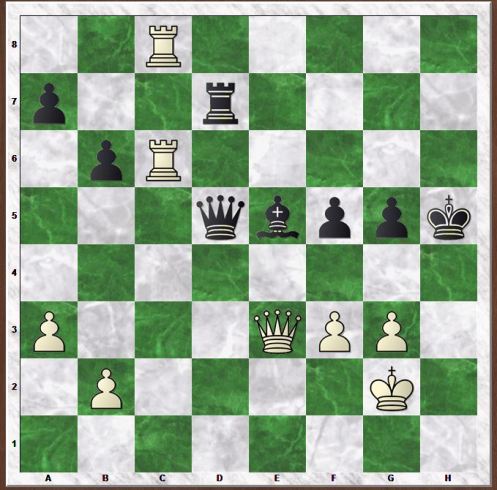
Schultz v Runtermund, Frankfurt 1966
Solution
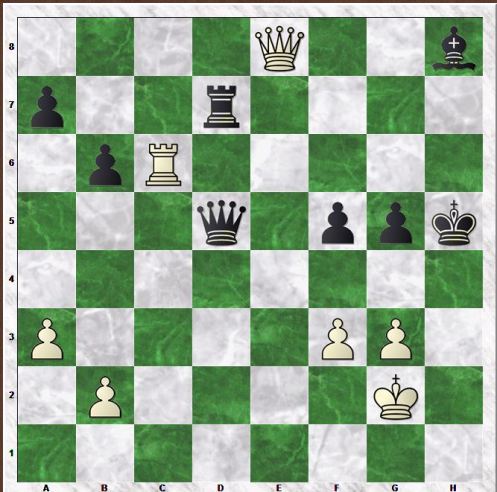

Komodo, by the way, doesn’t have a sense of humour or aesthetic taste: he doesn’t like 5 Qe1, preferring 5g4+, mating one move earlier.
FEN
“2R5/p2r4/1pR5/3qbppk/8/P3QPP1/1P4K1/8 w – -“
Another puzzle from Dragoslav Andric’s 1981 book “Matni Udar”.
White to play and mate Black

Kinnmark v Olivera, Havana 1966
Solution
1Bb6! to deflect the black queen from looking at f7. Black can even continue the game a piece down, or if 1…Qb6 then 2 Nh6+ mates. The nicest line is 2…Kh8 3 Nf7+ Kg8[] 4 Ne5+! with the idea of 5 Ng6 mate.

Perhaps Black’s best line is 1…Ng5, forcing 2 Qe3, when 2….Nh3+ at least picks up a pawn for Black: but +- anyway.
FEN
“3rrbk1/2q2ppn/p2p3p/np2pN2/4P1P1/1BP1BQ1P/PP3P2/R3R1K1 w – -“
Another puzzle from Dragoslav Andric’s 1981 book “Matni Udar”.
White to play and mate Black
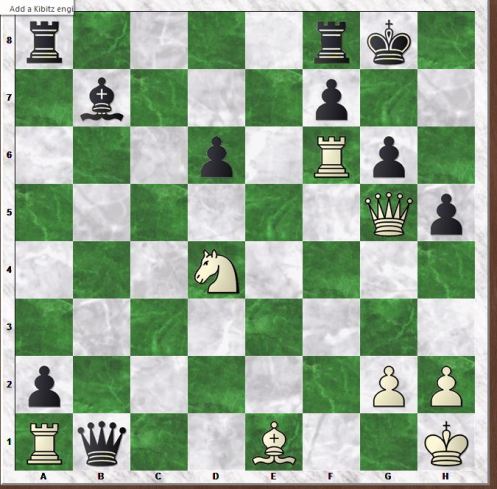
Minić v Pavlov, Bucharest 1966
Solution
1 Nf5! threatens no so much Qh6-g7 but 2 Rg6+! And since 1…Be4 doesn’t prevent it, Black has nothing else but taking the knight, losing the queen, or playing 1…Bg2+ for some spite checks.
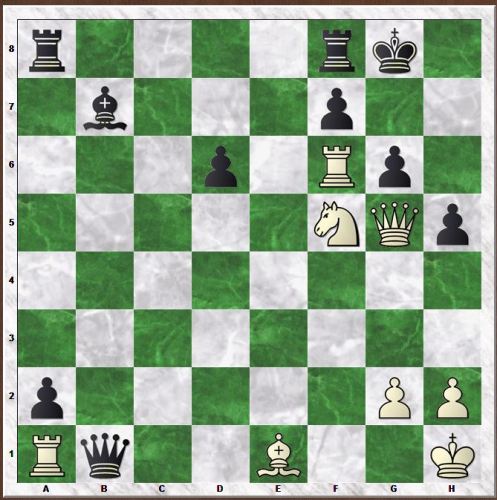
FEN
“r4rk1/1b3p2/3p1Rp1/6Qp/3N4/8/p5PP/Rq2B2K w – -“
Another puzzle from Dragoslav Andric’s 1981 book “Matni Udar”.
White to play and mate Black
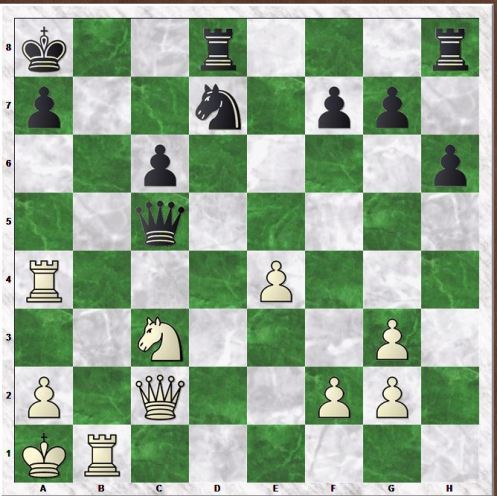
Böök v Halfanarsson, Reykjavik 1966
Solution
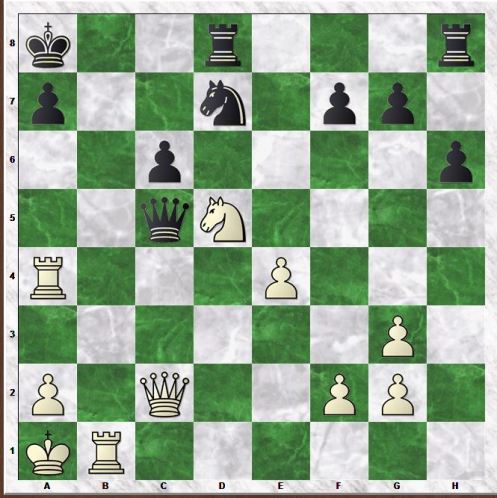
FEN
“k2r3r/p2n1pp1/2p4p/2q5/R3P3/2N3P1/P1Q2PP1/KR6 w – -“
Another puzzle from Dragoslav Andric’s 1981 book “Matni Udar”.
White to play and win
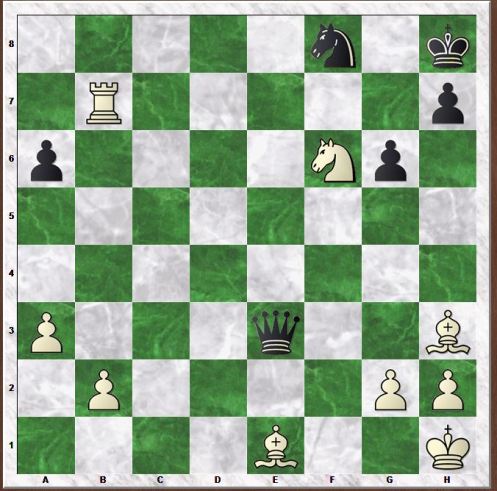
Gufeld v Gipslis, Tbilisi 1966
Solution
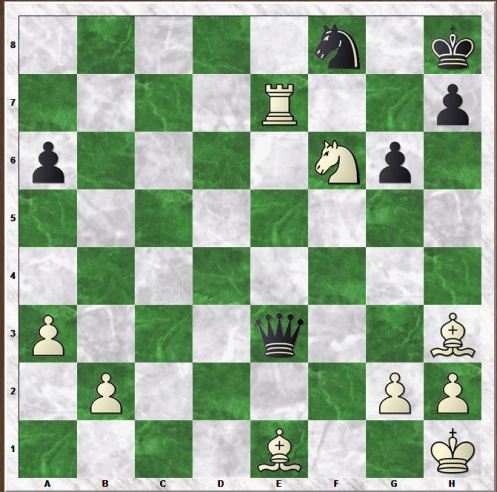
FEN
5n1k/1R5p/p4Np1/8/8/P3q2B/1P4PP/4B2K
Another puzzle from Dragoslav Andric’s 1981 book “Matni Udar”.
White to play and mate Black
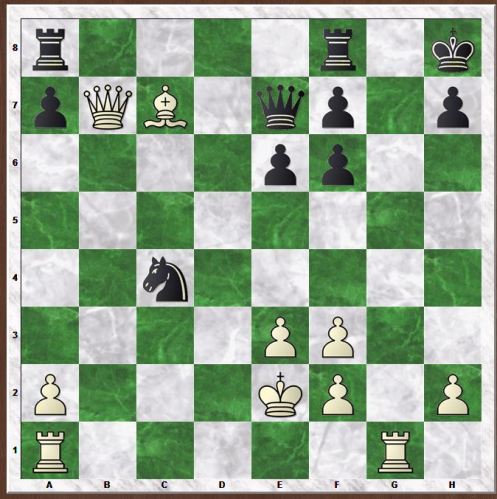
Brilla-Banflavi v Markussi, correspondence 1965-66
Solution
1Be5! exploits the LPDO Qe7, and if 1…Qd8, not 2 Qa8? which is the book’s suggestion, because of 2…Qd2+ with perpetual (the King can’t go to g2, else the queen can be captured) but 2Rad1 and White is better.
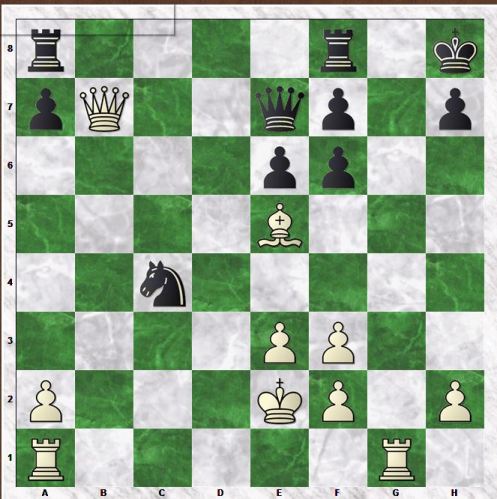
FEN
r4r1k/pQB1qp1p/4pp2/8/2n5/4PP2/P3KP1P/R5R1 w – – 0 1
Another puzzle from Dragoslav Andric’s 1981 book “Matni Udar”.
Black to play and mate White
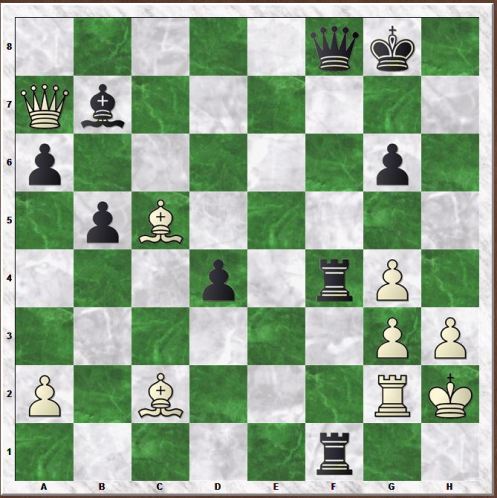
Hodjakov v Martinov, USSR 1965
Solution
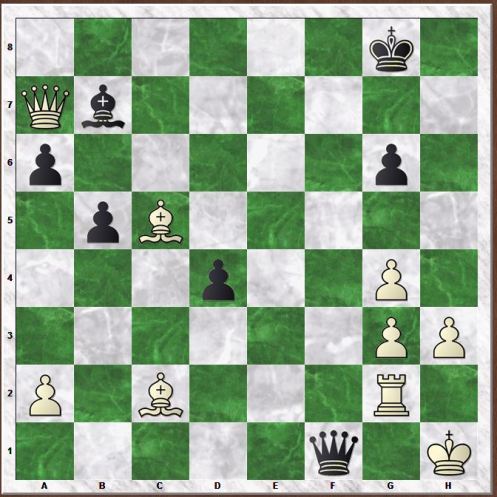
FEN
[FEN “5qk1/Qb6/p5p1/1pB5/3p1rP1/6PP/P1B3RK/5r2 b – -“]
 allanbeardsworth