Another puzzle from Dragoslav Andric’s 1981 book “Matni Udar”.
White to play and mate Black
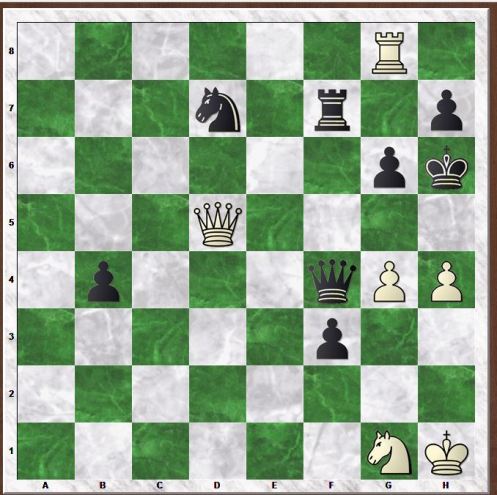
Damant v Comblehouse, Bognor Regis 1964
Solution
Another rest day: 1 Qh5+ and 2 g5+ etc is “standard”.
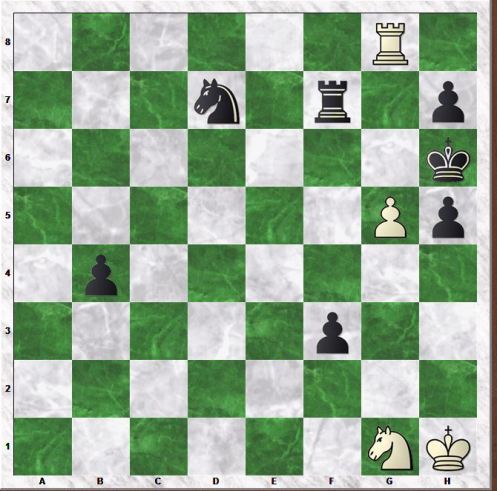
FEN
6R1/3n1r1p/6pk/3Q4/1p3qPP/5p2/8/6NK w – – 0 1
Another puzzle from Dragoslav Andric’s 1981 book “Matni Udar”.
Black to play and mate White
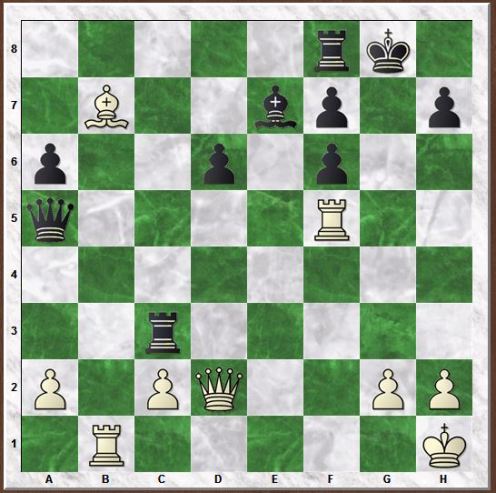
Maric v Gligoric, Belgrade 1962
Solution
Simple today: 1…Rb3! and Black wins: the LPDO Rf5 drops off after the rooks are exchanged, because of the back rank mate threat.
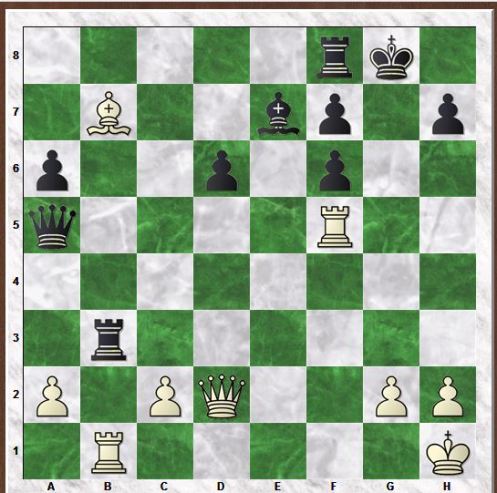
FEN
5rk1/1B2bp1p/p2p1p2/q4R2/8/2r5/P1PQ2PP/1R5K b – – 0 20
Another puzzle from Dragoslav Andric’s 1981 book “Matni Udar”.
Black to play and mate White
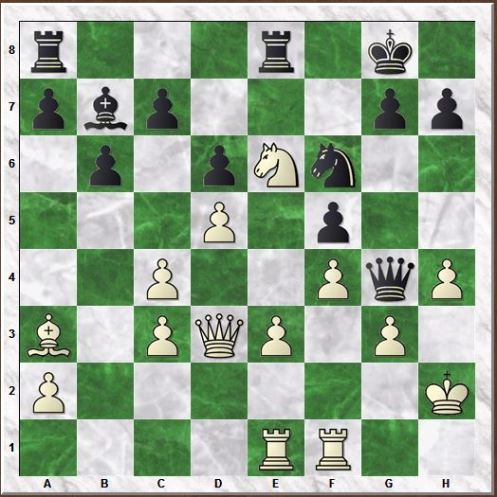
Malcanek v Teschner, Reggio Emilia 6/1/1965
Solution
I couldn’t decide between 1…Re6 or 1…Ne4: my engine can’t either: both win. In the game, Black played 1…Re6 2 de[] Ne4 and after 3 Rg1 Ng3! and White’s house collapses.
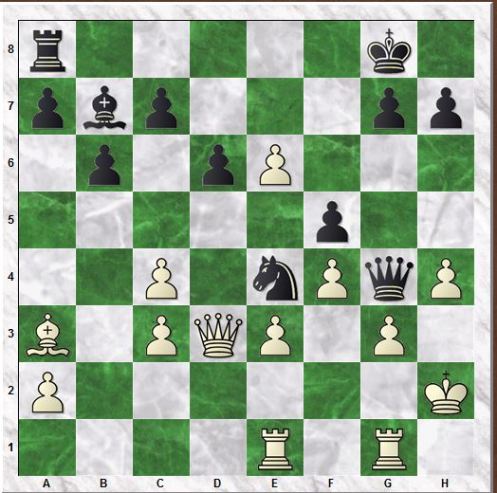
FEN
r3r1k1/pbp3pp/1p1pNn2/3P1p2/2P2PqP/B1PQP1P1/P6K/4RR2 b – – 0 23
Another puzzle from Dragoslav Andric’s 1981 book “Matni Udar”.
White to play and mate Black (cooked: try to see the defence)
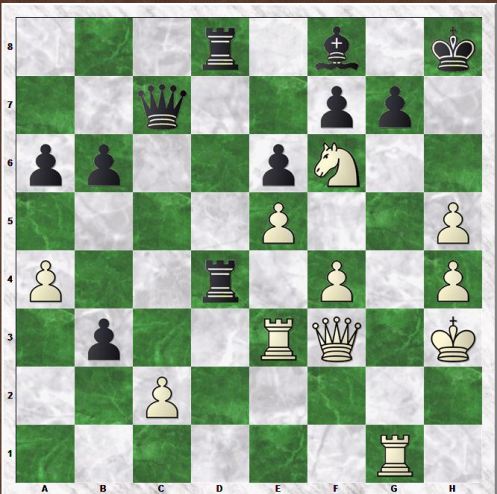
Sergijevski v Krimer, Riga 1964
Solution
The first cooked position in the book, if I recall correctly.
1 Qg4 is given as the solution, but 1..Qc2 defends- and wins: 2 Qg5 Qf5 is check, and so Black is safe.
I tried 1 h6, met with by 1..g6, 2 Qh5, and also couldn’t break 2…Qc2: eventually I gave up, and checked with Komodo.
FEN
3r1b1k/2q2pp1/pp2pN2/4P2P/P2r1P1P/1p2RQ1K/2P5/6R1 w – – 0 1
Another puzzle from Dragoslav Andric’s 1981 book “Matni Udar”.
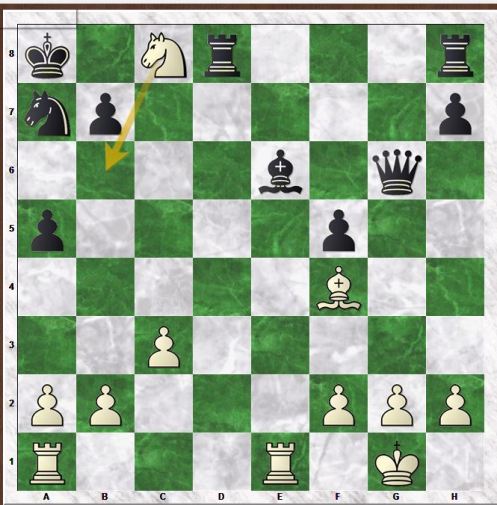
White to play and mate Black
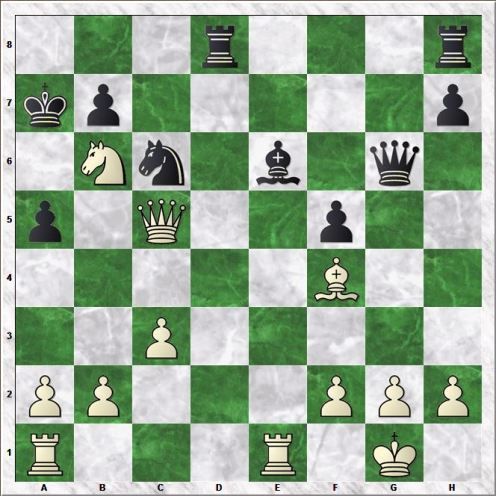
Milotzki v Hoschel, Porz 1964
Solution
A rest day, today: 1 Nc8+ and smothered mate after 2 Qa7+ and 3 Nb6 mate.
FEN
3r3r/kp5p/1Nn1b1q1/p1Q2p2/5B2/2P5/PP3PPP/R3R1K1 w – – 0 0
Another puzzle from Dragoslav Andric’s 1981 book “Matni Udar”.
Black to play and mate White
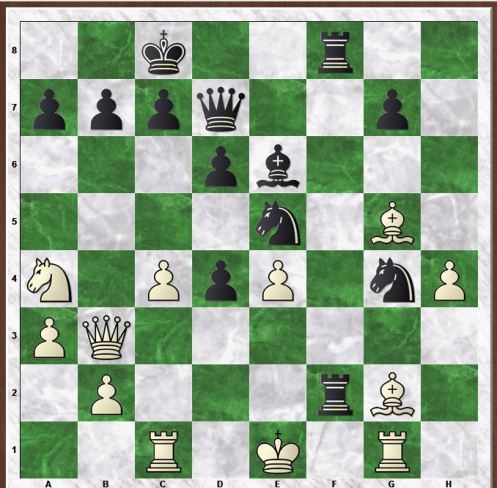
Zebenko v Kofman, SSSR 1964
Solution
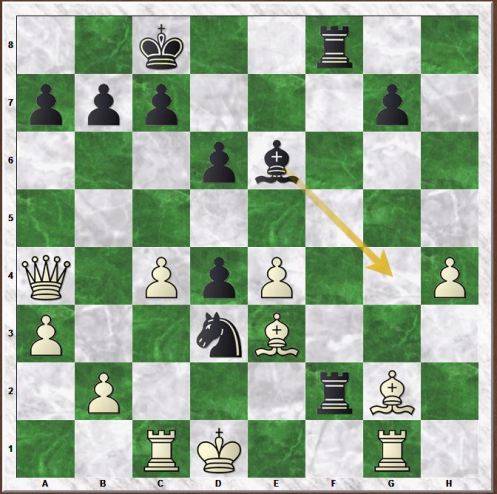
1..Qa4!! is the move you have to look at, it being a problem book (though 1…Qf7 looks enormous too, hitting c4 as well as threatening Rg2)
2 Qa4 Nd3+ 3 Kd1[] and now the clearance 3…Ne3+! makes way for 4…Bg4+ 0-1.
FEN
2k2r2/pppq2p1/3pb3/4n1B1/N1PpP1nP/PQ6/1P3rB1/2R1K1R1 b – – 0 1
Another puzzle from Dragoslav Andric’s 1981 book “Matni Udar”.
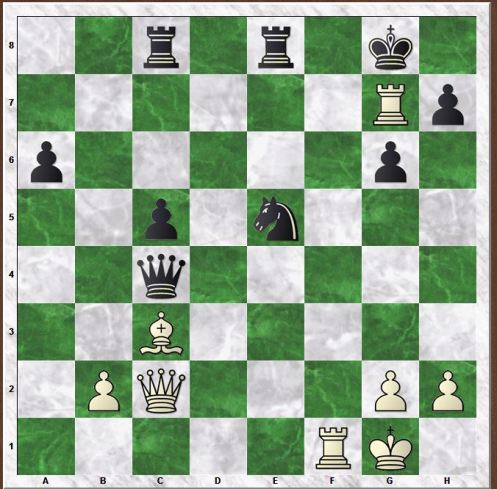
White to play and mate Black
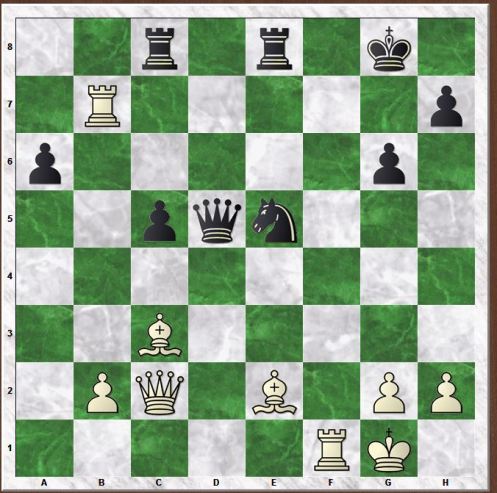
Taimanov v unknown, simul 1964
Solution
1Bc4! is obvious, and after the forced 1…Qc4, 2 Rg7+ and 3 Be5!! set up winning discoveries.
Or, one of my readers (Andy Reeve, of Stockport chess club) has pointed out that 2 Be5! is even better, winning the queen or mating.
FEN
2r1r1k1/1R5p/p5p1/2pqn3/8/2B5/1PQ1B1PP/5RK1 w – – 0 1
Another puzzle from Dragoslav Andric’s 1981 book “Matni Udar”.
Black to play and mate White
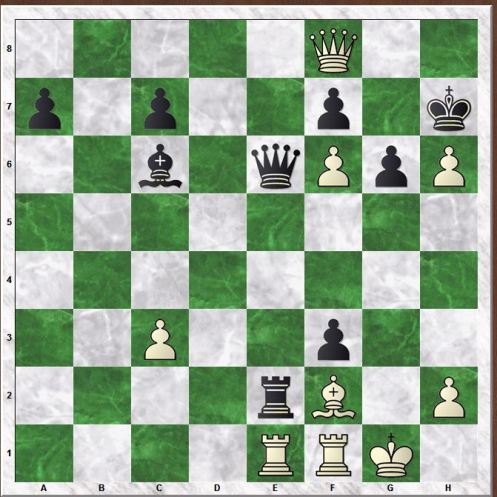
Swenkreis v Eisinger, Karlsruhe, 1964
Solution
Not too hard: 1…Qg4+ 2 Bg3[] Rg2+ 3 Kh1
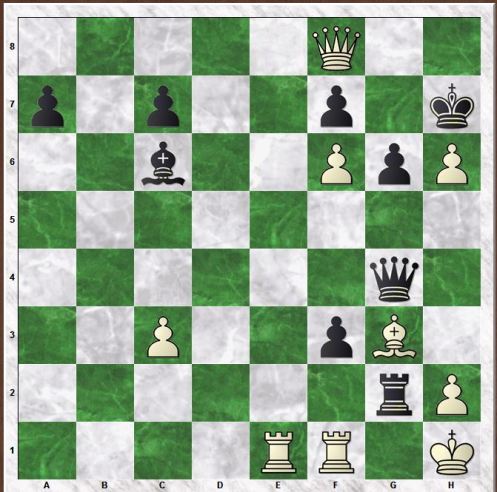
and 3…Rh2+! has to be looked at, and wins. 4 Kh2 Qh5+ 5 Kg1 f2+ etc.
FEN
5Q2/p1p2p1k/2b1qPpP/8/8/2P2p2/4rB1P/4RRK1 b – – 0 1
Another puzzle from Dragoslav Andric’s 1981 book “Matni Udar”.
White to play and mate Black
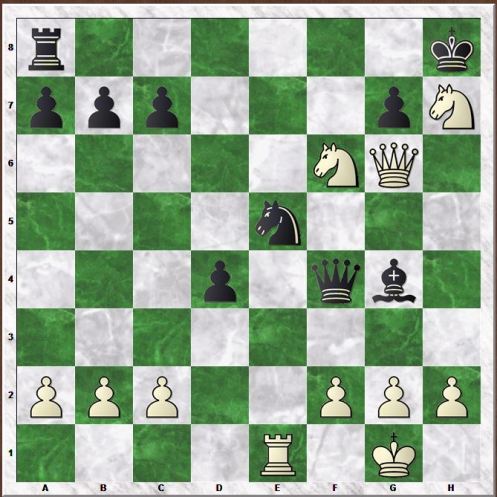
Morse v Bashian, correspondence 1963/64
Solution
I defy anyone to find the main line: I couldn’t.
1 Ng5! Qf5! was the defence I couldn’t break, except by winning the rook ending after exchanging everything.
But White has considerably better:
White to play and win
Try to solve this:

2 Qe8+!!
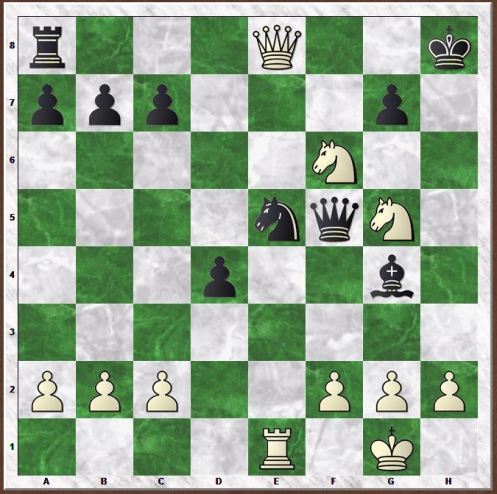
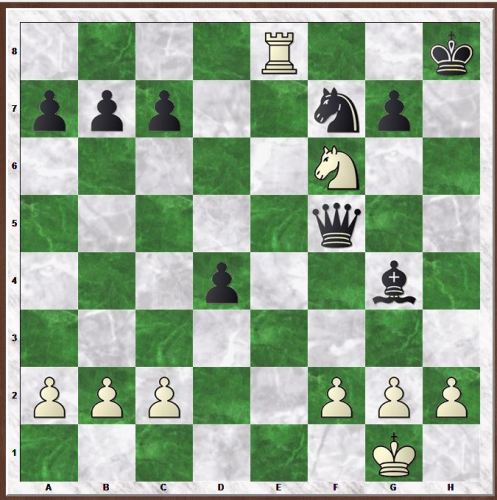
a wonderful magnet move, drawing the rook to where it can be captured: 2..Re8[] 3 Nf7+ Nf7[] 4 Re8 mate.
—
Instead, since I didn’t see 2 Qe8+!!, I played 1 Nf8! which also wins. After 1…Qf5 2 Re5 +-; so 1…Bf5 2 Qh5+ Qh6[] 3 Qh6+ gh 4 Re5 Rf8 5 Rf5 and White is a piece up. But nowhere near as pretty as the main line.
FEN
r6k/ppp3pN/5NQ1/4n3/3p1qb1/8/PPP2PPP/4R1K1 w – – 0 1
Another puzzle from Dragoslav Andric’s 1981 book “Matni Udar”.
White to play and mate Black
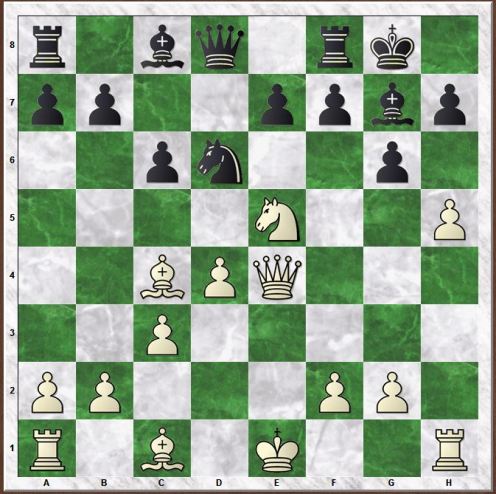
Biljonov v Kudrjasov, Moscow 1963
Solution
A nice puzzle today, but of the type I’ve seen before: it is obvious that the Q must be sacrificed: the task is to analyse why it works.
So, 1 hg Ne4 2 Bf7+!
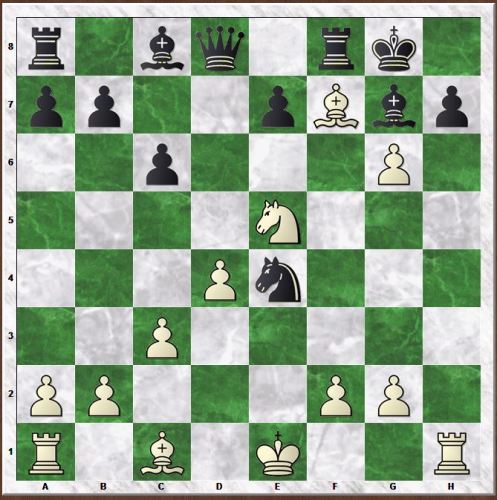
2..Rf7 3 gh+
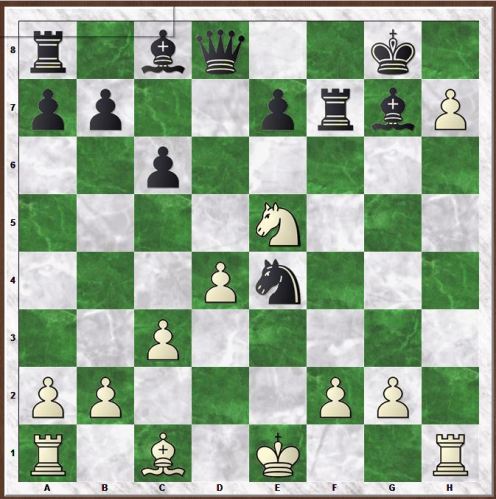
3…Kf8 and now the pretty 4 Bh6 wins.
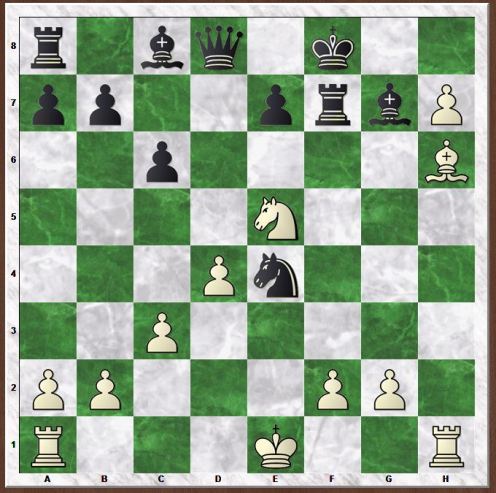
(4 h8(Q)+ peters out: White is only slightly better in that line).
FEN
r1bq1rk1/pp2ppbp/2pn2p1/4N2P/2BPQ3/2P5/PP3PP1/R1B1K2R w KQ – 0 1
 allanbeardsworth