Another puzzle from Dragoslav Andric’s 1981 book “Matni Udar”.
Black to play and mate White
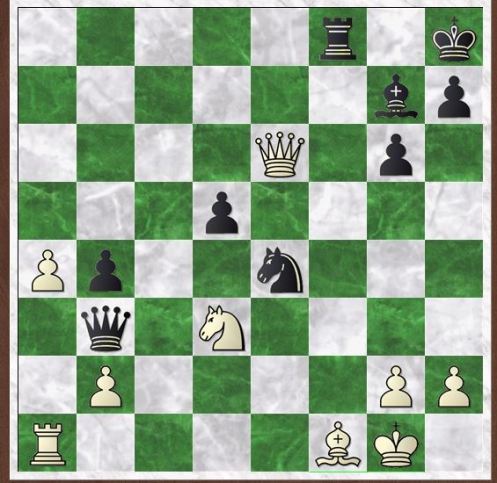
Cerendagva v Purevžav, 1949
Solution
Some form of back rent mate is clearly on the cards (in Purdy terms, White’s King is in a net) so…1…Bd4+! 2 Kh1
and now what?
It doesn’t take too long to see 2…Qd3
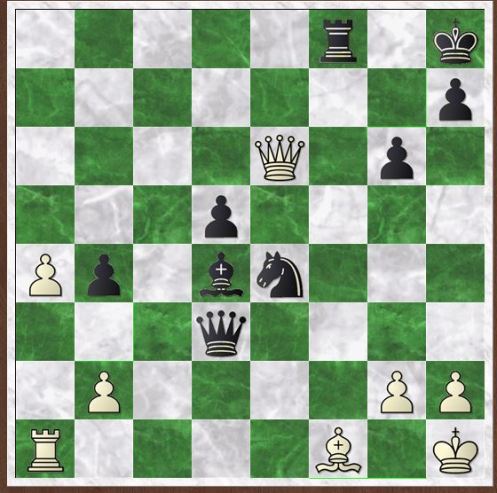
and after 3 Bd3 several checks: Nf2+ Nd3+ Nf2+ and finally Nd1+! blocks White’s rook’s sight of f1, so it mate next move.
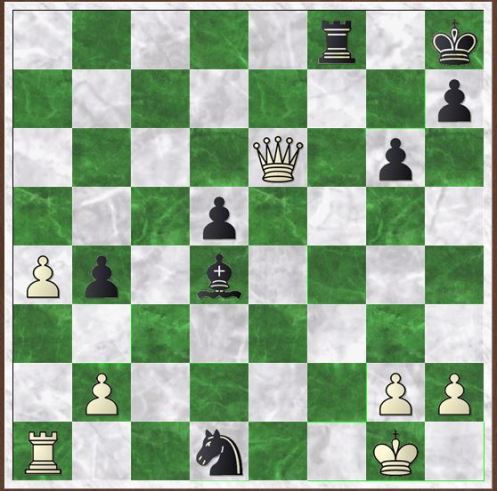
FEN
5r1k/6bp/4Q1p1/3p4/Pp2n3/1q1N4/1P4PP/R4BK1 b – – 0 1
Another puzzle from Dragoslav Andric’s 1981 book “Matni Udar”.
Black to play and win
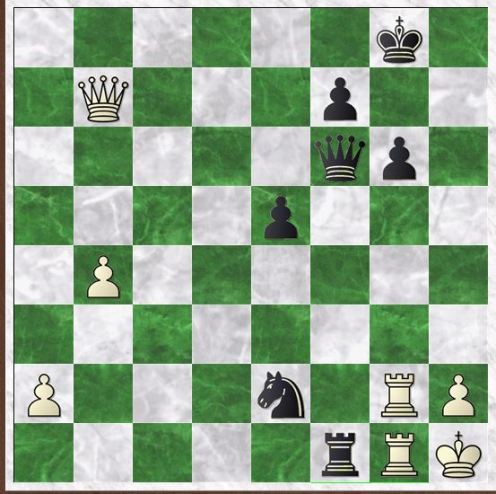
Prins v Sultanbejev, Hastings 1949
(I am assuming Black was Sultan Khan; but can’t find the game in Megabase; so have left the spelling as in the puzzle book)
Solution
Once I had decided who was to play (the book does not say so, leaving it to the reader to work out), it wasn’t too hard: 1….Qf2! breaks White’s defences.
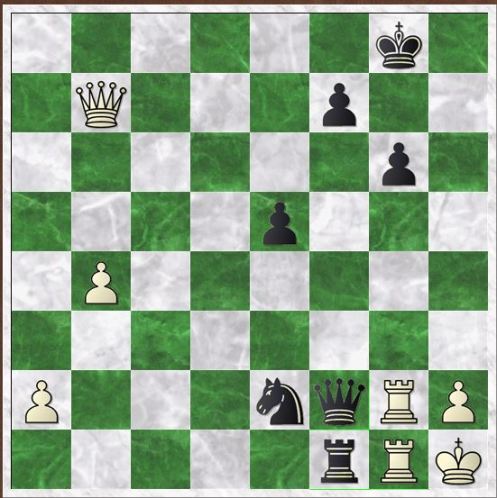
However, Fritz prefers 1….Ng1!: giving it as -3 compared to -2 for 1…Qf2, giving White the ‘save’ 2 Rg6+: but he is still lost.
FEN
6k1/1Q3p2/5qp1/4p3/1P6/8/P3n1RP/5rRK b – – 0 1
Another puzzle from Dragoslav Andric’s 1981 book “Matni Udar”.
White to play and mate Black
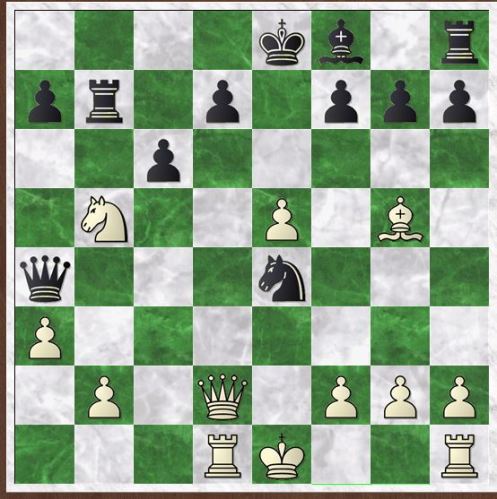
Ostropoljski v Ivanovski, SSSR 1949
Solution
Fairly standard: the aim, in Purdy terms, is to effect the jump-check Qd8 or Rd8.
So, 1 Qd7+! Rd7[] 2 Nc7+
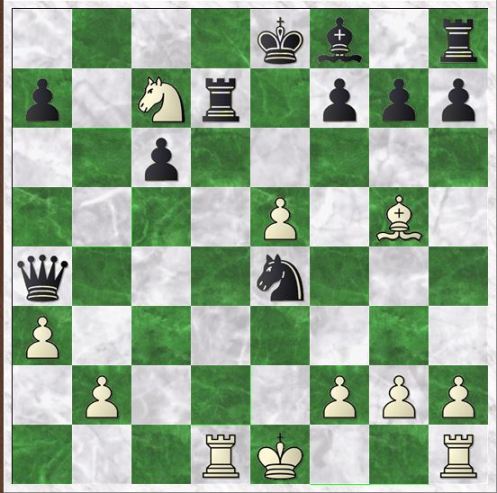
2…. Rc7[] 3 Rd8 mate.
FEN
4kb1r/pr1p1ppp/2p5/1N2P1B1/q3n3/P7/1P1Q1PPP/3RK2R w Kk – 0 1
Another puzzle from Dragoslav Andric’s 1981 book “Matni Udar”.
Black to play and mate White
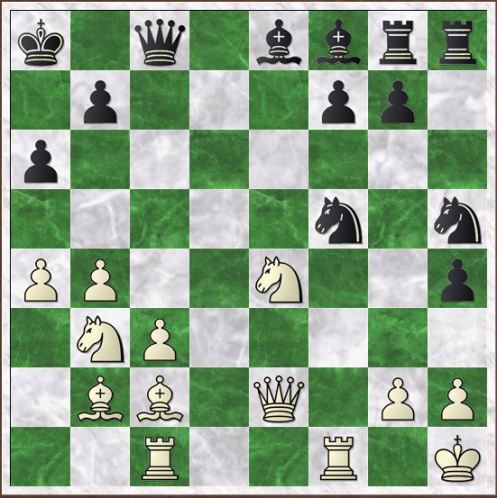
Unknown v Mason 1948
Solution
So, pretty, this looks almost ‘too good to be true’, since five of Black’s pieces (six, including his king) are on the back rank, and yet there is a forced mate.
1…Bb5! clears the back rank for the Q to reach h8 once the usual double rook sac has cleared the lines, here with the addition of the rank clearing Bc5+.
White can grovel, and play 2 Qf3, but if he then plays (after 2…Bf1) 3 Rf1, the same line follows.
So, 1…Bb5! 2 ab Nhg3+ 3 hg (3 hg drops the LPDO Qe2) hg+ 4 Kg1 Bc5+,
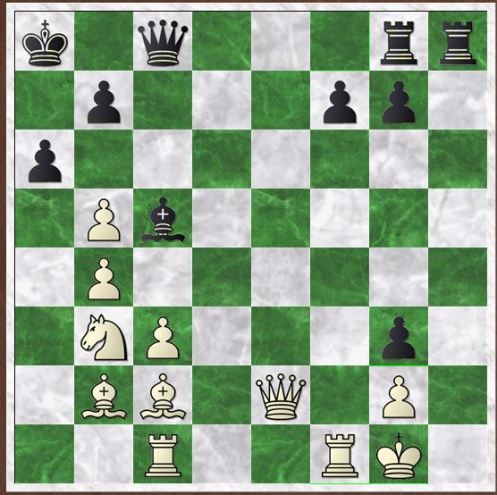
5…Rh1+, 6 Rh8+, 7…Rh1+ 8…Qh1+ and 9….Qh2 mate.
FEN
k1q1bbrr/1p3pp1/p7/5n1n/PP2N2p/1NP5/1BB1Q1PP/2R2R1K b – – 0 1
Another puzzle from Dragoslav Andric’s 1981 book “Matni Udar”.
White to play and mate Black

Crustoph v Muth, Hamburg 1948
Solution
Examine all biffs: 1 Bc6+

and if 1…Kd8. 2 Qd7mate, so 1…Qc6[] when 2 Rf8+!

2…Kf8 (2…Rf8 3 Qe7 mate) 3 Qe7+ (3 Be7+ is probably a move or two faster, but Qe7+was the line I worked out when solving the puzzle) Kg8
And now they standard mating moves 4 Qe6+ Kf8[] 5 Be7+ Ke8 6 Bf6+ Kf8[] 7 Qe7+

and 8 Qg7 mate.
FEN
4kb1r/4n1pp/3pQ3/1p4B1/2q5/5B2/1PP3PP/5R1K w k – 0 1
Another puzzle from Dragoslav Andric’s 1981 book “Matni Udar”.
Black to play and mate White
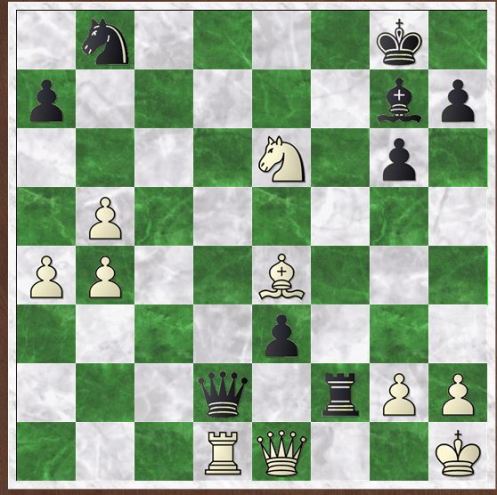
Borisenko v Aramanović, Kujbišev 1948
Solution
1…e2! is a standard double attack and White is overwhelmed: 0-1.
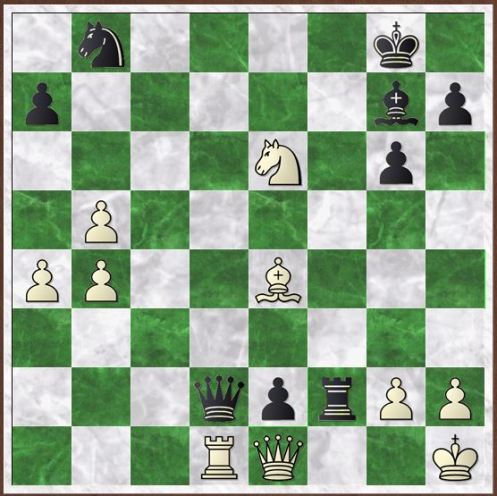
1…Qd1 2 Qd1 e2 also works, and was my first thought, since after 3 Qd8+ Bf8 White has no more checks other than the desperado 4 Qf8+ after which Black’s pawn promotes. But 1…e2 is prettier.
FEN
1n4k1/p5bp/4N1p1/1P6/PP2B3/4p3/3q1rPP/3RQ2K b – – 0 1
Another puzzle from Dragoslav Andric’s 1981 book “Matni Udar”.
Black to play and mate White
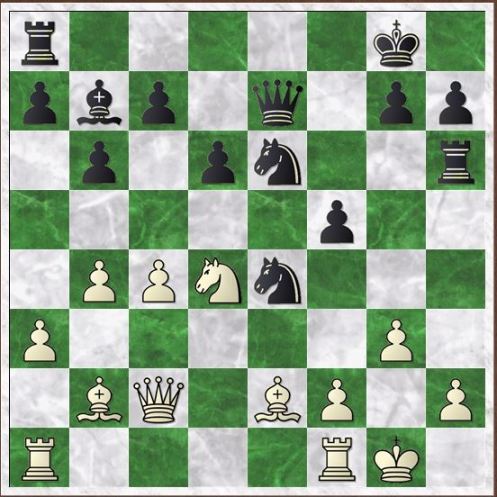
Steckl v Milner-Barry, Vienna 1948
Solution
The first move is ‘obvious’, given that this is a position in a puzzle book: 1…Qh4. (However, Fritz prefers exchanging on d4 first, in the sense that -18 (whatever it means) is better than -9)
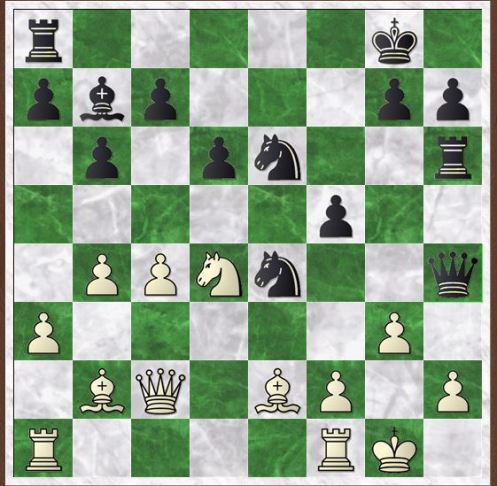
The easy point is 2 gh Rg6+ and 3…Nf2 mate.
Harder though is the move played in the game: 2 Nf3. This defence is why 1…Nd4 is probably better.
In a game, I would quickly get out of my depth of vision, and have to judge if my intuition trusted the Q sac: hopefully it would, but it might not be; but it being a daily puzzle with no pressure and ample time, it is easier: 2…N4g5!
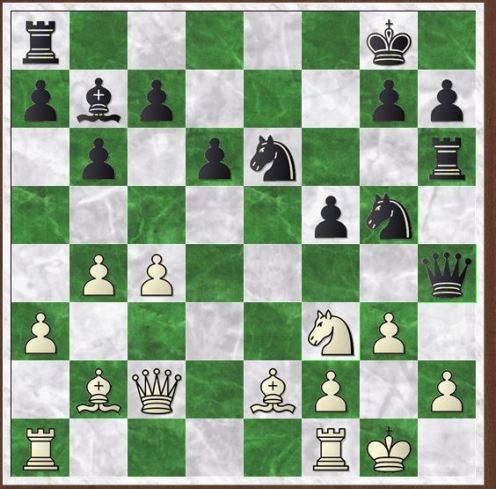
3 gh (3 Nh4?? Nh3 mate) Nf3+
4 Kg2! (4 Bf3 Bf3 and Rg6+)
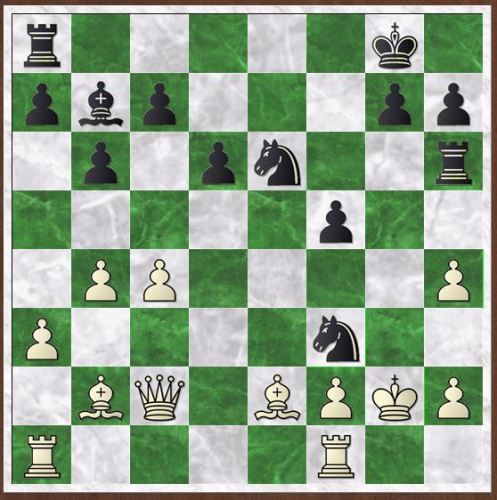
4…Ne1+ 5 Kg3 Rg6+ 6 Kh3 Bg2 mate.
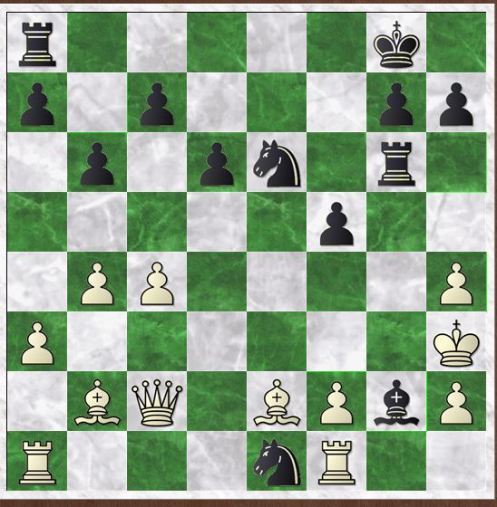
Very hard, especially since White has the 4 Kg2 defence.
FEN
r5k1/pbp1q1pp/1p1pn2r/5p2/1PPNn3/P5P1/1BQ1BP1P/R4RK1 b – – 0 1
Another puzzle from Dragoslav Andric’s 1981 book “Matni Udar”.
White to play and mate Black
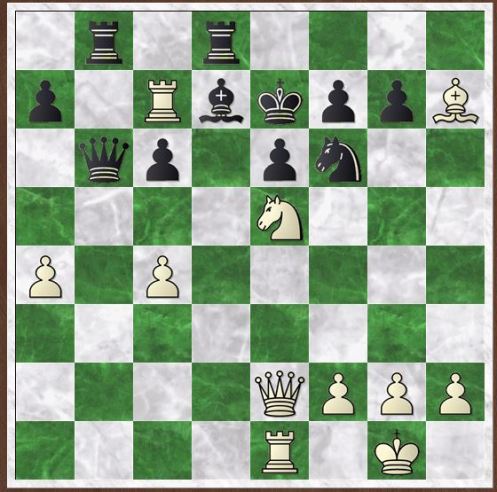
Horvat v Udovčić, Zagreb 1948
Solution
Examine all biffs quickly leads to 1 Ng6+!, and once it is noted that the Bd7 is pinned by the Rc7, after 1…fg, the Pe6 is LPDO, so 2 Qe6+ is terminal: 2…Kf8[] 3 Qe7 mate.
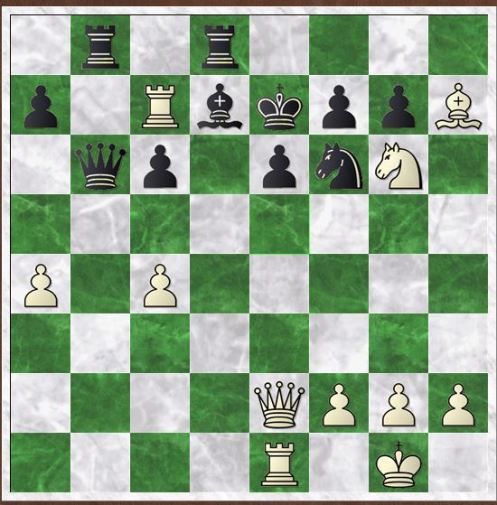
Black’s only other try is 1….Ke8, but 2 Qe6+!!
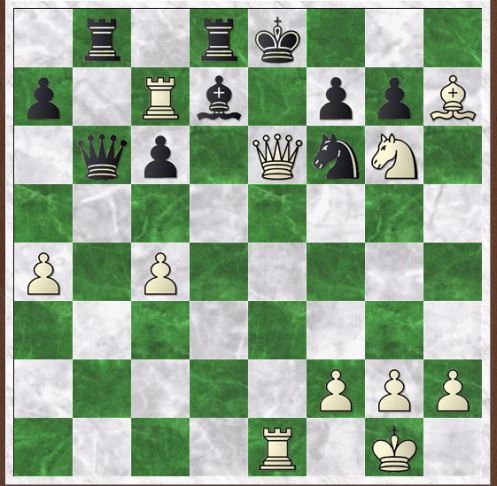
2…fe (2…Be6 3 Re7 mate) 3 Re6+ Kf7 (3…Bd7 4 Re7 mate) 4 Re7 mate.
FEN
1r1r4/p1RbkppB/1qp1pn2/4N3/P1P5/8/4QPPP/4R1K1 w – – 0 1
Another puzzle from Dragoslav Andric’s 1981 book “Matni Udar”.
Black to play and win
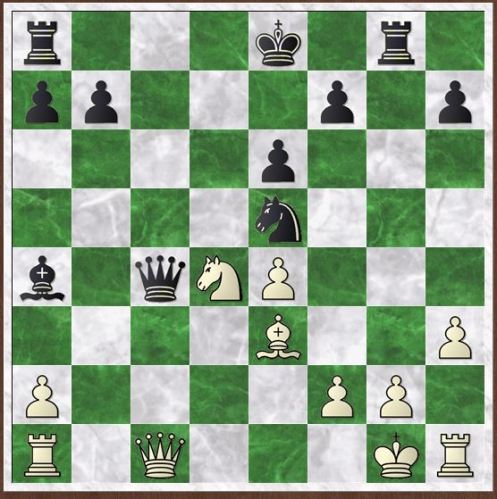
Subarić v Trifunović, Zagreb 1947
Solution
Pretty, but not too hard today. 1…Qd4!
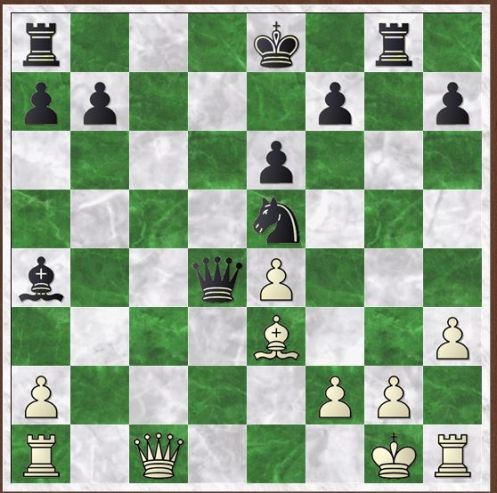
2 Bd4 Nf3+ 3 Kf1[] Bb5+ and mate next move.
FEN
r3k1r1/pp3p1p/4p3/4n3/b1qNP3/4B2P/P4PP1/R1Q3KR b q – 0 19
Another puzzle from Dragoslav Andric’s 1981 book “Matni Udar”.
White to play and win
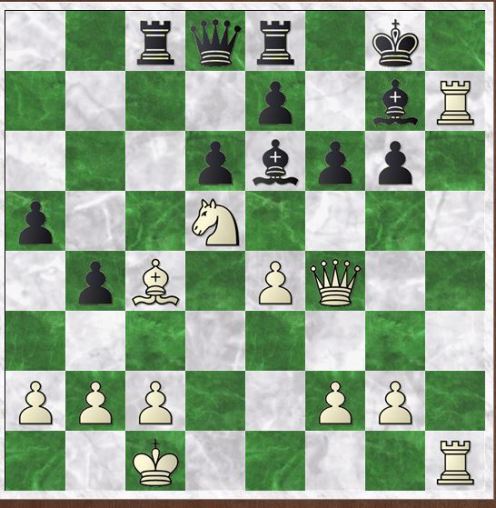
E Schröder v M Schröder, Maribor 1947
Solution
An odd one, in that the book’s solution, the game continuation no doubt, is the very hard to see 1 Qg4!, its main point being 1…Bg4 is met by 2 Ne7+ Kf8[] 3 Ng6 mate. In the game, Black played 1…Kf7 met by 2 Qg6+ (2 Nf4 also wins) Kg6 3 Nf4+ and mates. 1…Rc4 is met by 2 Qg6 1-0.
The above lines are fine, but the line I found, 1 Rg7+ is just as forcing, and more obvious. 1…Kg7 2 Qh6+ Kf7
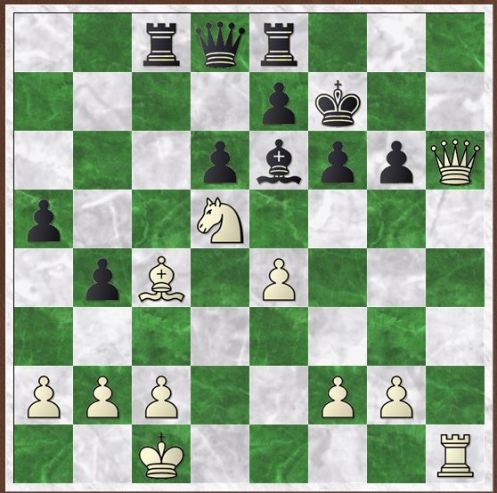
3 Qh7+ Kf8[]
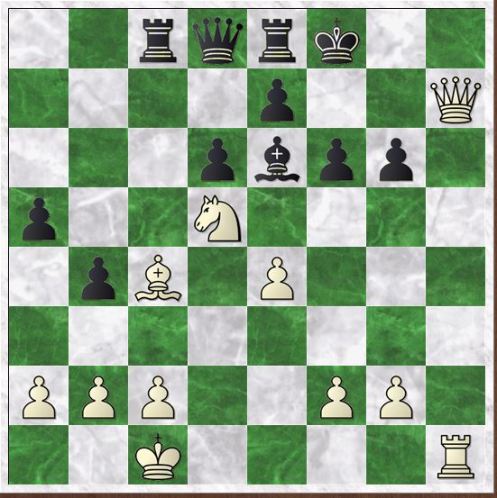
and either 4 Nf4 or 4 Qg6 or the line I saw, 4 Qh8+ Bg8[] 5 Rh7 and mate next move.
When I loaded the position into Deep Fritz, it gave both 1 Rg7+ and the surprising 1 Nf6+ as mate in 7: after some thought it reduced 1 Rg7_ to mate in 6; 1 Qg4 it also gives as mate in 7.
FEN
2rqr1k1/4p1bR/3pbpp1/p2N4/1pB1PQ2/8/PPP2PP1/2K4R w – – 0 1
 allanbeardsworth