Another puzzle from Dragoslav Andric's 1981 book “Matni Udar”.
Black to play and win
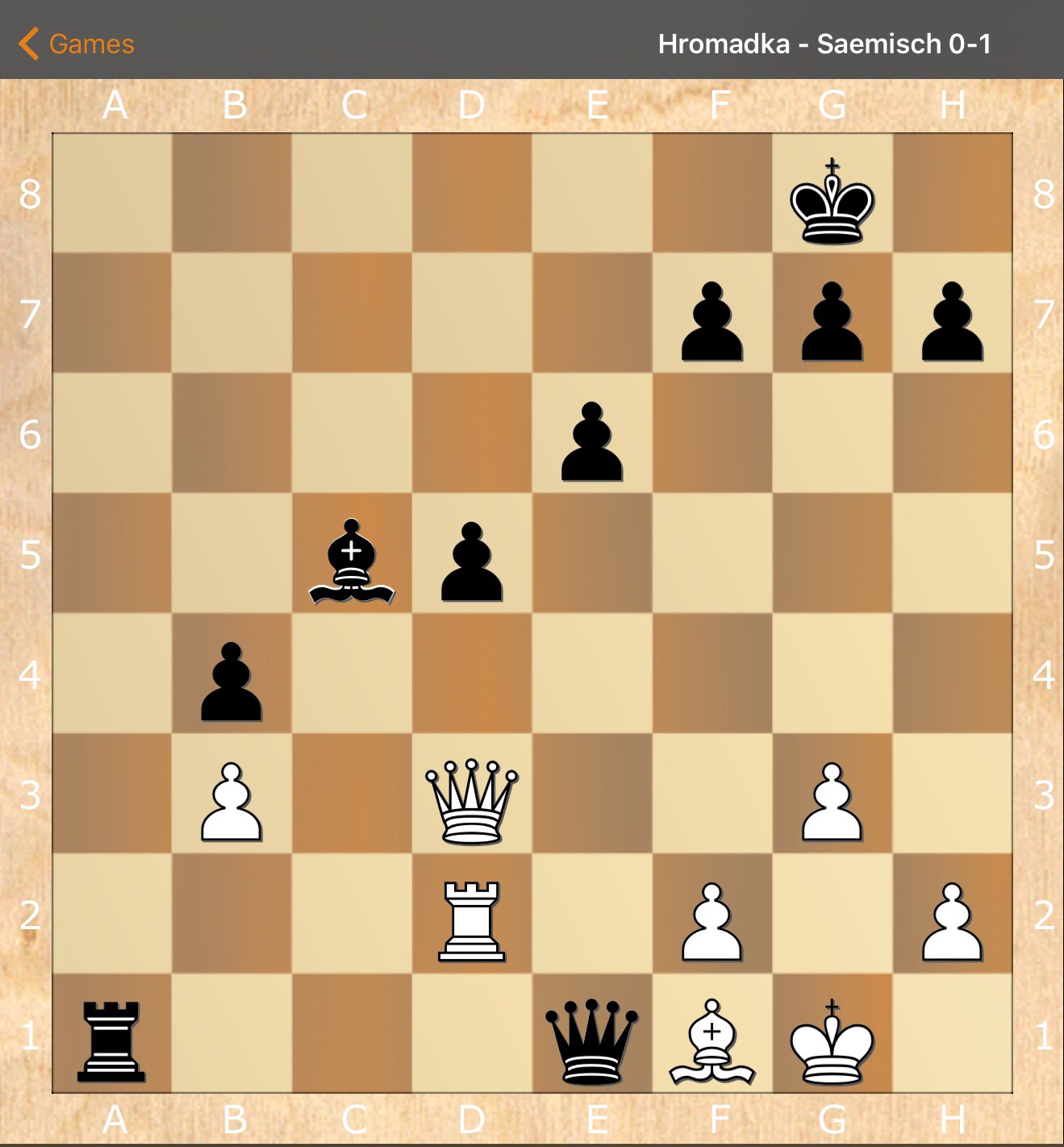
Hromadka v Samisch, Piestany 1922
Solution
I thought this puzzle was pretty. After seeing no easy way to take on f1 or f2, I saw, in CJS Purdy language, that the Rd2 was tied to defending f2, so can be overloaded with the lovely 1..Rd1! White's position collapses.
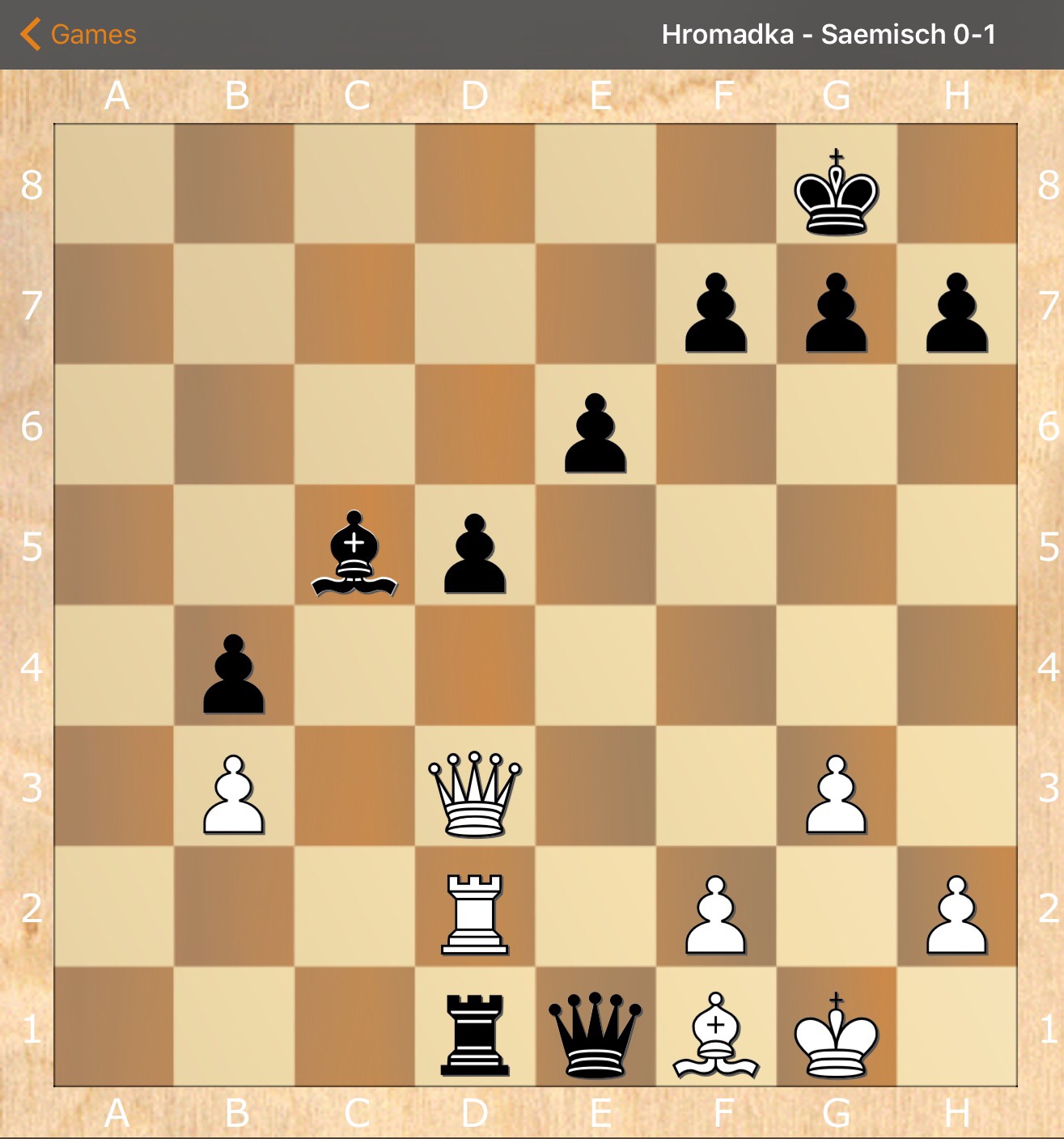
White resigned.
 Posted with Blogsy
Another puzzle from Dragoslav Andric's 1981 book “Matni Udar”.
Black to play and mate White.
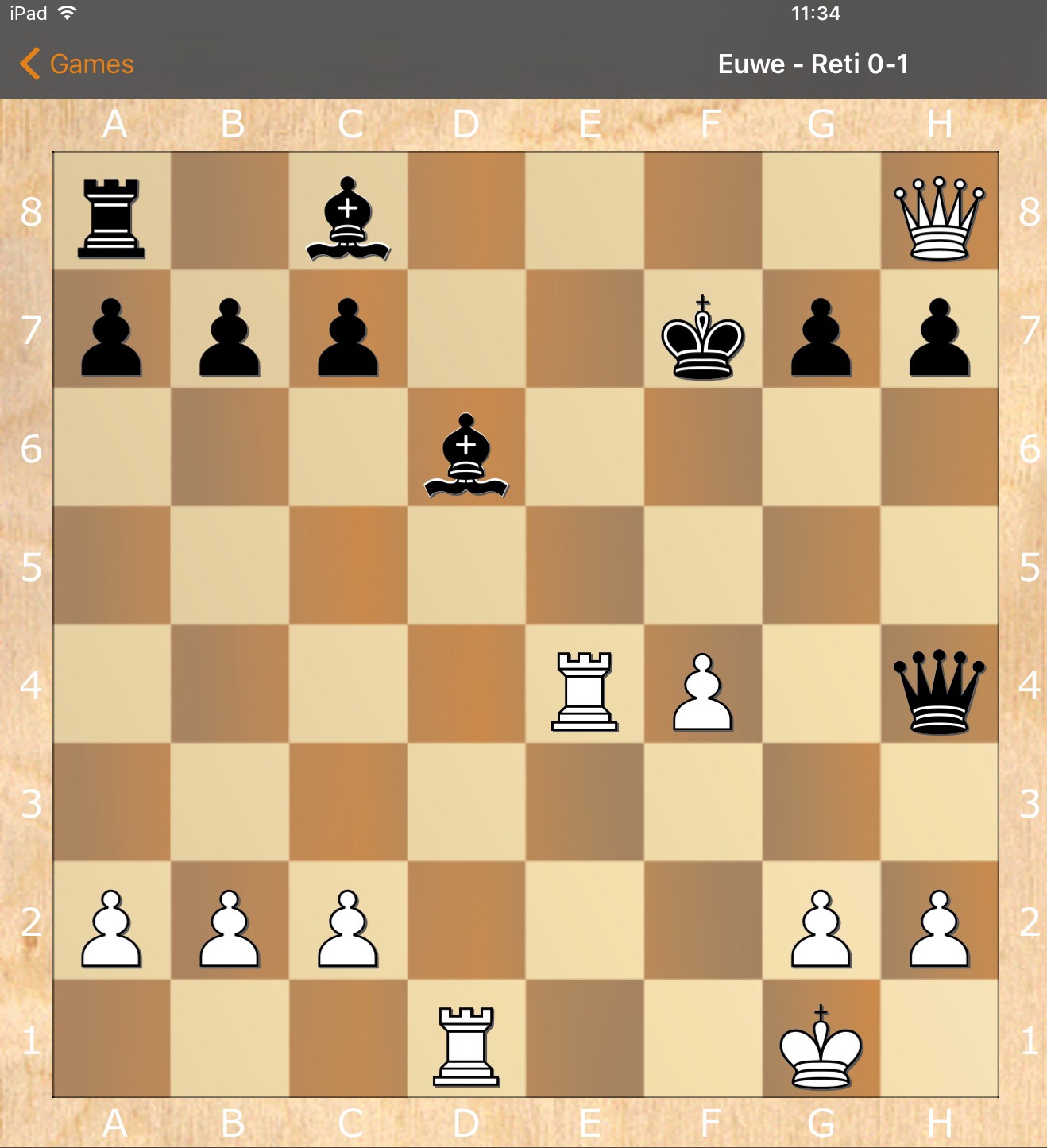
Euwe v Reti, Amsterdam 1920
Solution
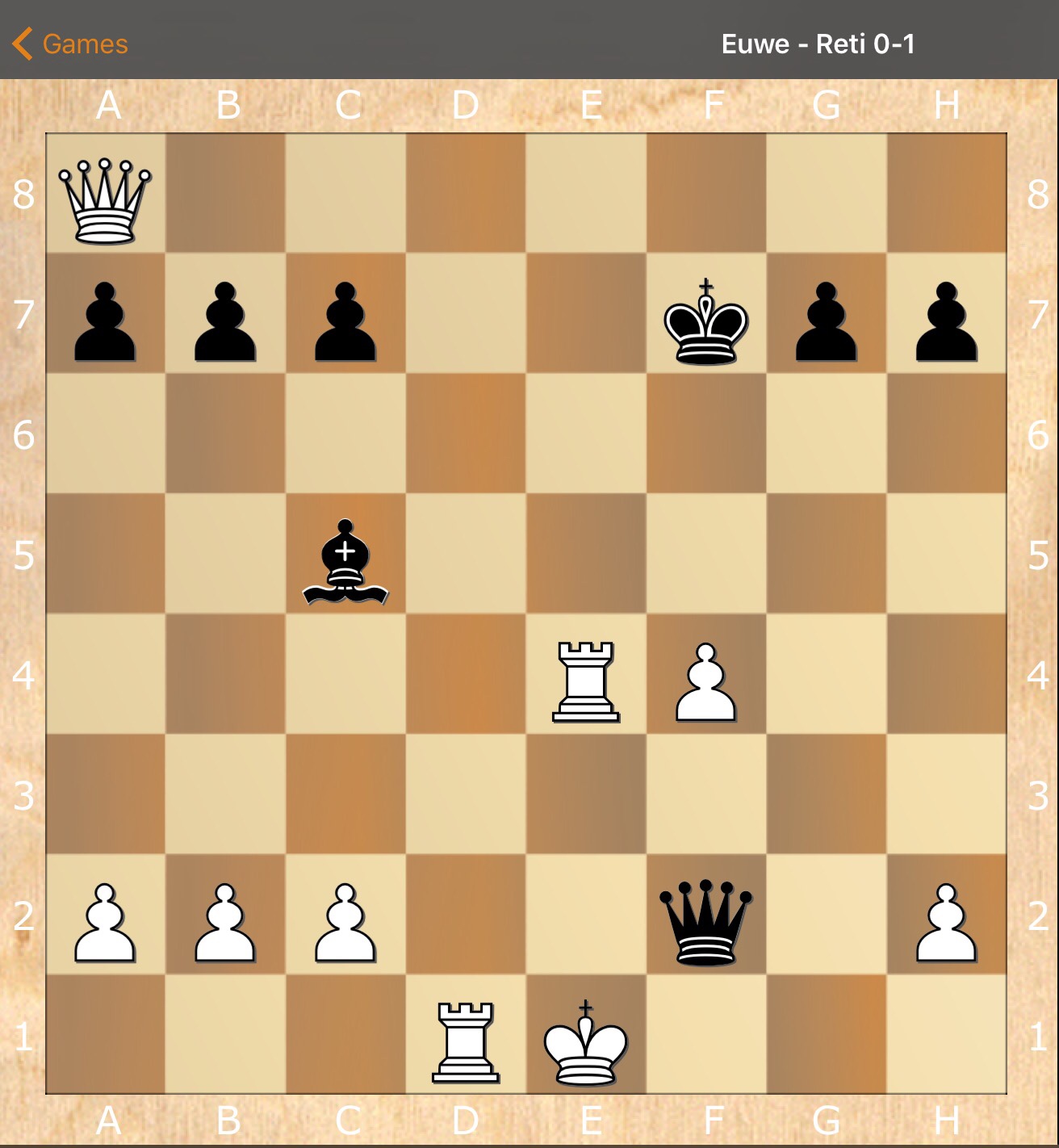
The first move is obvious, 1…Bh3! 2 Qa8[]. After a moment's thought, seeing that the slow double attack 2…Qg4 fails to 3 Qe8+, one sees that a forcing move is needed: 2…Bc5+, and after 3 Kh1[] (3 Kf1? Qf2 mate) 3…Bg2+! and it is check, check and mate: 4 Kg2[] Qg4+ 5 Kf1 (5 Kh1 Qf3 mate) Qf3+ 6 Ke1[] Qf2 mate.
Another puzzle from Dragoslav Andric's 1981 book “Matni Udar”.
White to play and mate Black
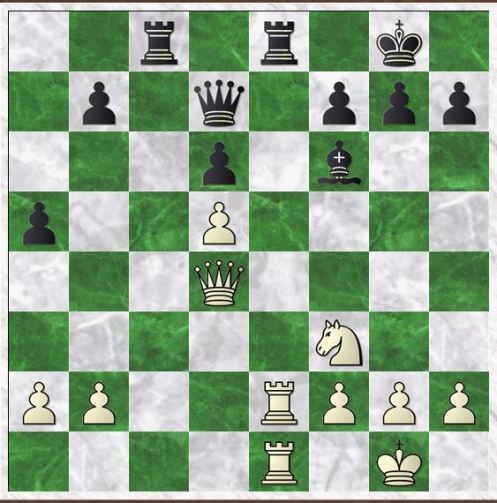
Adams v Torre, New Orleans 1920
Solution
Another position from my chess education, and doubtless known to most of my readers.
1 Qg4! Qb5[] (tied to the Re8) 2 Qc4!! Qd7 (ditto) 3 Qc7!! Qb5 (ditto)
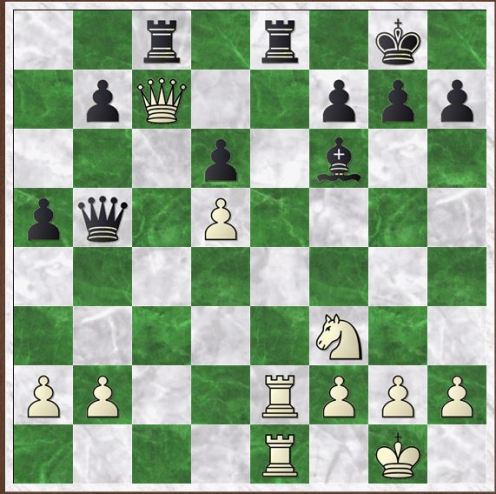
4 a4! (4 Qb7?? Qe2! would have spoiled everything) Qa4[] 5 Re4! Qb5[] 6 Qb7! 1-0 since Black no longer has the Q*e2 resource.
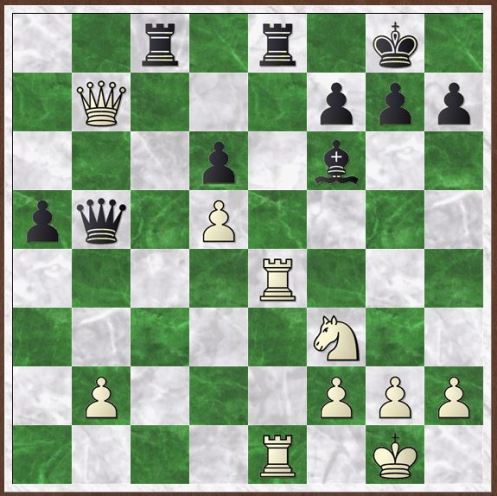
Another puzzle from Dragoslav Andric’s 1981 book “Matni Udar”.
Black to play and mate White
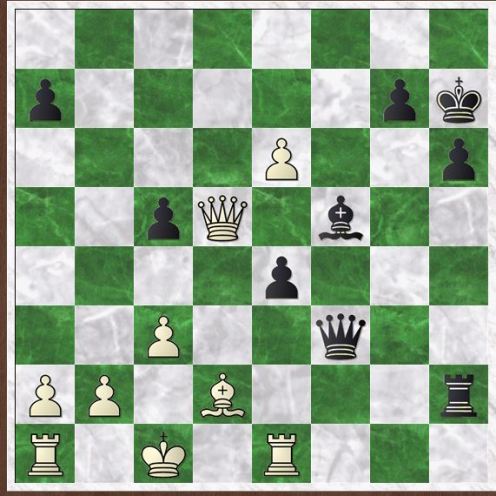
Jaffe v Kostic, New York 1919
Solution
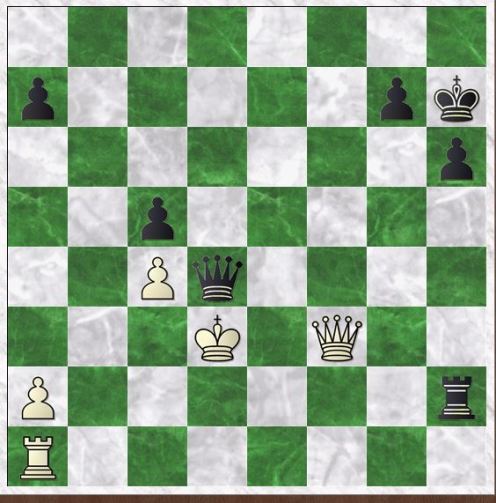
1..e3! is natural (this being a puzzle) and the calculation is fairly linear: 2 Qf3 ed+ 3 Kd1[] Bc2+! 4 Kc2[] de+(Q) 5 Kb3[] Qe6+
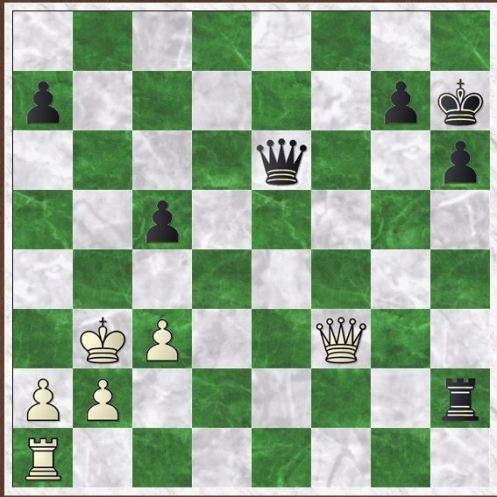
This is nearly the limit of my visualisation. I was able to see that 6 c4? loses to 6…Rh3 pinning the Queen and the King; so the K has to move: in a game I would play this far, and then see what turns up: although I could see that Black can check and check again, and then likely take on b2 with check. Seeing the position when writing up this blog, I see all this is true, and in the game, White played 6 c4 when in fact Black didn’t play 6…Rh3, but played for mate with 6…Qb6+ and 7…Qb2+: it is mate either on b4 or d4.
Another puzzle from Dragoslav Andric’s 1981 book “Matni Udar”.
White to play and mate Black
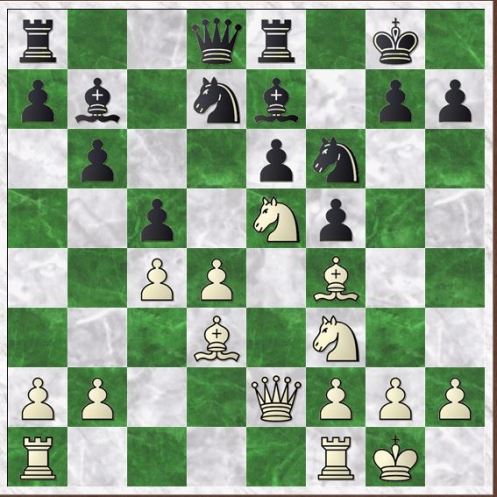
Alekhine v Feldt, Tarnopolj 1916
Solution
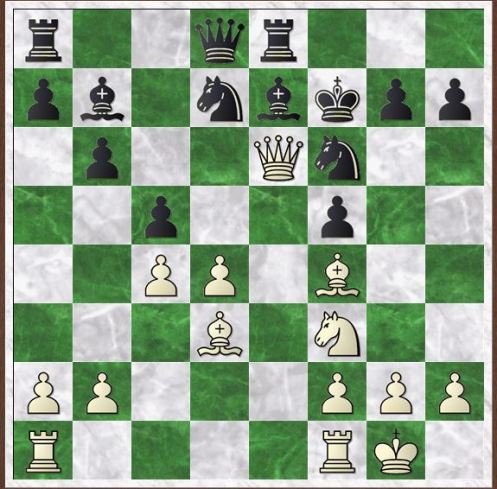
1 Nf7! Kf7 (1..Qc8 and Black loses prosaically) 2 Qe6+! Kg6 3 g4 1-0 There are alternative ways to win: 3 Qf5+, for instance, and Black can also defend, but it still hopelessly lost, by 2…Kf8.
Another puzzle from Dragoslav Andric’s 1981 book “Matni Udar”.
Black to play and mate White
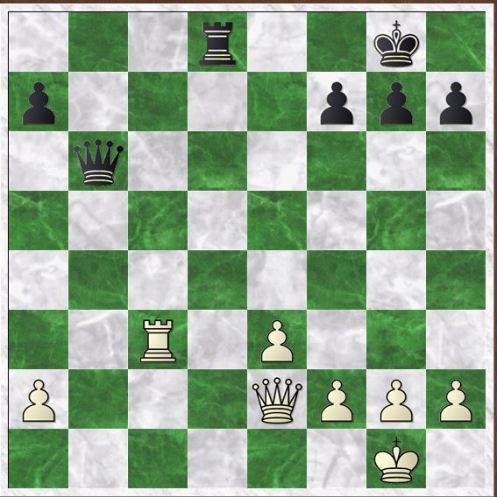
Bernstein v Capablanca. Moscow 1914
Solution
Part of my chess education: so solved immediately. 1…Qb2 0-1
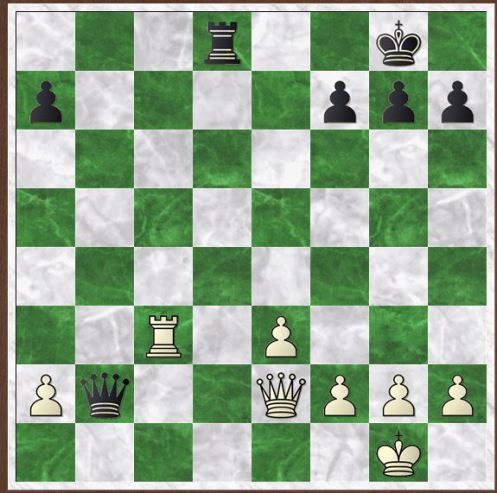
Another puzzle from Dragoslav Andric’s 1981 book “Matni Udar”.
White to play and mate Black
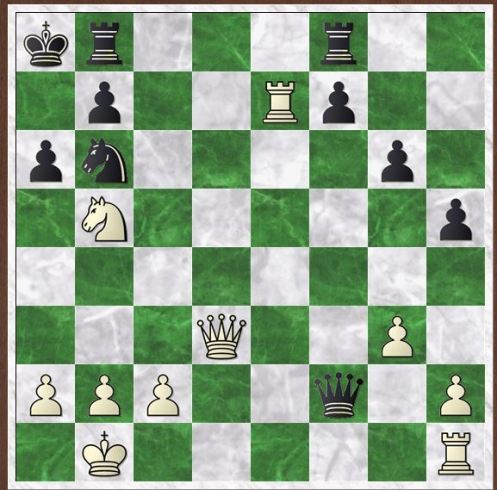
Munch v unknown, Kassel 1914
Solution
Quite picturesque: 1 Nc7+ Ka7 2 Qa6+!
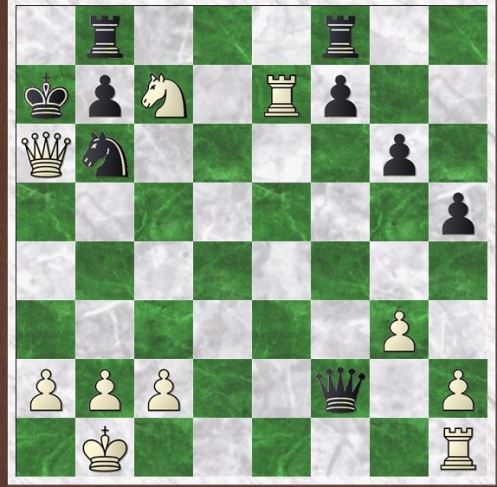
ba[] 3 Nb5++ Ka8[] 4 Ra7 mate.
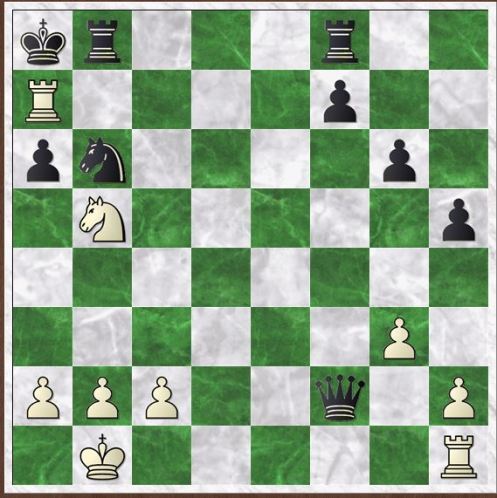
Another puzzle from Dragoslav Andric’s 1981 book “Matni Udar”.
White to play and mate Black
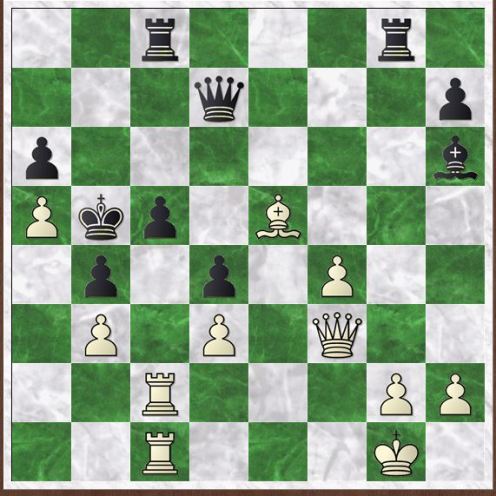
Tarrasch v consulting partners, Naples 1914
Solution
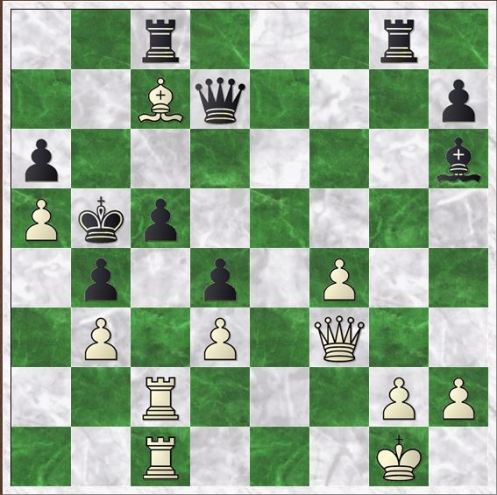
1 Bc7!! is a nice deflection, causing disconnection between Black’s pieces. 1…Qc7 2 Rc5+! or 1…Rb7 2 Qb7+!! and mates.
Another puzzle from Dragoslav Andric’s 1981 book “Matni Udar”.
White to play and mate Black
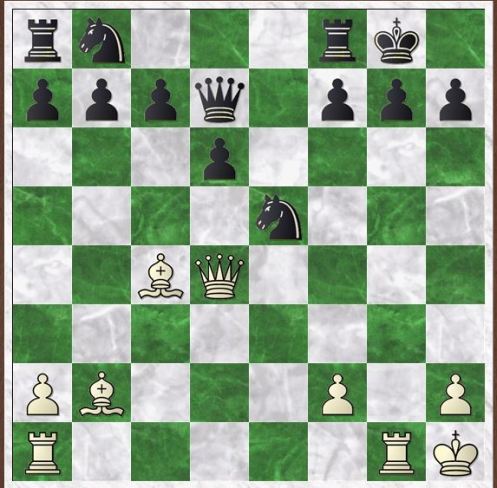
Hartlaub v Testa
Solution
Quite a standard motif: sacing on g7 a couple of times, then on e5, and capped by a nice mate once Black opens the a2-g8 diagonal by playing f7-f6.
1 Rg7+ Kg7 2 Rg1+ Kh8 3 Qe5+! de 4 Be5+ f6 5 Bf6+! Rf6[] 6 Rg8 mate.
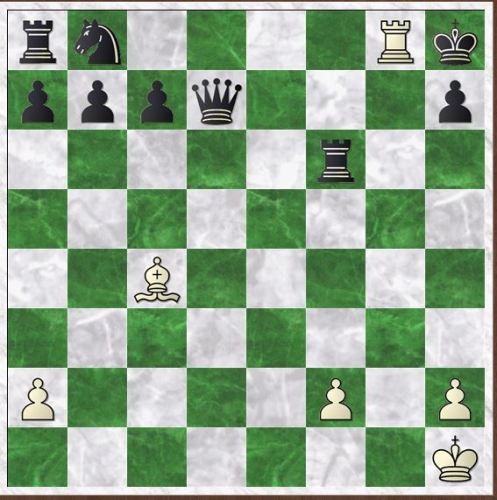
Another puzzle from Dragoslav Andric’s 1981 book “Matni Udar”.
White to play and mate Black
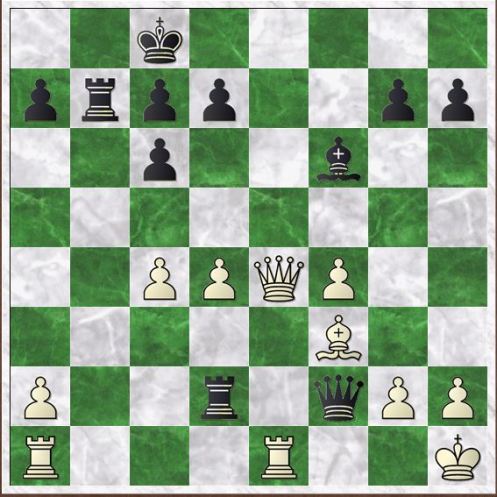
Schories v unknown, England 1913 {presuming Engleska is England}
Solution
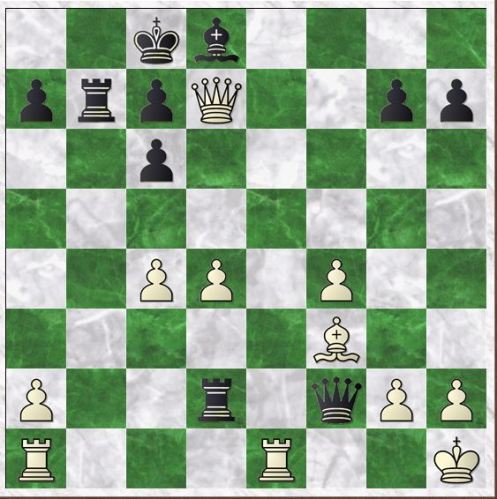
Quite nice: a variant of similar motifs. 1 Qe8+ Bd8[] 2 Qd7+! , 3 Bg4+ etc.
 allanbeardsworth