Another puzzle from Dragoslav Andric’s 1981 book “Matni Udar”.
White to play and mate Black
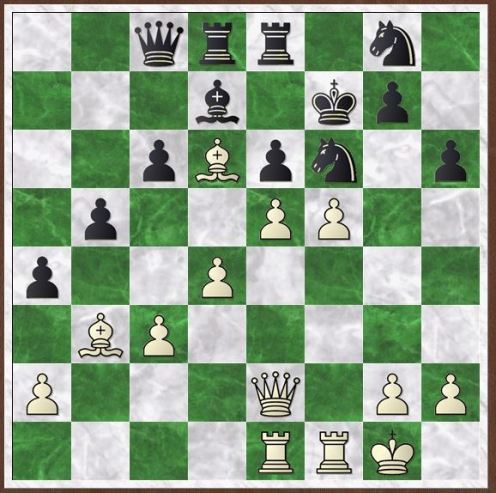
Alekhine v Pratt, Paris 1913
Solution
The first move is obvious, given it is a puzzle, and the line is fairly linear thereafter. 1 Qh5+ Nh5 2 fe+ Kg6[] 3 Bc2+
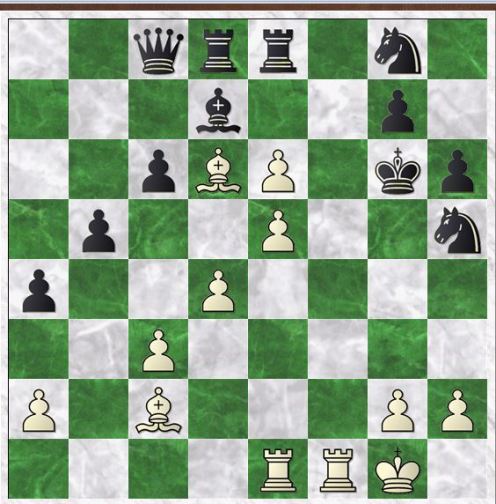
3…Kg5 4 Rf5+ etc – Rf6+/Rg6+/Re4+ and eventually a pawn move mates.
Another puzzle from Dragoslav Andric’s 1981 book “Matni Udar”.
White to play and mate Black
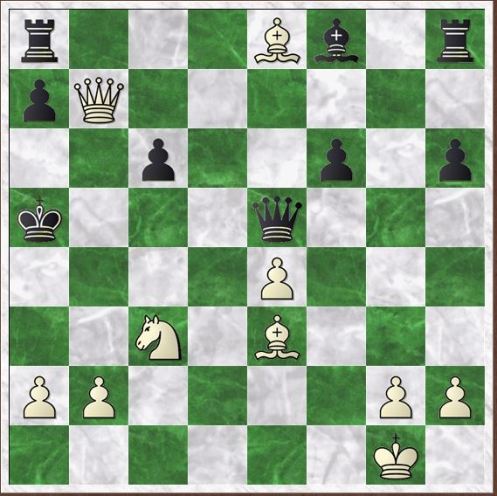
Blackburne v unknown, Kidderminster, 1912
Solution
A nice smothered mate:
1 b4+! to ensure the b4 square is occupied after 1…Bb4[]; 2Bb6+! ab[] 3 Qa8 mate
Another puzzle from Dragoslav Andric’s 1981 book “Matni Udar”.
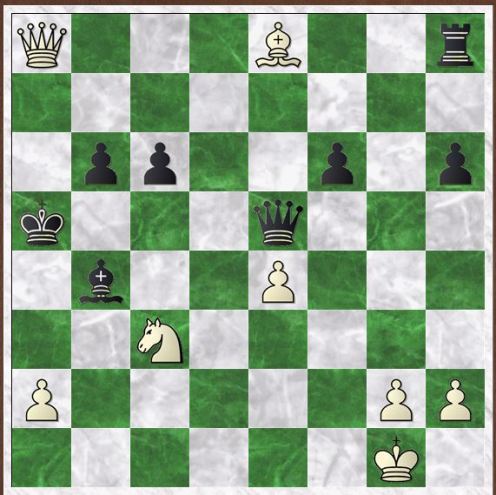
White to play and mate Black
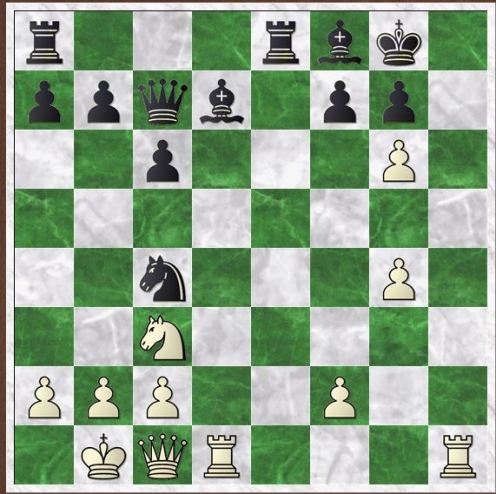
Mannheim v Regensburg, dop 1912 (not sure what dop means- perhaps “about”
Solution
Maybe the first occurrence of the well known motif: Rh8+! Rh1+! Rh8+! Qh1+ Qh7 mate.
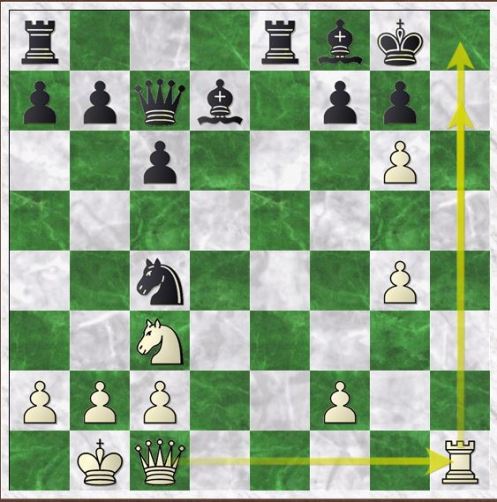
Another puzzle from Dragoslav Andric’s 1981 book “Matni Udar”.
Black to play and mate White
Levicki v Marshall, Breslau 1912
(in Megabase, White is Stepan Levitsky)
Solution
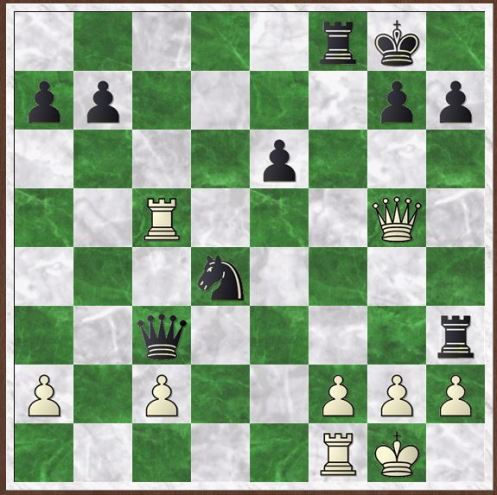
A very well known ending, beautiful play by Frank Marshall.
1…Qg3!! 0-1
Another puzzle from Dragoslav Andric’s 1981 book “Matni Udar”.
White to play and mate Black
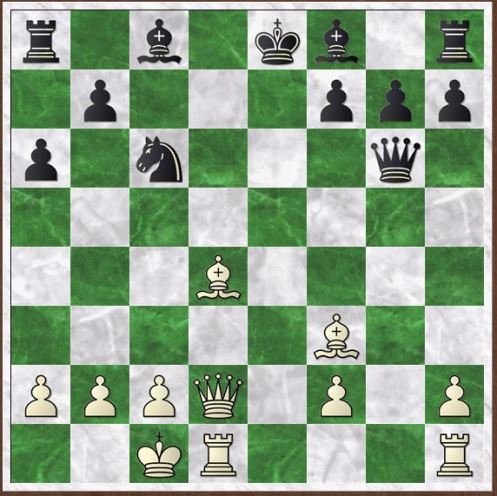
Nimzowitsch v Alapin,
Solution
Similar to Reti-Tartakower, puzzle 61. 1 Bf6!
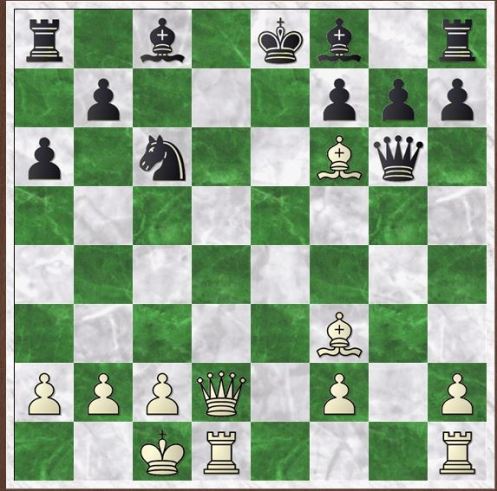
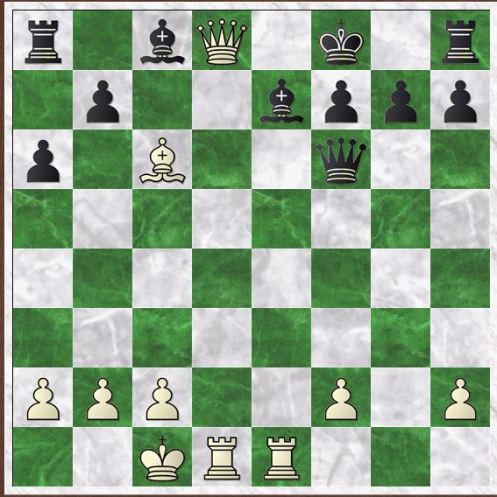
A few similar mates now. The line I shall give is
1..Qf6 2 Rhe1+ Be7 3 Bc6+ Kf8 4 Qd8+! and 4…Bd8 5 Re8 mate, which was the game continuation.
Another puzzle from Dragoslav Andric’s 1981 book “Matni Udar”.
Black to play and mate White

Lazard v Dus Chotimirsky, Paris 1911
Solution
Both 1…Nf2 and 1…Qf1! win, but the latter is stronger.
1..Qf1 Rf1[] 2 Nf2!

and it is mate in a few moves.
Another puzzle from Dragoslav Andric’s 1981 book “Matni Udar”.
White to play and mate Black

Reti v Tartakower, Bec 1910
Solution
Part of my chess education, so solved on inspection.
1 Qd8+ 2 Bg5+ 3 Bd8 mate.

Another puzzle from Dragoslav Andric’s 1981 book “Matni Udar”.
White to play and mate Black

Bernstein v unknown, Petrograd 1909
Solution
The game continuation is pretty forced, given that Black’s king is in a net and the juxtaposition of the two Ns. It is mate by zugzwang.
1 c5 b5 2 a3 zugzwang Ne6 3 Nb7 mate; or 1…bc 2 Nc4+ Kb5[] 3 a4 mate are the two main lines.


Another puzzle from Dragoslav Andric’s 1981 book “Matni Udar”.
Black to play and win

Rotlewi v Rubinstein, Lodz 1907
Solution
Part of my chess education, and doubtless that of many of my readers.
Rubinstein’s “Immortal”, analysed in depth elsewhere, so I won’t repeat, and just give the main moves: 1..Rc3 2 gh Rd2! 3 Qd2 Be4+ 4 Qg2 Rh3 0-1.
Doubtless a happy hour or more could be spent looking at all the variations.
Another puzzle from Dragoslav Andric’s 1981 book “Matni Udar”.
White to play and mate Black
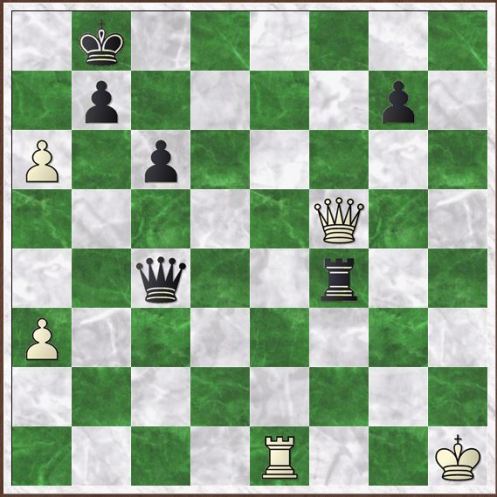
Kotrc v Prokes, Bec 1907
Solution
If I were White, this would be one of those many positions were I just “played and hoped”; and if I won, be proud of my skill; or if I lost, would accept that it was just too complicated and I was unlucky.
So the first moves are obvious, in this regard: check and check. 1 Re8+ Ka7 (not hard to see that 1..Rc7 is weaker: but 2 Qa5+!! is best: 2….b6 3 Qe5+ and 4 Qe7 mate; or 2…Kd6 3 Qe5+ all the same, and 4 Qe7 mate) 2 Ra8+
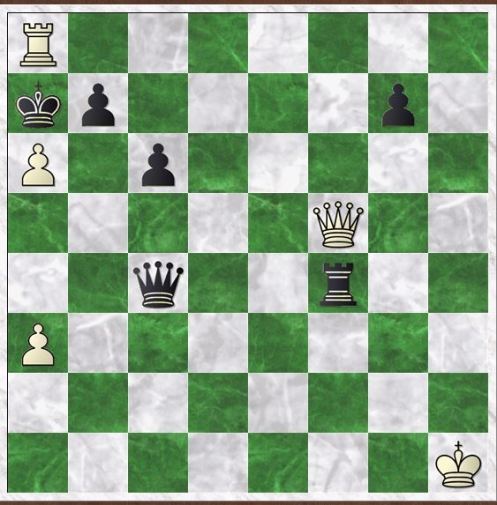
2…Kb6 (2…Ka8?? 3 Qc8+ and 4 Qb7 mate) and now the very pretty, but not too hard (since White has to “keep on checkin’ ” 3 Qa5+!!
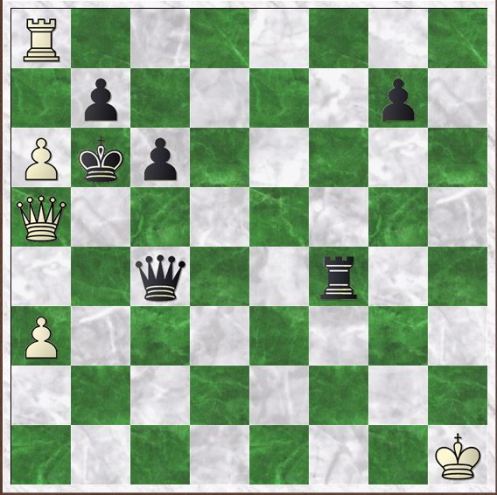
3…Ka5[] 4 ab+[] Kb5 (or 4…Kb6) 5 a8(Q)+ Kc5[]
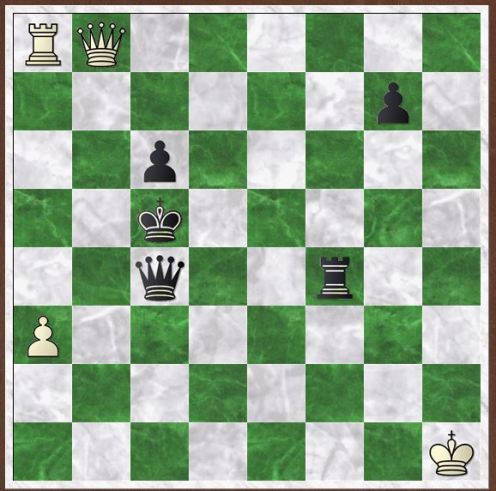
And now only one move wins, but it isn’t too hard, 6 Ra5+ and picks up the rook with the checks continuing: 6…Kd4 7 Qf4+ 1-0
 allanbeardsworth