Another puzzle from Dragoslav Andric’s 1981 book “Matni Udar”.
Black to play and win
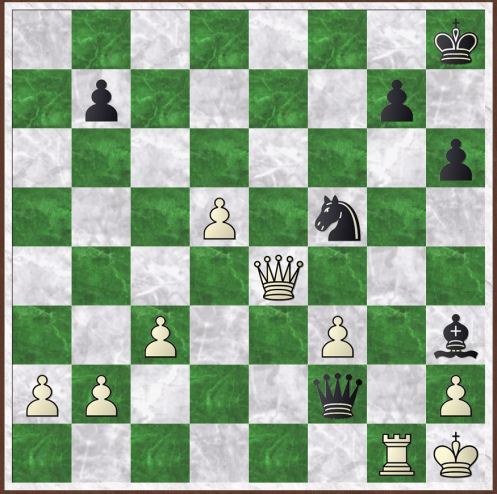
Nepoznati v Anderssen, 1872
Solution
A ‘standard’ motif, which I have seen before, so knew on inspection: I wonder whether it is because of this game that I ‘knew it’: it could have been the first occurrence.
1…Bg2+ 2 Rg2[] Qf1+ 3 Rg1[] Ng3+!
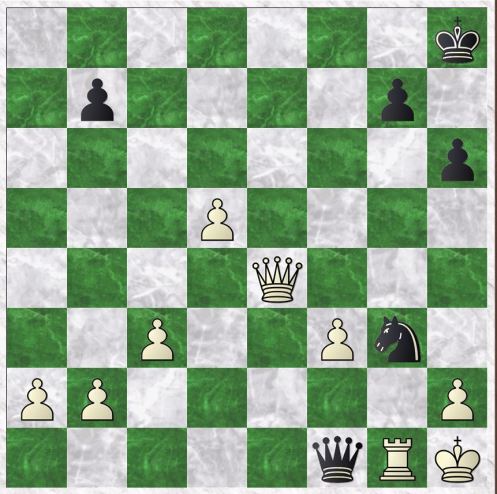
4 hg[] Qh3 mate.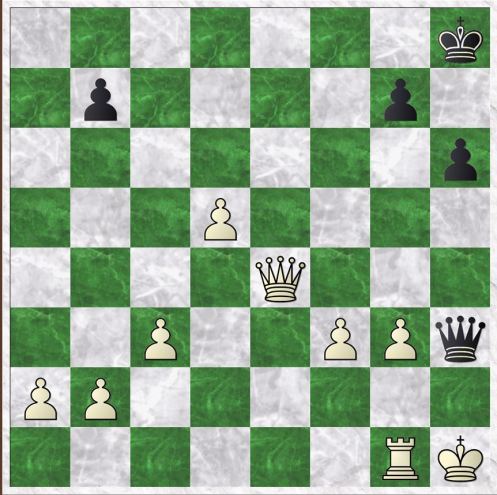
Another puzzle from Dragoslav Andric’s 1981 book “Matni Udar”.
White to play and win
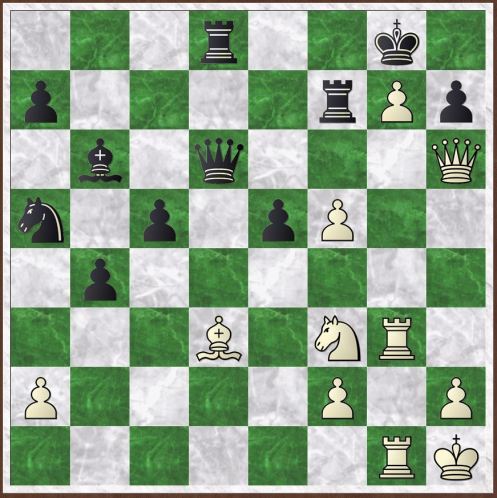
Anderssen v Zukertort, Bremen 8/8/1869
Solution
Fairly obvious: 1 Qh7+ and Black did the ungentlemanly thing of resigning, rather than letting Anderssen mate him: 1…Kh7 2 g8(Q)+! Rg8 3 f6+! and mates (e.g. 3…Kh6 4 Rh3 mate).
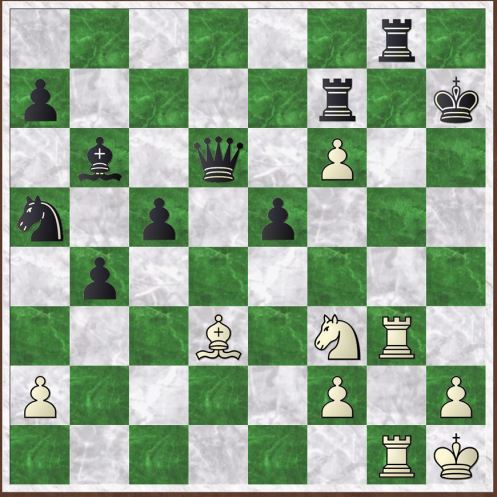
Another puzzle from Dragoslav Andric’s 1981 book “Matni Udar”.
Black to play and win
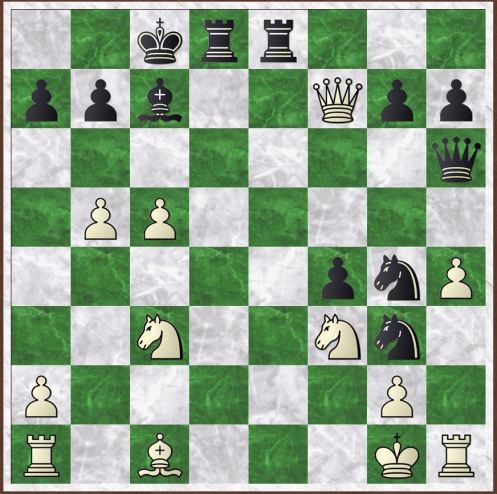
Mayet v Zuckertort, Berlin 1868
Solution
The first move I thought of wins prosaically enough: 1… Ne2+, winning the LPDO Nc3, since if 2 Ne2 Re1+ mates.
But just as instantaneously, I knew ‘the move’ had to be 1…Qd6, and sure enough, this was the move Black played, met by 2 Ba3.
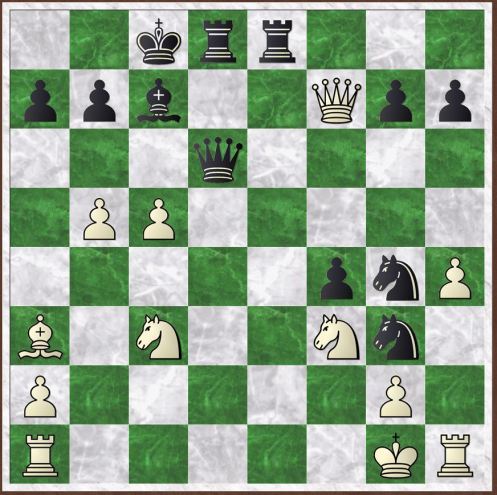
Then 2…Qd3 enters decisively, and in the game, led to a ptetty mate after 3 Nd5 Qf1+! and smothered mate follows with Ne2 mate.
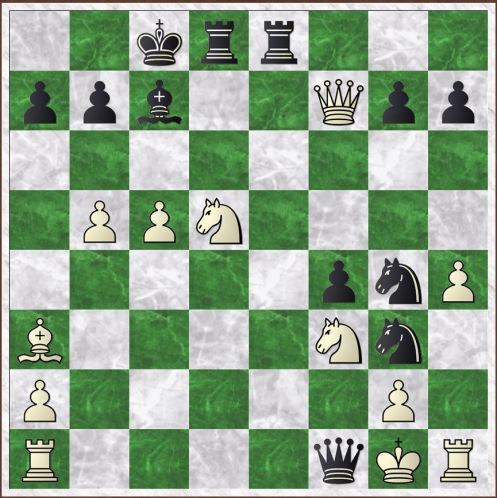
Another puzzle from Dragoslav Andric’s 1981 book “Matni Udar”.
Black to play and win
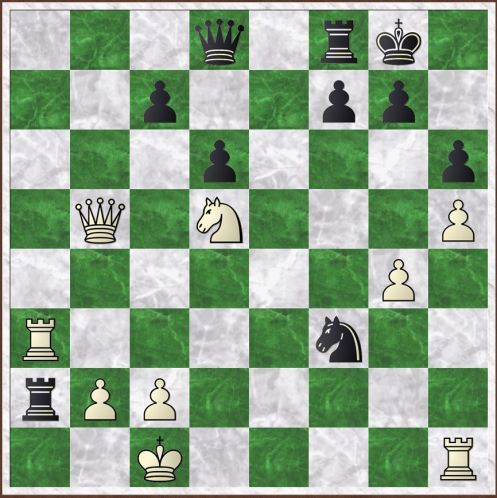
Celso Golmayo-Zupide v Samuel Loyd, Paris 27.6. 1867
Solution
Quite pretty, and a motif I have not seen before. 1…Ra1+! forces 2 Ra1[] when 2…Qg5+ 3 Kb1 Nd2+
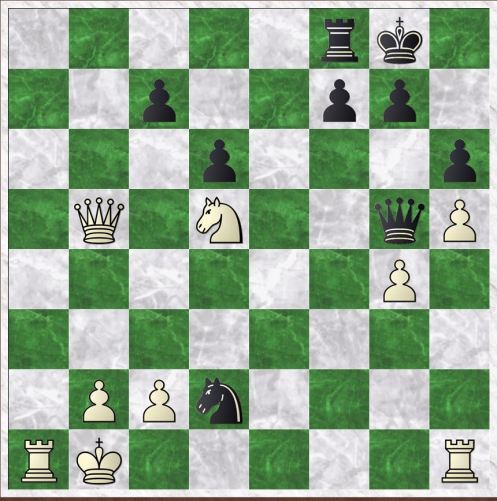
forces either 4 Ka2 Ra8+ and mates, or
4 Kc1 Qc1+! !
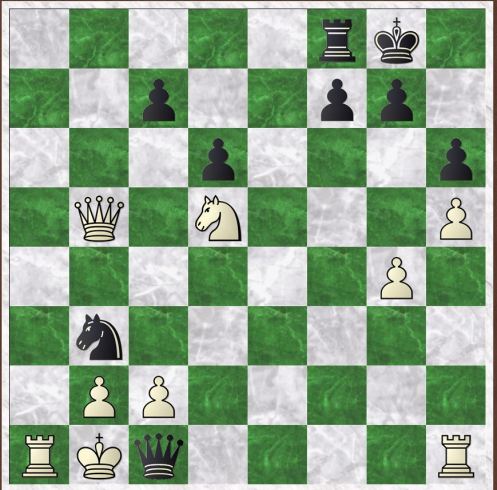
and 5…Nd2+ followed by the same mate on the a-line.
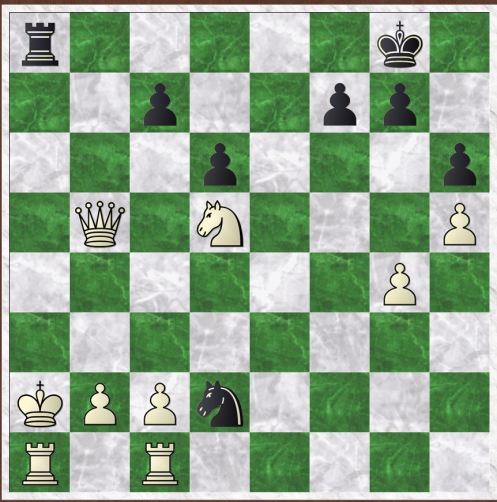
Megabase tells me this game was played in the international chess congress, else I would have assumed it was a game vs an amateur or a ‘staged’ game: you don’t get combinations like this nowadays?!
Another puzzle from Dragoslav Andric’s 1981 book “Matni Udar”.
Black to play and win
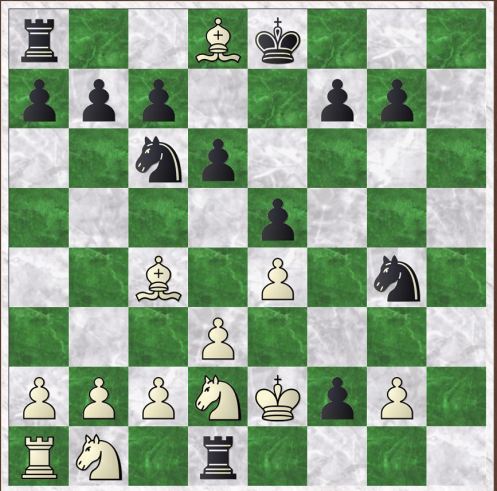
Nepoznati v Derrickson, Philadelphia 1862
Solution
Straightforward today: check, check and mate: 1…Ne3+ 2 Kd1[] Ne3+ 3 Kc1[] Ne2 mate.
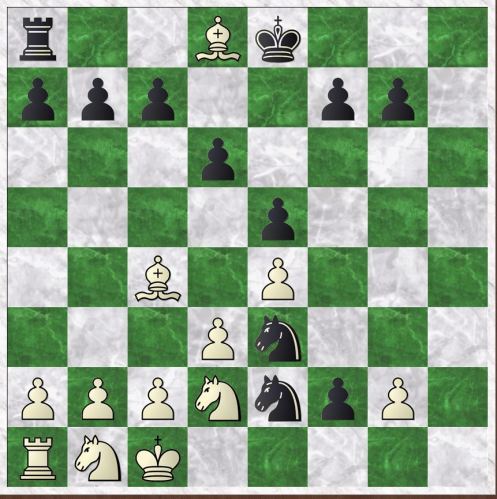
Another puzzle from Dragoslav Andric’s 1981 book “Matni Udar”.
White to play and win
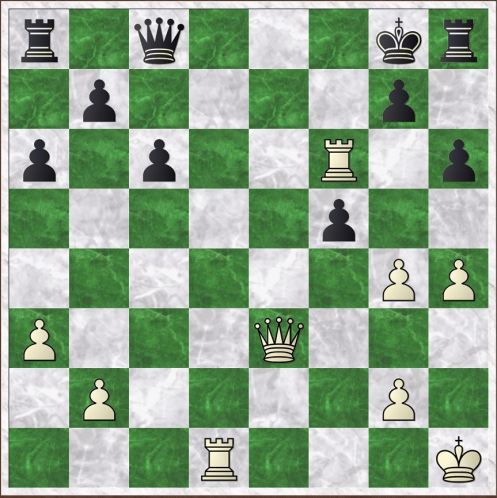
Steinitz v Nepoznati, Bec 1861
Solution
A nice play with the heavy pieces: 1 Rd8+! to deflect the queen from looking at e6, 2 Qe6+, and 3 Rh6+! forces 3…gh, so 4 Qf7 mate.
Pretty.
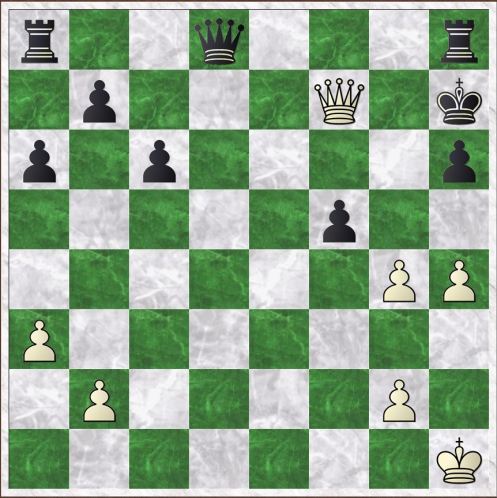
Another puzzle from Dragoslav Andric’s 1981 book “Matni Udar”.
Black to play and win
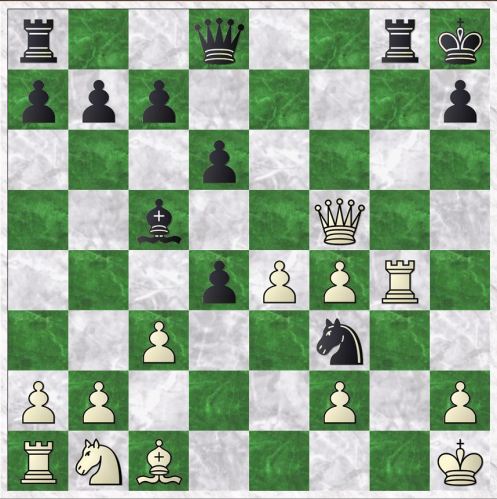
Reiner v Steinitz, Bec 1860
Solution
Not too hard: 1…Qh4! and if the Q is taken, 2…Rg1mate; or if 2 Rg2, Qh2+! followed by Rg1 mate all the same.
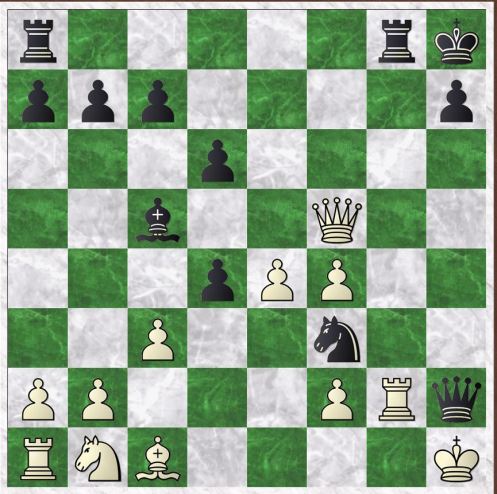
Another puzzle from Dragoslav Andric’s 1981 book “Matni Udar”.
Black to play and win
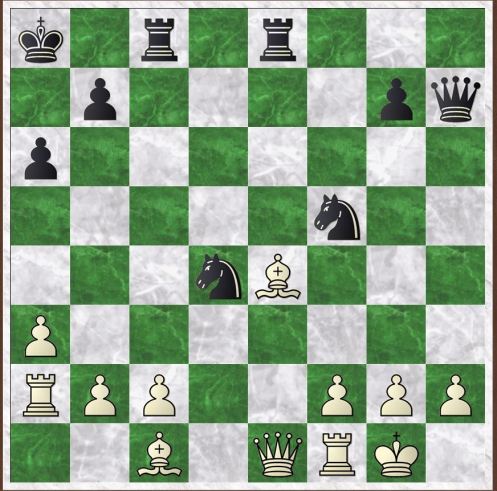
Nepoznati v Morphy, New York 1859
Solution
If you solved puzzle #7, then this one isn’t hard. The same motif, of Nd4 and Nf5, Q, and a Ng3 biff, apply: with a bit of a twist.
1…Re4! 2 Qe4 Ng3!
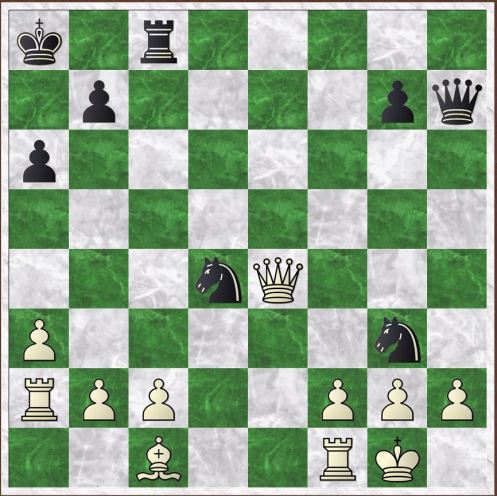
3 Qd4 Ne2+ 4 Kh1[] Qh2+! and Rh8+ mating.
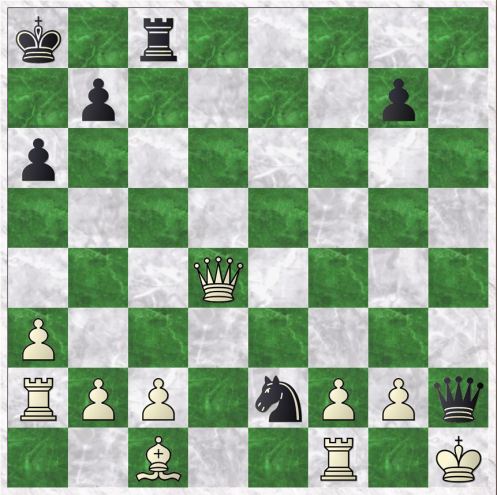
Another puzzle from Dragoslav Andric’s 1981 book “Matni Udar”.
Black to play and win
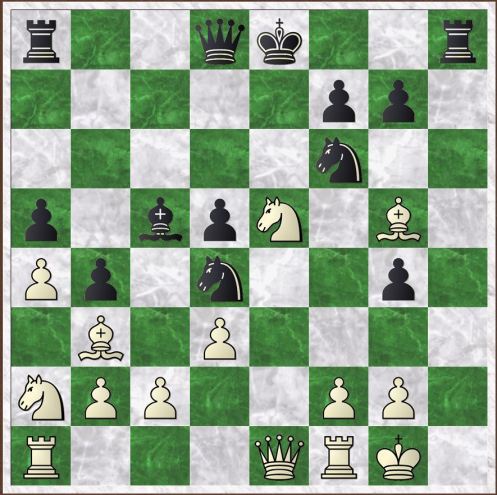
Mandolfo v Kolisch
Solution
Beautiful (and, from googling, a classic, but not a position I recall seeing before): 1…Ne4 (‘kinda obvious, given it is a puzzle’) 2 Bd8 Ng3!
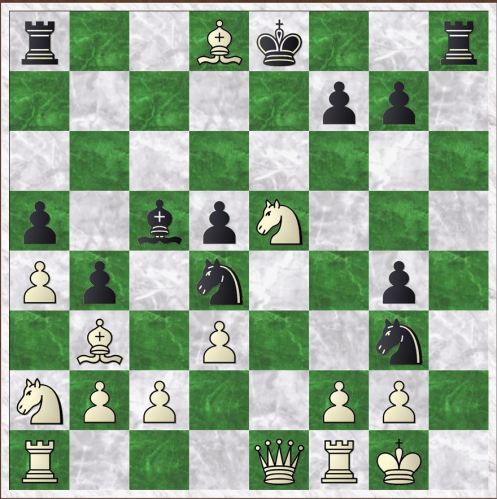
3 Nc6+ Nde2+ 4 Qe2+ Ne2 mate.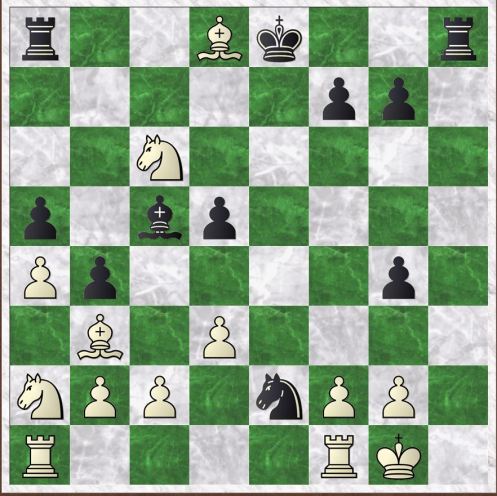
Another puzzle from Dragoslav Andric’s 1981 book “Matni Udar”.
White to play and win
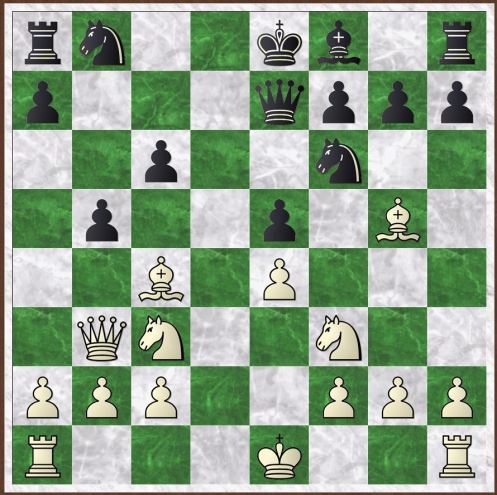
Morphy v Braunschweig, Paris 1858
Solution
The first moves are easy, and can be played on intuition: White gets at least 2 pawns for a piece, and Black’s king is open, and White is ahead in development. 1 Nb5 cb 2 Bb5+ Nbd7 (2…Kd8 is bound to be inferior, permitting e.g. 3 0-0-0+ followed by a Rd3 rook-lift).
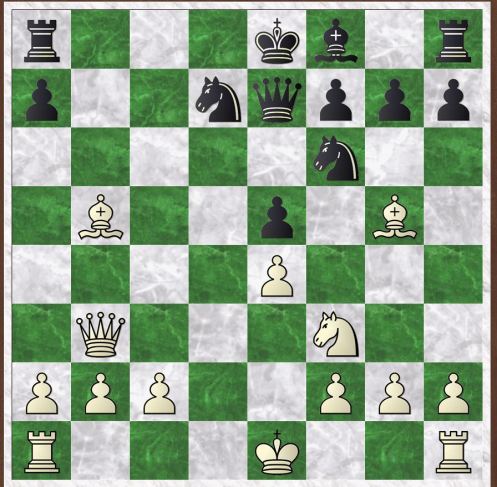
3 O-O-O Rd8 4 Rd7! Rd7[] 5 Rd1
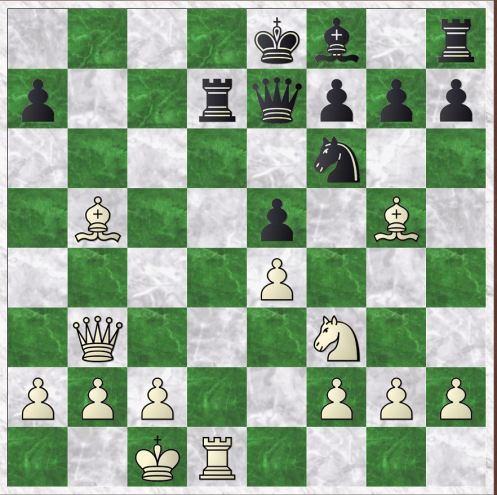
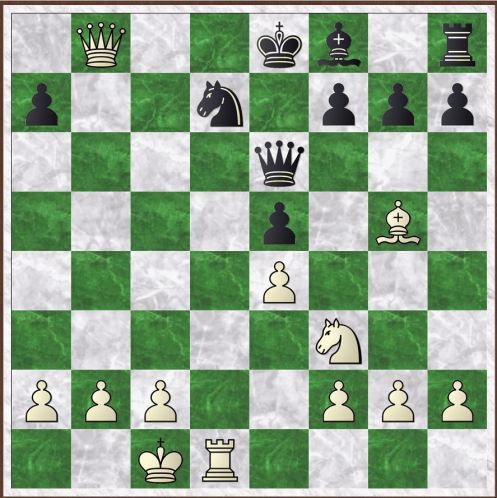
and in the game, Black permitted a typically pretty Paul Morphy finish:
5..Qe6 6 Bd7+ Nd7 7 Qb8+!! and 8 Rd8 mate.
 allanbeardsworth