White to play and win
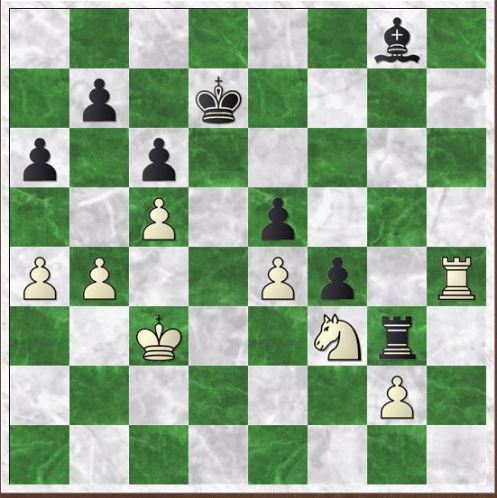
Hort- Garcia, Hastings 1974
Solution
Fairly easy today: 1 Rg4! forces the exchange of the rooks, leading to a won N v B ending. If 1…Rg4 then 2 Ne5+ picks up a pawn and then the rook.
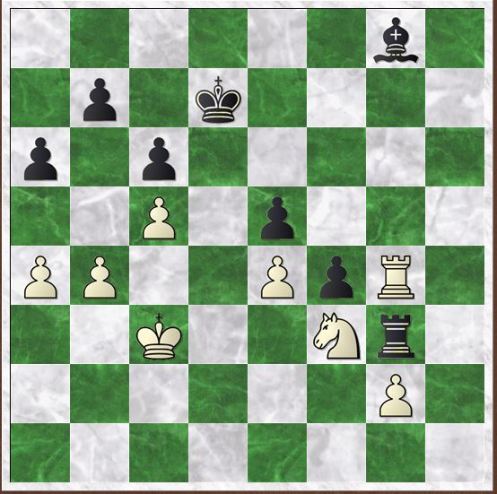
White to play and win
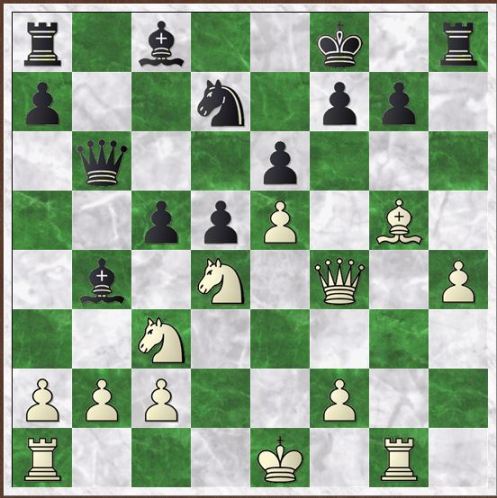
Urzica v Ghinda, Romania 1974
Solution
The first move is a nice biff: 1 Bd6! driving the queen away, by 1…Qa6.
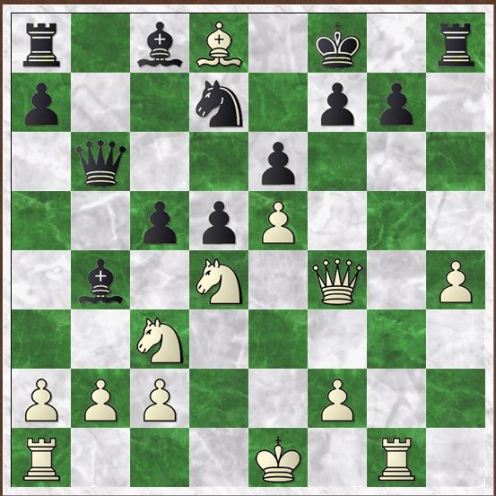
What does the Bd8 move achieve? Nothing to do with the Black Q (which isn’t LPDO) but to gain access for the Q: 2 Rg7! Kg7[] 3 Qg5+ and now the Q and B operate well: Be7+ and Bd6 follow.
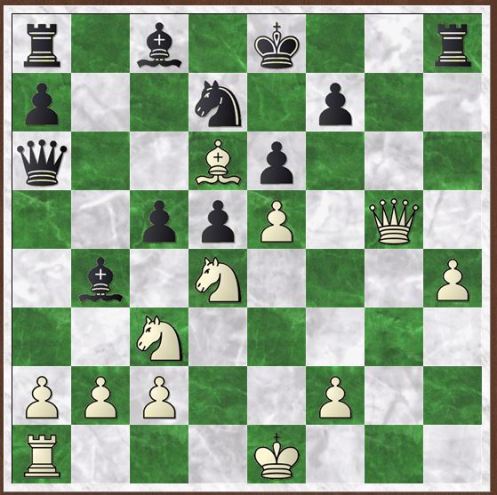
White played 1 Nf7: evaluate; and also consider alternatives
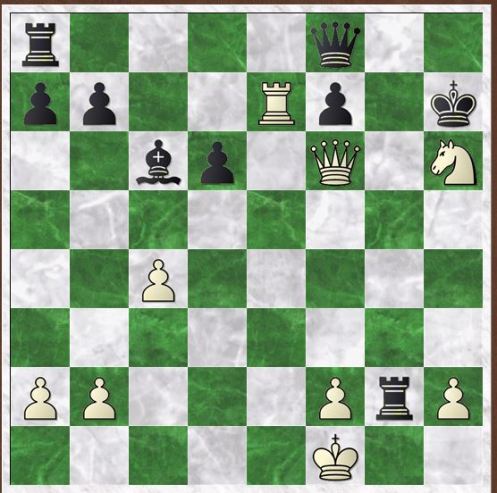
Schneider v Dieks, Manila 1974
Solution
Easy part first: 1 Rf7+ is a simple win.
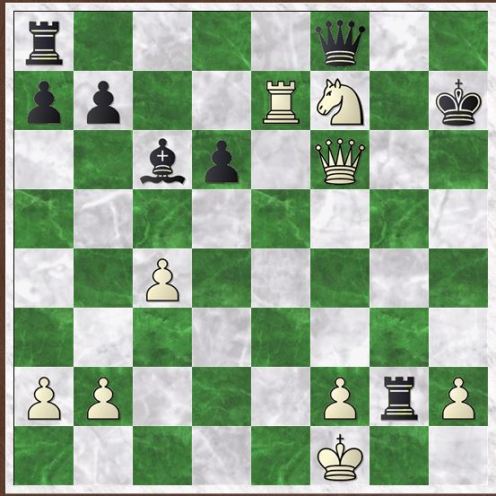
1 Nf7? is a blunder: 1…Qe7! 2 Qe7[] Re8
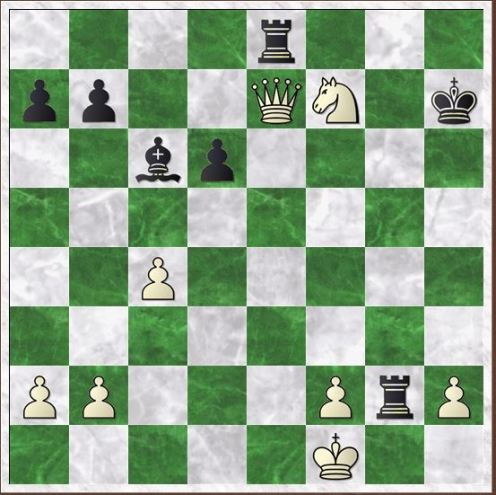
3 Qh4+ Kg7 4 f3 unclear. In the game, White played 4 Nd6??: my Megabase says 1-0, so it might be zeitnot, since 4..Rg1+! mates next move with 5…Re1 mate.
White to play and win
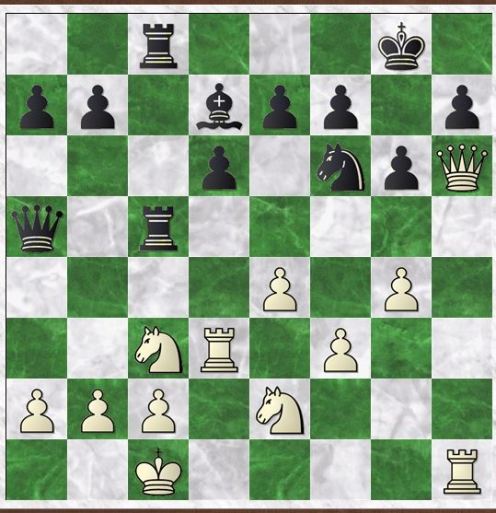
Karpov- Korchnoi, Candidates final 1974
Solution
If you are, like me, a child of the Fischer revolution, then you grew up with Karpov-Korchnoi. And if one of your first books was David Levy’s Batsford book on the Dragon, and if you devoured it like me, then you remember the K_K Dragons.
So, no work today for me: just memory. 1 g5! Rg5 2 Rd5! though the really special move is the later e5!!
Black to play and win
Examine: 1..Rh5 2 Bh5 a4 3 Nh3 b3 4 cb ab 5 a3. What happened next?
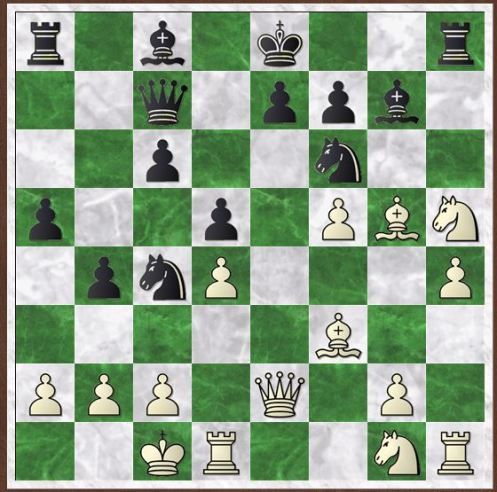
Sax-Kestler, Nice Olympiad 1974
Solution
The line given is at the periphery of my vision: but I could clearly see that 5…Ra3! had to be the move.
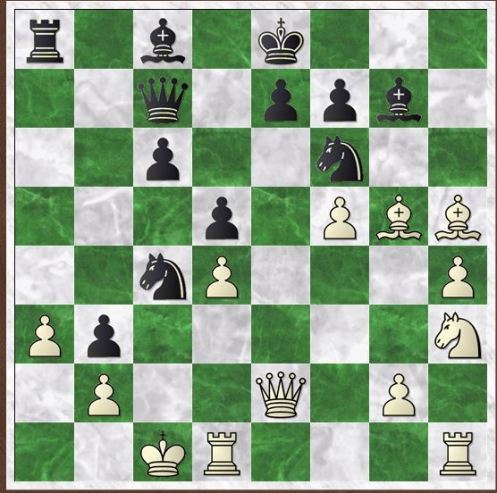
Black has so far only sacrificed the exchange, and the Pf5 is en pris, so the risk is fairly slight. Only in the above position need …Ra3! be calculated, and after 6 ba, Qa5! is natural, especially since White has no way to defend a3. Too many lines now, but intuitively, Black is winning: Q, b-pawn, N and if permitted the Nf6 and maybe Bc8-f5 are all in the attack.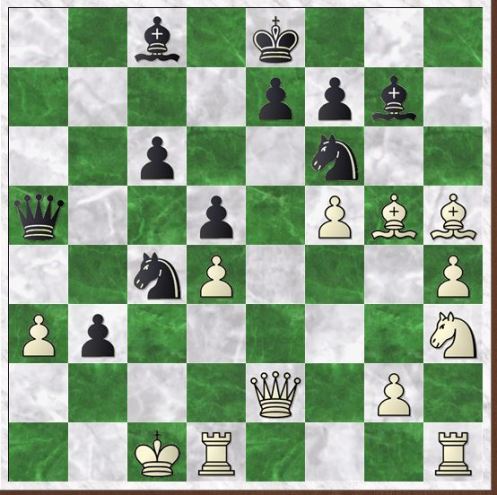
Black to play and win
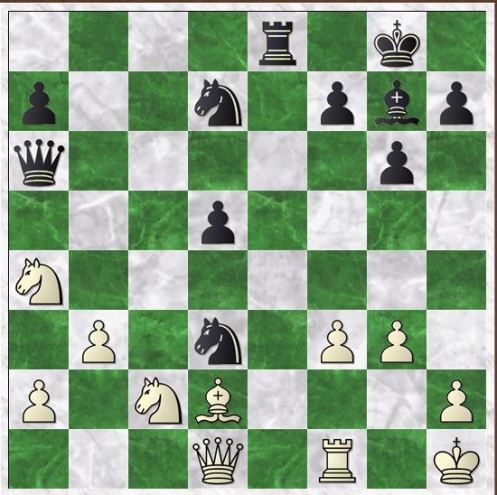
Jones v Dueball, Nice Olympiad 1974
Solution
A difficult, and a nice one, today. It took me a while, and I doubt I would have seen it in practice, but the stunning 1…Re1!! just does enough to win.
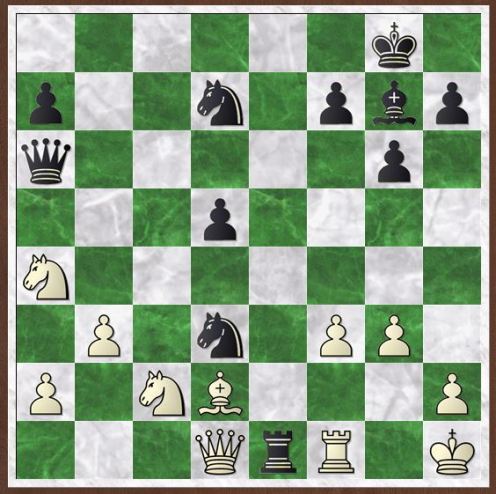
The Rf1 is tied to f2, to prevent Nf2+ hitting the Q; so 2 Be1 when 2…Nb2! is a lovely double attack on Q and R.
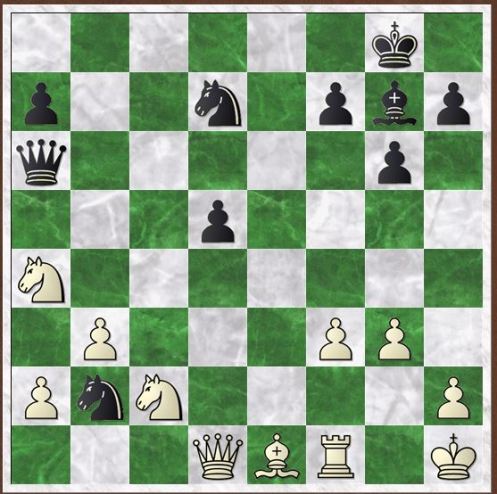
Lovely.
White to play and win
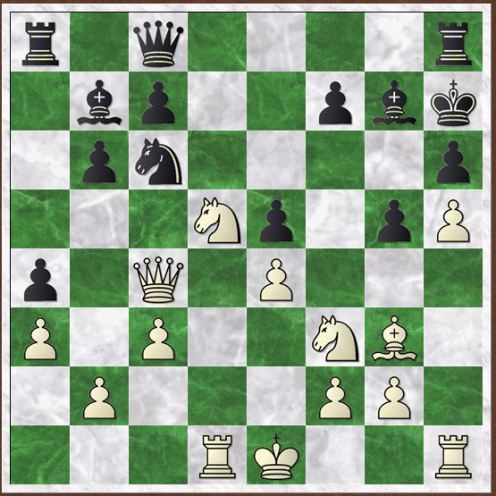
Ljubojevic v Padevsky, Nice Olympiad 1974
Solution
Not too hard today: forcing biffs work, in a single line. 1 Nf6+! Bf6[] 2 Qf7+ Bg7[] 3 Ng5+ 1-0; if 3…hg[] 4 h6 and mate next move.
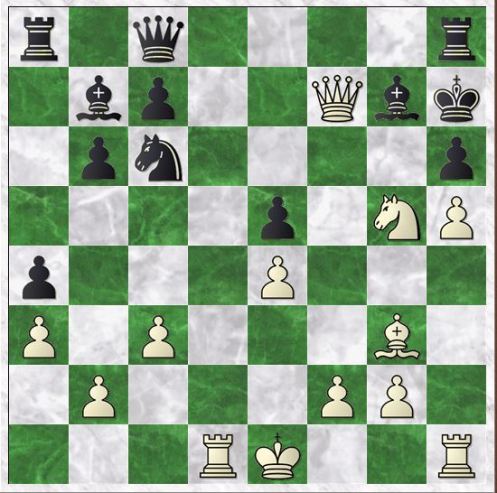
No puzzle today.
Instead, time for reflection. I hope my readers spend some time today, instead, reflecting on their loved ones, as I will be doing throughout a very difficult day.
My dear father died on 11th April, and today is his funeral. So, in advance of today {I always write my blog days or weeks in advance of publication- I am not up blogging religiously and posting at 7am UK}, I have written this posting. And I have timed its publication not for 7am but for when his funeral starts.
Dad didn’t play chess, didn’t to my knowledge know any of the moves. His interests were more physical- playing rugby as a child, and in the army; P.E., including the self defence art of ju-jitsu, and later watching sport, particularly rugby and soccer.
But when I was a child he took me to countless chess events. He must have driven numerous times the 20 miles each way from home to school to pick me up (after his work) after chess matches, and suffered the despondency of his child when I lost, or pleasure when I won. I wonder if I always said thank you? I suspect I often did, but sometimes didn’t. Before then he took me once a week to Golborne chess club where I first met a boy three years younger than me, Nigel Short. Dad would wait whilst Nigel and I played each other, little knowing until later that although beginners we were immediately stronger than the adults at that club.
Of course, in 2006 when I was non-playing Captain for the England men’s team, I gave him my Olympiad participants medal. When I visited his empty home the day after he died, there it was, on his side-board. I doubt I had seen it these last 10 years.
Thank you, Dad, for all you did for me, in life, in supporting my education which was the basis for whatever success I have in my career, and, in chess.
So today, pieces put away in their box, no moves, time to reflect.
Please join me in thinking about and celebrating the loved ones in your life.
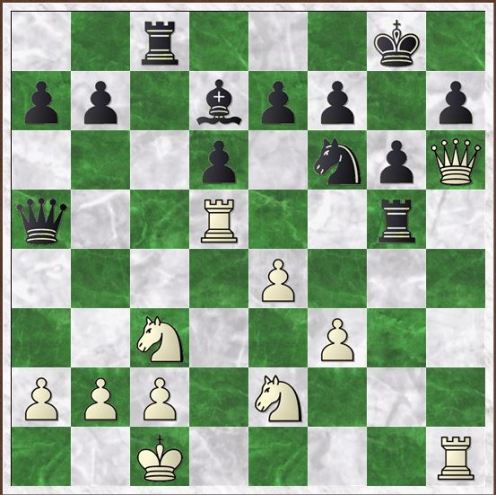
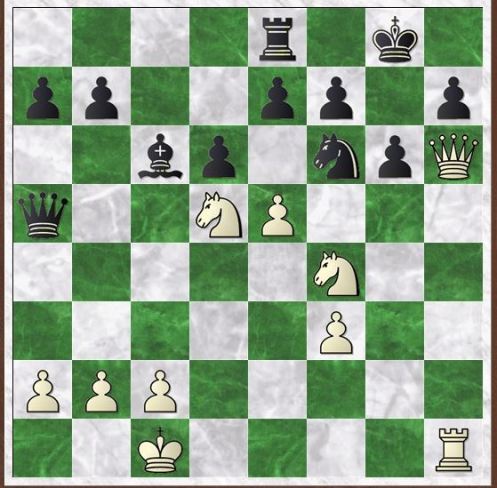
Examine: 1 Rd6 Rc1+ 2 Kh2 Qe5+ (hitting the LPDO Rd6)

Tal v Szymczak, Lublin 1974
Solution
3 Qf4 would lose: Queen’s come off, and White has insufficient fire power to mate or promote the e pawn.
So 3 f4! when 3…Qd6, and it is fairly easy to see that White has the “anchor” of a draw by repetition. I always like it when I have such a safety blanket.

But woe is me! Despite spending a long time on it, and despite setting the pieces out on the board (but not moving them) I simply couldn’t see what Tal saw.
And, as always, when you see the win, in hindsight it becomes obvious. And worse, I saw the winning move 4 Bh5! but rejected it because of 4…Qe6[]
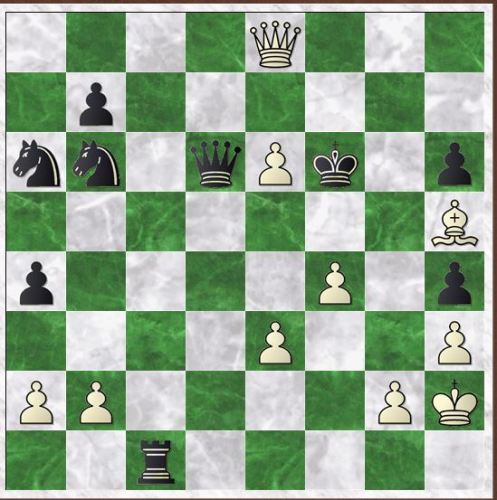
The optical illusion I missed was that after 4..Qe6, 5 Qf8+ wins: the f4 pawn guards two escape squares, so Black is forced to interpose his Q on f7, where it is captured with mate.
Simple? But I was blind to it.
 Posted with Blogsy
Black to play and win
(In the game, White’s last move had been ‘Draw? !!’ to which Black’s reply had been ‘Yes??’.

Calvo v Hamann, Clare Benedict, Menorca 1974
Solution
Not too hard, since, knowing there is a win, and with so few possibilities, any idea has to be tried.
1…h3[] 2 Kh4 g1(Q)+! is the key move, and once seen, it is clear the game is over. 3 Bg1[] Kg2 and the h pawn gets shouldered through.

 allanbeardsworth