Black to play and win
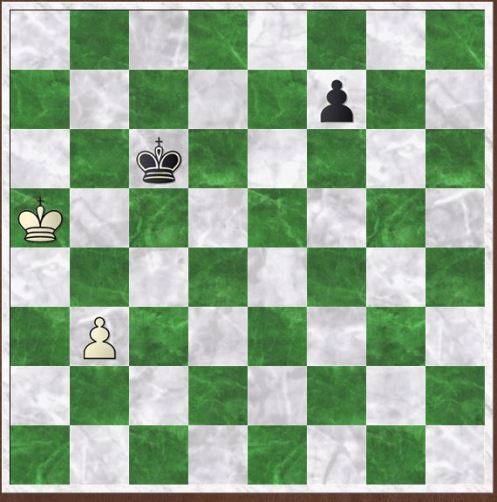
Ljubojevic v Browne, Amsterdam 1972
Solution
If you solved this one, bravo! It is, as I have written before, profound.
I solved it- not because I could actually do it, but because I knew it, having blogged about the ending at length before. It still takes me a good while to fathom why 1…Kd5!! wins and its difference from 1…f5? which Browne played with the players agreeing a draw after 2 Kb4 f4 3 Kc4.
White to play and win
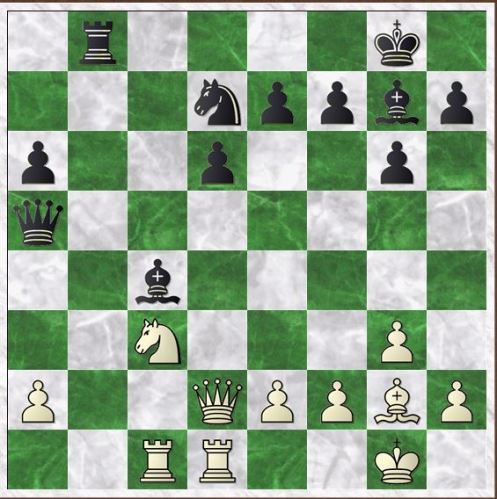
Fischer v Spassky, game 8, 1972
Solution
A rest day today: the Nd5 discovering Qd2-LPDO Qa5 is standard; sometimes it doesn’t work, often it does: here it works, because of the LPDO Bc4 hit by the Rc1, and if it plays a desperado Be2 or Ba2, White also has the desperado Ng6+. So White wins a pawn.
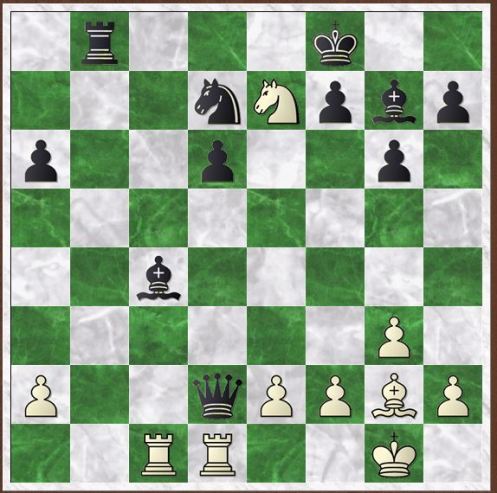
Not exactly winning, unless you are Fischer, Carlsen, or similar. But at least the tictac wins a pawn.
Black to play and win

Spassky v Fischer, Reykjavik 1972 (game 5)
Solution
Part of my chess education: 1…Ba4! and if 2 Qa4, Qe4 is a double attack on e1 and g2: 0-1

White to play and win
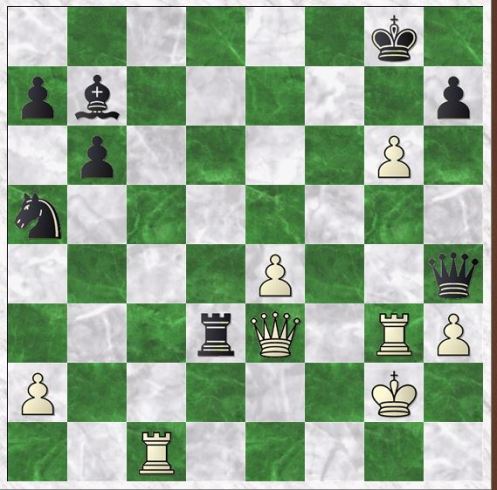
Spassky-Stein, Moscow 1971
Solution
Spassky missed the win, played 1 Rc8+ Bc8 2 gh+ Kh7 3 Qd3=.
The win is impossibly hard to find. I got the initial idea, of reversing the move order and played 1 gh+! Kh7 2 Rc7+
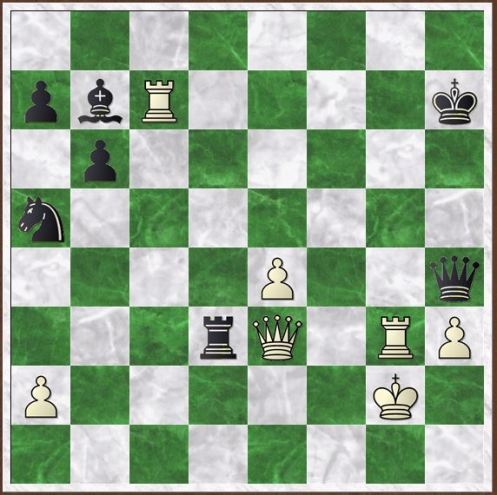
But after 2…Kh8, then what?
The answer is the lovely 3 Rf3!!
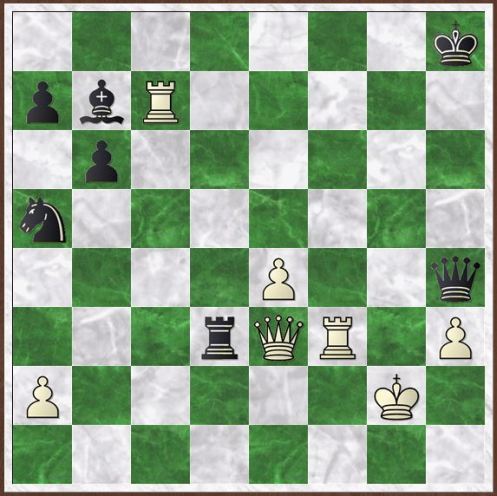
met with by 3…Be4
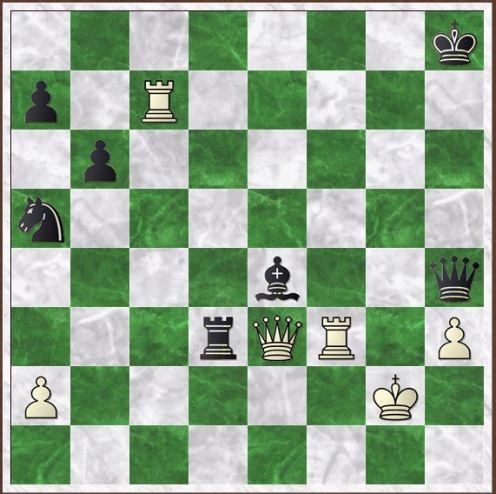
which is answered by the equally beautiful
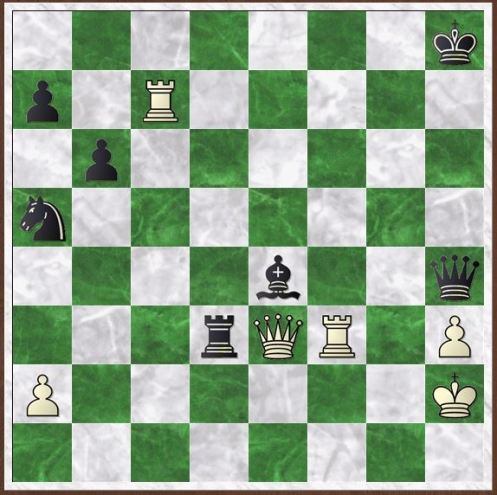
and White wins. If you can’t appreciate the depth and beauty of this, stop playing chess.
Going back to the start, after 1 gh+, if 1…Kh8, then 2 Rc8+, and if 2…Kh7 3 Rc7+ we have the main line; or if 3..Bc8, the pressure is off e4, so that 4 Qd3 wins.
Finally, my engine tells me even in the line Spassky played, 1 Rc8+ Bc8, then 2 Qd3 is winning, rather than the equalising 2 gh+. However: it is too deep for me to see, though I can understand when the engine shows: 2…hg 3 Qd5+ Kg7 4 Rc3!! is the engine’s main line, shifting the rook into a new line of attack.
White to play and win : what happens after the move played in the game, 1 Re1?
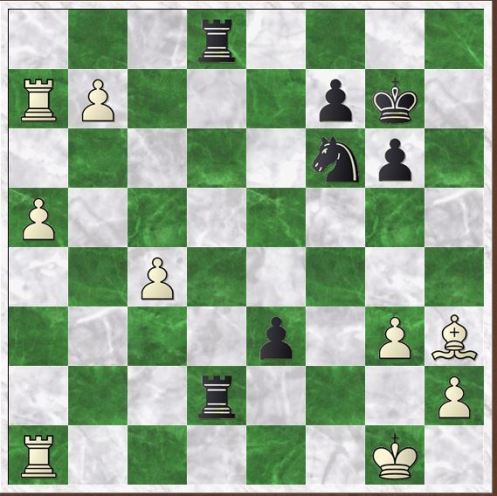
Langeweg v Wade, London 1971
Solution
Deja vu: yesterday’s puzzle showed what should have happened, today is what actually happened: 1 Re1.
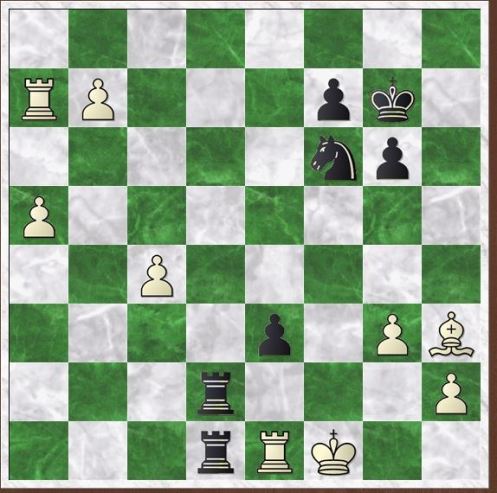
Then 1…Rd1 2 Kf1 but then 2…R8d2!
The position is rife for Purdy’s potassium cyanide, one of my favourite motifs, the e3 pawn ready to move to e2 hitting both f1 and d1: meanwhile Rf2+ and Re1 mate are threatened, and happened in the game so 0-1
Potassium cyanide
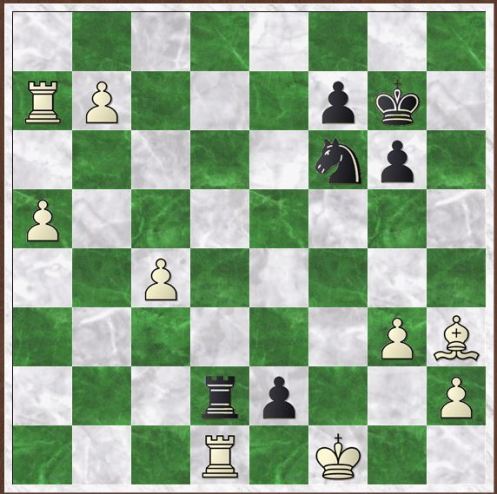
White to play and win
Langeweg v Wade, London 1971
Solution
Not too hard, since in this race, you try obvious forcing moves, and see what happens. 1 Ra8 is the move you first think of, and wins: 1…Rd1+ 2 Rd1 Rd1+ 3 Kg2 e2 4 b8(Q) threatens mate on h8:
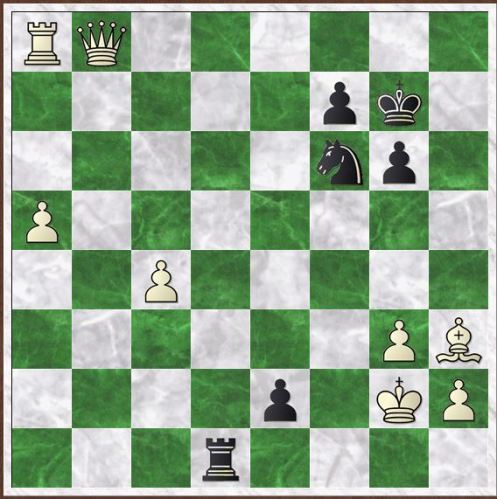
So the desperado 4…Rg1+ aiming for a perpetual if the rook is taken, but 5 Kf3 and the queen promotion isn’t with check, and the Bh3 covers f1: 1-0.
I am writing this at our house in Rosthwaite, the Lake District. The neighbouring village is Stonethwaite, the wettest village in England. The combination of (I) location (ii) it being a Bank Holiday means it is pouring down outside, so we are keeping warm in the cottage.
In the last few weeks’ I have been explaining for probably the last ever time how dividend grossing up calculations work: for the last time, because tax credits are being abolished from 6th April. So twenty plus years of explaining ‘the company pays a net dividend, which is grossed up for notional tax paid by the company; then the total is taxed; then you deduct the notional credit the company hasn’t paid but you pretended it had’…has left clients (I) confused; (ii) happy they didn’t follow a career in tax.
Merely explaining the calculations is enough to result in most clients wishing they hadn’t asked for an explanation, but it has been even worse for a client whose dividends passed through a discretionary trust before received by individuals. Then you have to also explain the second layer of grossing up.
Explaining it all to said client, I remarked it was like the children’s party maths game. Probably an oxymoron, or possibly showing how unfortunate my children have been in the choice of party daddy.
Here it is (with some embellishments)
Think of a number
Think of a number between 1 and 9; suggest they don’t choose 1, because it is less interesting. Suggest that the braver they are, choose a larger number, but warn it is only for the brave, since the multiplication is harder.
Multiply the number by 9. Tell them they should now have a two digit number.
Swap the digits round. Explain that if their number is say 28 (eagle eyed readers note: I know it won’t be) ask them to swap the digits round, making 82.
Add to the two digits. Eagle eyed readers note: I know the ‘swap the digits round’ stage has no affect on the sum, but it helps confuse or prolong.
Deduct 4.
Then ask them to work out the letter based on A=1, B=2, and so on, and, quick as a flash!, think of an animal beginning with that letter.
The answer will be Elephant.
I tried it on my client, over lunch, and, of course, it worked: and then on my 18 year old daughter who…thought it was fun (amazing outcome), so, emboldened, tried on my primary school teacher wife, who also liked it, and asked me to write it down so she could try it on her pupils.
Now back to the wet weekend. That has given me time to work out why it works.
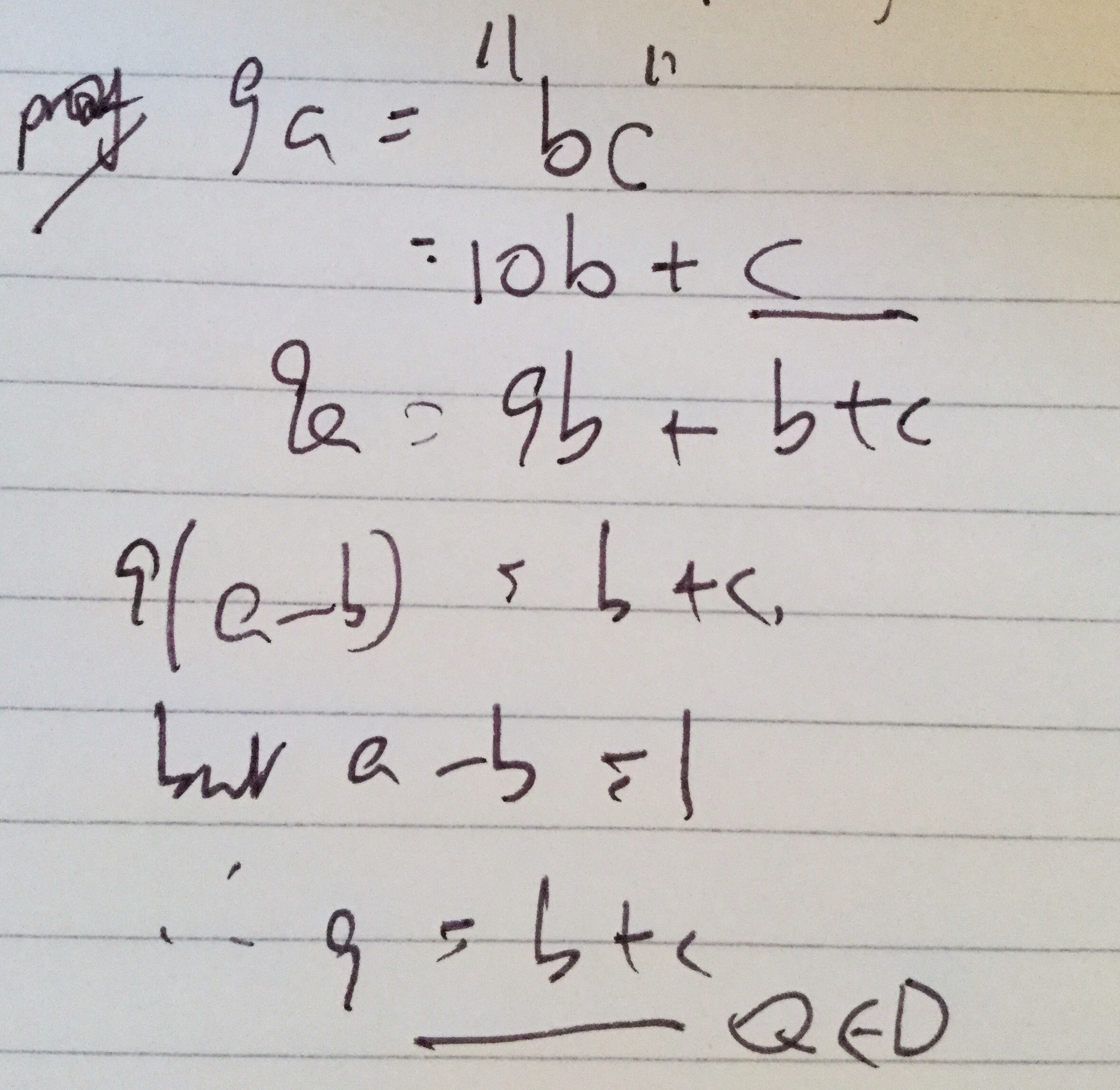
Below is the proof. Not entirely Euclidean rigorous, and it relies on the observation that the ten’s digit is always one less than the number which is multiplied by 9 (so 3*9 starts with a 2). I imagine Mod arithmetic would give a stronger proof, but hopefully my scribbled version is sufficient. The nub is that the sum of the digits is always 9, taking 4 off 9 gives 5, which is letter E, and Elephant is the only animal beginning with E that anyone can think of. I think.
 Posted with Blogsy
White to play and win
A jewel to savour
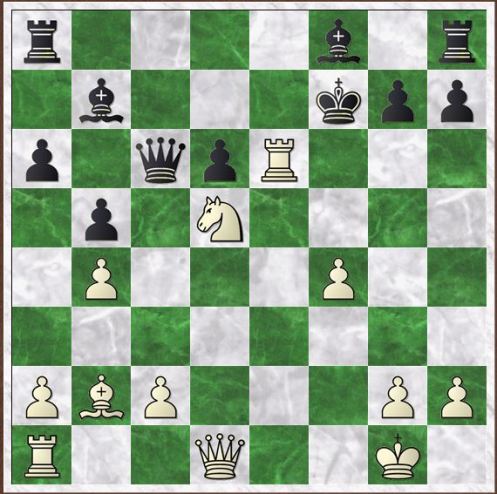
Savermuttu v Juhnke, Hamburg 1971
Solution
I played the prosaic 1 Qh5+ which wins easily enough after 1..Ke6, but 1…Kg8 is a tougher nut to crack. My engine plays sensible, defending the Nd5 by Rd1 and seeing what Black does. White is winning, but in a human-human game, it is unclear.
The engine suggests instead as its second choice 1 c4!! which has the cute point of keeping the Black Q out of the action after 1…bc.
But strongest of all is 1 Rf6+!! with some beautiful lines after 1..Kg8- lines which occurred in the game- but which are best discovered not by me writing them down, but by my readers with pieces and board. There are some joyful lines. [Think of this response as my Pierre de Fermat moment: there are some beautiful lines, but I am not going to show you them].
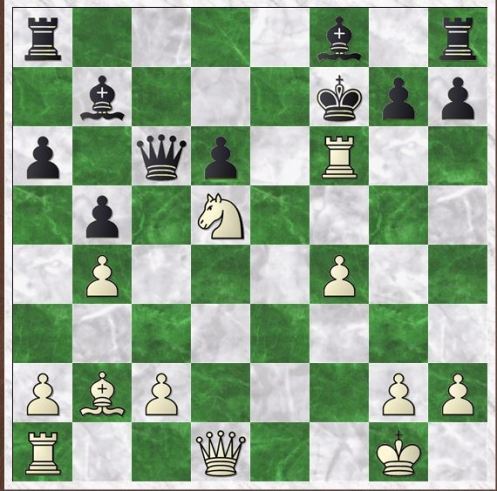
Evaluate 1..Nh4 2 Rc8 Rc8 3 Qh3
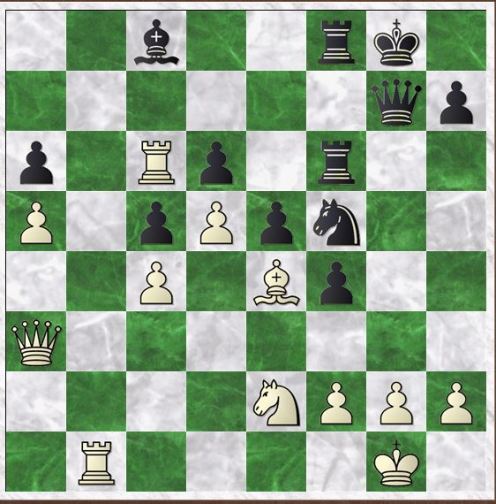
Larsen v Fischer, Denver 1971
Solution
Larsen didn’t play 1 Rc8 after Fischer had played Nh4: after 2 Qh3
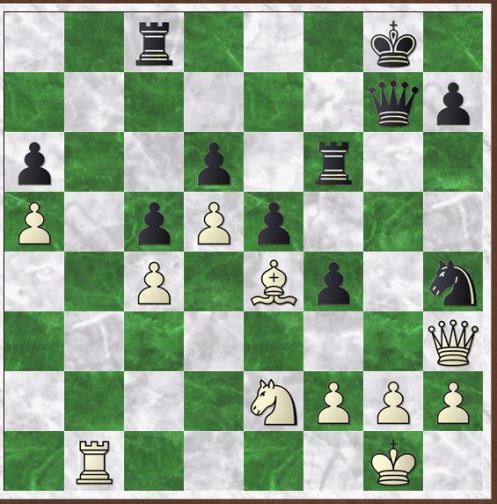
Black has 2…Rcf8! and if 3 Qh4, Rh6! traps the Queen.
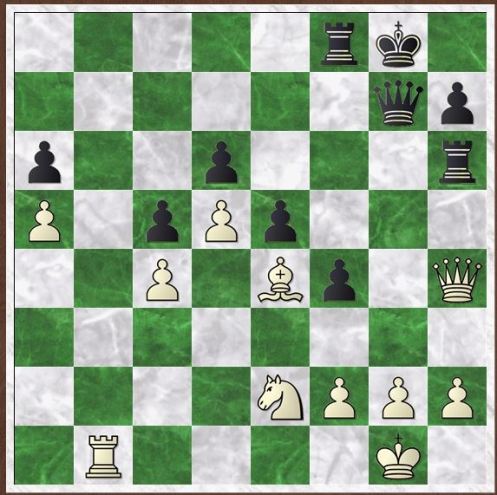
Larsen instead played 1 Qd3, but lost regardless.
White to play and win
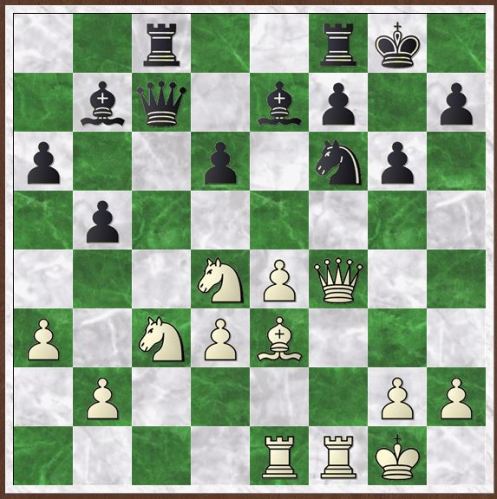
Ciocaltea-Masic, Baja 1971
Solution
The first move is obvious, 1 Nf5 has to be tried.
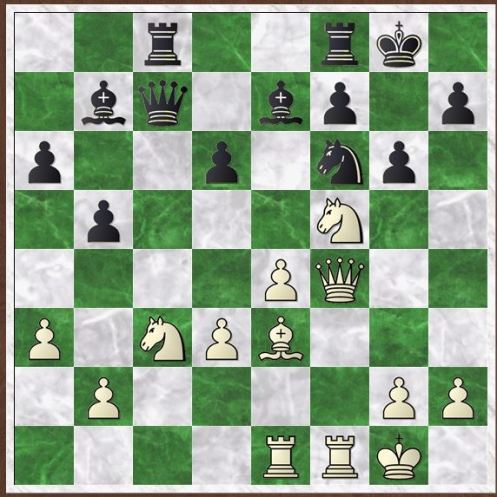
Weakly, I spent a lot of time for some reason visualising something which should have been easy: what happens after the N is captured: 1…gf 2 Qg5+ Kh8[] 3 Bd4 Qd8 and for some reason it took me a couple of sittings before seeing the obvious 4 Rf5 is not well met by 4…Rg8 because of the simple exchanging on f6: 1-0.
Tougher is 1…Nh5 when again 2 Nh6+ is obvious, and Black’s obvious reply, played in the game, is 2…Kg7.
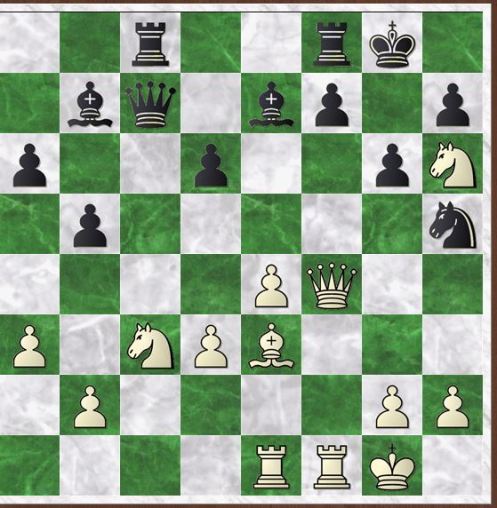
But then 3 Qf7+!! Rf7 4 Rf7+ Kh8[]
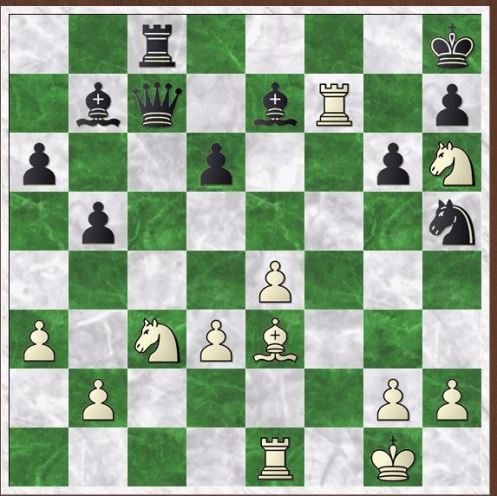
But now what?
Any human being would play 5 Bd4+- and win- the Black Queen falls, but my engine says 5 Ref1 or 5 g4 are both stronger. Of course it must be true, but amazing. Looking at them a bit further, they are both similar: bringing one more piece to the party, aiming to add pressure to f6 after an unavoidable Bd4+: “the threat is stronger than the execution”.
2…Kh8 is similar: White breaks through prosaically after 3 Nf7+ Kg8 4 Nh6+, and in some lines there are sacs: e..g 4…Kh8 5 Bd4+ Bf6 6 Qf6+!! echoes the 2…Kg7 line: 6…Nf6 7 Rf6 and a horrible check is unavoidable.
 allanbeardsworth