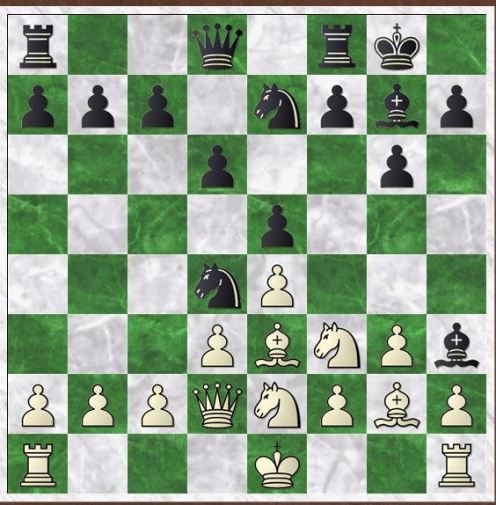
White to play and win
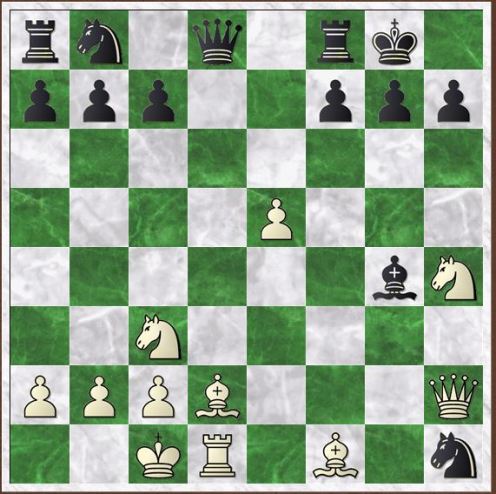
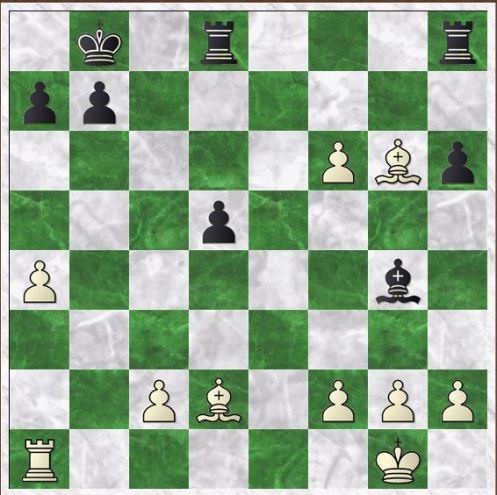
Basman v Griffiths, Bognor 1968
Solution
The source book, Teschner’s “It’s Your Move”, was written in the pre-computer era and extols the line Basman played: 1 Bd3!
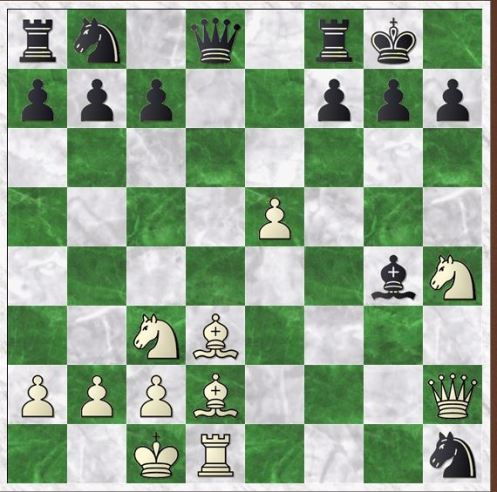
Then 1..Bd3 2 Nf5! with a threat of 3 Ne7+ discovering a double attack on h7. The books gives various lines but not the diversionary defence 1..Nf2! which puts an equalising spanner in the works. The Q is diverted from eyeing h7, and Black has time to develop and defend: unclear.
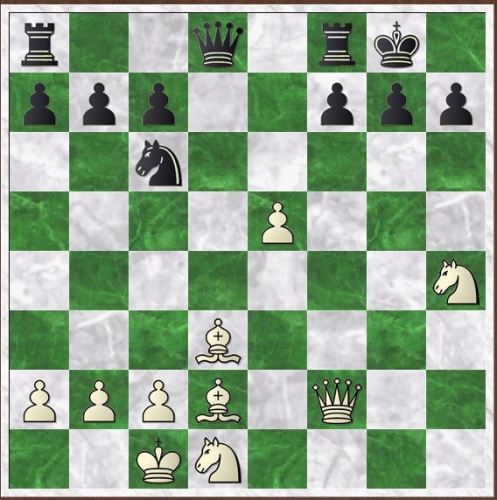
Instead, 1 Be2 is my engine’s suggestion, quickly assessing the position as+3: White takes the Nh1, and has too many pieces out. I can see why an engine will say +3 even though it looks unclear to me. One to study if interested.
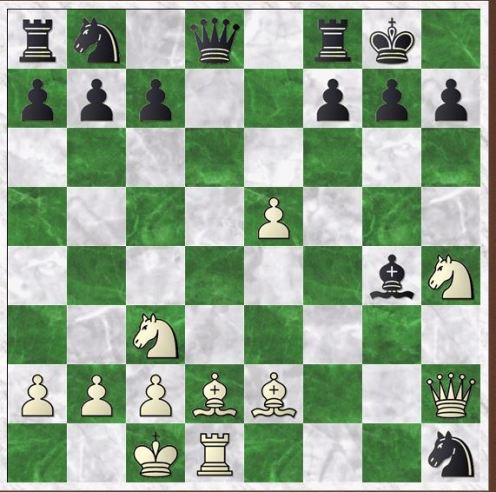
White to play and win
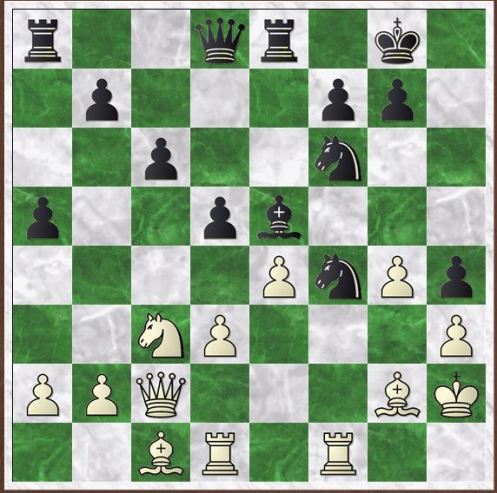
Keene-Darga, Cheltenham 1971
Solution
Not too hard today: after realising that exchanging on f4 fails to Qc7 pinning, 1 d4! breaks the pin.
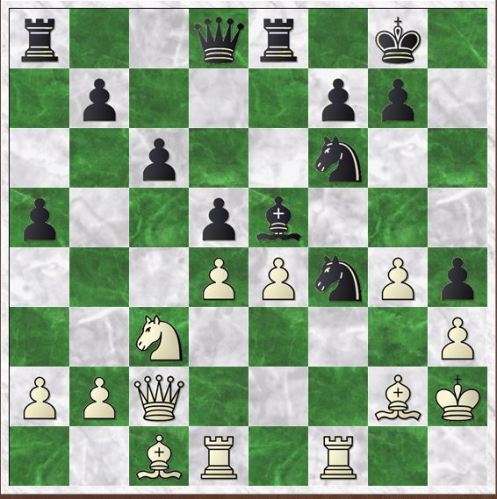
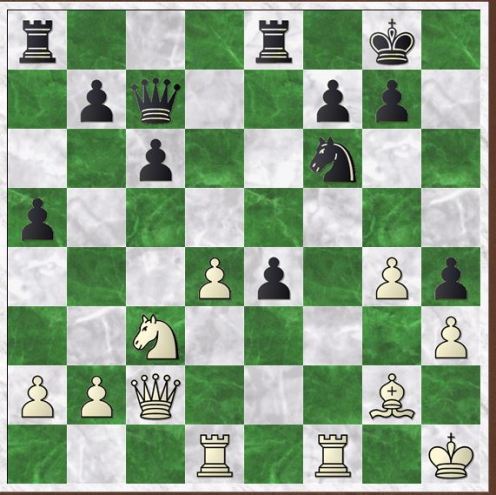
Then, after exchanges, White is a piece up, rounds up the e3 pawn, and the win is then trivial.
Black to play and win
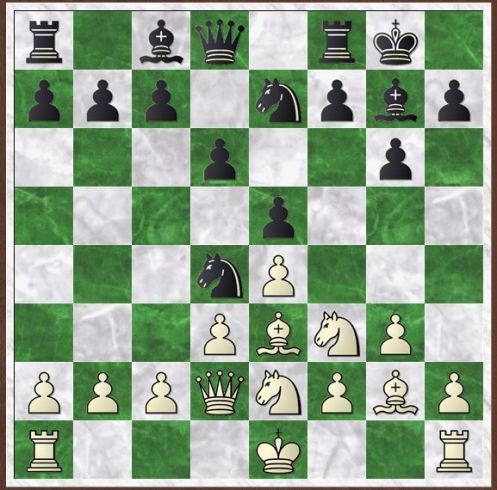
Barcza v Tal, Tallinn 1971
Solution
Straightforward today: 1…Bh3 wins a piece, by a common motif.
White to play and win
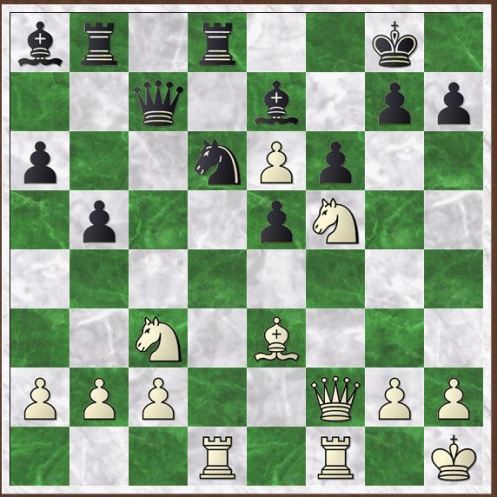
Laakmann v Jana Bellin, Cheltenham 1971
Solution
A much tougher one, and the best move, 1 Bb6! came to me after all else failed.
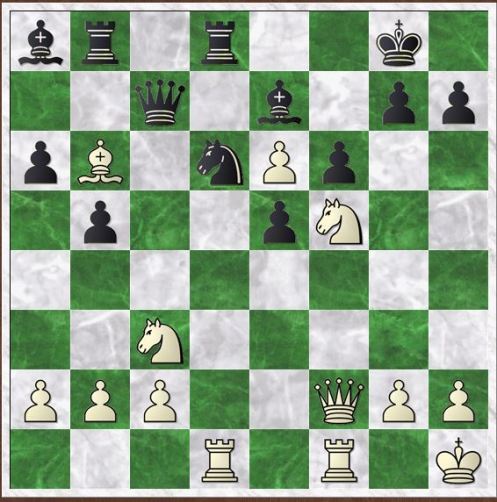
If 1…Rb6 then 2 Ne7+ and after K moves, 3 Ned5 picks up the exchange, as White also does after 2…Qe7 3 Qb6. So instead 1…Qb6[] when 2 Ne7+ Kh8 3 Qb6 Rb6[] 4 Nf5
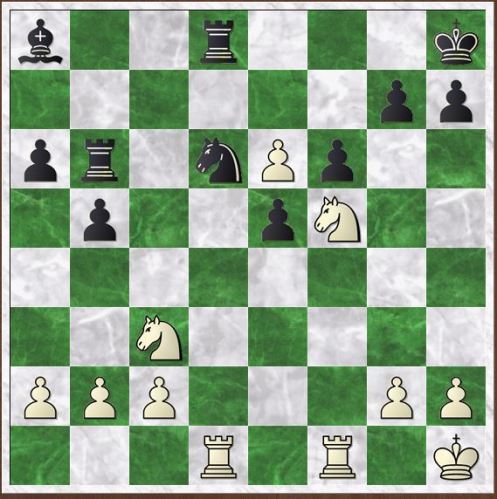
and the surprising thing, which I couldn’t see from the initial position, is that the bind (which I could see) was winning. The threat of e6-e7 overloads the Rd8 which can’t protect the eighth rank and the Nd6 at the same time.
In the game, White chose the weaker 1 Rd6 Rd6! (1…Bd6 2 Ba7! rather than the move Teschner gives, 2 Qg3 which is met by 2..Kg8 or 2…g6) and Black eventually won.
White to play and win
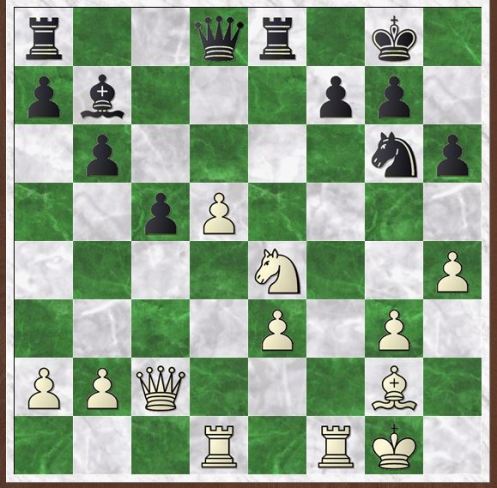
Keene v Robatsch, Madrid 1971
Solution
Part of my chess education, as a British junior of the Fischer era: I have seen this game of England’s second (correction, previously I wrote first, by mistake) GM many times.
1 Rf7! Kf7 2 Rf1+ Ke7 (2…Kg8 3 Nf6+) 3 d6+ Kd7
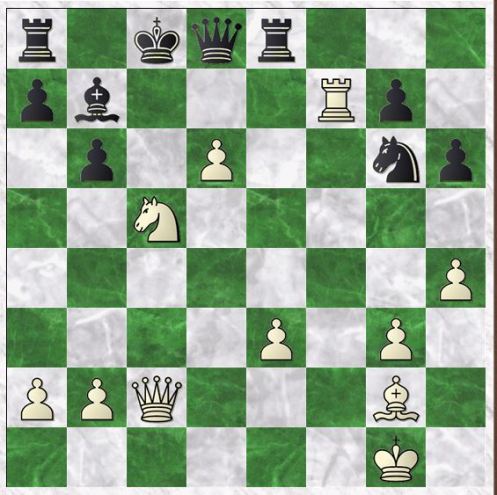
4 Rf7+ is curtains. Nc5 follows.
White to play and win
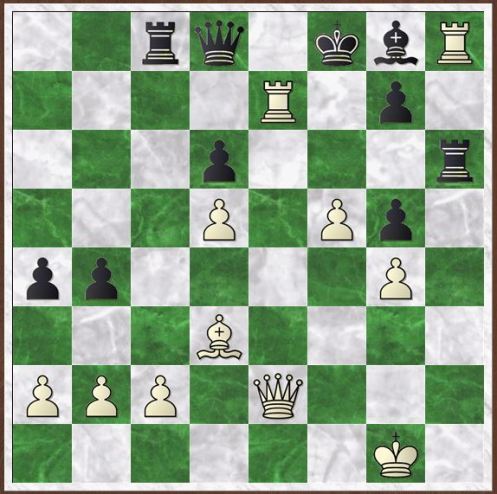
Ciocaltea v Malich, Siegen Olympiad 1970
Solution
Examine all biffs leads quickly to 1 f6! which causes collapse. Not much more to say today.
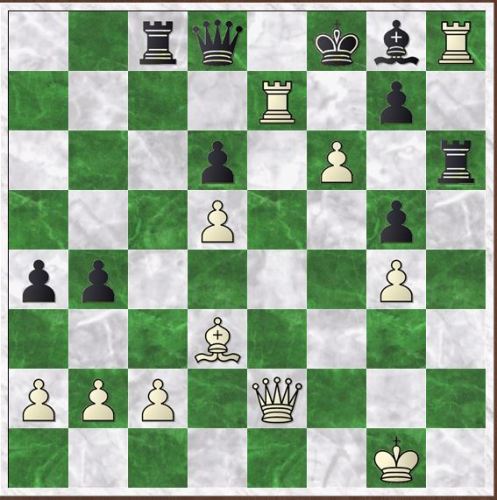
Black to play and win after 1 cd+
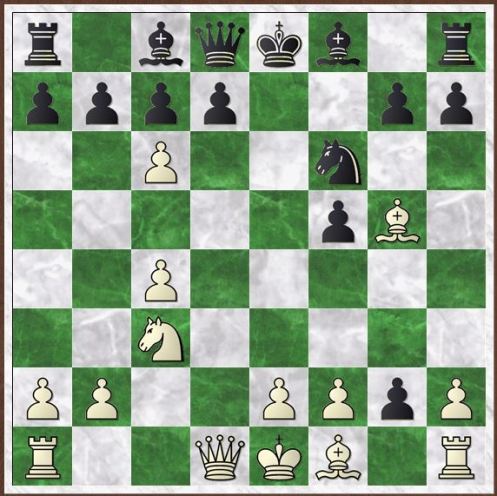
Duroshkevich v Tukmakov, Riga 1970
Solution
As with yesterday’s puzzle, today’s is also part of my chess education: 1…Nd7 wins a piece.
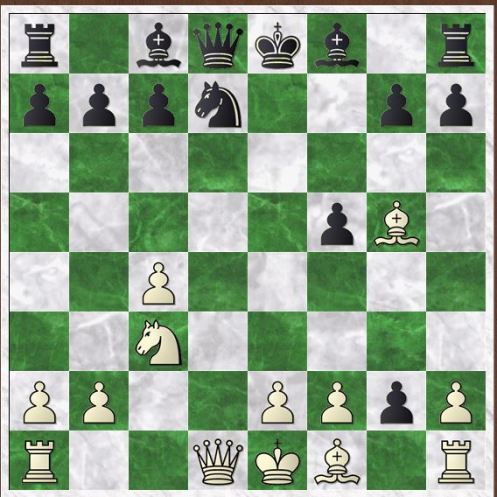
White to play and win
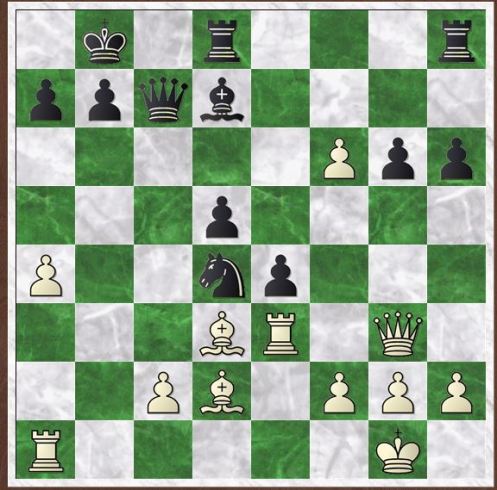
Fischer v Schweber, Buenos Aires 1970
Solution
Part of my chess education: I am, after all, a child of the Fischer era.
1 Re4! Qg3 2 Rd4! and the Black Queen is trapped: White emerges with a dominant position.
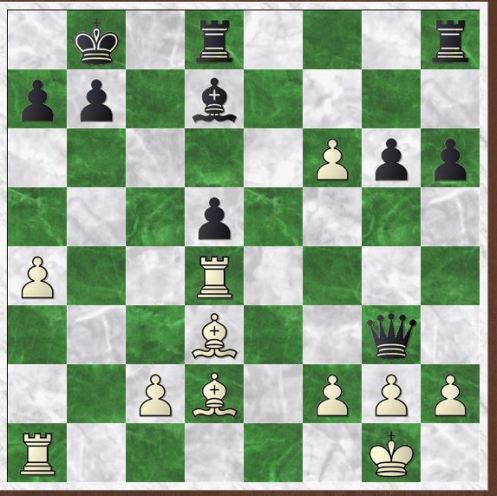
In the game, Black played 2..Qg4 and White emerged with a dominant advanced passed pawn and the two bishops for the exchange.
Black to play and win
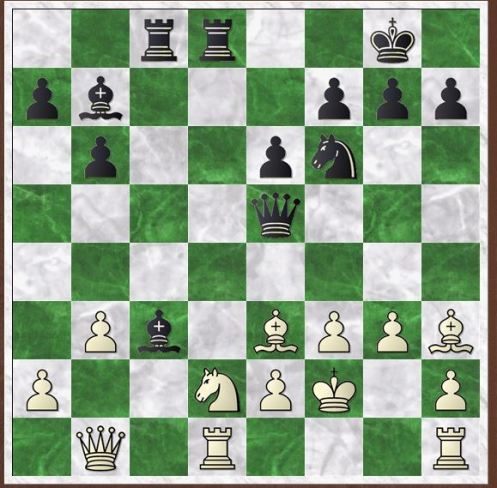
Agdamus v Rubinetti, Buenos Aires 1970
Solution
The first moves are obvious: but personally, I couldn’t see to the end, though intuitively Black should have sufficient.
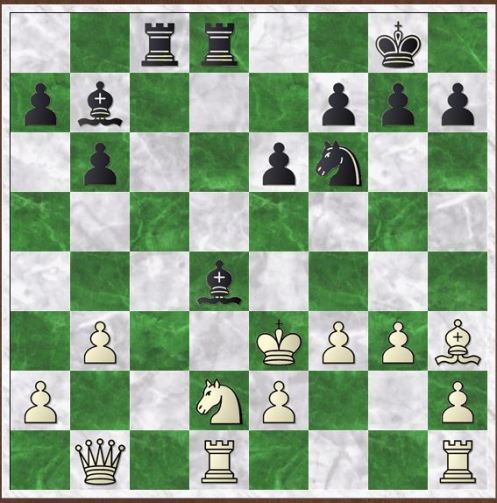
1…Qe3+! 2 Ke3[] Bd4+ 3 Kf4 (3 Kd3? Bf2 mate)
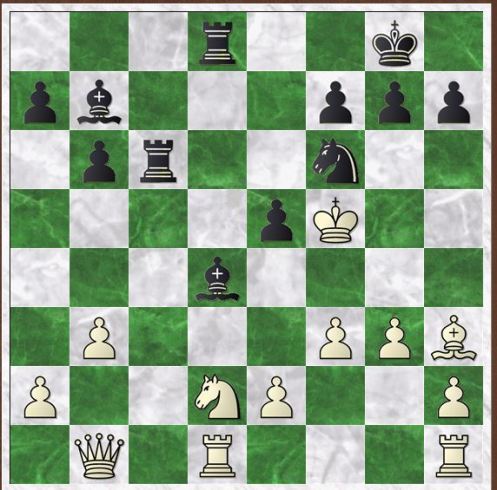
3..e5+ 4 Kf5 Rc6 and with threats like Bc8+, h6+, g5+ Black is winning.
White to play and win
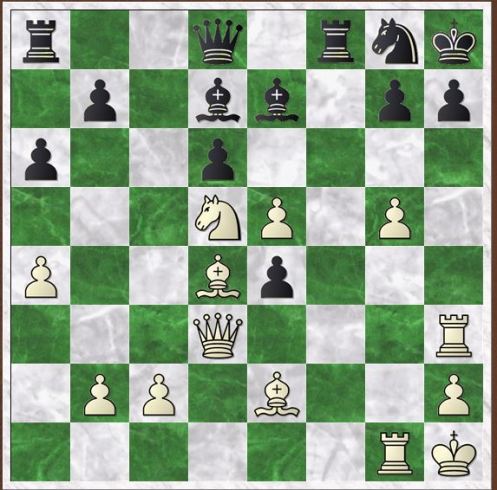
Tukmakov- Panno, Buenos Aires 1970
Solution
I chose the prosaic 1 Rh7+! which wins after 1…Kh7[] 2 Qe4+ Bf5 3 Qh4+ Nh6[] 4 Ne7.
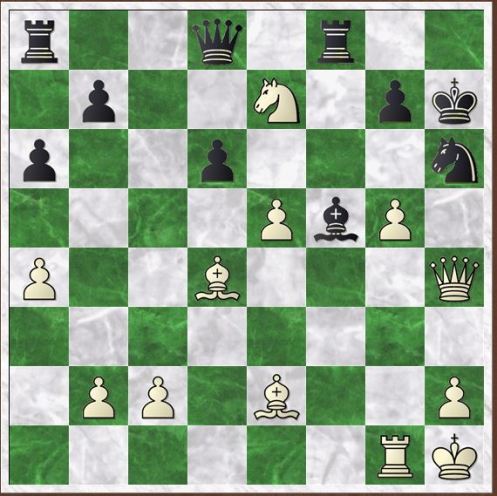
If the N is recaptured, then 5 g6+ wins the LPDO Queen.
But White had better, 1 e6!!
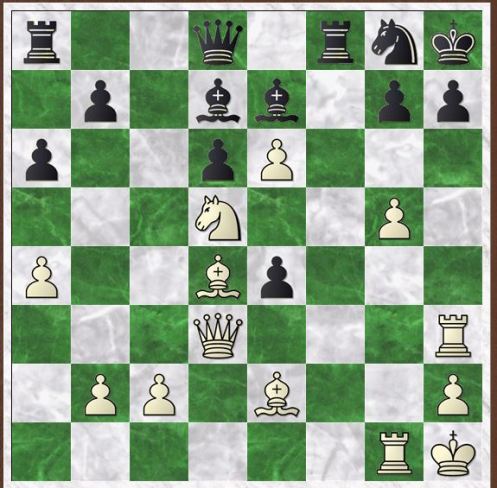
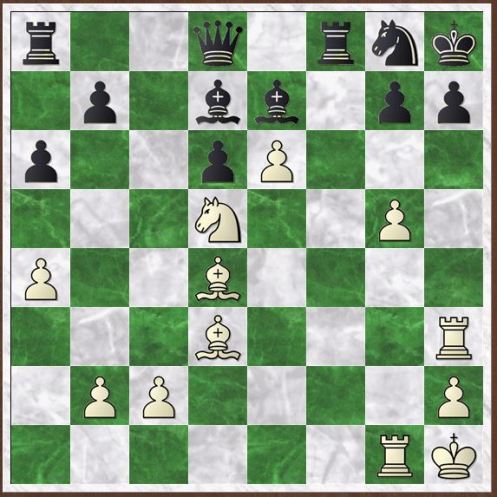
For if 1…ed, 2 Bd3 and Black is powerless: best for readers to look at Black’s tries and see his helplessness for themselves.
 allanbeardsworth