Black to play and win
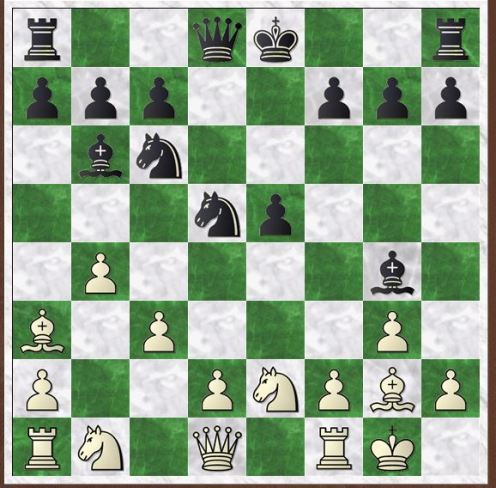
Jacobsen v Ljubojevic, Groningen 1969-70
Solution
A lovely one today, and very hard – it took me a good while, looking at very confusing and similar lines, and throwing away various pieces on b4, e3, d4 before finding 1…Nf4! with the key move then being 2 gf Qd3!! – for a while I tried to make 2..ef work, but, if nothing else, 3 Qe1 refutes it.
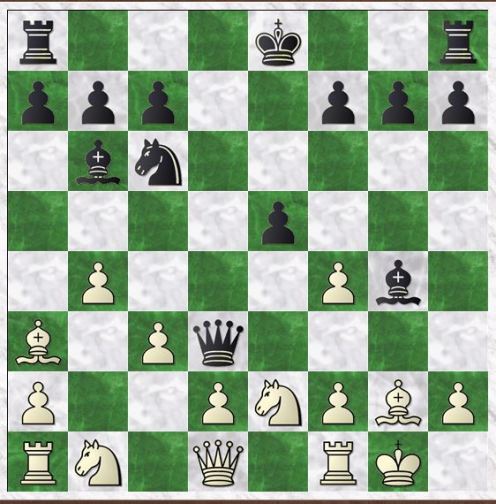
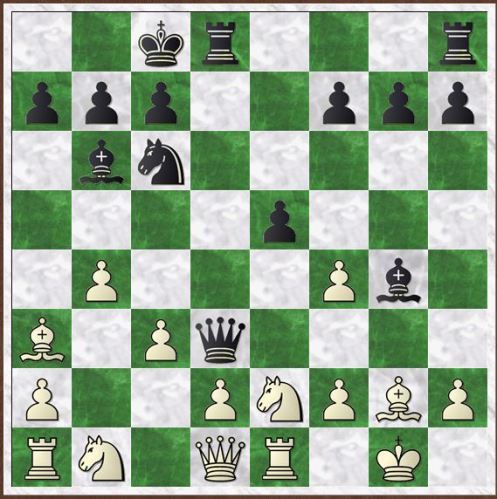
But after 2..Qd3 White is totally trussed up: 3 Re1 0-0-0 and at some stage, trouble on f2 or somewhere else, dependent on how White wriggles.
(i) White to play and win
and (ii) evaluate 1 Ra6
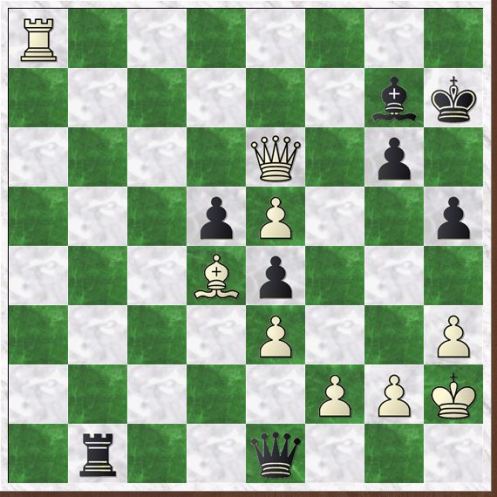
Lehmann v Cordovil, Malaga 1970
Solution
Second part first: 1 Ra6? loses to 1…Qg1+[] 2 Kg3[] h4+!
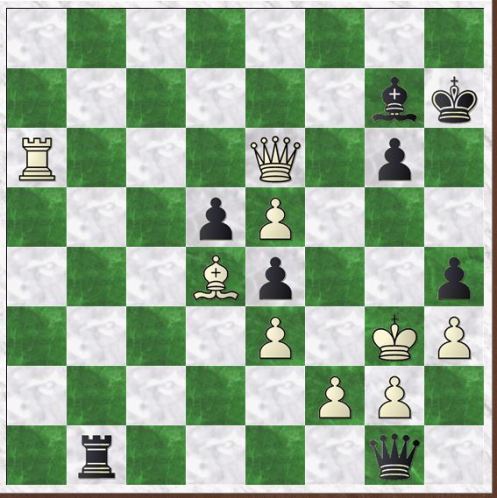
3 Kh4 Qg2![] defending the Pg6 and giving Black sufficient time to follow up with Rh1/ Rg1/Qf2.
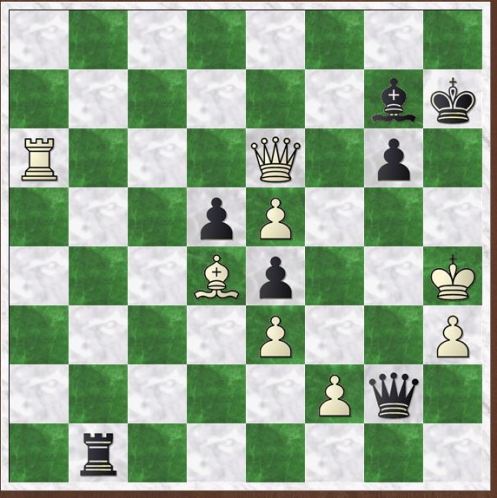
The key point in Black’s winning line is Ph4+! so the way White wins is 1 h4!. There is the threat of mating with Qg8+ Qg7+! e6+! Rh8 mate, and Black is powerless against it.
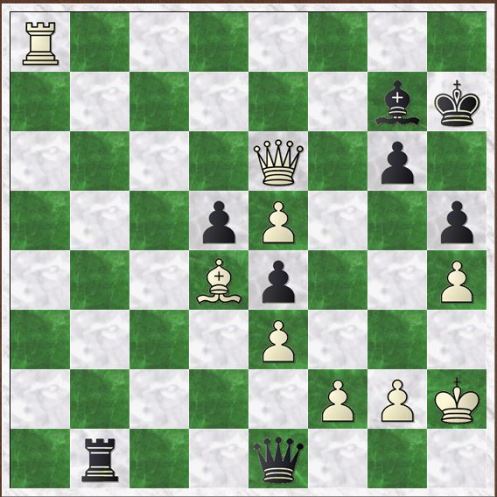
White to play and win
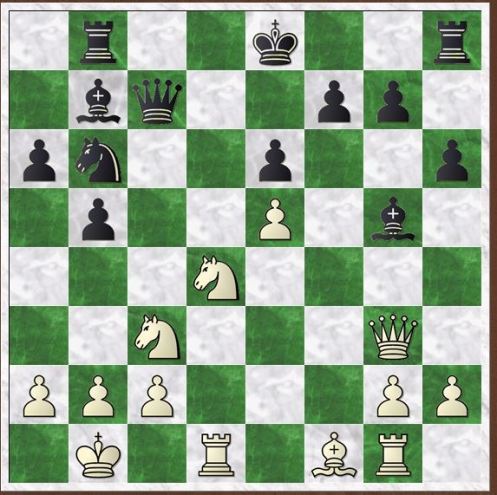
Hecht v B Kristjansson, Reykjavik 1970
Solution
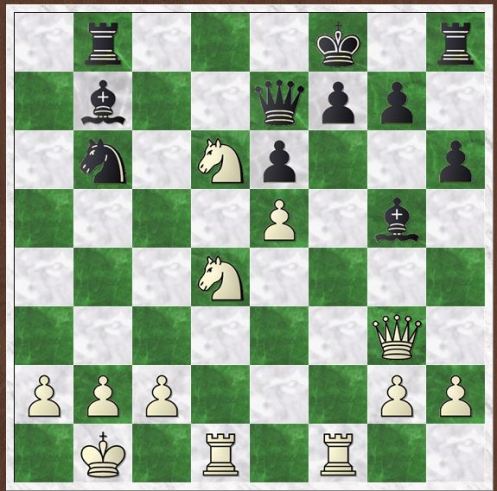
Not too hard, but I totally miffed this one. I played 1 Ncb5, convinced it wins, but part of my reasoning was that after a Nd6+ I could follow up with Rf1-f7; but alas, the R is on g1- so a total fail. I thought the problem was easy, and checked the solution too quickly.
Instead, 1 Bb5+! is the move, partly to vacate f1 the said rook.
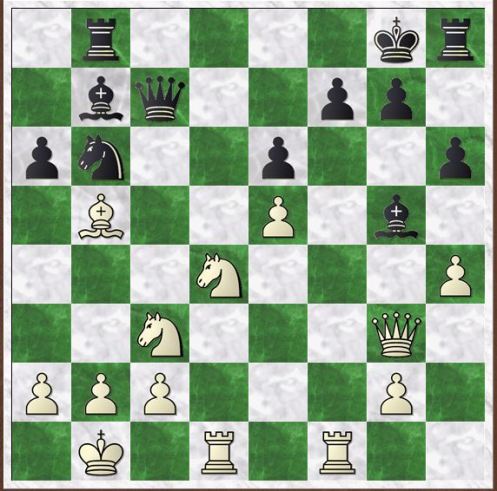
In the game, Black didn’t capture, and lumbered on a pawn down: White’s attack was also easier than Black’s play. 1 Bb5+! Kf8 2 Rf1 (threat 3 Ne6+) Kg1 3 h4 and White dominates.
Or 1…ab 2 Ncb5 Qe7 3 Nd6+ Kf8 4 Rf1 with a similarly overwhelming position.
White to play and win
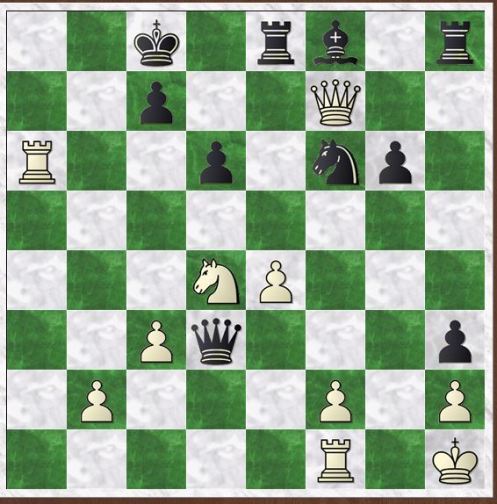
White actually played 1 Rfa1 and lost – how?; and how could he have won?
Burkett – Fritzinger, California 1969
Solution
Not too hard it being a puzzle, but in the game White erred playing 1 Rfa1? which was met by 1…Qe4+ 2 Kg1 (2f3 same) Qe1+ and mate next move.
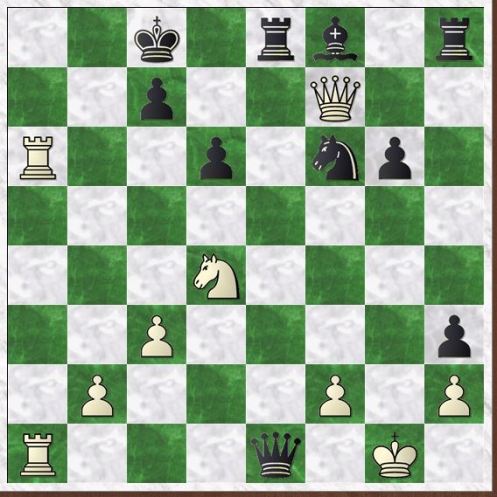
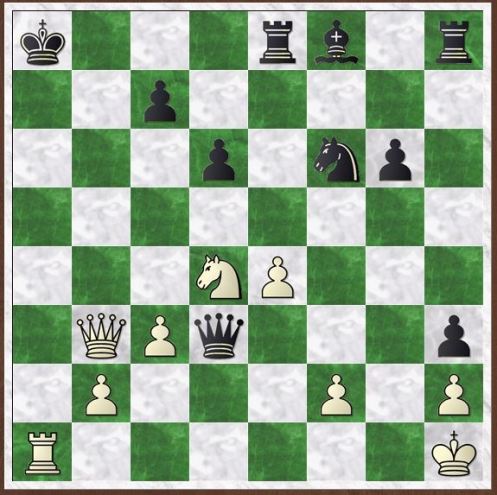
Instead, 1 Ra8+ Kb7[] :
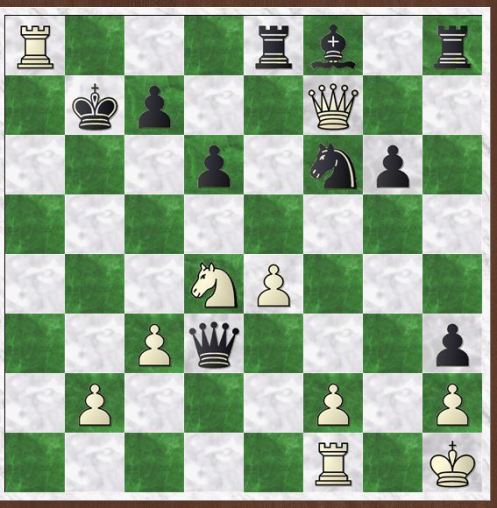
My solution was 2 Ra7+! Ka7[] 3 Qc7+ and mates on the a line, but equally 2 Qb3+ mates on the same line, and is prettier: 2…Ka8[] 3 Ra1+ etc.
White to play and win
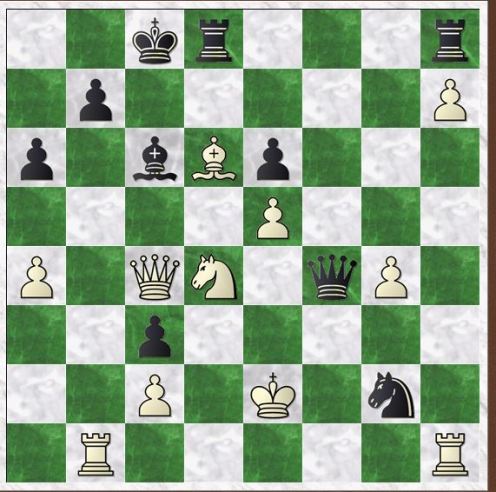
Bures- Zikan, corres 1969
Solution
More or less desperado, but 1 Qc6+! begs to be tried, and in fact wins. 1…bc[] 2 Rb8+ Kd7[] 3 Rb7+
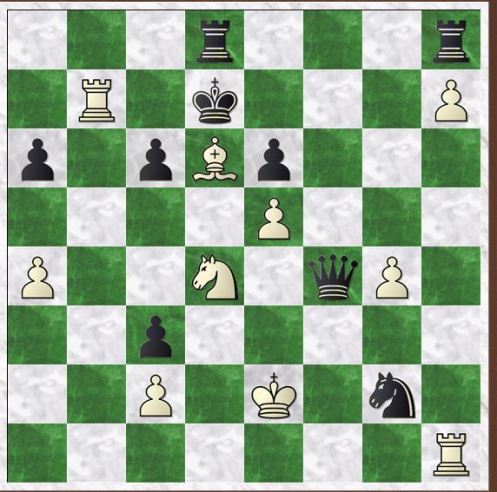
3…Ke8 4 Re7+ and 5 Ne6 mate (because of the Ph7) whilst 3…Kc8 4 Rc7+ 5Nc6+ and 6 Ra7 mate.
White to play: can he play 1 c6*d7?
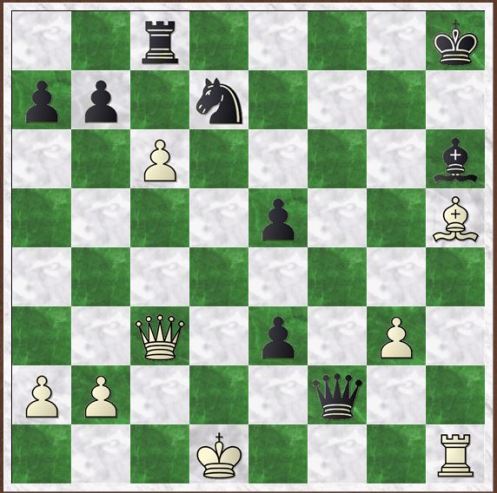
Smirnov v Yeleznov, USSR 1969
Solution
The answer is, “he might as well” since all moves lose, and here Black must fund something; but it is not too hard: 1 d7 e2+ 2 Be2 Qd4+!
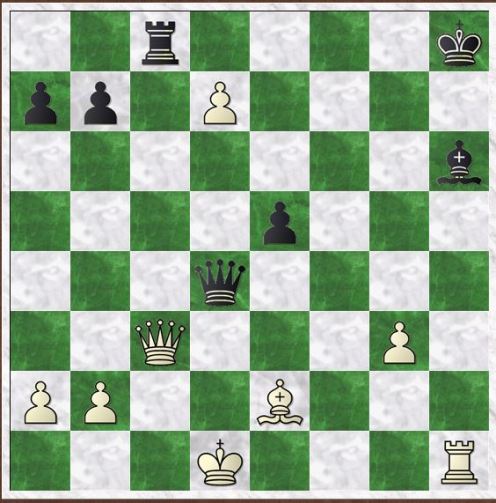
and it is all over. If the King moves, or the B interposes, the Q can be taken, since the Qd4 controls the promotion square. So 3 Qd4 but then 3..Rc1 is a pretty mate.
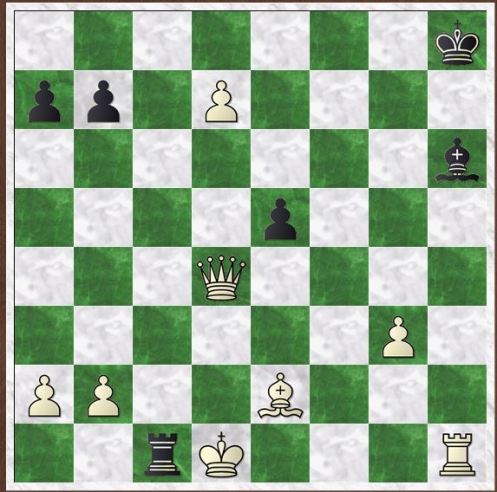
White to play and win
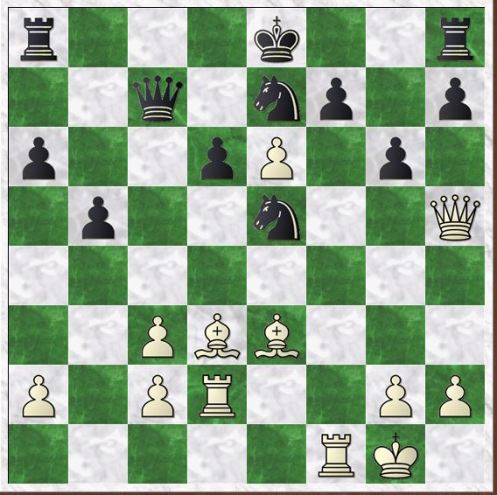
Tal- Suetin, Tbilisi 1969-1970
Solution
For once, a Tal problem which is not fiendishly difficult. Examine all biffs leads quickly to 1 Qe5! de[] 2 ef+ Kd8 (2…Kf8 3 Bh6 mate) and now 3 Bf5+ is murderous, but my engine says 3 f8(Q+) is even stronger.
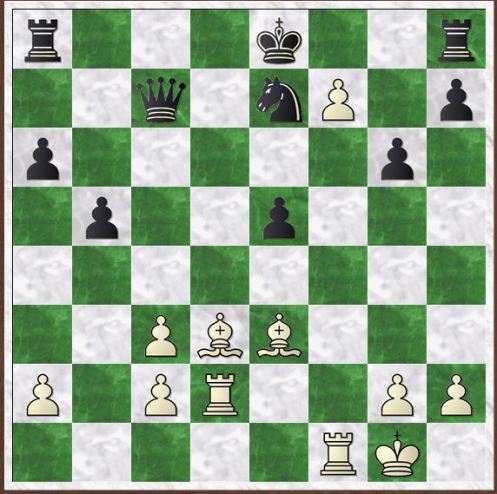
Black to play and win
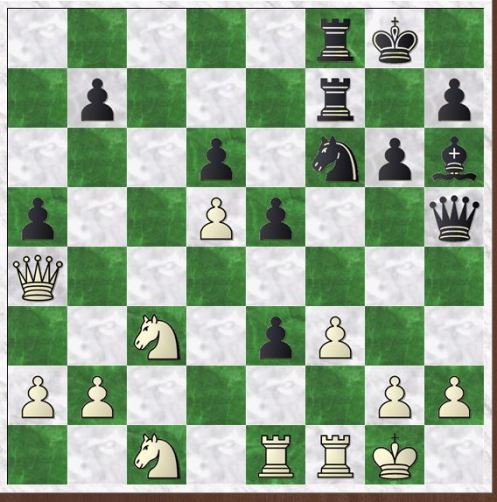
Spiridonov v Tal, Tbilisi 1969
Solution
I make an exception for Tal, especially, as here, where the position is a mess. Black won by 1…e2! 2 Re2 Ng4! and several more tactics: my engine tells me this wins, but so do other moves- I suspect I could write chapters, which isn’t my aim – seeing 1…e2 and 2…Ng4, or equivalent strong messes like 1…b5 and 1…e4 isn’t hard: I’ll leave the lines to those readers who are interested. The game is in Megabase.
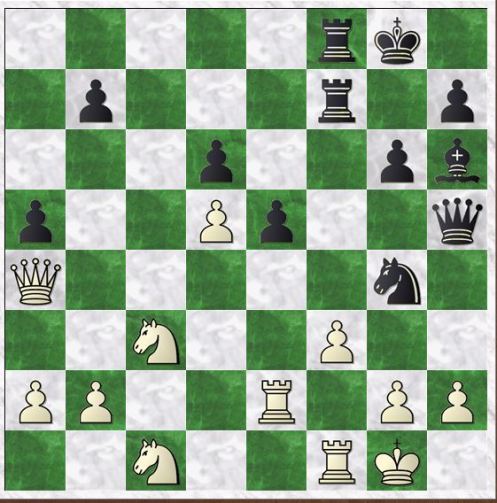





White played 1 Be5; what happened?
How instead should White have played?

Sahovic v Matulovic, Belgrade 1969
Solution
First question has fairly standard answer, 1..Qa1+ and mate next move after 2 Ba1[] Ra1 mate.
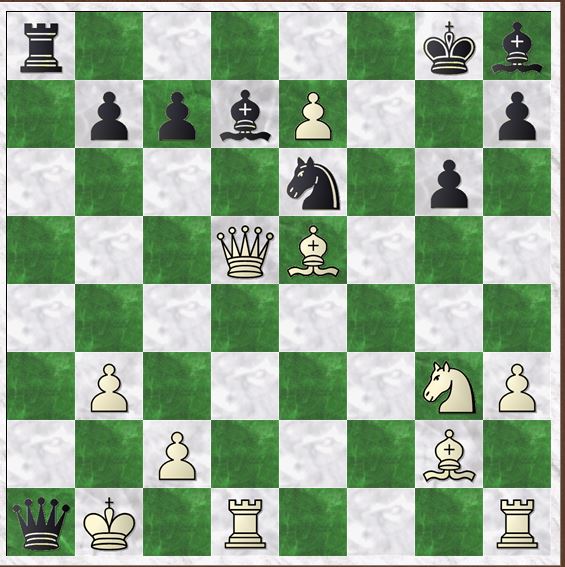
Second question is harder: 1 e8(Q)+ either deflects the Ra8, meaning that the same Qa1 tictac doesn’t work, or if 1…Ba8 then 2 Qe6+ safely picks up a piece, and e.g. 2…Bf7
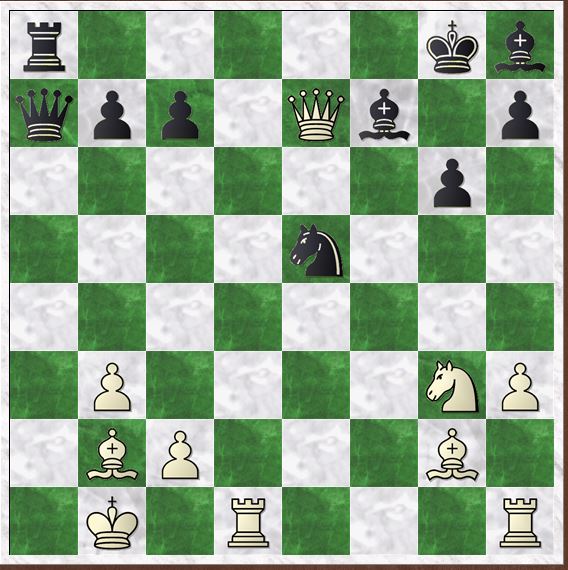
3 Qe7?? threatens 4 Rd8+ and thus keeps the piece, except that Black has a hidden tictac: 3…Qa2+ 4 Kc1[] Qb2+!! 5 Kb2 Nd3++ 6 Kb1 Ra1 mate.
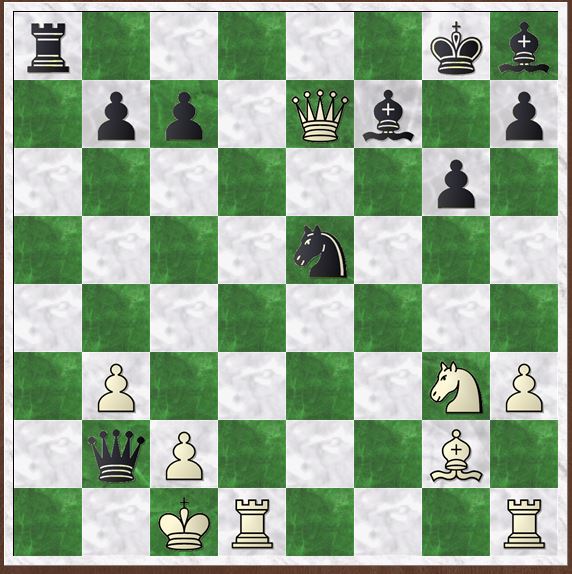
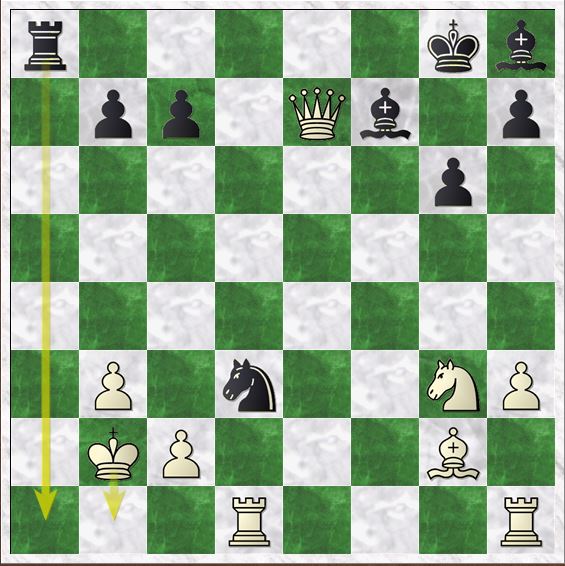
White would have to grovel with 3 Qe5 when after exchanges, Black is to be preferred: 3…Be5 4 Be5 Bb3 5 cb Qa2+ 6 Kc1[] Qg2 and White is just about holding together.
So instead 1 Qe6+! Be6 2 Rd8+ and the pawn safely queens, since the Black King must move to g7, blocking the Bh8’s line of sight.
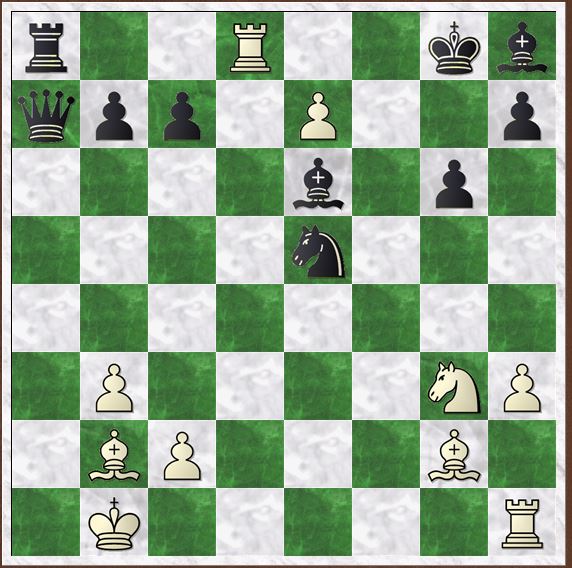
Also, a prophylactic move such as 1 c3! would also be mean (i.e. winning; White keeps control) Black’s pieces lack stability and will fall apart.
 Posted with Blogsy
 allanbeardsworth