Black to play and win
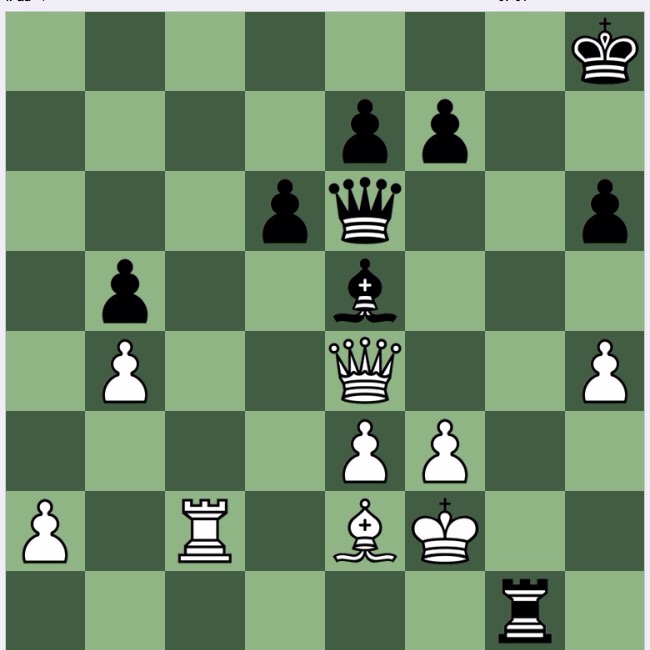
Larsen v Unzicker, Santa Monica 1966
Solution
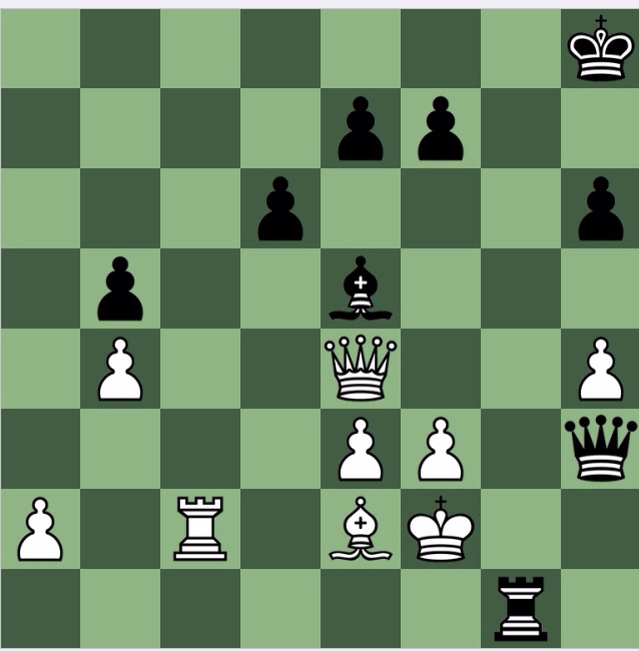
Not too hard today, since 1…Qh3 is virtually the only try: and once you can see that 2 Kg1 Bh2+ mates (in typical fashion) then it is game over. If 2 Rc8+ Black simply ignores the rook, playing 2…Kg7.
 Posted with Blogsy
White to play and win
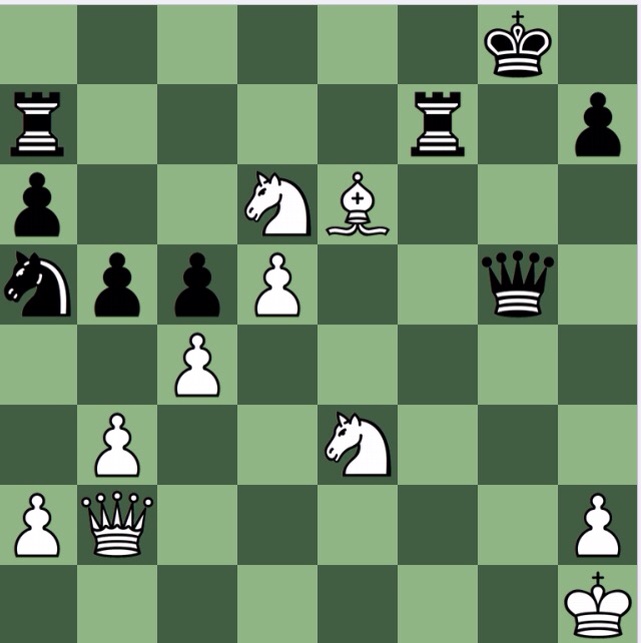
Petrosian v Spassky, World Championship, game 10, 1966
Solution
Part of my chess culture. I recognised this position, and knew where it was from, and, of course, the solution.
1 Bf7+ Rf7 (1…Kf8 2 Qh8+ Ke7 3 Nef5+ Kd7 4 Qc8 mate) 2 Qh8+! and Nf7+ forking follows.
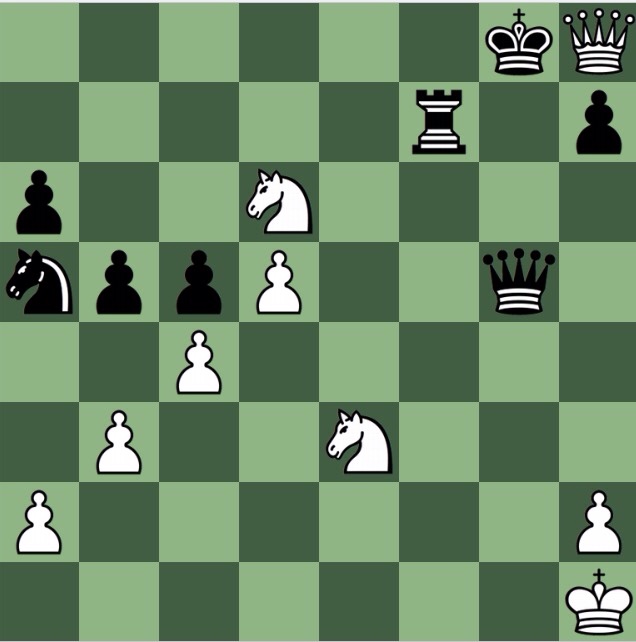
White to play and win
One worth spending time on: I didn't, getting the solution wrong.
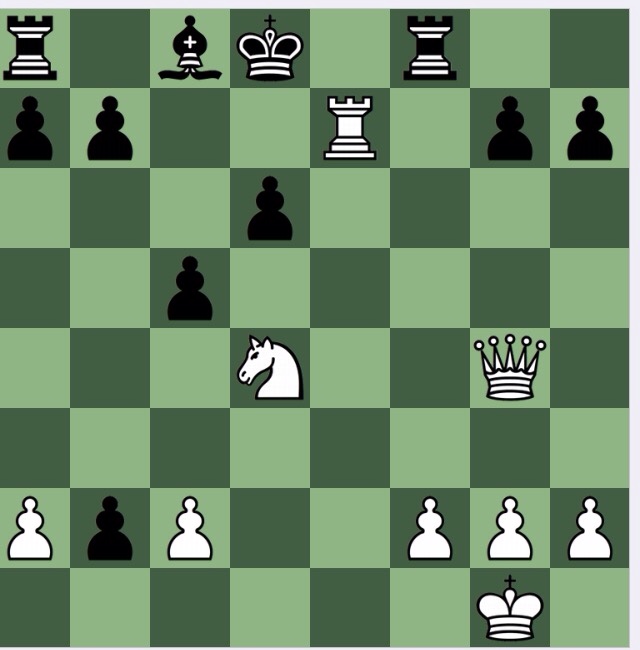
Sokolov v Rushnikov, corres 1965-6
Solution
After a short while, I found the idea: Q to the h4-d8 diagonal, and if 1..b1(Q), then Re1 dis+. I then figured 'not 1 Qg5 because of 1…h6, and if 2 Qh4 g5 0-1’, and thought I had the solution, so entered the position into Stockfish, to write this posting. I therefore chose 1 Qh4
1 Qg5!:
So, firstly, I checked that 1 Qh4 was the same, but almost when entering the changed position, I realised 1…Rf4!; whereas after1 Qg5 there is no 1…Rf5 biff due to 2 Nf5. But what after 1….h6?
Stockfish played 2 Rb7+!!
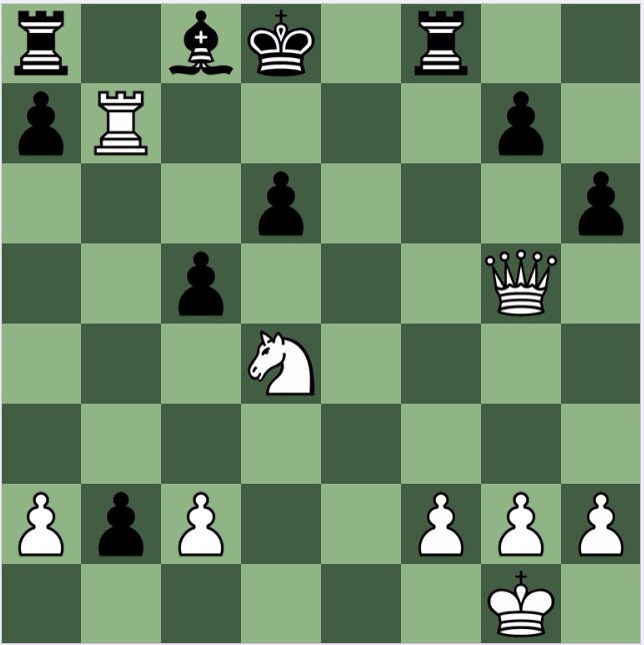
2…hg 3 Nc6+ Ke8[] 4 Re7 mate. Lovely.
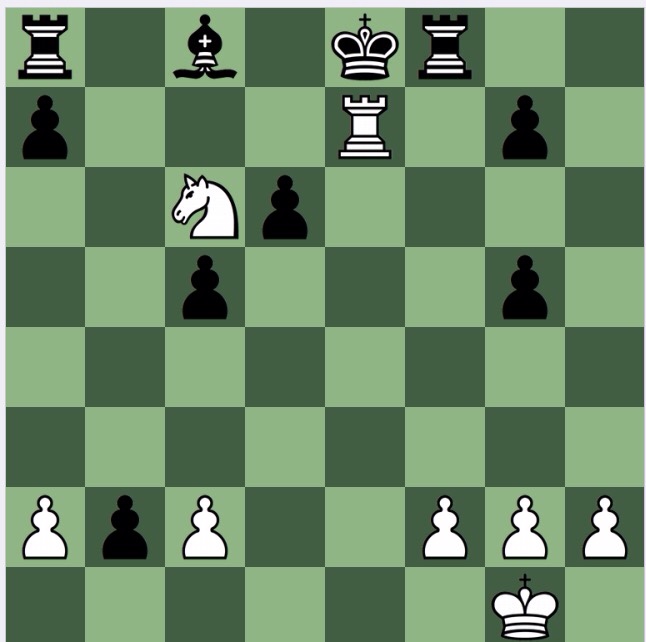
White to play and win
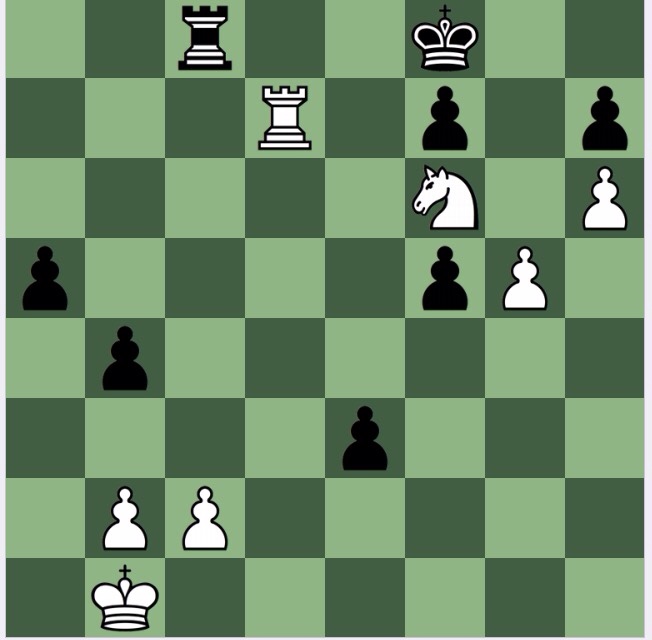
Minic v Kurajica, Batumi 1966
Solution
Not too hard today, but a nice calculation exercise nevertheless.
1 Nh7+ Kg8 2 Nf6+ Kf8 (2…Kh8 3 Rf7 and 4 Rh7 mate) 3 g6! and mate either by 3…fg 4 h7 5 h8(Q)mate; or by 3….other, 4 g7mate (or 4 Rf7mate).
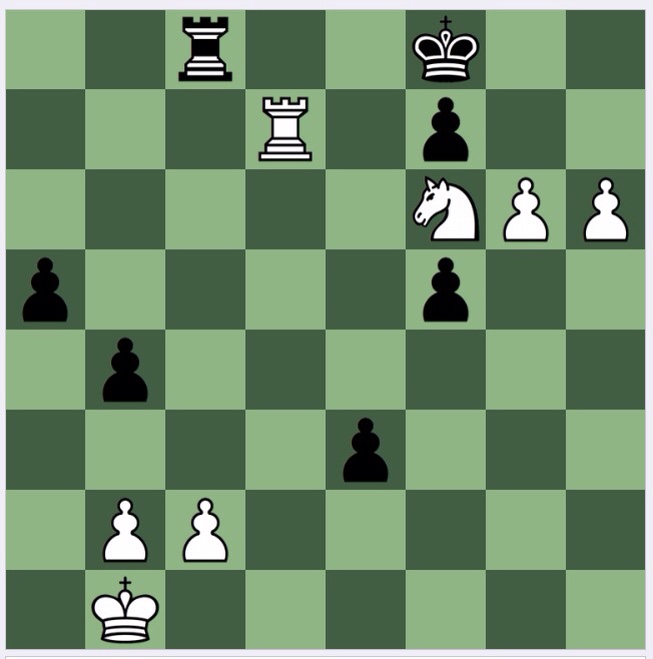
Black to play and win
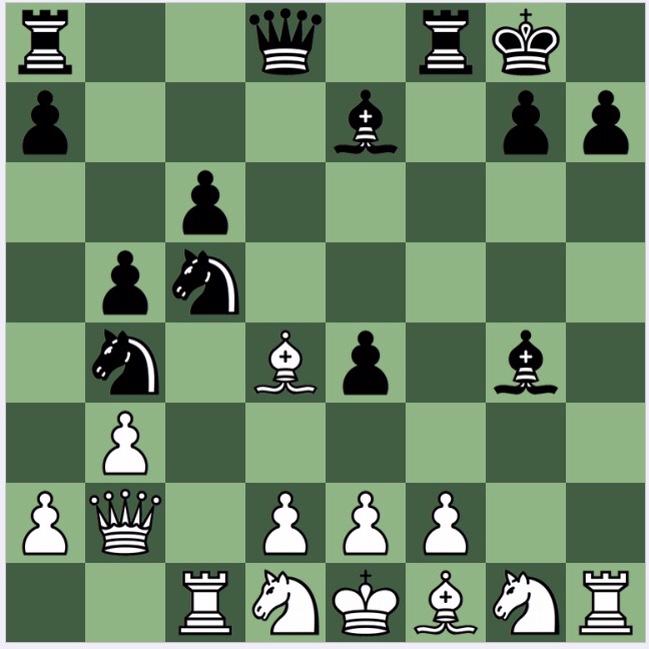
Ujtelky v Kolarov, Batumi, 1966
Solution
Examine all biffs: after seeing that neither Nbd3+ or Ncd3+ work, the next try is 1…Be2+! and whatever White plays, one form of disaster follows, mostly involving a Nd3 invitation, forking.
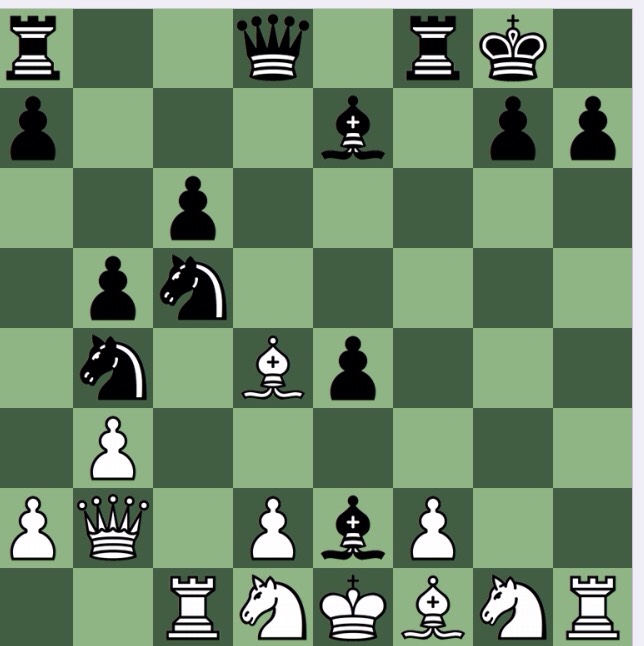
Black to play and win
White played 1 Qd4 in this position.
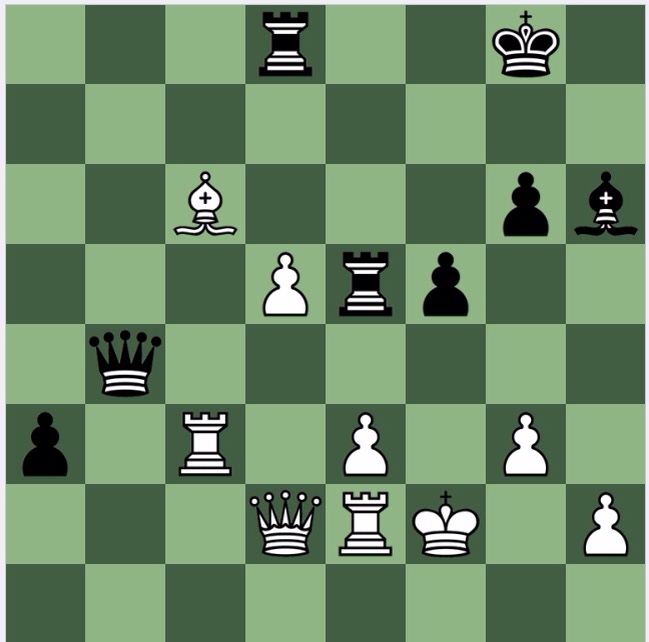
Szilagyi v Gheorghiu, Tel Aviv 1966
Solution
A rest day: 1…Be3+ 0-1.
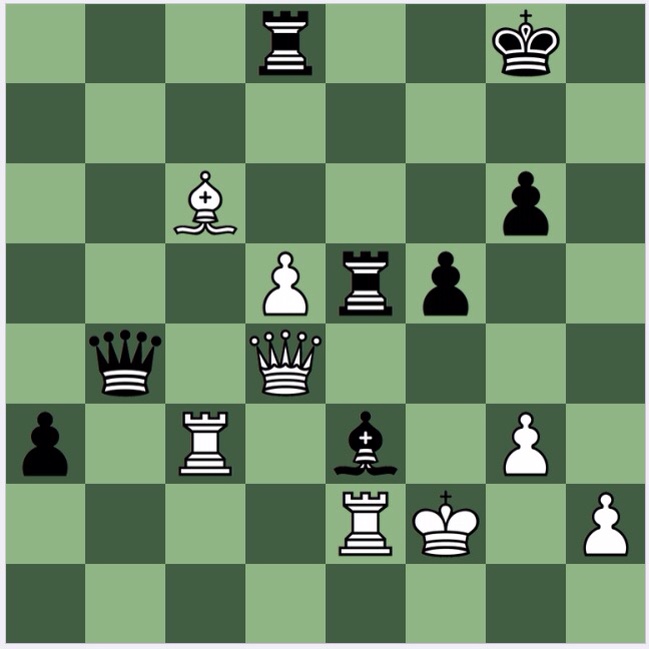
Since the main, Teschner book puzzle is easy, a tougher problem from a recent (June 2015) edition of Chess Today.
Tougher, but one which is very pleasurable to solve.
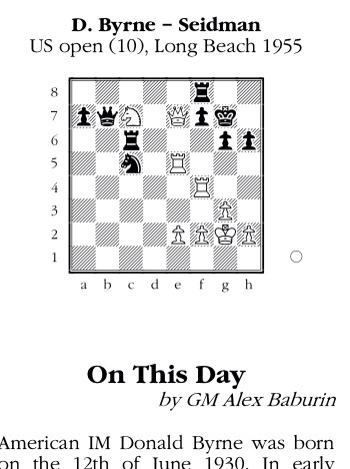
White to play and win
Solution
1 Ne8+ Kg8 (1…Kh7 2 Rf7+ and mates; 1…Kh8 2 Qf8+ and mates) 2 Nf6+ Kg7 (2…Rf6 3 Qb7 Nb7[] 4 Rf6 + -)
3 Qf8+!! (the star move) 3…Kf8 4 Re8+ Kg7[] 5 Rg8 mate. Pretty.
White to play and win
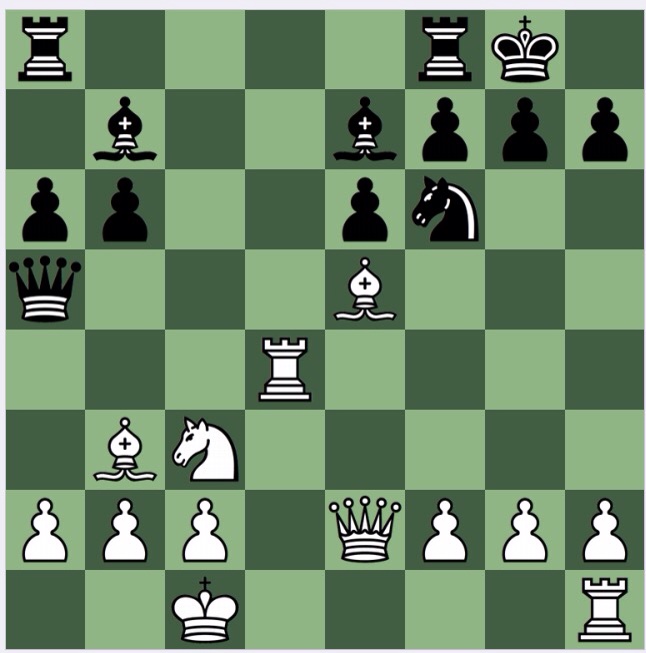
Radulov v Sapurov, Bulgarian championship 1966
Solution
A nice, quite unusual but worth remembering solution. Yet again, it combines various CJS Purdy motifs.
There are two LPDOs in Black's position, his two bishops. And Black's Queen is in a bit of a net. Examine all biffs leads to 1 Ra4! Qc5[] 2 Rc4! Qa5[] 3 Rc7! forking the LPDOs.
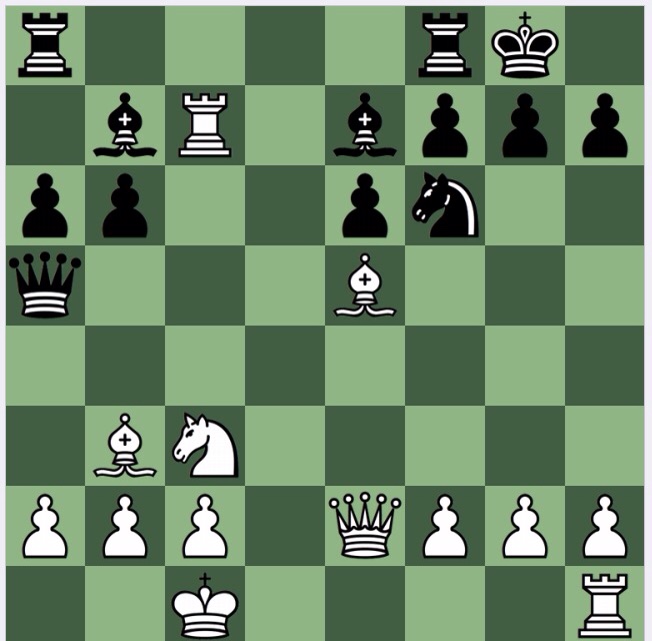
White to play and win
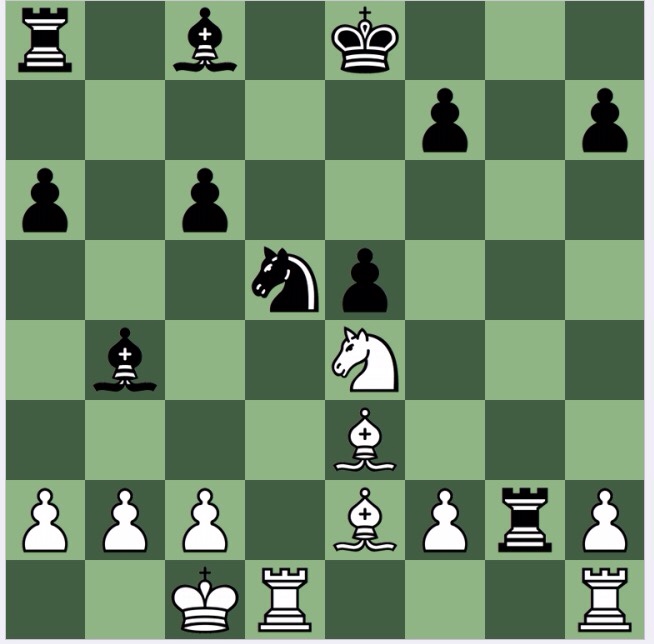
Averbakh v Osnos, Kiev 1964-5
Solution
I found the winning 1 Nf6+!, either picking up at least a pawn after say 1…Ke7 2 Nd5+ cd[], when 3 Bf3 is probably the best way to pick the pawn up, with a dominating position; but Stockfish preferred 1 Rd5! cd[] 2 Nf6+ and it turns out Black's king can't avoid going to the mines square e7 ( 2…Kf8 3 Bh6+; 2…Kd8 3 Bb6+) when the LPDO Bb4 drops after the Nd5+ fork.
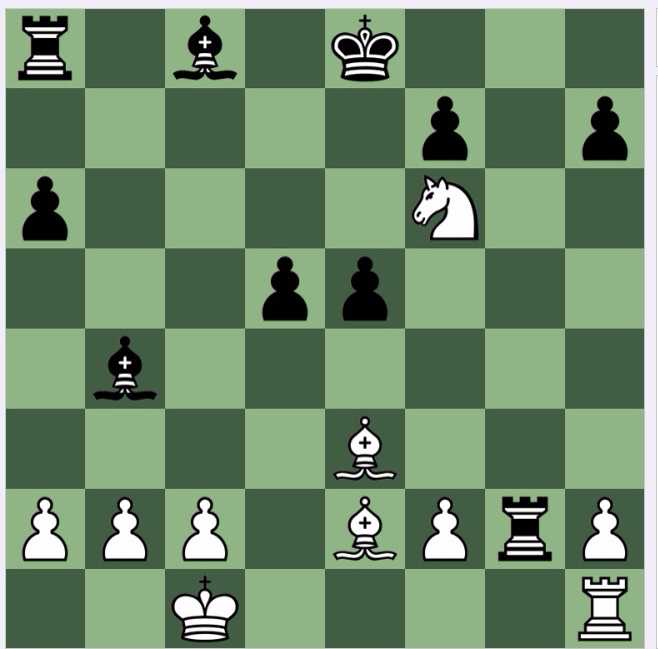
Checking on ChessBase online from my iPad app, Averbakh (who had a lifetime equal score against, for me, his unknown opponent) played 1 Rd5!
White to play and win
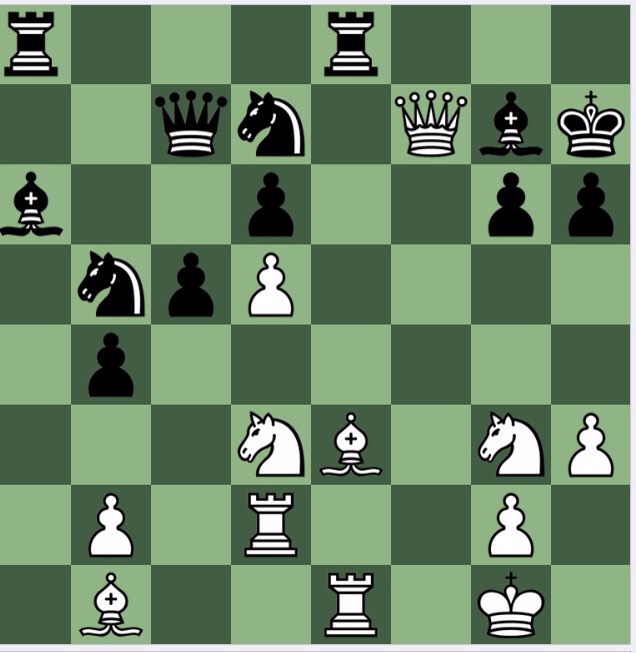
Mermagen v Kühne, corres 1966
Solution
I flunked this one, not being able to work out in my head whether 1 Qg6+!! works, and instead settling for 1 Nh5! which also wins, but not as nicely.
Firstly, my line: 1 Nh5! Ne5 (1…Nf8 2 Nf6+ Kh8[] 3 Qg8mate, the Nf8 blocking the Re8’s sight of g8) 2 Nf6+ Kh8[] 3 Ne5!, the point being that 3….Qf7 4 Nf7+ is mate; so 3…de 4 Qg6+ -.
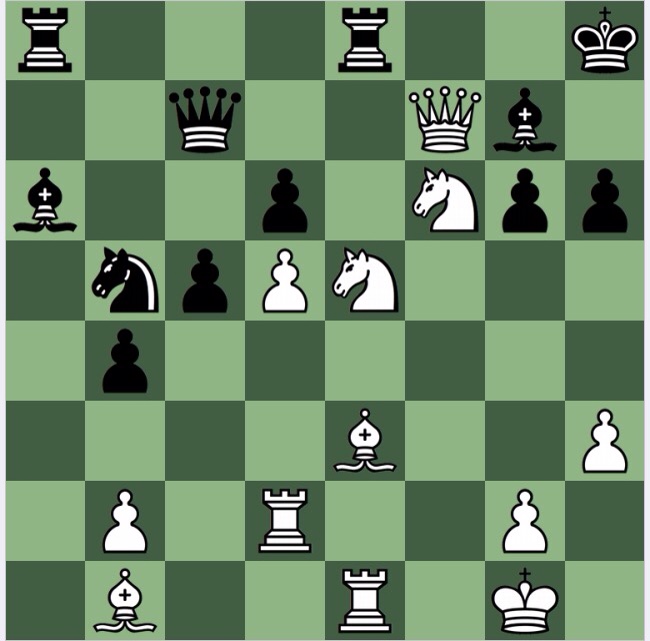
But 1 Qg6+!! is forced mate, unless Black chickens out with 1…Kh8, when the win is prosaic.
So, 1…Kg6 2 Ne5+ Kf6:
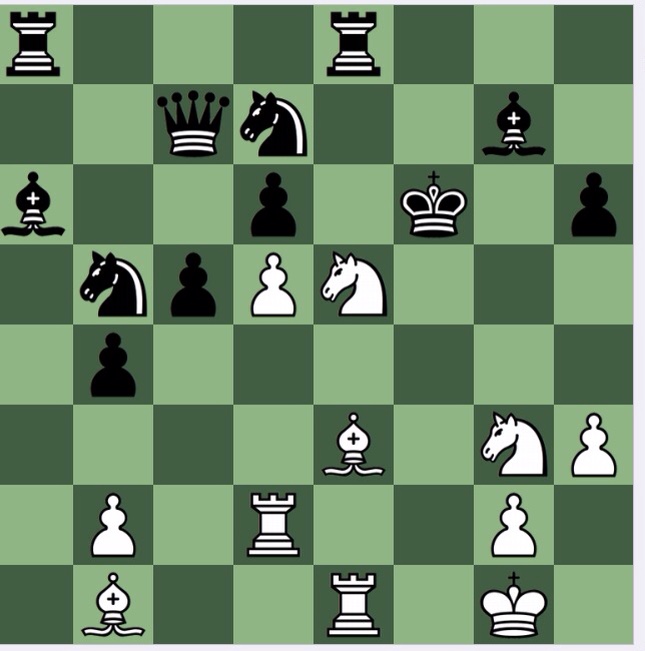
Of course I saw this position, and even saw 3 Rf2+! but I thought it lost control over the Pd5 so that 3…Ke5 runs away, but then 4 Rf5mate, the move I missed. The Rd2 is a star performer.
So, instead. 3…Ke7, when 4 Nc6+
And capturing the Nc6 is forced: 4….Qc6; then 5 Bg5 mate.
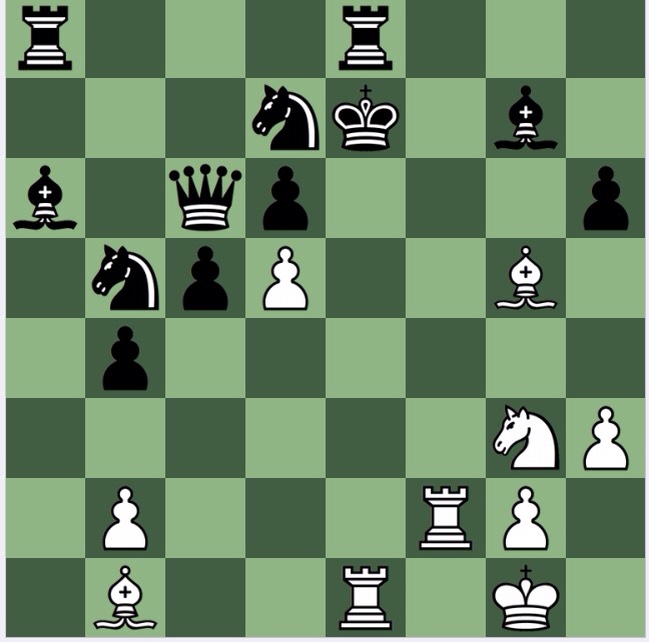
What happened to me was typical. There are a lot of variations, a lot of ways that white could check and check, but too many responses to each; confusion struck, and I found a good alternative, but missed the best.
 allanbeardsworth