White to play and win
(A tough one)
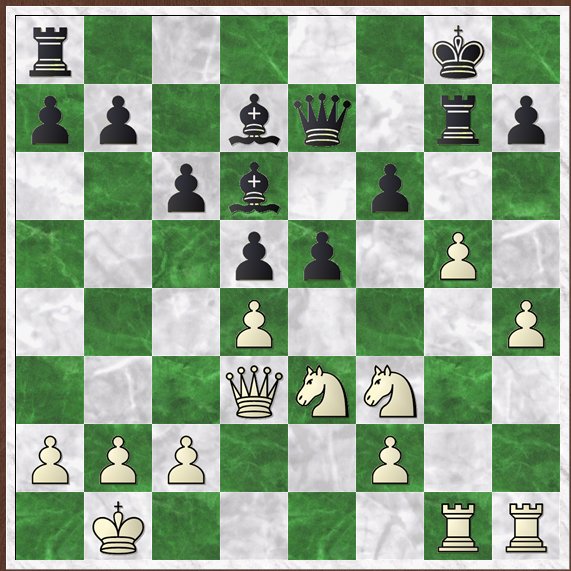
Teschner v Hecht, Berlin 1964
Solution
This one took me a while, since whilst some moves are obvious, there is one key, hidden, point to find. Purdy’s concept of jump-biffs would help.
Firstly, 1 gf has to be played, else Black can close the position, gain space, and has the advantage. 1…Qf6 is forced, when 2 de Be5 3 Nd5!!, or 2 Nd5!! cd 3 de is equivalent:
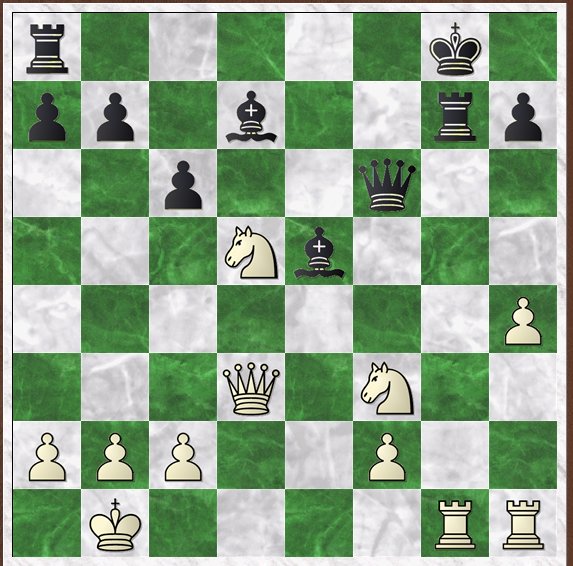
and white ends a pawn up, with the safer king.
Black could try to mix things, playing (1 gf) 1…e4 2 Qb3! putting maximum strain on Black, and after 2…Qf6[] 3 Rg7+ Kg7[] 4 Qb7:
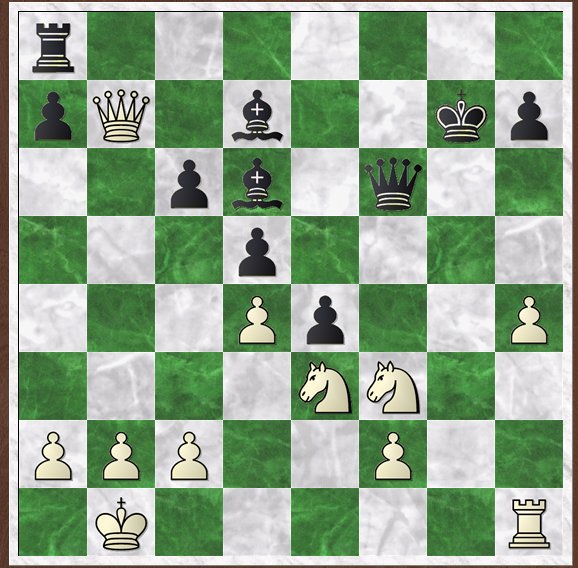
4..Rd8 5 Ne5 Be5 6 de Qe5 and White is better, with Houdini saying winning, though at my level there is easy scope to lose.
 Posted with Blogsy
White to play and win
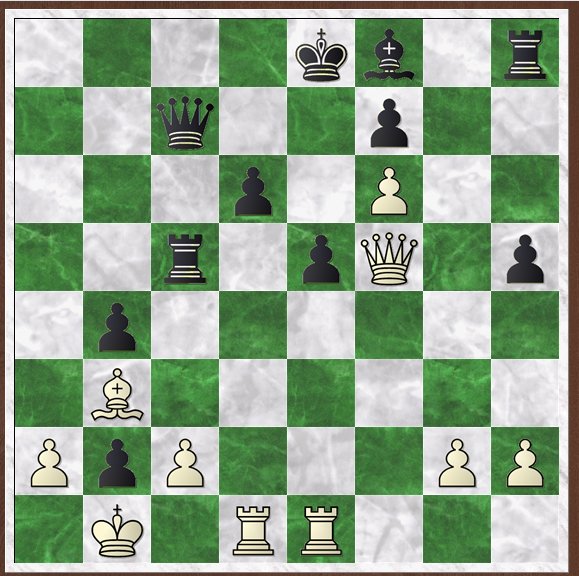
Mnatsakanian v Helman, Kraków 1964
Solution
Examine all biffs yet again: either 1 Ba4+, 2 Re5, or 1 Re5+, Re5 2 Ba4+ win.
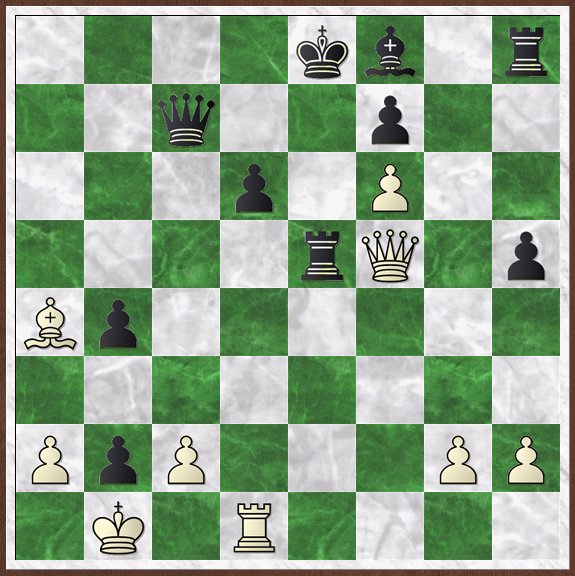
Black to play and win
White plays 1 h3??
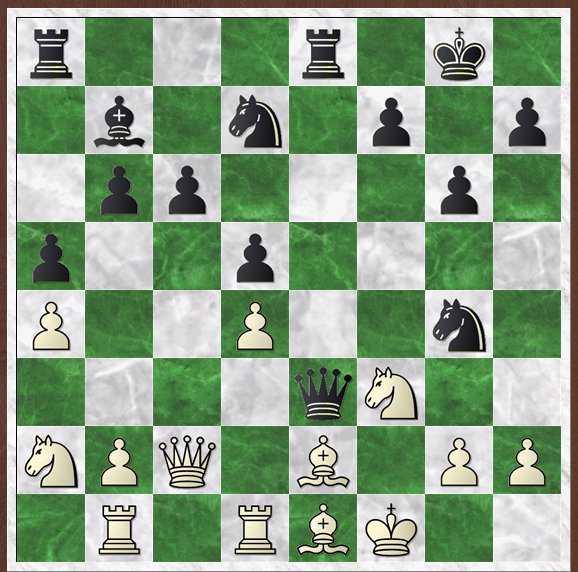
Reshevsky v Weinstein, 1963-64
Solution
At first, I tried to find a smothered mate, but there is none. Eventually I looked elsewhere and quickly found 1…Qf3+! and after the queen is captured, 2…Ne3+ forks the King and the LPDO Qc2. A quick check that the N isn’t trapped on c2, and once confirmed it isn’t, 0-1.
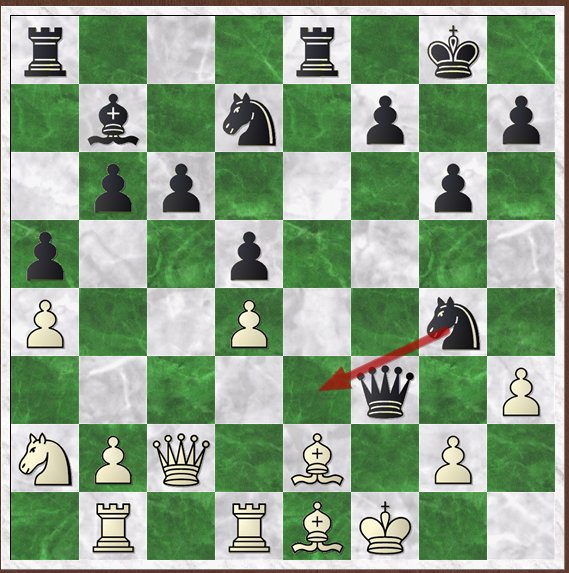
Black to play and win
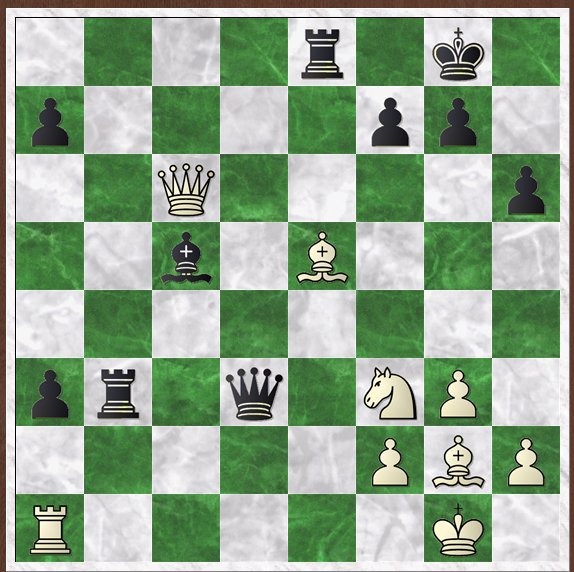
Vranesic v Larsen, Amsterdam 1964
Solution
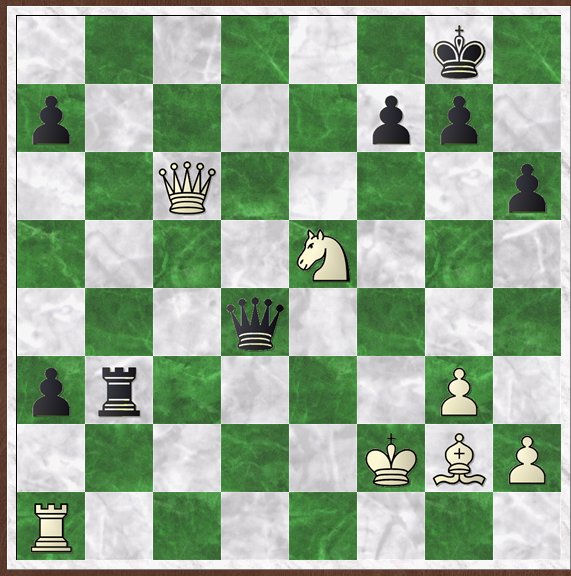
A nice piece of calculation is required, but the usual examine all biffs and LPDO motifs being relevant (the LPDO being the Ra1). 1…Re5! 2 Ne5[] Bf2+!
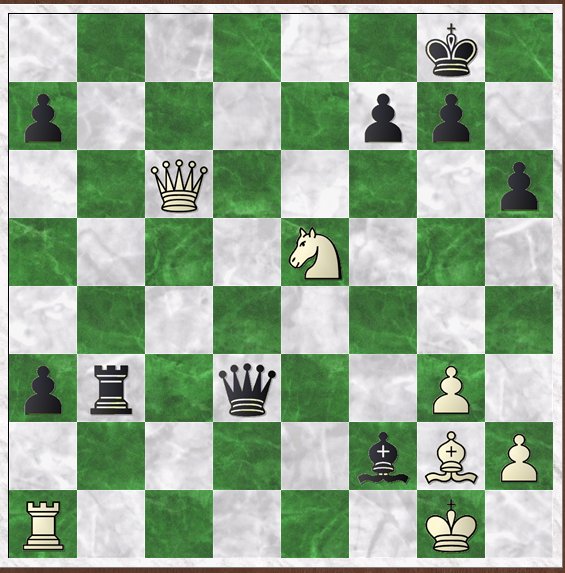
White must take, since if 3 Kh1 Rb1+ 4 Kh1 (4 Rb1 Qb1+ 5 Bf1[] Qf1 mate) Qf1 mate. After 3 Kf2 Qd4+ wraps up. A bit of care is needed depending on where the K moves (and not falling into Qe5+ Be4 Qa1?? Qe8 mate).
Black to play and win
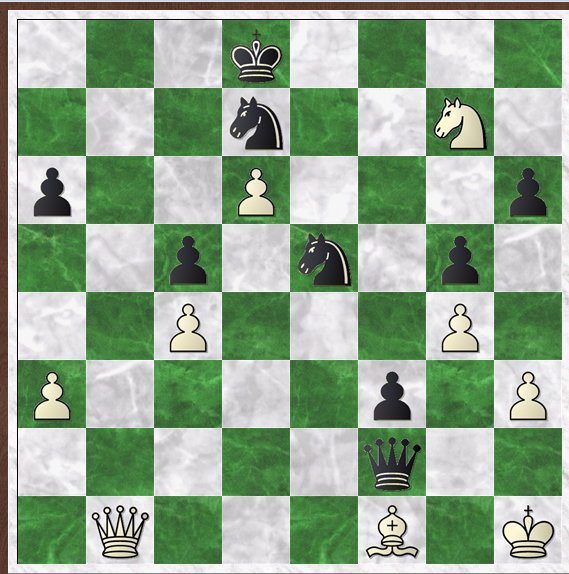
Portisch v Smyslov, Amsterdam 1964
Solution
A nice, but fairly standard motif: sac to open the h file, a few checks, and then advance the f pawn to create threats on the black squares.
1…Ng4! 2 hg[] Qh4+ 3 Kg1[] Qg3+! 4 Kh1
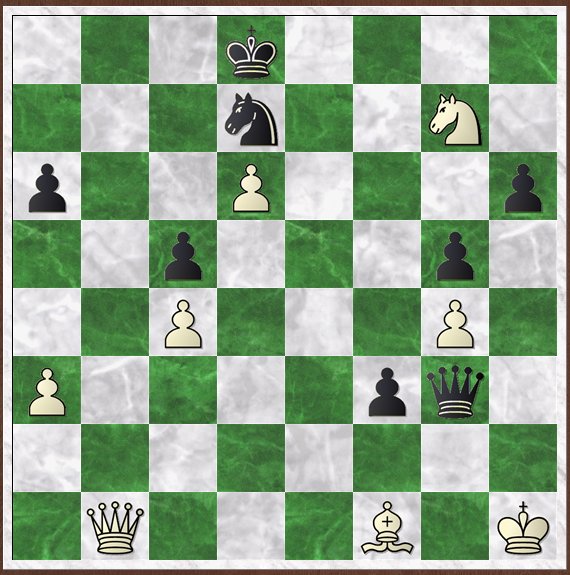
4…f2! threatens Qg1mate, so the Bishop must move, and if 5 Bg2 Qh4 mate; or 5 Be2 Qh3 mate.
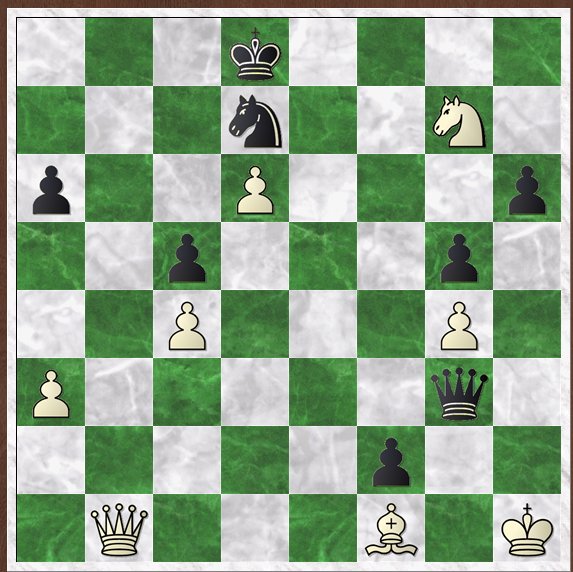
White to play and win
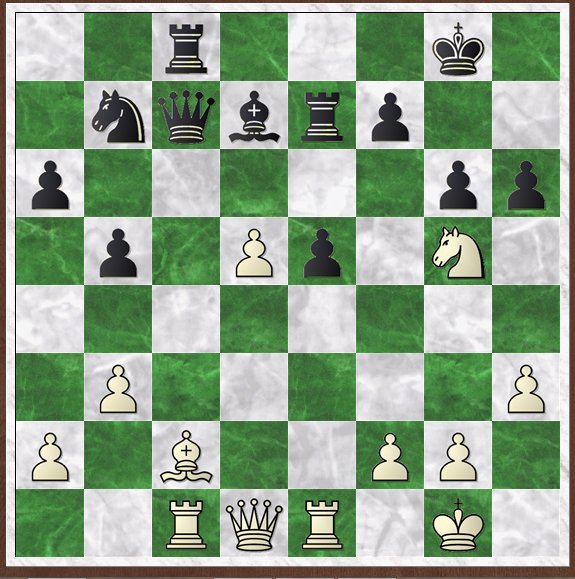
Tal v Matanovic, Moscow 1963
Solution
As with yesterday's puzzle, examine all biffs leads immediately to 1 Nf7!
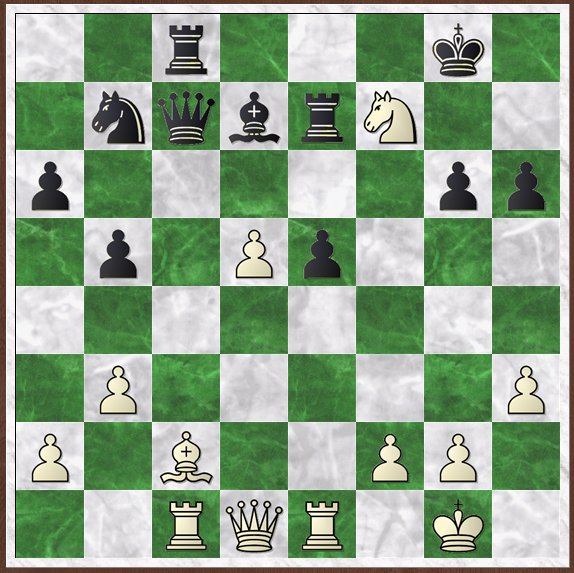
There aren't too many lines, and only one is important. The trivial one is 1.. Kf7 2 Bg6+, 3 Rc7, 4 d6, the final move, potassium cyanide, being key to the success of the combination.
The more interesting one is 1..Rf7 2 Bg6 Qc1 3 Bf7+ Kf7.
What then is best? The two alternatives are 4 Qc1, hoping to win the ending by picking up a loose pawn of two, or 4 Qh5+ hoping QandPawns prevail. In practice, I might have made the wrong choice.
White to play and win: what would you play?
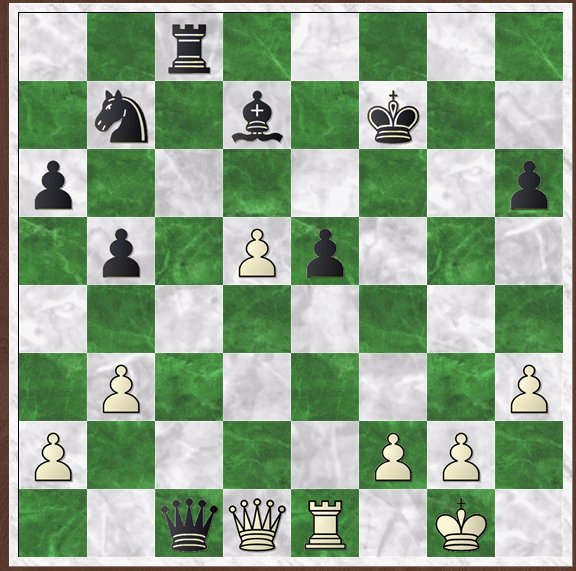
Showing a weakness in my approach to chess, namely undue fear of losing, I would play 4 Qc1, thinking that I should win, and can't lose by simplifying; and that keeping queens on gives a higher risk of losing.
But playing on a few likely moves in the endgame, White does (with skilful rook moves) eventually win a pawn, probably as below the h pawn, but then his rook is offside and Black's pieces cooperate well.
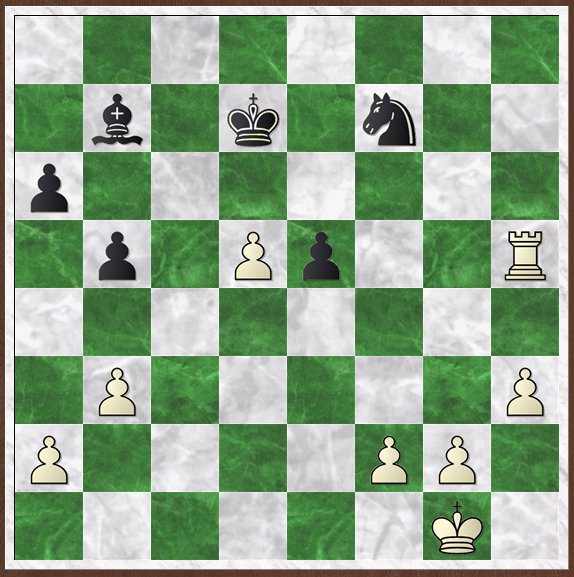
He probably shouldn't lose, and probably wins the above. However, playing Qh5+ and winning the Q, then gobbling up a pawn or two, seems (having played the lines against an engine a few times) the surer way to proceed. Rather than give possible lines, which as I say, are just possible ones, I will leave it to the reader to do some work him or her self.
White to play and win
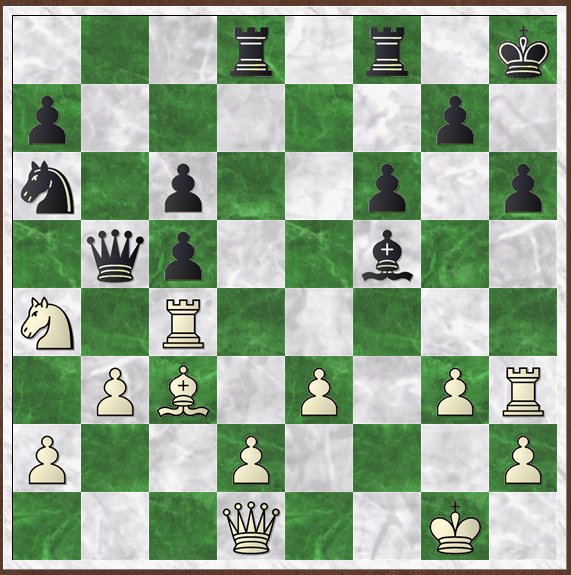
Bielicki v Evans, Havana 1964
Solution
Not too hard today, since examine all biffs forces you first to look at 1 Rh6! gh 2 Qh5 and after some examination, it is clear that Black’s pieces can’t coordinate a defence. Sometimes Bf6+ follows, and after Rf6 Qf6 the LPDO Rd8 drops off to a fork; other times the Rc4 swings to g4.
White to play and win

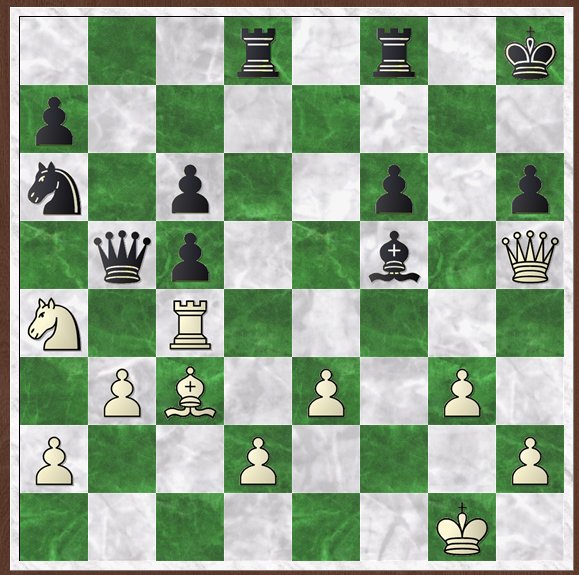
Nei v van den Berg, Beverwijk, 1964
Solution
Teschner's puzzle book gives hints or comments which, due to the layout of the book, are impossible not to read. Here, the comment is 'White captures a pawn and weakens his opponent's position decisively'.
So all I did was choose between 1 Ne4 de 2 Ne6, and 1 Ne6! The former line is clearly less strong because Black exchanges queens and then has the tempo to take on c2. So the 'solution' is 1 Ne6! fe[] 2 Ne4
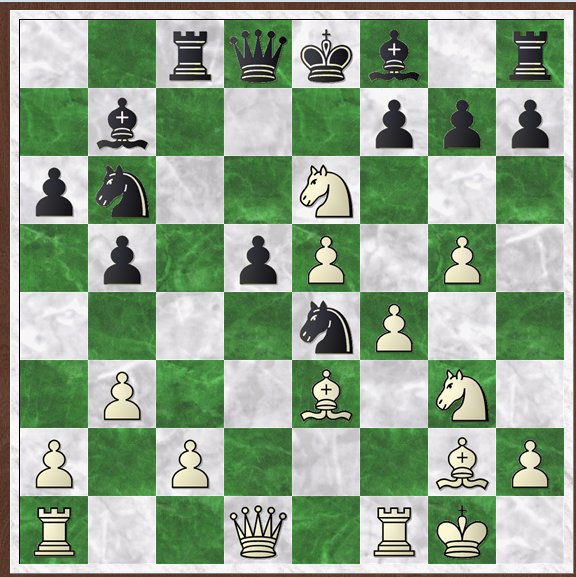
In the game, Black didn't take on e4, and soldiered on in a hopeless position. Teschner merely comments that 2..de 3 Qd8+ and 4 Bb6 win, which is where I stopped, but I did wonder if the advantage was overwhelming.
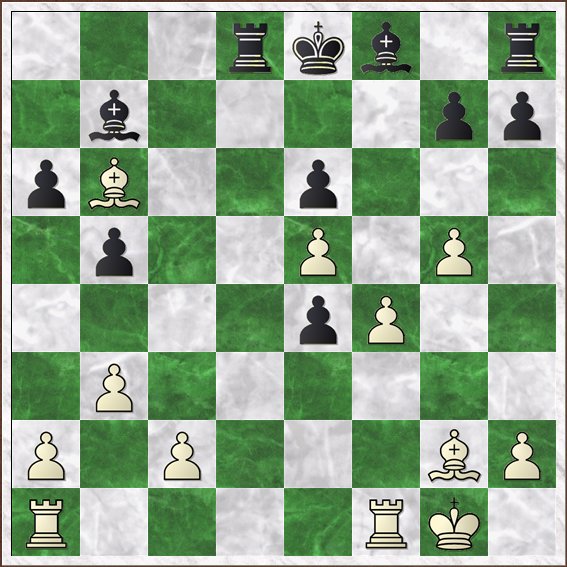
In fact, it isn't. 4….Rc8 and Black has some compensation for the pawn. It is actually a good training position, and I played it a few times as white against Houdini. In each case, my advantage dissipated. I suggest my readers give the position some time to reflect, and hence I will add a solution heading to break the blog.
Solution

Having played it a few times, I see that white's advanced kingside pawns can be a weakness, and that Black creates pressure by activating his rook by a timely …h6. If White responds by h2-h4, Black exchanges and then lifts his rook, for instance to h4. If white instead keeps the h file closed by g6, then h6-h5, rook lift and R*g6.
Solution
So, in fact, 1 Ne6 isn't easily winning: you need better technique than I have to exploit it, and Houdini only gives a +1 advantage.
Instead, the equally natural 1f5! is far stronger. Black probably responds by 1…Qd7 when 2 fe fe 3 g6! either gains control of f7 if Black doesn't take, or lets the white queen in (4 Qg4) if he does.
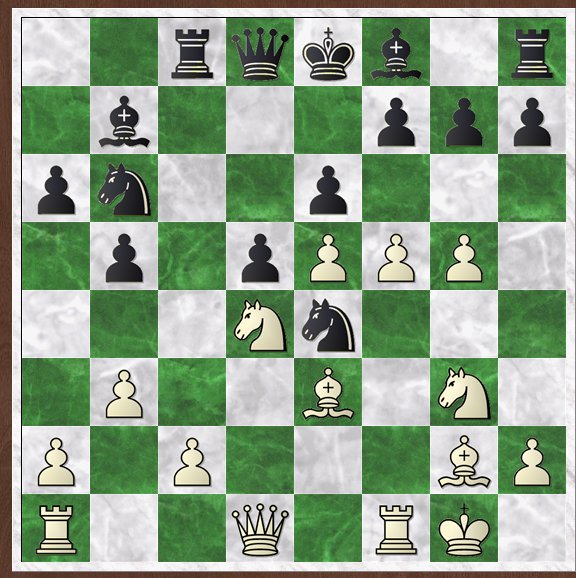
Black has other defences, but White has all the fun for instance after 1 f5 ef 2 Ngf5 g6 3 e6!

Again, the positions after 1 f5 are good training material. I played it against Houdini a few times with far better results, provided I played aggressively. If White is passive, Black has time to develop and defend, and then White's weaknesses will prevail.
This is an occasional series of postings inspired by a brief discussion on the flight home from Turkey last summer.
The flight attendant saw I was reading a chess book (quelle surprise) and, just making polite small talk, said she also liked playing chess, saying that depending on whether other crew members played, she would play on stopovers. Later in the flight she asked me if I had a chess set at home…and that set me thinking. How many chess sets do I have? And since then number is, well, shall we say, quite high, I thought I would blog about them especially those which 'mean something to me'.
This posting is on the set which I keep at our villa in Kas, Turkey.
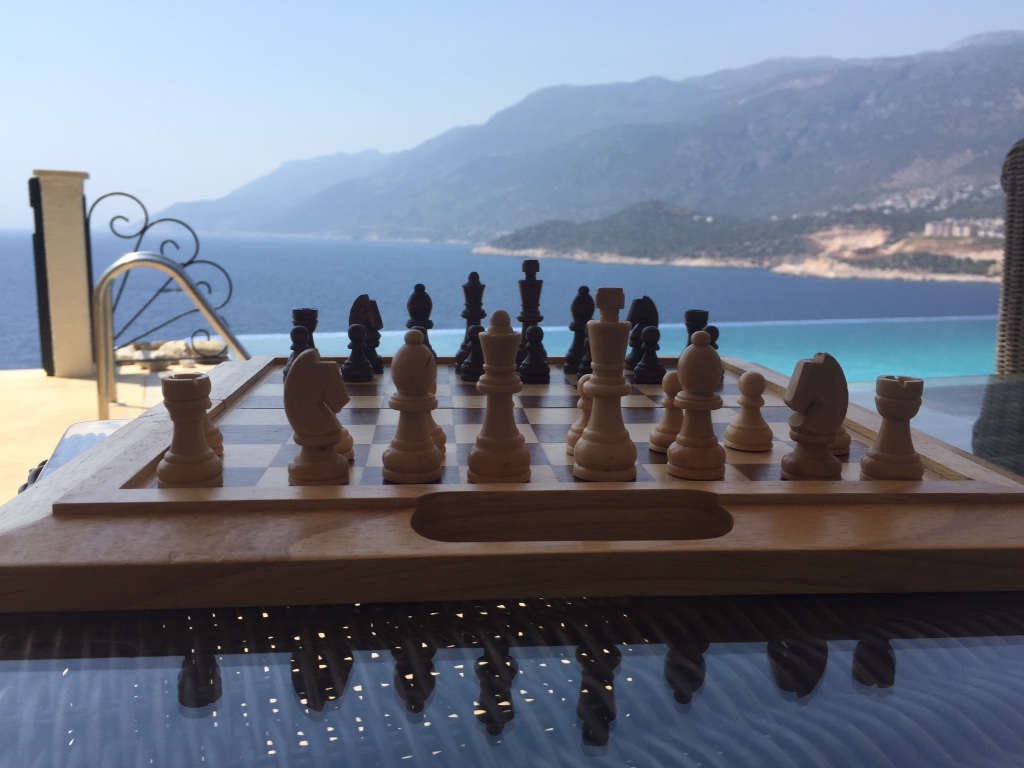
The set was bought at one of the Manchester German markets. For our family, these mark the start of Christmas, no season being complete without wrapping up warm and having a hotdog with hot mulled wine; the only downside is that Jane and the girls then spend ages walking round the countless stalls selling Christmas tat gifts. Well, every cloud has a silver lining and on at least a couple of occasions I have bought chess sets from the wooden products stall.
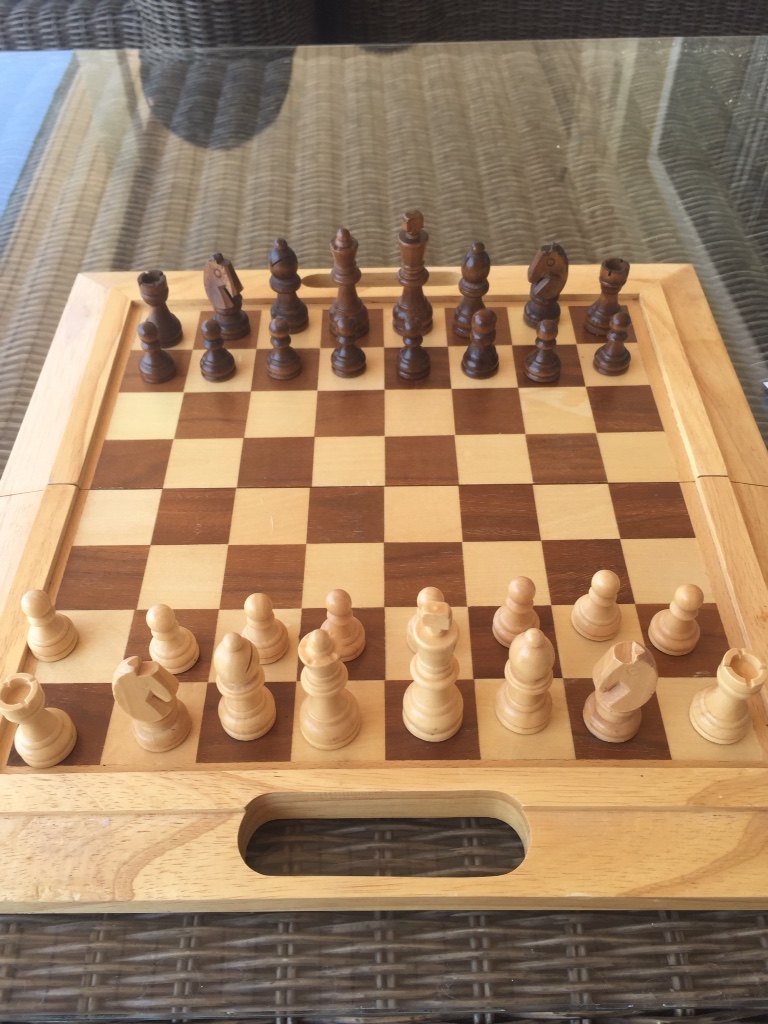
The one I keep at our villa is 2/3 full size, well made, in a nice wood, and the pieces have a good feel to them too.
Rating: 6/10- just a well made semi-portable set. 10/10 for the location, though.
This is an occasional series of postings inspired by a brief discussion on the flight home from Turkey this summer. The flight attendant saw I was reading a chess book (quelle surprise) and, just making polite small talk, said she also liked playing chess, saying that depending on whether other crew members played, she would play on stopovers. Later in the flight she asked me if I had a chess set at home…and that set me thinking. How many chess sets do I have? And since then number is, well, shall we say, quite high, I thought I would blog about them especially those which ‘mean something to me’.
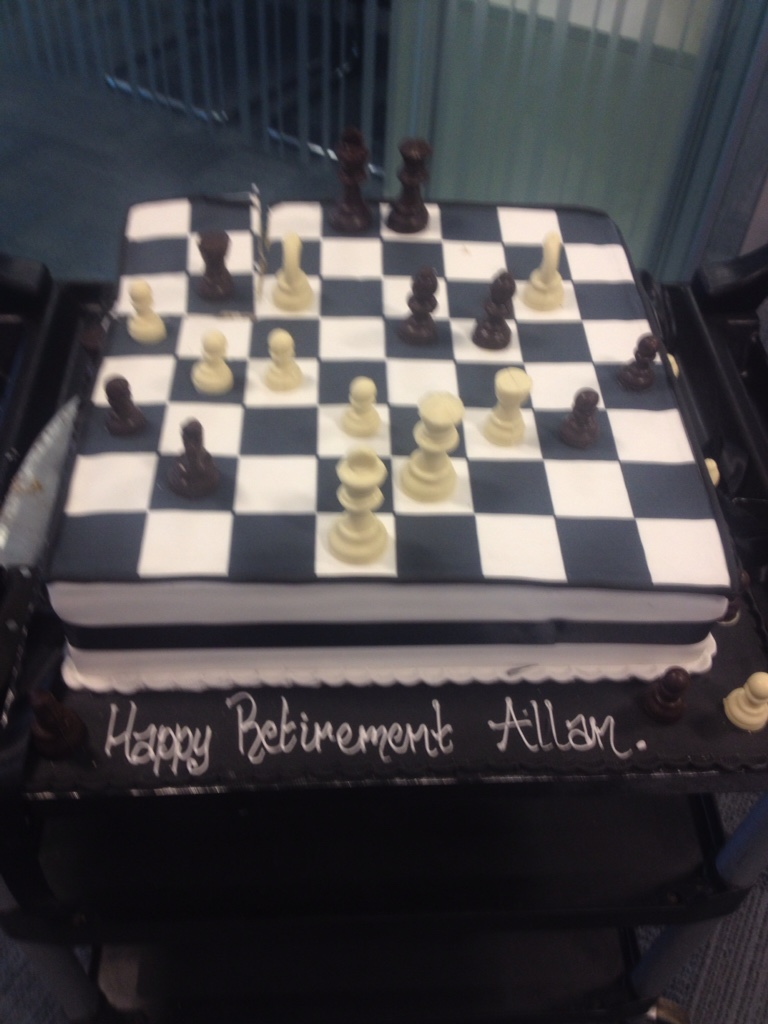
I retired from Deloitte in December 2014, and one of my colleagues, Fallon, baked this lovely set for me (even the filling was two coloured:
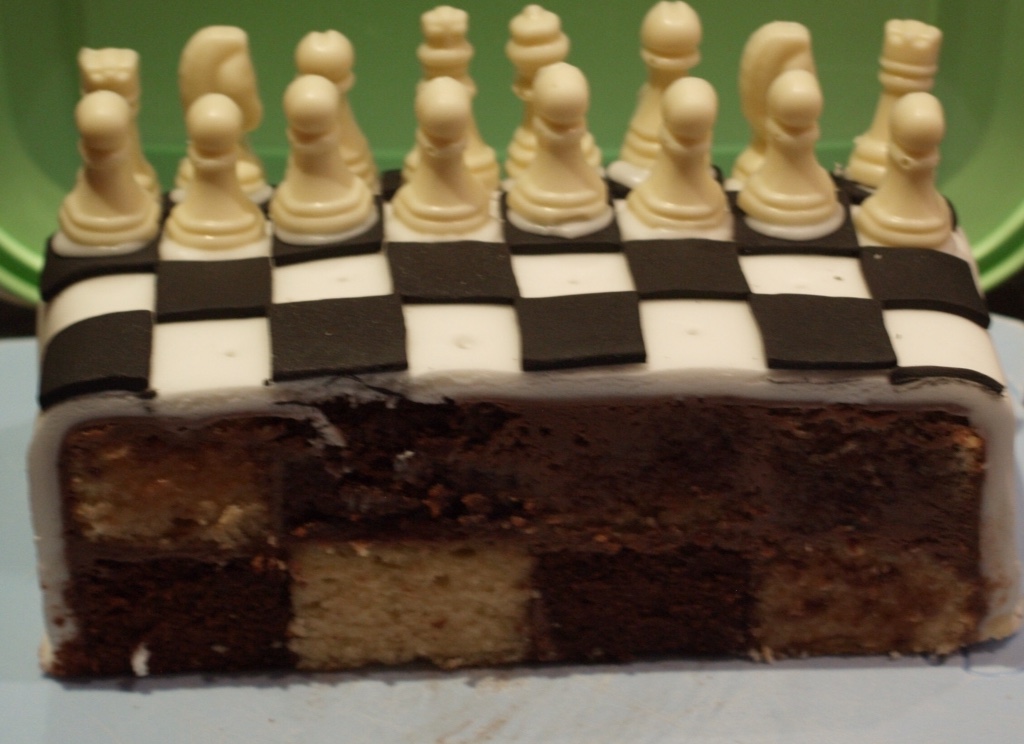
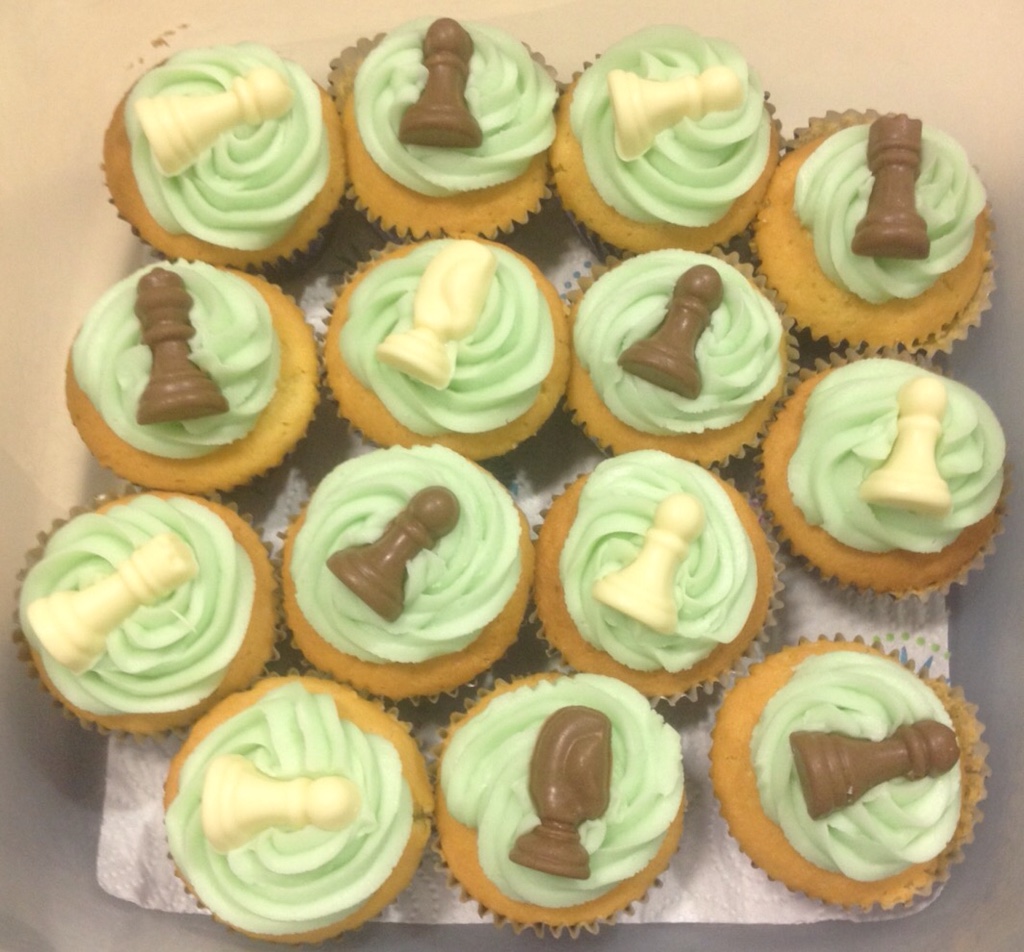
how long must it have taken her to make it) and the buns below.
Then, on my last day at Deloitte (which also happened to be Christmas jumper day) the firm had had a caterer make this enormous cake.
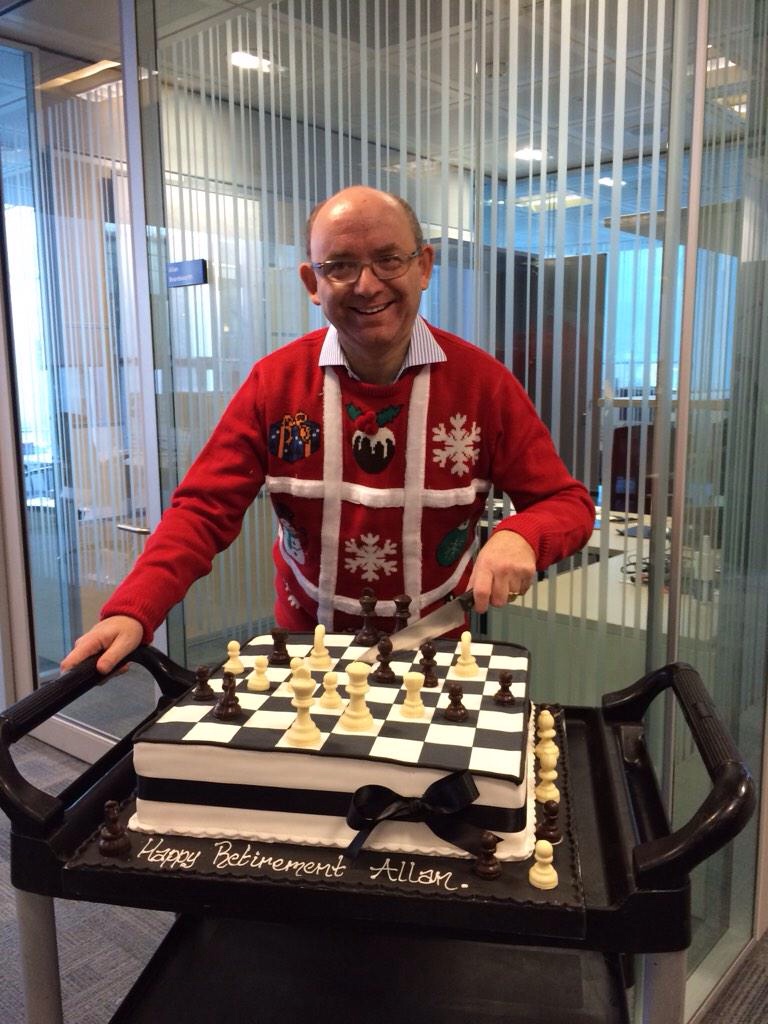
All the cakes were delicious; it was a close fought final, but Fallon’s won the bake off.
Rating:
10/10: I shall always treasure having had these cakes made for me.
 allanbeardsworth