Today’s problem is from the C.H.O’D. Alexander’s 1973 book”The Penguin Book of Chess Positions”, a book I devoured (and loved) as a child.
I thought I would use it for more of my daily training.
As is my custom, I only say which side is to play: and not giving an idea if the move wins or otherwise, unless on occasion I think signposting would be helpful. Instead, the problems are posed with the instruction to decide what you would play, as in a game.
White to play
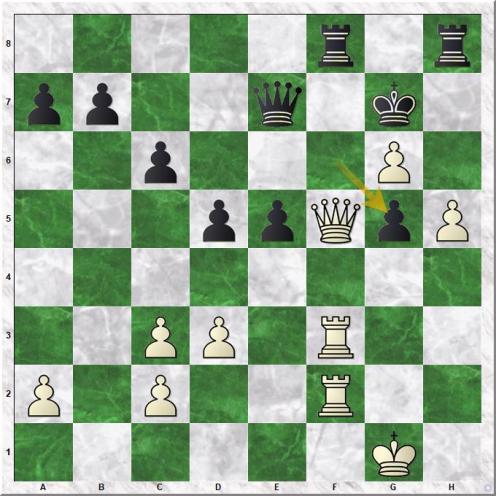
Tarrasch v Janowski, Ostend 1907
Solution
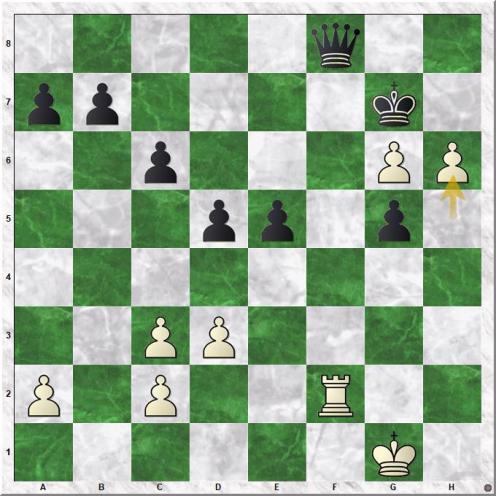
1 Qf8+! Rf8[] 2 Rf8 Qf8[] 3 h6+ 1-0
FEN
5r1r/pp2q1k1/2p3P1/3ppQpP/8/2PP1R2/P1P2R2/6K1 w – – 0 28
Today’s problem is from the C.H.O’D. Alexander’s 1973 book”The Penguin Book of Chess Positions”, a book I devoured (and loved) as a child.
I thought I would use it for more of my daily training.
As is my custom, I only say which side is to play: and not giving an idea if the move wins or otherwise, unless on occasion I think signposting would be helpful. Instead, the problems are posed with the instruction to decide what you would play, as in a game.
White to play
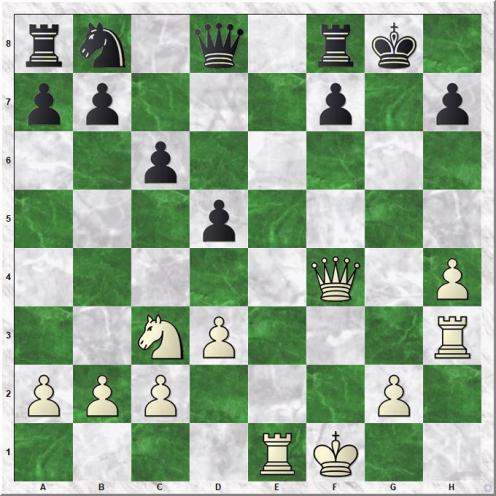
Harrwitz v Sven, London 1851
Solution
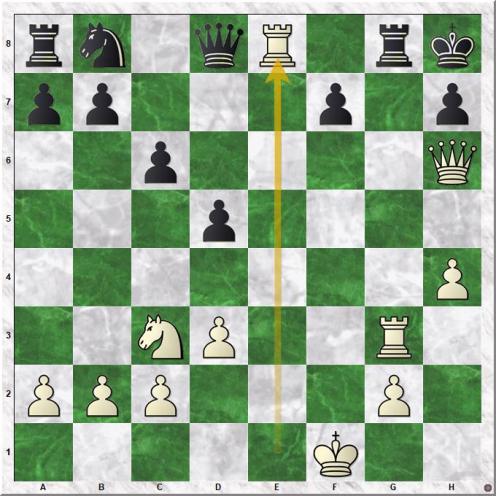
1 Rg3+ Kh8[] 2 Qh6 Rg8[] 3 Re8! decoy and pin: 1-0/
FEN
rn1q1rk1/pp3p1p/2p5/3p4/5Q1P/2NP3R/PPP3P1/4RK2 w – – 0 1
Today’s problem is from the C.H.O’D. Alexander’s 1973 book”The Penguin Book of Chess Positions”, a book I devoured (and loved) as a child.
I thought I would use it for more of my daily training.
As is my custom, I only say which side is to play: and not giving an idea if the move wins or otherwise, unless on occasion I think signposting would be helpful. Instead, the problems are posed with the instruction to decide what you would play, as in a game.
White to play

Matulovic v Zvetkov, Varna Olympiad 15//91965
Solution
1 Qa8+ Kg7[] 2 Qh8+! and 3 Nf7+-4 Ne5 1-0

FEN
6k1/p4p2/4p1p1/1p1pq1N1/3n2PP/3K4/P4P2/2Q5 w – – 0 34
Today’s problem was from my Cambridge University days, marking the fact that, for the first time in many years, I am visiting my alma mater this weekend.
As has been my custom on this blog for a while, I adopt the style of only saying which side is to play: and not giving an idea if the move wins or otherwise, unless on occasion I think signposting would be helpful. Instead, the problems are posed with the instruction to decide what you would play, as in a game.
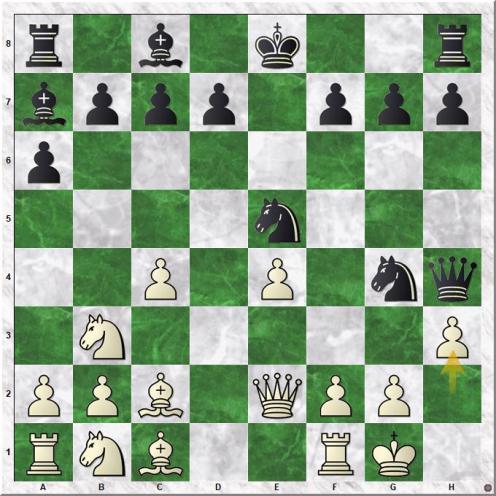
Black to play

Tim Mortimer v Allan Beardsworth, Cambridge University Championships, 10/2/1984
Solution
1…Qg3, and White resigned: probably my shortest ever victory.
FEN
r1b1k2r/bppp1ppp/p7/4n3/2P1P1nq/1N5P/PPB1QPP1/RNB2RK1 b kq – 0 11
Today’s problem was from my Cambridge University days, marking the fact that, for the first time in many years, I am visiting my alma mater this weekend.
As has been my custom on this blog for a while, I adopt the style of only saying which side is to play: and not giving an idea if the move wins or otherwise, unless on occasion I think signposting would be helpful. Instead, the problems are posed with the instruction to decide what you would play, as in a game.
White to play
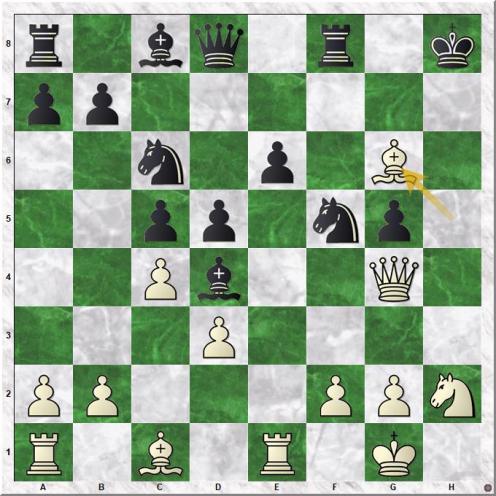
C Mackenzie v Allan Beardsworth Cambridge University Championships 8/1/1982
Solution
1…Bf2+! and after 2 Kh1 Ng3+ White resigned.

Championship
I won the championship in my first two years, but alas, failed in the final round of my third and final year. Here is a picture of me in 1982, after my first victory.

FEN
r1bq1r1k/pp6/2n1p1B1/2pp1np1/2Pb2Q1/3P4/PP3PPN/R1B1R1K1 b – – 0 17
Today’s problem is from the C.H.O’D. Alexander’s 1973 book”The Penguin Book of Chess Positions”, a book I devoured (and loved) as a child.
I thought I would use it for more of my daily training.
As is my custom, I only say which side is to play: and not giving an idea if the move wins or otherwise, unless on occasion I think signposting would be helpful. Instead, the problems are posed with the instruction to decide what you would play, as in a game.
White to play

Rubnstein v Girschbein, Lodz 1967
Solution
1 Rd7! Bd7[] 2 Nf6+ Kf8

3 Nd5! with a winning double attack: on e7 and h8: 1-0.
FEN
r1b1r1k1/pp1nqp2/2p1p1pp/8/4N3/P1Q1P3/1P3PPP/1BRR2K1 w – – 0 1
Today’s problem is from the C.H.O’D. Alexander’s 1973 book”The Penguin Book of Chess Positions”, a book I devoured (and loved) as a child.
I thought I would use it for more of my daily training.
As is my custom, I only say which side is to play: and not giving an idea if the move wins or otherwise, unless on occasion I think signposting would be helpful. Instead, the problems are posed with the instruction to decide what you would play, as in a game.
White to play

Veranteren v Svensson, corres, date unknown
Solution
1 Re6! Qe6[] 2 Bc4 Qc4[] 3 Qe8 mate.

FEN
4r1k1/pp2q2p/2n1b3/5p1Q/6pP/P1B5/1P3PP1/4RBK1 w – – 0 1
Today’s problem is from the C.H.O’D. Alexander’s 1973 book”The Penguin Book of Chess Positions”, a book I devoured (and loved) as a child.
I thought I would use it for more of my daily training.
As is my custom, I only say which side is to play: and not giving an idea if the move wins or otherwise, unless on occasion I think signposting would be helpful. Instead, the problems are posed with the instruction to decide what you would play, as in a game.
Black to play
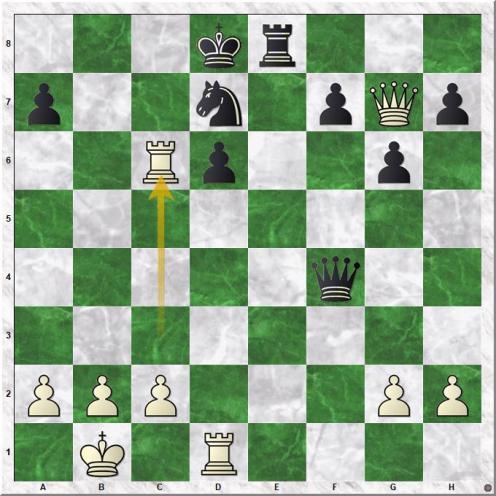
Kestler v Suess, Voelklinger 11/5/1970
Solution
1…Qd2! and White resigned, since 2 Rc1 Re1 0-1.
FEN
3kr3/p2n1pQp/2Rp2p1/8/5q2/8/PPP3PP/1K1R4 b – – 0 24
Today’s problem is from the C.H.O’D. Alexander’s 1973 book”The Penguin Book of Chess Positions”, a book I devoured (and loved) as a child.
I thought I would use it for more of my daily training.
As is my custom, I only say which side is to play: and not giving an idea if the move wins or otherwise, unless on occasion I think signposting would be helpful. Instead, the problems are posed with the instruction to decide what you would play, as in a game.
Black to play

Barriera v Belkadi, Siegen 5/9/1970
Solution
1…Bc5! pins and wins: Black wins the house, or mates on e1.

FEN
r3q1k1/1b3ppp/p1pb4/1p1n2N1/5P2/1BP5/PP3QPP/R1B3K1 b – – 0 19
Today’s problem is from the C.H.O’D. Alexander’s 1973 book”The Penguin Book of Chess Positions”, a book I devoured (and loved) as a child.
I thought I would use it for more of my daily training.
As is my custom, I only say which side is to play: and not giving an idea if the move wins or otherwise, unless on occasion I think signposting would be helpful. Instead, the problems are posed with the instruction to decide what you would play, as in a game.
White to play

Solution
1 Rd5 wins the Bf1 since if 1…Bh3, then 2 Qh7+! and 3 Qh5 mate.

FEN
q4r1k/p3Nppp/1p6/2p5/2P5/1P1R2P1/P1Q2P1P/5bK1 w – – 0 25
 allanbeardsworth