Today’s problem is from the C.H.O’D. Alexander’s 1973 book”The Penguin Book of Chess Positions”, a book I devoured (and loved) as a child.
I thought I would use it for more of my daily training.
As is my custom, I only say which side is to play: and not giving an idea if the move wins or otherwise, unless on occasion I think signposting would be helpful. Instead, the problems are posed with the instruction to decide what you would play, as in a game.
White to play played 1 Qa8 and Black resigned: should he have?

Capablanca v Sir George Thomas, Hastings 14/8/1918
Solution
No: 1…Ra2! and the game is level.
For instance, 2 Re8 Ra8 3 Rf8+ Rf8
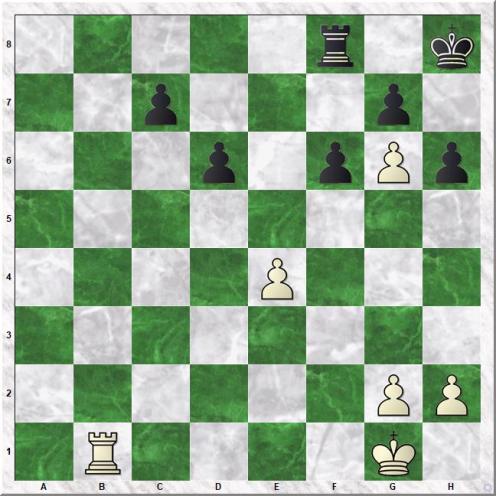
and if anyone is better, it is Black: Rc8, Kg8-Kf8, and then see what happens.
FEN
QR2rq1k/2p3p1/3p1pPp/8/4P3/8/P1r3PP/1R4K1 b – – 0 29
Today’s problem is from the C.H.O’D. Alexander’s 1973 book”The Penguin Book of Chess Positions”, a book I devoured (and loved) as a child.
I thought I would use it for more of my daily training.
As is my custom, I only say which side is to play: and not giving an idea if the move wins or otherwise, unless on occasion I think signposting would be helpful. Instead, the problems are posed with the instruction to decide what you would play, as in a game.
White to play
Capablanca v Sir George Thomas, Hastings 14/8/1918
Solution
White played 1 Qa8 and Sir George resigned.
For tomorrow’s puzzle, we will look to see if the resignation was correct.
FEN
1R2rq1k/2p3p1/Q2p1pPp/8/4P3/8/P1r3PP/1R4K1 w – – 0 29
Today’s problem is from the recent St Louis 2019 blitz tournament.
As has been my custom on this blog for a while, I adopt the style of only saying which side is to play: and not giving an idea if the move wins or otherwise, unless on occasion I think signposting would be helpful. Instead, the problems are posed with the instruction to decide what you would play, as in a game.
White to play
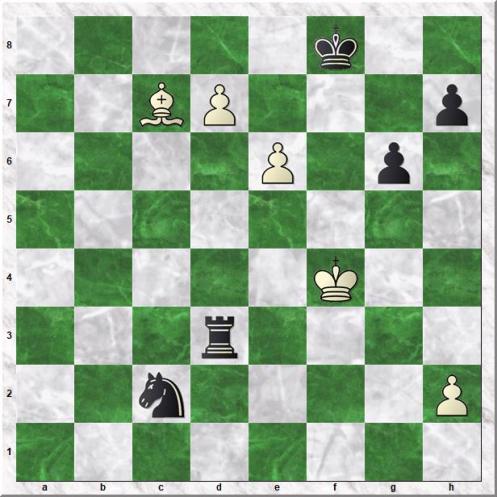
variation from Kasparov v Caruana, St Louis 2019
Solution
Garry could have won with 1 Bd8!!
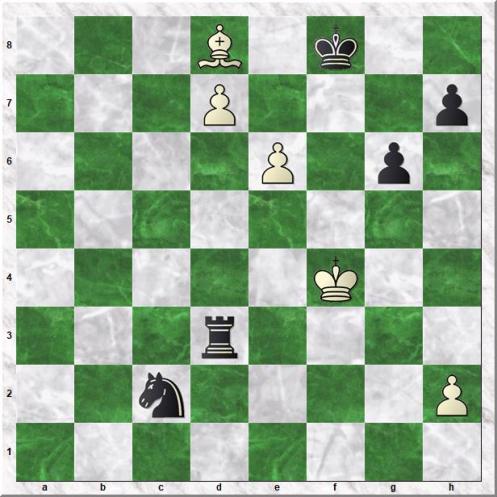
If 1…Re3 2 Bf6; so 1…Rd7 is forced, met by 2 ed Nd4 3 Bg5 Ne6+ 4 Ke5 Kf7[] 5 d8(Q) Nd8[] 6 Bd8
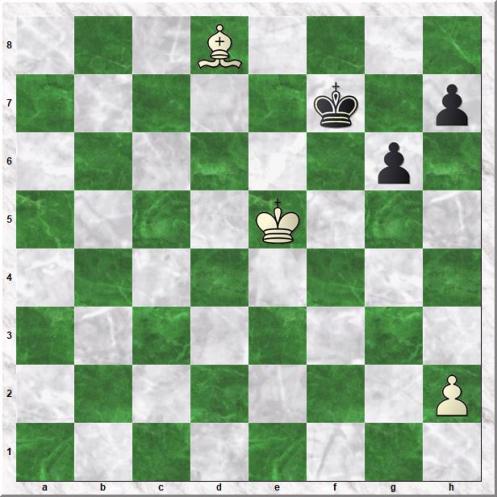
And since h8 is a black square, this is a win. My engine happens to say mate in 20, but that is worth nothing.
FEN
5k2/2BP3p/4P1p1/8/5K2/3r4/2n4P/8 w – – 0 1
Today’s problem is from a book I am reading at the moment; the position brings back memories.
As is my custom, I only say which side is to play: and not giving an idea if the move wins or otherwise, unless on occasion I think signposting would be helpful. Instead, the problems are posed with the instruction to decide what you would play, as in a game.
Black to play

Anand v Kasparov, WC match, New York, 2/10/1995
Solution
1…Ne4! and Vishy resigned; if 2 Qe1 Rd6 wins.
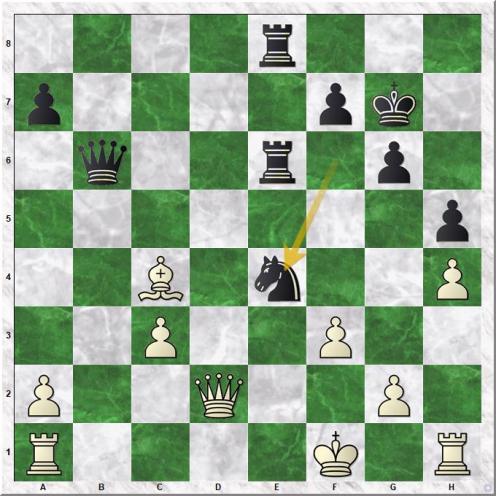
FEN
4r3/p4pk1/1q2rnp1/7p/2B4P/2P2P2/P2Q2P1/R4K1R b – – 0 25
Today’s problem is a position from the recent Sinquefield Cup: I’ve given the position, since it compares very similarly wiht Lundin v Smyslov, posted recently.
As is my custom, I only say which side is to play: and not giving an idea if the move wins or otherwise, unless on occasion I think signposting would be helpful. Instead, the problems are posed with the instruction to decide what you would play, as in a game.
Black to play

Vachier-Lagrave v Carlsen, Saint Louise 28/8/19
Solution
1…Kh8!, showing the same imagination as Smyslov, anticipating the opening the g-file. It happened after 2 f4 gf 3 Bf4 Rg8, and Magnus won in style.
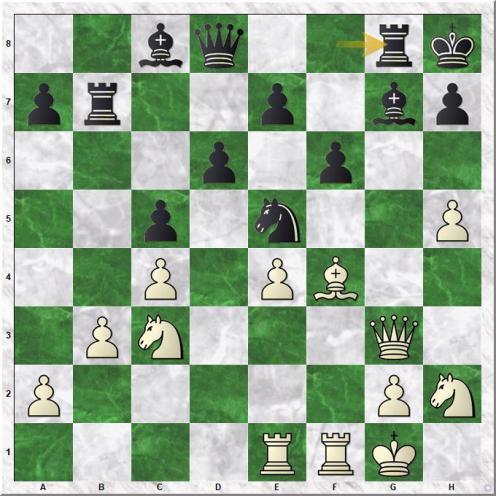
FEN
2bq1rk1/pr2p1bp/3p1p2/2p1n1pP/2P1P3/1PN3Q1/P2B1PPN/4RRK1 b – – 0 17
Today’s problem is from the C.H.O’D. Alexander’s 1973 book”The Penguin Book of Chess Positions”, a book I devoured (and loved) as a child.
I thought I would use it for more of my daily training.
As is my custom, I only say which side is to play: and not giving an idea if the move wins or otherwise, unless on occasion I think signposting would be helpful. Instead, the problems are posed with the instruction to decide what you would play, as in a game.
White to play

Chigorin v Rubinstein, Lodz 1906
Solution
1 Rf7! 1-0 ; this is amazingly, the identical position, with coloured reversed, down to every pawn, of Lundin v Smyslov 1946 which I published a few days ago. Smyslov missed the winning move.
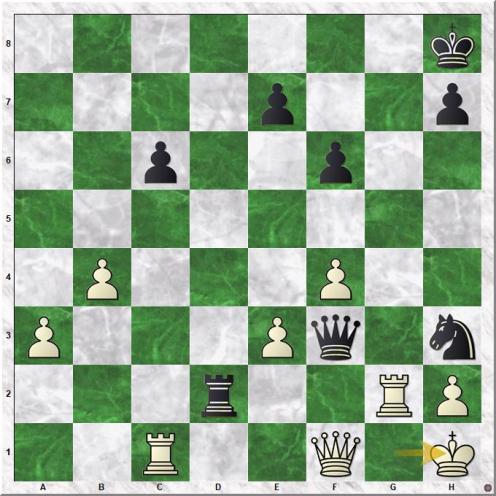
Lundin v Smyslov, Groningen 1946
FEN
r4q1k/p2bR1rp/2p2Q1N/5p2/5p2/2P5/PP3PPP/R5K1 w – – 0 27
Today’s problem is from the C.H.O’D. Alexander’s 1973 book”The Penguin Book of Chess Positions”, a book I devoured (and loved) as a child.
I thought I would use it for more of my daily training.
As is my custom, I only say which side is to play: and not giving an idea if the move wins or otherwise, unless on occasion I think signposting would be helpful. Instead, the problems are posed with the instruction to decide what you would play, as in a game.
Black to play
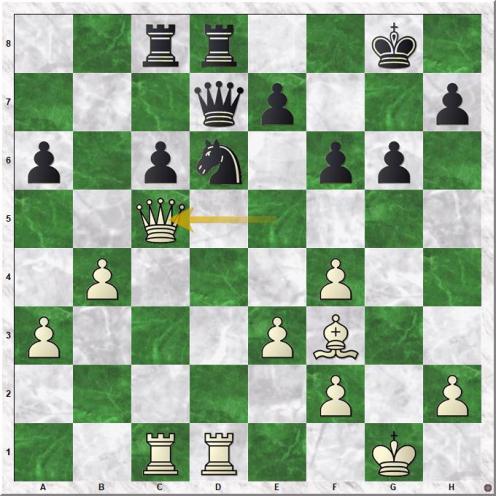
Lundin v Smyslov, Groninger 7/9/1946
Solution
Smyslov played 1…Kh8!, a beautifully inventive move, forseeing the opening of the g file by …g5.
After 2 Qb6 g5! 3 fg Qf5! Black had the initiative.
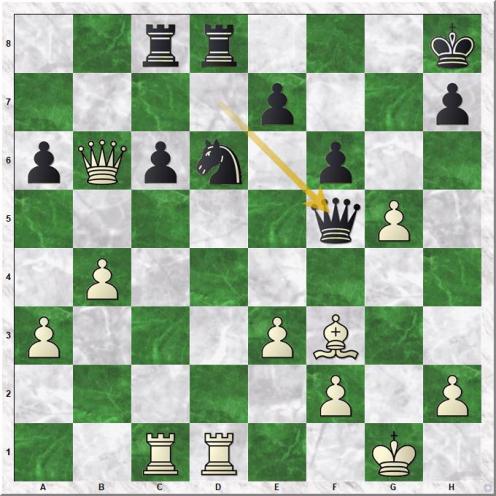
Yesterday’s position shows the finale of this game. The game is annotated in Megabase.
FEN
2rr2k1/3qp2p/p1pn1pp1/2Q5/1P3P2/P3PB2/5P1P/2RR2K1 b – – 0 23
Today’s problem is from the C.H.O’D. Alexander’s 1973 book”The Penguin Book of Chess Positions”, a book I devoured (and loved) as a child.
I thought I would use it for more of my daily training.
As is my custom, I only say which side is to play: and not giving an idea if the move wins or otherwise, unless on occasion I think signposting would be helpful. Instead, the problems are posed with the instruction to decide what you would play, as in a game.
Black to play
Lundin v Smyslov, Staunton Memorial, Groningen 7/9/1946
Solution
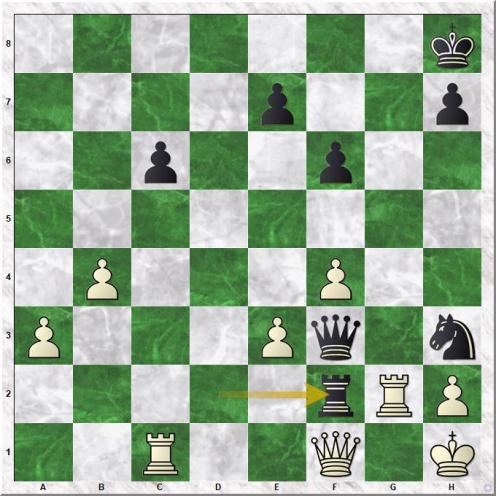
Smyslov played 1…Nf2+ and 2…Nh3+ , 3…Nf2+, with a draw by repetition.
Instead 1…Rf2! (or 3…Rf2!) wins. White is overloaded.
FEN
7k/4p2p/2p2p2/8/1P3P2/P3Pq1n/3r2RP/2R2Q1K b – – 0 37
Today’s problem is just a position which caught my eye recently. Malcolm Pein annotated the game in a recent Daily Telegraph column. What caught my eye was a move Malcolm didn’t comment on, in the brief space of a newspaper column.
As is my custom, I only say which side is to play: and not giving an idea if the move wins or otherwise, unless on occasion I think signposting would be helpful. Instead, the problems are posed with the instruction to decide what you would play, as in a game.
White to play
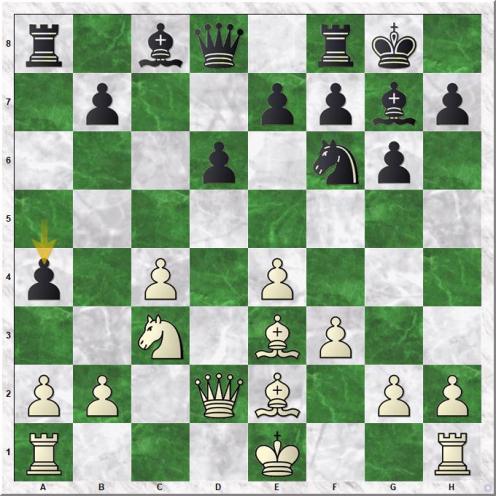
Praggnanandhaa v Vocataro, Helsingor, 25/7/19
Solution
Praggnanandhaa played 1 Kf2!, a move that, likely, I would never have thought of.
The position is given not as a White to play and win, but as a “what would you do”? I think 99 times out of 100 I would have played 1 0-0 without a moment’s thought.
Had I thought about 1 Kf2, to keep the King nearer the centre for when the Queens come off, I think I would just have easily rejected it.
Praggnanandhaa’s judgement was justified; a few moves later, pieces had come up, resulting in this position:
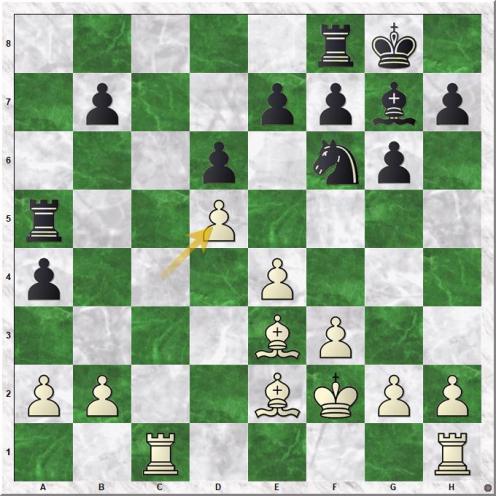
White is by no means winning, but he is a niggle of an edge, and later Vocaturo erred, and Praggnanandhaa managed to win. The whole game is worth examining: it is in Megabase and no doubt also in TWIC.
FEN
r1bq1rk1/1p2ppbp/3p1np1/8/p1P1P3/2N1BP2/PP1QB1PP/R3K2R w KQ – 0 12
Today’s problem is from the C.H.O’D. Alexander’s 1973 book”The Penguin Book of Chess Positions”, a book I devoured (and loved) as a child.
I thought I would use it for more of my daily training.
As is my custom, I only say which side is to play: and not giving an idea if the move wins or otherwise, unless on occasion I think signposting would be helpful. Instead, the problems are posed with the instruction to decide what you would play, as in a game.
White to play
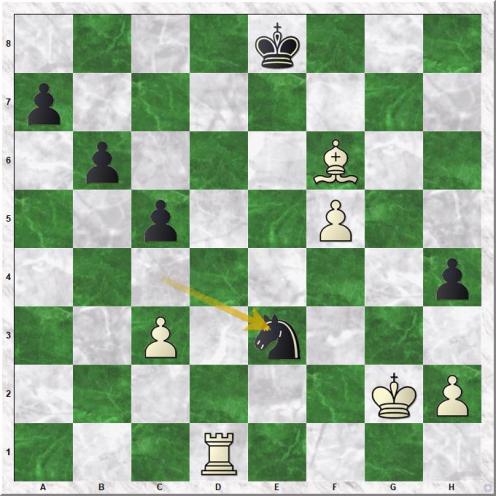
Taimanov v Huebner, Palma de Mallorca 13/11/1970
Solution
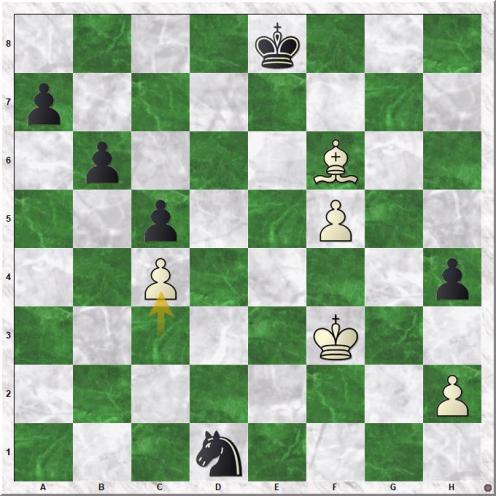
The position reached at the end of yesterday’s line.
Now 1 Kf3 Nd1[] 2 c4 traps the N, which is captured after 3 Ke2
Taimanov should have taken the Pf6 in yesterday’s position; he didn’t, and the game was instead drawn.
FEN
4k3/p7/1p3B2/2p2P2/7p/2P1n3/6KP/3R4 w – – 0 38
 allanbeardsworth