White to play and win

LR Reitstein v L Wilken 1961
Solution
I found Reitstein's move, and the solution, fairly easily: 1 Bc7 is fairly natural, exploiting the fact that the Qc8 is tied to the Ra8. It can also be rationalised by one of Jacob Aagaard's three questions, namely 'which is the worst placed piece'.
Black's best is probably to play 1…Nc6, blocking white's queen's sight of the Ra8, and hoping to struggle on after 2 Bd6+. Neither king move looks appealing, and it is only a question whether white can find a manoeuvre before black gets some coordination. White has moves like Nf3-h4-f5; Qe4-g4; Nf3-d2-e4. Provided he finds the right ones of these, perhaps also with the prophylactic c3 (to close d4 for the black knight) he should be able to convert.

Probably Nf3-d2-e4 after Ke8; and Qg4/ Nf3-h4-f5 after Kg8
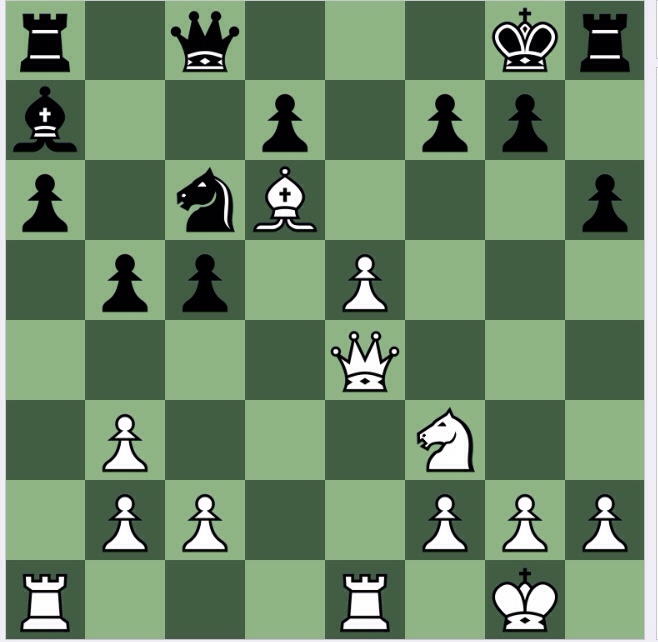
When entering the position into Stockfish to produce this blog, the engine says 1 Red1 is just as strong as Bc7, hitting d5. Essentially, white has more space and better pieces, and black's queen side pawn advance has just created holes.
 Posted with Blogsy
White to play and win
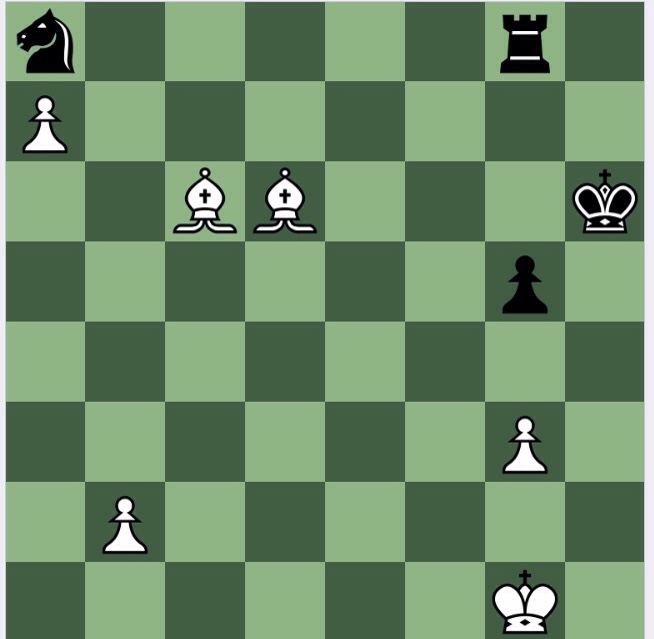
M Levitt v D Wolf 1986
Solution
A simple one today, 1 Ba8! Ra8[] 2 Bb8! locks in the bishop, so that either the pawn advances and queens, or, if the king comes over to block it, white's king snaffles black's g pawn. Game over.

White to play and ?

D Morschel v O Santos 1974
Solution
I can well imagine in a game white resigning here, especially if it had been one hard defensive slog, and the motivation to continue the fight had ebbed. But seeing it is a problem with a solution, and seeing that neither of the queen checks nor the rook check are anything, it is natural to try 1 e5+!, and immediately one sees possibilities.
If 1…de?? 2 Qh4 mate is pretty, as is 1…Qe5?? 2 Qh4 mate, so there is a poor choice between 2…Ke7 and 2…Qe5. Reitstein doesn’t bother with the former, and he is right to, since 3 Qc7+ is eventually mate…the queen and rook combine in checking heaven and somehow the rook drops, and then it is mate.
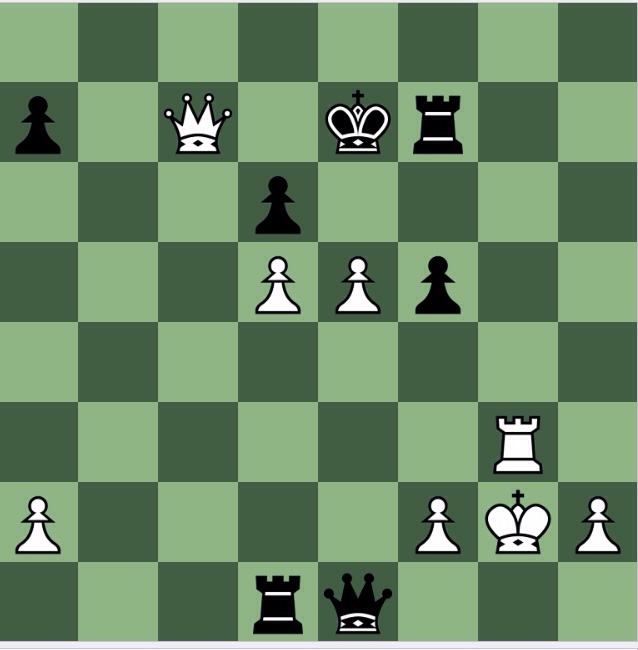
(Stockfish confirms it is mate in a few moves after 3…Ke8 4 Rg8+)
So 2…Ke5 is forced, when 3 Re3+ enters a Q v 2R ending, which Reitstein says is won for white because of the insecure positon of black’s king. That presumably means that white won the game, but I am not convinced that the resultant position is won:

Black to play
Black plays 4…Rd5[], an only move, but sufficient to I think at least cause white significant conversion difficulties. There’s no mate, and Stockfish doesn’t show me a forced tactical line whereby a rook drops off, so it is Q+3 v RR+3: a draw, I suspect.
I will try to find the game in a database to see whether my conclusion is erroneous. If it is, I will add a further posting, though reader’s are welcome to post their own comments.
On Friday night when I was driving home Radio 4‘s Feedback programme was on. In the slot that I heard the presenter Roger Bolton was talking to Radio 1’s controller Ben Cooper.

We were told that the channel's aims were to reduce the proportion of over 30s in its audience and to make it more popular in its target 15-29 age range. Ben explained that the mean (and he stressed the word, making a mathematical point) age was 32, explaining it by saying that the organisation which creates the statistics starts at age 10, so there is only a five year range audience below the target, but that the upper range extends 'all the way to death'. Nicely put, I thought. What he means is that the distribution may well be skewed.
So far, so good, but Ben then explained that their performance was in fact far better than the mean suggests since the mode (similarly stressed was 19. Maybe. Maybe not. I suspect that the best, or should I say most appropriate, measure of central tendency should in fact be the median. Now if that is somewhere between 15 and 29, perhaps especially if it is near the range mean (22) that would should indicate good performance against the targets set for the station.
Black to play and win
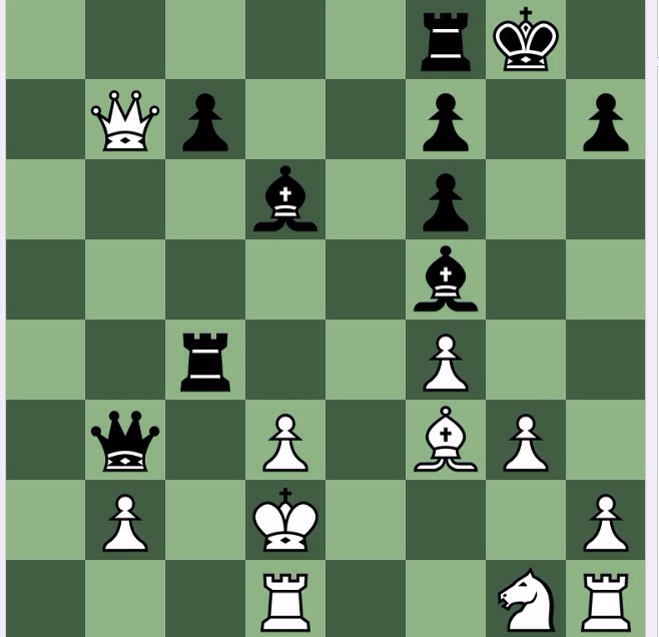
JH Van Dyk v CH Van der Meyden 1961
Solution
Examine all biffs means that 1…Rc4+ has to be the first try, especially with both black's queen and Bf5 looking at c2: so the rook can't be captured. If 2 Kb1, 2…Rb4 decides, so 2 Kd2 and it is now a choice. I thought 2…Rc2+ was easier to calculate, since after 3 Ke1 Re8+ 4 Ne2 Black can play 4…Ree2+! since the Bf3 is overloaded: it is tied to defending the Qb7. In the game, black played 2…Qc2+ 3 Ke1 Bb4+ and won just as convincingly.
Black to play and win
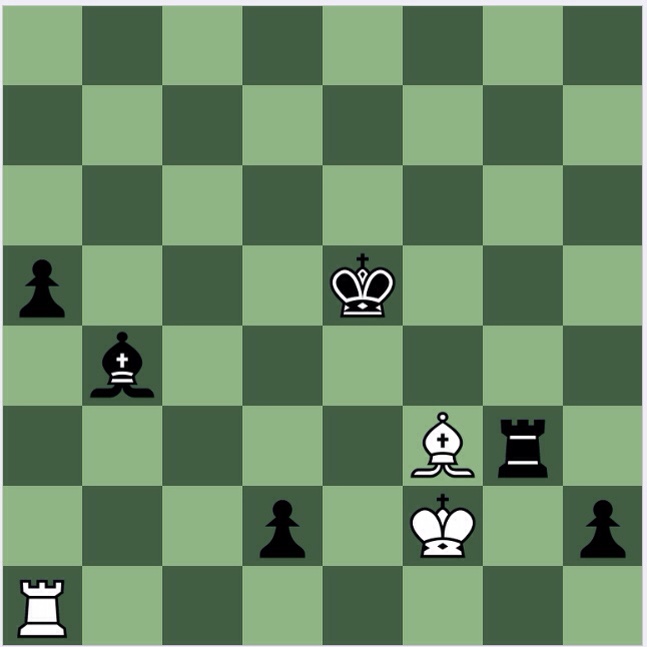
M Solomon v D Gluckman 1995
Solution
1…Rg1 begs to be played (I am not sure why, but it does, doesn't it?) the only question is how to follow up. But once you see that 2 Rg1 is met by 2…Bc5+!, the problem is solved.
In a way, I wonder why 1…Rg1 is 'obvious'? It might be because it assists in trying to promote the h pawn; or it just puts pressure on the Bf3 which is tied to defending h1, so that if 2 Rd1, the white rook isn't defended by the Bf3 and is instead a LPDO.
I should also mention that my second immediate thought, 1…Rf3+! (examine all biffs) also works: 2 Kf3 Ba3! (Stockfish tells me that 2…a4 is even stronger) and a pawn promotes. The bishop arrives at c1, and the white king can't contain both the d and the h pawns.
Happy days are here again. Regular readers of my blog will know that about a month ago I could no longer do my daily blog based on Leonard Reitstein's second book of puzzles from South Africa. Stupidly, I had either left it behind or lost it when last at our holiday home, here in Kas, Turkey.
We arrived late last night and, even before I had a drink in hand, I had checked the bookshelves to find, alas, no Reitstein; and then, in the dark, went to the storeroom and hallejujah!, I had for some unknown reason left it with some of our leave behinds. So, my holiday started with the best of spirits. The book will be guarded as gold until the entire series has finished.
Normally, I write may blogs several weeks in advance (no, I am not always up at 7am UK and on Twitter), the excellent Blogsy ipad add enables writer's to plan publication times and dates. So now I have some work to do, to get back ahead. Fortunately, today's and the next couple are easy enough.
White to play and win
Black plays ….Rg7 in this position:
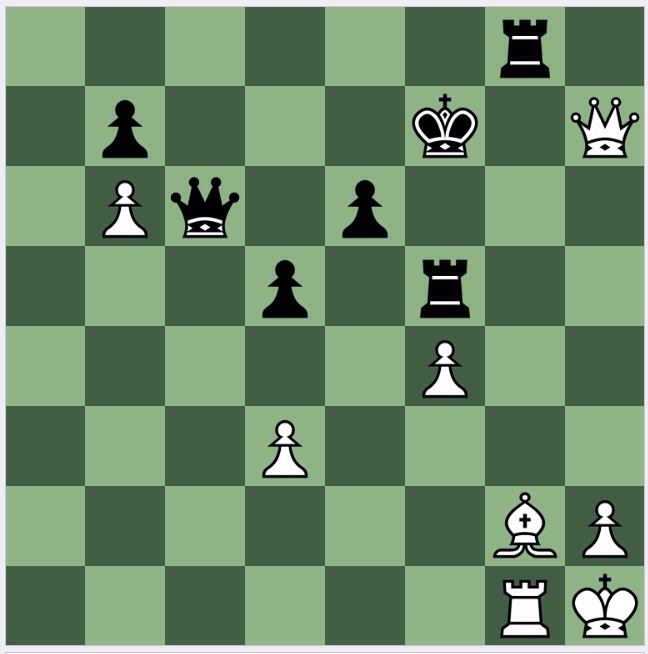
S Bhawoodien v Y Aranov 2003
Solution
Straightforward, and even if it weren't solved on sight, examine all biffs would find white's first two moves.
1 Qg7+! Kg7 2 Bd5+! and after K moves, 3 Bc6 bc, 4 Rb1 is easiest, forcing black's rook to passitivity at b8, when white's two pawn advantage wins simply.
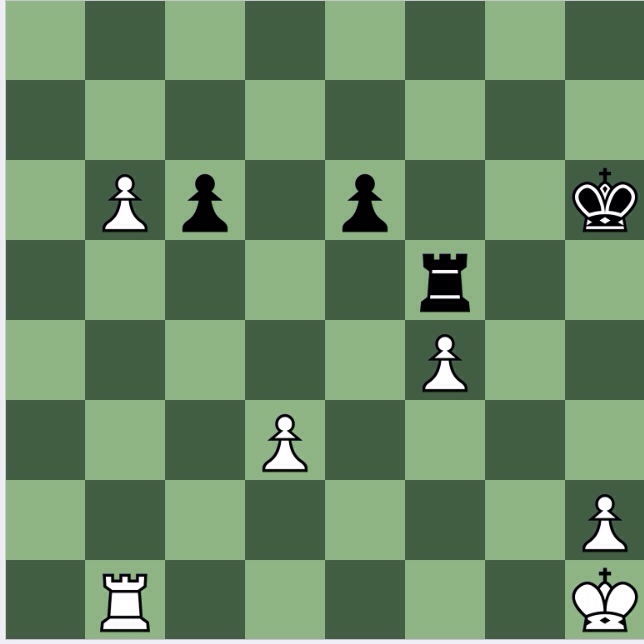
Black to play: how to defend the Pb7?
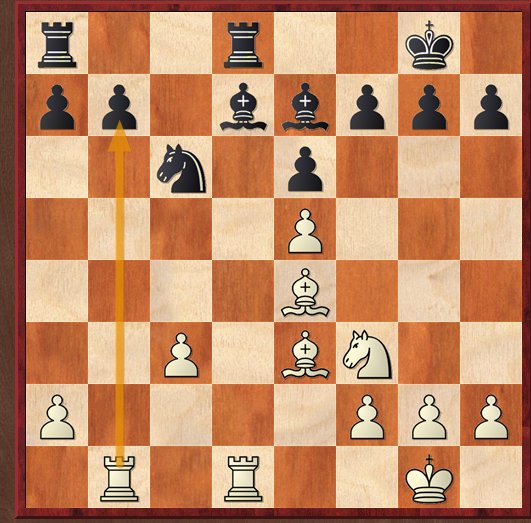
Cau- AWB, 3 min blitz, ICC 2014
Solution
This is just a quick follow on from yesterday's puzzle. I made the mistake of responding to the threat by 1…b6??, to be floored by the response 2 Rd7!- see my posting.
Of course, it was only fast blitz, but the lesson here is to follow CJS Purdy's advice and, at least for a moment, presume the threat can't possibly be executed, what would you then want to play?
Here, that leads to 1…Be8! exploiting the back rank threats to white's king. The pawn doesn't need defending.
Insightful and instructive, showing yet again the value of the Purdy principles.
White to play and win
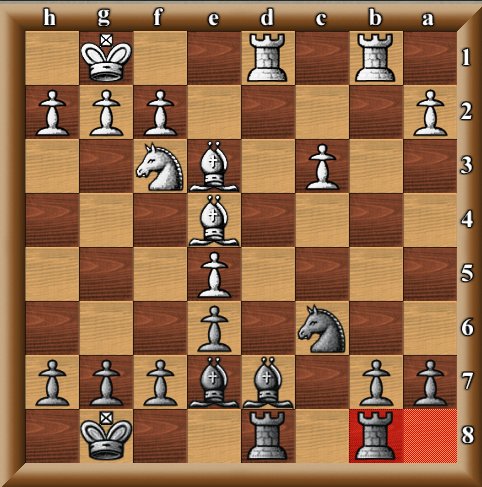
Cau- AWB, ICC 3min blitz October 2014
Solution
This loss hurt: because I had struggled all through the game, with white having better development and some resultant pressure. Full credit to my opponent.
In particular, just as I was starting to hope the worst was over, he delivered a knock out combination. A lot of Purdy elements fit here.
1 Rd7! (examine all biffs) Rd7[] 2 Bc6! (examine all biffs, and note the jump biff Rb1-b8, so the Pb7 is tied, so that in fact the Nc6 is LPDO). 1-0, since 2…bc 3 Rb8+ is curtains.
A nice combination, and in the spirit of gens una sumus I congratulated white, and we had a nice ICC chat.
Black to play and win
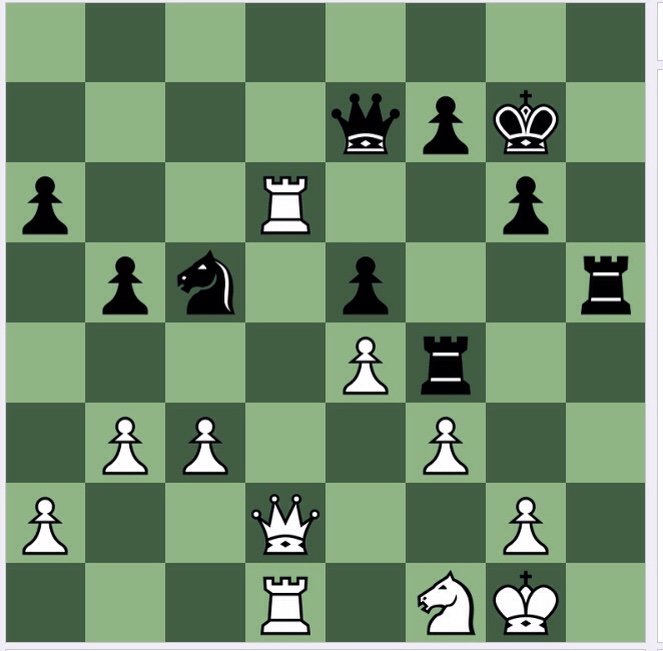
Stefan Kindermann v Roman Slobodjan, German Ch. 18/11/99
Solution
I saw this in Raymond Keene's column in the Times, Jan 2000. I came across the clipping the other day: I must have torn it out, and put it somewhere safe to turn my attention to sometime, and then…found it fourteen years later.
Looked at now, in 2014, it doesn't seem that hard, and I wonder why I tore it out- nowadays I only do so when I can't solve newspaper puzzles on inspection. So, 1…Ne4! and if 2 fe, 2…Qh4 and either mate follows on h1 or white must take the Rf4 and then the win is trivial.
When I entered the position into Stockfish to produce the above diagram, it suggests 1…Qh4 as even stronger (in the machine sense -6 is better than -4): and indeed, it is 'correct' since after 2 Qe3 Ne4, white's best sacrifice is 3 Qe4, and the resultant end position is even more in black's favour. But from a mere human perspective, 1…Ne4 removes the need to look at 2 g3 after 1…Qh4- not that it survives, 2…Qh1+ 3 Kf2 Ne4+ is gruesome. A boxer's second would thrown in the towel.
 allanbeardsworth