White to play and win
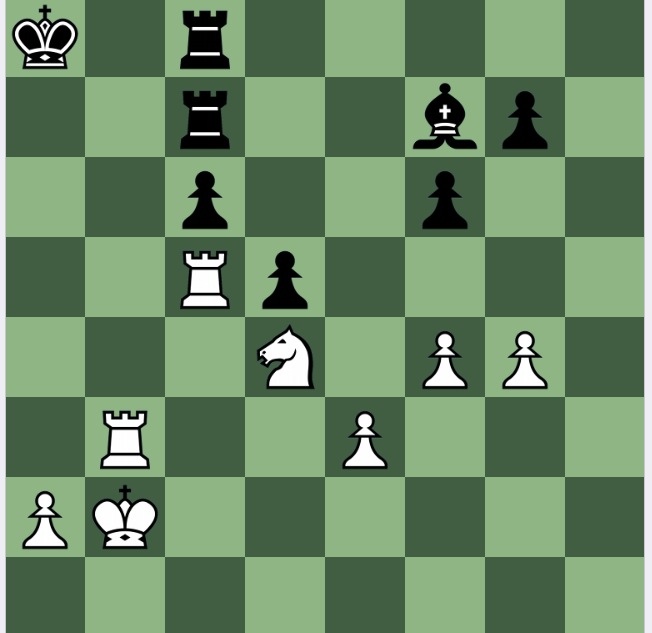
V Ivanchuk v Lafuente, Gibraltar 2011
Solution
I was lucky enough to visit Gibraltar to watch some of the 2011 tournament, including this game. One of fond my memories was listening to Chucky in his post mortem analysis of this game. Incredible, humbling, to witness his speed of thought.
At times, the compère- if I recall correctly, Stuart Conquest- had to intervene, to ask Chucky to slow down and explain things to the audience, and this position was one: he saw the concluding combination several moves before, and it was all obvious to him.
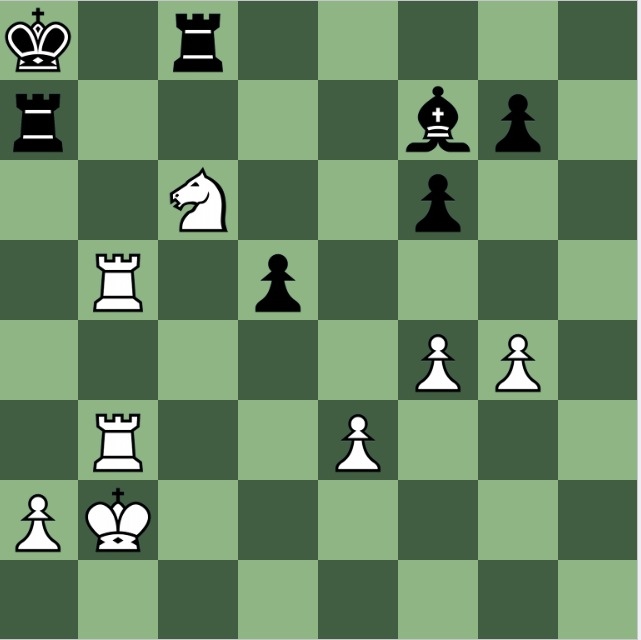
Here, 1 Nc6! with the idea 1…Rc6 2 Ra5+ and mate next move, since Rc6-a6 is unprotected. Or, if 1…Ra7!, seeking to benefit from the self pin Nc6 creates, 2 Rb5! and 2…Rc6 3 Rb8 mate.
 Posted with Blogsy
White to play and win
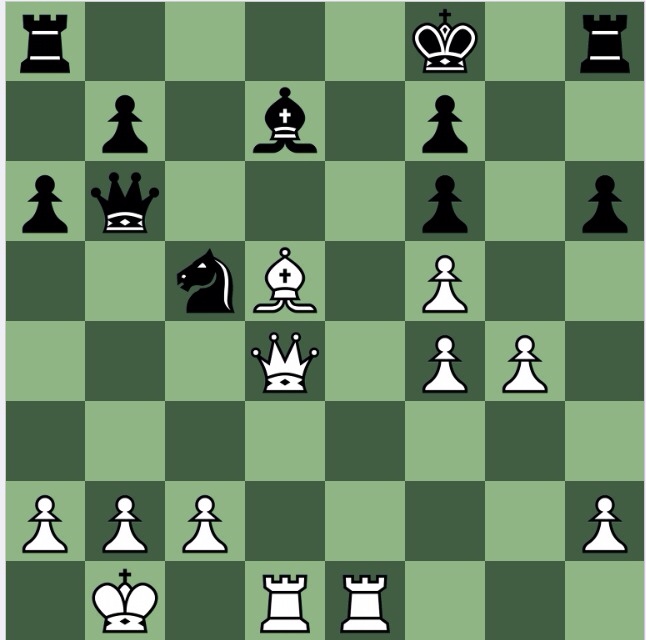
Y Solodovnichenko v V Petkov, Padua 2013
Solution
This is another stinker from Malcolm Pein's Daily Telegraph column. It wasn't given as a puzzle, Malcolm just gave the game score (a fantastic Nf5!! sac in the open Sicilian). Had he set it as a puzzle, I wouldn't have solved it in a month of Sundays.
Once seen, it is 'obvious', just like so many impossible to find moves: 1 Be6!! exploits the fact that the black Q is LPDO and the Nc5 pinned. If 1…Kg7 2 g5!! crashes through, and if 1….fe (as played) 2 Qf6+ Kg8 (else the LPDO Rh8 drops off) 3 Rd7! Nd7 4 Qg6+ Kf8 5 fe 1-0
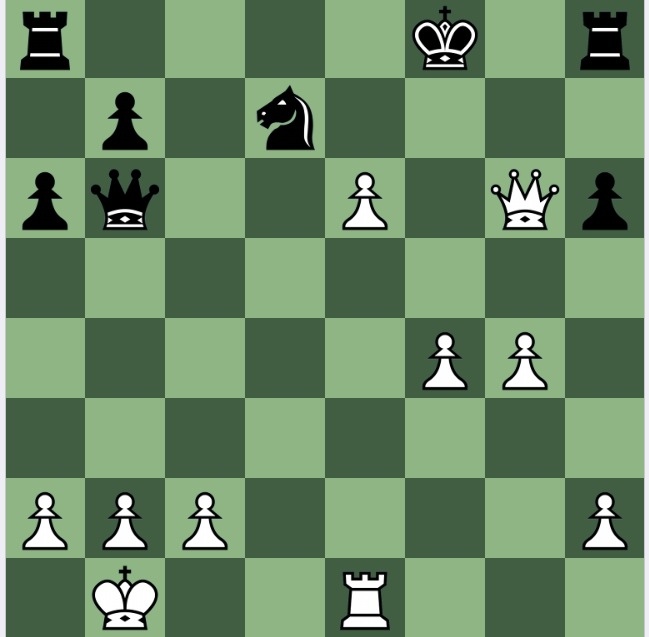
A final thought: in the initial position, there are three black pieces which are LPDOs; the two rooks and queen; and the N is tied to the B, and the N pinned to the Q: enough for any Purdy player.
Black to play and win
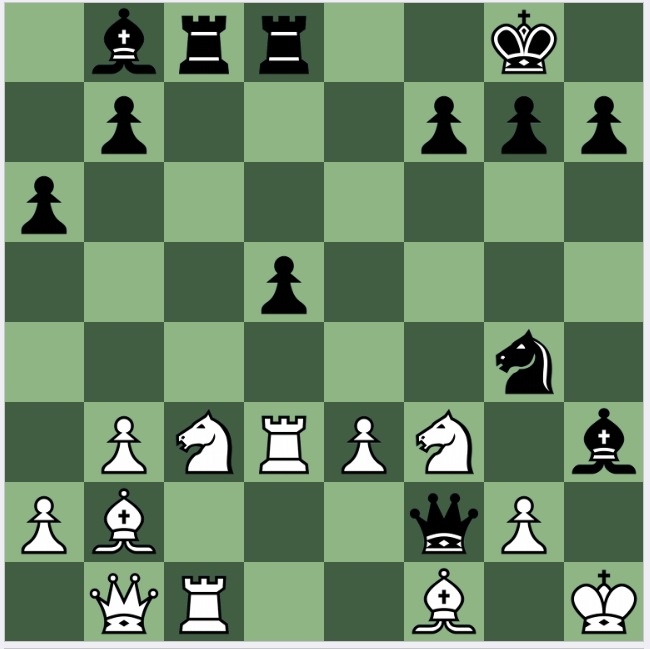
E Dizdarevic v A Greet, Tromsø Olympiad 2014
Solution
I saw this problem in Malcolm Pein's column in the Daily Telegraph during the Olympiad. I am an avid, and long term (forty year) reader of the Telegraph chess column- if my memory serves me right, written in the 1970s by Tony Miles and latterly by Malcolm. Each day I do the puzzle, if there is one. Most I solve by inspection or soon thereafter: some stump me, and then I cut them out, and solve them during spare moments. The above problem was one such stinker.
Eventually, I saw the solution: examine all biffs means 1…Bg2+! and after the forced 2 Bg2, bringing more pieces to the party leads to 2…Rc6! threatening the unanswerable Rh6+. The Rc6 rook lift could also be seen by following Purdy's maxim to look for nets– here, the white king is in a net.
Stockfish tells me that reversing the moves is equivalent, though it is to my mind, slightly messier: 1…Rc6 2 gh needs to be defeated, which it is by 2…Qf3+ 3 Bg2 Qg3 4 Kg1 Rf6! cutting off the f file, followed by Qh2 mate.
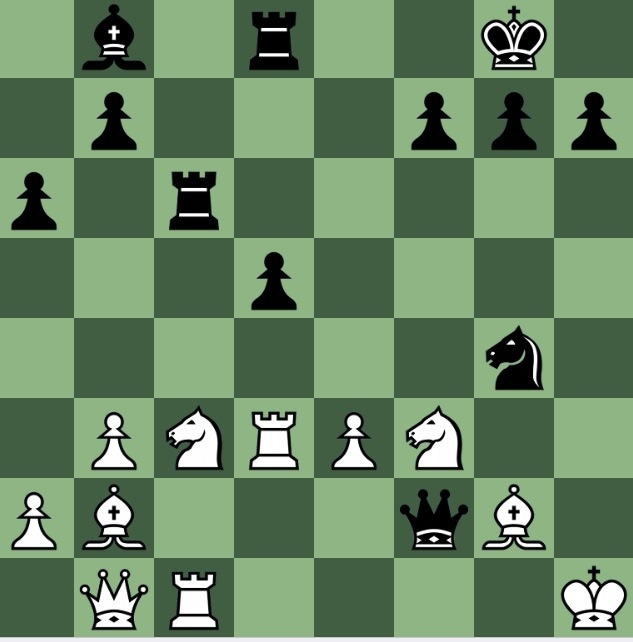
I have lightly annotated the game here.
http://www.viewchess.com/cbreader/2014/9/15/Game185814437.html
Earlier it was Saturday afternoon, so time to watch either (a) football on TV (b) chess on Playchess. No prizes for guessing my preference.
Today I mainly logged on to see how Mickey Adams and Nigel Short did in their round one games at the Poker Stars tournament in the Isle of Man. Both won, I am pleased to say, with Mickey playing a classic Mickey game, weaving somehow into a position where he had the pressure, which naturally turned into a pawn up in a rook and same coloured bishop ending, which naturally turned into 1-0. Lovely.
White to play and win
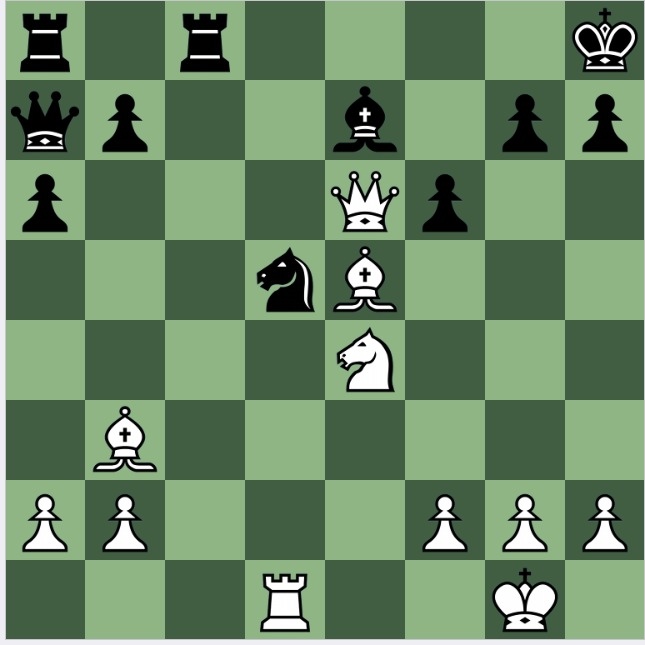
allanbeard v sweet ICC 2012 3 minute blitz
Solution
Several moves no doubt win (1 Bd4, for instance) but 1 Ng5!! was pretty. I had hoped to be allowed to do a Nf7+/Nh6+/Qg8+/Nf7 smothered mate, but alas, 1….fg 2 Bd5 and since 2…Bf8 loses to 3 Qg8 mate, black played 2…Qc5 after which 3 Qh6! Bf8 (3…Bf6 4 Qf6!) 4 Be4 1-0
Another example of Morra Mayhem (the title of Marc Esserman's book).
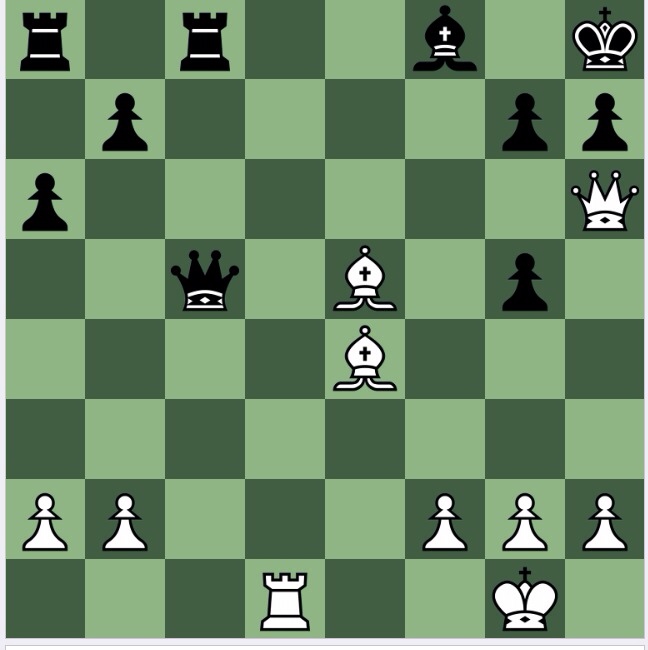
White to play: what is his best move?
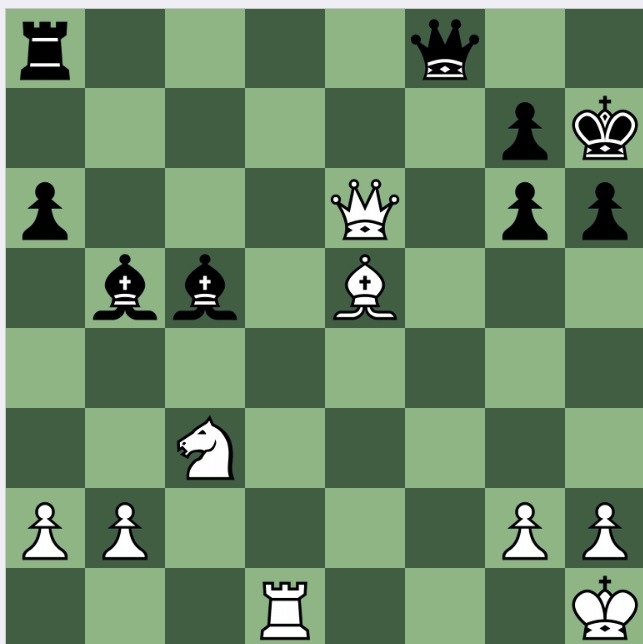
allanbeard v rpair ICC 2013 3 minute blitz
Solution
1 Bg7! the idea being 1…Qg7 (as played) 2 Nb5! 1-0 since 2…ab 3 Rd7 and white should win the ending. However, 1..Kg7! is only a perpetual after 2 Nb5 ab 3 Rd7+ Kh8 4 Qe5+.
White to play and win
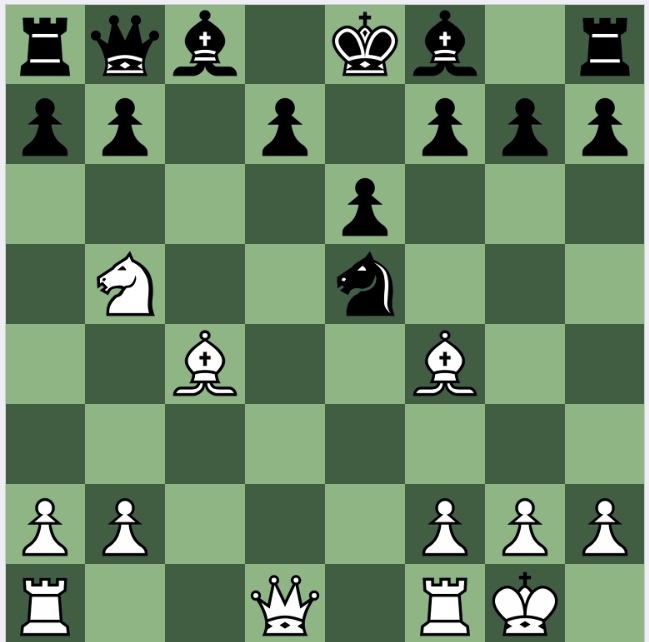
allanbeard v mega ICC 2013, 3 minute blitz
Solution
1 Be6! with the idea of 1…de 2 Rc1! 1-0; if 1…fe 2 Qh5+ and one of the rooks drops off. If 1…a6 then 2 Be5 Qe5[] 3 Bd7+ Bd7 4 Re1.
Observant readers will have seen a theme from my games from the last several days: they are all from the Morra gambit. The Morra is a rubbish opening despite the fact that I love Marc Esserman’s book on it, and despite the fact that it is so easy for black to come out of the opening simply a pawn up, and then for white to suffer a dull death. However, it is fun to play, and fairly often you can light the board up. The above position is more or less theory: the desperado throwing away of the Bc4, normally on b5, to gain a tempo to play Rc1, is a theme of many successful Morra attacks.
White to play and win
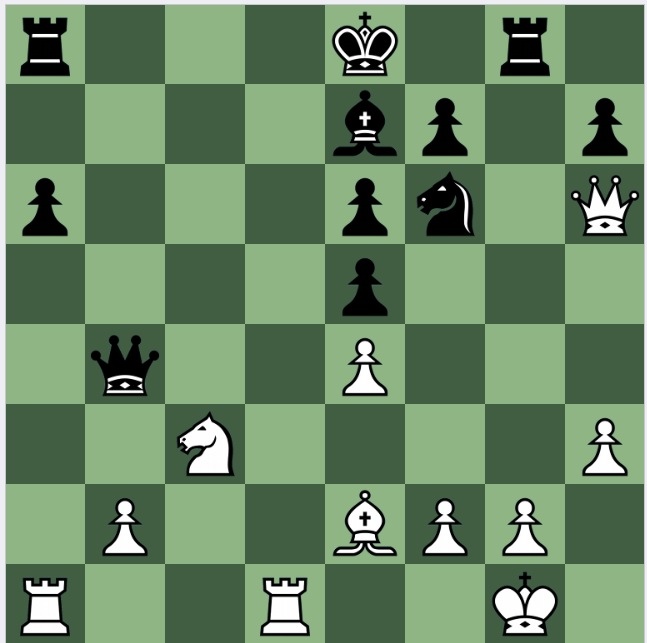
allanbeard v KPK ICC 3 minute blitz 2014
Solution
1 Bb5+! 1-0 exploiting the fact that the a6 pawn is pinned, and seeing the jump check Ra1-a8.
I enjoyed the recent BBC programme The Woodpushers (h/t to my brother for pointing it out):
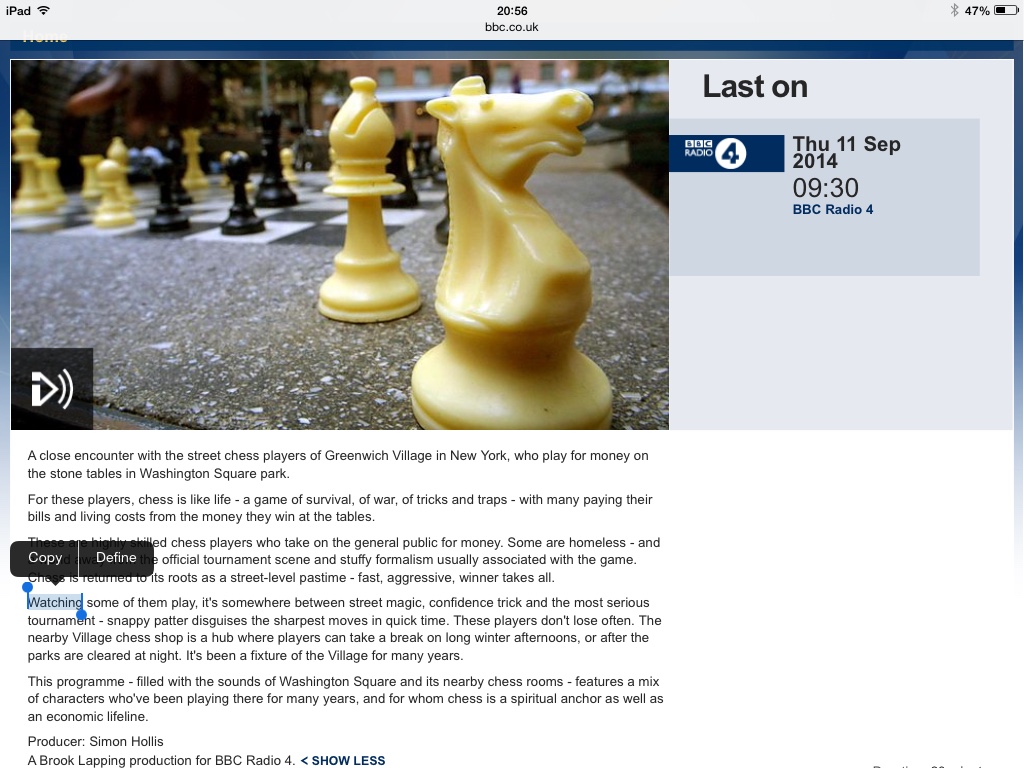
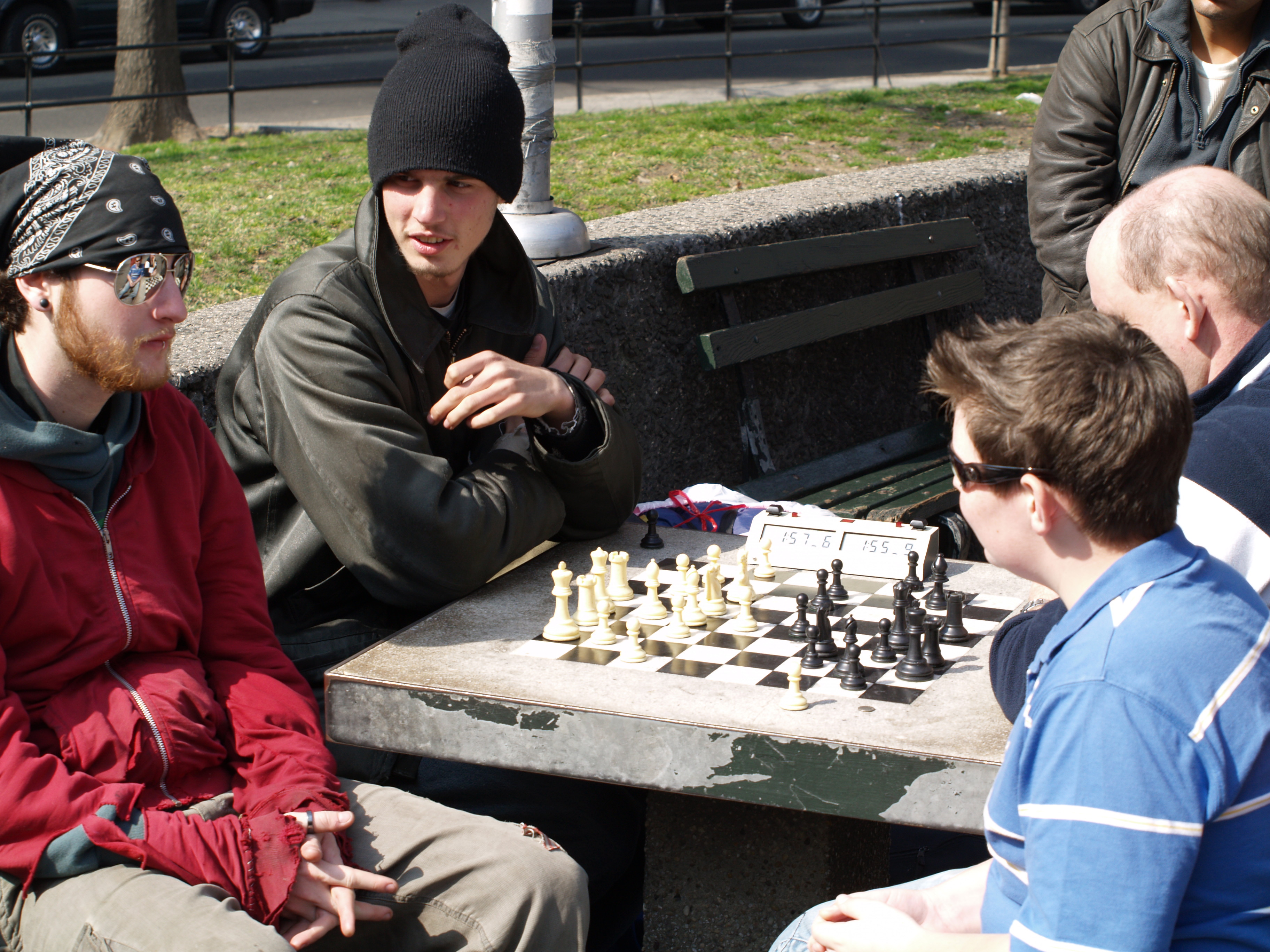
The programme took me back down memory lane, in 2007 when I last played chess at Washington Square Park.
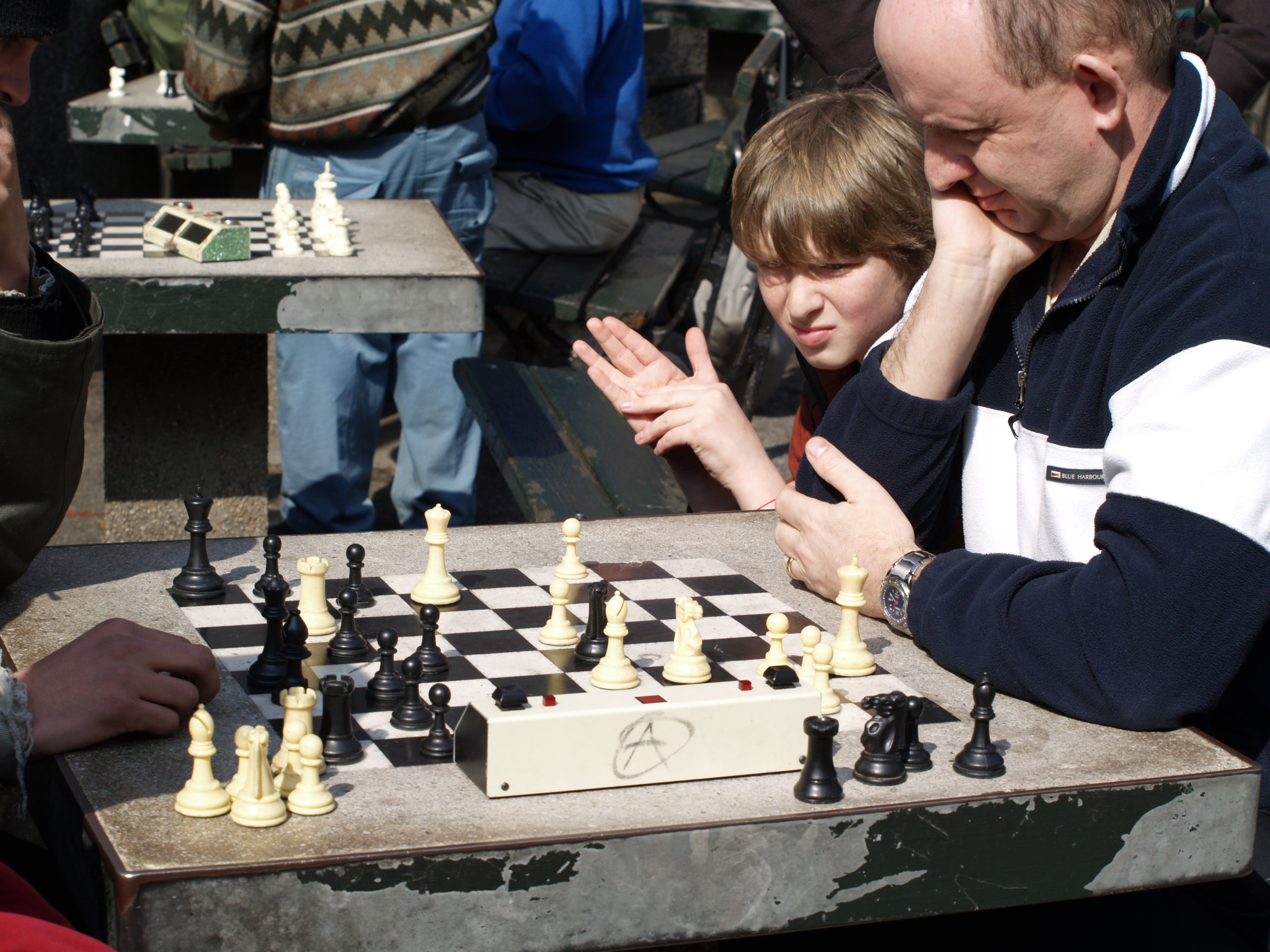
The kibitzer is my son, Tom, now 21.
We had gone to New York with our close friends John and Fiona, and their children Andrew and Emma. Without staying what I was doing, I steered the walk towards Washington Square, my frequent playground when I lived in Manhattan in 1993. I feigned surprise when we happened on people playing chess in the SW corner.
I recall that John asked if I wanted to play: did I want to play? did I want to play? did I want to play? did I want to play? There was nothing in New York I would rather do than play, it was what I had been hoping to do since the moment we arranged the holiday.
So, act cool, sidle over, don't seem to interested (Tom said later I headed like a dart to the players). One of the regulars, who play tourists for money, asked me if I wanted to play?: yes; we play with clocks?; ok; we play fast chess?; ok; $5 per game?; ok. He then said, 'I'm not playing you, play him instead': something about my demeanour put him off, and I was passed to Mike, a student from California, who turned out to be their best player.
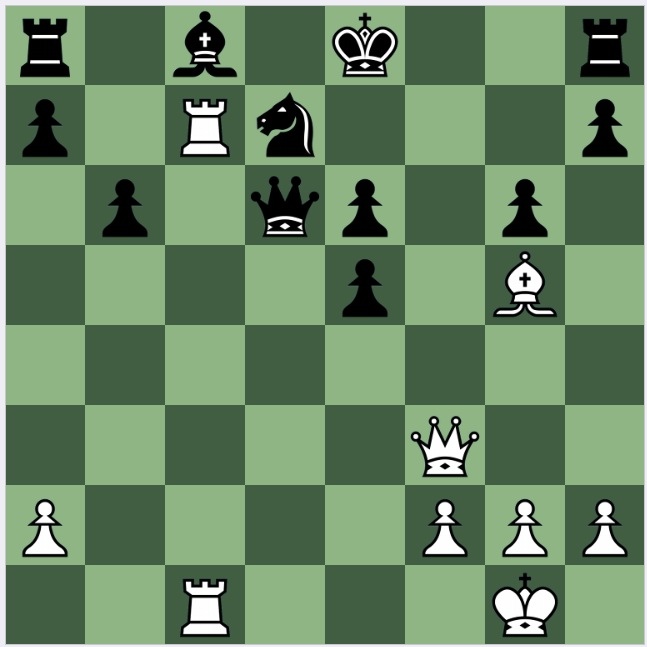
White to play and win
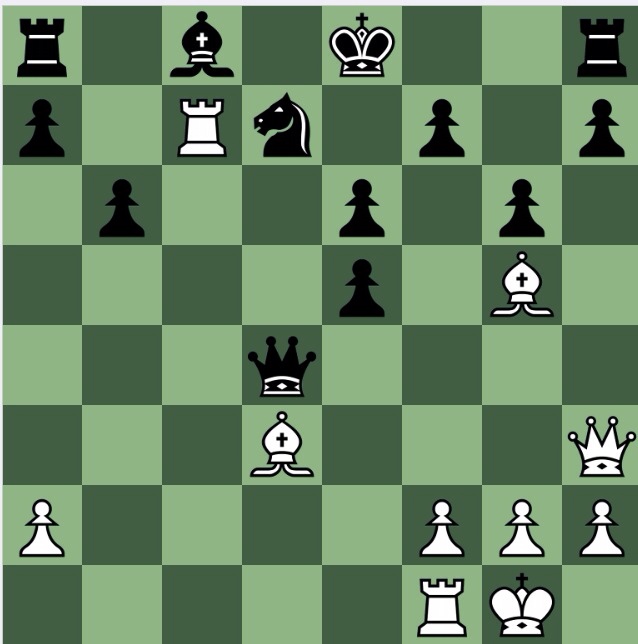
allanbeard v Casper, ICC 2012, 3 min blitz
Solution
1 Bg6! Qd6 (defending the Pe6 and biffing the Rc7) 2 Rfc1 fg (2….Ba6 3 Qf3 double attacking the Ra8 and Pf7 1-0) 3 Qf3, threatening mate with Rc8+, and the Nd7 is pinned- so Nc5 Qf7 mate.
 allanbeardsworth