Today’s problem is from the April 1979 Chess magazine. I have hundreds (many hundreds) of magazines on my book shelves, and I thought I would dip into them; and thought I would start with going forty years back.
As is my custom, I only say which side is to play: and not giving an idea if the move wins or otherwise, unless on occasion I think signposting would be helpful. Instead, the problems are posed with the instruction to decide what you would play, as in a game.
Black to play, after White played 1 Qf5

Titov v Kovalev, Tashkent September 1978
Solution
1…Rg2+ 2 Kf1 Rg1+! 0-1
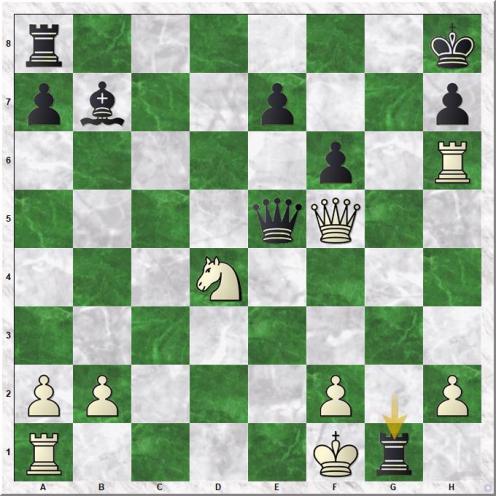
White must capture, when 3…Rg2+ 4 Kf1 Ba6+ overloads the Nd4 (and also mates).
FEN
r5rk/pb2p2p/5p1R/4q3/3N2Q1/8/PP3PPP/R5K1 w – – 0 21
Today’s problem is from the June 1979 Chess magazine. I have hundreds (many hundreds) of magazines on my book shelves, and I thought I would dip into them; and thought I would start with going forty years back.
As is my custom, I only say which side is to play: and not giving an idea if the move wins or otherwise, unless on occasion I think signposting would be helpful. Instead, the problems are posed with the instruction to decide what you would play, as in a game.
Before I give the puzzle, the June 1979 Chess magazine might have been the first time Garry Kasparov came to the attention of Chess magazine readers.

None of Garry’s games are in the magazine, though.
White to play

Espig v Inkiov, Varna 15/5/1976
Solution
1 f7! and after 1…Kf7 (1…Kg7 or 1…Ke7 are both met by 2 Kf6 and wins trivially) 2 Kf5 and White wins, with the opposition.
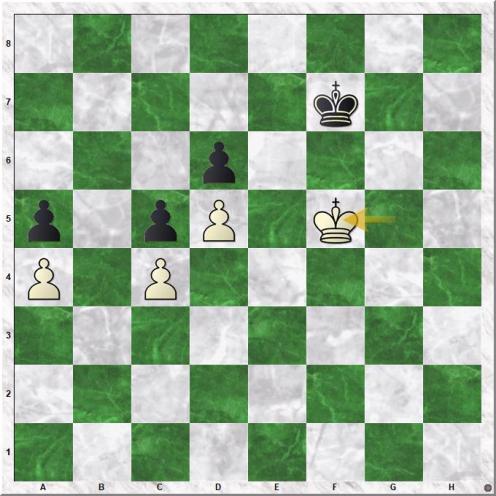
White shoulders the Black king away from its protection of the Pd6.
FEN
5k2/8/3p1P2/p1pP2K1/P1P5/8/8/8 w – – 0 54
Today’s problem is from the January 1979 Chess magazine. I have hundreds (many hundreds) of magazines on my book shelves, and I thought I would dip into them; and thought I would start with going forty years back.
As is my custom, I only say which side is to play: and not giving an idea if the move wins or otherwise, unless on occasion I think signposting would be helpful. Instead, the problems are posed with the instruction to decide what you would play, as in a game.
Black to play

Abbott v McGowan, Southend Easter 1979
Solution
1…Qh2+ 2 Kf1[] Qh1+! and mate next move.

FEN
r1b2k2/pp5r/3p3q/1QpPpNp1/P1P1PnP1/2P2P2/5RB1/1R4K1 b – – 0 1
Today’s problem is from the June 1979 Chess magazine. I have hundreds (many hundreds) of magazines on my book shelves, and I thought I would dip into them; and thought I would start with going forty years back.
As is my custom, I only say which side is to play: and not giving an idea if the move wins or otherwise, unless on occasion I think signposting would be helpful. Instead, the problems are posed with the instruction to decide what you would play, as in a game.
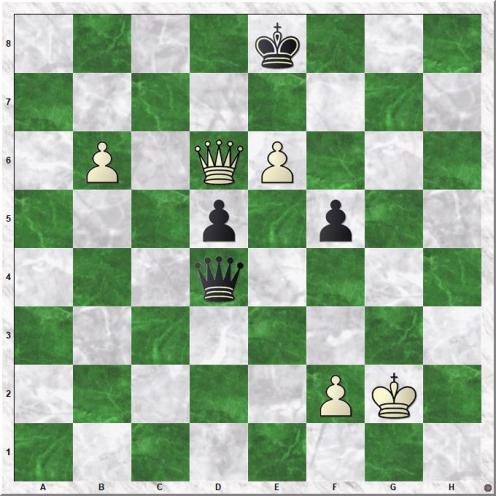
White to play: how should White have played?

Lemachko v Caldwell, Hyeres April 1979
Solution
White could have won by 1 b6! (or 1 Kg2 or even 2 Kh2, wins, too)
1…a4 2 c6 a3 3 cb a2 4 b8(Q) a1(Q)

5 Kg2 (best, defending the f2 pawn) Qd4

And my engine says it is mate in 33; but what matters is 6 Qd6+ Ke8 7 e6 and the Queen has sight of important squares around the White’s king, such as g3, so the checks can be shielded: and pawns pushed.
FEN
8/1p2k3/8/pPPpPp2/3P4/8/5P2/7K w – – 0 1
Today’s problem is from the June 1979 Chess magazine. I have hundreds (many hundreds) of magazines on my book shelves, and I thought I would dip into them; and thought I would start with going forty years back.
As is my custom, I only say which side is to play: and not giving an idea if the move wins or otherwise, unless on occasion I think signposting would be helpful. Instead, the problems are posed with the instruction to decide what you would play, as in a game.
White to play: examine 1 c6, as played in the game
Lemachko v Caldwell, Hyeres April 1979
Solution
1c6?? was a blunder: 1…b6!, and White resigned.

FEN
8/1p2k3/8/pPPpPp2/3P4/8/5P2/7K w – – 0 1
Today’s problem is from the June 1979 Chess magazine. I have hundreds (many hundreds) of magazines on my book shelves, and I thought I would dip into them; and thought I would start with going forty years back.
As is my custom, I only say which side is to play: and not giving an idea if the move wins or otherwise, unless on occasion I think signposting would be helpful. Instead, the problems are posed with the instruction to decide what you would play, as in a game.
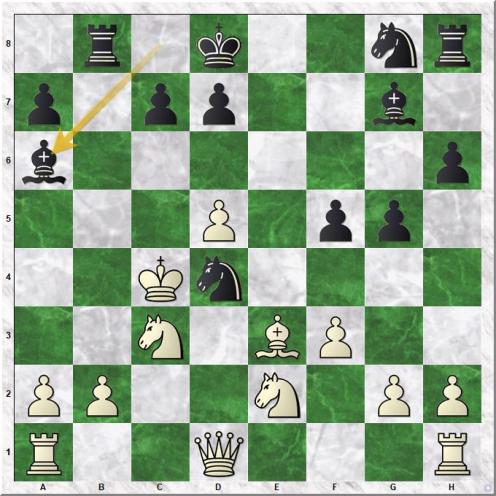
Black to play
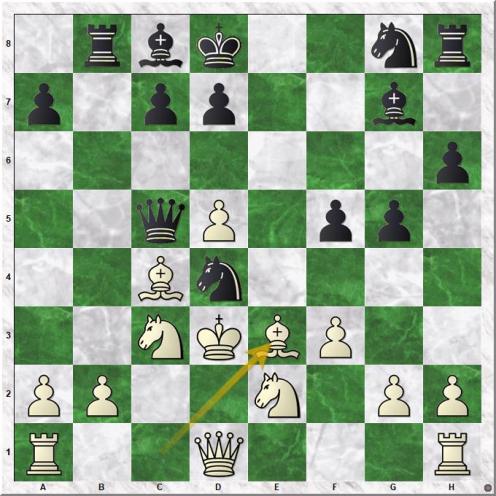
Seirawan v Browne, Berkeley 1979
Solution
1…Qc4+ and 2 Kc4 Ba6+ wins.
FEN
1rbk2nr/p1pp2b1/7p/2qP1pp1/2Bn4/2NKBP2/PP2N1PP/R2Q3R b – – 0 16
Today’s problem is from the June 1979 Chess magazine. I have hundreds (many hundreds) of magazines on my book shelves, and I thought I would dip into them; and thought I would start with going forty years back.
As is my custom, I only say which side is to play: and not giving an idea if the move wins or otherwise, unless on occasion I think signposting would be helpful. Instead, the problems are posed with the instruction to decide what you would play, as in a game.
White to play

Gruenfeld v Soltis, Lone Pine 3/4/1979
Solution
1 Ng6! and Black’s position crumbles.

If 1…Kg6 2 Bh5+! wins.
1 Bh5 also wins, per my engine.
FEN
r5nr/1bq1pkb1/pn4pp/1p2pp2/7N/P1NQ2B1/1PP1BPPP/R3R1K1 w – – 0 17
Today’s problem is from the June 1979 Chess magazine. I have hundreds (many hundreds) of magazines on my book shelves, and I thought I would dip into them; and thought I would start with going forty years back.
As is my custom, I only say which side is to play: and not giving an idea if the move wins or otherwise, unless on occasion I think signposting would be helpful. Instead, the problems are posed with the instruction to decide what you would play, as in a game.
Black to play
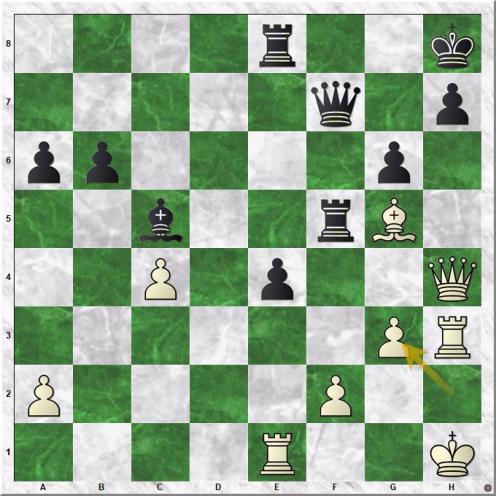
Shirazi v Grefe, Lone Pine 1979
Solution
1…Rg5 and White resigned. If 2 Qg5, then Qf3+, Qf2+. Qe1+ and mates.

FEN
4r2k/5q1p/pp4p1/2b2rB1/2P1p2Q/6PR/P4P2/4R2K b – – 0 30
Today’s problem is from the June1979 Chess magazine. I have hundreds (many hundreds) of magazines on my book shelves, and I thought I would dip into them; and thought I would start with going forty years back.
As is my custom, I only say which side is to play: and not giving an idea if the move wins or otherwise, unless on occasion I think signposting would be helpful. Instead, the problems are posed with the instruction to decide what you would play, as in a game.
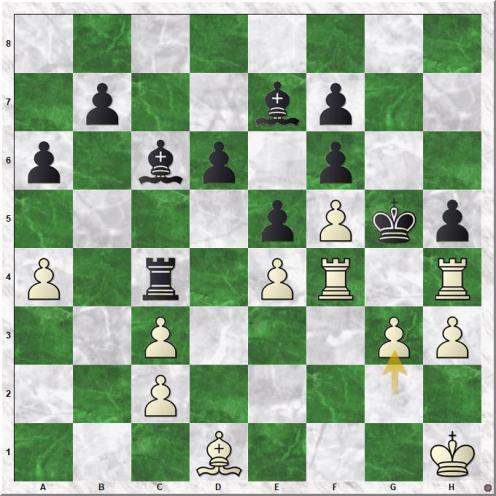
White to play

Larsen v Strauss, Lone Pine 1979
Solution
1 Rff4! and if 1…ef, 2 Rh5 mate; since the pawn on f4 blocks an escape square.
If instead 1…h5 then 2 g3! and mate follows.
FEN
8/1p2bp1p/p1bp1p2/4pPk1/P1r1P2R/2P2R1P/2P3P1/3B3K w – – 0 33
Today’s problem is from the June 1979 Chess magazine. I have hundreds (many hundreds) of magazines on my book shelves, and I thought I would dip into them; and thought I would start with going forty years back.
As is my custom, I only say which side is to play: and not giving an idea if the move wins or otherwise, unless on occasion I think signposting would be helpful. Instead, the problems are posed with the instruction to decide what you would play, as in a game.
White to play

Shirazi v Matera, Lone Pine 26/3/1979
Solution
1 Nc6! and after 1…Nf2[] 2 Ne7+ not only wins material, but places Black in a near mating net.

Black resigned after 2…Kh8 3 Kf2 de 4 f6 since Rh1-h6 is unstoppable.
FEN
r4rk1/pp3p2/2bp3p/4PP2/2PNn3/3B4/PP3R2/R5K1 w – – 0 25
 allanbeardsworth