Today’s problem is from the June 1979 Chess magazine. I have hundreds (many hundreds) of magazines on my book shelves, and I thought I would dip into them; and thought I would start with going forty years back.
As is my custom, I only say which side is to play: and not giving an idea if the move wins or otherwise, unless on occasion I think signposting would be helpful. Instead, the problems are posed with the instruction to decide what you would play, as in a game.
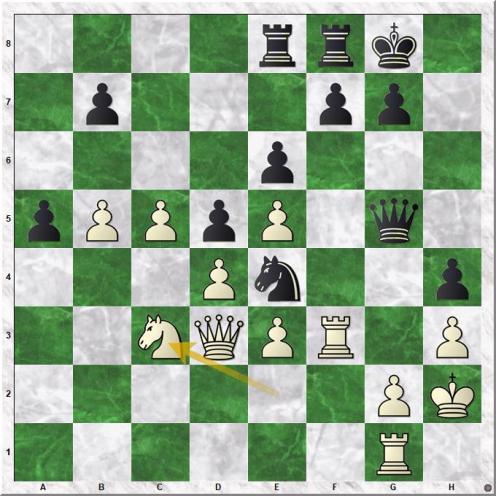
Black to play

Unzicker v Dankert, Munich 1979
Solution
1…Qg3+! and White resigned. It is either a smothered mate after 2hg or if 2 Kh1 then 2…Qf3!
FEN
4rrk1/1p3pp1/4p3/pPPpP1q1/3Pn2p/2NQPR1P/6PK/6R1 b – – 0 30
Today’s problem is from one of my collection of chess cuttings. For perhaps 20 years I have been cutting articles out to read later, and rarely get round to it. The pile is (or the piles are) now embarrassingly large, so for part of the time I have available for chess I am reading through them, and will blog about interesting things or positions from them.
Where known, I will say where the cutting was from. Normally I will be able to tell this. Sometimes, though, I for example only cut out the puzzle and might not know. Today’s puzzle was seen in David Howell’s Sunday Telegraph column.
As is my custom, I only say which side is to play: and not giving an idea if the move wins or otherwise, unless on occasion I think signposting would be helpful. Instead, the problems are posed with the instruction to decide what you would play, as in a game.
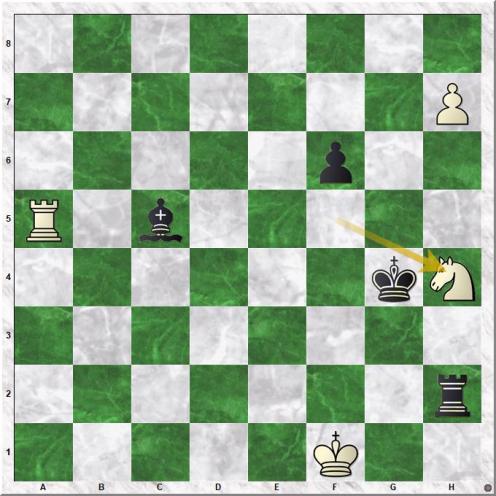
White to play

Goryachkina v Gunina, Kazan 1/6/19
Solution
1 Nh4! and if 1…Rh4, 2 Ra4+ skewers the K and R; after the rook is captured, the pawn promotes.
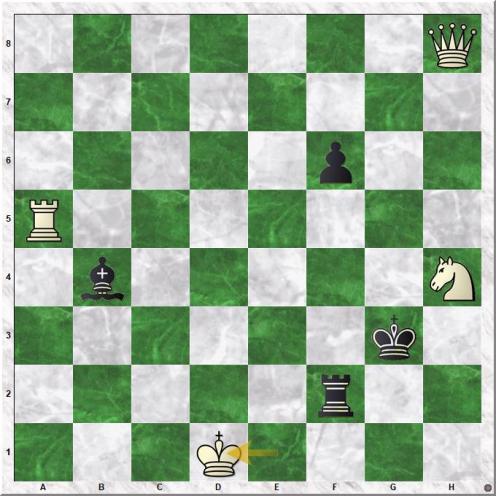
Black defended well: 1…Kg3 2 h8(Q) Rf2+ 3 Ke1 Bb4+ picking up the rook; but lost 15 or so moves later.
FEN
8/7P/5p2/R1b2N2/6k1/8/7r/5K2 w – – 0 72
Today’s problem is from the June 1979 Chess magazine. I have hundreds (many hundreds) of magazines on my book shelves, and I thought I would dip into them; and thought I would start with going forty years back.
As is my custom, I only say which side is to play: and not giving an idea if the move wins or otherwise, unless on occasion I think signposting would be helpful. Instead, the problems are posed with the instruction to decide what you would play, as in a game.
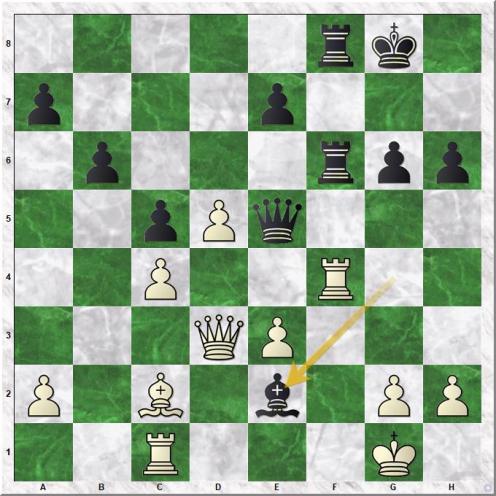
Black to play
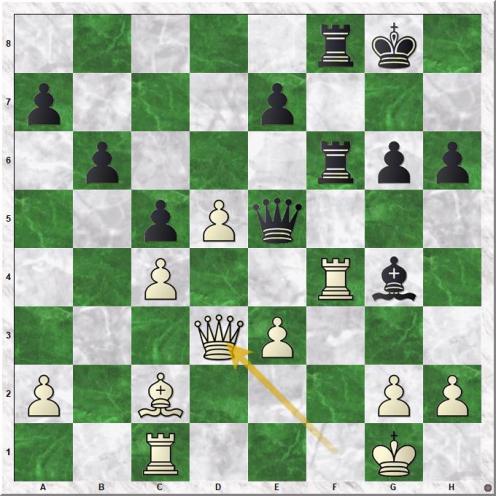
Xu, Yinghan v Wan, Yunguo China 29/10/18
Solution
1…Be2! and White wins at least a pawn, with a continuing attack.
FEN
5rk1/p3p3/1p3rpp/2pPq3/2P2Rb1/3QP3/P1B3PP/2R3K1 b – – 0 25
Today’s problem is from one of my collection of chess cuttings. For perhaps 20 years I have been cutting articles out to read later, and rarely get round to it. The pile is (or the piles are) now embarrassingly large, so for part of the time I have available for chess I am reading through them, and will blog about interesting things or positions from them.
Where known, I will say where the cutting was from. Normally I will be able to tell this. Sometimes, though, I for example only cut out the puzzle and might not know.
Today’s position is from a past edition of Chess magazine.
As is my custom, I only say which side is to play: and not giving an idea if the move wins or otherwise, unless on occasion I think signposting would be helpful. Instead, the problems are posed with the instruction to decide what you would play, as in a game.
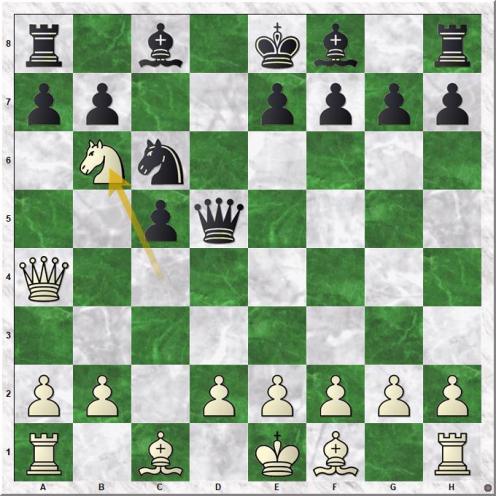
White to play

Timofeev v Paravyan, Russian Rapid Championships, 2018
Solution
1 Nc4! and Black loses the exchange. 1 Qd8[] 2 Nd5 Qd5[] 3 Nb6 and the Ra8 falls.
FEN
r1b1kb1r/pp2pppp/2nq4/2pnN3/Q7/2N5/PP1PPPPP/R1B1KB1R w KQkq – 0 7
Today’s problem is from one of my collection of chess cuttings. For perhaps 20 years I have been cutting articles out to read later, and rarely get round to it. The pile is (or the piles are) now embarrassingly large, so for part of the time I have available for chess I am reading through them, and will blog about interesting things or positions from them.
Where known, I will say where the cutting was from. Normally I will be able to tell this. Sometimes, though, I for example only cut out the puzzle and might not know.
Today’s problem is from a previous edition of Chess magazine.
As is my custom, I only say which side is to play: and not giving an idea if the move wins or otherwise, unless on occasion I think signposting would be helpful. Instead, the problems are posed with the instruction to decide what you would play, as in a game.
Black to play
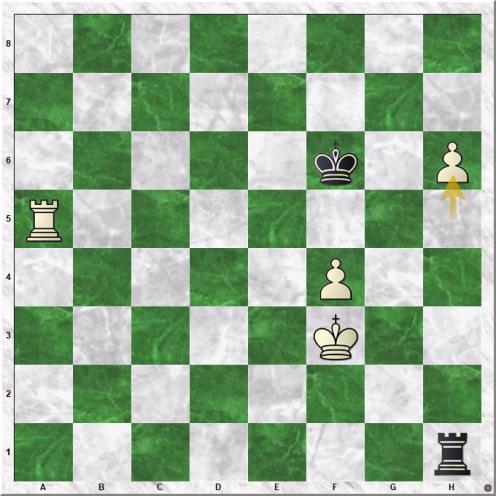
Schroeder v Voacturo, Bundesliga 10/11/2018
Solution
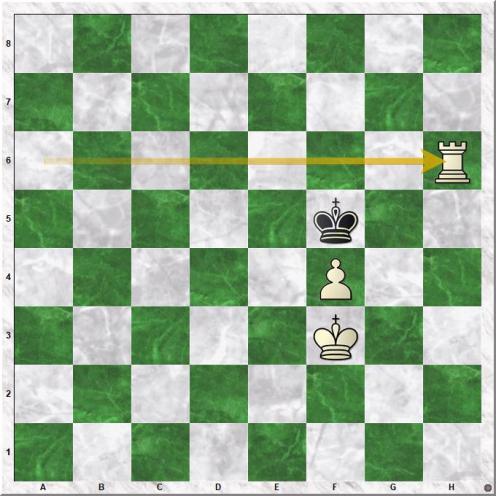
A standard trick. 1…Rh6! 2 Ra6+ Kf5! 3 Rh6 stalemate.
FEN
8/8/5k1P/R7/5P2/5K2/8/7r b – – 0 92
Today’s problem is from one of my collection of chess cuttings. For perhaps 20 years I have been cutting articles out to read later, and rarely get round to it. The pile is (or the piles are) now embarrassingly large, so for part of the time I have available for chess I am reading through them, and will blog about interesting things or positions from them.
Where known, I will say where the cutting was from. Normally I will be able to tell this. Sometimes, though, I for example only cut out the puzzle and might not know.
Today’s problem comes from a photocopy I took of some long-forgotten book.
As is my custom, I only say which side is to play: and not giving an idea if the move wins or otherwise, unless on occasion I think signposting would be helpful. Instead, the problems are posed with the instruction to decide what you would play, as in a game.
Black to play: played 1…Rh1

Tal v unknown, simul, date unknown
Solution
1….Rh1 was met by 2 gf!! a point being that if 2…Rd1+ 3 Nd1!! wins.

If 3…Qd2 then 4 fg!!: the Queen and Rook can do no harm, and meanwhile g8(Q) mate is threatened: 1-0.

That’s Tal.
FEN
2r1k2r/1p1bppb1/p2p1np1/q3n1P1/3NP3/2N1BP2/PPPQB3/1K1R3R b k – 0 1
Today’s problem is from one of my collection of chess cuttings. For perhaps 20 years I have been cutting articles out to read later, and rarely get round to it. The pile is (or the piles are) now embarrassingly large, so for part of the time I have available for chess I am reading through them, and will blog about interesting things or positions from them.
Where known, I will say where the cutting was from. Normally I will be able to tell this. Sometimes, though, I for example only cut out the puzzle and might not know.
As is my custom, I only say which side is to play: and not giving an idea if the move wins or otherwise, unless on occasion I think signposting would be helpful. Instead, the problems are posed with the instruction to decide what you would play, as in a game.
Black to play

Tal v Suttles, Sukhumi 24/8/1972
Solution
Engines, engines, engines.
Suttles played (of course) 1…Ra5 here, with complications as posted in the last several days.
But Komodo 10 says 1…Nb2! with the cute point 2 Qb2 Qa4! hitting the B and Rook 3 Rd8+ defending against the threat 3…Rd8[] 4 Bd8 Qd1+ double attack! Hitting the K and the LPDO Bd8.
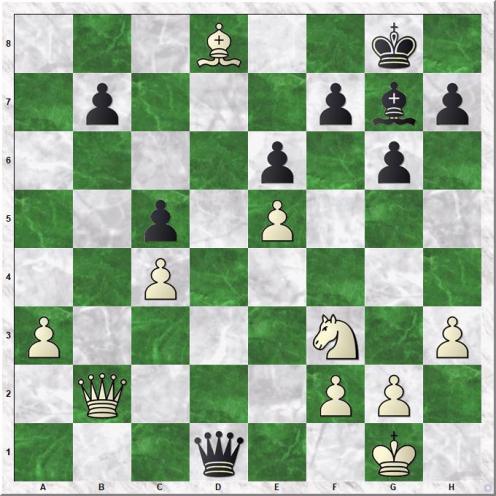
After 5 Kh2[] Qd8[] 6 Qb7 Qa5 White is better. I don’t know if it winning. I assume it is, perhaps as a grind. (7 Ng5? Be5+ 8 g3 Qc7 holds, and White has dissipated much of his advantage).

FEN
r5k1/1p3pbp/2q1p1p1/B1p1P3/n1P5/P4N1P/1P2QPP1/3R2K1 b – – 0 27
Today’s problem is from one of my collection of chess cuttings. For perhaps 20 years I have been cutting articles out to read later, and rarely get round to it. The pile is (or the piles are) now embarrassingly large, so for part of the time I have available for chess I am reading through them, and will blog about interesting things or positions from them.
Where known, I will say where the cutting was from. Normally I will be able to tell this. Sometimes, though, I for example only cut out the puzzle and might not know.
As is my custom, I only say which side is to play: and not giving an idea if the move wins or otherwise, unless on occasion I think signposting would be helpful. Instead, the problems are posed with the instruction to decide what you would play, as in a game.
Black to play: evaluate 1…Ra7, as played in the game

Tal v Suttles, Sukhumi 24/8/1972
Solution
1…Ra7 was met by 2 Qf6+ Kg8[] 3 Ng5

White threatens 4 Ne6 or 4 Nh7, so 4…Qd7 is forced, but then 5 Rd8 and Black has no good reply. If 5…Qc7 then 6 Ne6 all the same.
Though my engine says 6 Rf8+ is mate in 9, and so it appears to be.
FEN
4Rb2/1pq2pkp/4p1p1/r1p1P1Q1/n1P5/P4N1P/1P3PP1/6K1 b – – 0 31
Today’s problem is from one of my collection of chess cuttings. For perhaps 20 years I have been cutting articles out to read later, and rarely get round to it. The pile is (or the piles are) now embarrassingly large, so for part of the time I have available for chess I am reading through them, and will blog about interesting things or positions from them.
Where known, I will say where the cutting was from. Normally I will be able to tell this. Sometimes, though, I for example only cut out the puzzle and might not know.
As is my custom, I only say which side is to play: and not giving an idea if the move wins or otherwise, unless on occasion I think signposting would be helpful. Instead, the problems are posed with the instruction to decide what you would play, as in a game.
Black to play: evaluate 1…Nb6, with the idea 2…Ra8
Tal v Suttles, Sukhumi 24/8/1972
Solution
1…Nb6 is met by 2 Qf6+ Kg8[] 3 Ng5 and if 3…Ra8 then 4 Ne6! wins.

Either the queen falls, or Black is mated by 5 Qg7+, the Bf8 being pinned by the Re8.
Very nice.
FEN
4Rb2/1pq2pkp/4p1p1/r1p1P1Q1/n1P5/P4N1P/1P3PP1/6K1 b – – 0 31
Today’s problem is from one of my collection of chess cuttings. For perhaps 20 years I have been cutting articles out to read later, and rarely get round to it. The pile is (or the piles are) now embarrassingly large, so for part of the time I have available for chess I am reading through them, and will blog about interesting things or positions from them.
Where known, I will say where the cutting was from. Normally I will be able to tell this. Sometimes, though, I for example only cut out the puzzle and might not know.
As is my custom, I only say which side is to play: and not giving an idea if the move wins or otherwise, unless on occasion I think signposting would be helpful. Instead, the problems are posed with the instruction to decide what you would play, as in a game.
Black to play: evaluate 1…h6
Tal v Suttles, Sukhumi 24/8/1972
Solution
1…h6 would have been met by 2 Qf6+ Kg8 (Black’s king is tied to the Bf8) 3 Nh4! and Black can’t prevent or prepare for 4 Ng6! 1-0

FEN
4Rb2/1pq2pkp/4p1p1/r1p1P1Q1/n1P5/P4N1P/1P3PP1/6K1 b – – 0 31
 allanbeardsworth