Today’s problem is from one of my collection of chess cuttings. For perhaps 20 years I have been cutting articles out to read later, and rarely get round to it. The pile is (or the piles are) now embarrassingly large, so for part of the time I have available for chess I am reading through them, and will blog about interesting things or positions from them.
Where known, I will say where the cutting was from. Normally I will be able to tell this. Sometimes, though, I for example only cut out the puzzle and might not know.
As is my custom, I only say which side is to play: and not giving an idea if the move wins or otherwise, unless on occasion I think signposting would be helpful. Instead, the problems are posed with the instruction to decide what you would play, as in a game.
White to play after Black here plays 1…Qc7, defending the Ra5
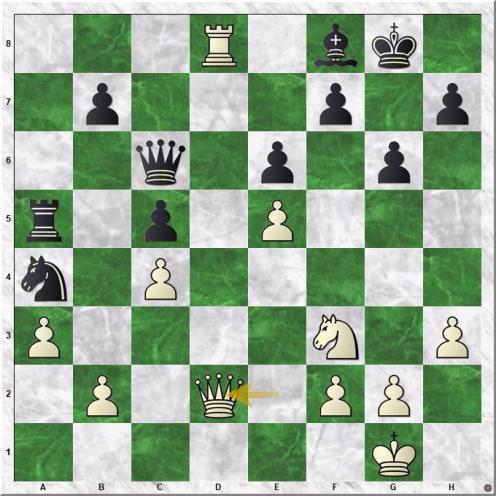
Tal v Suttles, Sukhumi 24/8/1972
Solution
Tal’s 1 Ba5 (see yesterday’s blog) was speculative, or needed deep vision, since 1…Qc7 seems to hold things together. After 2 Re8 Kg7 (to remove the pin) 3 Qg5 was played.
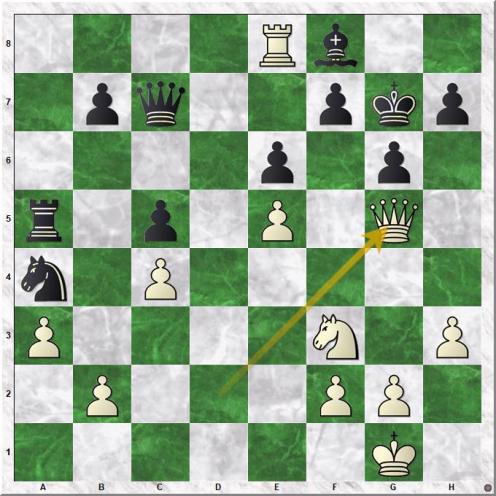
Black is in such a bind that White is winning.
I will continue to blog about this game in the coming days.
FEN
3R1bk1/1p3p1p/2q1p1p1/r1p1P3/n1P5/P4N1P/1P1Q1PP1/6K1 b – – 0 29
Today’s problem is from one of my collection of chess cuttings. For perhaps 20 years I have been cutting articles out to read later, and rarely get round to it. The pile is (or the piles are) now embarrassingly large, so for part of the time I have available for chess I am reading through them, and will blog about interesting things or positions from them.
Where known, I will say where the cutting was from. Normally I will be able to tell this. Sometimes, though, I for example only cut out the puzzle and might not know. I don’t know the source of today’s post: a photocopy from some book I must have read in the past.
As is my custom, I only say which side is to play: and not giving an idea if the move wins or otherwise, unless on occasion I think signposting would be helpful. Instead, the problems are posed with the instruction to decide what you would play, as in a game.
White to play
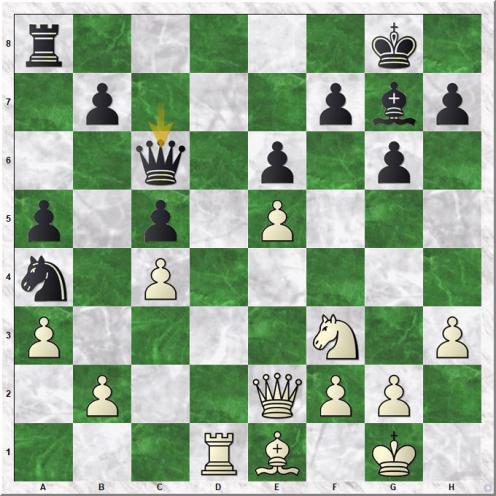
Tal v Suttles, Sukhumi 24/8/1972
Solution
1 Ba5!! and after 1…Ra5 (otherwise Black is down a pawn for nothing) 2 Rd8+ Bf8[] 3 Qd2 is a double attack.
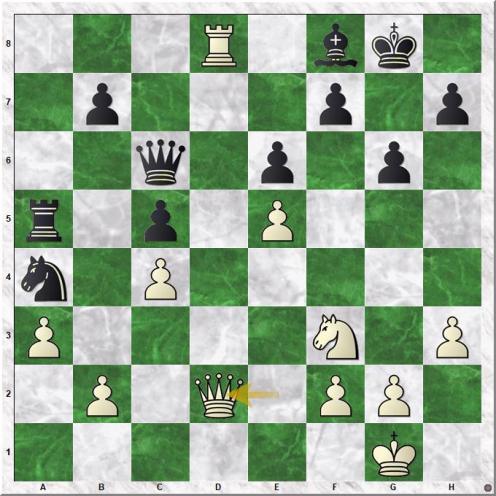
But does it win? I shall blog further tomorrow.
FEN
r5k1/1p3pbp/2q1p1p1/p1p1P3/n1P5/P4N1P/1P2QPP1/3RB1K1 w – – 0 27
Today’s problem is from one of my collection of chess cuttings. For perhaps 20 years I have been cutting articles out to read later, and rarely get round to it. The pile is (or the piles are) now embarrassingly large, so for part of the time I have available for chess I am reading through them, and will blog about interesting things or positions from them.
Where known, I will say where the cutting was from. Normally I will be able to tell this. Sometimes, though, I for example only cut out the puzzle and might not know. Today’s problem is from Malcolm Pein’s column in the Daily Telegraph.
As is my custom, I only say which side is to play: and not giving an idea if the move wins or otherwise, unless on occasion I think signposting would be helpful. Instead, the problems are posed with the instruction to decide what you would play, as in a game.
White to play

Hou Yifan v James Jackson. Douglas IOM 1/10/16
Solution
Hou Yifan played the brilliant 1 f4!! sacrificing the N to open lines. I suspect an engine can see all the way, but for a human, I assume the move was partly speculative/judgment.
Yesterday’s problem showed the position several moves later.
FEN
1rb1r3/2q1bpkp/1n1p2pN/p1nPp3/p1p1P3/2P1B1NP/RPBQ1PP1/5R1K w – – 0 27
Today’s problem is from one of my collection of chess cuttings. For perhaps 20 years I have been cutting articles out to read later, and rarely get round to it. The pile is (or the piles are) now embarrassingly large, so for part of the time I have available for chess I am reading through them, and will blog about interesting things or positions from them.
Where known, I will say where the cutting was from. Normally I will be able to tell this. Sometimes, though, I for example only cut out the puzzle and might not know. Today’s puzzle was in a Daily Telegraph column written by Malcolm Pein.
As is my custom, I only say which side is to play: and not giving an idea if the move wins or otherwise, unless on occasion I think signposting would be helpful. Instead, the problems are posed with the instruction to decide what you would play, as in a game.
White to play
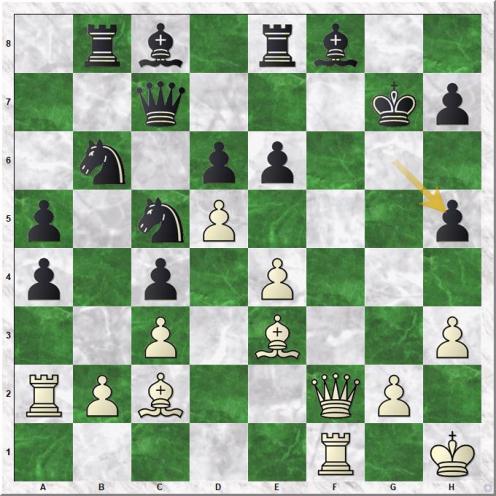
Hou Yifan v James Jackson. Douglas IOM 1/10/16
Solution
1 Bh6+! Kh6 2 Qf6 mate.
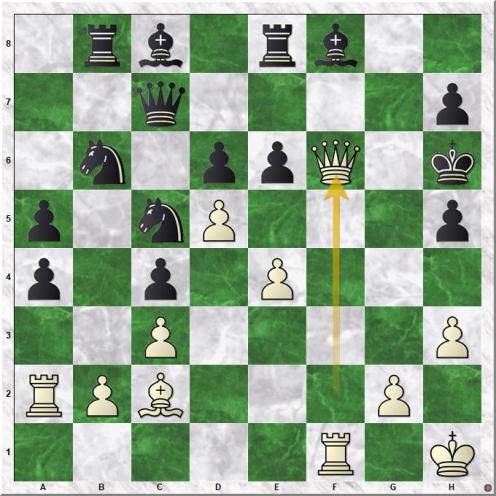
The puzzle was the culmination of a fine attacking game by Hou Yifan.
FEN
1rb1rb2/2q3kp/1n1pp3/p1nP3p/p1p1P3/2P1B2P/RPB2QP1/5R1K w – – 0 32
Today’s problem is from a 5 minute game played by my team captain at Stockport chess club, Andy Reeve.
As is my custom, I only say which side is to play: and not giving an idea if the move wins or otherwise, unless on occasion I think signposting would be helpful. Instead, the problems are posed with the instruction to decide what you would play, as in a game.
White to play after Black’s 6…Nge7

Andy Reeve v Nimra, 5 minute, online, June 2019
Solution
1 Nd4 Bd4 (1…Nd4 2 Be7 wins the queen) 2 Qd4! Nc6 3 Nf6+ Kf8 4 Bh6 1-0.
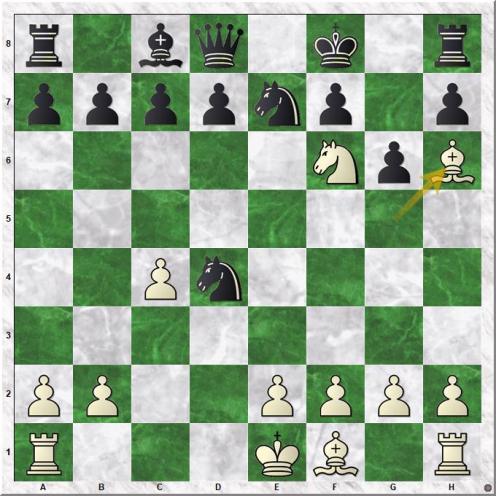
Andy tells me he has known why 6…Nge7 was bad for years, but this is the first time he has managed to execute the winning mate.
FEN
r1bqk2r/ppppnpbp/2n3p1/3N2B1/2Pp4/5N2/PP2PPPP/R2QKB1R w KQkq – 0 7
Today’s problem is from the January 1979 Chess magazine. I have hundreds (many hundreds) of magazines on my book shelves, and I thought I would dip into them; and thought I would start with going forty years back.
As is my custom, I only say which side is to play: and not giving an idea if the move wins or otherwise, unless on occasion I think signposting would be helpful. Instead, the problems are posed with the instruction to decide what you would play, as in a game.
White to play: consider what candidates you would look at
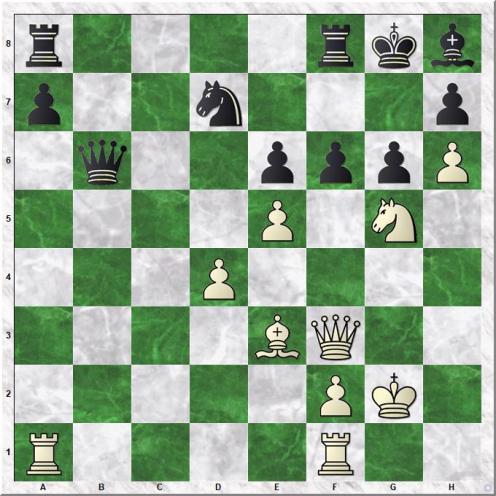
Carlsen v Mamedyarov, Norway 13/6/19
Solution
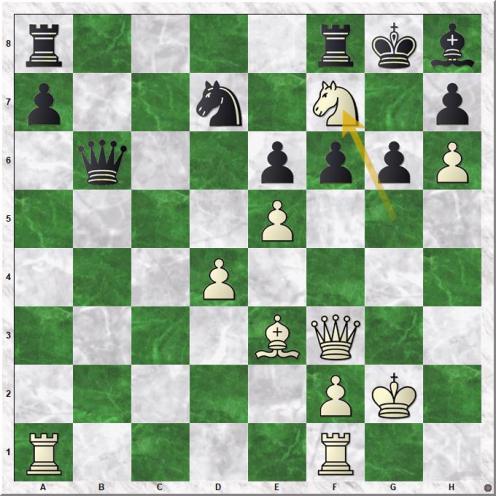
Magnus played 1 ef. I wonder if he considered the magnificent 1 Nf7!?!?
I recently read Matthew Sadler’s excellent book “Study Chess with Matthew Sadler”. In one chapter, he identifies three types of thinking: Active, Reactive and Prophylactic.
Using reactive thinking- looking at what you don’t want to happen; or maybe prophylactic- preventing the opponent’s idea might lead top players to identify 1 Nf7!?!?’ but I doubt I would ever notice it, or, if I did, I would reject it at a glance.
But consider: Black threatens fg, so the Knight likely needs to move, And the Qf3 looks at the Ra8, so the Rf8 is tied.
After 1…Ke7 2 Rfb1 Qd8 (2…Qc7 3 Rc7) 3 Rb7
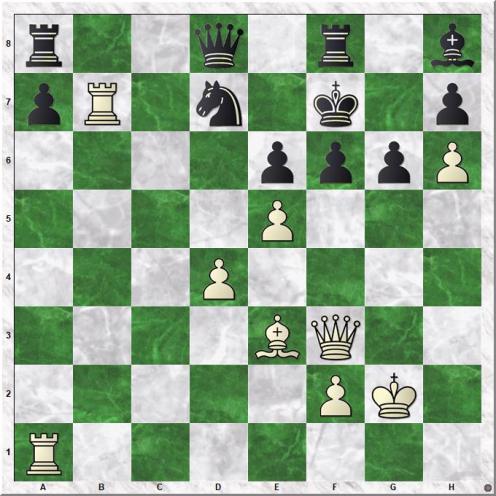
we see the next motif: geometry. The R, N and K are on the same rank, so the N is pinned.
3…Kg8 4 Qc6 is then a double attack on the Rd7 and Pe6, so White regains the N. My engines, of course, assesses the resultant position as three zeroes.
If instead 1…fe then 2 Rfb1 Qx7 3 Rb7 Qc8 4 Rc1 Qe8 and again three zeroes.
There are more lines, and 1 Nf7 doesn’t win the game, but it wins the inspirational prize.
FEN
r4rkb/p2n3p/1q2pppP/4P1N1/3P4/4BQ2/5PK1/R4R2 w – – 0 1
I was talking to my very dear sister-in-law, the jeweller and goldsmith Vicki Ambery-Smith recently. I don’t recall how it came up, but it turned out that, like me, Vicki likes listening or watching the occasional TED talk.
I am writing this today, Father’s Day, to have some quiet reflective time.

Piece by Vicki Ambery-Smith
Typical Vicki: whereas I listen to talks which align with my interests, Vicki often listens to those which differ from hers, to have fresh insights and be exposed to different interests. (Maybe I am being harsh on myself).
I offered to let Vicki know some of the TED talks which I found interesting or impactful. This blog is the result, and I will add to it from time to time.
I tend to watch TED talks using the TED app on my iPad. If using it, search by the speaker to find this talks.
In no particular order:
His Holiness Pope Francis
When the Pope meets or sees people in straightened or dire circumstances, he thinks “there but by the grace of God he would be”.

Three Questions
I defy anybody not to be moved by this talk.
And I also think her three questions are really useful, and widely applicable.
What do I want to do? the first question; and now the second question, which is so often not considered
Why do I want to do it? and if the reasoning is worthwhile, and only then, the third question
How will I go about achieving it?

Time management
A very interesting and insightful talk by Laura Venderkam.
Her story about the problem with her house flood must resonate with everyone.

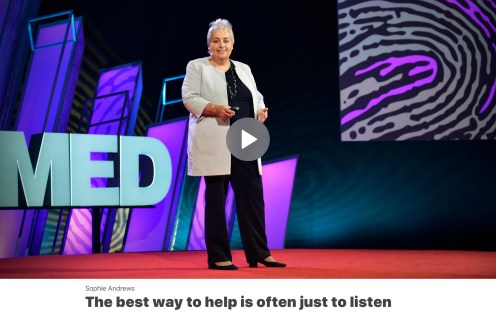
Helping, just by listening
I have learnt a lot over the last five years through my work with St Ann’s Hospice and the hospice movement generally.
And learned about loneliness in older people, too.
Only a week or so after watching this TED talk, I learnt about the financial difficulties that Silverline, the charity Sophie Andrews is CEO of, is facing.
Watch this talk, hear about Sophie’s life, hear about Silverline’s work, and decide for yourself if it is a charity worth supporting.
Origami
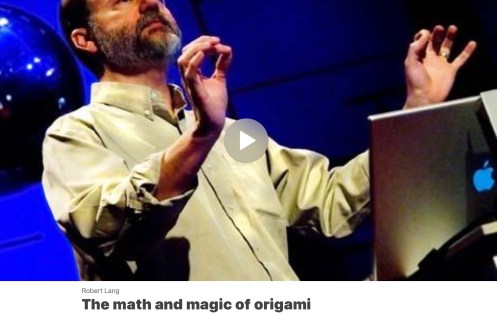
Well, not useful: but you might find this talk insightful.
Robert Lang is one of my heroes. The level to which he and others have taken origami will surprise you.
Hyperlink
Just a fun one. To show what can be found by dipping in at random on TED.

The Language of images
I’ve been advising on tax for over 30 years; I have counselled and mentored dozens and maybe a hundred people. Many joke or smile at my use of drawings to help express what I want to say. (Maybe because they are often scribbled).
One of my longest known, dearest, clients, presently in very poor health, was a trigger. I helped him understand some difficult tax matters relevant to him by a drawing, which I know he has kept for over 15 years. And in 2019, I came up with a new way to talk about what I talk about professionally which involves drawing.
My drawings are kindergarten. Watch, enjoy, and think about this TED talk:

Giver or taker?
A very simple concept, this talk takes it to levels where insights can be drawn.

And finally
I can’t do a posting on “what to watch” without mentioning one of the most meaningful, impact and moving talks I have ever heard. Worth watching and re-watching.
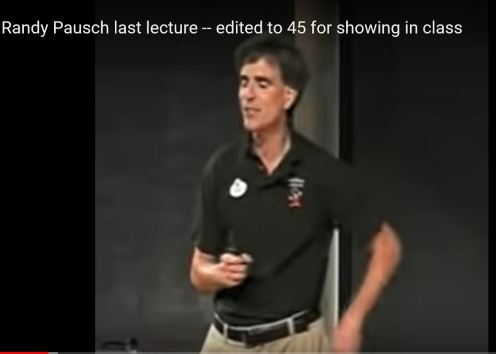
I have guided many friends and colleagues using some of the insights from Randy Pausch’s last lecture. A google search will find various links to it on YouTube and elsewhere. Worth your time, when you can concentrate.
Summary
The above are a summary of the TED talks which I remember watching; those I will watch again; those I learnt from, or that moved me. Doubtless I have missed several that I shouldn’t. As I remember these, and as I come across new ones, I will update this posting or add a new one.
Today’s problem was recently seen posted on Twitter by Olimpiu G Urcan (Twitter handle @olimpiuurcan
As is my custom, I only say which side is to play: and not giving an idea if the move wins or otherwise, unless on occasion I think signposting would be helpful. Instead, the problems are posed with the instruction to decide what you would play, as in a game.
White to play
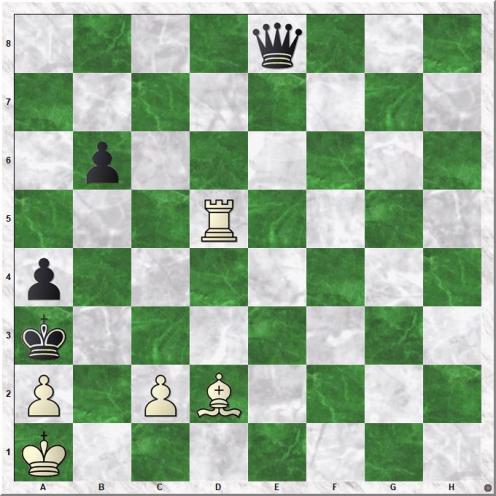
unknow composition
Solution
I’ll respect Olimpiu, and not give the solution. All I will say is that I got it wrong, and the solution is beautiful and deep.
FEN
4q3/8/1p6/3R4/p7/k7/P1PB4/K7 b – – 0 0
Today’s problem is from one of my recent blitz games; an easy tactic, for a change.
As is my custom, I only say which side is to play: and not giving an idea if the move wins or otherwise, unless on occasion I think signposting would be helpful. Instead, the problems are posed with the instruction to decide what you would play, as in a game.
Black to play moved 1…Qb6: evaluate
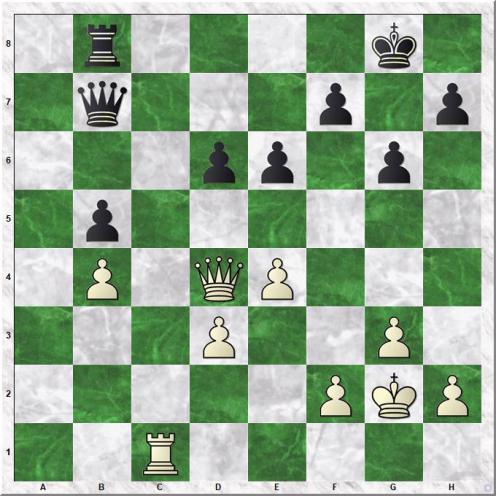
allanbeard v Neste74, Chess.com 3-0, 13.6.19
Solution
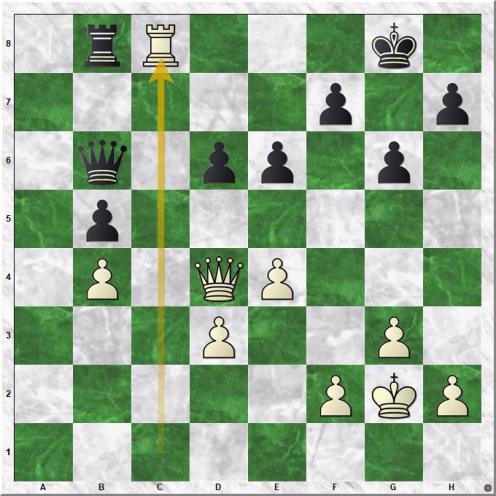
Is it just me, but the tactic 2 Rc8+! undermining the Black’s rooks protection of his queen always pleases me. I visualise it as akin to pulling the rug from under a person’s feet, not that I have ever done this.
In Purdy terms, Black’s rook is tied to protecting the Qb6, and his king is in a net.
FEN
1r4k1/1q3p1p/3pp1p1/1p6/1P1QP3/3P2P1/5PKP/2R5 w – – 0 1
Today’s problem was seen in a recent Financial Times column by Leonard Barden.
As is my custom, I only say which side is to play: and not giving an idea if the move wins or otherwise, unless on occasion I think signposting would be helpful. Instead, the problems are posed with the instruction to decide what you would play, as in a game.
Black to play
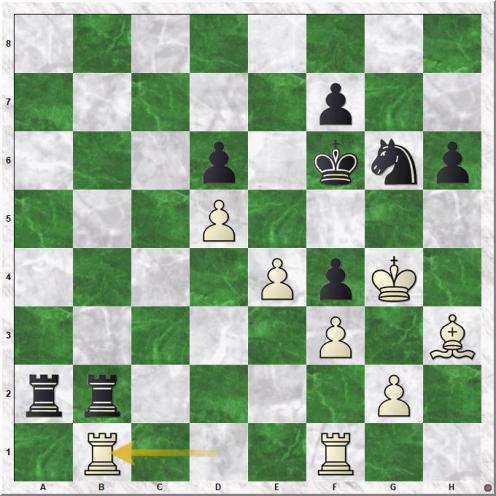
Kamsky v Kasparov, New York, 1994; Rapid
Solution
1…h5+ 2 Kh4 Ne5!

3 Rb2 Ra8!!

and Black mates by Rh8+.
In the game, Garry played 2..Ra8 (which was my solution too) but it fails to 3 Kg4! Rh8 4 g3. Black still wins (he wins the Bh3 after 4….Rh2) but 2…Ne5! finishes the game off.
Nice.
FEN
8/5p2/3p1knp/3P4/4PpK1/5P1B/rr4P1/1R3R2 b – – 0 33
 allanbeardsworth