Today’s problem is from the 1972 book “Chess Combination as a Fine Art”, a book based on articles published in the 1950s-1960s by Kurt Richter.
Since the start of 2018, I have decided to adopt the style of only saying which side is to play: and not giving an idea if the move wins or otherwise, unless on occasion I think signposting would be helpful. Instead, the problems are posed with the instruction to decide what you would play, as in a game.
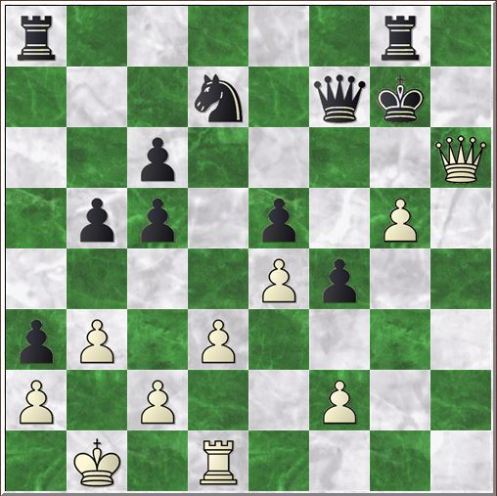
Black to play
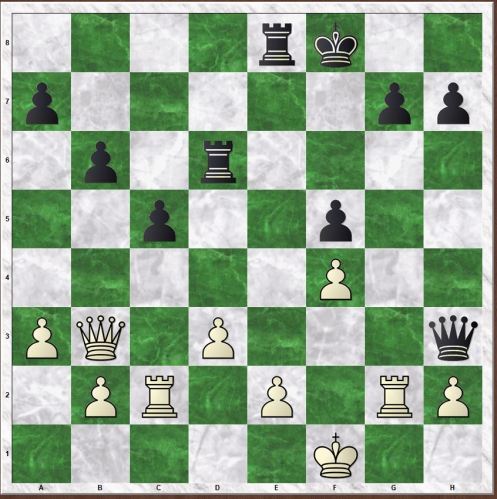
Gislason v Boey, Moscow Olympiad 11/9/1956
Solution
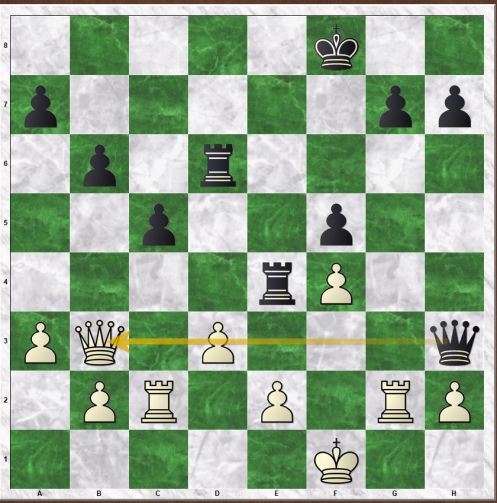
Geometry: jump-biffs and the Qb3 being LPDO means that 1…Re4! is possible; and White collapses.
FEN
4rk2/p5pp/1p1r4/2p2p2/5P2/PQ1P3q/1PR1P1RP/5K2 b – – 0 29
Today’s problem is from the 1972 book “Chess Combination as a Fine Art”, a book based on articles published in the 1950s-1960s by Kurt Richter.
Since the start of 2018, I have decided to adopt the style of only saying which side is to play: and not giving an idea if the move wins or otherwise, unless on occasion I think signposting would be helpful. Instead, the problems are posed with the instruction to decide what you would play, as in a game.
Black to play

W Evans v Karaklajic, Bognor Regis 1962
Solution
Examine all biffs 1..Qg5+ 2 Qg5 Bg5+ 3 Kg5? h4 and mate next move.
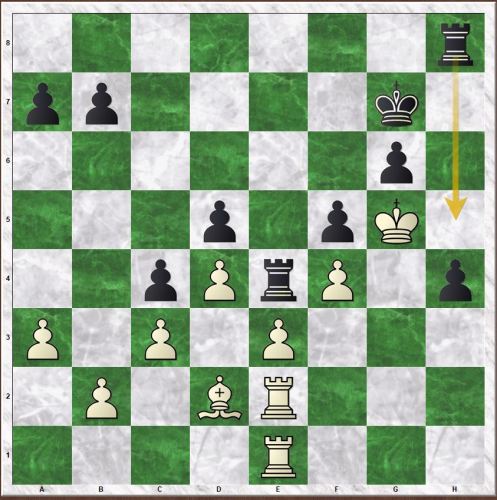
If White doesn’t play 2 Qg5 or 3 Kg5, then Black has won a pawn, and will slowly win.
FEN
3b3r/pp2q1k1/6p1/3p1pPp/2pPrP1K/P1P1P3/1P1BR3/4R1Q1 b – – 0 1
Today’s problem is from the 1972 book “Chess Combination as a Fine Art”, a book based on articles published in the 1950s-1960s by Kurt Richter.
Since the start of 2018, I have decided to adopt the style of only saying which side is to play: and not giving an idea if the move wins or otherwise, unless on occasion I think signposting would be helpful. Instead, the problems are posed with the instruction to decide what you would play, as in a game.
White to play

Suta v Sutey, Bucharest 1953
Solution
One I’d seen before, and fortunately recalled the answer, so solved immediately. Maybe these daily blogs are doing me some good!
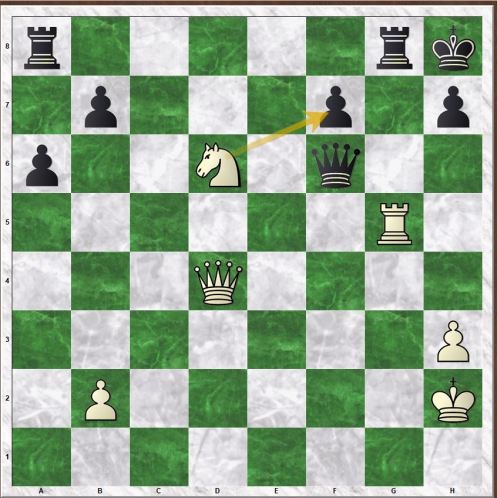
1 Rg5! since the Qg6 is tied to f7.
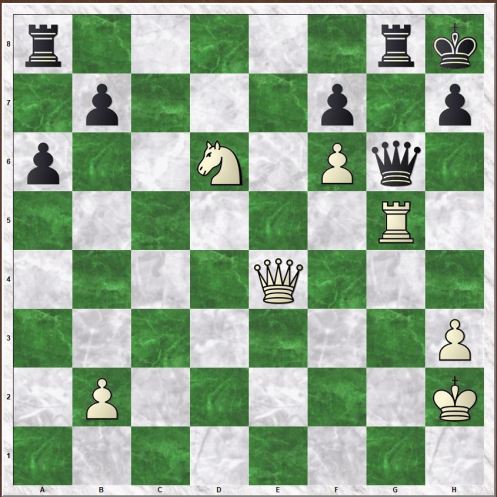
1…Qf6[] 2 Qd4!! (not 2 Qe5?? Qe5+ check– and black wins) Rg6[] 3 Rg6 1-0
FEN
r5rk/1p3p1p/p2N1Pq1/5R2/4Q3/7P/1P5K/8 w – – 0 1
Today’s problem is from the 1972 book “Chess Combination as a Fine Art”, a book based on articles published in the 1950s-1960s by Kurt Richter.
Since the start of 2018, I have decided to adopt the style of only saying which side is to play: and not giving an idea if the move wins or otherwise, unless on occasion I think signposting would be helpful. Instead, the problems are posed with the instruction to decide what you would play, as in a game.
White to play
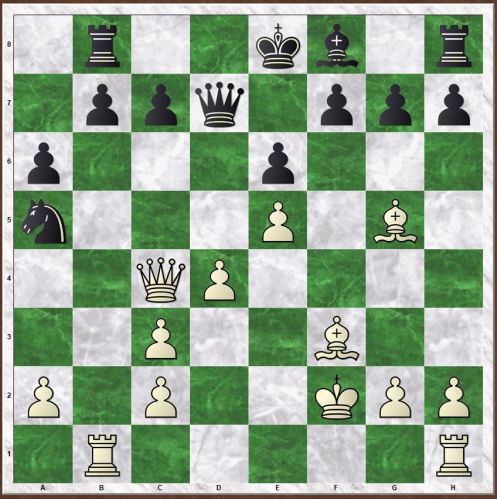
Beni- Soluch, Steyr 1953
Solution
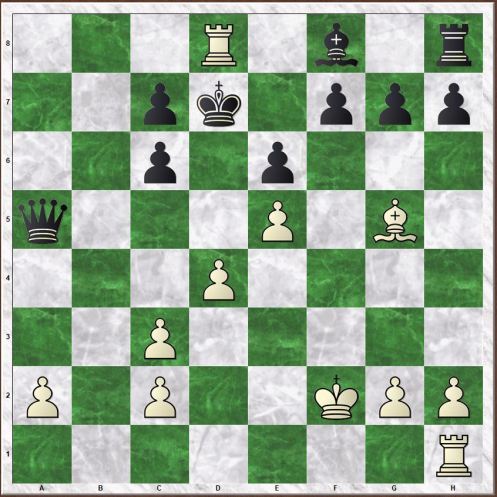
A nice variation on a standard theme. The aim is of course back rank mate, so 1 Qa6! since 1..ba?? 2 Rb8+ and 3 Rd8 mate.
But 1…Qa4:
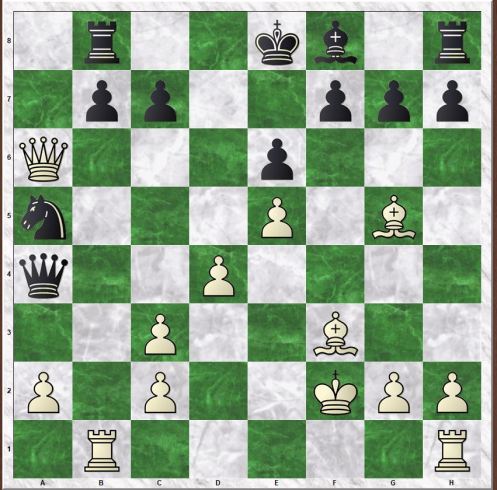
And now a nice twist: 2 Qa5! Qa5 3 Bc6+!
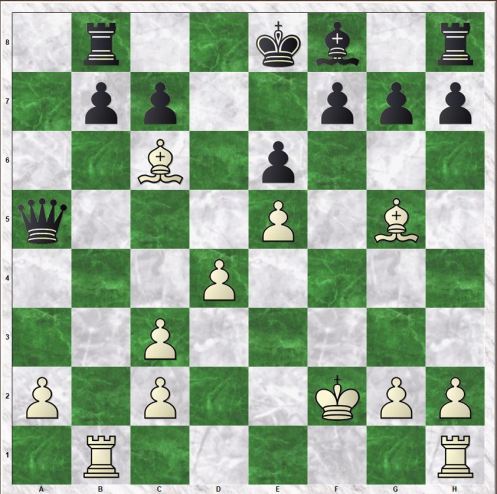
3…bc[] 4 Rb8+ Kd7[] 5 Rd8 mate.
Very nice.
FEN
1r2kb1r/1ppq1ppp/p3p3/n3P1B1/2QP4/2P2B2/P1P2KPP/1R5R w k – 0 1
Today’s problem is from the 1972 book “Chess Combination as a Fine Art”, a book based on articles published in the 1950s-1960s by Kurt Richter.
Since the start of 2018, I have decided to adopt the style of only saying which side is to play: and not giving an idea if the move wins or otherwise, unless on occasion I think signposting would be helpful. Instead, the problems are posed with the instruction to decide what you would play, as in a game.
Black to play

Seyandinov v Zakhov, USSR 1960
Solution
A nice initial move, 1…d3! whose purpose is to gain a tempo. 2 Qd3[] Re3 and the rooks double on the e file with gain of time.

Black wins the Bishop, and his pieces dominate. The game finished 3 Qd1 Rf38 4 O-O Re2 5 Qb3 Be3! 6 Nc2 Bf2+ 0-1.
FEN
4rrk1/1p3p1p/p5pb/3P4/2Pp3q/N6P/PPQ1BP1P/R3K2R b KQ – 0 1
Today’s problem is from the 1972 book “Chess Combination as a Fine Art”, a book based on articles published in the 1950s-1960s by Kurt Richter.
Since the start of 2018, I have decided to adopt the style of only saying which side is to play: and not giving an idea if the move wins or otherwise, unless on occasion I think signposting would be helpful. Instead, the problems are posed with the instruction to decide what you would play, as in a game.
White to play
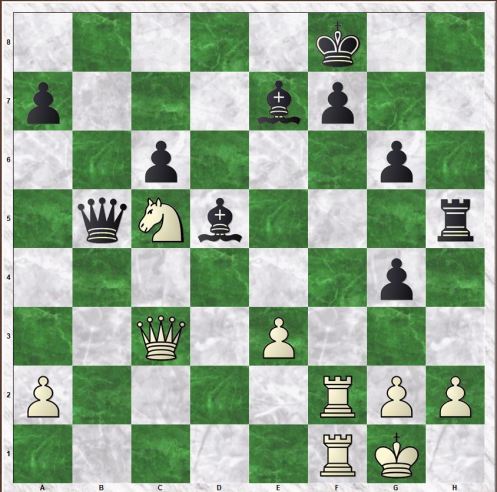
Skotorenko v Vladimirov USSR 1961
Solution
A nice one today: first, an absolute pin is created by 1 Rf7+ Bf7: the B is now pinned by the Rf1, so that e6 is unprotected: 2 Ne6+
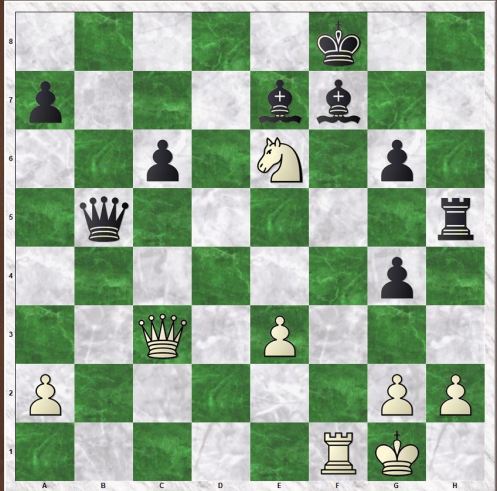
2..Kg8? 3 Qg7 mate, so 2…Ke8[] when 3 Nc7+ forks king and queen.
FEN
5k2/p3bp2/2p3p1/1qNb3r/6p1/2Q1P3/P4RPP/5RK1 w – – 0 1
Today’s problem is from the 1972 book “Chess Combination as a Fine Art”, a book based on articles published in the 1950s-1960s by Kurt Richter.
Since the start of 2018, I have decided to adopt the style of only saying which side is to play: and not giving an idea if the move wins or otherwise, unless on occasion I think signposting would be helpful. Instead, the problems are posed with the instruction to decide what you would play, as in a game.
White to play

Thiermann v Schmitt, Bad Kissingen 18/7/1954
Solution
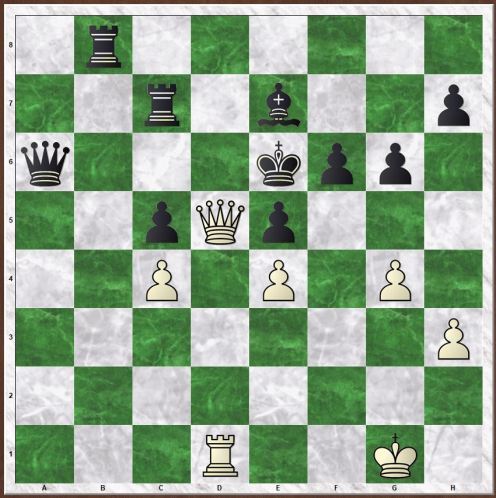
Pinning, diversion, and forking of the queen. 1 Ra6! pinning Qa6[] diversion 2 Nc7+ forking 2…Rc7[] 3 Qd5 mate.
FEN
1r6/1r2b2p/2q1kpp1/2pNp3/2P1P1P1/3Q3P/R7/3R2K1 w – – 0 1
Today’s problem is a nice combination from my school mate and club mate Nigel Short. I have followed Nigel’s success for 40 years, and always like it when he wins, especially in style.
Since the start of 2018, I have decided to adopt the style of only saying which side is to play: and not giving an idea if the move wins or otherwise, unless on occasion I think signposting would be helpful. Instead, the problems are posed with the instruction to decide what you would play, as in a game.
White to play
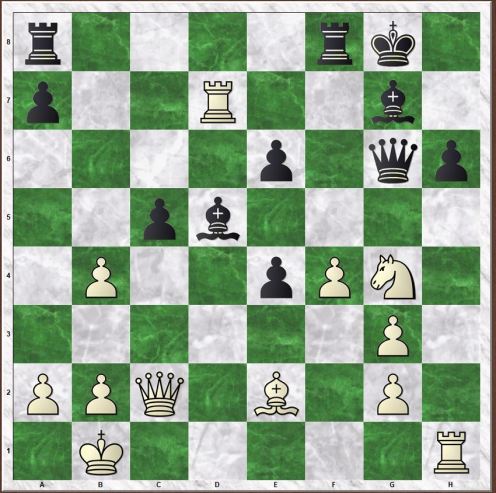
Short v Khmelniker, Douglas IOM 1/10/17
Solution
1 Rg7+!; and if 1..Qg7, 2 Nh6+ K-h file 3 Nf5+ wins the queen.
So 1…Kg7[] 2 Qc3+
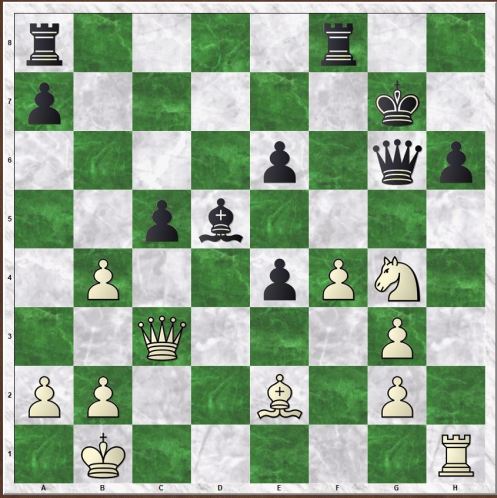
2…Kf7 3 Ne5+ forks king and queen, so 2…Kg8 3 Nh6+ or 2…Kh7 3 Nh6 win.
I wonder how much earlier Nigel saw the combination? His game ‘flowed’ and I wouldn’t be at all surprised if he saw the tactic coming many moves before.
FEN
r4rk1/p2R2b1/4p1qp/2pb4/1P2pPN1/6P1/PPQ1B1P1/1K5R w – – 0 29
Today’s problem is from the current Candidates tournament. Levon Aronian finished off an ending in an instructive way.
Since the start of 2018, I have decided to adopt the style of only saying which side is to play: and not giving an idea if the move wins or otherwise, unless on occasion I think signposting would be helpful. Instead, the problems are posed with the instruction to decide what you would play, as in a game.
Black to play

Karjakin v Aronian, Berlin Candidates, 14/3/18
Solution
If I were Black, I would not know what to do; would fear that somehow I would mess up, and let White off with a draw.
Not Levon.
1..f2! 2 Rf1[] Rf5!
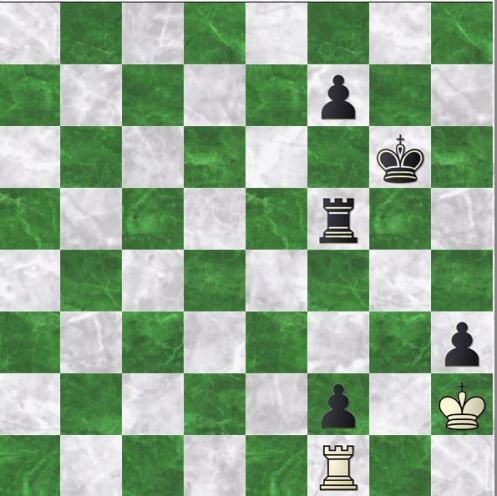
And the White rook is now totally passive. 3 Kh3 Kg5 4 Kg3 Rf4 and White resigned.

I imagine both players knew this finale as soon as the ending arose many moves earlier:
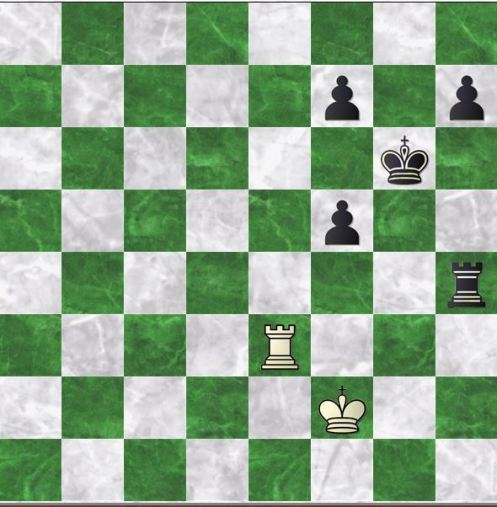
Again, here, I don’t know enough about R+BP+RP v R endings, let alone with an extra f pawn, to ‘know’ the result; but I imagine both players knew that the extra f pawn made the win ‘trivial’ because of zugzwangs.
FEN
8/5p2/6k1/7r/8/5p1p/7K/R7 b – – 0 65
wKh2,Ra1/bKg6,Rh5,Pf3,f7,h3
Today’s problem is from the recent Tal Memorial in Moscow. A lovely combination by Vishy Anand.
Since the start of 2018, I have decided to adopt the style of only saying which side is to play: and not giving an idea if the move wins or otherwise, unless on occasion I think signposting would be helpful. Instead, the problems are posed with the instruction to decide what you would play, as in a game.
White to play

Anand V c Grischuk A, Rapidplay, Tal Memorial Moscow 4/3/18
Solution
What makes this combination special, and therefore really hard to see is the second move, since 1 Ng5+ hg is fairly obvious. But 2 Rf7+!! is a move which I certainly could miss (I played through the game shortly after it finished, on Playchess, so couldn’t set the problem for myself).

R*f7 makes the Qe6 LPDO, so Black is forced to play 2…Qf7, when 3 hg+ Kg7 (or Kg6) 4 Qh6 is a pretty mate.
FEN
r5r1/3n1p1k/2p1q2p/1pp1pR2/4Pp1P/pP1P1N1Q/P1P2P2/1K1R4 w – – 0 27
wKb1,Qh3,Nf3,Rd1,f5,Pa2,b3,c2,d3,e4,f2,h4/bKh7,Qe6,Nd7,Ra8,g8,Pa3,b5,c5,c6,e5,f4,f7,h6
 allanbeardsworth