Test your chess: Reitstein problem 127 (3)
White to play and win: the solution
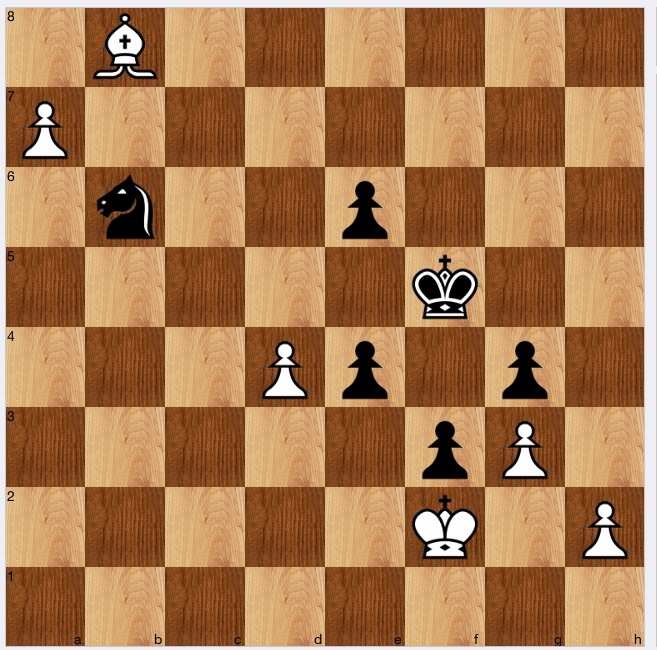
This ending would be well worth studying and trying to solve: it defeated me when playing it out against Stockfish on my iPad. Later, when playing black against Houdini on my PC, eventually Houdini found how to win. But Reitstein is wrong to state that white could have won quickly: or, if not precisely wrong, it takes imagination and precision to win.
Whilst Houdini prefers 1 Bd6, which was my move too, it is in fact weaker than 1 Bf4!. The win happens on stages:
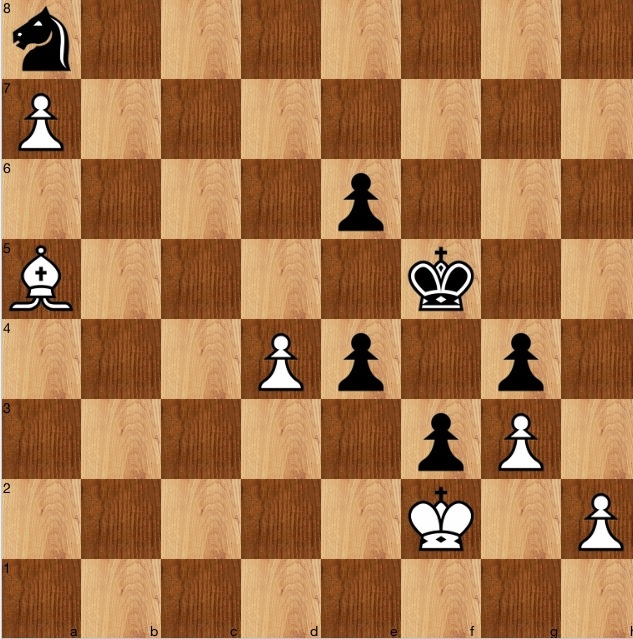
Bring the Bishop round to a5 and block in black's knight on a8
1 Bf4! Na8 (say, or the king can oscillate: and the same for many of the following moves) 2 Bd2! Nb6 3 Ba5! Na8[].
Improve the king
4 Ke3 Kg6[] (4….e5? 5 d5)

This sort of position is easy to get to: but now the problem emerges, that Ke4 is impossible due to f2 and the pawn queens. So, and thanks to Houdini:
Re-route the bishop to f2
5 Be1! Kf5[] 6 Bf2!
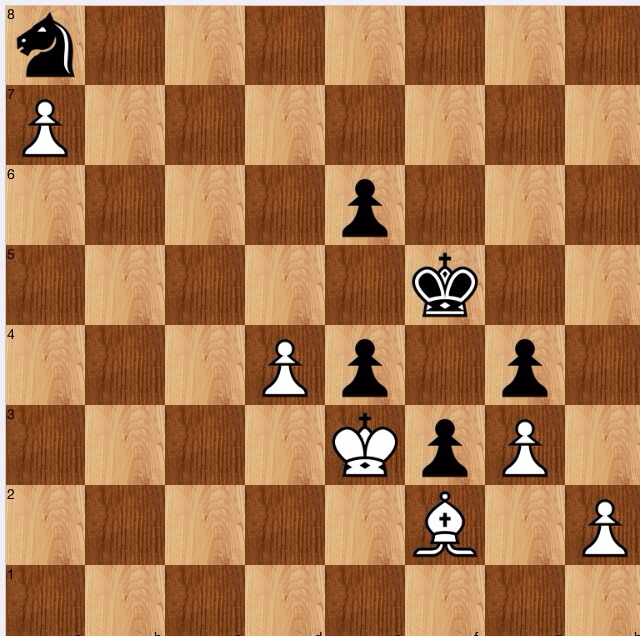
6…Nb6 (or 6…Nb7)
Sacrifice the d pawn to improve the king
7 d5!! ed (7…Nd5+ 8 Kd4 Nb6 7 Kc5 etc; 7…e5 8 Kd2! Na6 9 Bc5! prepares to defend the d pawn when on d6, so that Ke3-e4 can pick up the e4 pawn, the f2 square still being watched by the Bc5. 7…Ke5!? 8 Kd2!:

and not (after 7 d5 Ke5!? 8 de?? since:

Is mate!
After 7 d5 ed, white's king can come forward:

There is one final neat point: 8 Kd4 Ke6[] 9 Kc5 Na8:
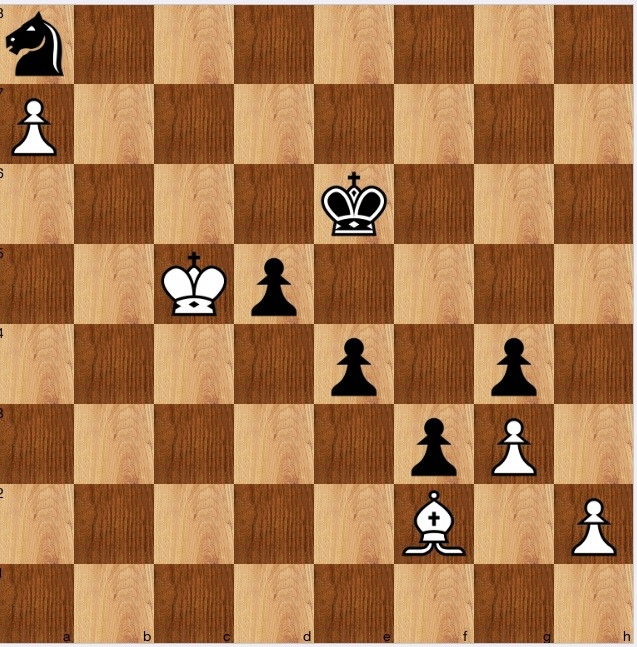
White's best is 10 Be3!! losing a tempo (not a concept I have seen much of before) so that if 10…Ke5, white can biff the king back with 11 Bd4+! before advancing with the King. If instead the hasty (and easily played) 10 Kc6?? then 10…Ke5 is either a draw or better for black: 11 Kb7 d4 12 Ka8 e3 13 Be3 de 14 Kb7 f2 15 a8(Q) f1(Q) and since white hasn't got a check skewering the white king and queen, the only question is whether black can get his king to shelter and promote the e pawn. But 10 Be3!! very elegantly slows down black just enough.
Alternative
It is probably not necessary to sac the d pawn: 7 Kd2 may (probably does) also win: the king is improved Ke3-d2-c3-c4 and beyond always watching for black's e3 break, and also watching out for a good time to play d5! if necessary.
Conclusion
The stage by stage re-routing to f2 via a5 wins: but I don't think it is easy to see!
 Posted with Blogsy
 allanbeardsworth
Reblogged this on Chess Musings and commented:
A difficult Bishop vs Knight situation worthy of study.