A day’s gap from Dragoslav Andric’s 1981 book “Matni Udar”. Today, a lovely puzzle, for my elder daughter’s birthday.
Seen in Chessbase.
Black to play and draw
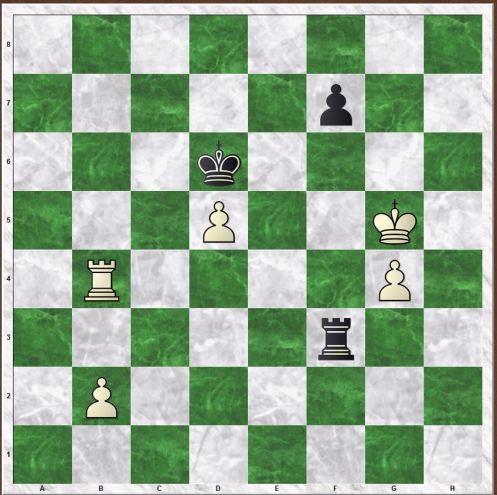
Korbel v Wimmer, Chessbase
Solution
I would never have solved this even if I had given the puzzle the time it deserved (I didn’t, I glanced at it, not realising its beauty.
Alas, CJS Purdy would have found it, or, I could have, had I followed his maxim of “examine all biffs”
1..f5!!! extraordinary
2 gf Ke5!
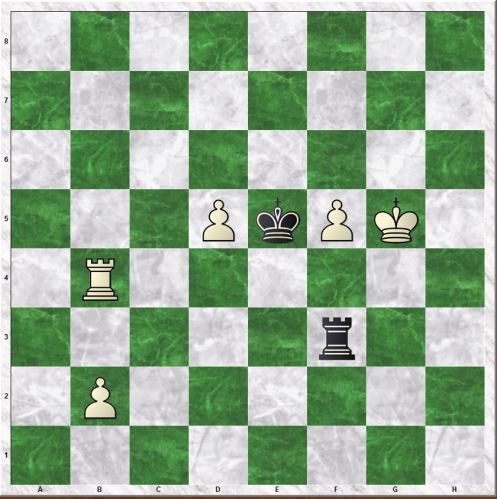
Is the ‘point’. The ChessBase article gives lots more detail, well worth studying.
FEN
8/5p2/3k4/3P2K1/1R4P1/5r2/1P6/8 b – – 0 49
Another puzzle from Dragoslav Andric’s 1981 book “Matni Udar”.
White to play and mate Black

Werle v Lundin, Sweden 1969
Solution
1 Be5! starts a known theme: 1..Qa6 2 Rd8+ Kh7[]
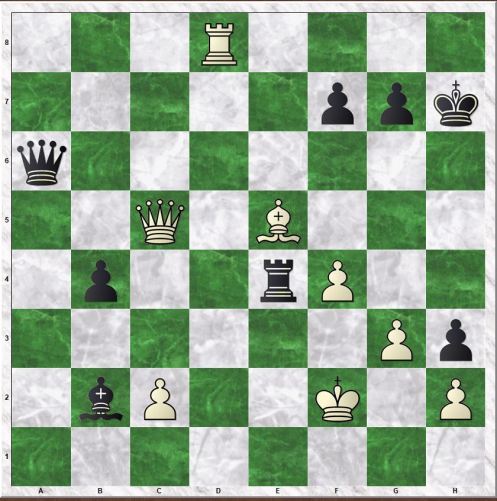
3 Rh8+!
and if 3..Kg6 4 f5+ mates, or 3…Kh8 4 Qf8+ and 5 Qg7 mate.
Nice.
FEN
3r2k1/5pp1/R2B3q/2Q5/1p2rP2/6Pp/1bP2K1P/3R4 w – – 0 1
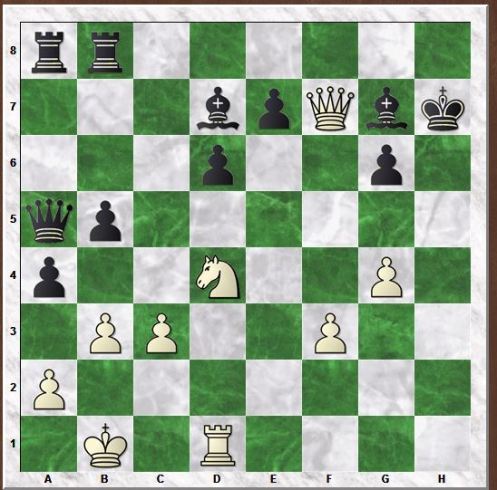
Another puzzle from Dragoslav Andric’s 1981 book “Matni Udar”.
White to play and mate Black
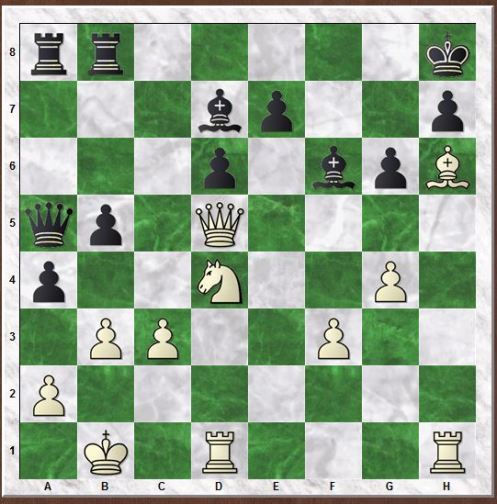
Penrose v Hnini, 1969 (not sure of the Black player’s name: written as typed in the book; but the book also had Penrode for White)
Solution
I think I may have seen this puzzle before, maybe because the winner is a former top English player.
1 Bg7+! 2 Rh7+! enables the Q to reach f7; then 4 f4! if necessary, to lock in Black’s King. 1 Qf7 is equivalent, playing 2 Bg7+!
FEN
rr5k/3bp2p/3p1bpB/qp1Q4/p2N2P1/1PP2P2/P7/1K1R3R w – – 0 1
Another puzzle from Dragoslav Andric’s 1981 book “Matni Udar”.
White to play and mate Black
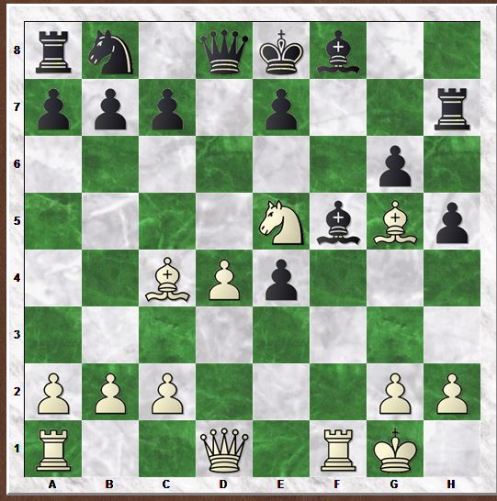
Sterenberg v Gulnin, 1968
Solution
Easy today: 1 Rf5! 2 Qh5+ and 3 Bf7 mate. A rest day.
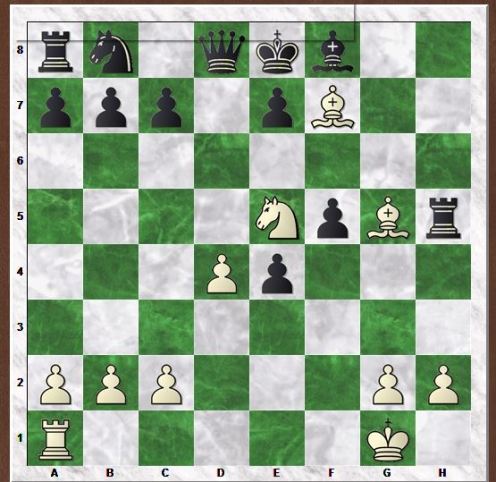
FEN
rn1qkb2/ppp1p2r/6p1/4NbBp/2BPp3/8/PPP3PP/R2Q1RK1 w q – 0 1
Another puzzle from Dragoslav Andric’s 1981 book “Matni Udar”.
White to play and mate Black
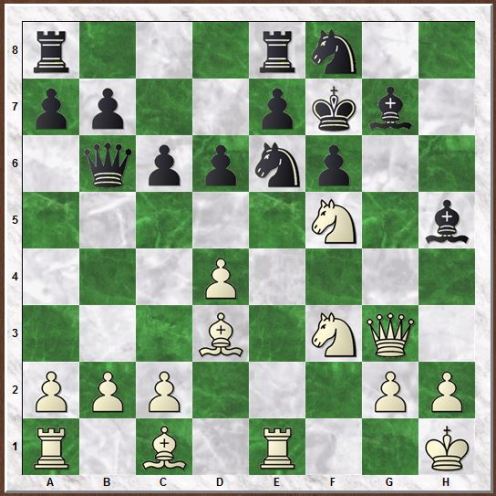
Lechtynsky v Kubicek, Prague 1968
Solution
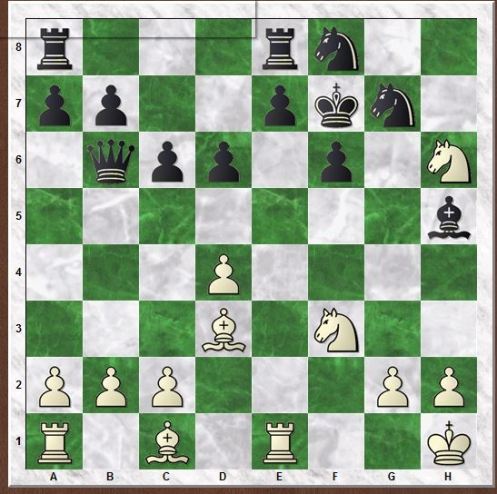
Not too hard: 1 Qg7+! Ng7[] 2 Nh6 mate. A rest day.
FEN
r3rn2/pp2pkb1/1qppnp2/5N1b/3P4/3B1NQ1/PPP3PP/R1B1R2K w – – 0 1
Another puzzle from Dragoslav Andric’s 1981 book “Matni Udar”.
White to play and mate Black
Mista v Navarovski, Reggio Emilia 1968
Solution
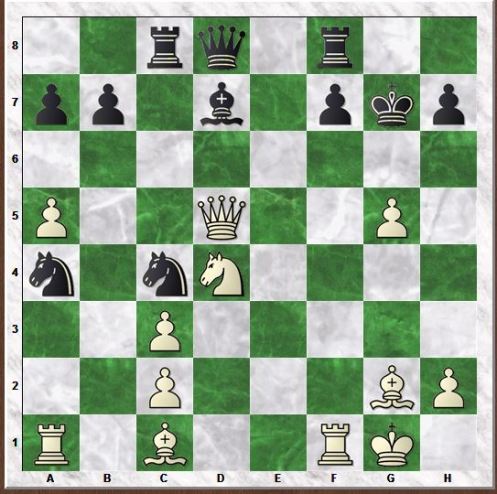
A good puzzle today: at the limit of my horizon.
1Ra4! is “obviously” the move, and after 1…Ba4[] 2 Rf7+! is the natural follow up, forcing 2…Kh8!, else there is a discovered check winning the Queen, or a mate.
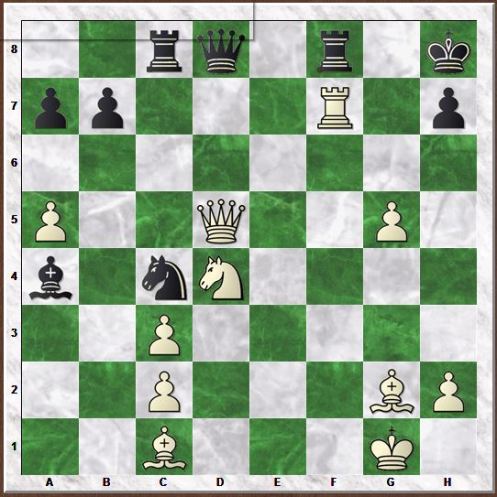
But what then?
Eventually I found 3 Rh7+! Kh7[] 4 Qe6, which alas is only equal, but missed the far better 4 g6+! to force the Black King to move to the mined square g7, on which Ne6+ then forks the Queen: 1-0.
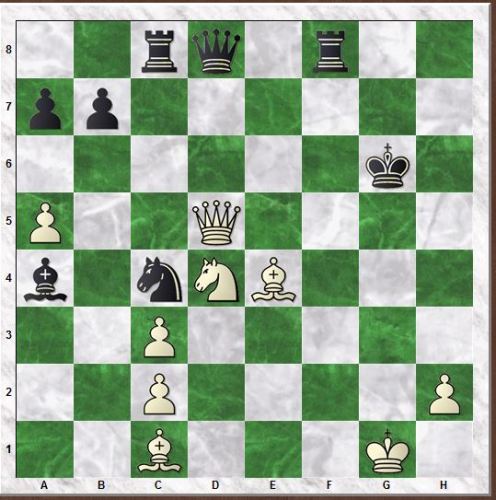
Very nice.
FEN
2rq1r2/pp1b1pkp/8/P2Q2P1/n1nN4/2P5/2P3BP/R1B2RK1 w – – 0 22
Another puzzle from Dragoslav Andric’s 1981 book “Matni Udar”.
Black to play and mate White
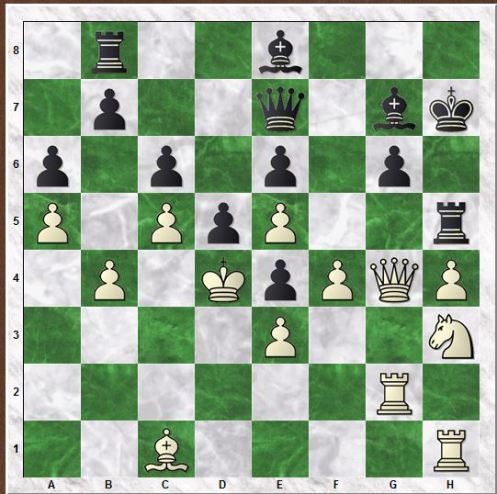
Mandel v Kurze, Berlin 1968
Solution
Fairly obvious, especially when you work out it is Black to move in the diagram- the book doesn’t show the colour of the player to move.
1…Re5! and 2 fe Be5+! 3 Ke5 Qc7+!
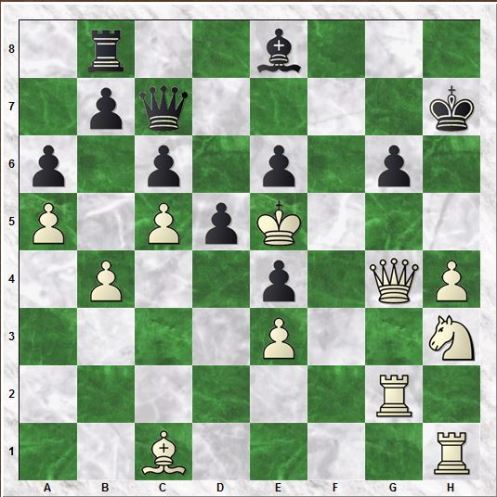
4 Kf6 Qg7+ etc, 0-1
FEN
1r2b3/1p2q1bk/p1p1p1p1/P1PpP2r/1P1KpPQP/4P2N/6R1/2B4R w – – 0 1
My wife and I are midway through a glorious holiday; presently on safari in Botswana, at the second of two safari camps.
Our first was tremendous; the present, Baines camp on the Okavango Delta (the inland estuary of the Okavango river) is even more so. A stilted camp, a metre or two above the savannah, the peace and tranquility is only broken by the numerous birds and other creatures.
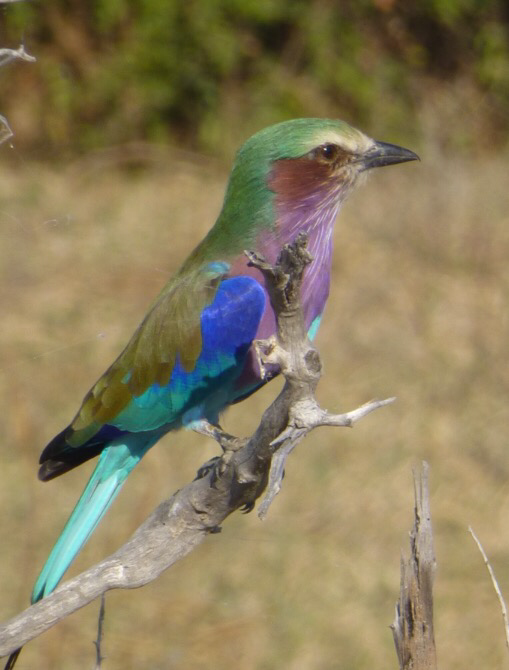
Pure bliss.
And to cap it all, there is a lovely chess set in the lounge.
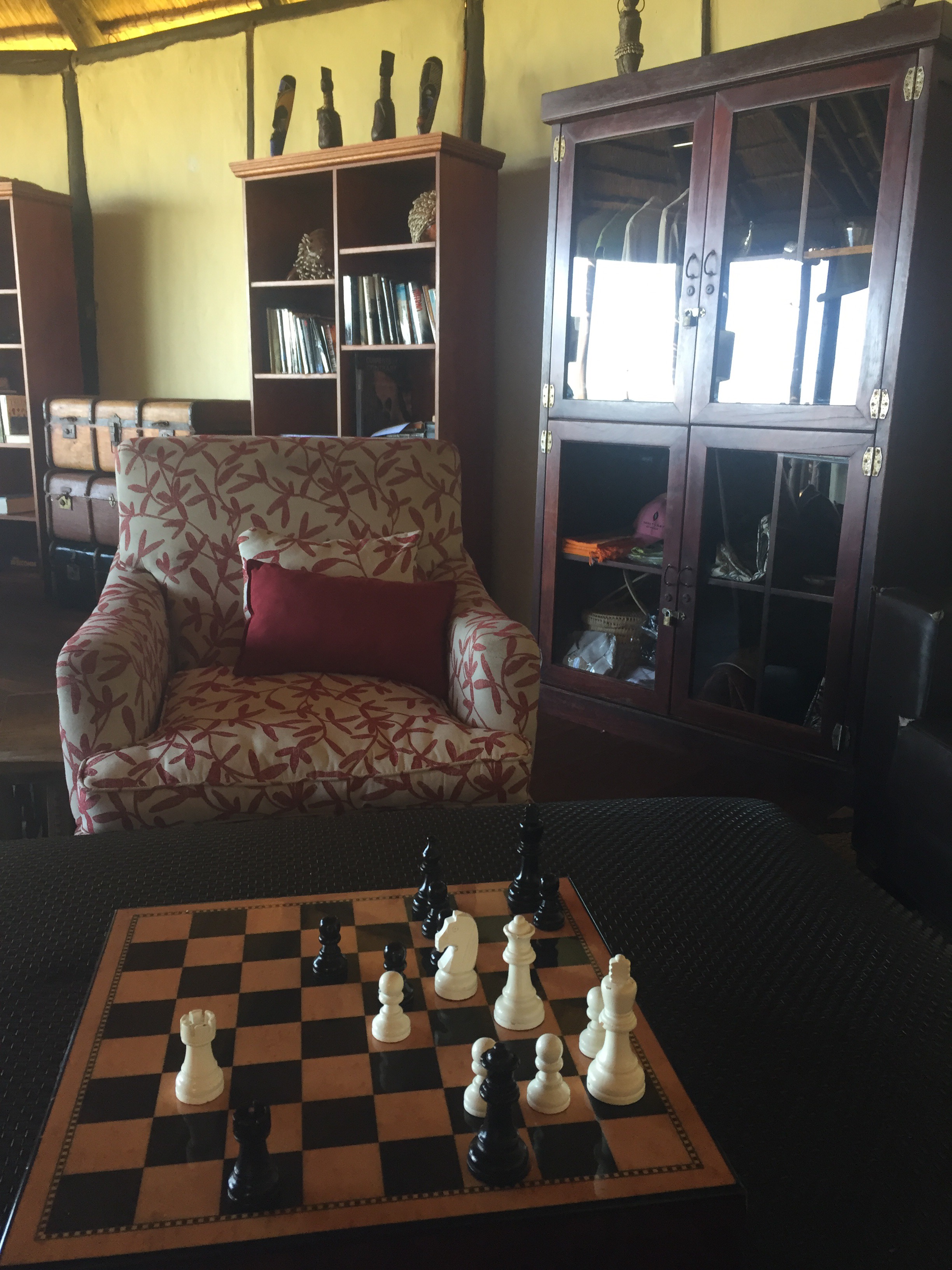
So, a fairly easy puzzle to celebrate, from my #1 game of 2017 so far (though I am biased towards Nigel’s games).
White to play and win
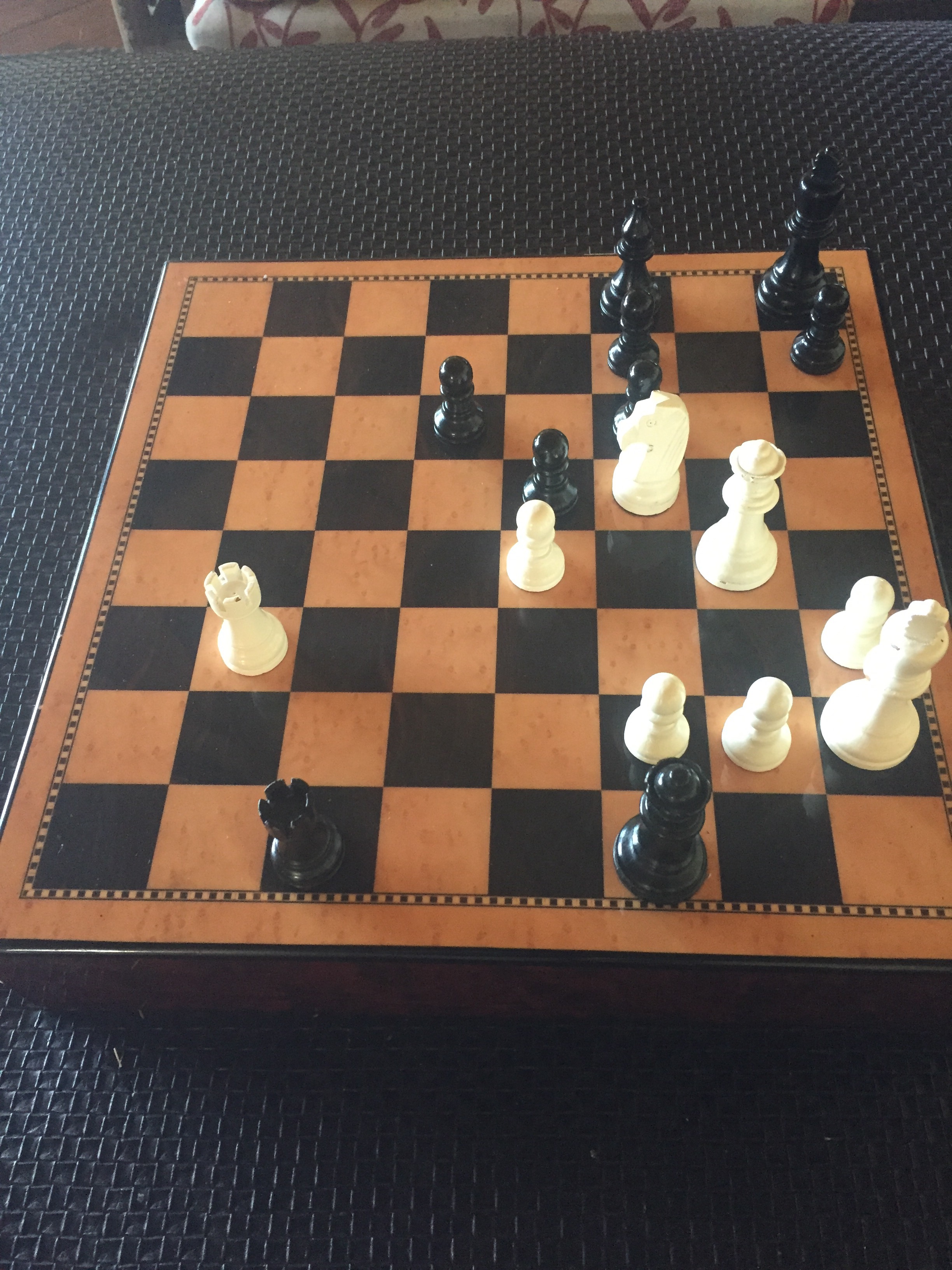
Nigel Short v Erik Blomqvisy, Sigeman & Co, May 2017
Solution
1 Qg7+ was Nigel’s lovely conclusion.
Another puzzle from Dragoslav Andric’s 1981 book “Matni Udar”.
Black to play and mate White
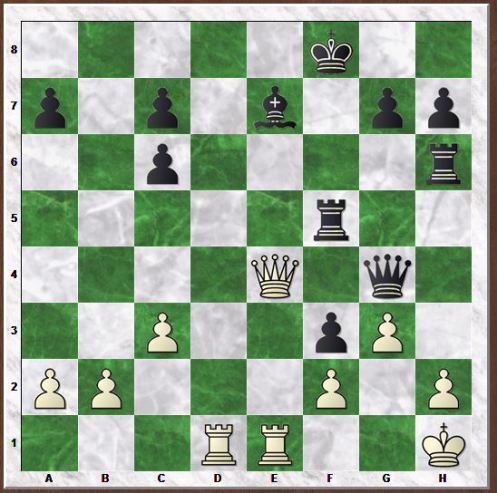
Grabov v Kunde, Germany 1968
Solution
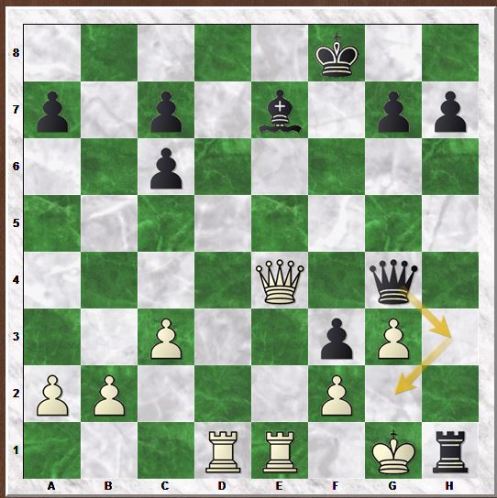
FEN
5k2/p1p1b1pp/2p4r/5r2/4Q1q1/2P2pP1/PP3P1P/3RR2K b – –
Another puzzle from Dragoslav Andric’s 1981 book “Matni Udar”.
White to play and mate Black
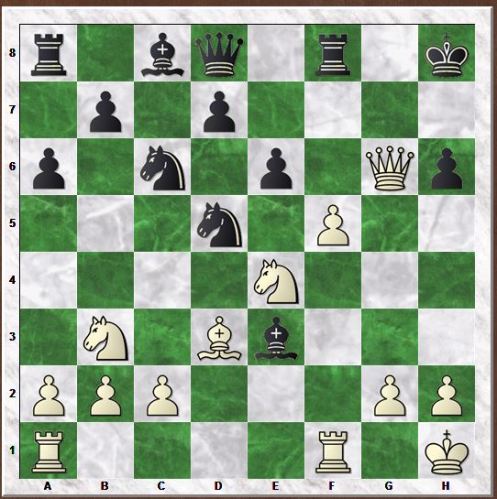
Pachman v Lechtynsky, Czechoslovakia 1968
Solution
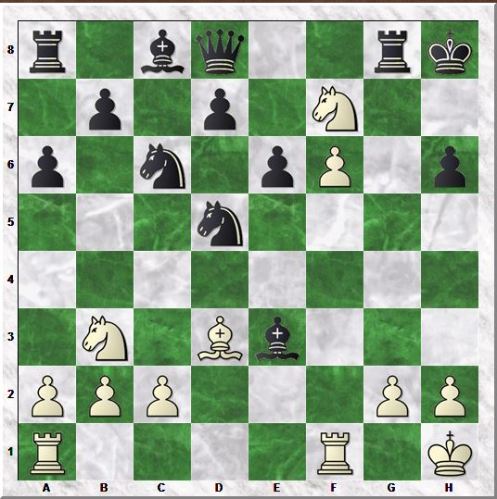
1 f6 (though 1 Qh6+ also wins) and if 1…Rg8, 2 Qh7+!
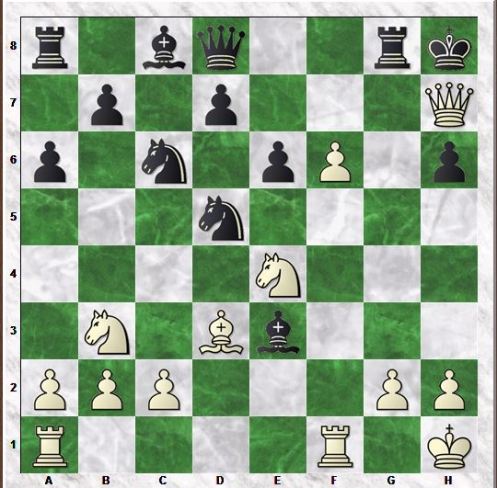
There is then a forced mate by 3 Ng5+ and 4 Nf7 mate.
FEN
r1bq1r1k/1p1p4/p1n1p1Qp/3n1P2/4N3/1N1Bb3/PPP3PP/R4R1K w – –
 allanbeardsworth