Another puzzle from Dragoslav Andric’s 1981 book “Matni Udar”.
White to play and mate Black

Rees v Klarwatter, Rotterdam 1932
Solution
Optically hard to see, but as soon as you see it, it is 1-0.
1 Qd8!
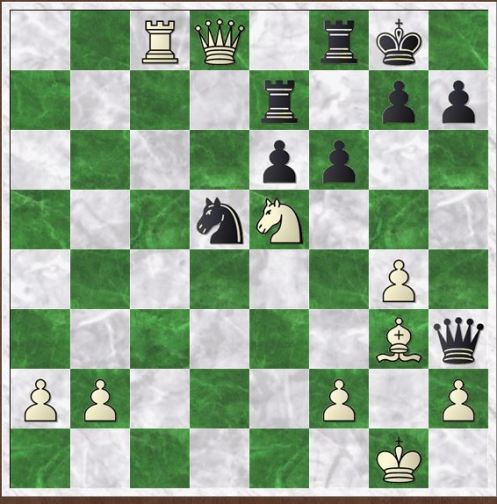
Very pretty. My engine tells me that Black is winning after every single other move White can make.
FEN
2R2rk1/3Qr1pp/4pp2/3nN3/6P1/6Bq/PP3P1P/6K1 w – – 0 1
Another puzzle from Dragoslav Andric’s 1981 book “Matni Udar”.
White to play and mate Black
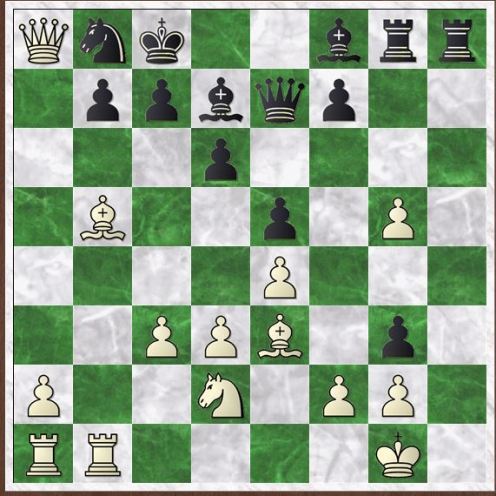
Balogh v Gtomer, Prague 1931
Solution
Since it is a puzzle, you have to try 1 Qb7+ (in a game, I might be more careful with my Queen) and once seen, it is fairly easy it is check, check, check…mate.
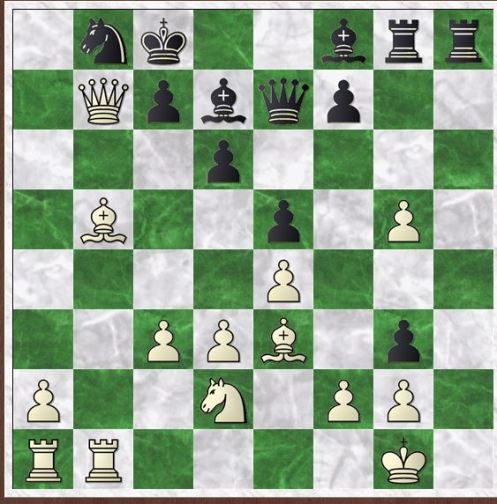
In the game, Black resigned after 1..Kb7 2 Bd7+
(My first solution had been 1 Ba6, which wins equally well, but is less flashy. After 1…Qb7+ Black can of course grovel on with 1…Kd8, but he is still in an awful plight.
FEN
1nk2brr/1Qpbqp2/3p4/1B2p1P1/4P3/2PPB1p1/P2N1PP1/RR4K1 b – – 0 22
Another puzzle from Dragoslav Andric’s 1981 book “Matni Udar”.
White to play and mate Black
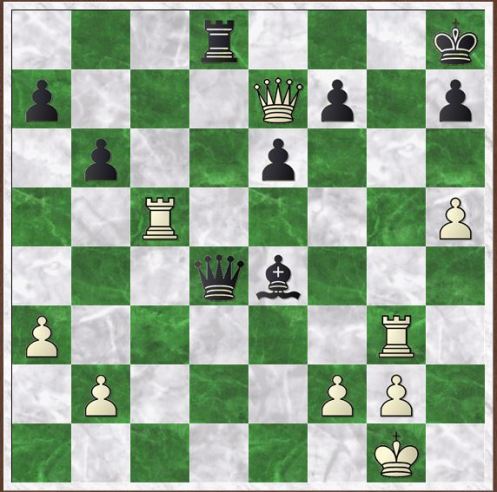
Eliskases v Holzel, Bec, 1931
Solution
A nice disrupting move, 1 Rd5!, and Black can’t defend both f6 and d8: 1-0.
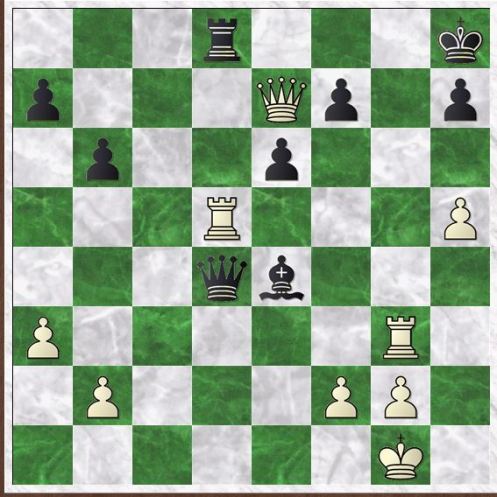
FEN
3r3k/p3Qp1p/1p2p3/2R4P/3qb3/P5R1/1P3PP1/6K1 w – – 0 1
Another puzzle from Dragoslav Andric’s 1981 book “Matni Udar”.
White to play and mate Black
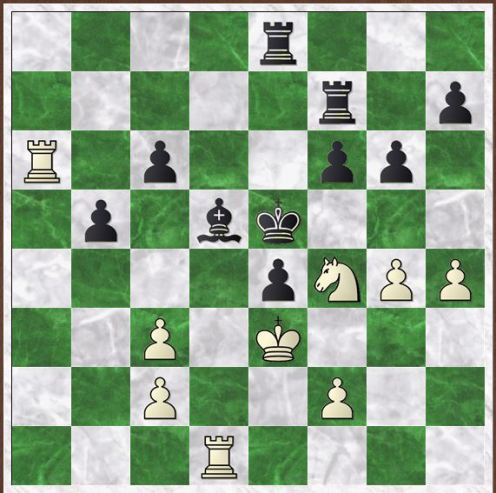
Opocensky v Hromadka, Katowice 1931
Solution
A nice piece of calculation, with a mate in the centre of the board.
1 Rd5+! cd[] 2 Nd3+!
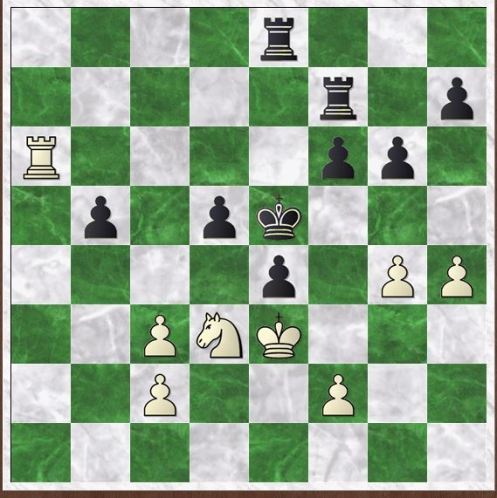
ed[] 3 f4 mate.
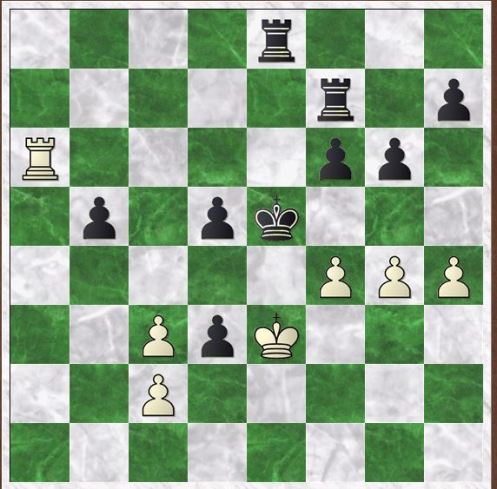
FEN
4r3/5r1p/R1p2pp1/1p1bk3/4pNPP/2P1K3/2P2P2/3R4 w – – 0 1
Another puzzle from Dragoslav Andric’s 1981 book “Matni Udar”.
White to play and mate Black
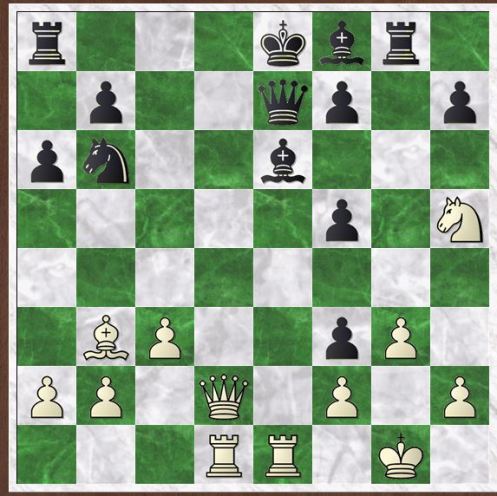
Picugin v Fradkin, Habarovsk 1031
Solution
Fairly straightforward, but pleasing nevertheless. A single track line of forced moves, with only one minor variation..
1 Nf6+ Qf6[] 2 Ba4+ Na4 3 Qd7 mate; or 2…Ke7 3 Qd6 mate.
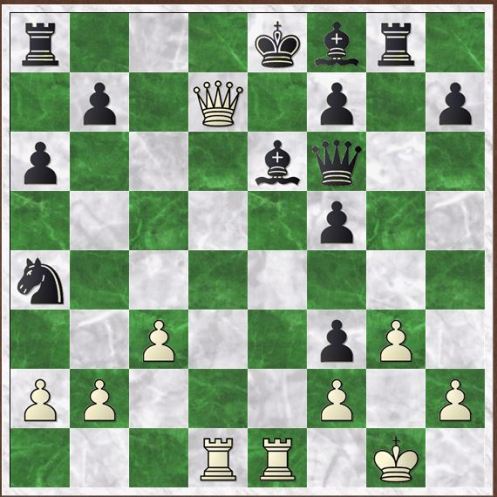
FEN
r3kbr1/1p2qp1p/pn2b3/5p1N/8/1BP2pP1/PP1Q1P1P/3RR1K1 w q – 0 1
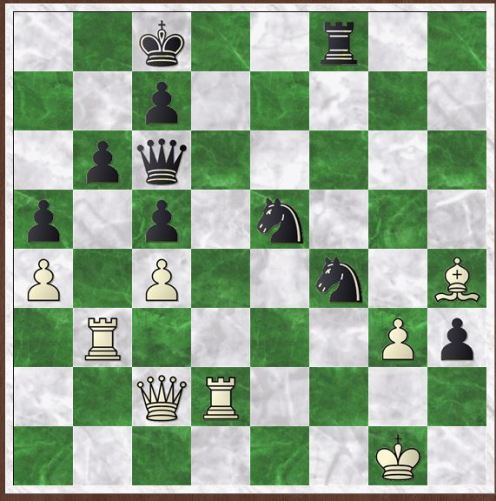
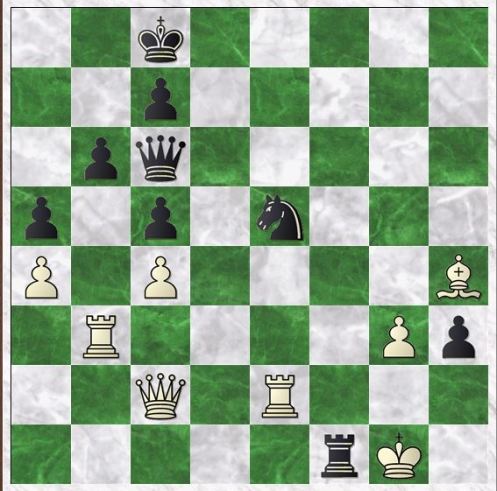
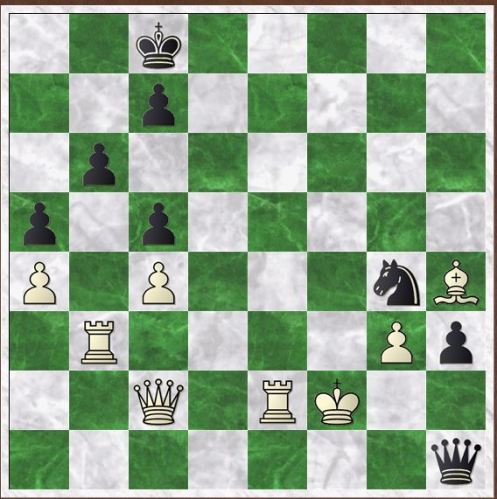
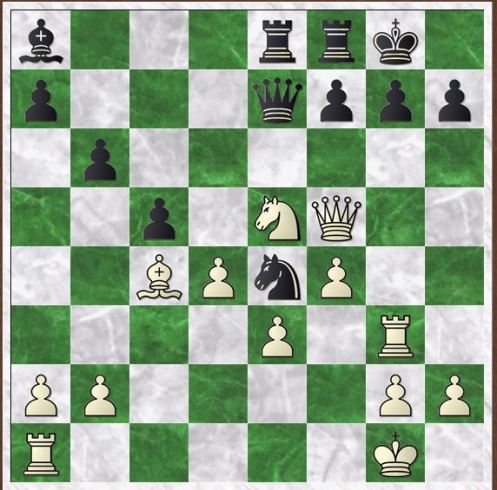
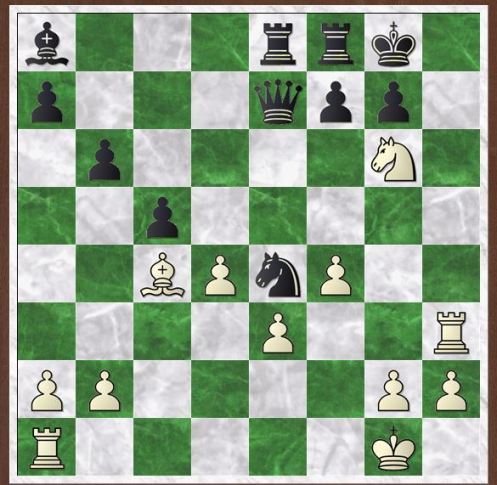
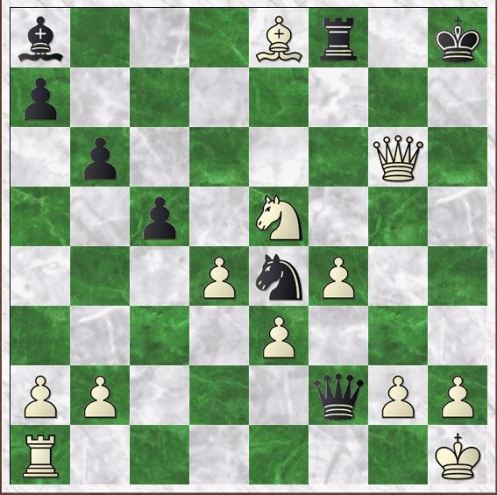
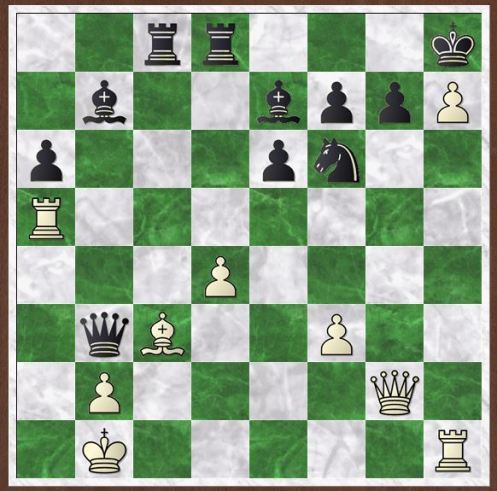
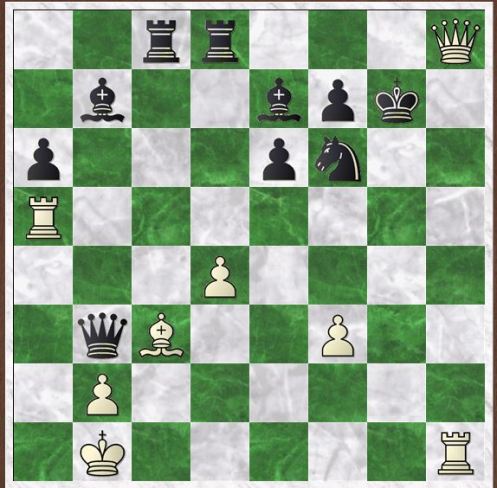
Another puzzle from Dragoslav Andric’s 1981 book “Matni Udar”.
xxx (see below) to play and win (i.e. decide which side is to play first)
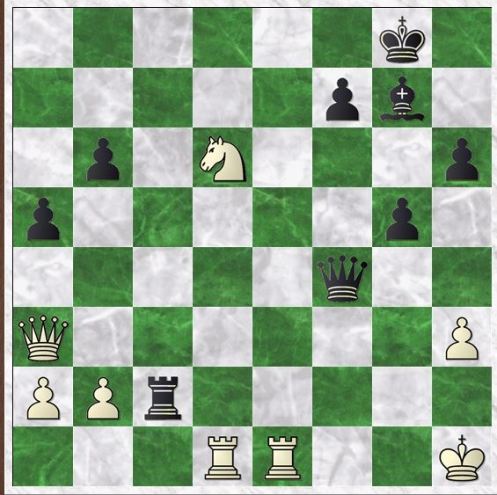
Vidmar v Euwe, Karlovy Vary {per the book, Karlsbad per Megabase) 1929
Solution
The book doesn’t say which side is to win: normally it is obvious, and when it isn’t obvious, a quick look at the players’ names makes it all clear: Alekhine v unknown, simul, is likely to be 1-0 (though not always: puzzle 111 is a case in point, where the well known player loses).
Here, I struggled for a while, thinking that White is so much material up he can win prosaically (and he can) so ‘it’ must be a Black to play and win, and yet he doesn’t have enough pieces to do anything, particularly since White’s pieces control the long white diagonal.
I then thought ‘it must be a quick forced win for White’ and immediately found it: in hindsight, I suspect I have seen the position before.
1 Re8+ Bf8 (1…Kh7 is prosaic: 2 Qd3+ and 3 Qf5+ exchanges the queens) 2 Rf8+! Kf8 (else 3 Rf7+ 1-0) 3 Nf5+
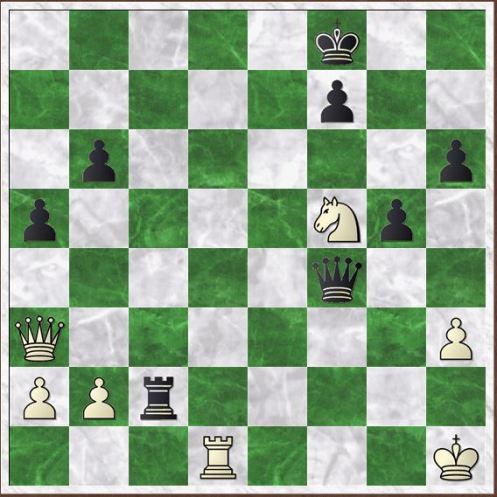
Another puzzle from Dragoslav Andric’s 1981 book “Matni Udar”.
Black to play and win.
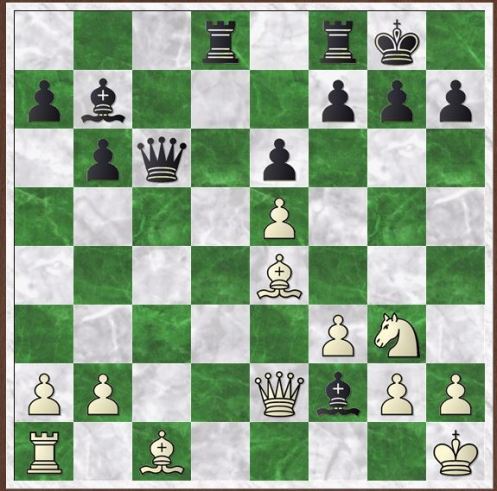
Havasi v Monticelli, Budapest, 1929
Solution
Once I saw it was Black to play- the book doesn’t indicate which side it is to move (!) I immediately realised it was a back rank mate theme, exploiting the looseness of White’s Queen.
So I first tried 1…Qb5??: but this loses to 2 Qb5 Rd1+ 3 Nf1 and Black has nothing.-a small detail being 3…Rfc8 loses to 4 Bb7, and 4…R8c1 loses to 5 Qe8 mate;
Then, 1…Qc4?? : same thing.
So finally 1…Ba6!!, and everything works.
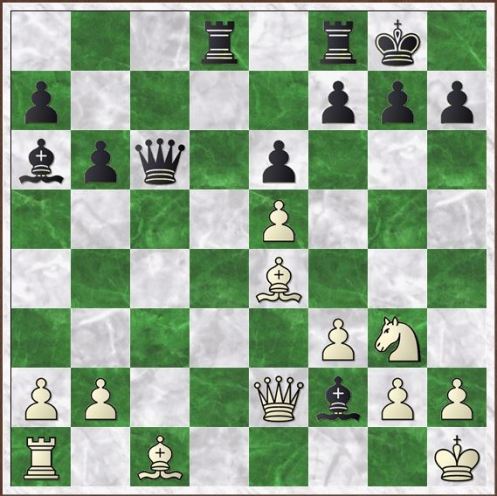
2 Bc6 Be2, and Black is the exchange up, for which White has no compensation, and Black can also exchange White’s last rook, making the ending a mopping-up.
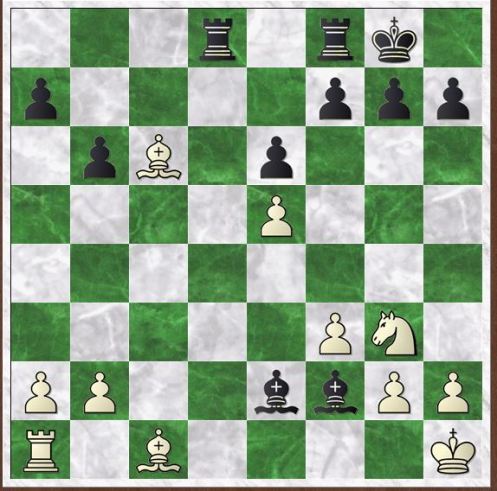
Finally, my engine also says that 1…Qa4 is also winning, because it continues to look at d1: the difference between it and 1…Qd7 being that it is the Rd8 which can lend on d1. But 1…Qa6 is ‘less convincing’ since 2 Bg5 reaches a lost Q+R ending (2…Bg3 3 Bd8 Rd8 4 hg Be4 etc)
Postscript
When writing these blogs, I typically look at Megabase to try to find the game: normally quicker than typing the position in fresh, and also more interesting because I can have a quick look at the game.
For today’s puzzle, I found several Havasi-Monticelli games, either 1-0 or 1/2-1/2, no 0-1. So I almost moved on, but decided to have a dip into the games first, and saw that in fact, White won the present game. Black actually played 1….Qd7 and the game went on: 2 Qf2 Qd1+ 3 Qg1 and a fairly long game continued. Black actually resigned (presuming he didn’t just lose on time- it was move 47) in a technically drawn position- or I think it might be, if ultimately it became a R+B v R ending:
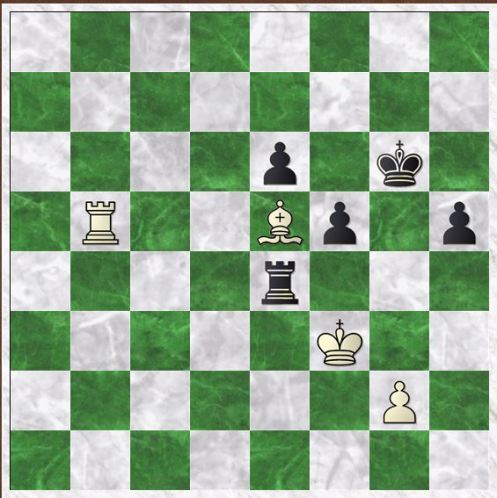
FEN
3r1rk1/pb3ppp/1pq1p3/4P3/4B3/5PN1/PP2QbPP/R1B4K b – – 0 20
 allanbeardsworth