The FIDE website item that a set of stamps had been produced for the Baku Olympiad caught my eye.
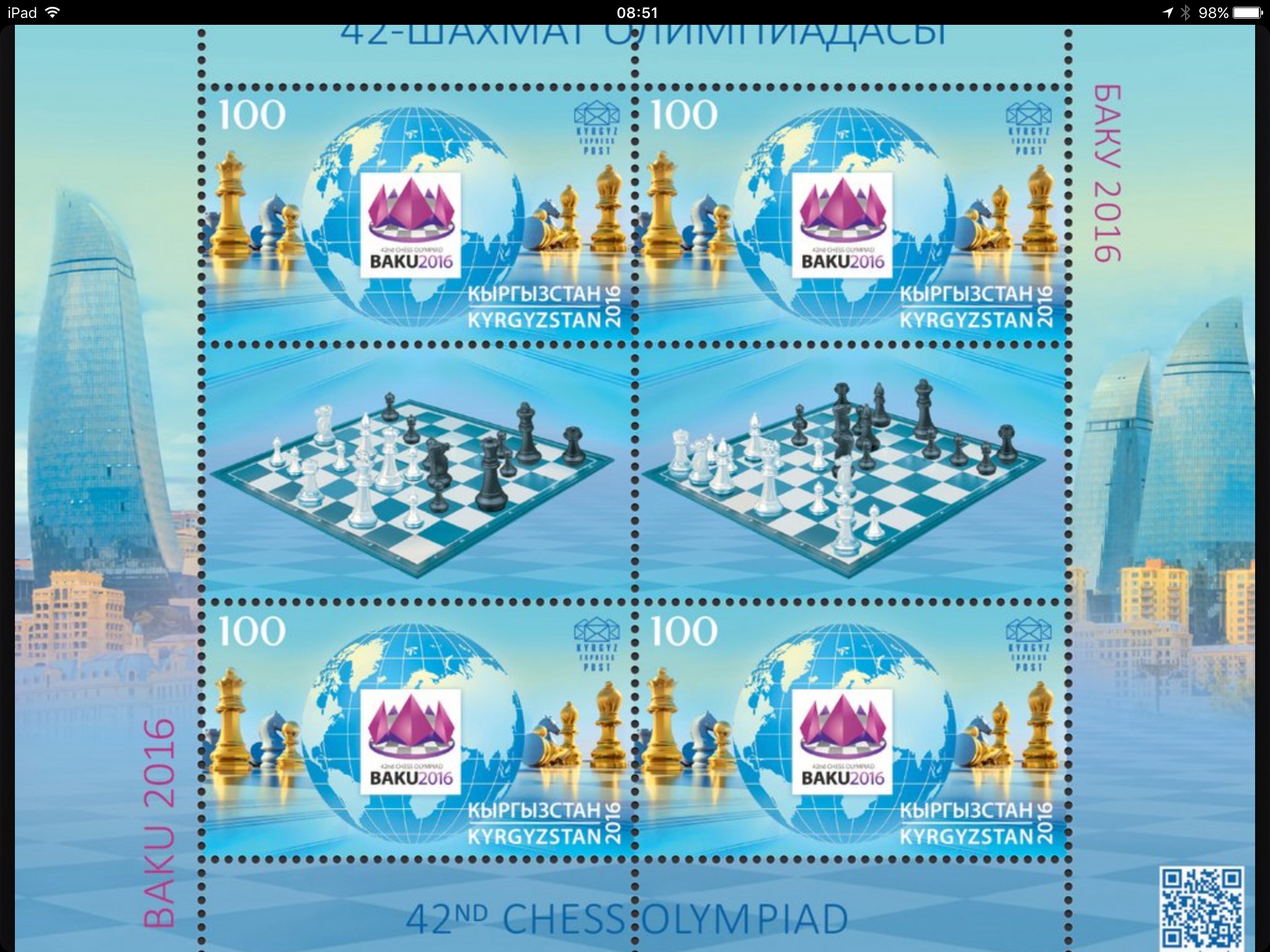
Only whilst writing this posting did I notice that the chess positions aren't stamps: they must be mere 'decorations' for envelopes. By the time I had noticed this, I had wondered 'which games the two positions are' and 'why the particular positions had been chosen'. I had guessed, wrongly, that the positions were from the late Vugar Gashimov or from a leading present day Ajerbaijani player, but that doesn't seem to be the case.
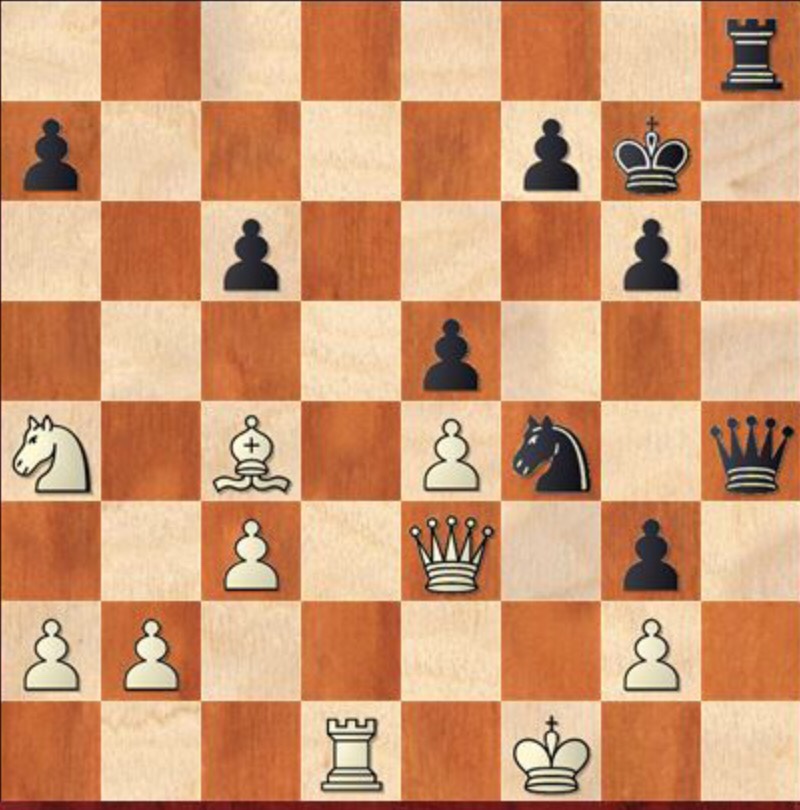
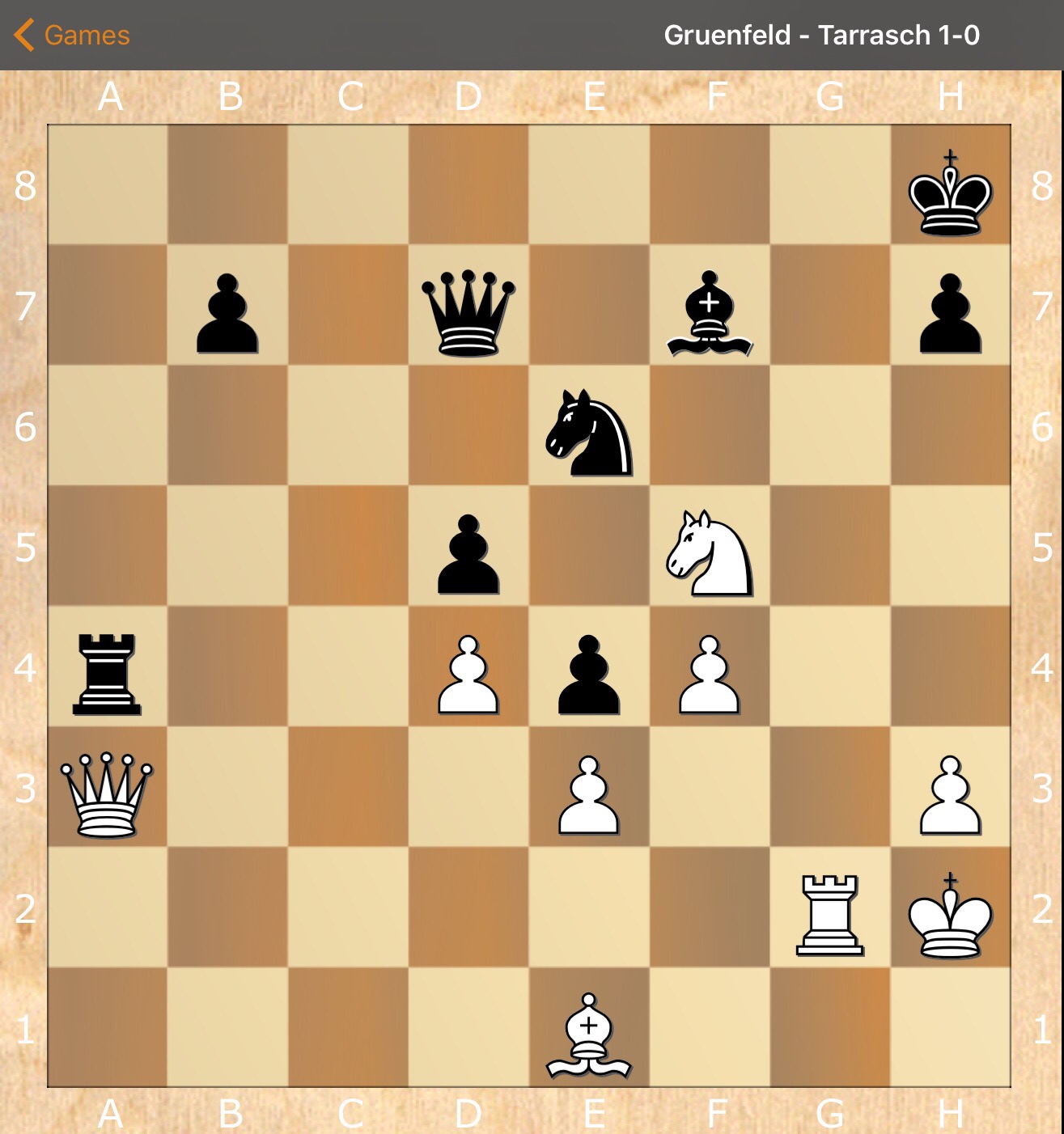
The first one is today's puzzle:
Black to play and win
Solution
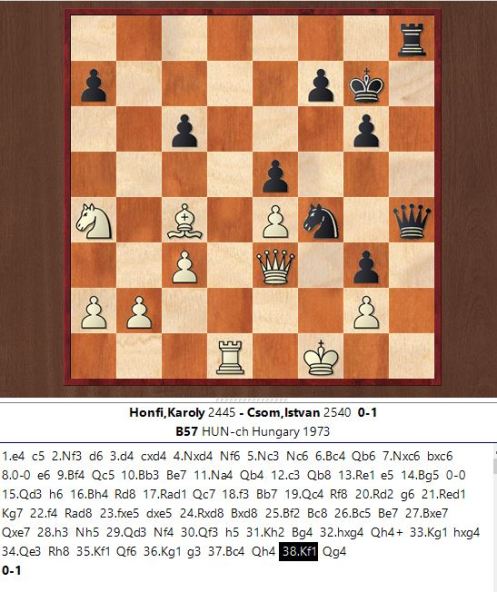
Oddly, this game does not feature an Ajerbaijani player, but is from an old Hungarian championship, the game being Honfi v Csom 1973. Quite why this position has been chosen I cannot guess.
Anyway, 1…Qg4! is very strong, taking advantage of the point that e1 is mined: 2 Ke1 Ng2+ forks and wins.
I haven't been able to source the second position. {I only have Megabase 2012, with my search augmented by TWIC}
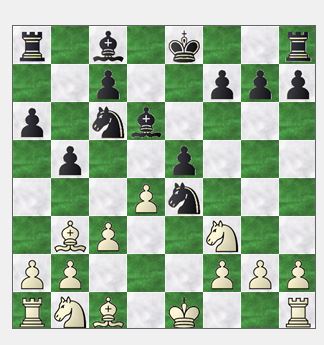
Clearly, some type of Open Ruy Lopez, but how did Queens come off? I suspect the position is composed. I can't see a logical way in which the position could have arisen. Can any reader?
 Posted with Blogsy
Another puzzle from Dragoslav Andric's 1981 book “Matni Udar”.
White to play and mate Black.
Gruenfeld v Tarrasch, Baden-Baden 1925
Make sure you look beyond the first move, and find the best continuation.
Solution
When you notice that the Ne6 is tied to f8 (Qf8+) and the Qd7 is tied to defending the Ra4, and the King is in a mating net (the language of being tied and nets being CJS Purdy's), you look to bring more pieces to the party, and 1 Bh4! is natural.
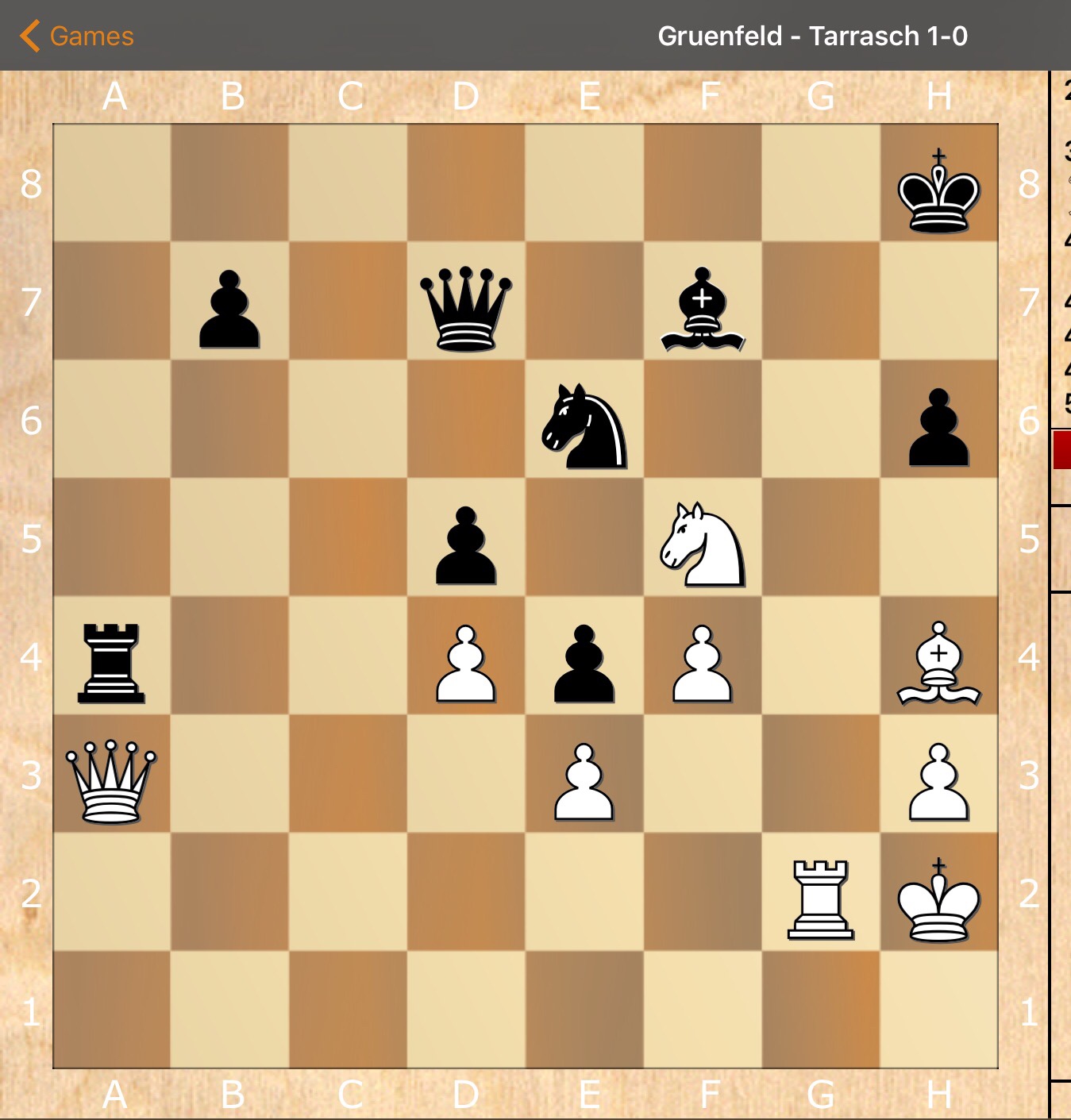
I was lazy, and saw the win after 1…h5 (2 Bf6+ Kh7 3 Rg7+ Ng7 4 Qf8+ Bg8[] 5 Bg7+ Kh7[] 6 Bf6 with the idea of 7 Qh6mate), and didn't look at the more restrictive 1…h6.
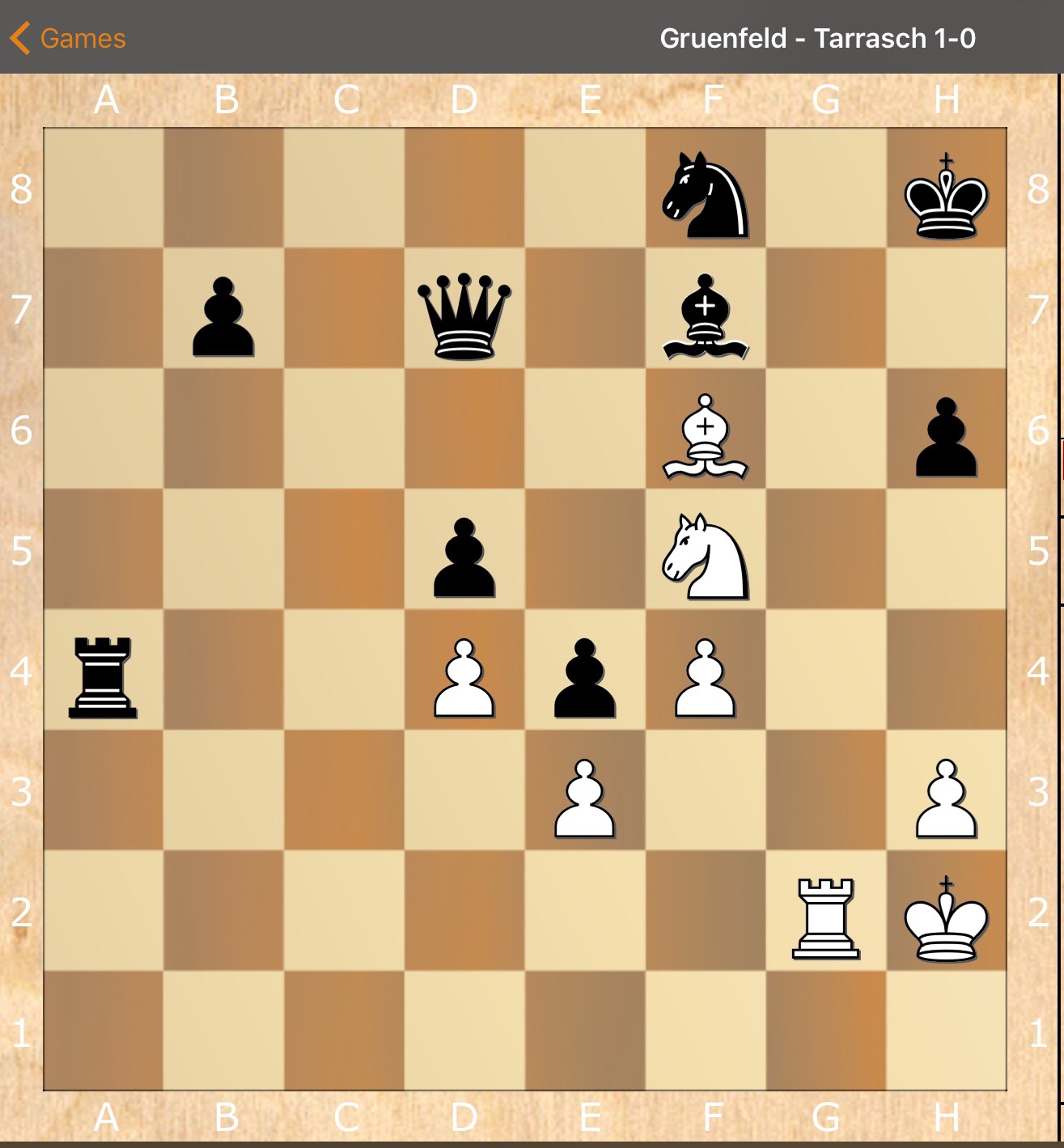
But I should have, because Gruenfeld then played the lovely 2 Qf8+!! tightening the net. 2…Nf8 3 Bf6+ and mate follows easily.
Nice.
A break for a day from my series of postings from Matni Udar.
One of my habits is to cut and keep cuttings of problems that I can't solve. A treasure chest for a later day. Some I keep in a filing cabinet, a few I keep in the pocket of my Kindle case. Why do I mention this? I am posting this blog whilst on holiday in Turkey, and was reading a book on my Kindle, but at times dipped into my cache of problems. Some turn out to be trite, and I wonder why I missed the solution first time round, others stump me for a while long, and these I will post on my blog. This is one of them.
Today's is really tough, at the limit of my ability: I wonder now long Peter Svidler took to see the win?
White to play and win
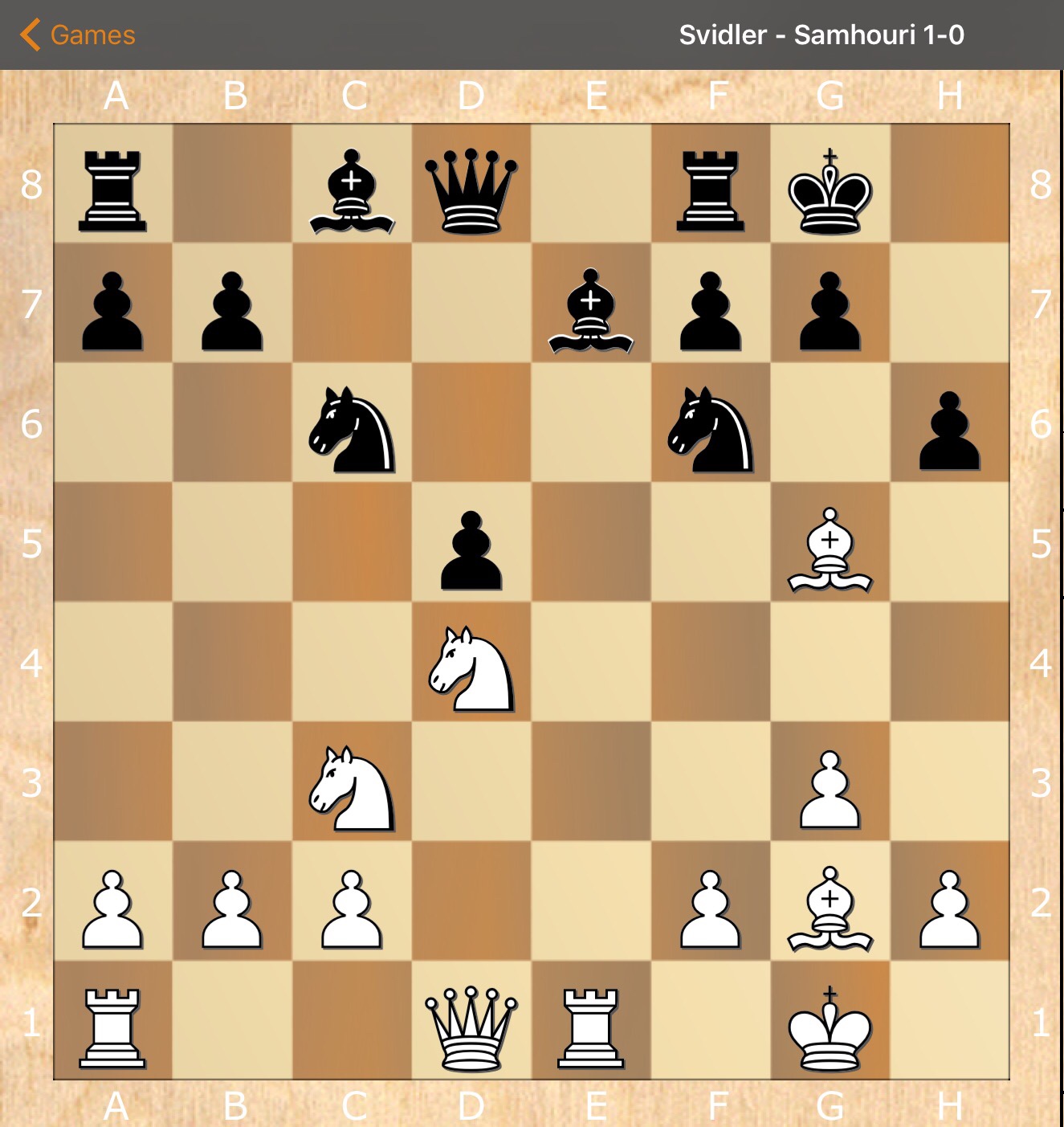
Svidler v Samhouri, Tromsø Olympiad, 2014
Puzzle seen in Chess magazine, October 2014
Solution
So, I knew it would be a capture, and I knew it would be the win of the d pawn, but which order of moves? And after several of the moves, Black has several alternatives.
Intuitively I felt that 1 Nd5! had to be the move, but I couldn't make it work, all the exchanges were too much for me. But I looked at the normal alternatives, and dafter ones like 1 Bh6? and 1 Re7?, to no avail, so looked again at 1 Nd5! and eventually saw the path. 1…Nd5 2 Nc6! bc[] 3 Be7! Ne7[] 4 Qd8 exchanging the defender of the Ne7, which is now a LPDO, so 4….Rd8[] 5 Re7 and White is a healthy pawn up.
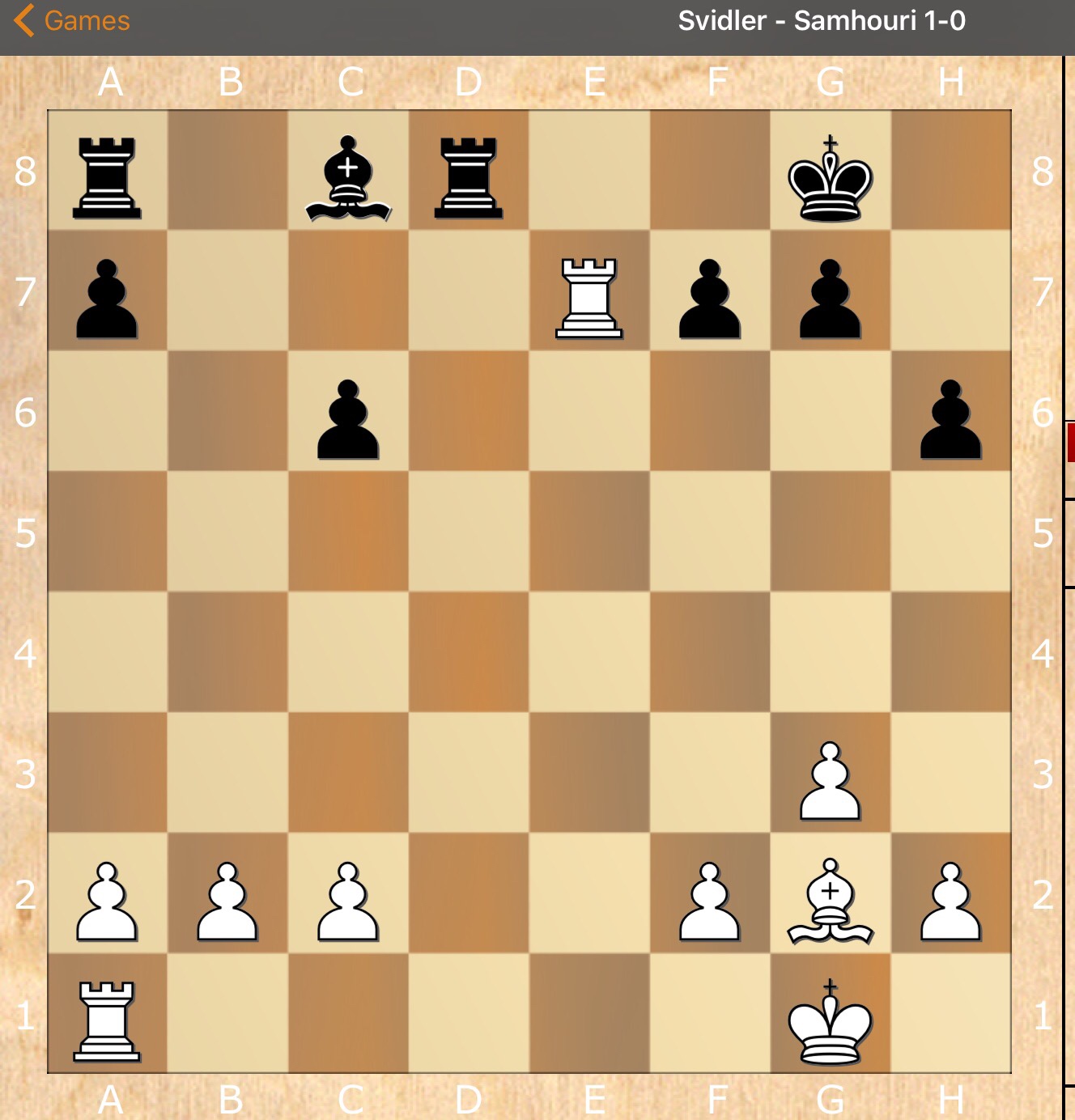
In the end position, Black can't play 5…Rd2 due to 6 Re8+ Kh7[] 7 Bc6 Rb8[] 8 Be4+ g6[] (8…f5 9 Bf5+ and the Bf5 is pinned to the LPDO Rb8) 9 b3 and White is two pawns up, 1-0.
Earlier, if after 1 Nd5 Black plays 1…hg then 2 Nc6 and 3 Ne7+ wins. And 1…Nd4 2 Ne7+ also nets the pawn.
Another puzzle from Dragoslav Andric's 1981 book “Matni Udar”.
Black to play and mate White.
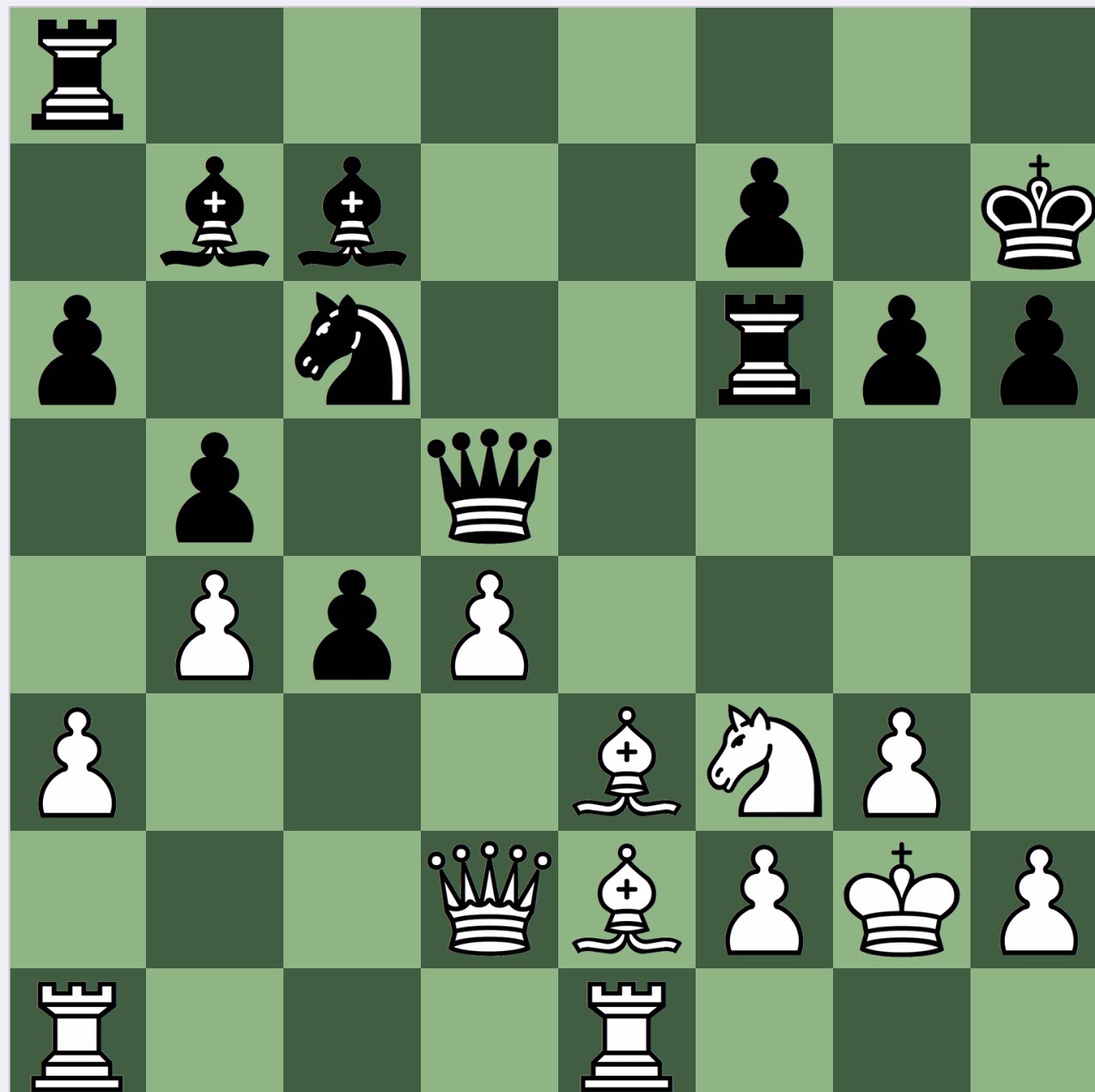
Popov v Riumin, Moscow 1925
Solution
Because this is a puzzle from a book, you 'know' the answer has to be 1…Rf3! 2 Bf3 Qf3+! 3 Kf3 (3 Kf1 is just a grovel). All you need to do is then work out 'what next'. In a game, of course, you don't know that the combination is winning, or even that it is there: it has to be looked for and calculated.
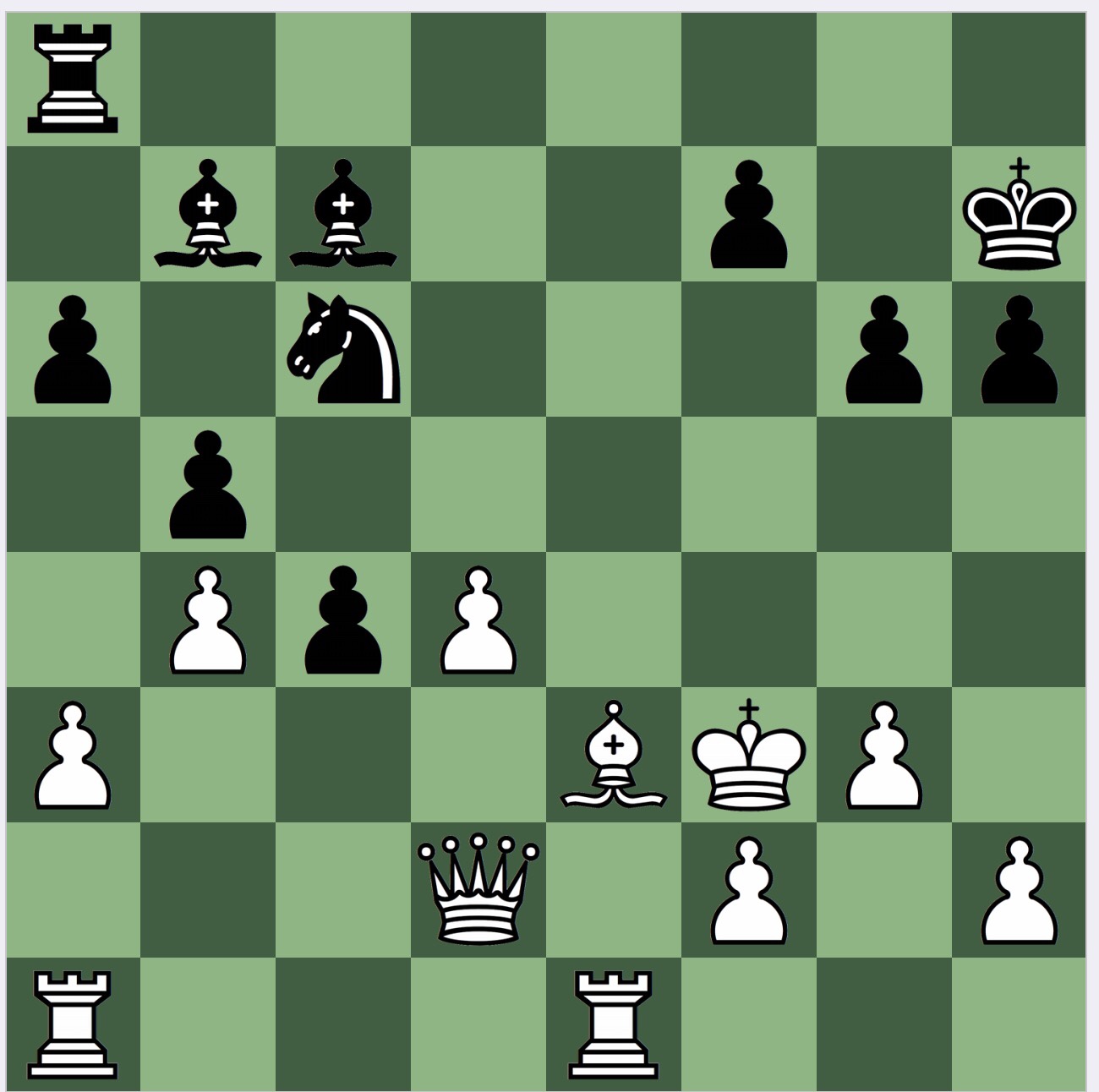
Fortunately it is not too hard.
3…Nd4++ 4 Kg4[] Bc8+ 5 Kh4[] Nf3 mate is a forced line.
Another puzzle from Dragoslav Andric's 1981 book “Matni Udar”.
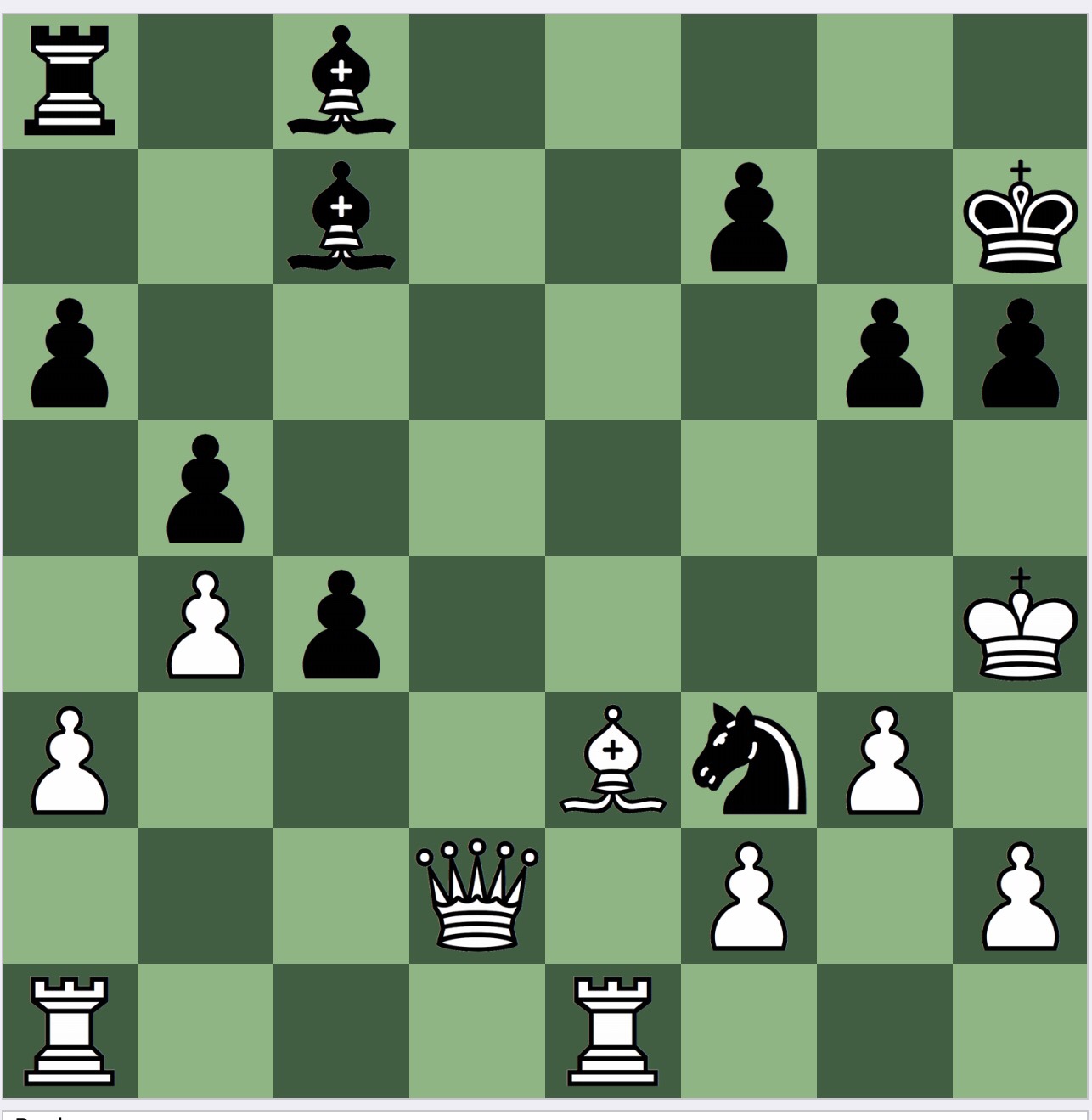
Black to play and mate White.
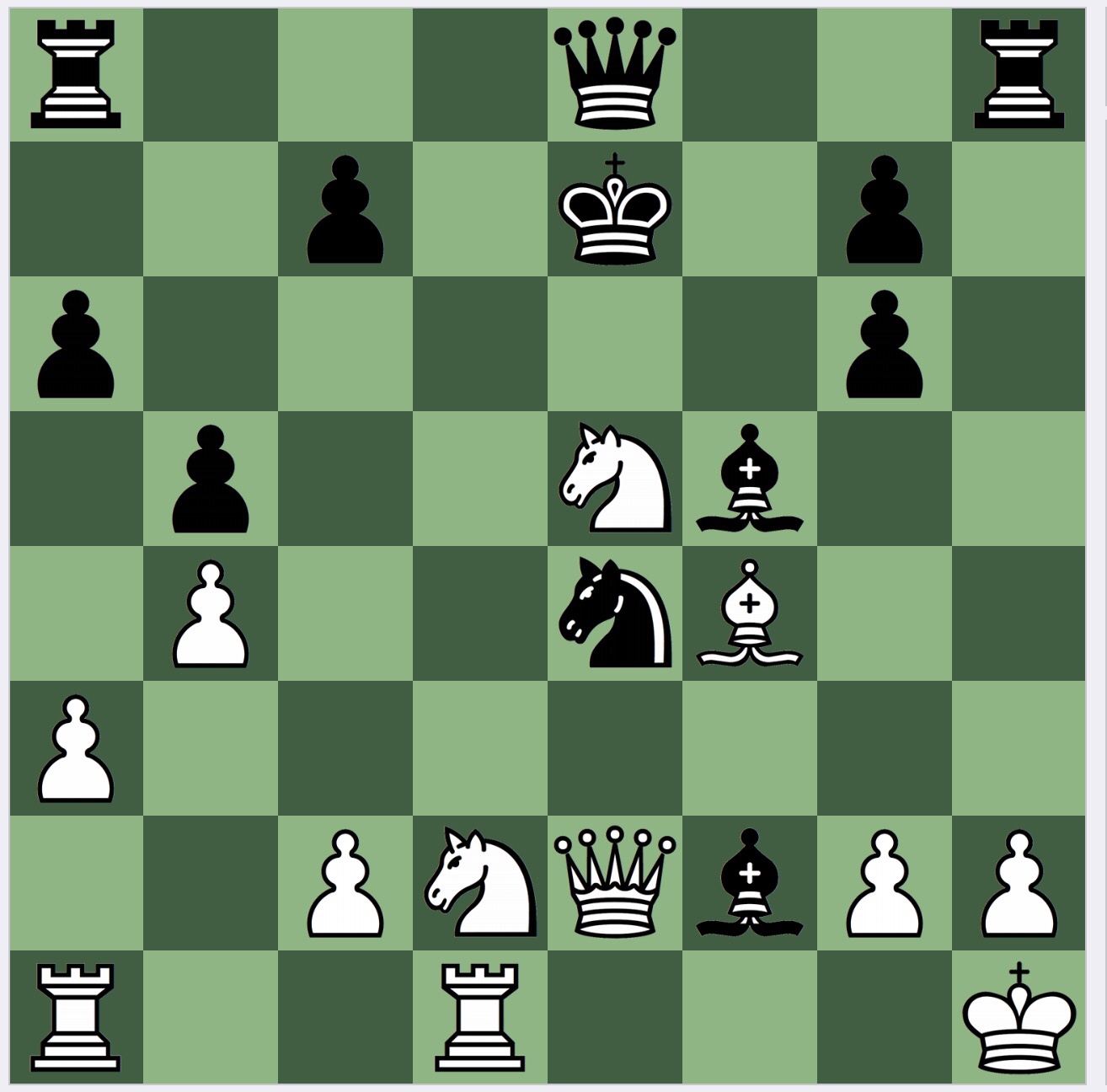
Unknown v Stoner, Sad 1924
Solution
A pretty variation of a standard theme of back rank mating (or back file mating). Black has to open the h file and does so forcibly by 1….Rh2+! 2 Bh2 Ng3+!!
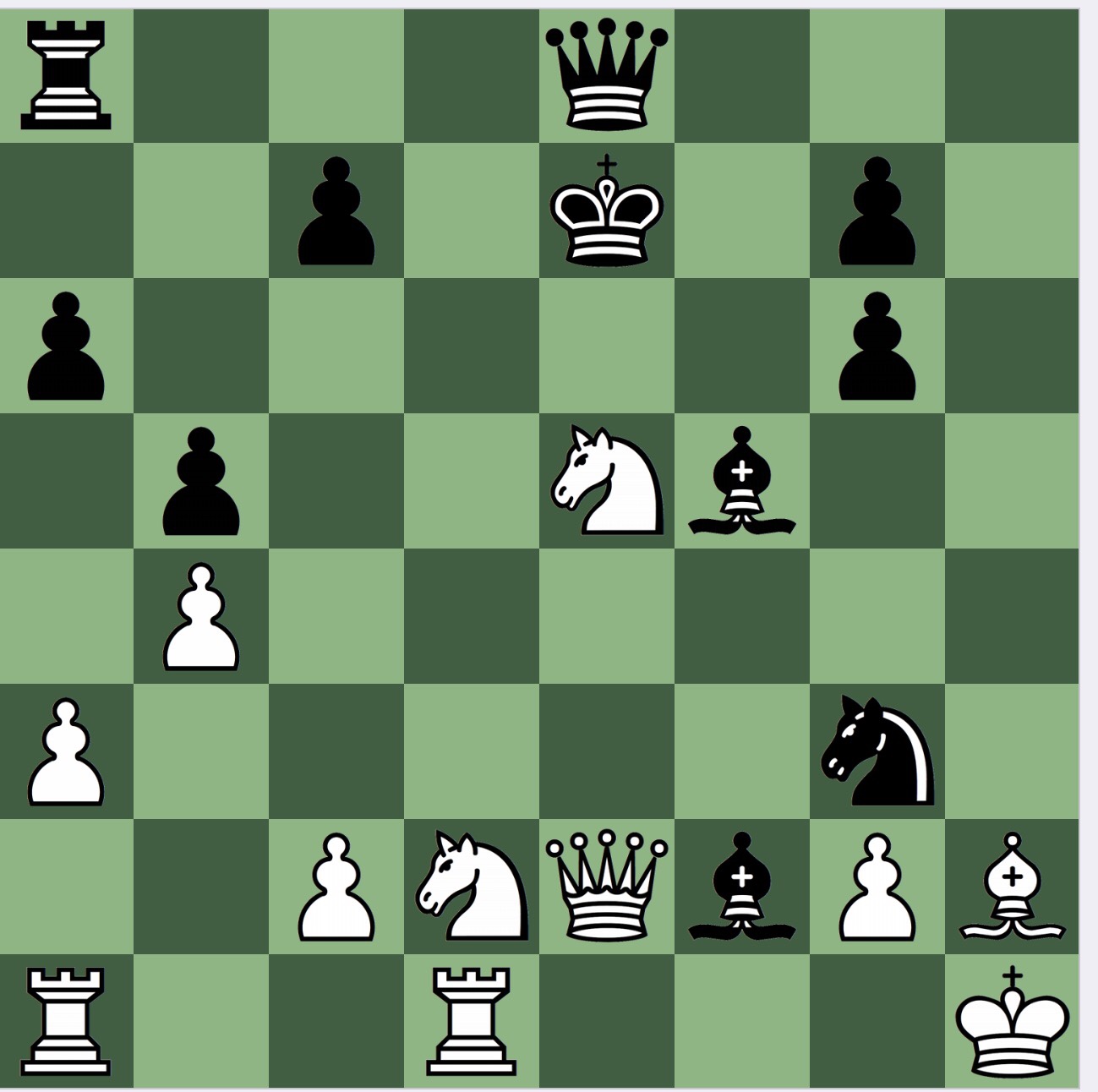
3 Bg3[] Qh8+ 4 Bh2 Qh2+! 5 Kh2[] Rh8+
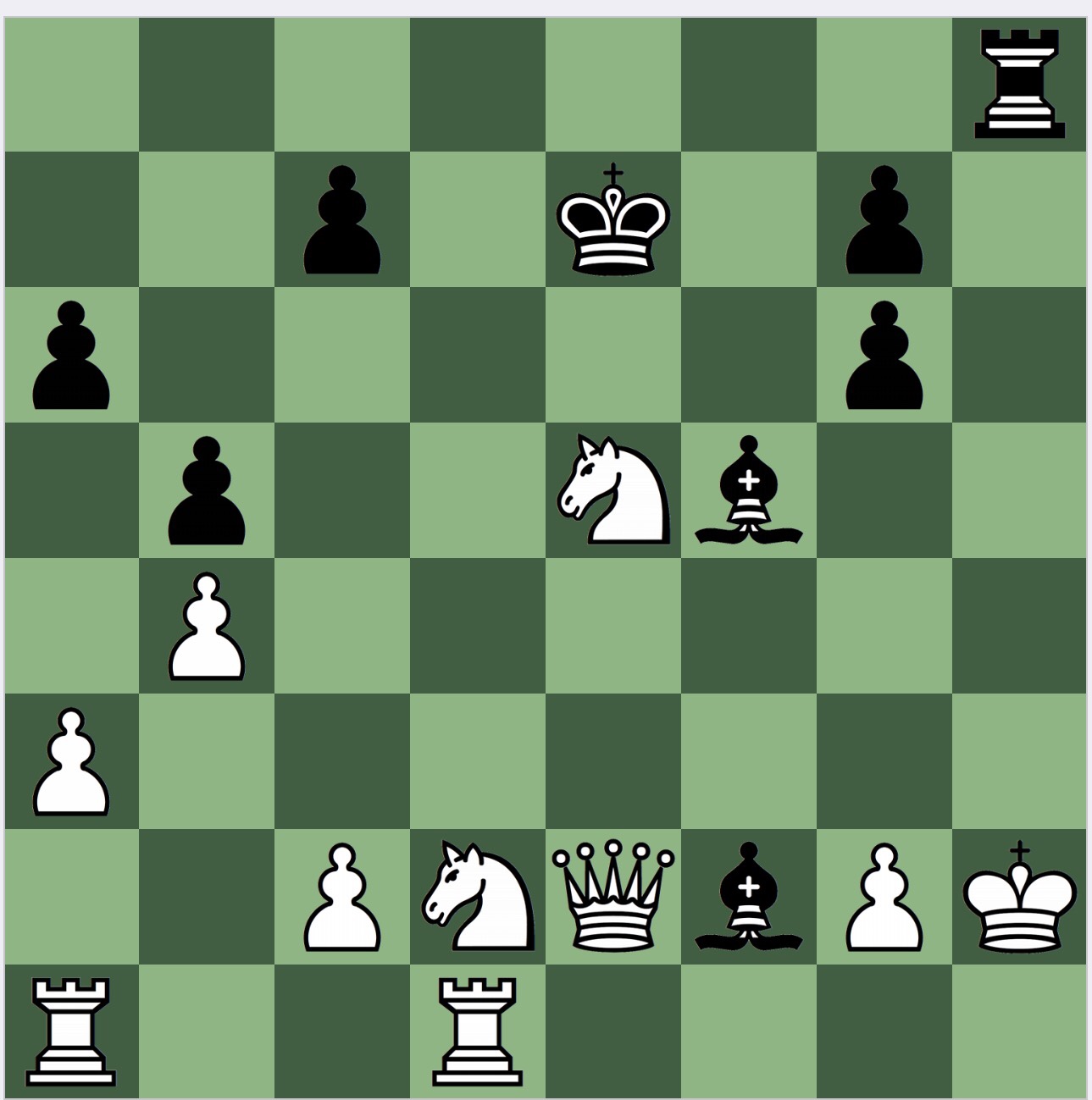
and after 6 Qh5 Rh5 mate.
A nice exercise.
Another puzzle from Dragoslav Andric's 1981 book “Matni Udar”.
White to play and mate Black.
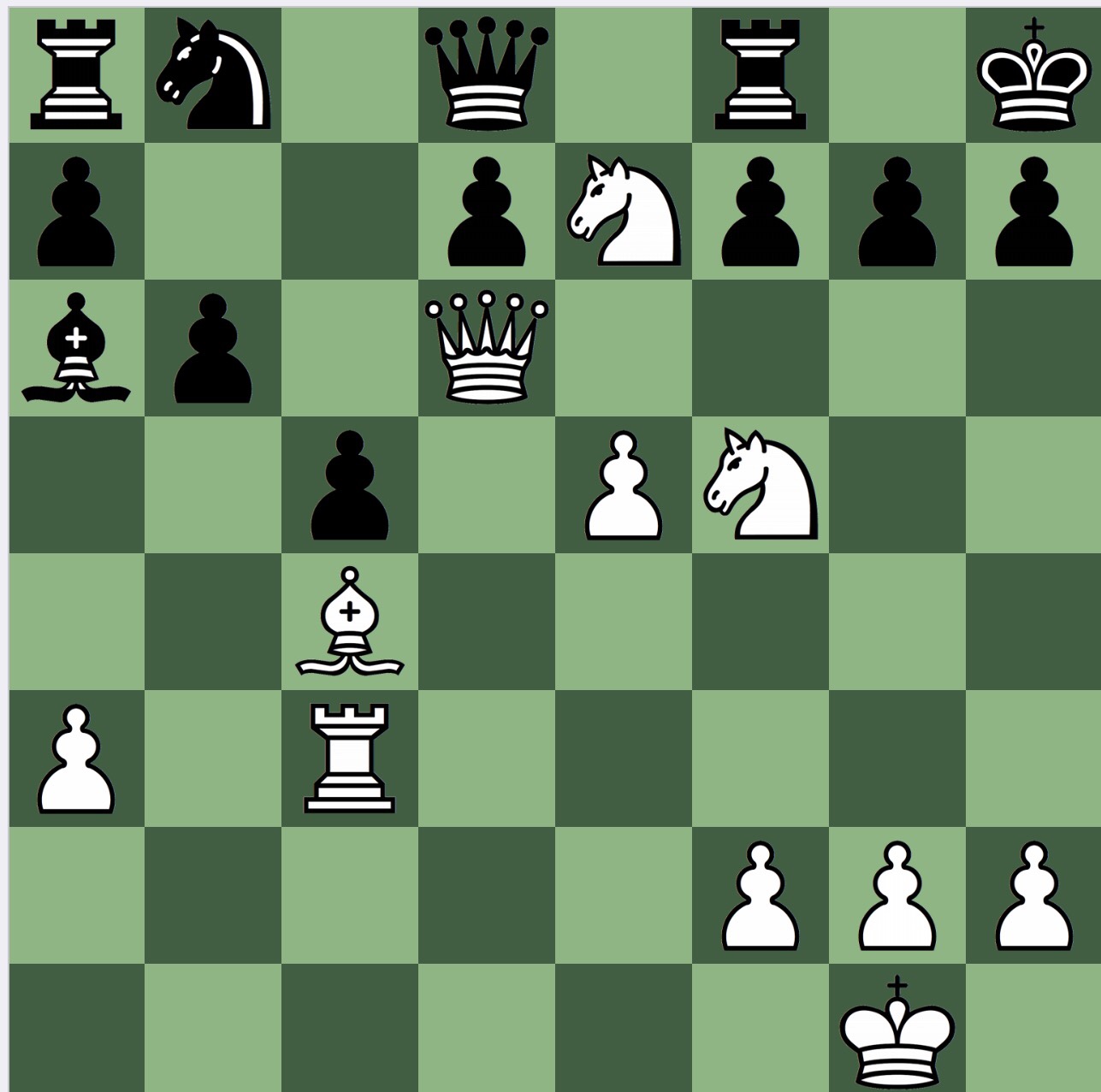
Alekhine v Supiko, 1924
Solution
A pattern I had seen before: here, the fact that the rook had already been lifted to c3 is key. 1 Qg6! and if 1…fg 2 Ng6+! hg[] 3 Rh3+ and mates next move.
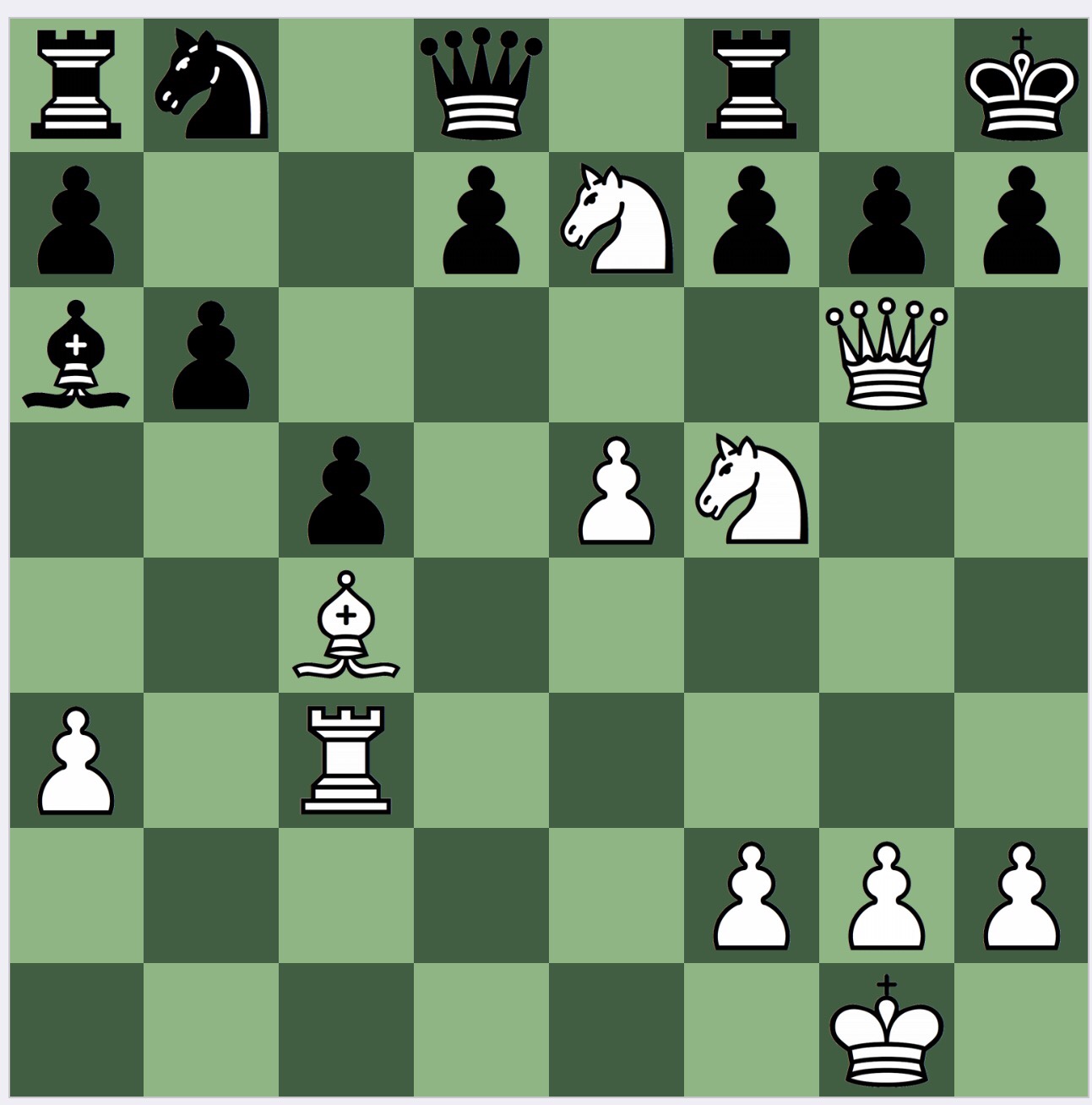
Another puzzle from Dragoslav Andric's 1981 book “Matni Udar”.
White to play and win
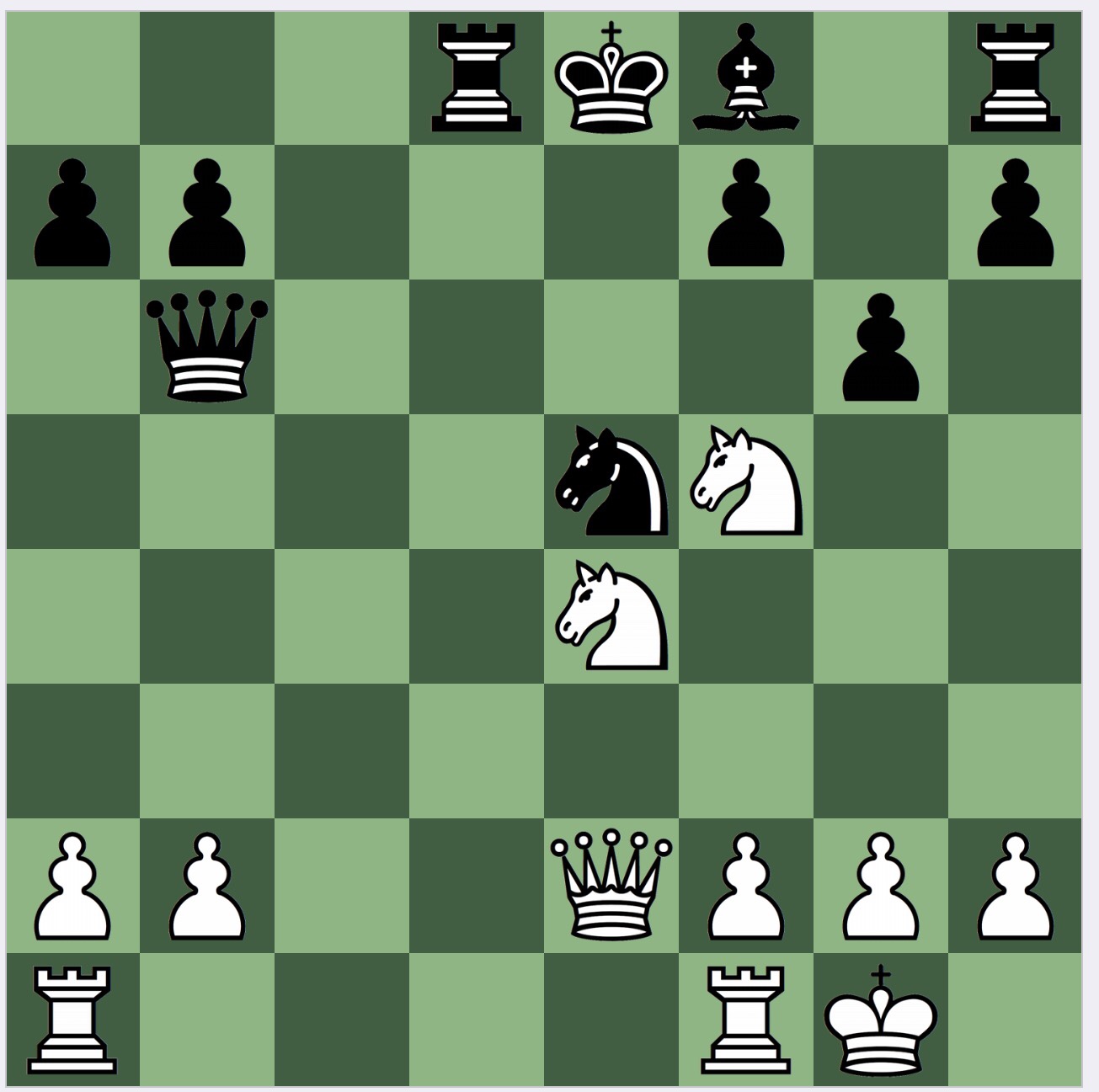
Alekhine v Kussman, simul New York 1924
Solution
The first move, and Black's best reply are obvious. 1 Qb5+! Nd7
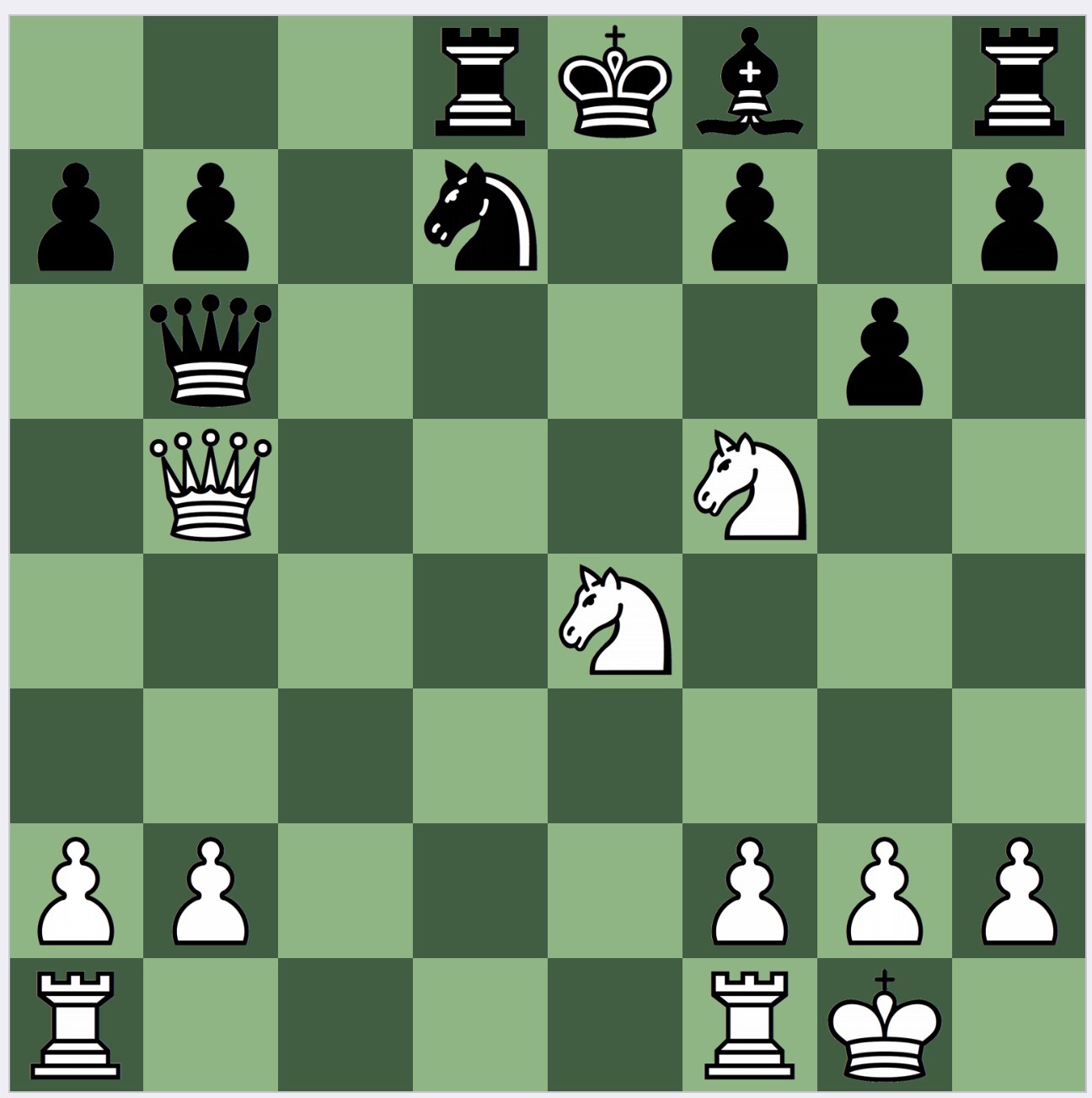
It is then not a hard task to see that there is no forced mate, but after 2 Rfe1 White's advantage is overwhelming, and White needn't calculate further. Black has a few replies. If say 2…Be7 then 3 Ned6+ and if 3…Kf8 then 4 Re7 1-0. Or if say 2…Bb4 then 3 Nf6++ and 4 Nd7+ 1-0
A break for a day. A few weeks ago, whilst on holiday in Turkey, I posted this position on my Instgram, Facebook and Twitter (@allanbeard) feeds.
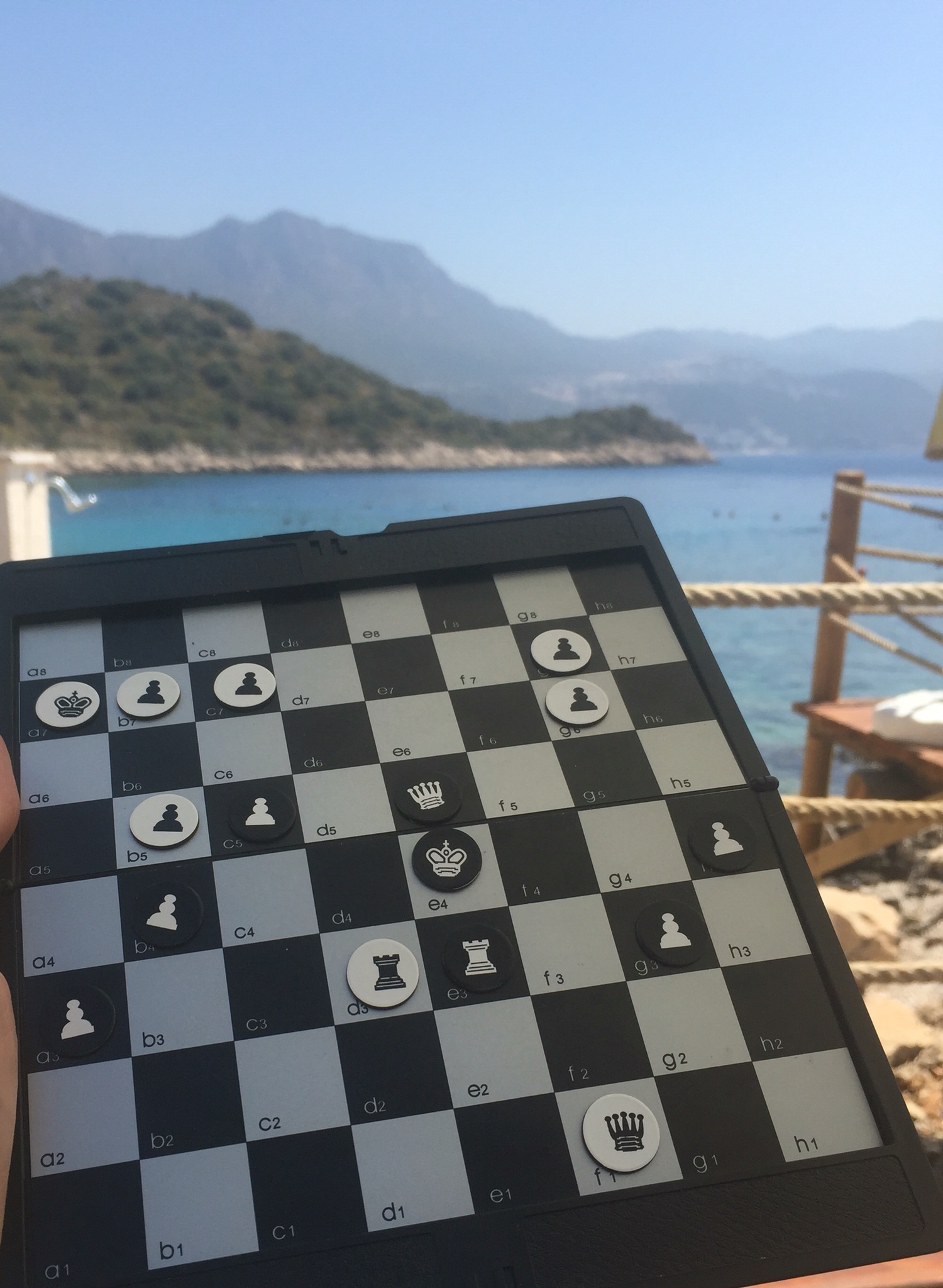
From Kas, Turkey
Below, I show the position in more convenient format.
Black to play and mate in 2
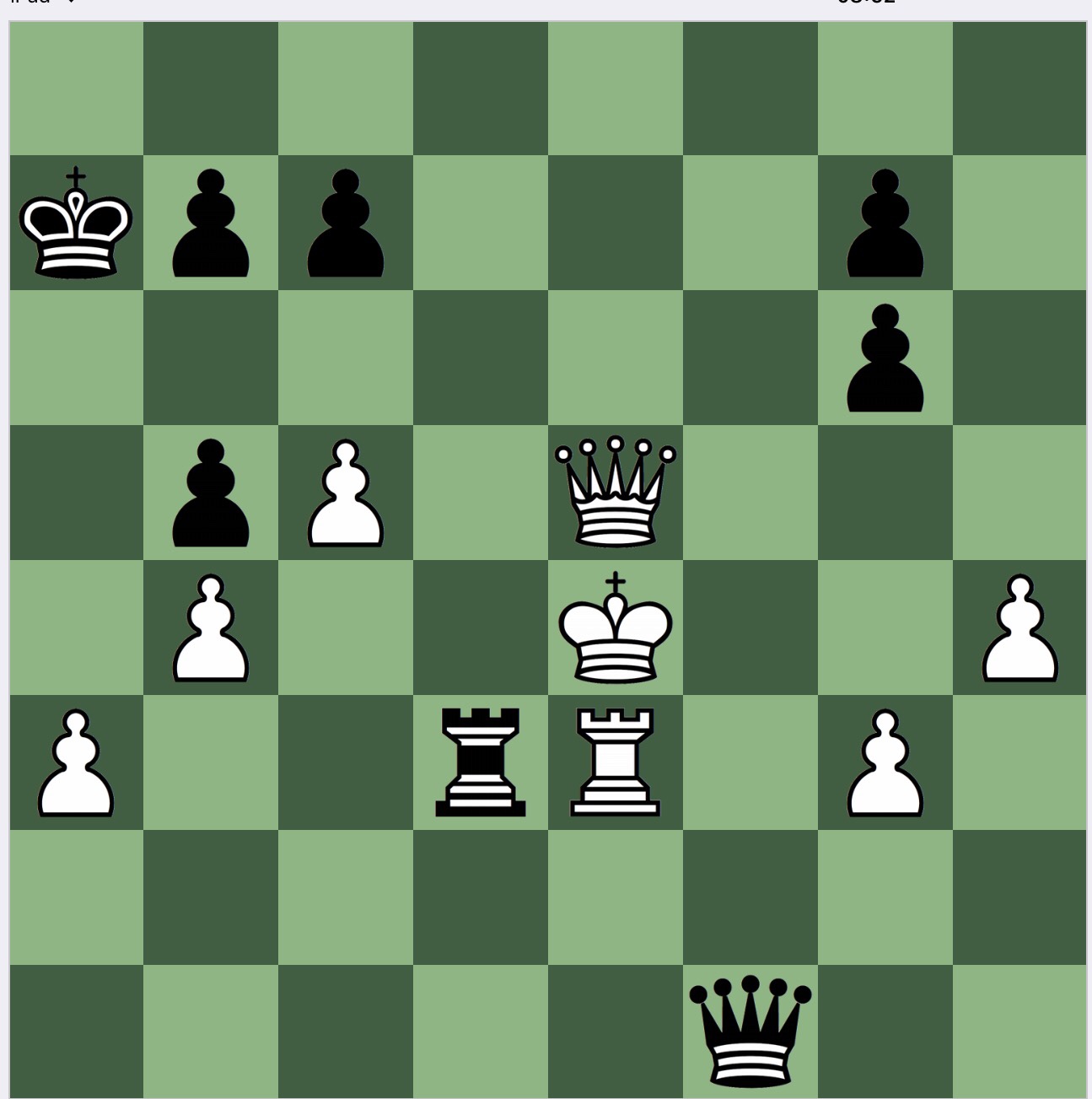
NN v Kokshal, Prague 1928 (source a 14/5/2003 article by Mark Dvortesky on Chesscafe.com)
I would have posted the position sooner, except that I typically do my daily posts a week or two in advance, and to then insert a new posting is time consuming (a new daily posting: perhaps I should have just posted it same day).
The solution is pretty: 1…Rd4+! and after either 2 Kd4 Qc4 is a smothered mate, or 2 Qd4, 2…Qf5 is a different smothered mate.
The initial position is also instructive. It is part of a series of positions Dvortesky gives on a theme of 'double pin' or he says 'Maltese cross'.
Black to play and win
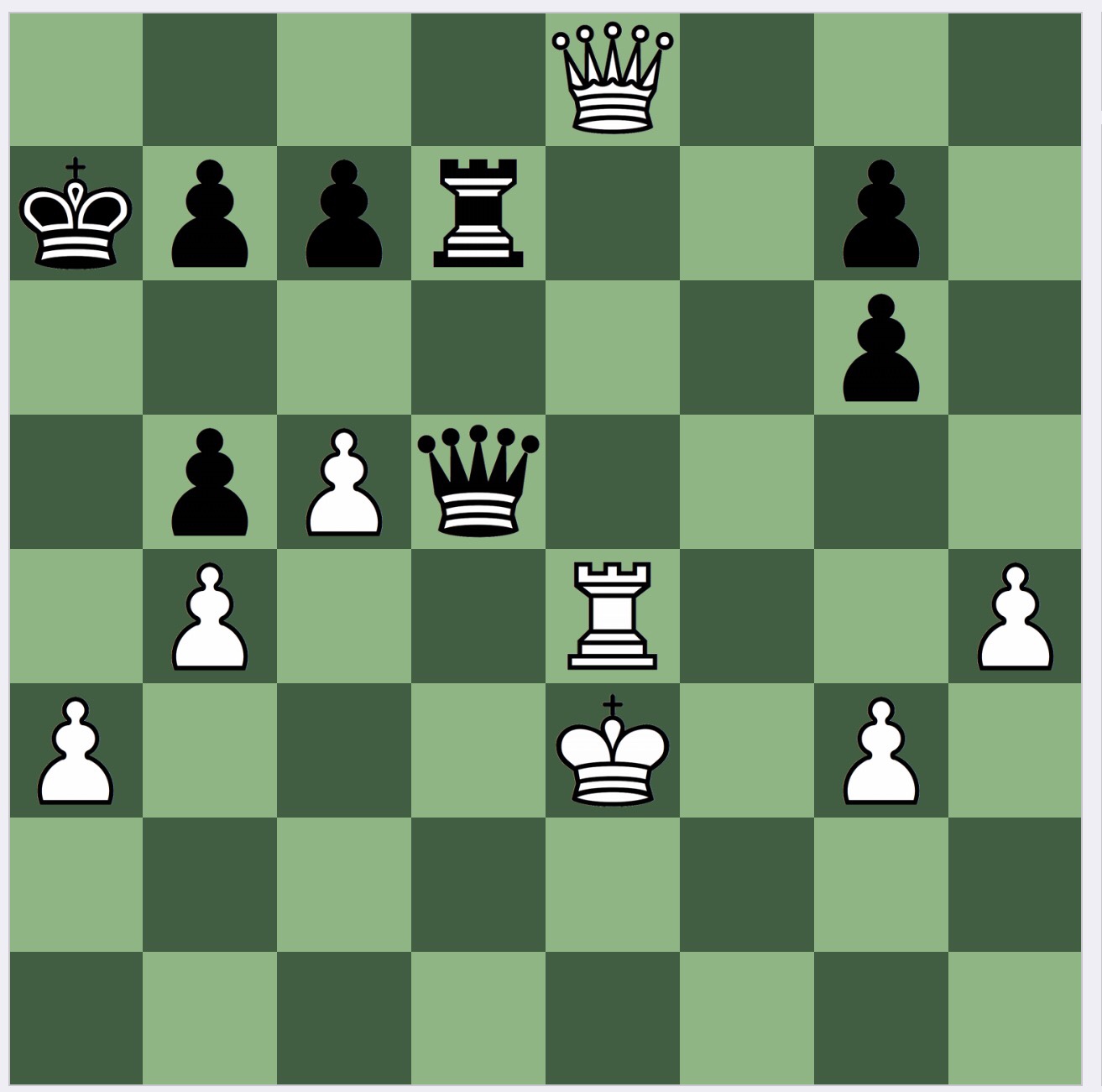
1…Qd2+! 2 Kf3[] Rd3+ 3 Re3 (3 Kg4 Qf2 4 Qe5 Rg3+! 5 Qg3[] Qf5 mate) 3…Qe1!! The Maltese Cross.
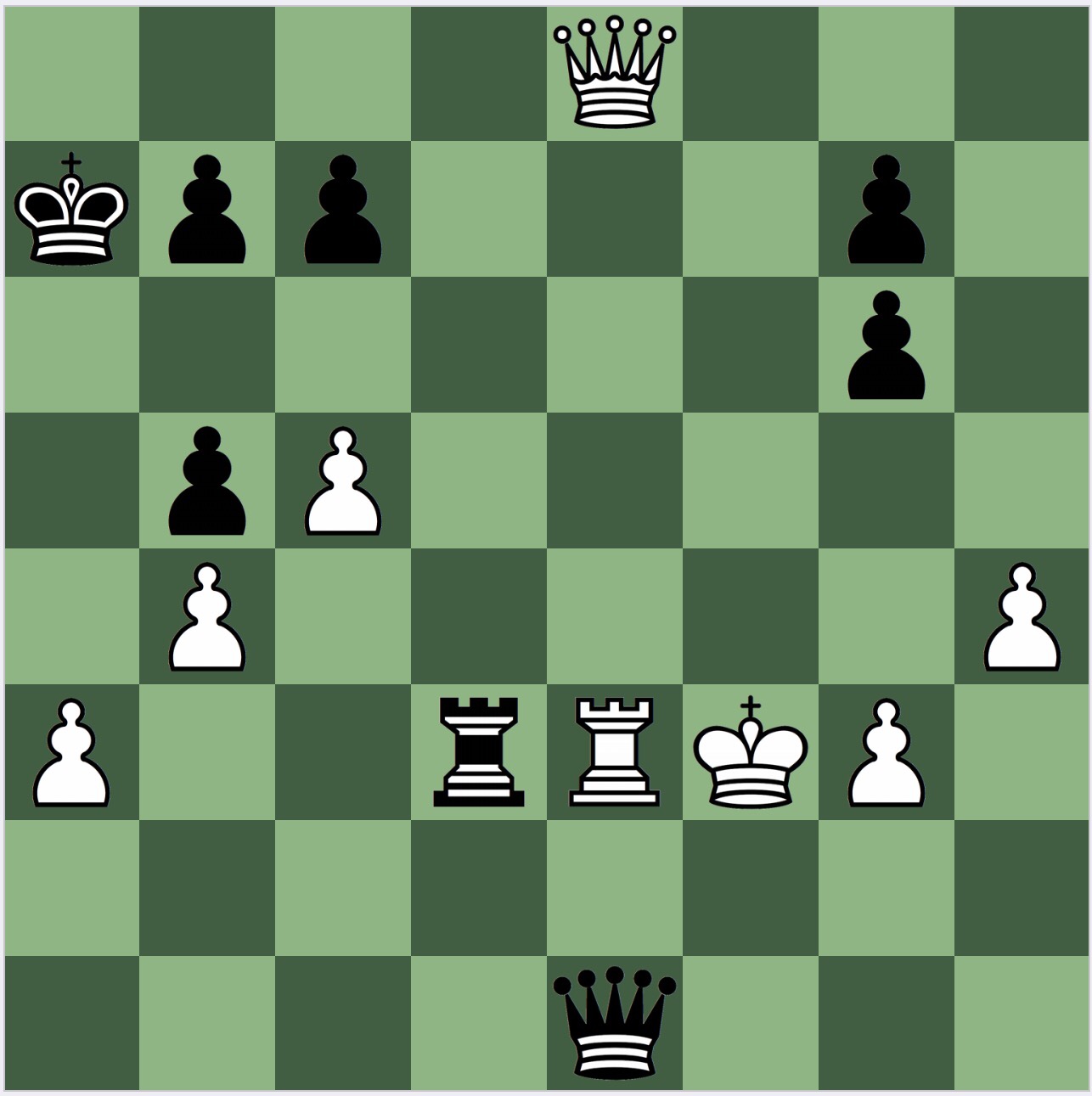
4 Qe5 Qf1+ 5 Ke4 (5 Kg4 Re3 6 Qe3 Qf5 mate) reaches the initial diagram position.
If instead 4 g4 then there is another Maltese Cross: 4…Qf1+ 5 Kg3 Qe2!!
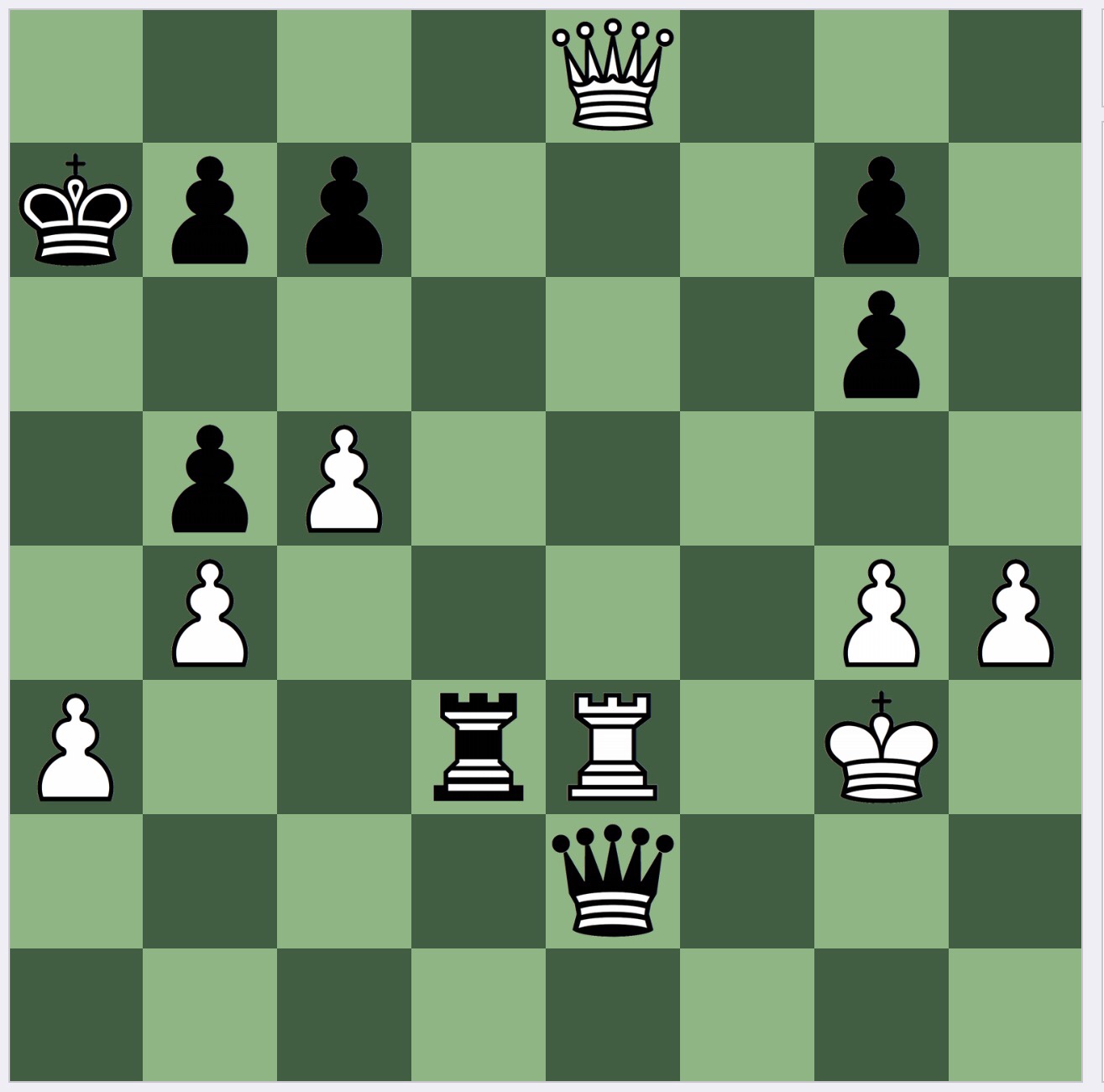
(5..Rd2 wins more prosaically). If (after 5…Qe2) 6 Kf4 then 6….Qf2+ 0-1.
Another puzzle from Dragoslav Andric's 1981 book “Matni Udar”.
White to play and mate Black
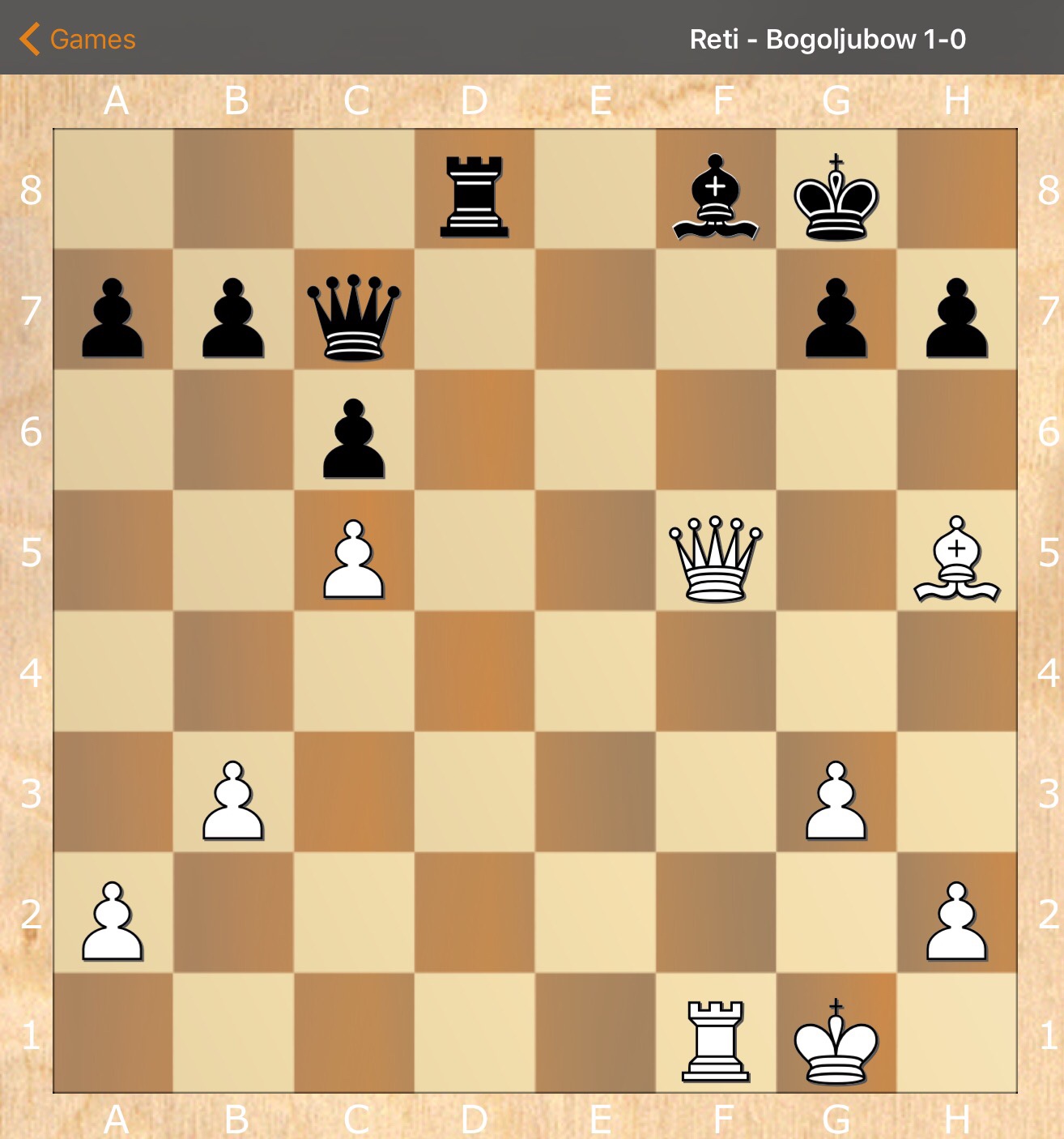
Reti v Bogoljubov, New York 1924
Solution
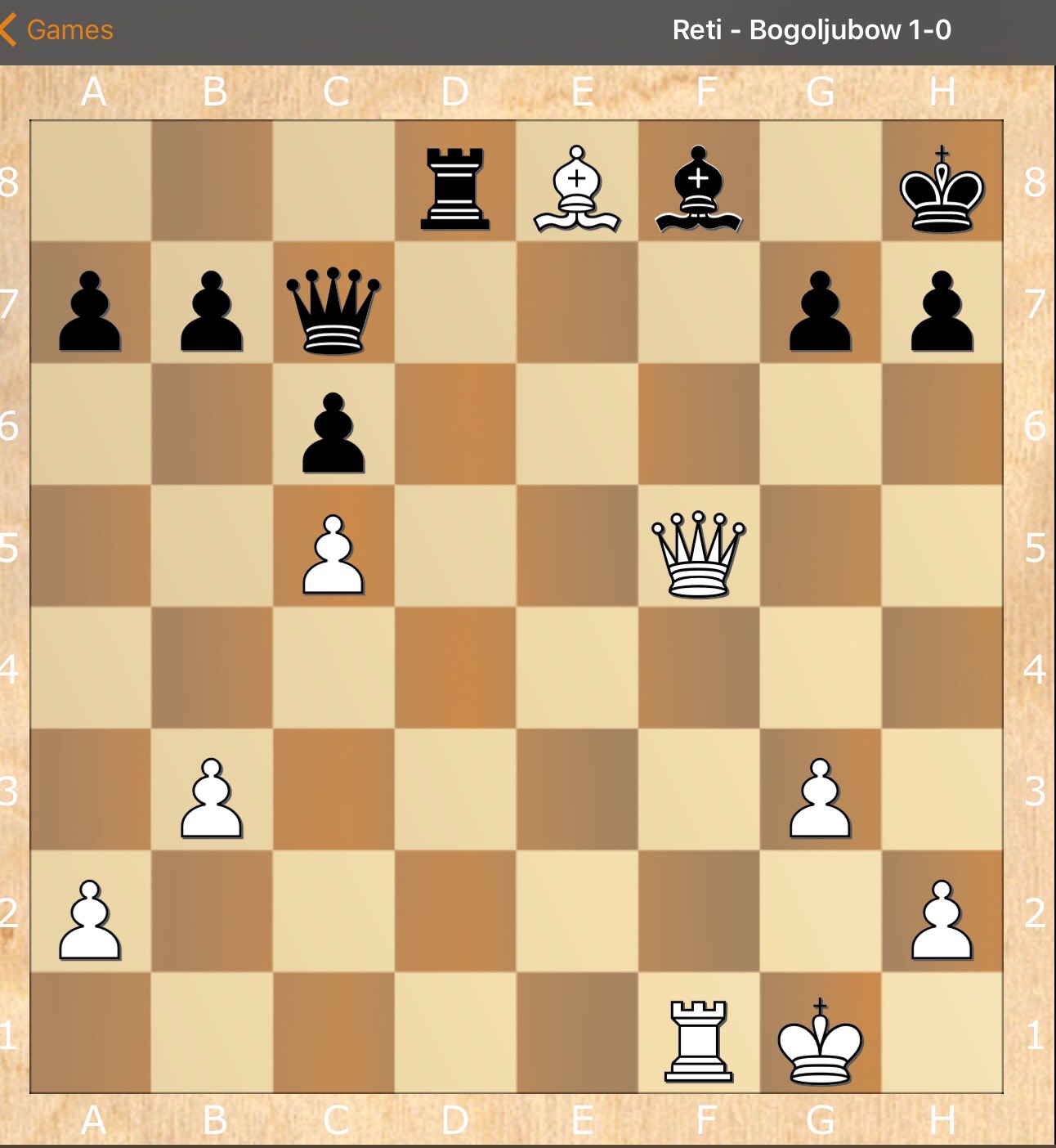
A position I knew, from my chess education. 1 Bf7+ Kh8[] 2 Be8! 1-0.
Yesterday, I posted this problem, from Dragoslav Andrić's book Matni Udar, the puzzle book that I am presently working through.
White to play and mate Black
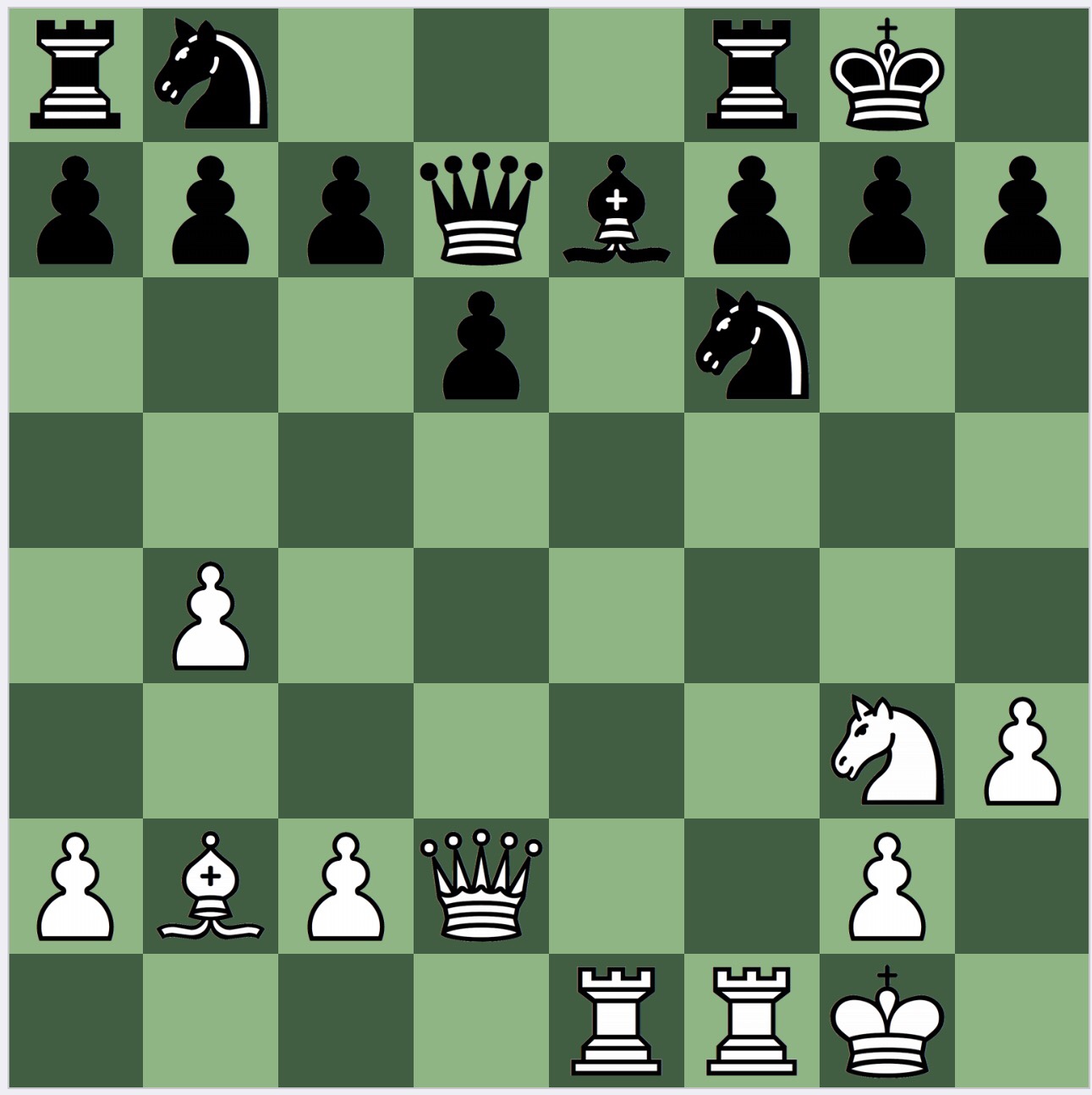
Hartlaub v Walle, Bremen 1923
I gave the solution, as in the book, 1 Re7 Qe7 2 Rf6 gf 3 Nf5 Qe4 4 Qg5+!! 1-0. The book also gives the alternative line 3…Qe6 4 Qf4 Kh8 5 Qh6 1-0).
Alas, something is wrong. Stockfish, the iPad app I use for posting the diagrams, immediately flashed up 1 Nf5! with a +5 assessment; giving only a +2 assessment to 1 Re7, and swinging to a -4 assessment after 2 Rf6?.
Once I saw the assessment, I looked to understand the position after 3…Qe6. It immediately became clear that 4…Rd8! gives Black's king sufficient luft: there is no mate or N fork after 4 Qg4+ Kf8 5 Qg7+ Ke8[].
Instead, better, after 1 Re7 Qe7 is 2 Bf6! gf[] 3 Nf5 so that after 3…Qe4 or 3…Qe6 White plays 4 Qh6 and mates unless Black plays 4…Qf5 5 Rf5, after which White has an easy win in the endgame.
But best of all, simply play 1 Nf5 and after say 1…Nc6 (to defend the Be7 and develop) 2 Qg5 is overwhelming. Black loses a piece after 2…g6 (or, in fact, it is mate in 6, per my engine: 3 Nh6+ Kg7[] 4 Re7! etc).
So the problem isn't cooked, but the solution was, but the spoiler was well hidden.
 allanbeardsworth