A break from the daily mate puzzle from the book I am presently working through.
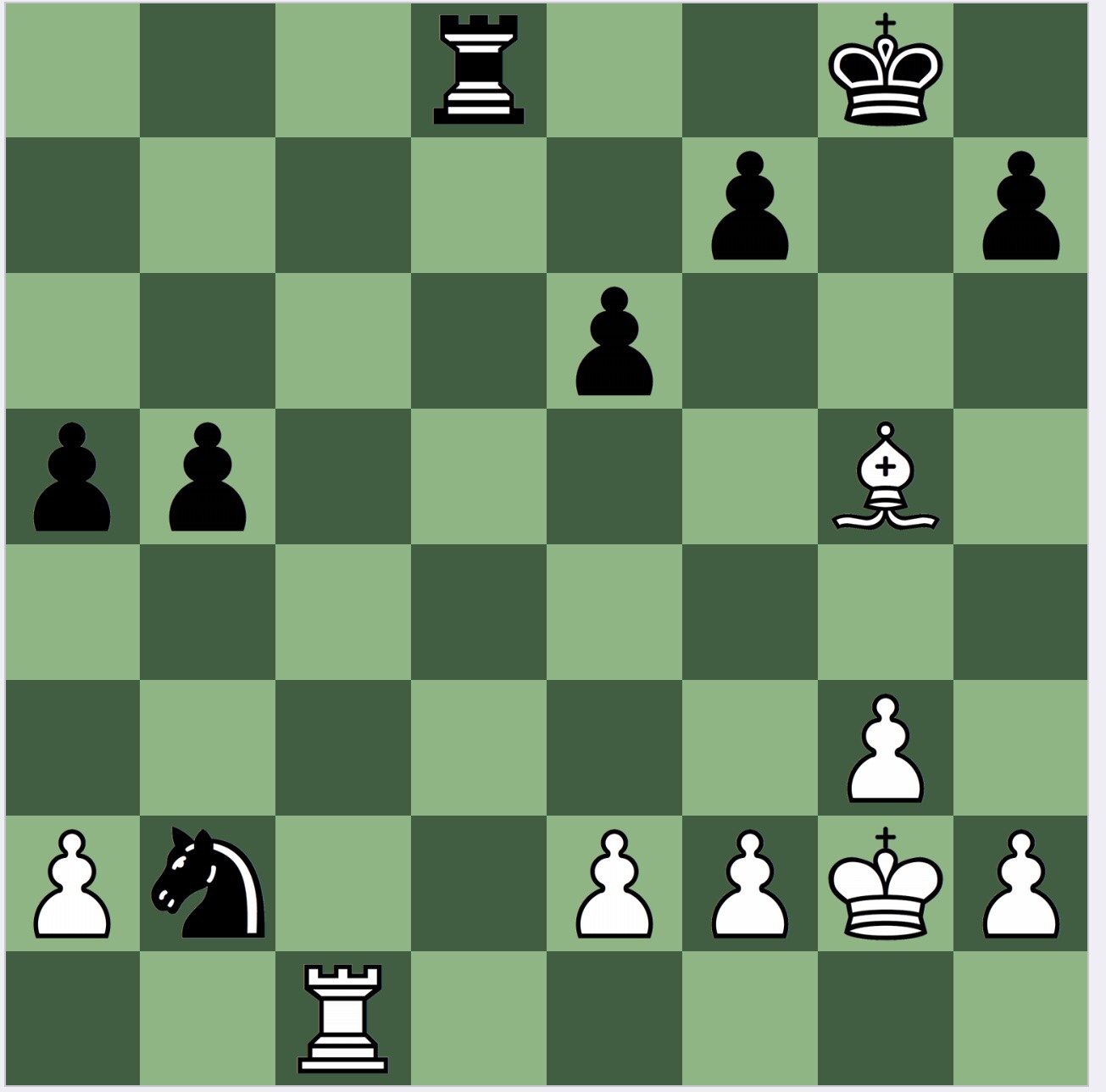
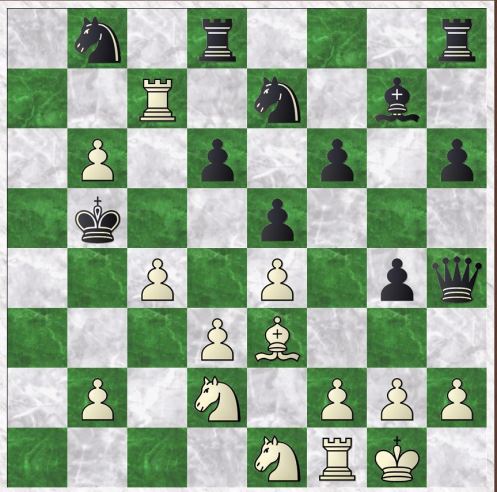
Wei Yi v Anand, Leon 2016.
The game continued 1…Rd1 2 Rc7 Kg7 3 Rb7 Rd5.
What did these two great players miss?
Solution
This took longer than it should. I saw the actual missed line more or less immediately, but mentally ruled it out, by not considering properly the line, evaluating it, ruling it out, on instinct and not calculation.
Instead I tried hard to mate Black, knowing it seemed forelorn, and/or finding a way to get B checking on the a1-h8 diagonal to pick up the LPDO Nb2: again, ignoring my senses that this too was forelorn.
So, eventually, back to calculation, and rather than 2Rc7?, White should have exchanged. 1 Rd1 Nd1[] 2 Bf6 threatens to capture the N, so 2…b4 is forced. 3 Kf1 Kf8 4 Ke1 Nc3[] 5 Bc3 bc[] 6 Kd1 Ke7 7 Kc2
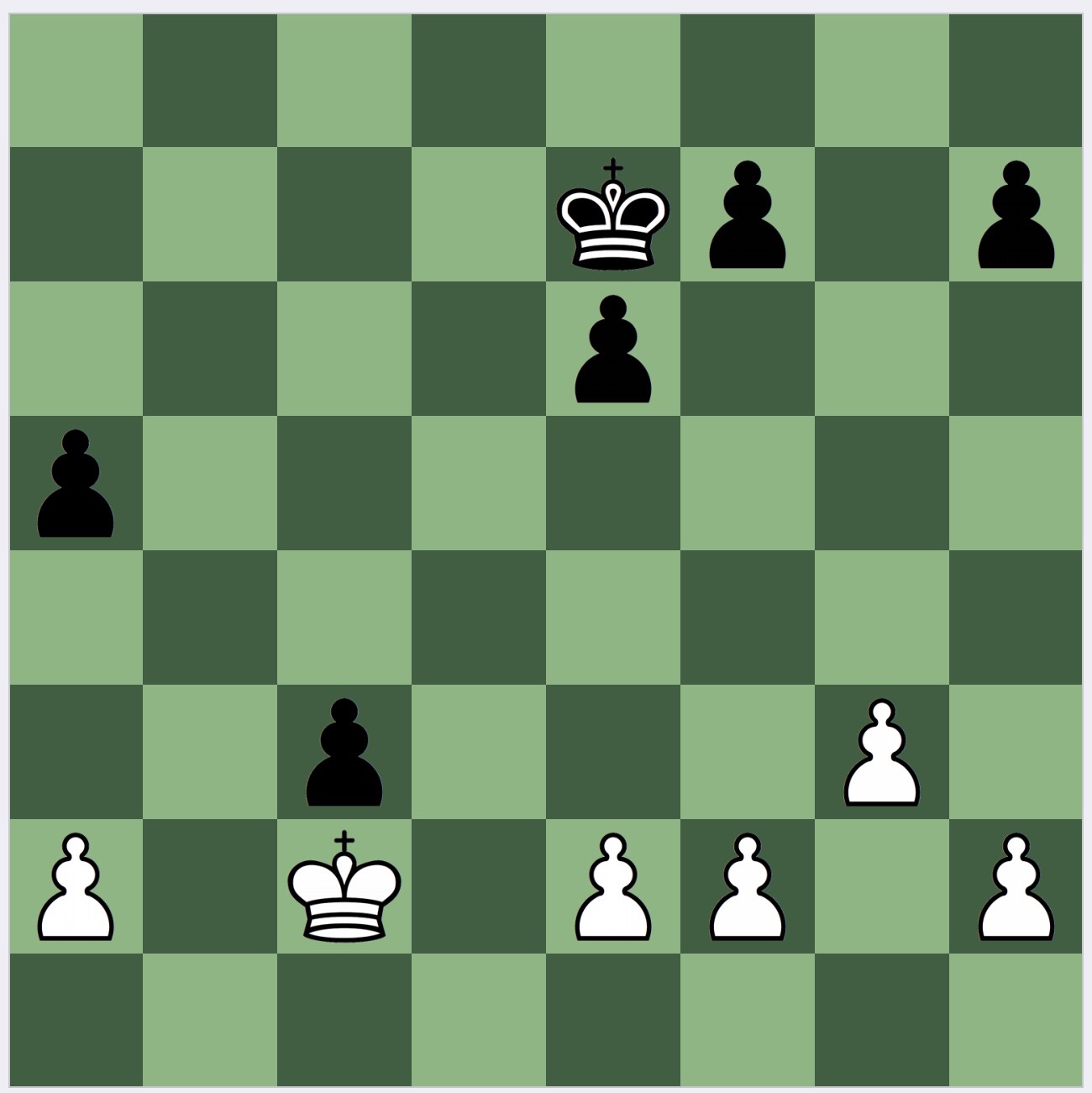
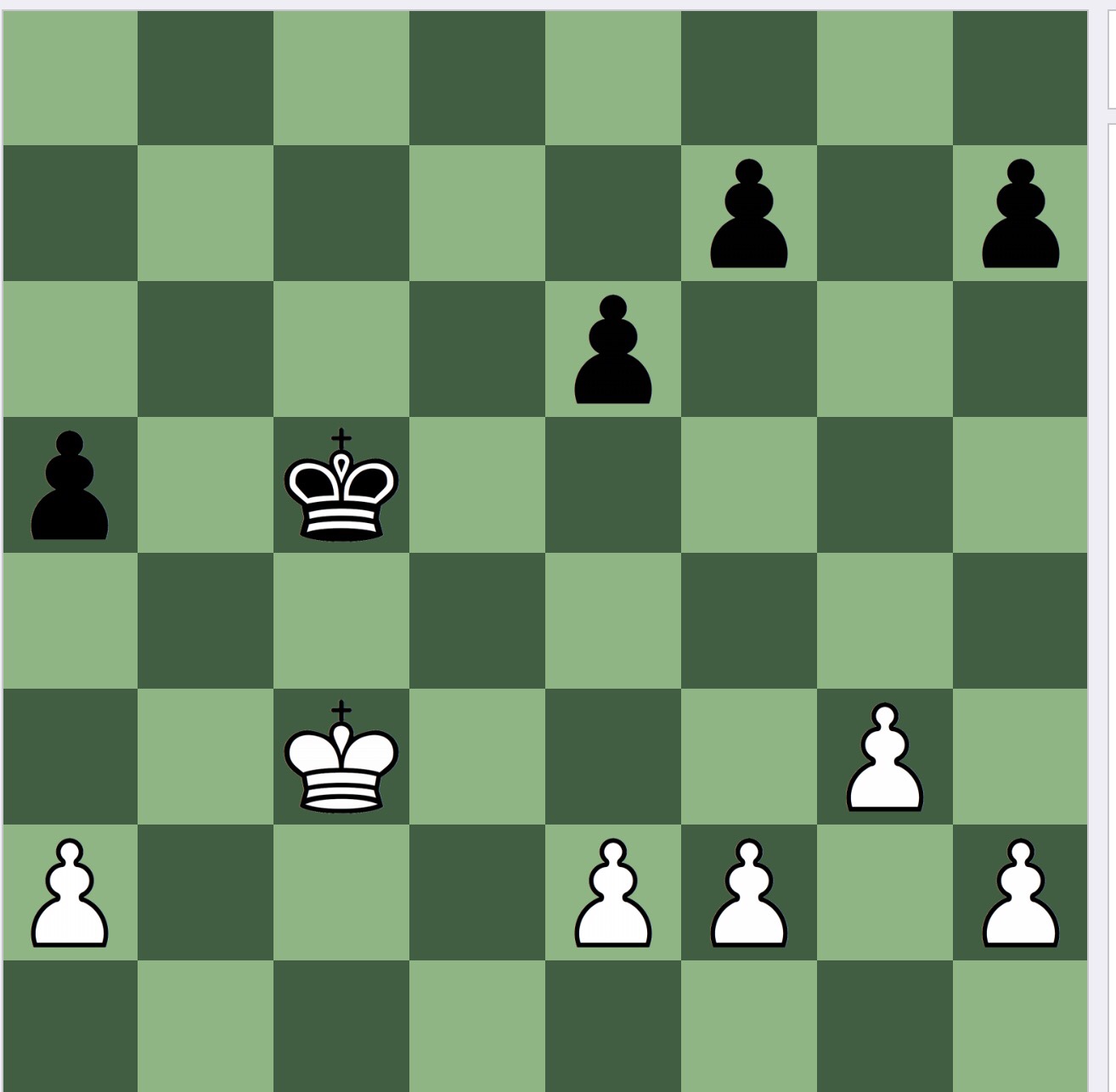
7…Kd6 8 Kc3 Kc5 was the horizon of my vision, and I could only evaluate this position as 'probably better for white'.
(h/t to Leonard Barden, who gave this puzzle in his chess column in the Financial Times, 25/6/15)
 Posted with Blogsy
Another puzzle from Dragoslav Andric’s 1981 book “Matni Udar”.
White to play and win
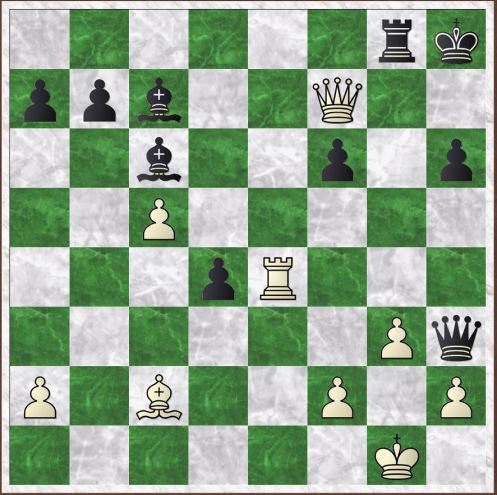
Wagenheim v Yanzelis, 1898
Solution
Easy today: 1 Qh7+, 2 Rd7+, 3 Rh7 mate.
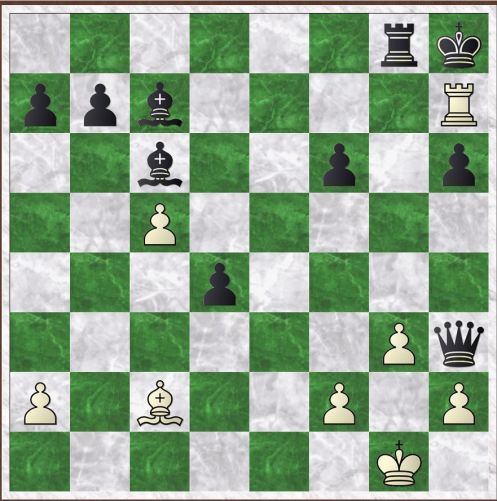
Another puzzle from Dragoslav Andric’s 1981 book “Matni Udar”.
Black to play and mate White
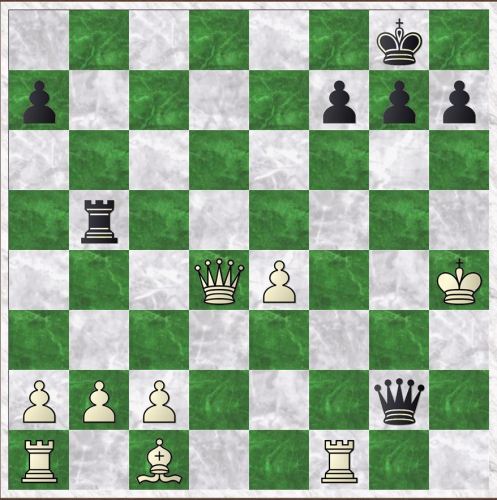
Zambelly v Maroczy, 1897
Solution
Not too hard, especially since I have seen the motif- the netting of Black’s King: 1…Rh5+! 2 Kh5[] Qh3+ 3 Kg5[]
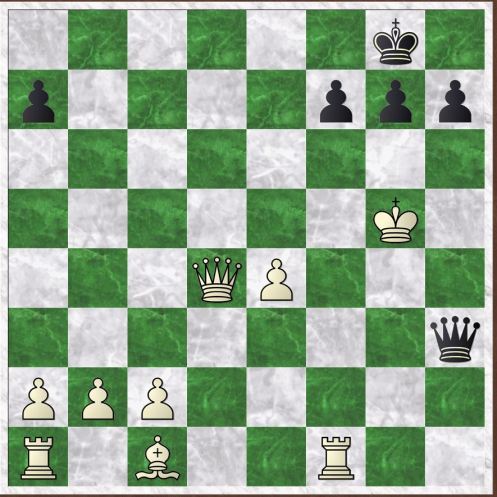
3…h6+ 4 Kf4 g5+ 5 Ke5[] Qe6 mate.
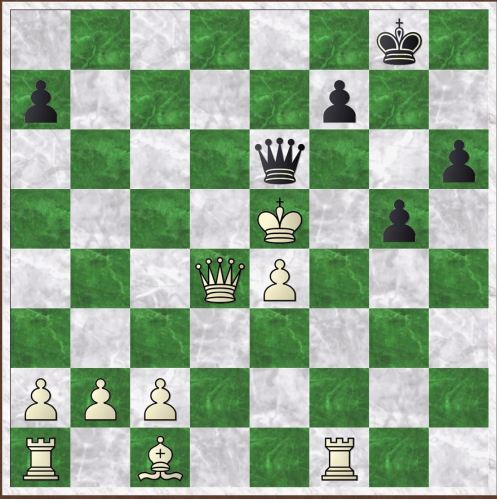
Another puzzle from Dragoslav Andric’s 1981 book “Matni Udar”.
Black to play and mate White
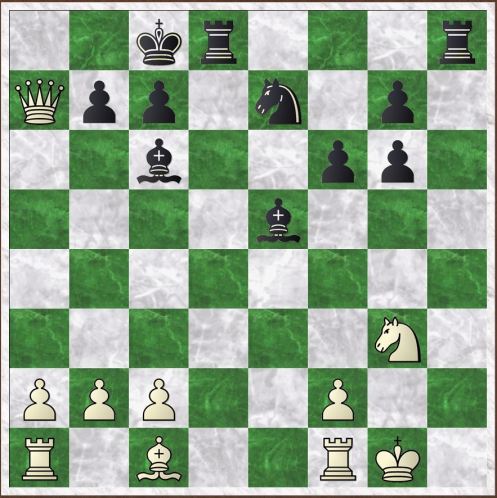
Schiffers v Chigorin, Berlin 1897
Solution
Due to the quality of the printing of the book (the production quality isn’t great, with the boards and pieces not being very sharp, at least for my half century old eyes) I missed for a while that Chigorin was a Q down. When I realised this, I realised that a straightforward 1…Nf5 can’t be sufficient, and forcing moves had to be used.
So I looked afresh at my first thought, 1…Rh1+, and this time found (2 Kh1[] ) 2…Bh2+! when it isn’t too hard:
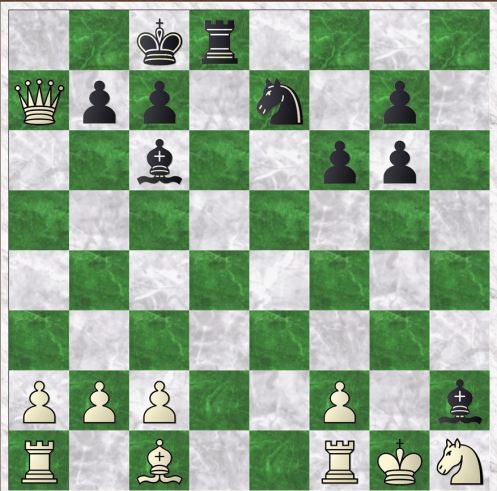
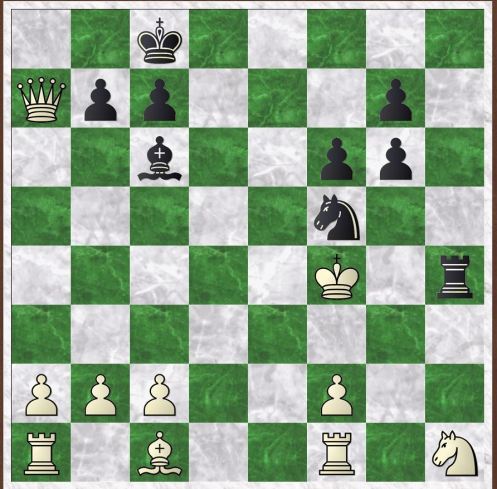
3 Kh2[] Rh8+ 4 Kg3 (4 Kg1 Rh1mate) Nf5+ 5 Kf4 (or 5Kg4) 5…Rh4 mate.
Another puzzle from Dragoslav Andric’s 1981 book “Matni Udar”.
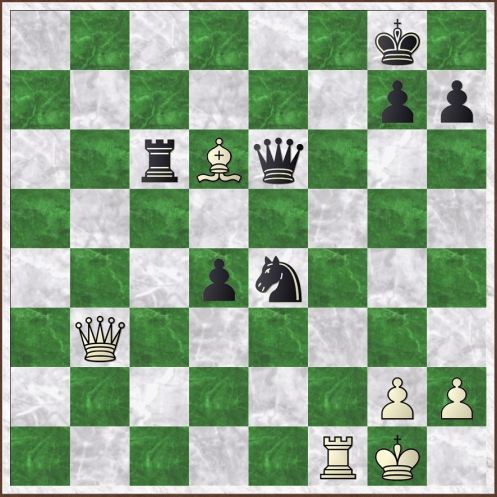
White to play and mate Black
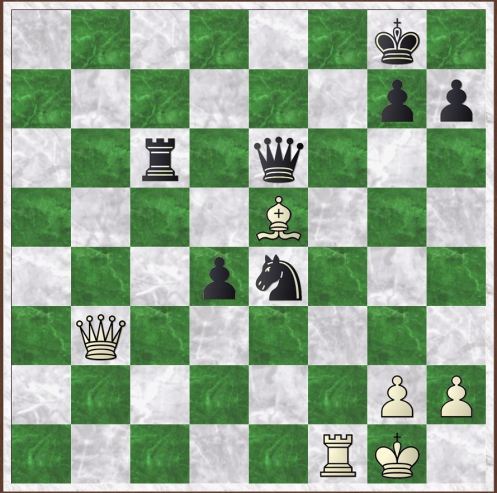
B Lasker v Kagan, Berlin 1894
Solution
1 Bd6! is a nice disrupting move, breaking Black’s coordination.
If 1…Qb3, 2 Rf8 mate;
If 1….Rd6 2 Qb8+ and mate in a move or two;
If 1….Nd6 2 Qe8+ and mate next move.
Another puzzle from Dragoslav Andric’s 1981 book “Matni Udar”.
White to play and mate Black
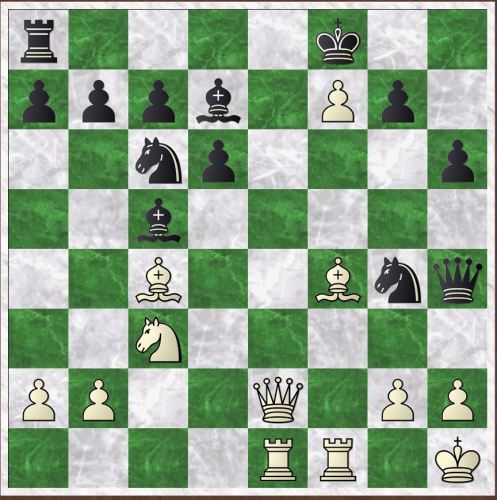
Charousek v Wollner, Kosice 1893
Solution
Not too hard today, and a fairly standard theme.
1 Qd8+ Re8 2 ed+ Be8 3 Bd6 mate.
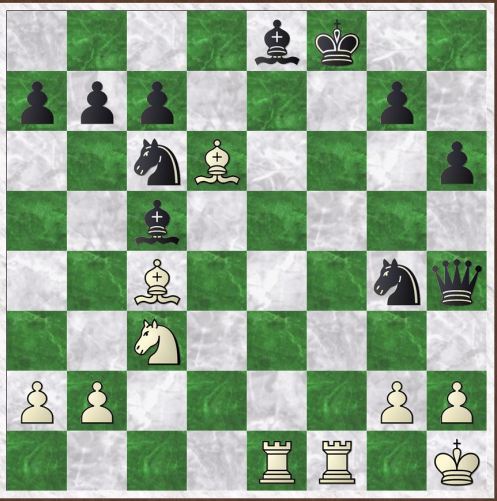
Another puzzle from Dragoslav Andric’s 1981 book “Matni Udar”.
White to play and mate; and find the cook
(The book gives a mating line, but there is a problem with it; try to find the mating line, and the cook; and find a better, winning not mating, line for White).

Tallantyre v Liddelel, Newcastle 1893
Solution
In a game, I would without a doubt play 1 Bc4!, which the engine says is the best move. In Purdy terms, the Knight is tied to blocking the e file (1…Nc4?? 2 e8(Q)+)?
Knowing that the book is all about mates, I tried to make something else work: 1 Re5 de 2 Rf8+ Rf8, but I couldn’t make it work: 3 Bc4+ Kg7 and then what?
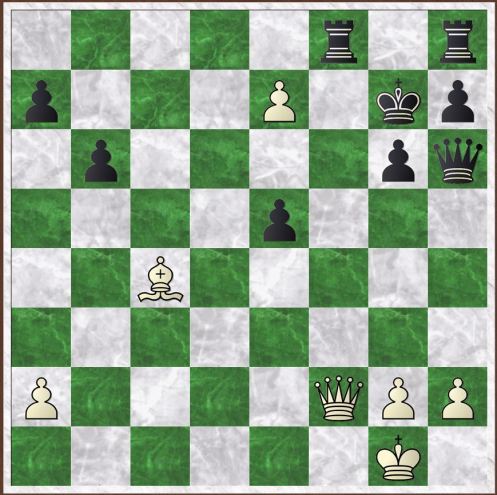
But 4 e8(N)+!! is very pretty: 4….Re8 5 Qf7 mate.
However, 2…Qf8! is considerably better:
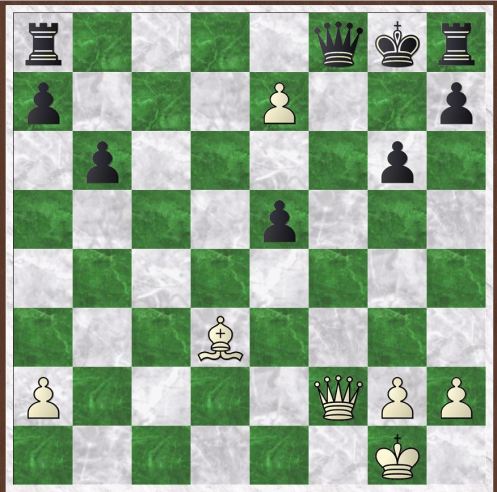
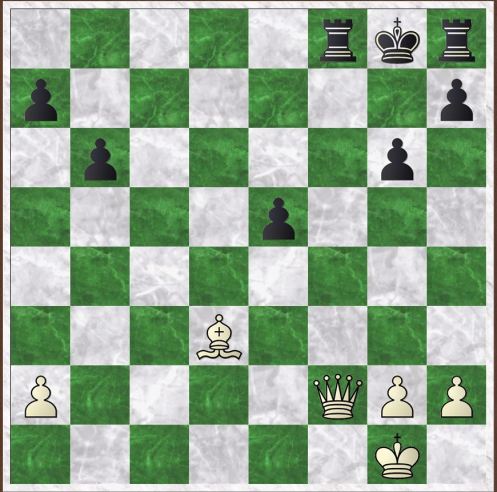
Black creates luft at h6. After 3 ef+ Rf8 White is probably better, with Q+B v RR plus 2 extra pawns, but a win is not a forgone conclusion. My acid test~: would I win the position below against Carlsen? Possibly, but possibly not.
Another puzzle from Dragoslav Andric’s 1981 book “Matni Udar”.
White to play and mate Black
(i) find the move which White played, and the book gives as a solution; but
(ii) find the cook;
but, don’t spend too much time, because “more or less anything wins”
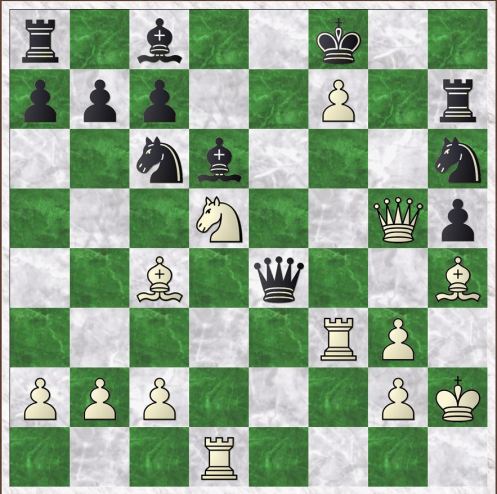
Sorensen v Wagner, Rim 1893
Solution
I tried 1 Qg8+!, knowing it is a 19th century move: but it draws: 1 …Ng8 2 fg(Q)+ Kg8[] 3 Ne7+ Kg7 4 Rf7+ Kh6 and perpetual by Rf6+/Rf7+ is all that can be achieved.
I therefore just brought a piece up, 1 Nf6, and White is dominant: but no mate.
The (cooked) solution is 1 Re1, diverting the Q from g6: 1…Qe1 2 Qg8+ Ng8 4 fg(Q)+
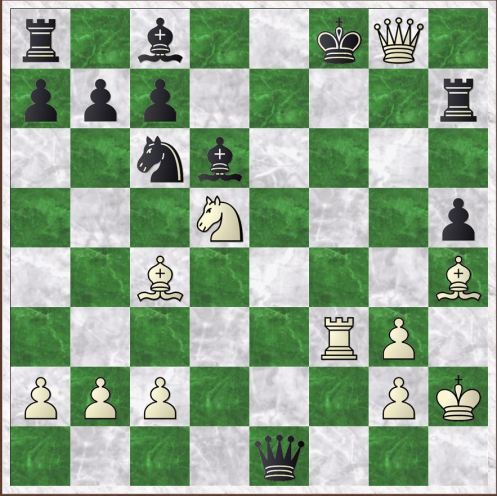
4…Kg8 5 Ne7+ Kg7 6 Rf7+ Kh6 6 Rf6+
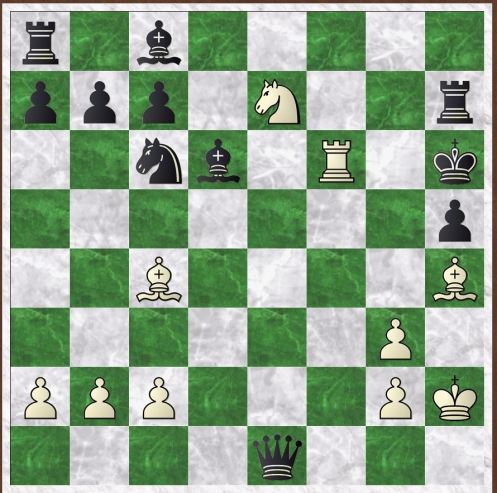
6…Kg7 (all as in the line without 1 Re1) but now 7 Rg6+ (there is no Qe4*g6) wins
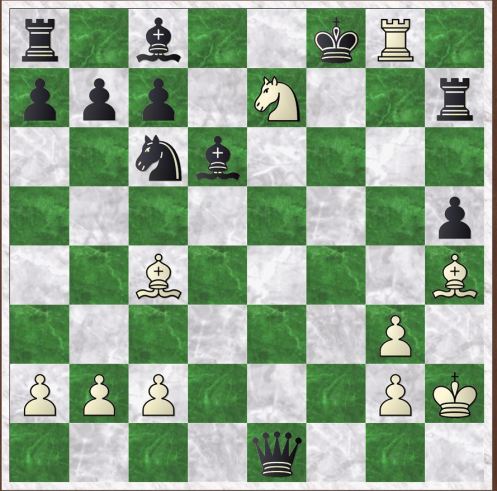
7…Kf8 8 Rg8 mate.
Cook
But the simple 1…Ng4+ is perpetual: Kh3/Kh2; Nf2/Ng4. White can’t play Kh1 because of Qe1+.
Another puzzle from Dragoslav Andric’s 1981 book “Matni Udar”. Starting today, I am changing the “…to play and..” to “…mate” since it appears all the problems in this book end in mate. If that changes, as I get further into the book, I will revert back.
White to play and mate Black
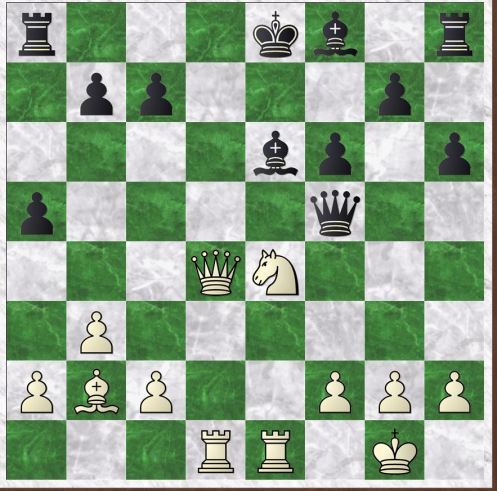
Pollock v Konzultanti 1893
(presumably “Konzultanti” means consulting amateurs)
Solution
Pretty, though so picturesque I wonder if it is “made up”.
1 Qd7+! Bd7[] 2 Nd6+
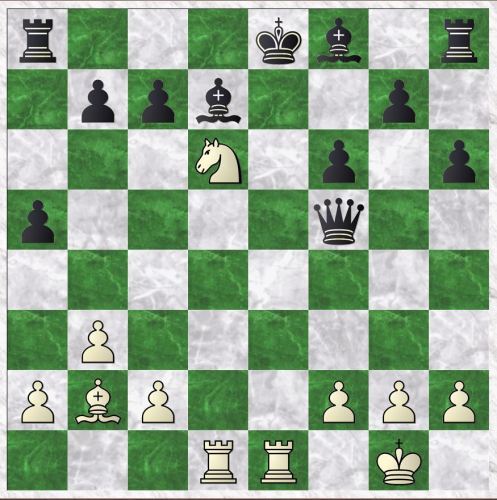
2…Kd8[] 3 Nf7+ Kc8[] 4 Re8+
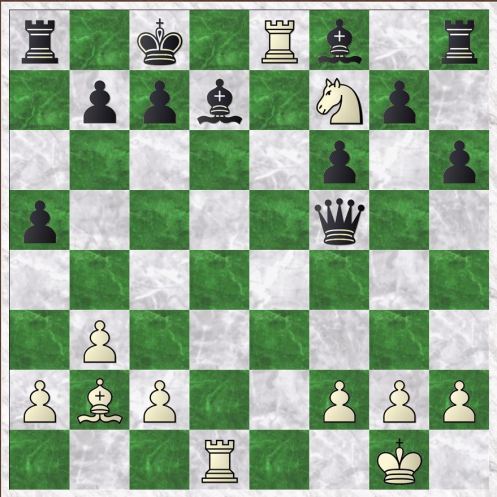
4…Be8[] 5 Rd8 mate.
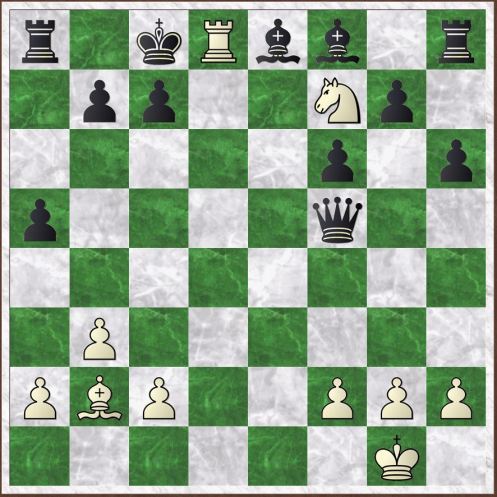
Another puzzle from Dragoslav Andric’s 1981 book “Matni Udar”.
White to play and win
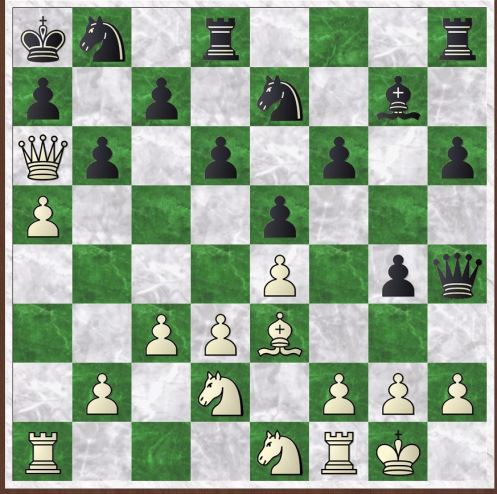
Janowski v Amstmann, Paris 1892
Solution
First moves easy: 1 Qa7+! Ka7[] 2 ab+ Kb7[] 3 Ra7+.
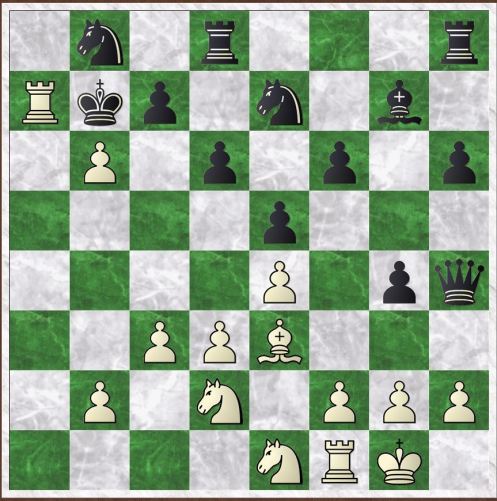
Now, 3…Kc8 4 Rc7 mate, so 3….Kc6[], met again by 4 Rc7+ Kb5[]. Visualising this position sufficiently well to ensure there was a mate was hard for me, but after not too long I saw ‘just keep on checking’: 5 c4+
Kb4 6 Nc2+ forces the King to the a line, when 7 Ra1 is mate.
 allanbeardsworth