For the next couple of weeks, I shall, for a change, pick the top puzzles from the book I have just finished, Teschner and Miles’ “It’s Your Move”.
Loyal readers who have followed by blog for the last 345 days will have seen the puzzles. For new readers, or those who only dip in on occasion, many will be new. For my loyal readers, there isn’t much harm, and arguably some good in repetition, especially since my selection will be the hardest and prettiest puzzles: did you solve them last time?; if so, did you solve the puzzle faster this time.
In about a fortnight I will start my next series, based on a different puzzle book, which I am presently choosing. It will, as is my preference, be an old book, from the pre-computer checked era.
Today’s puzzle is here.
Enjoy!
For the next couple of weeks, I shall, for a change, pick the top puzzles from the book I have just finished, Teschner and Miles’ “It’s Your Move”.
Loyal readers who have followed by blog for the last 345 days will have seen the puzzles. For new readers, or those who only dip in on occasion, many will be new. For my loyal readers, there isn’t much harm, and arguably some good in repetition, especially since my selection will be the hardest and prettiest puzzles: did you solve them last time?; if so, did you solve the puzzle faster this time.
In about a fortnight I will start my next series, based on a different puzzle book, which I am presently choosing. It will, as is my preference, be an old book, from the pre-computer checked era.
Today’s puzzle is here.
Enjoy!
For the next couple of weeks, I shall, for a change, pick the top puzzles from the book I have just finished, Teschner and Miles’ “It’s Your Move”.
Loyal readers who have followed by blog for the last 345 days will have seen the puzzles. For new readers, or those who only dip in on occasion, many will be new. For my loyal readers, there isn’t much harm, and arguably some good in repetition, especially since my selection will be the hardest and prettiest puzzles: did you solve them last time?; if so, did you solve the puzzle faster this time.
In about a fortnight I will start my next series, based on a different puzzle book, which I am presently choosing. It will, as is my preference, be an old book, from the pre-computer checked era.
Today’s puzzle is here.
Enjoy!
For the next couple of weeks, I shall, for a change, pick the top puzzles from the book I have just finished, Teschner and Miles’ “It’s Your Move”.
Loyal readers who have followed by blog for the last 345 days will have seen the puzzles. For new readers, or those who only dip in on occasion, many will be new. For my loyal readers, there isn’t much harm, and arguably some good in repetition, especially since my selection will be the hardest and prettiest puzzles: did you solve them last time?; if so, did you solve the puzzle faster this time.
In about a fortnight I will start my next series, based on a different puzzle book, which I am presently choosing. It will, as is my preference, be an old book, from the pre-computer checked era.
Today’s puzzle is here.
Enjoy!
White to play and win
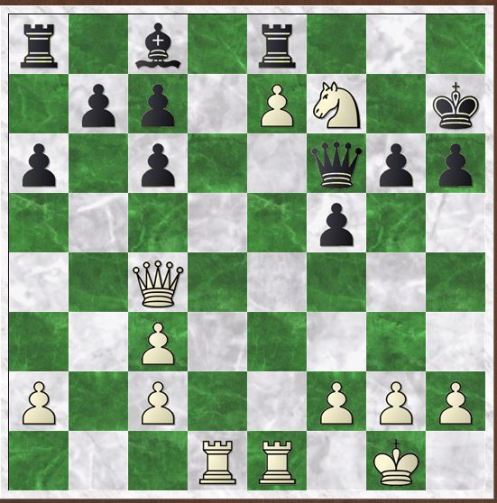
Mestel v Ball, Birmingham 1975
Solution
A nice piece of calculation, which was pleasing to see through to the end. 1 Rd8 Re7 2 Ng5+
(where, in the game, Black resigned), seeing:
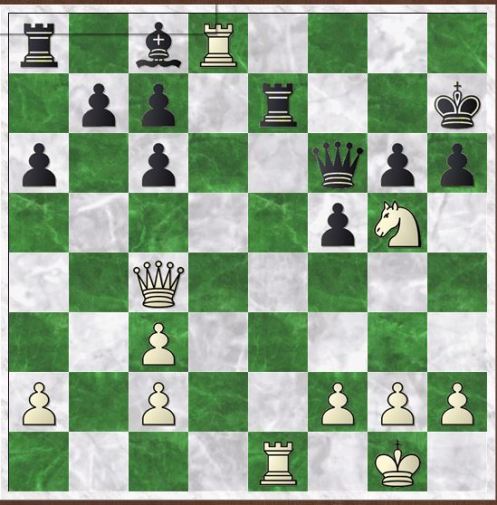
2…hg 3 Qg8+ Kh6[] 4 Re7+ Qe7[] 5 Qh8+ Qh7[] 6 Qf6!
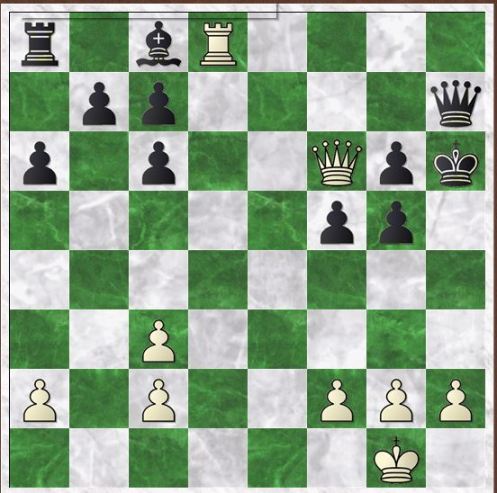
and Black can’t prevent a subsequent Rh8. Very nice, and a pleasing finish to Teschner and Miles’ puzzle book.
White to play and win
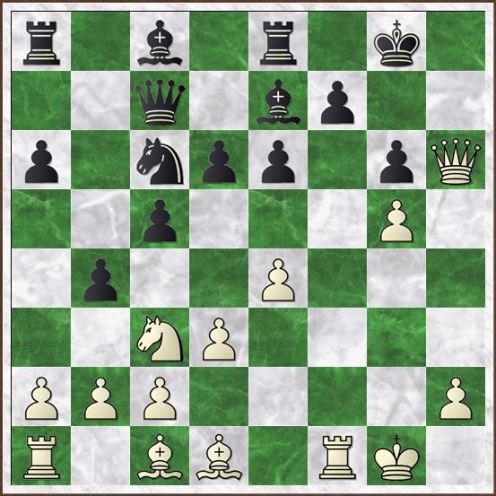
Radic v Ahrend, Bamberg 1973
Solution
I failed with this puzzle. Of course I saw 1 Rf7! but I couldn’t see more than a draw after 1…Kf7
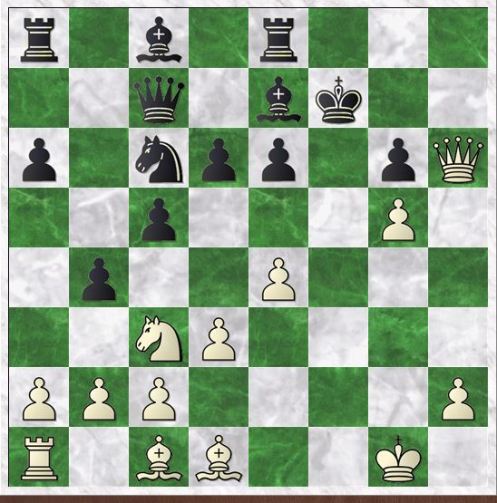
I would have chickened out and given a perpetual. In fact, White wins by 2 Qh7+ Kf8
3 Bh5! which is of course a line I looked at, but couldn’t see to its conclusion.
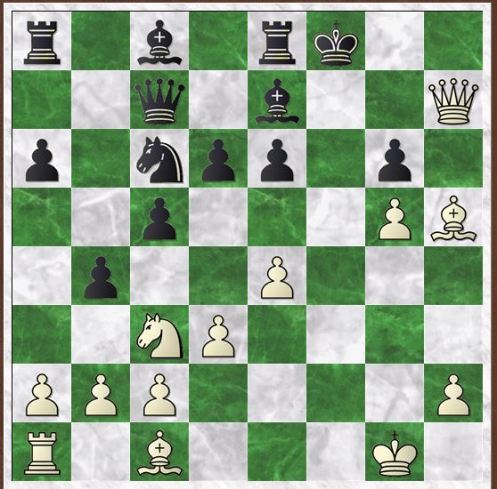
If I had thought more clearly, may be I would have seen it: 3..Ne5 4 Be3 is good enough, with White’s rook joining the party next move. 4…Bd8 5 Rf1+ Nf7 6 Bg6 1-0.
Black’s better defence is 3…Bd8 but Fritz says it is mate in 13 after 4 Qh8+ Kf7[] 5 Bg6+
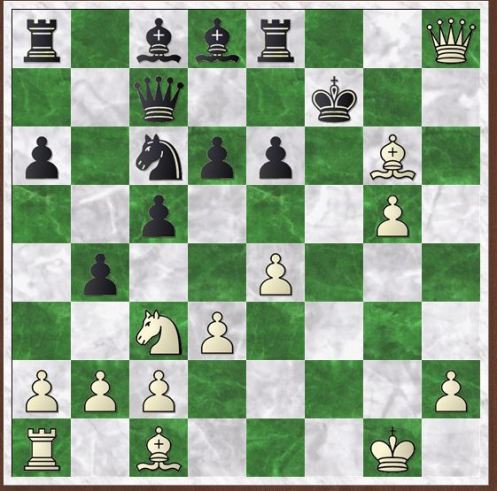
which happened in the game. 5…Kg6 6 Qh6+ Kf7[] 7 Qh7+! Kf8[] 8 Qh8+! Kf7
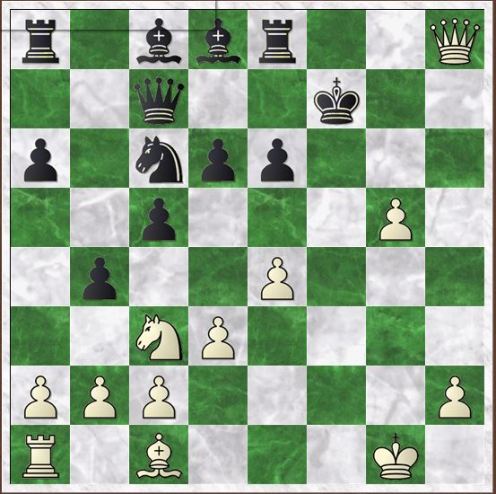
9 g6+! Kg6[] 10 Qh6+!! Kf7 11 Qh7+! Kf6 (11..Kf8 12 Bh6+ etc) 12 e5+!
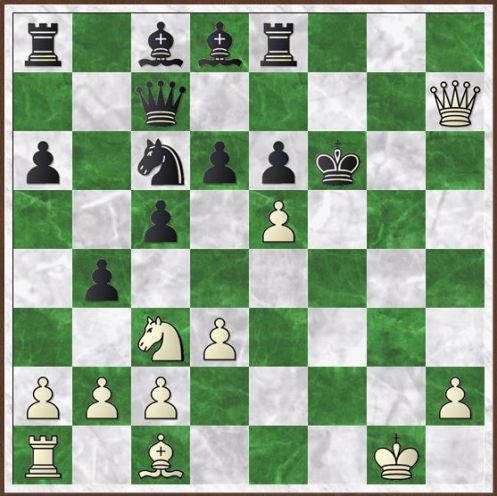
12…Ke5 13 Bf4+!! Kf4[] 14 Rf1+ and the rook joins the party.
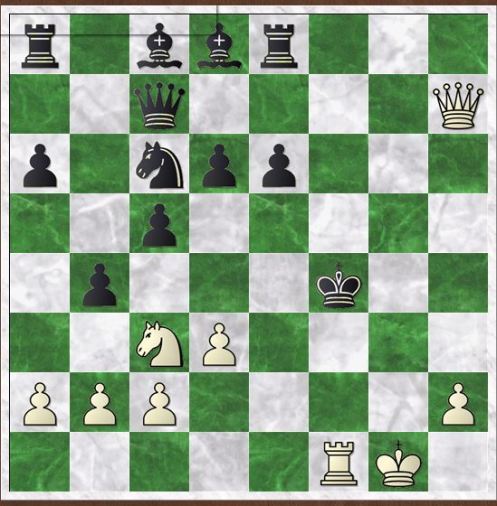
14..Kg4 (14..Kg5 15 Ne4+) 15 h3+! and wherever the King moves, 16 Ne4 move. In the game, all this was played, Black resigning after 15 h3+.
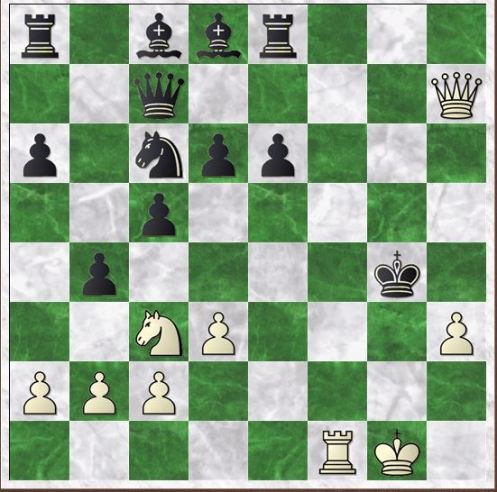
Wonderful. And perhaps, in a game, I would have seen it, since at many stages White had the luxury of being able to bale out with a perpetual.
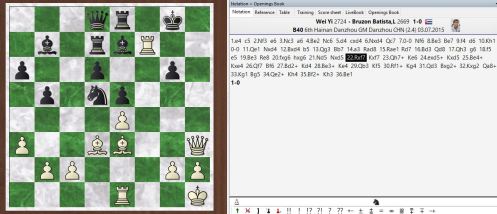
The game of course has echoes of Wei Yi v Bruzon:
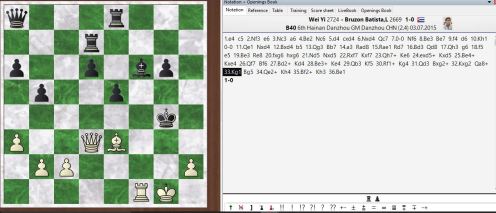
Black to play and win
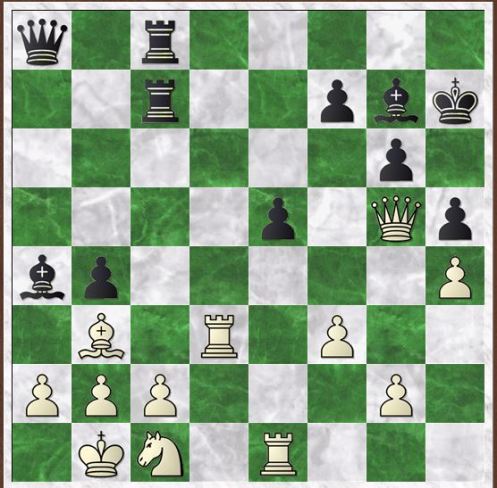
Haag v Miles, Birmingham 1975
Solution
Black’s first move is easy, almost a free move: 1…e4! is bound to be good, opening up his fianchettoed bishop in return for a mere pawn. Then 2 fe Rc2
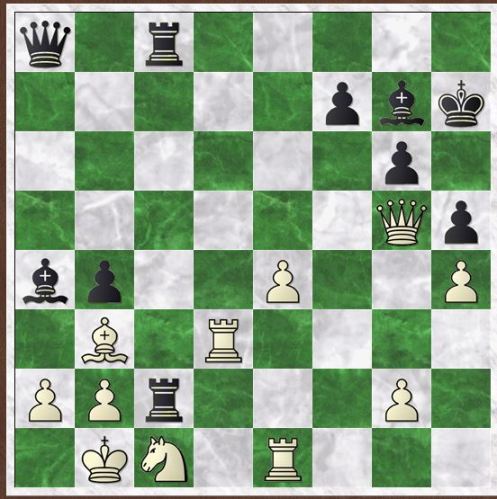
3 Bc2[] Bc2+ 4 Ka1 Bd3 5 Nd3[] and 5…b3 0-1
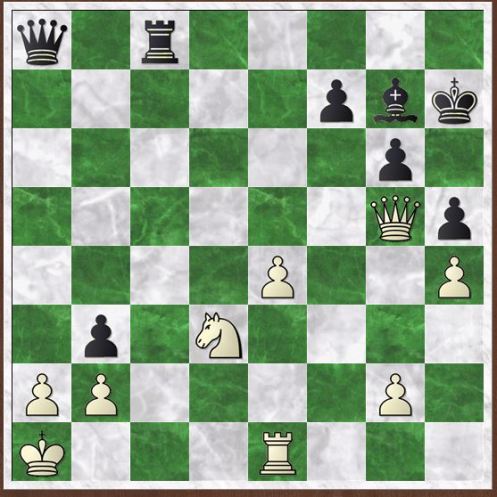
White to play and win
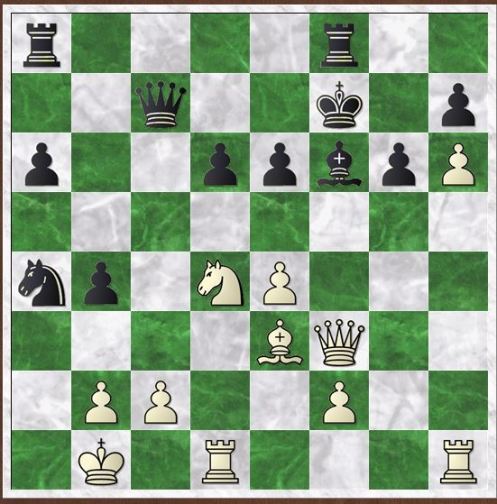
Planinc v Belyavsky, Hastings 1974-75
Solution
The next day after yesterday’s puzzle, Planinc had another striking finish.
Here, not too hard, at least to play some forcing moves. The evaluation of the resultant position was harder for me to judge, but I could solve the puzzle to the extent of knowing what White’s best line was (even if I couldn’t see how strong the end position was).
1 e5! de[] 2 Ne6! Ke6

3 Qg4+! (! because from g4, rather than d5, it hits the Pb4/ Na4)
3..Ke7[] (3…Kd7? 4 Rd7+) 4 Qb4+ Kf7 5 Qb3+! forcing the King back into the centre) Ke7 6 Qa4.
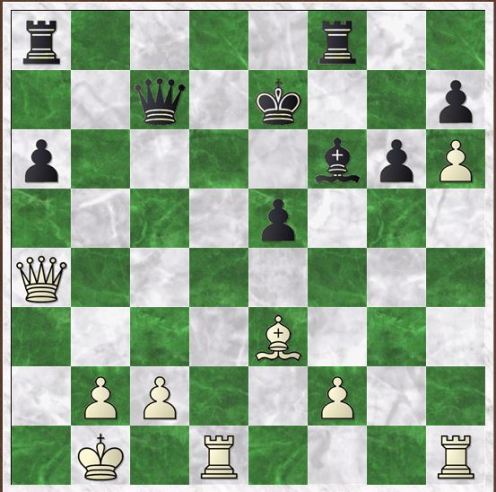
And White is better: Black’s king is more exposed, and if e.g. Black sacs his e5 pawn (e5-e4) then the effect is to open up his king as much as White’s.
Black to play and win
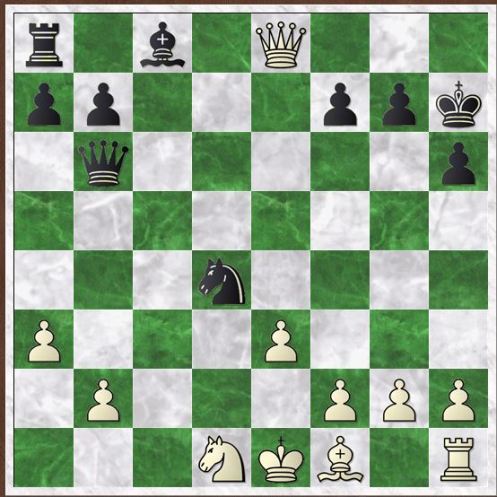
Vaganian – Planinc, Hastings 1974
Solution
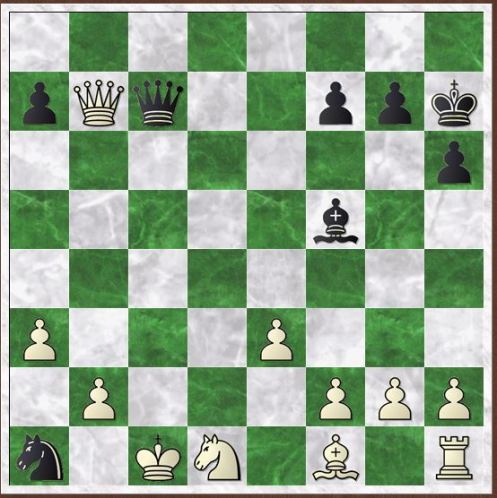
In a game, I am not sure what I would have played, but since it is a puzzle -and since I vaguely recall the denouement – I probably saw the game in BCM in my teens- 1..Nc2+ 2 Kd2[] (2 Ken?? Bg4+ discovers on the Qe8) 2…Bf5
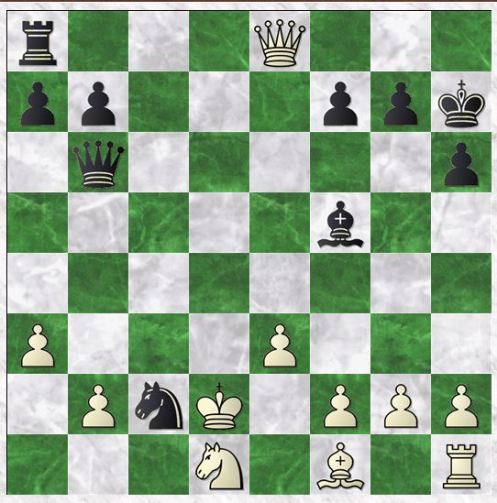
3 Qa8 Qd6+ 4 Kc1 4…Na1!
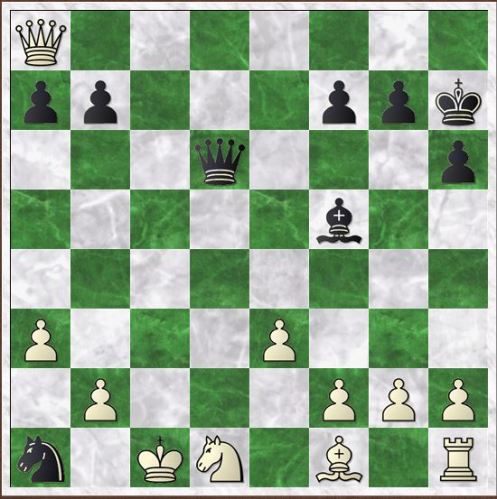
and if 5 Qb7 then 5…Qc7+ is a nice deflection (6 Qc7 Nb3 mate).
White to play and win
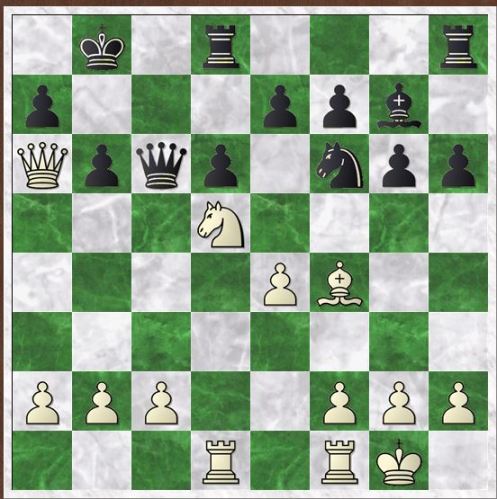
Miles-Basman, Hastings 1974
Solution
Oh dear. I spent many sittings trying to solve the position in the book, without success: the B was on g5, where nothing works.
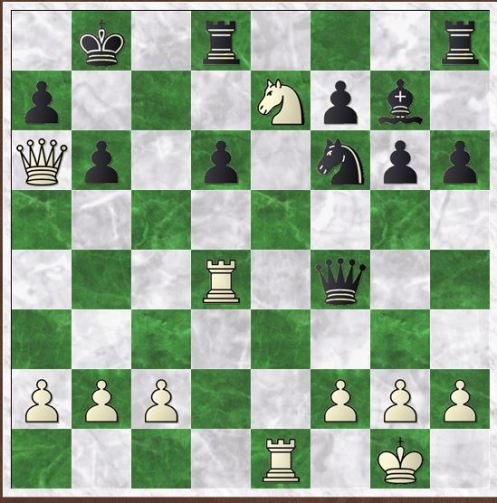
In fact, in the game, Tony had just played Bg5-f4+, met by d7-d6. so the B is on f4 as I have shown, and 1 Ne7! is fairly straightforward: 1…Qe4 2 Rfe1 Qf4 3 Rd4! (poisoned- 3…Qd4 4 Nc6+ forks king, queen and rook) 3..Qg5 4 Rc4 and mates.
 allanbeardsworth