White to play and win
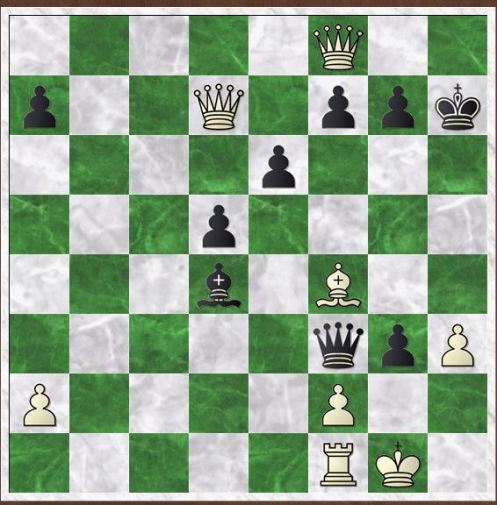
Capelan v Both, Volklingen 1970
Solution
White’s position is desperate, since he is threatened with mate. There is a perpetual after 2 Bg3, but there is better: 1 Qg8+! forces 1..Kg8 (1…Kg6 2 Qdf7mate) when 2 Qd8+! Kh7[] 3 Qh4+ gets to g3 in time.
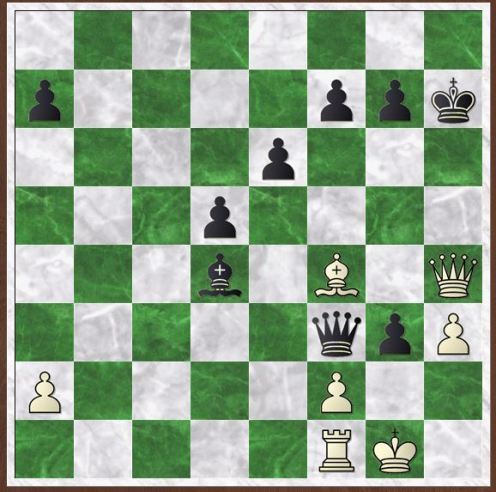
White to play and win
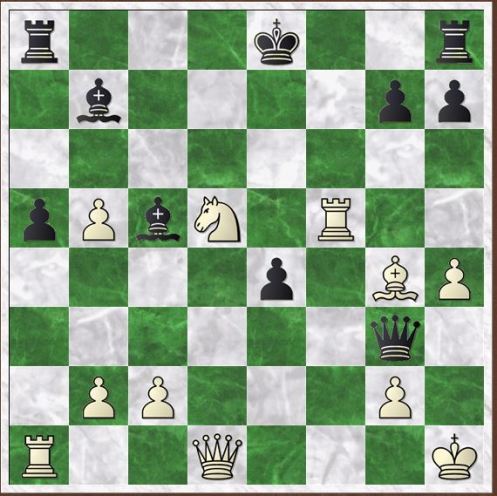
Planinc v Gerenski, Varna 1970
Solution
Examine all biffs quickly leads to 1 Nc7+! being considered.
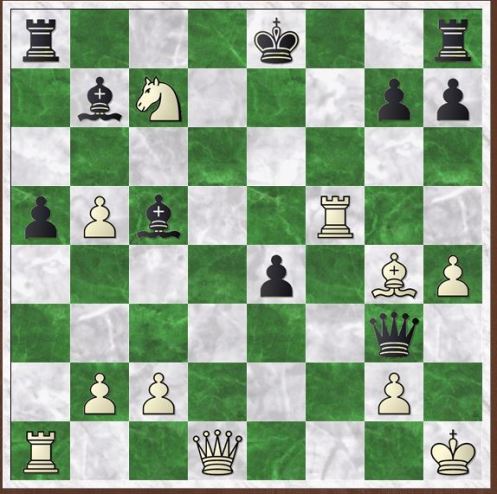
Firstly, considering the capture 1…Qc7: 2 Rc5! at least restores material equality, because of 2..Qc5 3 Qd7+ Kf8[] 4 Rf1+ 1-0; but it is stronger than that, since 2…Qe7 is met with 3 Re5! with the same motif.
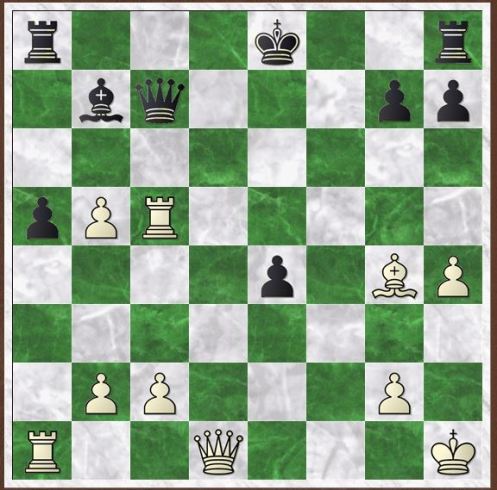
So, 1..Ke7, when 2 Rf7+! forces 2…Kf7[] 3 Qd7+ and mates.
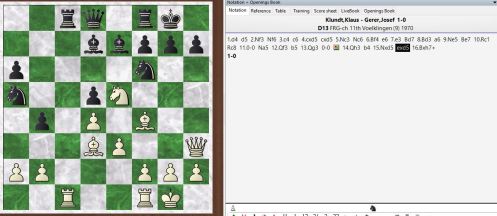
White to play and win, after 1 Qh3 b4?:

Klundt v Gerer, Volklingen 1970
Solution
Not too hard, 2 Nd5! ed and now 3 Nd7! rather than the move Megabase 2012 says White played, which gives all the advantage away.
Black to play and win
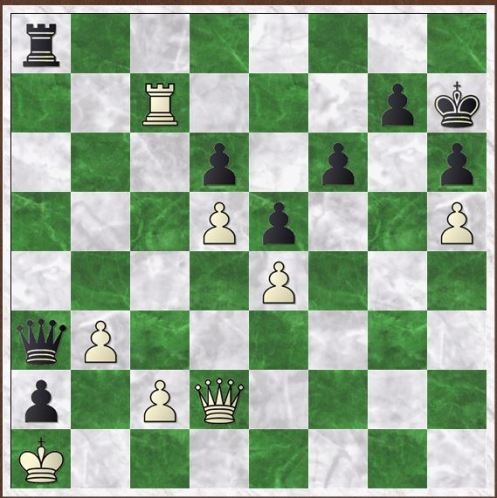
Lungwitz v Lohsse, Volklingen 1970
Solution
Easy today, though in the game, after White had played 1 Rc4-c7, he quickly offered a draw, which was accepted.
1…Qb2+ and next move 2…a1(Q) mate.

White to play and win
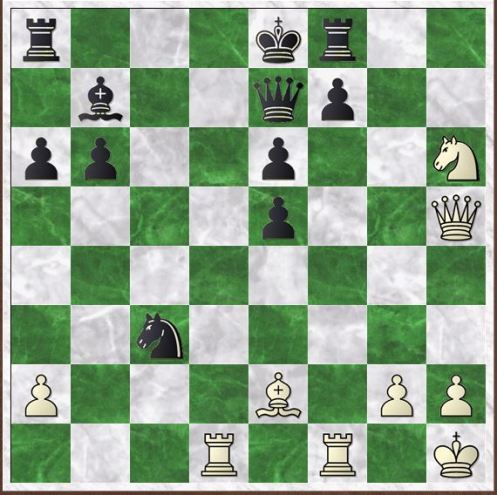
Klundt v Kestler, Volklingen 1970
Solution
For the second day running, I failed. I played 1 Rf7! thinking it was winning, but it loses; whereas 1 Nf7!! as played in game wins, but only by computer analysis.
White won in the game, because Black’s defence wasn’t the strongest, and Teschner’s analysis were human, not computer aided, so erroneous. I have posted my present analysis here.
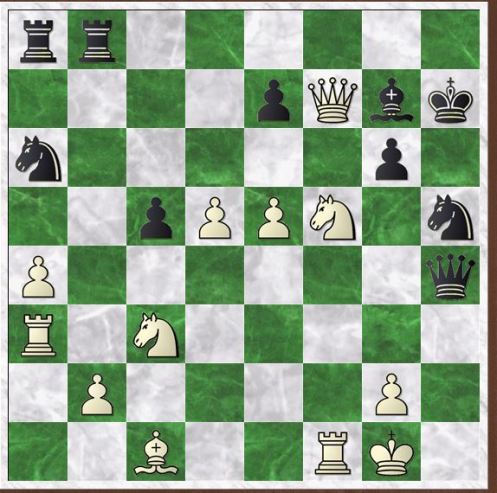
White to play and win
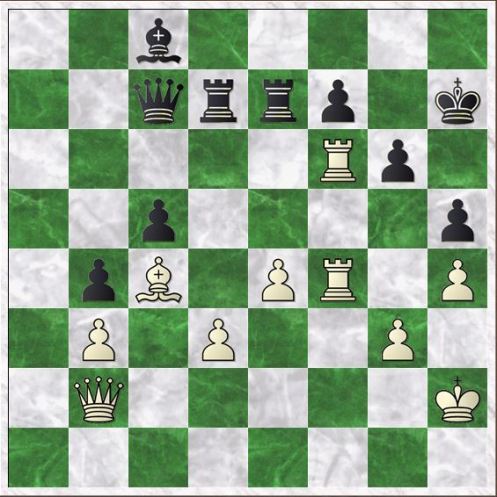
Geller- Liebert, Kapfenberg 1970
Solution
I failed with this one, missing entirely the winning move- it never even occurred to me.
Well, maybe not failed entirely, because my choice of move, 1 g4! also gets the engine’s blessing, +2; White’s can opener attack 1 g4 hg 2 h5 does indeed break through. But it is more risky, in exposing White’s King (but, as I thought, Black’s Queen is stuck, so 2…gh 3 Kg1 plans Qh2 wins) than the move Geller played: 1 R4f5!!
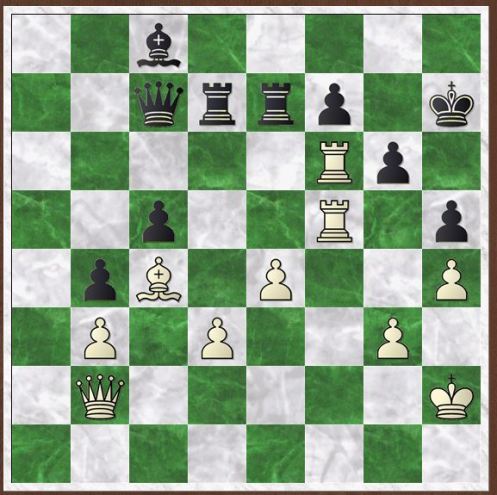
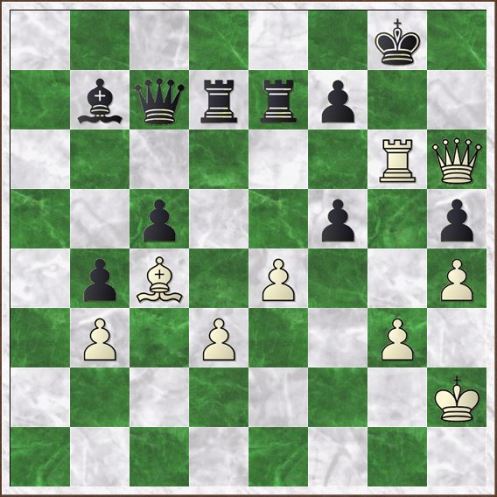
If the Rook is captured, then 2 Qc1 heads for h6l and if not, still 2 Qc1 and 3 Rh5+ gh 4 Qh6+ Kg8[] 5 Rg6mate – wonderful.
Black to play and win
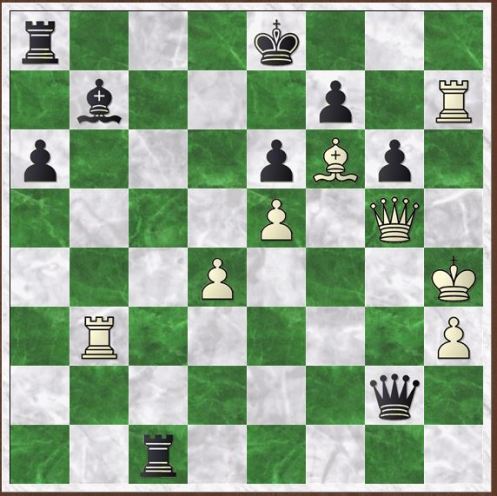
Padevsky v Polugayevsky, Kapfenberg 1970
Solution
Quite a nice problem today, especially after 1..Qe4+ 2 Qg4 g5+! discovers an attack on the LPDO Rh7 – another reminder, if one is needed, of the benefit of Purdy’s maxims.
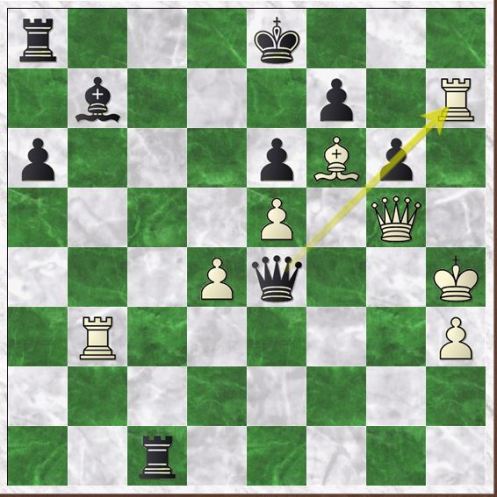
Also, if 2 Qg3, then 2…Rg1+ not only skewers king and queen, but mates after 3 Kf2 Qe1 mate, or 3 Kh2 Qh1 mate.
In the game, Polu played 1..Qf2+ and eventually lost.
Black to play and win;
and: Black actually played 1…Nc5: analyse
Solution
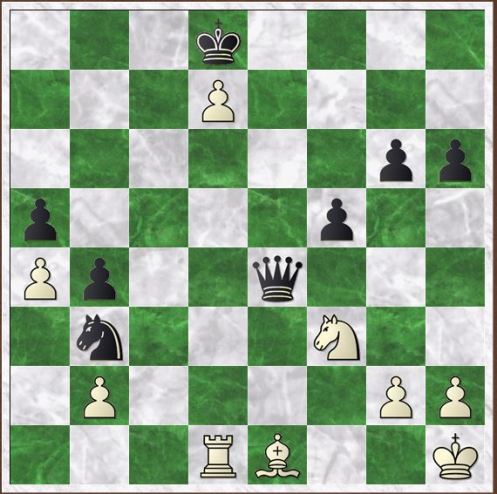
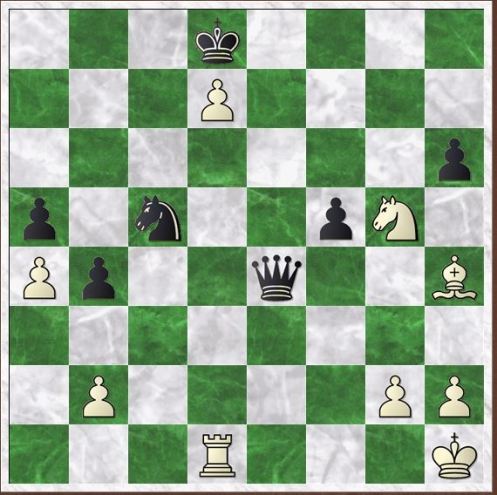
The first problem isn’t too hard: 1…Qe2 is a double attack, hitting the LPDO Rd1 and if 2 Rb1, 2…Qc2 traps it; and if 2 Rd6, 2..Qf1+ 3 Kg1 Qe1 0-1; or finally 2 Bh4+ g5 is a similar conclusive double attack.
The move played, 1…Nc5 is a blunder (and it was 41…Nc5, so perhaps the move after the time control), since 2 Bh4+ g5 3 Ng5! wins: mate or the pawn promotes.
Black has just played 1…c6; evaluate 2 c5
Karjakin v Carlsen, Tata Steel 24/1/16
Solution
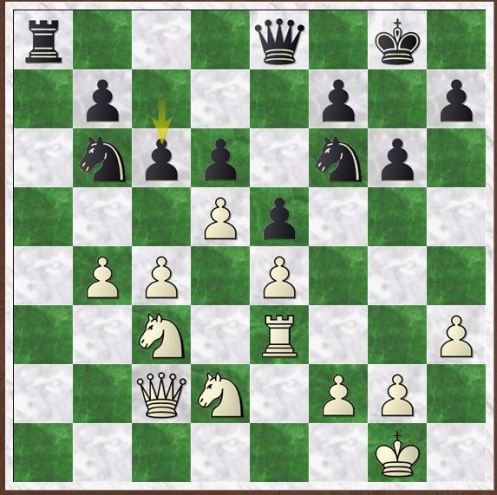
Something different today. I watched this game live; it was drawn shortly after this position- Carlsen, as so often, had the knack of drawing easily as Black. I was surrprised when he played 1…c6, but instantly saw that it was a useful simplification.
But what about 2 c5 I thought at the time? Fairly quickly I saw the neat point, Purdy’s potassium cyanide motif in a new guise, plus, in the tactics, the fact that at the end the c6 pawn hits the Nd2 therefore meaning that the LPDO Nf6 doesn’t fall off.
(1…c6 2 c5) 2…cd! 3 cb d4! forking the N and R
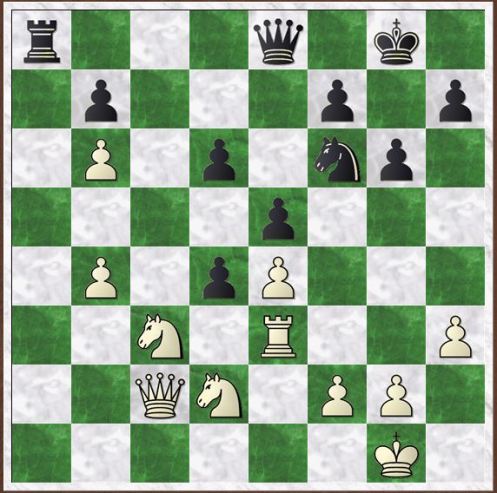
4 Rf3 dc hitting the Nd2- therefore equality is preserved.
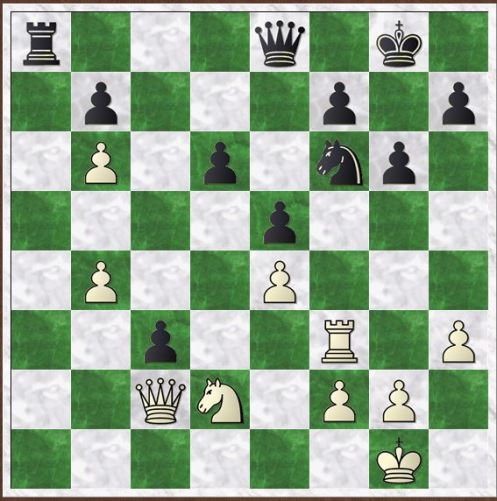
So, a nice example of the motif.
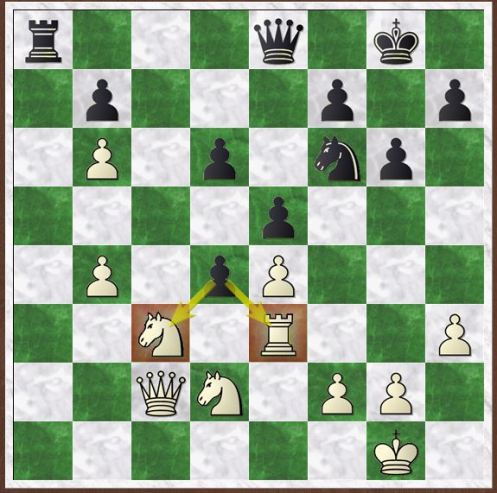
Potassium Cyanide
Potassium cyanide– always watch out for two pieces positioned at a pawn’s fork’s distance. Such a common motif in practice.
White to play and win
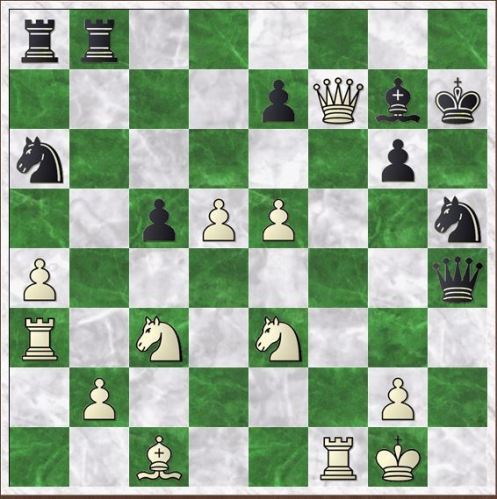
O'Kelly v Toran, Olot 1970
Solution
One to spend time on: this one took me a good while (plenty of off and on thinking at home, then a long dog walk in Lyme Park, then pieces on the board to move around.

I got the initial idea immediately, but never got all the follow up. I did manage to find the wins against Black's secondary defences, but overall my attempt was a fail, missing the precise second and third moves in the main line.
So, 1 Nf5!, but what after 1…gf?
My annotated solution is here.
 Posted with Blogsy
 allanbeardsworth