White to play and win
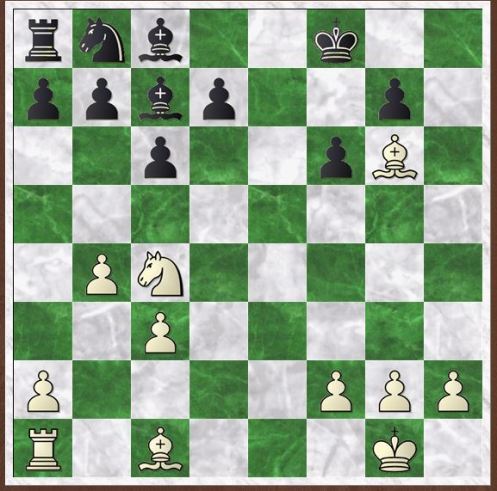
Georgescu v Urzica, Bucharest 1967
Solution
I failed with this puzzle, totally. I looked at every B move, or at least 1 Be3, 1 Bg5, 1 Ba3, before deciding on 1 Be3, which is a bit better for White, totally missing 1 Bf4!
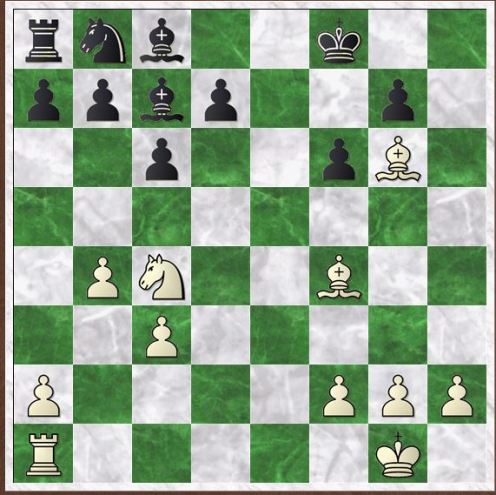
Maybe I saw it, but instantly rejected it, but I should have looked more closely – examine all biffs- 1…Bf4[] 2 Re1 Be5 3 Ne5 and White is dominant.
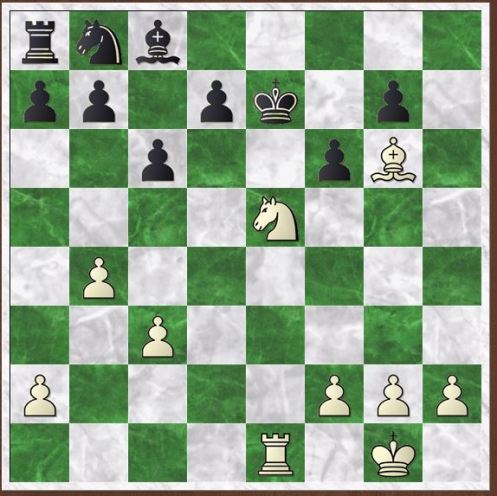
One nice touch is what happens after 3…Ke7. Try to solve it yourself.
Solution
4 Nf7+!! and mates in a couple or so moves 4…Kf8, when 5 Nd6 seals Black’s fate.
White to play and win
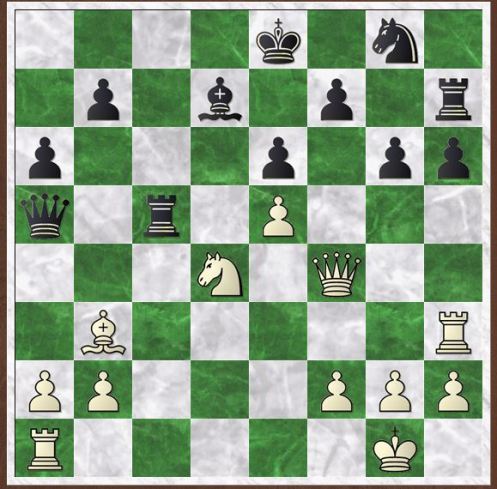
Gheorghiu v Dr Troianescu, Bucharest 1967
Solution
This puzzle is Aagaardian in depth: by which I mean the type of position susceptible to the deep analysis Jacob puts into his books. My analysis is by no means complete, both in this posting and in the game file link below.
1 Be6! is “obvious”; but may not be best.
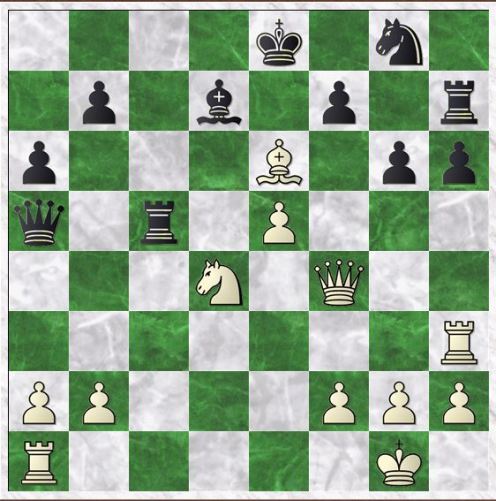
If Black ignores the Bishop, and captures on e5, then 2 b4 disturbs the connection between Qa5, Re5 and the square e1- the back rank mate theme repeats in the analysis.
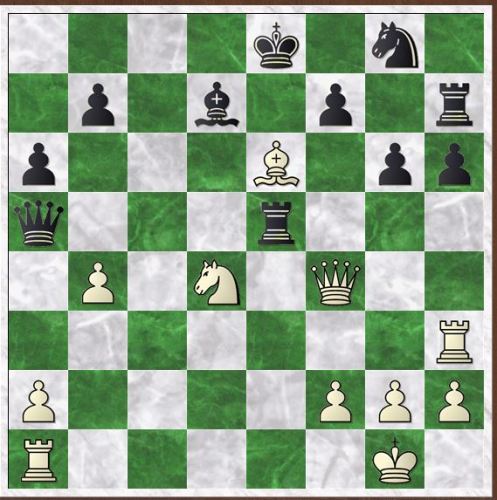
2…Qc7 threatens a discovery on e1, so 3 Re3 hits the rook, and pins it to the LPDO Qc7.
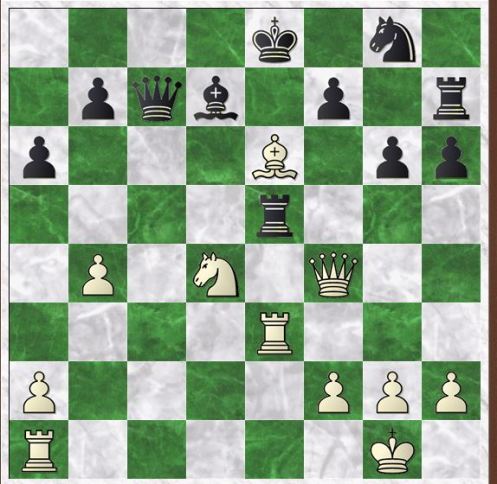
3…f6 defending the rook 4 Bg8 (LPDO) 4…Rhe7 5 Nf3! protects everything, including e1.
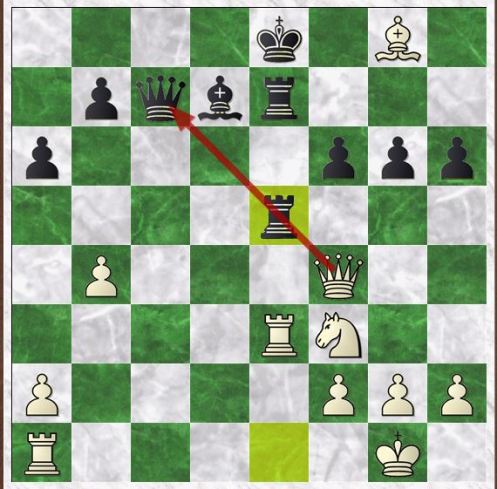
Alternatively, (1 Be6) 1…Be6! 2 Ne6 fe
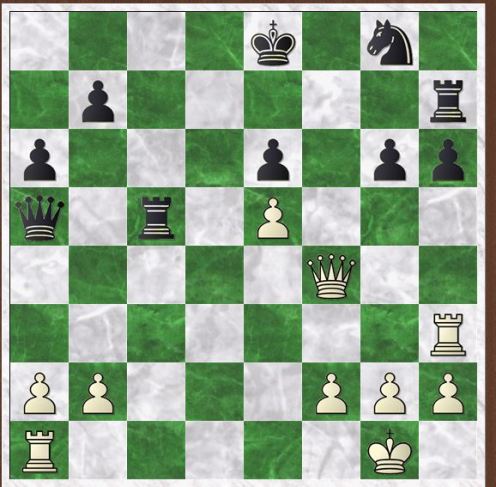
3 Rf3! Re5! ignoring the threat, in true CJS Purdy style- White can’t check and take on g8 due to the by now normal back rank mate on e1. The net result is an odd equality, at least after some engine analysis. I have given some further commentary here. In short, 1 Be6! is strong, but with best place leads to a small advantage; my engine prefers 1 Rd1 or 1 Nf3 which is says leads to larger advantage, but to me both lead to just unclear positions.
Black to play and win
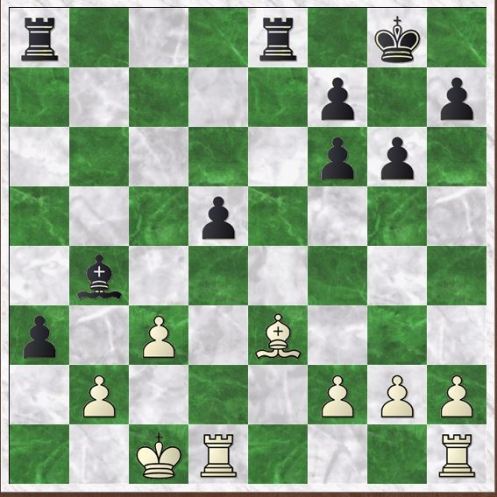
Packroff v Mohring, Weimar 1968
Solution
It is fairly obvious, since it is a puzzle, that 1…d4! is the move, but the calculations involved are fairly tough.
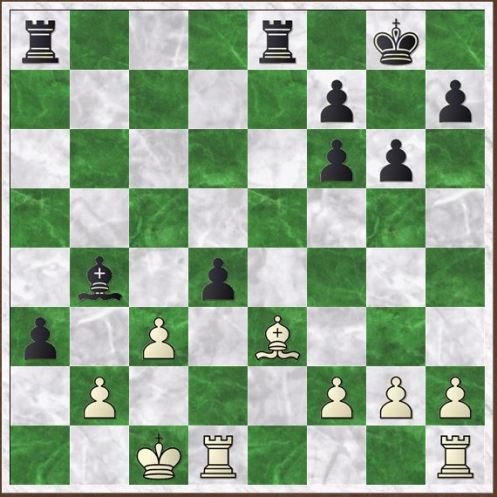
Rather than give loads of lines, I have included an annotated game file here.
White’s best is probably 2 cd Rec8+ 3 Kb1 ab! when it is clear that Black has an attack.
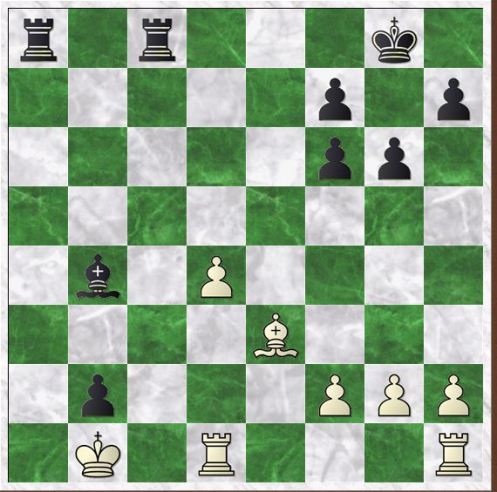
Less clear is how to win it, but the main motif is to use defty rook footwork to try to mate on the a and b lines. It is a good exercise, with some lines given in my game file.
White to play and win
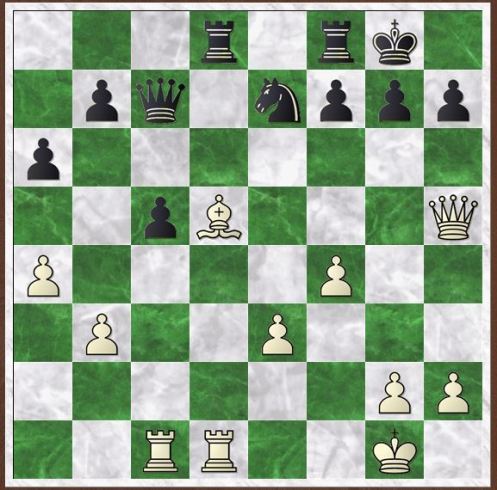
Uhlmann v Hennings, Weimar 1968
Solution
In the game, White played 1 Bf3, missing that 1 Rc5 works- I am sure Uhlmann would have seen the move.
1..Qc5 2 Bf7+
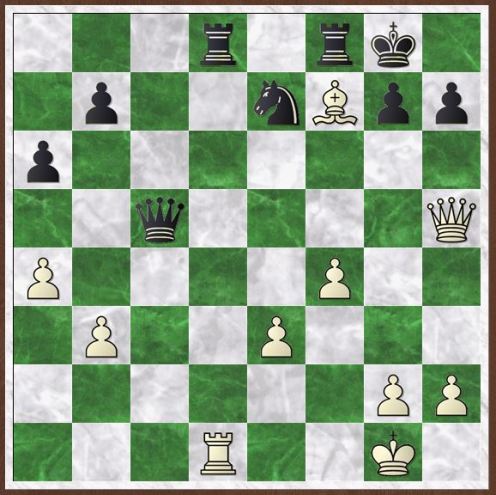
2…Rf7 and the zwischenschach 3 Rd8+! may have been the move White missed.
Or of 2…Kh81? then 3 Qc5 Rd1+ 4 Kf1 Rf7:
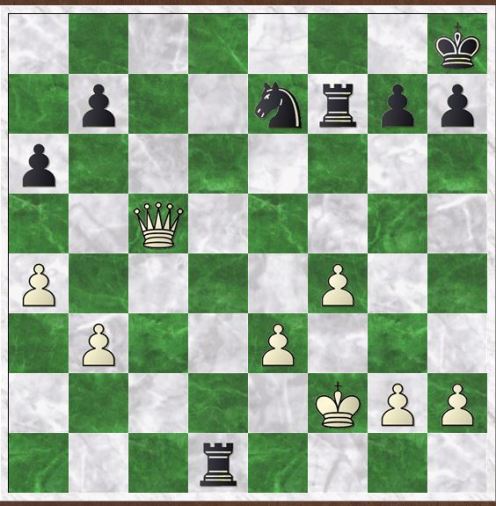
5 Qh5! forks the two LPDO rooks.
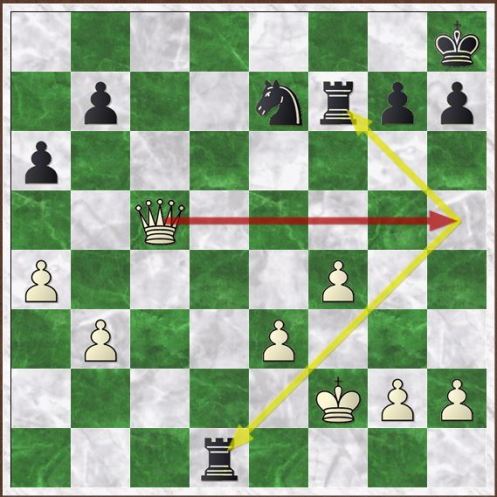
White to play and win
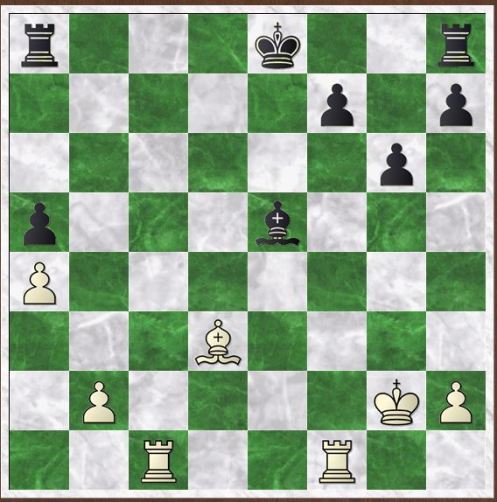
Kaplan v Tatai, Malaga, 1968
Solution
Fairly easy today: 1 Rce1! is the correct way to biff the Be5, forcing 1…f6[]. when 2 Rf6 removes the defender, and 2…Ke7[] 3 Rb6! leaves the pinned Be5 undefendable.
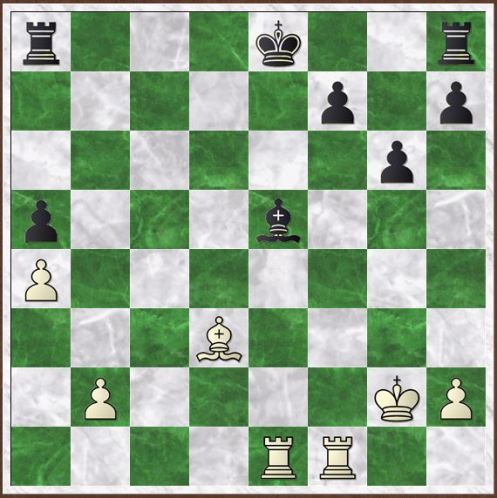
White to play and win
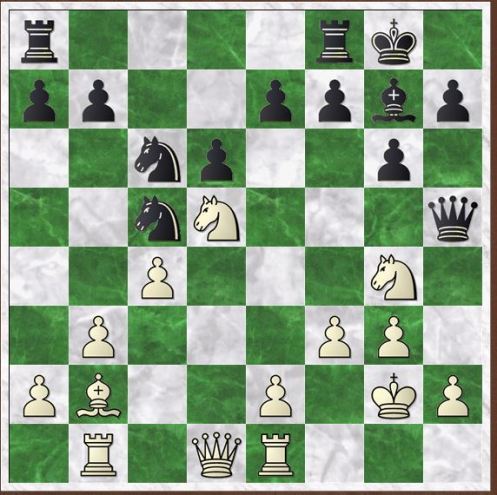
Ek- Gaprindashvili, Goteberg 1967-68
Solution
I chose the unflashy 1 b4! which, on checking, my engine thinks it best- White biffs the Nc5, then plays 2 b5, biffing his friend on c6, and wins the Pe7.
Ek played the flashier 1 Be7! which I had not even considered:1…Kh8 2 Ne7 wins the same e7 pawn. Black can mess things up a bit with Ne4, which is untouchable, but a pawn in a pawn.
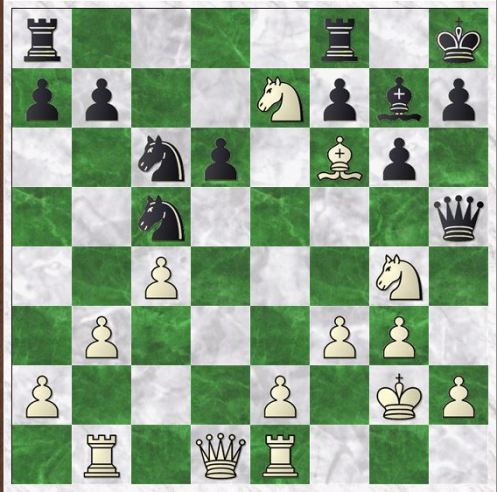
Despite having now seen the game continuation, I still prefer 1 b4.
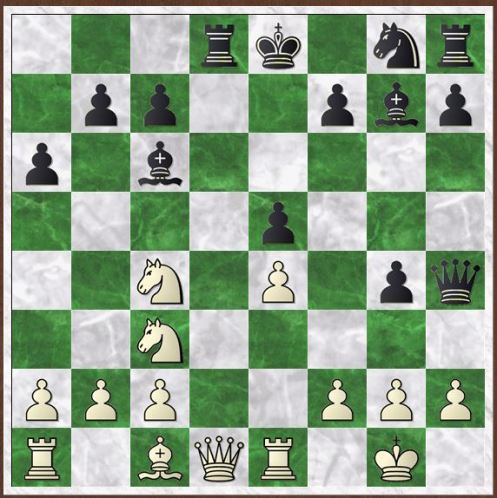
Black to play and win, after White plays 1 Nd5? here:
Korchnoi v Portisch, Wijk aan Zee 1968
Solution
The key point is the LPDO Nc4 and its geometrical alignment with the Qh4: or, as Purdy would say it, the jump-check Qh4*Nc4.
1…Bd5! 2 ed g3! hits h2, f2 and the Nc4 0-1
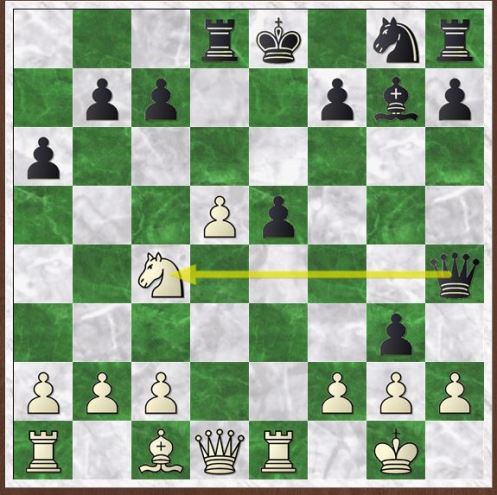
Viktor struggled on, a piece down, but Lajos kept control and won easily enough.
White to play and win
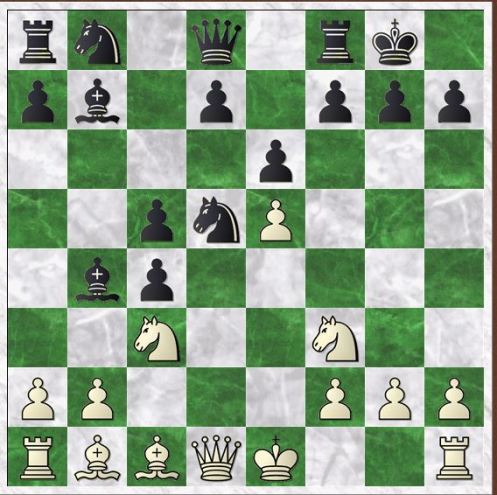
Donner v Portisch, Wijk aan Zee, 1968
Solution
The Greek gift “must” work here, and indeed it does: 1 Bh7+! and even 1…Kh8 fails: 2 Ng5 Nc3 3 Qh5! is carnage.
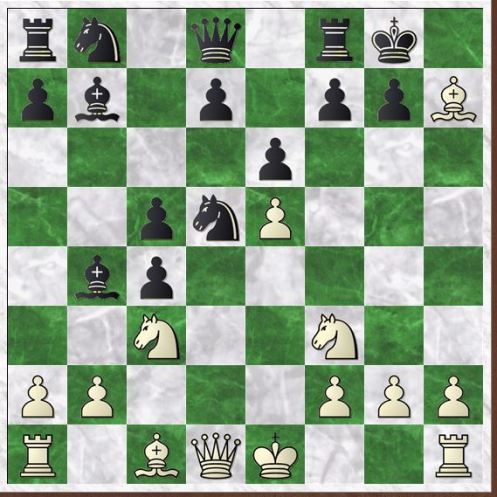
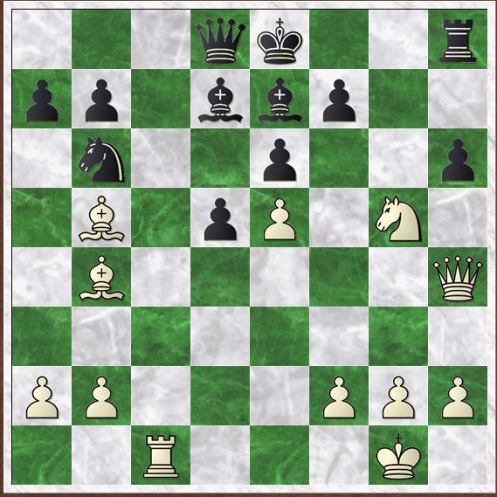
White to play and win
Solution
A very pretty puzzle, with some nice geometry.
The first move is obvious, but does it win? 1 Ne6!
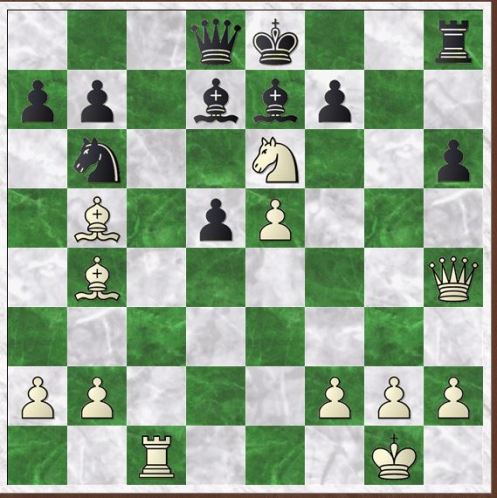
Black clearly can’t play 1..Bh4 due to 2 Ng7 mate; and 1…fe 2 Qh5+ and rook lift is almost as clearly 1-0; but what about 1…Bb5?
(in the game, printed below, Black did take on e6 and lost)
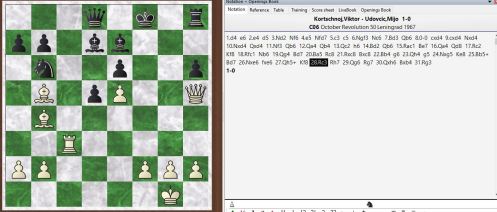
The nice point, which took me the standard British unit of time to work out (time to brew a cup of tea and ponder) is that (1…Bb5) 2 Ng7+! is vicious. 2…Kd7 3 Qg4 mate, so 2…Kf8
3 Nf5!! which is geometrically very pretty (hence the exclamation marks)
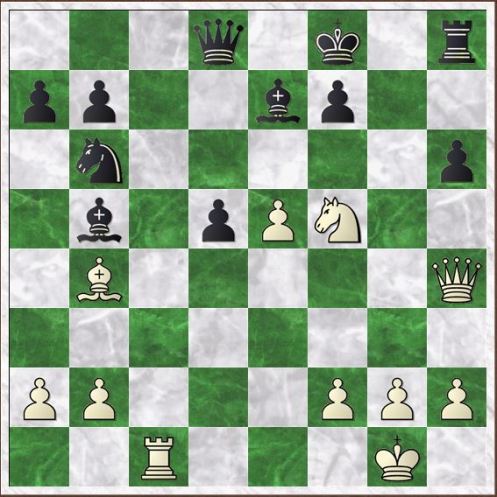
Black can’t take the Bb4 because the Qd8 is then LPDO; and can’t take the Qh4 since the Be7 is pinned to the King by the Bb4. So say 3..Nc8 defending the Be7, but then 4 Rc8! 1-0.
The whole game, and how Viktor the Terrible builds up the attack, is worth playing through.
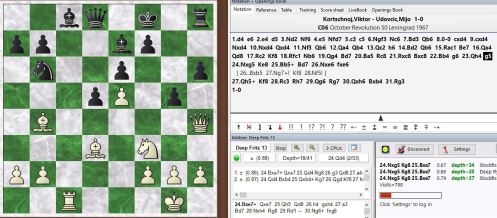
Black to play and win
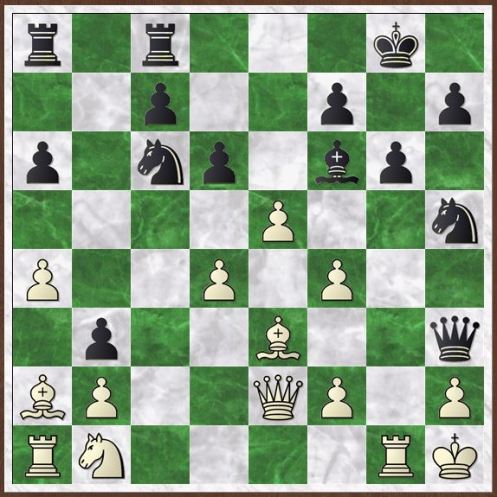
Solution
A difficult one today, and one I failed to solve.
I played 1…Nf4!?, which has the advantage of being better than the move actually played in the game, 1…Bh4?? 2 Qh5 1-0, but not much else. After 2 Bf4 Nd4 3 Qe3 White is to be preferred.
Far better is a move I never imagined, which is poor since examine all biffs would have made me consider it- 1…b3!!
2 Bb3 is best, when 2..Nd4 3 Bd4 Qb3:
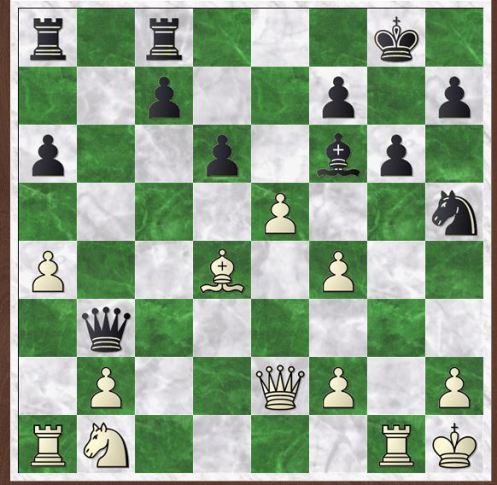
When I saw this, reading the solution, the following came immediately to mind: 4 Qh5
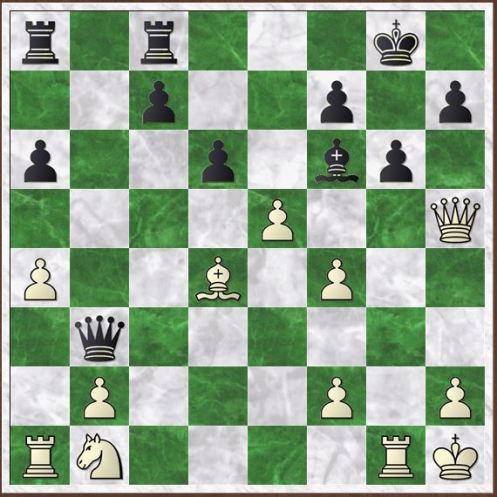
Qd5+ 5 Rg2
Black to play and win
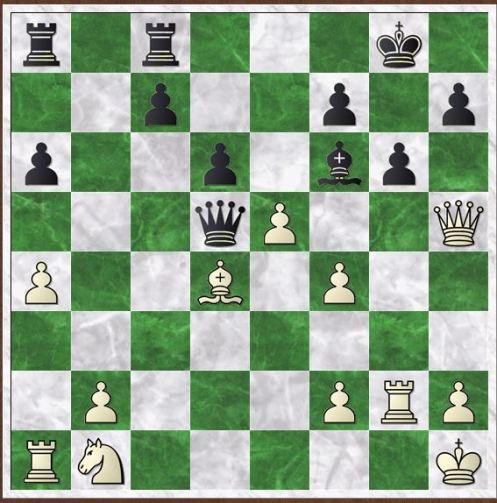
Solution
..and I just assumed that 5..Qg2+ would be better for Black, but the engine tells me that it loses: and, indeed, on close inspection, it does. The ending after 6 Kg2 gh 7 ef is surprisingly (to my mind) bad for Black.
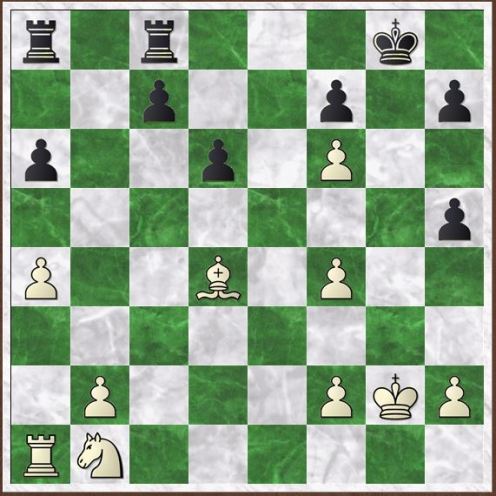
Instead, simply 5…Bg7 is near winning for Black.
 allanbeardsworth