Black to play and win
Don't just find the initial move(s), find and defeat White's best defences
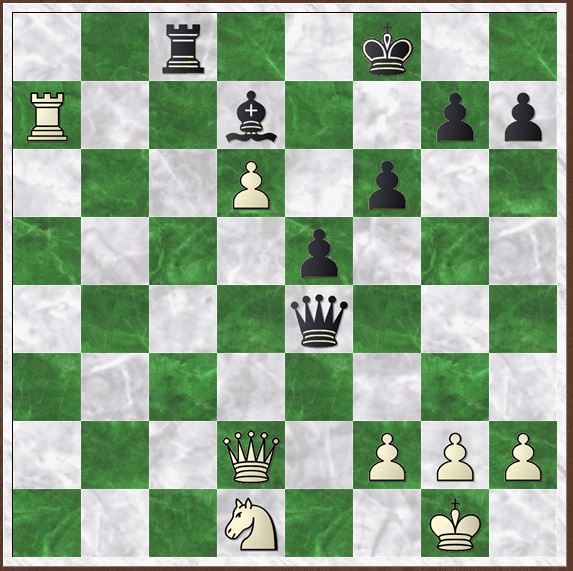
Darga- Teschner, Frankfurt 1966
Solution
In the game, Black, the author of the puzzle book, took the draw by 1…Bc6 2 Ne3 Qb1+ with a repetition. Knowing it is a puzzle, the move 1…Rc1! is fairly obvious, trying to deflect the Q from protecting e1.
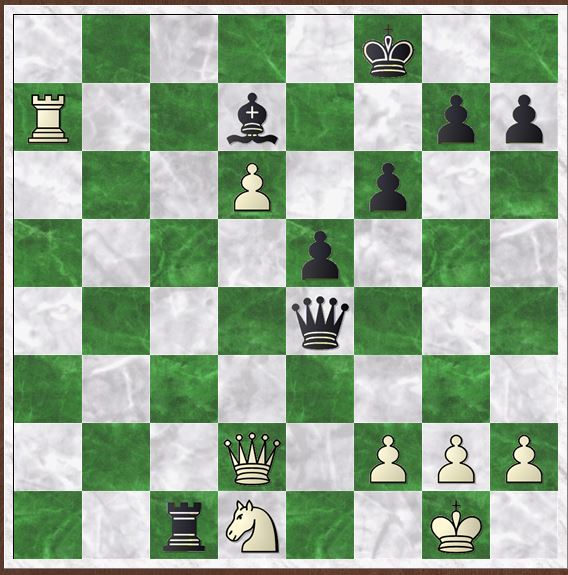
If 2 Rc7, 2…Qb4!! is a neat over-powering.
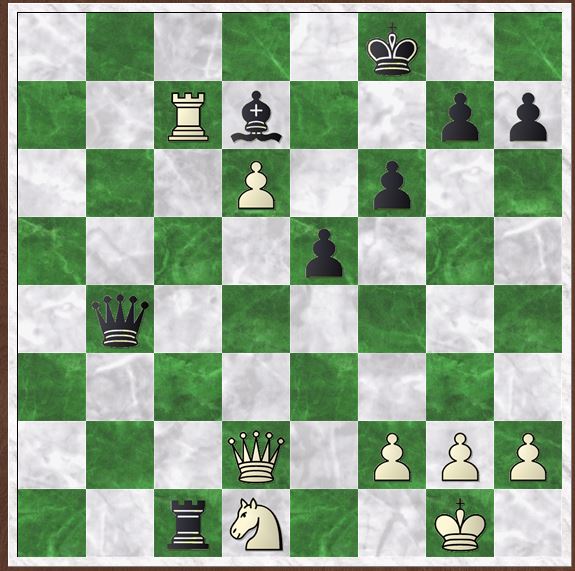
More difficult is 2 Ra3 Qb1 3 Rd3:
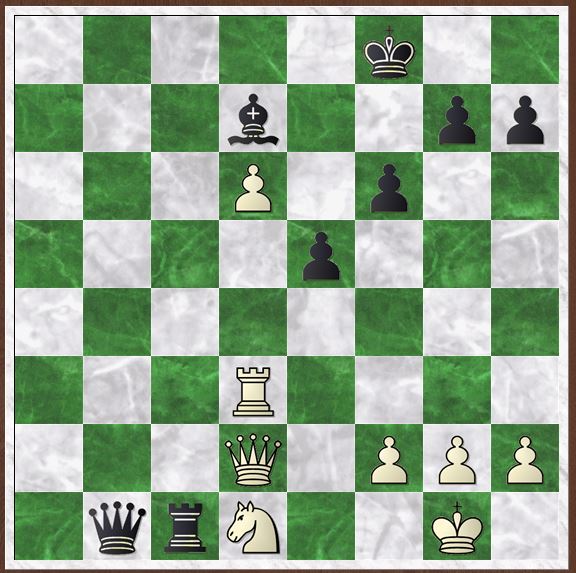
Defeating this is difficult. 3…Kf7! moves the King from the 8th rank, so the White pawn wouldn't queen with check; 4 h3 Ba4! 5 d7 Rd1+ 6 Qd1 Bd1!
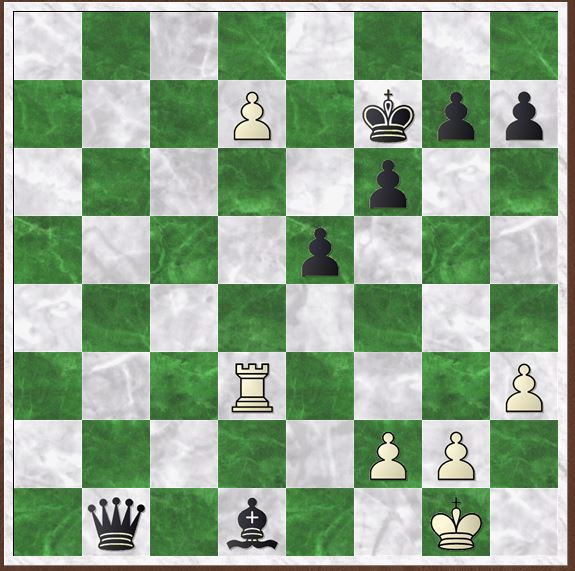
7 d8(Q) Bc2+ and Black is a bishop up, and White doesn't have a perpetual.
 Posted with Blogsy
White to play and win
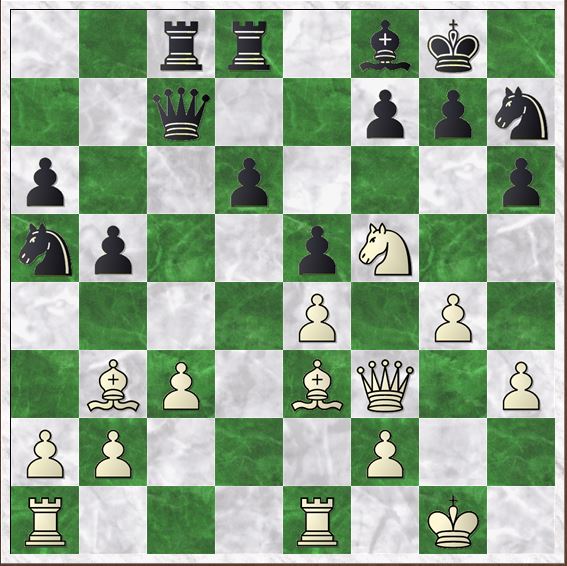
Kinnmark v Oliveira, Havana Olympiad 1966
Solution
A nice puzzle: first, a deflection (examine all biffs): 1 Bb6. If 1…Ng5 then 2 Qe3 protects the Bb6 and wins a piece. So 1…Qb6 2 Nh6+! Kh8 (2…gh 3 Qf7+ Kh8[] 4 Qg8 mate)
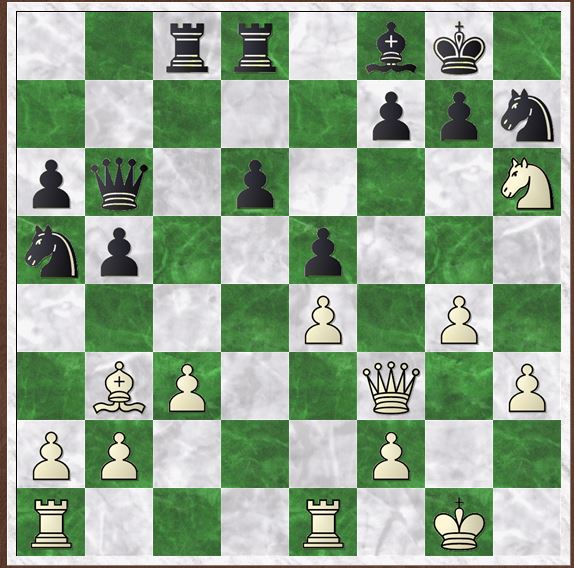
and now 3 Nf7+, 4 Ne5+ and 6 Ng6 mate is a pretty knight’s tour.
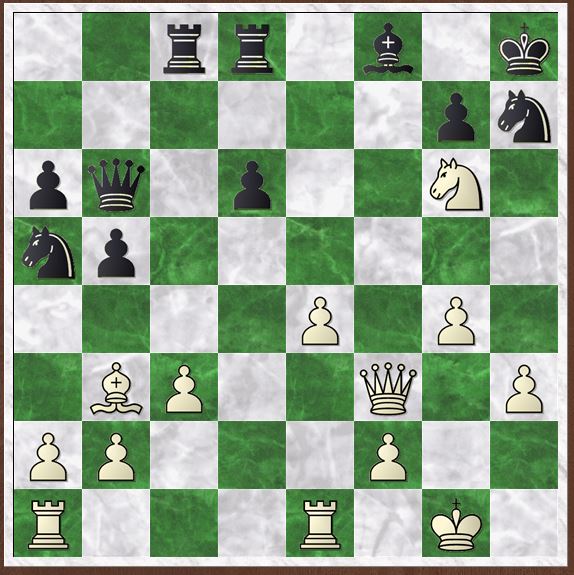
White to play and win
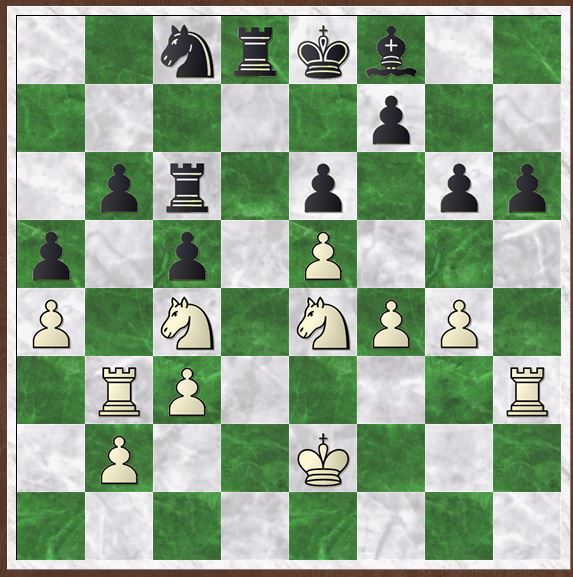
Fischer v Durao, Havana Olympiad 1966
Solution
A nice puzzle, which took me a while to solve: to play 1 Nf6+ or not?
Finding that nothing ‘clicked’ after 1 Nf6+, my first thoughts were to exploit Black’s near zugzwang, improve the rooks, and then ‘do something’. But I couldn’t see what to do here either, until, back to ever reliable Examine All Biffs, I saw 1 Na5! and its point.
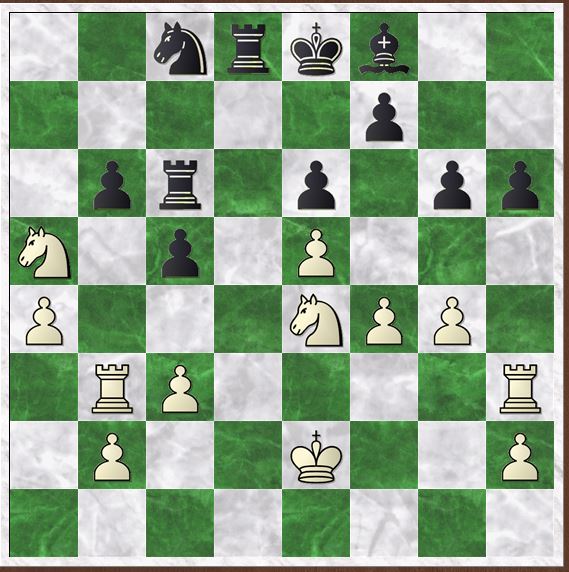
If Black doesn’t take the N, he has simply lost an important pawn. But if captures it, then 2 Nf6+ Ke7[] 3 Rb7+ is decisive.
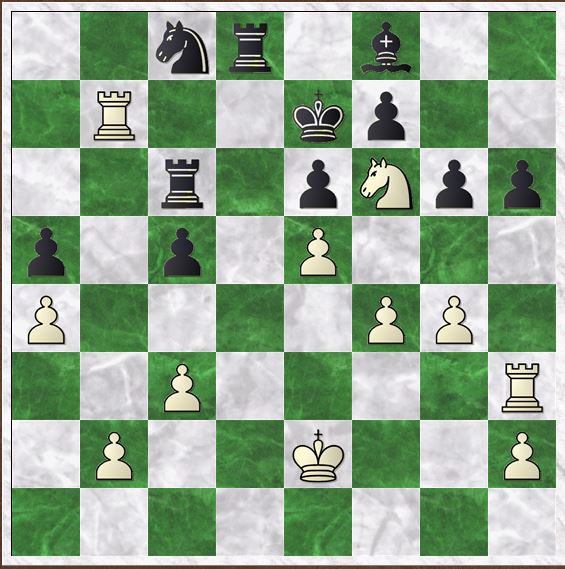
Very nice.
White to play and lose: after 1 Bc6??

Troyanska v Jovanovic, Oberhausen 1966
Solution
1 Bc6?? loses to the standard 1…Qh1+; ’nuff said.
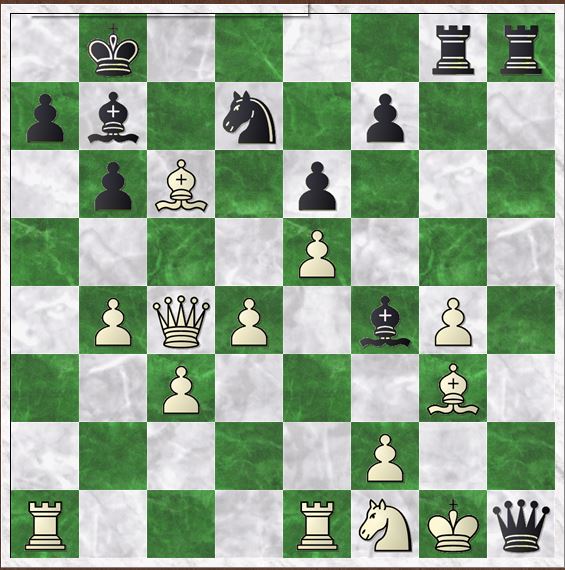
White to play and win
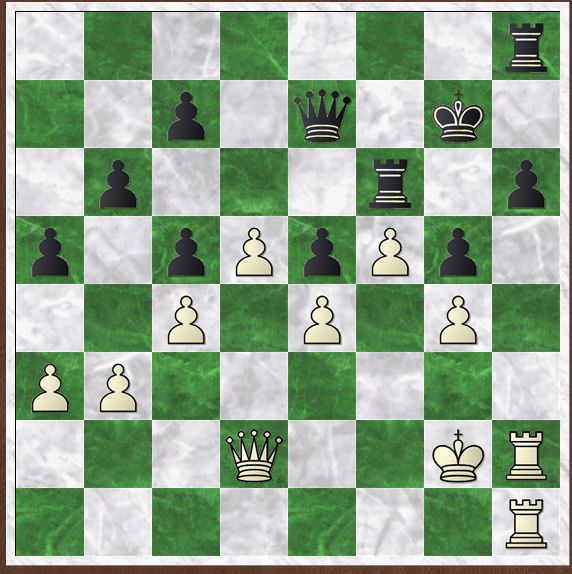
Benko v Weinberger, Mission Bay 1965
Solution
An unusual motif, after the obvious first moves, 1 Qg5+ hg[] 2 Rh8 Rf7: Black is in zugzwang after say 3 R1h5
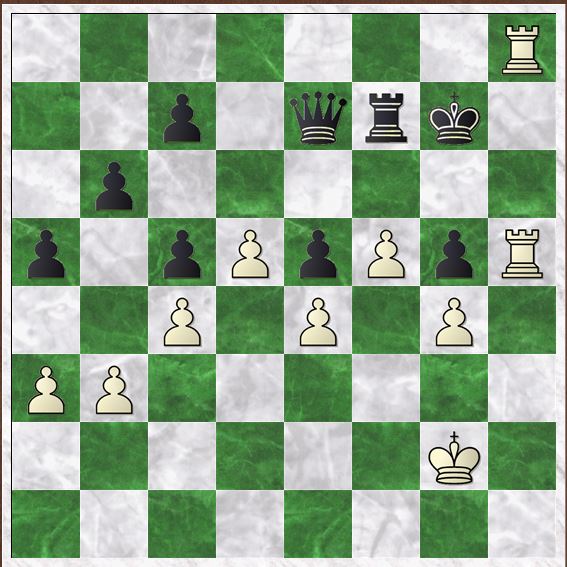
If 3…Kf6 then 4 R5h6+ Kg7[] 5 f6+ and, next move, the queen is skewered.
White to play and win
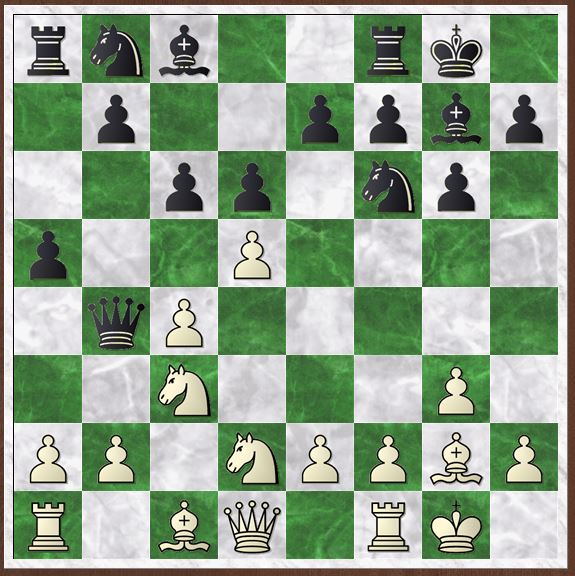
Roth v Durao, Hague 1966
Solution
In the game, White played the natural 1 a3 and after 1..Qb6 the game went on. But 1 Na4! wins the queen: for instance 1…b5 2 a3! Qa4[] 3 b3 is an unusual entrapment.
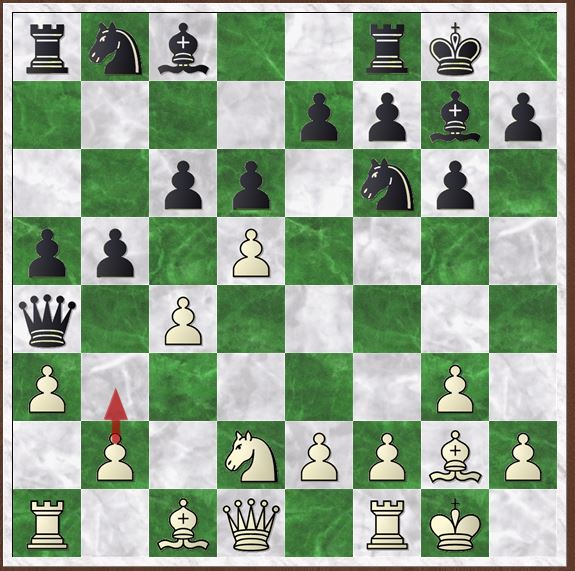
White to play and win
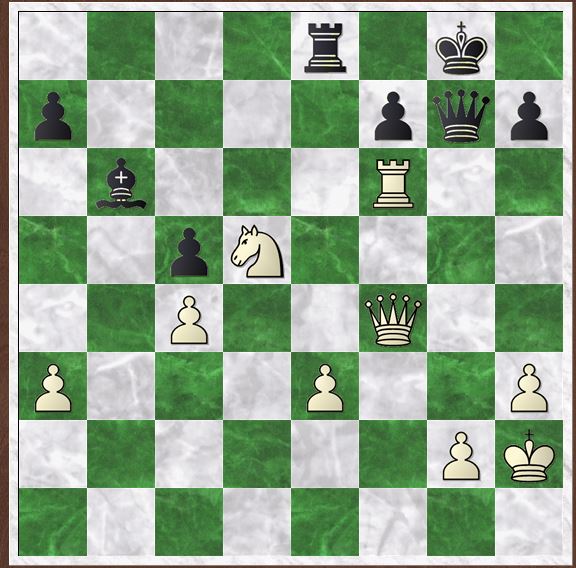
Uhlmann v Bronstein, Szombathely 1966
Solution
Examine all biffs, leads, as so often it does, to the solution: 1 Rb6! clears the f6 square for the N fork, and Black has no rescue check. So, for instance, 1…ab 2 Nf6+ Kf8 and rather than the prosaic 3 Ne8, 3. Qd6+! mates.
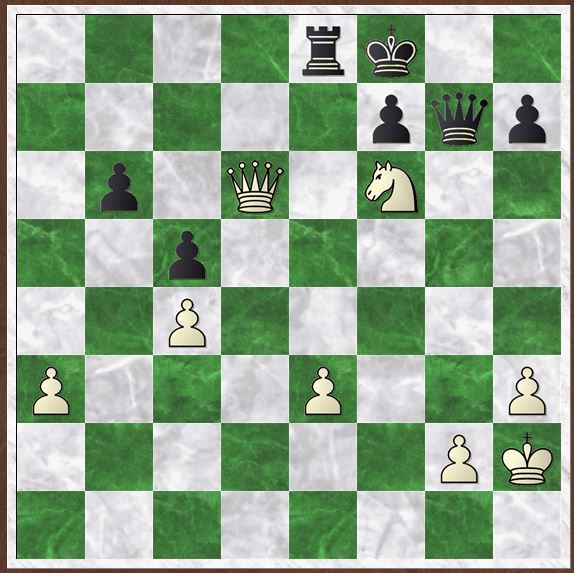
White to play and draw

provenance: a recent tweet by Anish Giri; I suspect the provenance is that is a puzzle, rather than a game position.
Had it been a game, and were I playing White, it would for sure be 0-1. However, Anish tweeted that he had solved it, and Nigel Short responded that he had too, so I had to accept the challenge. But I doubt it took either Anish or Nigel as long as it took me.
The standard British unit of time is the time it takes to make and drink a mug of tea: so a couple of units, at least; then a long dog walk, then pieces out in the lounge, half watching Scotland-Australia in the Rugby World Cup, but more throwing the pieces around; then a couple of tired last bed-time minutes before lights off, until, last night! -it all clicked.
My friend Luke McShane, who I forwarded Anish’s tweet to, had also solved it, and told me that he had also checked it to the Shredder tablebases, which I didn’t know existed. I have attached a link, or the url is http://www.shredderchess.com/online-chess/online-databases/endgame-database.html.
Solution
I think, on this one occasion, I won’t give the solution, but instead leave it to my readers to solve. I have also checked it with Deep Fritz 13, which finds the solution instantly (for all I know, it might have tablebases installed).
Turns out I got half marks: the main concept, the first move, the plan, but not the all important second move. Understanding why only one second move works, and why the other one which I lazily played doesn’t, requires a deep penetration into the endgame.
Enjoy!
Black to play : evaluate 1…Qe5
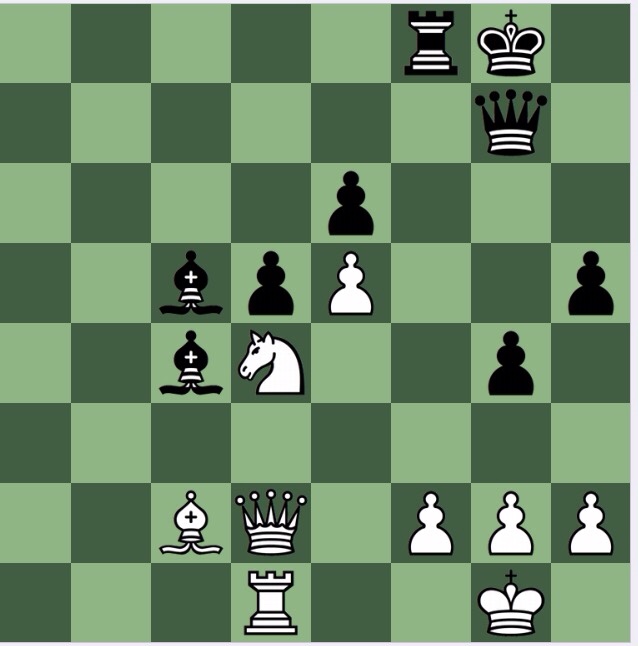
Ree v Lehmann, Ter Apel 1966
Solution
In the game, Black offered a draw, which was accepted, but 1…Qe5 wins.
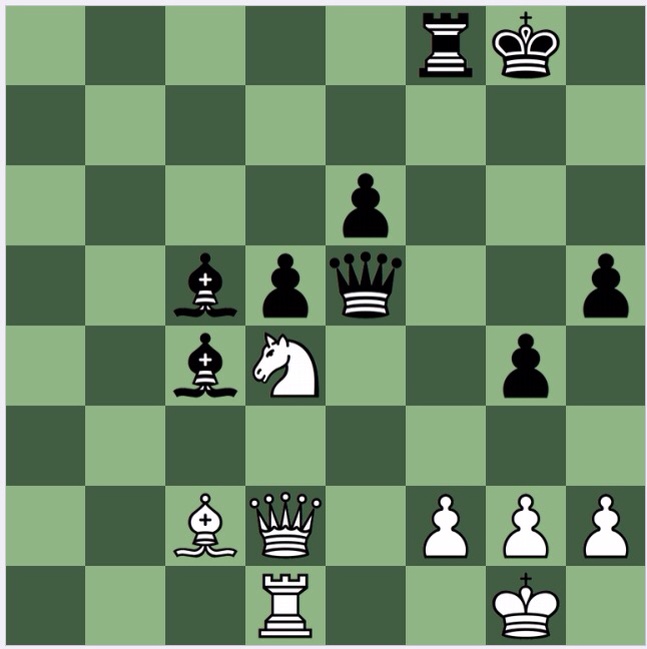
White's best is to play 2 Qe3, though it is hopeless after queens are exchanged and 3…e5, with two extra pawns and the bishop pair, so 0-1. But if 2 Qh6, 2…Rf2! breaks through.
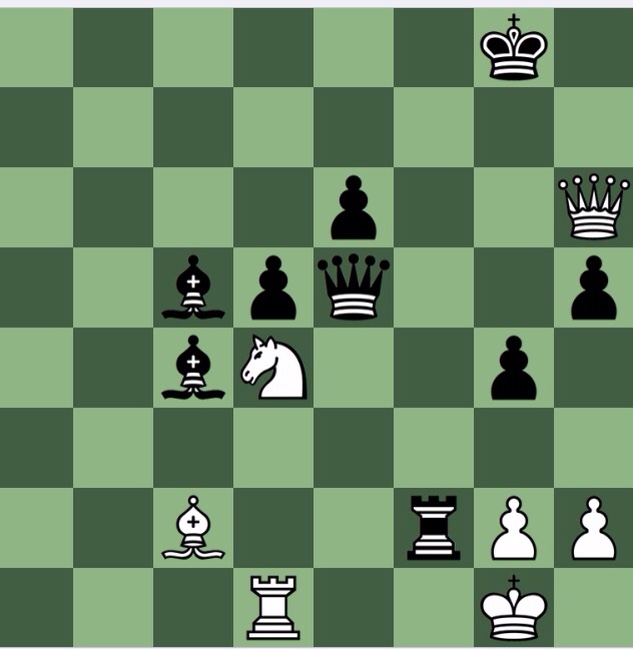
If 3 Kf2, then 3…Bd4+ 4 Rd4 Qd4+ picks up the rook, and probably the B or one or two pawns, always worth check, so the queen can safely return somewhere to harness White's queen. (In fact, Stockfish prefers 4…Qe2+ ignoring the rook, going after the LPDO Qh6- it is skewered after 4…Qe2+ 5 Kg3 Qe1+ 6 Kf4[] Qc1+, but that is computer chess)
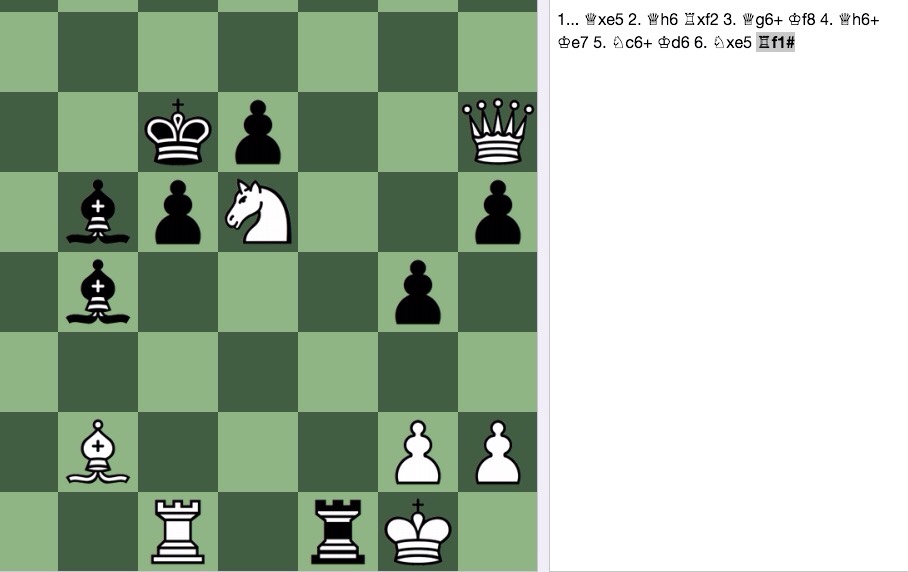
If instead White tries checking, Black can even let his queen fall to a Nc6+ fork and be captured:
Evaluate the line Black played: 1…Bg2 2 Be6 Bf1
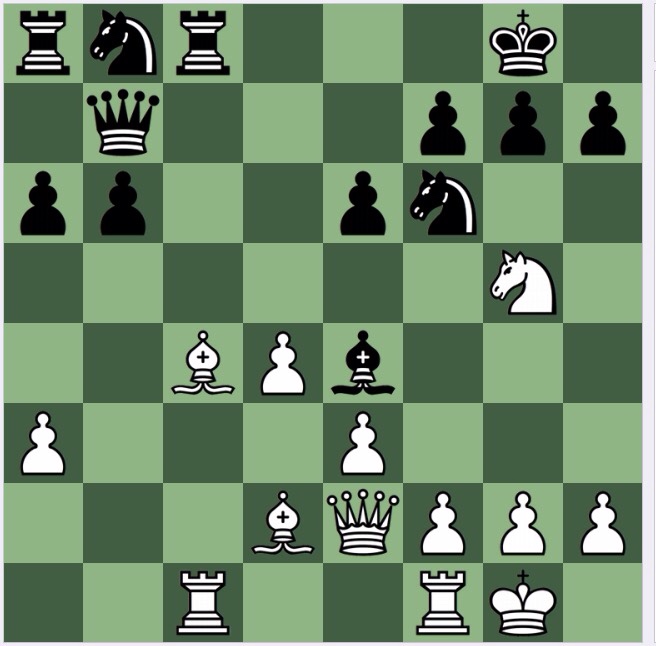
Pomar v Johansson, Havana 1966
Solution
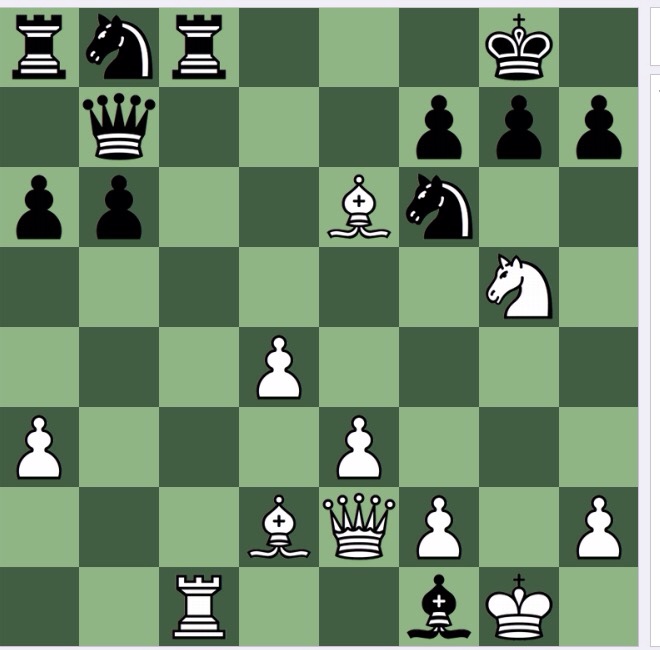
A hard puzzle, at least to see to the end: but I think in practice it might not be necessary, even if it is possible. As soon as you see 2 Qf3! trying to overload the Qb7, which is tied to the Rc8, you know Black may have bitten off more than he could chew.
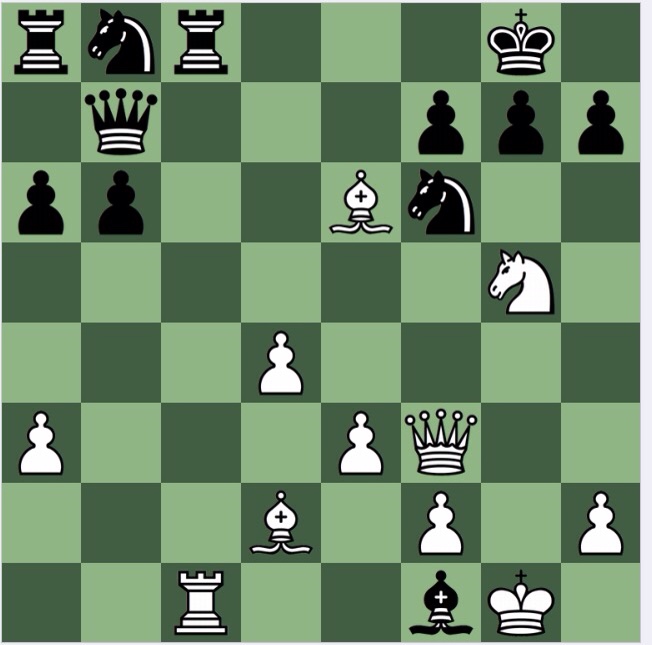
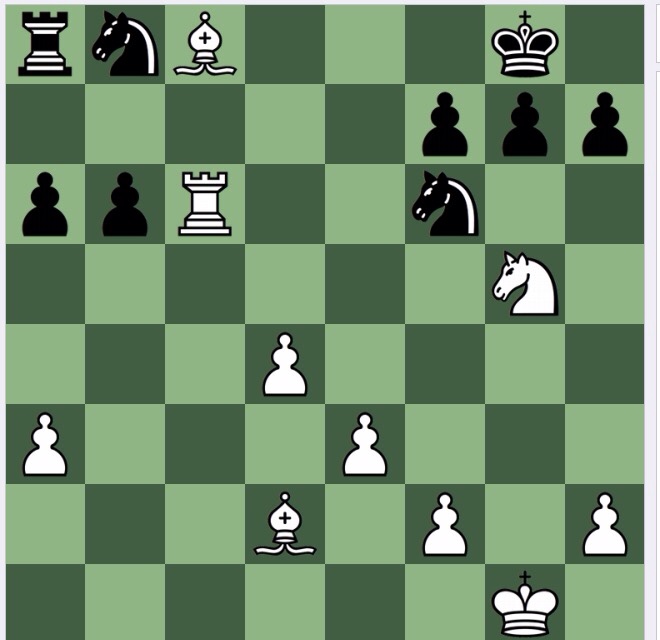
Best might well be 3…Bg2! when there is a forced line: 4 Qb7[] Bb7[] 5 Bc8[] Bc6!
Then the tactic 6 Rc6! Nc6[] 7 Bb7 is convincing enough.
 allanbeardsworth