White to play and win
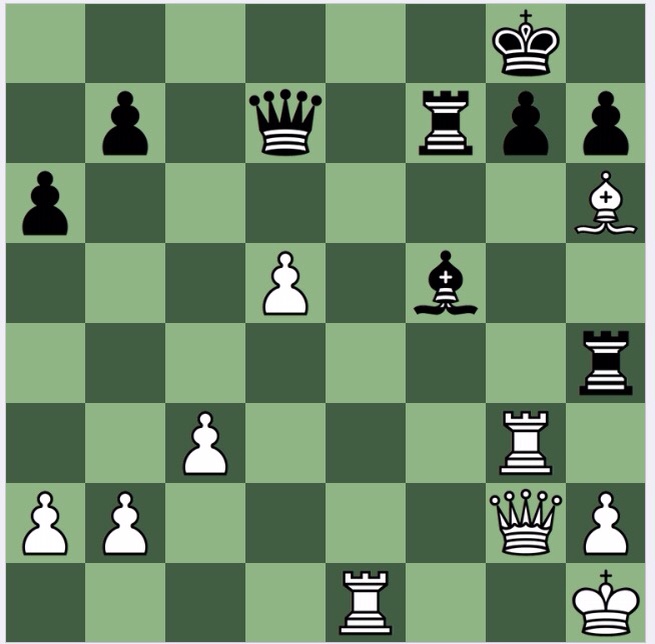
Spassov v Kozma, Zinniwitz 1965
Solution
Pretty, but not too hard today. 1 Rg7+! has to be tried, when 1…Rg7[] 2 Re8+! is a standard attempt to deflect the Black Queen. In Purdy terms, the Queen is tied to the Rg7.
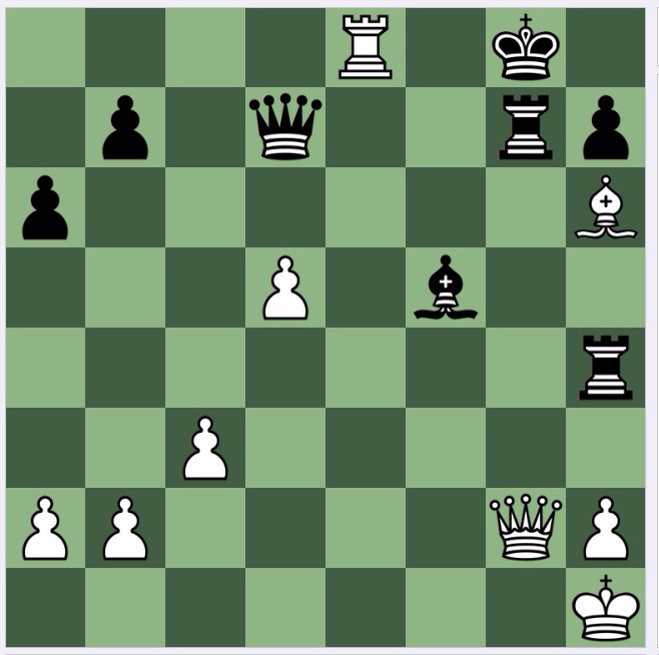
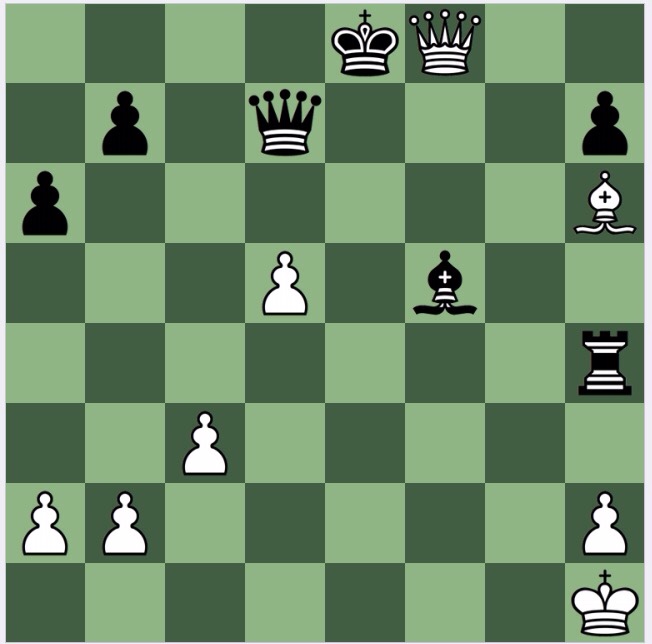
The pretty point is 2…Kf7[] 3 Qg7+ Ke8[] 4 Qf8+ is mate:
 Posted with Blogsy
White to play and win? Or draw? Or lose?
set the pieces up, pour yourself a sherry, g&t, or your favourite tipple; have the bottle to hand, to top up, and study the following. Perhaps, better still, set the clock ticking, and give yourself a sensible amount of time to decide how you would play this position in practice.
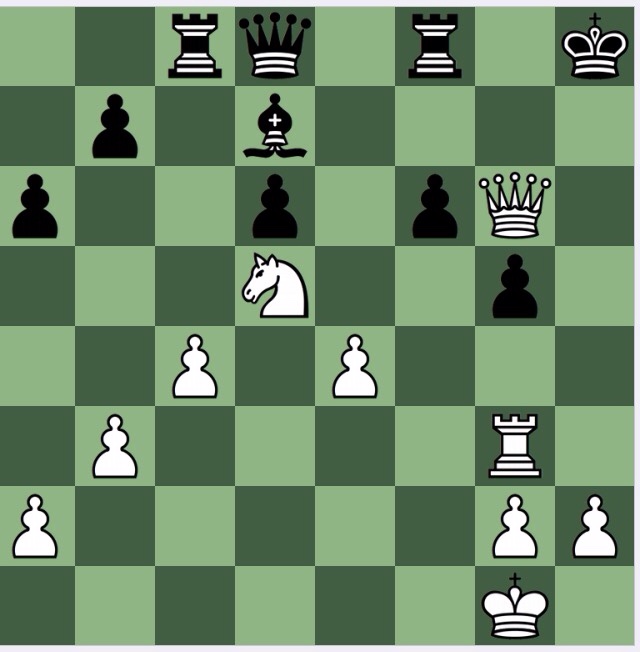
Bilek v Ghitescu, Hamburg, 1965
Solution
White offered a draw here, and who can blame him? If I were white, I would take the perpetual too, 98 times out of 100.
If though I were in a must win situation, and if I had ample time on my clock, I would still on 1 time out of 100 take the perpetual, but the other time I might, just might, play 1 Nf6: especially if I flunked it, since even after 1…Qf6, the weaker of Black's two captures, the best White can hope for is a perpetual: 2 Qh5+ Kg7 3 Rg5+[] Qg5[] and White only has his Queen left, and can't fork/skewer king and bishop. [my engine says he has perpetual]
But 1 Nf6? is better met by 1…Rf6!, the more obvious move too, since the rook move creates luft for the king on f8. It isn't too hard to get to the following position:
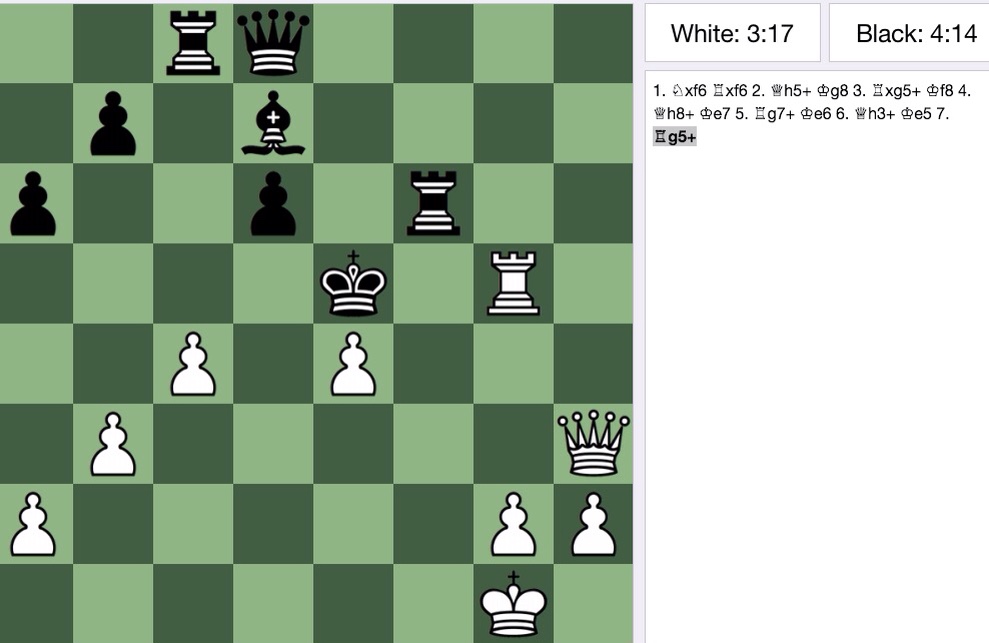
And here, my intuition would say 'Black is escaping' 'might be a draw'. My chess knowledge might say 'is there a Wei Yi immortal checkmate here'? (there isn't, though more engine analysis might perhaps throw up something) my 'seeing how the top GMs defend' brain would say 'I wonder if 7…Rf5 or 7…Bf5 is a serious spanner in the works?' (in fact, 7…Bf5! kills White's attack).
So, 1 Nf6 loses, I think.
So, Bilek was right to take the draw?
No, White is winning in the original position.
If you too took the draw, and didn't find anything better, I suggest you look again, with the knowledge that there is a winning move: but one I would never see in one hundred occasions.
Solution
1 Rf3.
Obvious.
Obvious once you are shown it.
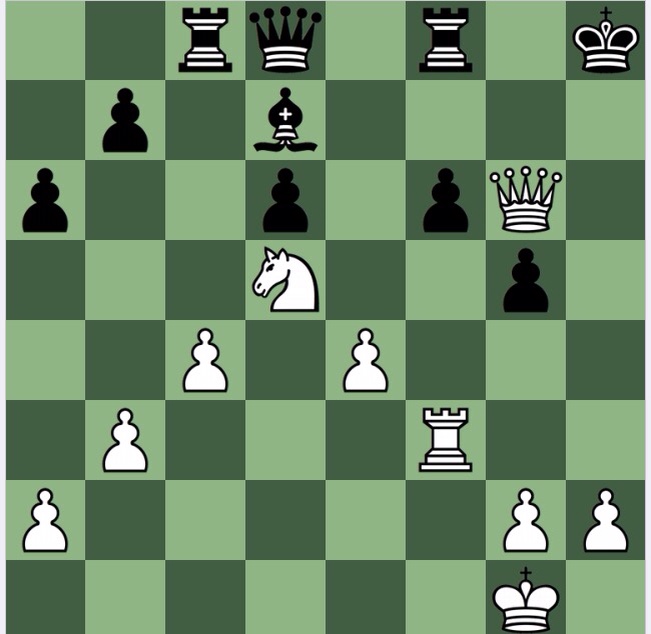
And insightful when you study the resultant position, for instance with Black playing a null move like 1…a5; then 2 Nf6 Rf6 3 Rf6:
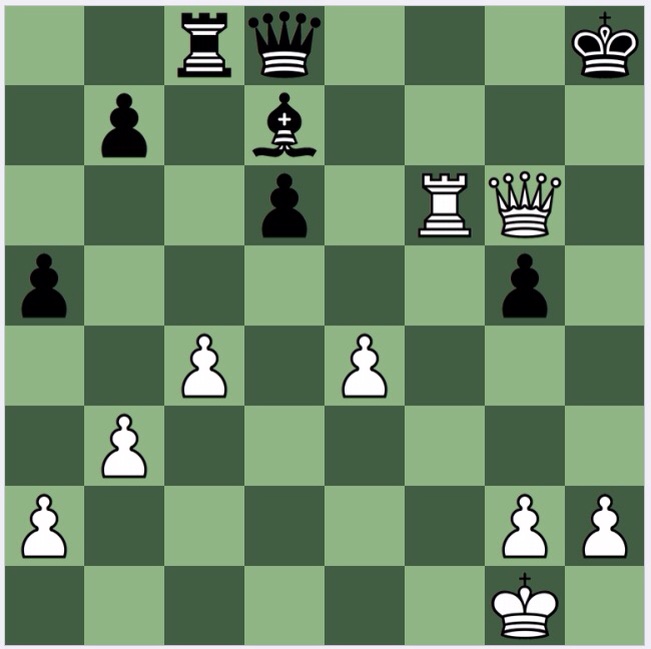
I wonder at what level of player 1 Rf3!! is obvious in a game?
Postscript: the game itself
White made a wonderful sacrifice, 23 Rf6!! to reach the puzzle position. Wonderful because it is dramatic, though in fact it was forced, since otherwise his Queen was about to be trapped by …Rf7-h7. So, I suspect, Bilek was baling out a well played Maroczy Bind game for a draw.

(diagram from Chessbase's online database iPad app)
White to play and win
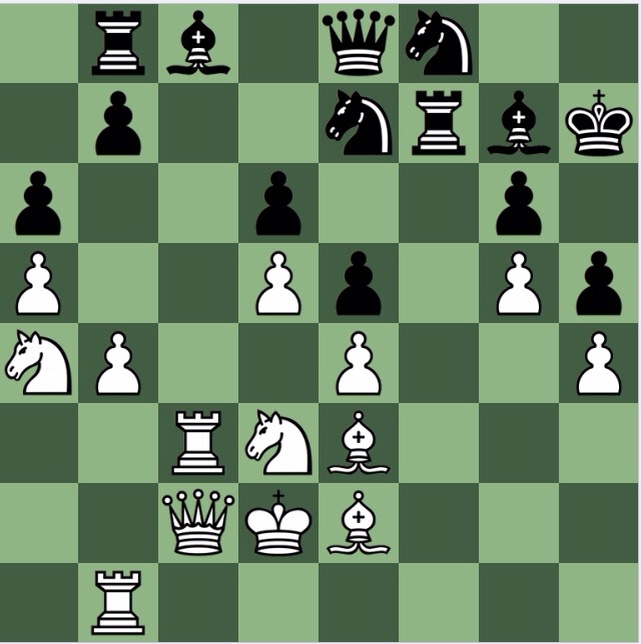
Not the best of puzzles, since Stockfish assesses the position as +2 after many moves, including 1 Nb6, which keeps the bind. But the most natural move is 1 Ba7 (examine all biffs) and indeed it is best, and the move Viktor played.
There are only two lines. Ignoring the threat, and playing 1….Bd7, but then 2 Bb8 Ba4 3 Qa2 overloads the Qe8: it can't capture the Bb8 without losing the Ba4.
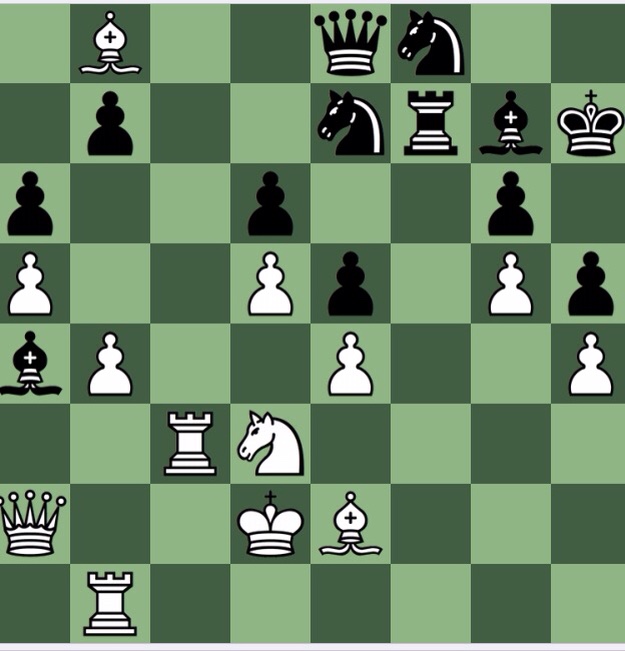
So, instead, 1..Ra8 when 2 Nb6 Ra7[] 3 Nc8 is good enough, or 3Rc8 Nc8[] 4 Nc8 which is crushing.
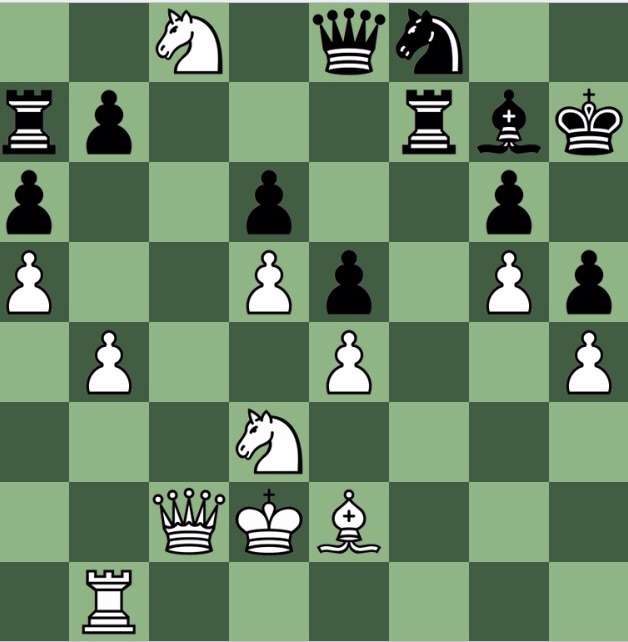
This was the line played in the game, with White winning some moves later. The diagram below is from ChessBase online.
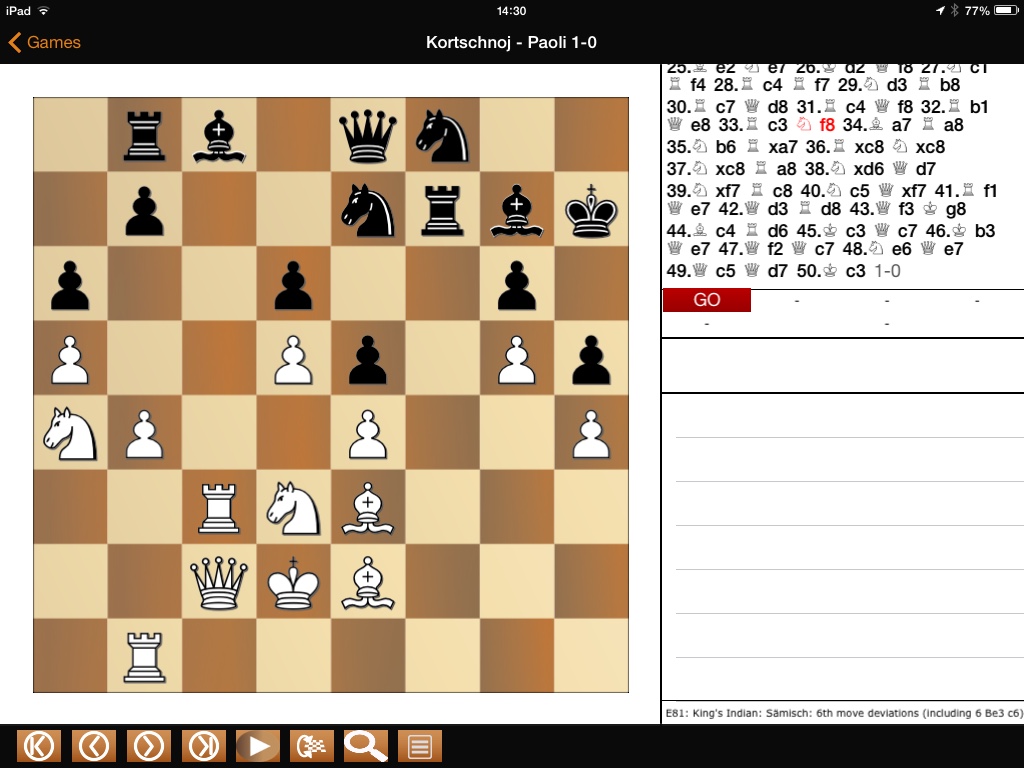
White to play and win
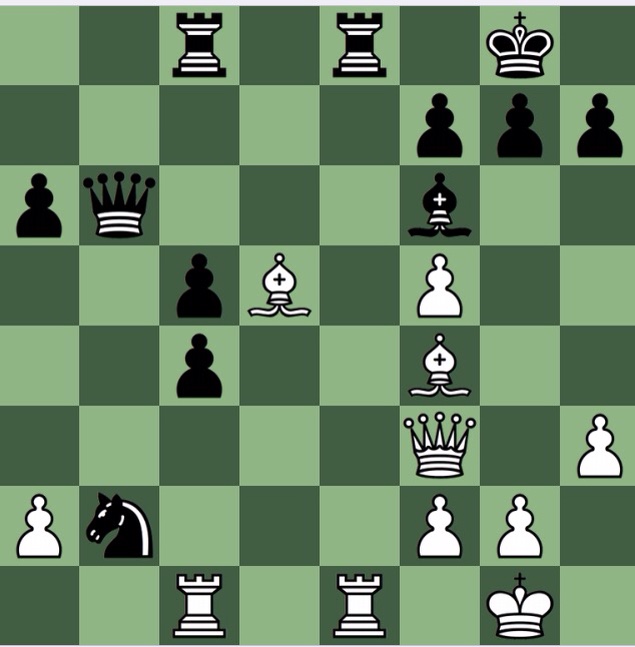
Unzicker v Antoshin, Sochi 1965
Solution
The initial moves are fairly apparent, but why they win is anything but so: I had to set up the pieces on the board and fully concentrate for the solution to 'click'.
1 Bf7+ Kf7[] 2 Qd5+ Kf8 3 Bd6+ is obvious:
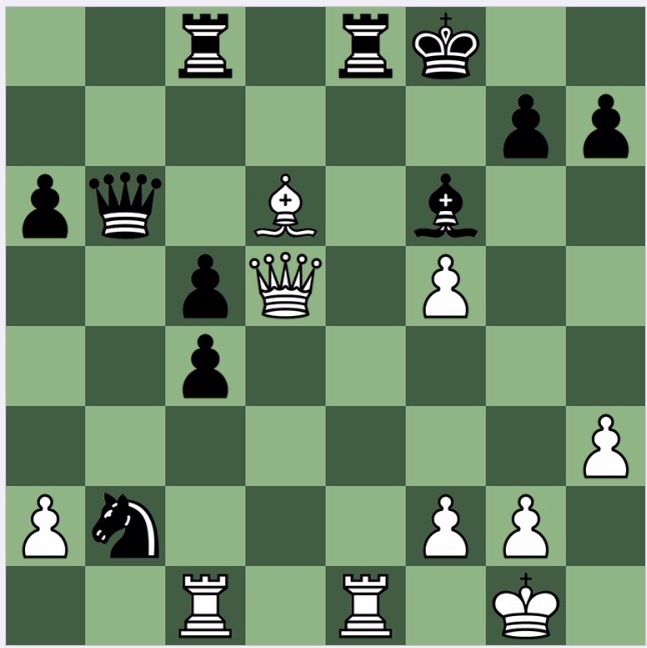
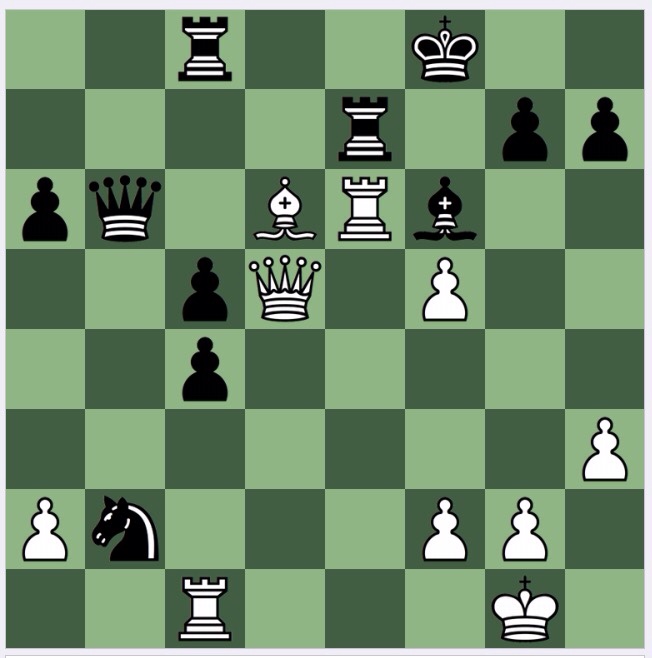
4…Qd8 5 Rf6+ (or 5 Rce1) gf[] 6 Re11-0
If instead 3…Be7 then 4 Re7! Re7[] 5 Qe6!
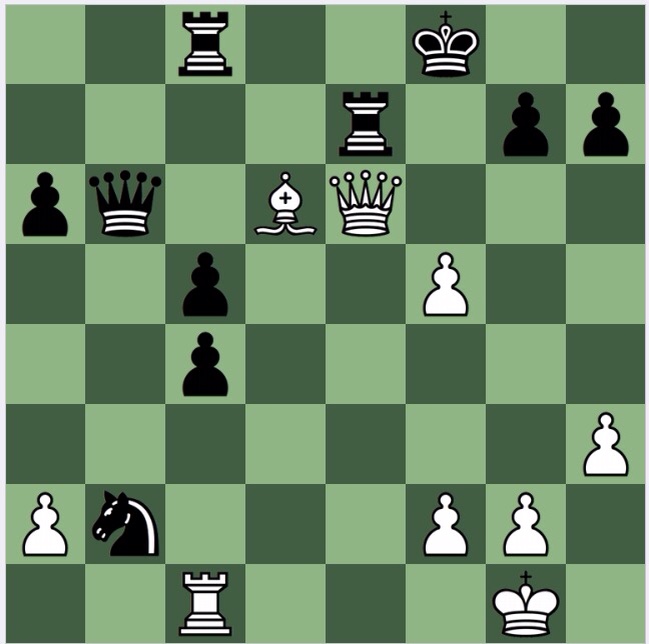
And if say 5…Qb7 then 6 Be7+, and Black's Queen is overloaded. It can't capture the Be7 since the Rc8 would then be a LPDO.
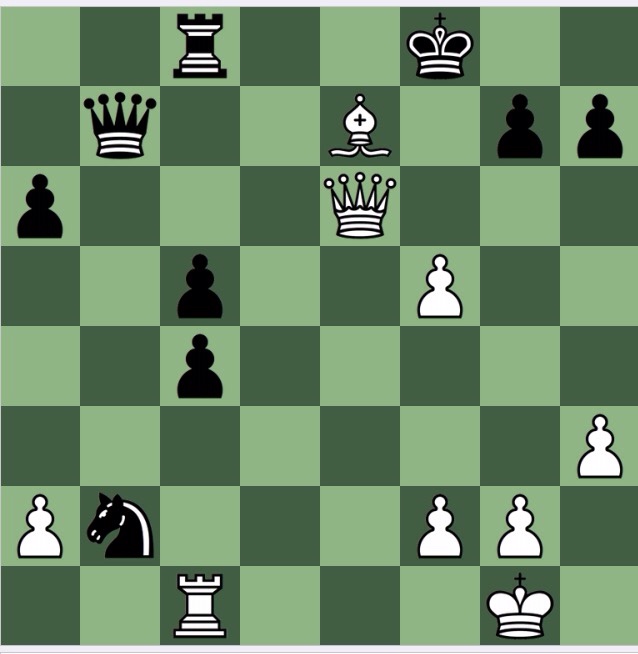
A challenging, enjoyable, puzzle.
White to play and win
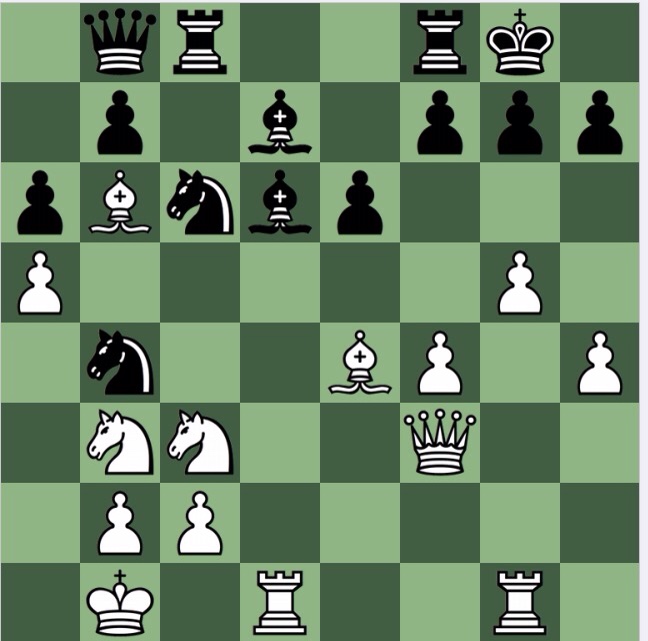
Schmid v Höhenberger, Regensburg 1965
Solution
Fairly easy, because standard: a Greek gift, and then bring more pieces to the party. 1 Bh7+ Kh7 2 Qh5+ Kg8 3 Ne4
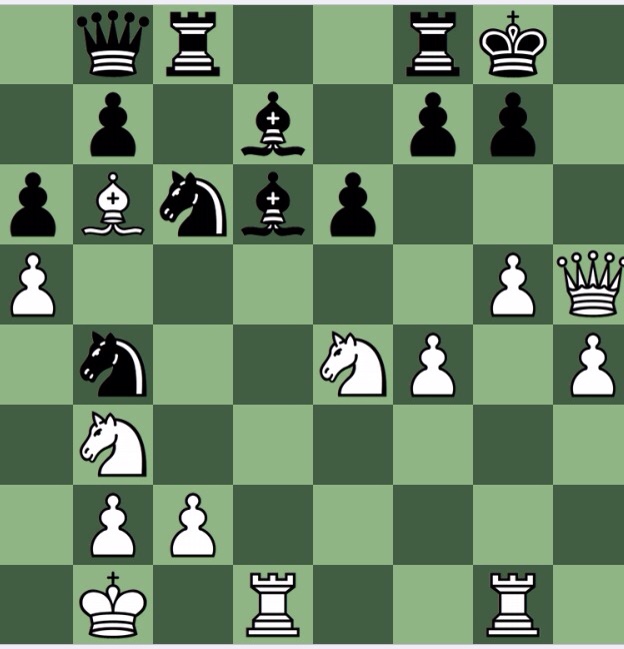
If for instance 3..Rfd8 then 4 g6 Be8, and 5 Nf6+! Kf8 6 Qh8+ Ke7[] 7 Qg7, and white is to be preferred 🙂
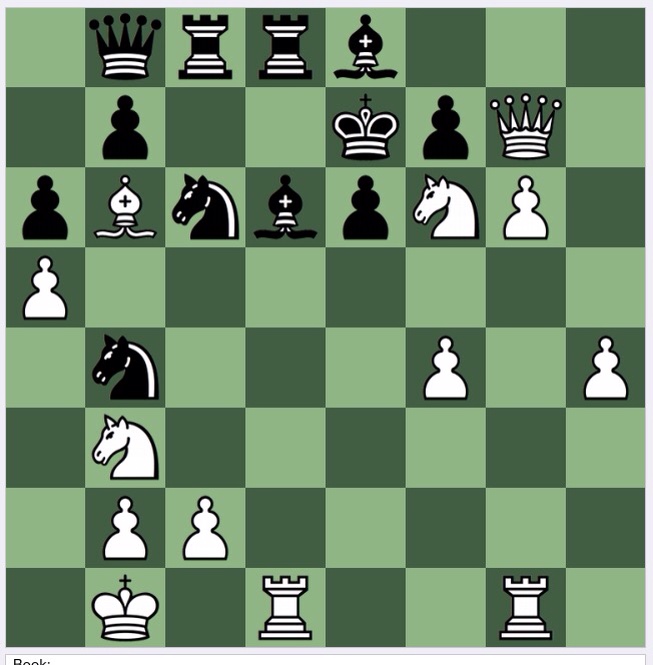
2 Ne4 is equally good.
Black to play and win
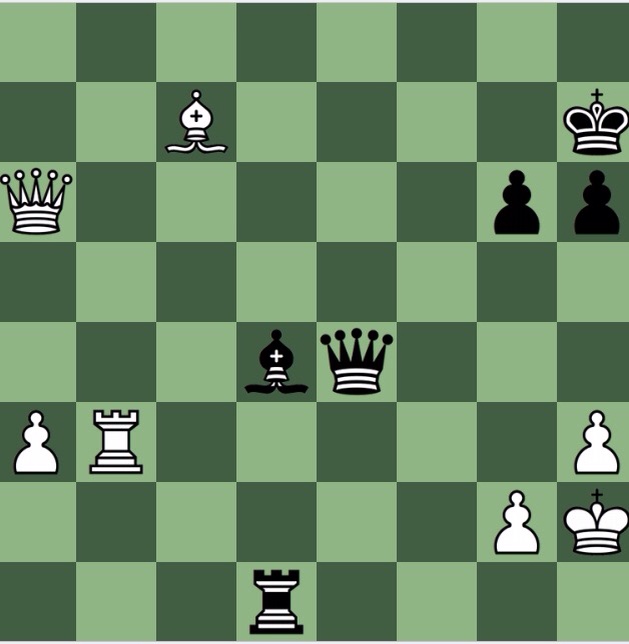
Bubis v Ciocaltea, Netanya 1965
Solution
On one level, fairly easy: 1…Rh1+! is fairly obvious, with a standard manoeuvre following after 2 Kh1.
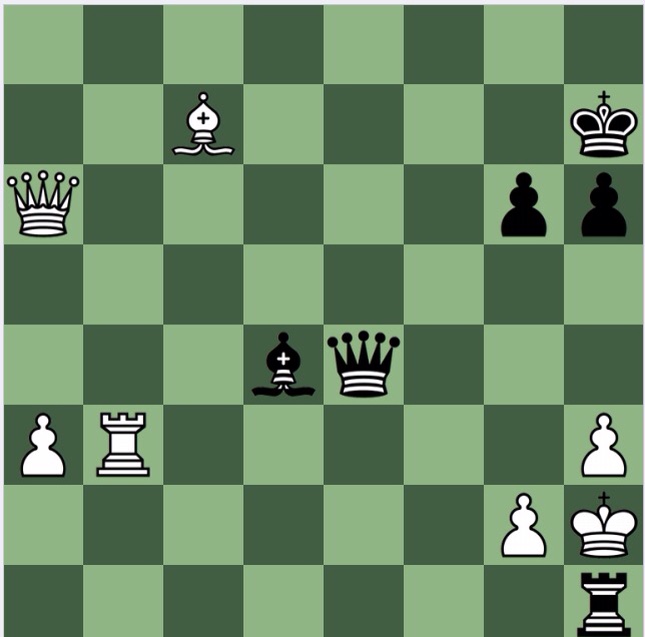
2…Qe1+ 3 Kh2[] Bg1+, 4…Bf2+, 5…Qg1 mate.
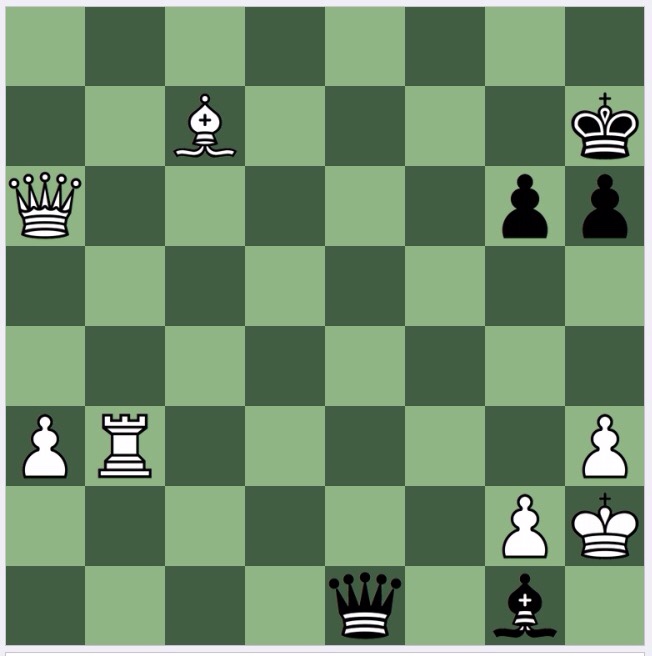
White can though spoil the fun, playing 2 Kg3, when Black is winning (2…h5) but not with particular force. The reason I say the puzzle is only easy on one level is because my engine tells me that 1…Bg1+! is forced mate in six: 2 Kg3 Qe1+ mates, apparently- and playing through a few lines confirms this, though to me it isn't calculable, and I would fear the white king slipping away.
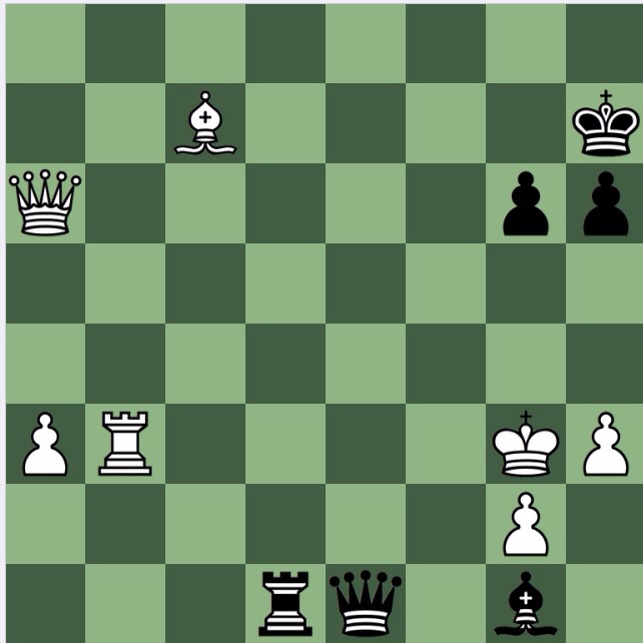
Black to play and win
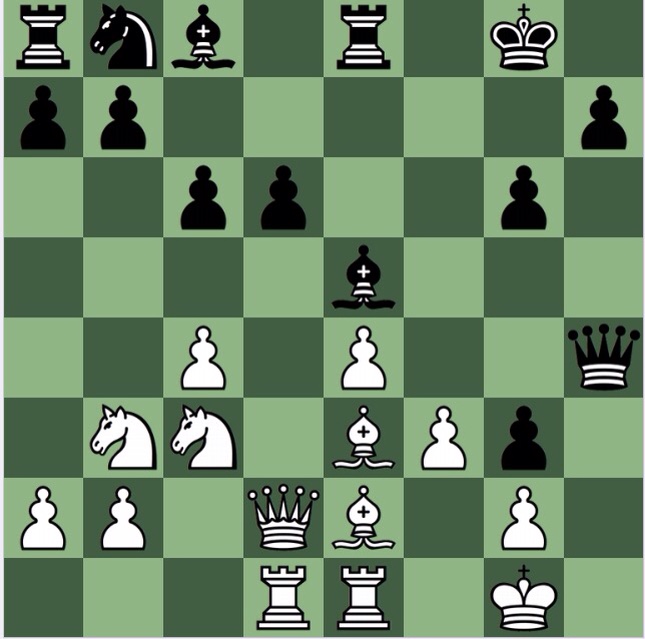
Porath v Gligoric, Netanya 1965
Solution
1…Bf4! adds to the pressure, so that if 2 Bf4? then 2…Qh2+ 3 Kf1[] Qh1 is mate. And if 2 Qd3, then 2…Qh2+ 3 Kf1[] Bh3 0-1.
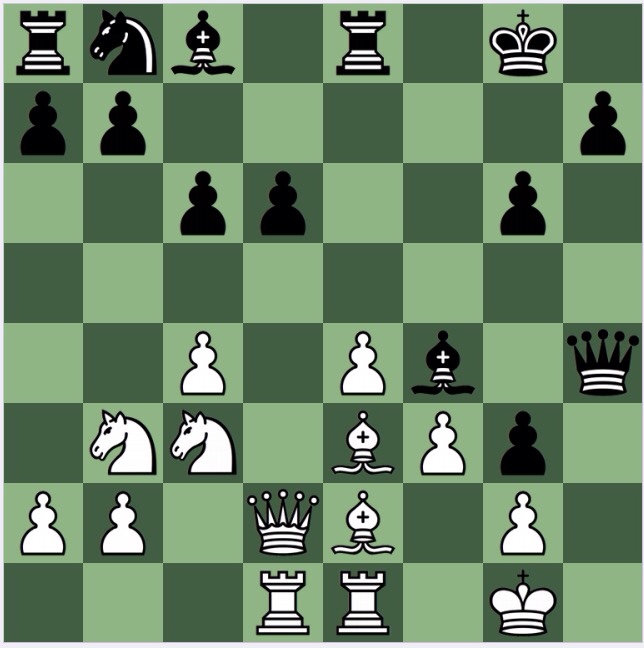
Black to play and win
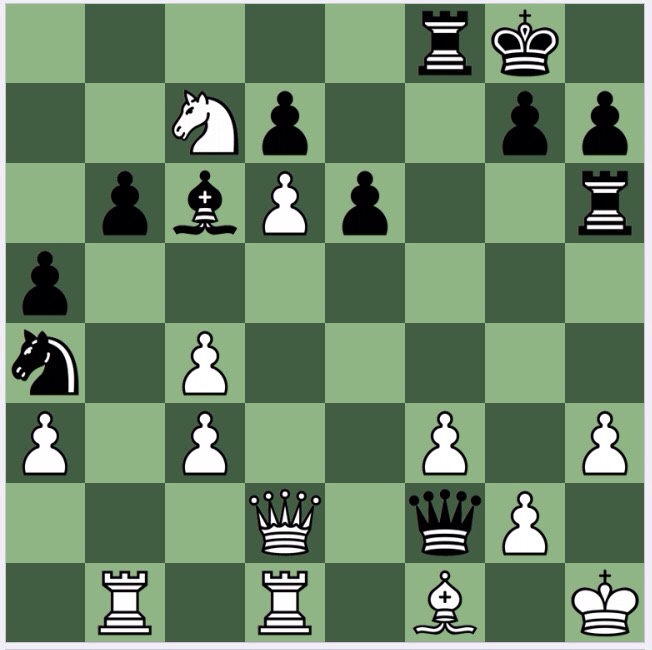
Kluger v Szilagyi, Budapest 1965
Solution
I first looked at the 'obvious' biff 1…Rh3+!, after which 2 gh [] Bf3+ 3 Bg2[] Bg2+ 4 Kh2, but couldn't visualise anything forcing in the resultant position.
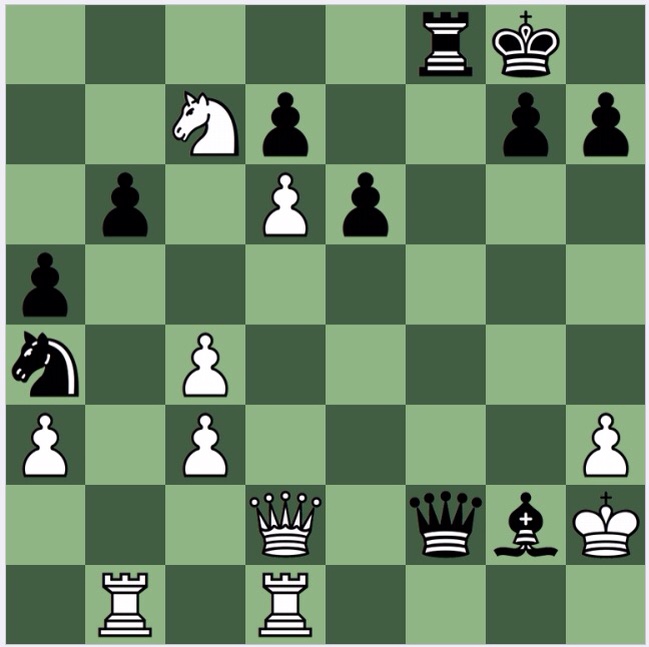
Because I couldn't see 1…Rh3+! to a successful, conclusion, I instead turned to 1…Rf3!, discussed below, but Stockfish of course finds 4…Nc3! which is cute, especially since a subsequent N*d1 defends the Qf2. Black wins. So 1…Rh3+ does indeed win by force. In the answers in Teschner's book, they too don't see 4…Nc3!, saying instead that 'in reality, Black would be in difficulties'. Not in the engine age.
1…Rf3 is pretty if White behaves: 2 Qf2 is met not by the automatic recapture Rf2 but by 2…Rfh3+! with mate next move. This was the game continuation and the solution given in Teschner.
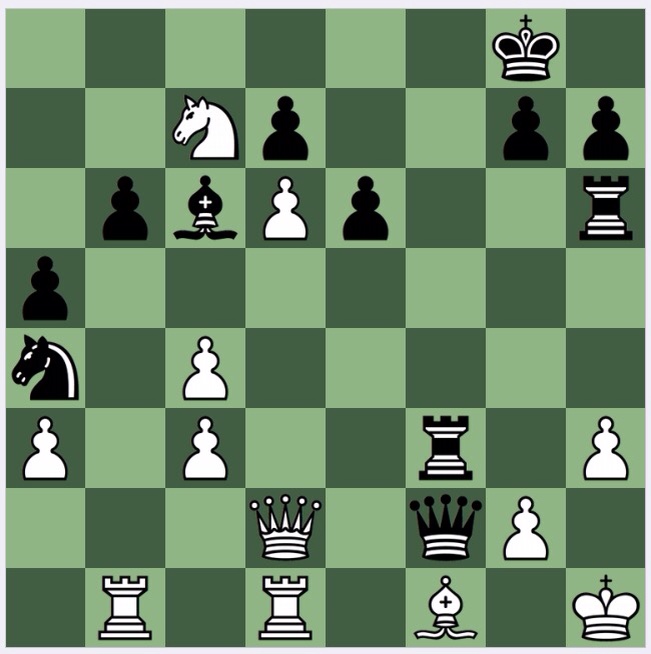
White can though be a spoil sport and play (1…Rf3) 2 Nd5 when Black is better after 2..Qd2 3 Rd2[] Rf1+ 4 Rf1 ed 5 cd Bb5 6 Rf3 Rd6:
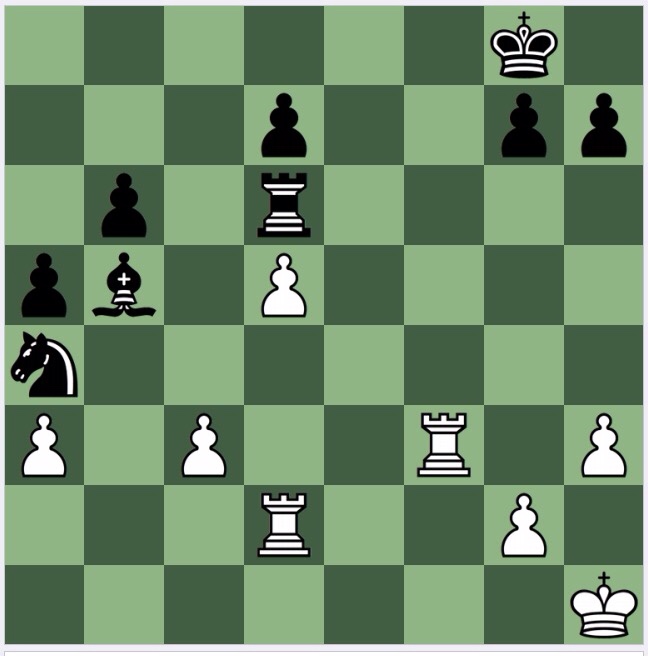
Stockfish assesses this as -2.6, and who am I to argue, but it looks closer to me than that. White probably plays 7 Rd4 to protect his d Rook and also prevent 7…Bc4. Perhaps Black should first insert 6…Rf6 7 Re3 Rd6, to give his king access to the f file, presuming that it is not in White's interests to exchange a pair of rooks, since then White's remaining rook would be overloaded with too many duties.
I can't find the game on Chessbase online, and (writing this blog from Turkey in August) I don't have the Teschner puzzle book with me, so I can't presently check what in fact Black played.
The World Cup in Baku has started, with many excellent games, and the usual good coverage on Chessbase and elsewhere.
One of the best things I did at the end of last year, in readiness to starting to work for myself, mainly from home, was to buy a second screen for my desktop PC. Having got so used to the advantage of having different programmes open on different screens, I sometimes wish I had three screens; but two is sufficient for weekends: some work, mainly of a minor nature on one screen, and…Playchess.com on the other, with q handful of games from Baku.
My number 1 game to watch today was Mariya Muzychuk against Mickey Adams. Their first game had been a fairly even draw in the Open Ruy Lopez. Today, my impression is that the game was also a very even draw, with Mickey never much if any better.
Towards the end, I started to accept that it would go to tie break; being sanguine about it, I knew that Mickey would be strong favourite in the rapids, but fast chess must heighten the risk element.
In the position below, the game was heading to a totally drawn opposite coloured bishop ending. 1 Rf2[] and if the rooks and a pawns are traded, it is time for the rapids. White took a long time before playing 1 Rf2 (why?) during which time I saw 1…Be2, which Mickey played, when 2 Ba3 Ra2 and 1/2-1/2.

No: I suspect a book or a long article could be written on the number of times when ‘he takes me, I take him’, automatic recaptures, is wrong.

Mickey instead played the exquisite last chance 2…Rc2!! putting White in near zugzwang. Its point is that on c2 the rook prevents Bc5, and so enables the breakthrough d5-d4, with strong possibilities. It is still drawn, with 3 f5!, which White played, 3…d4! 4 ed[] e3 and 5 Bc1!, exploiting the pin: if Black wants to carry on he has to hope that 5….Bf3+! is sufficient, but I suspect it is a draw. However, White played 5 Rf4?, losing after Mickey’s precise exploitation of his opponent’s mistake.
This game file contains my brief comments. http://www.viewchess.com/cbreader/2015/9/14/Game114846468.html
A class performance, finding and taking the smidgen of a chance he was given.
White to play and win
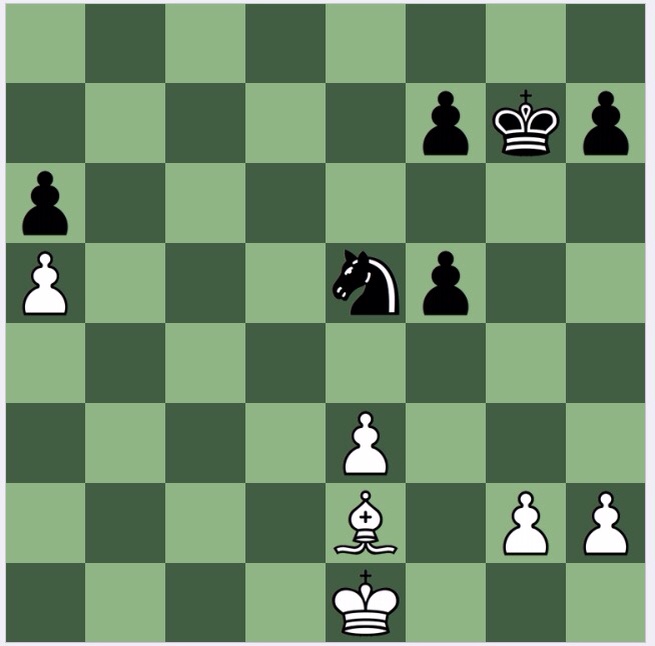
Keres v Kavalek, Marianske Lazne, 1965
Solution
I solved this one, but only by eliminating all other possibilities, knowing there was a win to be found.
1 Ba6? Nc6 and probably a draw, with all the pieces on one side. The key point is that 2 Bc4 Na5 3 Bd5 doesn't trap the Na5 because 3…Kf6 and reaches e5 before White's king can get to d4.
1 Bf3? Nc4 again winning the a5 pawn.
So, 1 Kd2! Nc6 3 Kc3! and if 3…Na5?, 4 Bf3 now does win the Na5; so instead 3…Nb8 but 4 Bf3, 5 Kb4 and the a6 pawn will fall.
 allanbeardsworth