Black to play and win
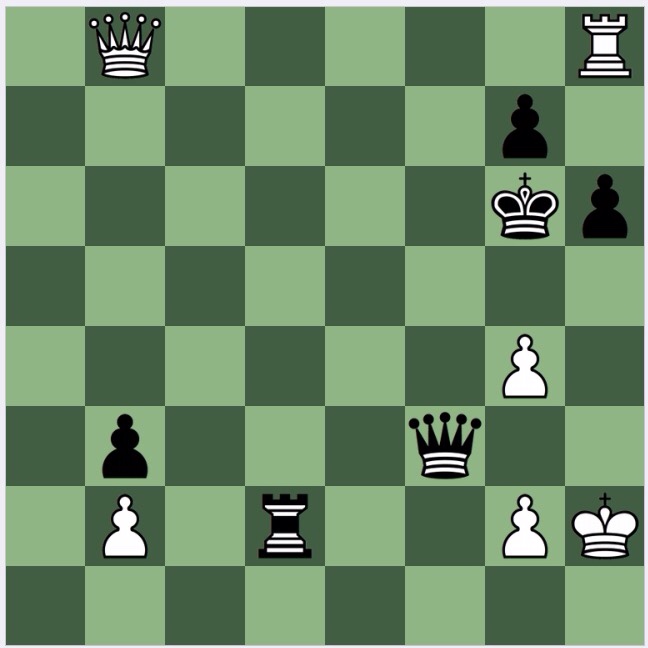
Bronstein v Korchnoi, Leningrad 1962
Solution
This position is part of my 'chess culture': I recognised the position, and knew that 1 Rh6+! won for Viktor.
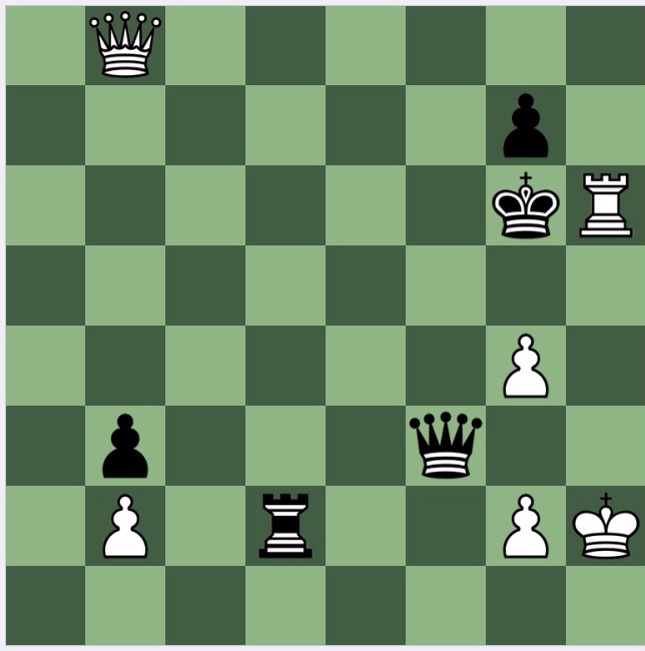
Easy parts first:
1…Kh6 2 Qh8+ Kg6[] 3 Qh5+ Kf6 4 g5+ discovering an attack on the LPDO Qf3, 1-0;
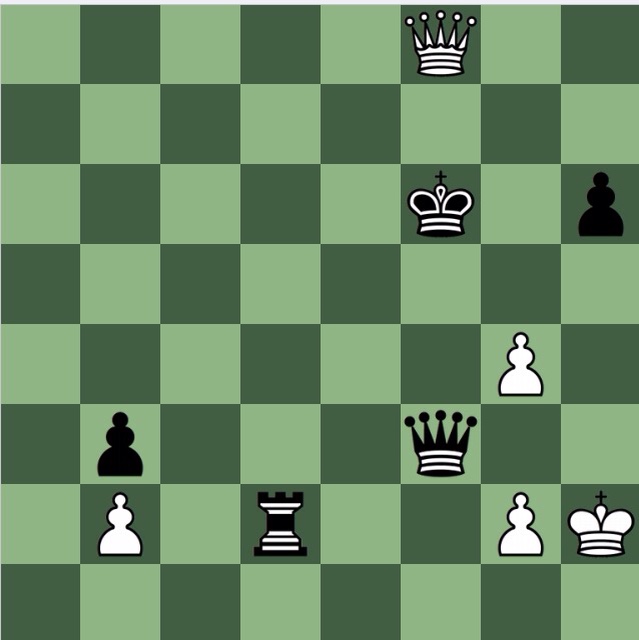
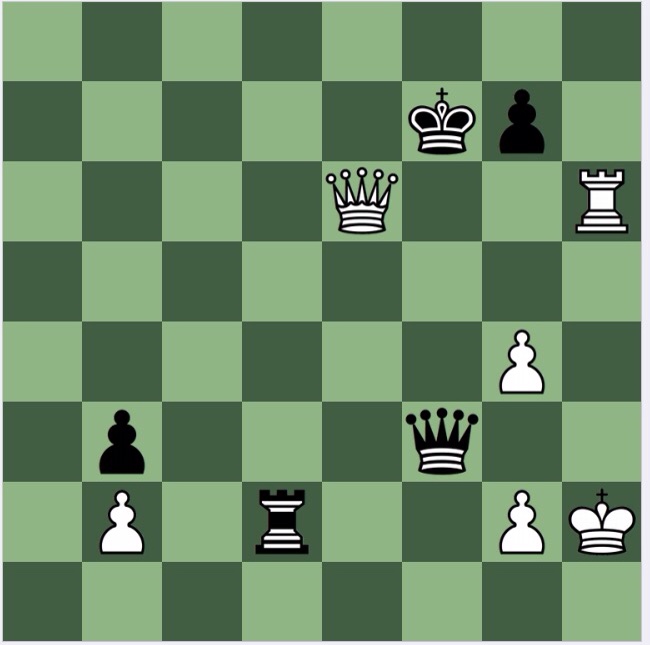
1…gh 2 Qg8+ Kf6[] 3 Qf8+ skewering the king and LPDO Qf3 again;
 Posted with Blogsy
White to play and win
Teschner's caption asks whether White must play 1 Qd1 as Black believed?
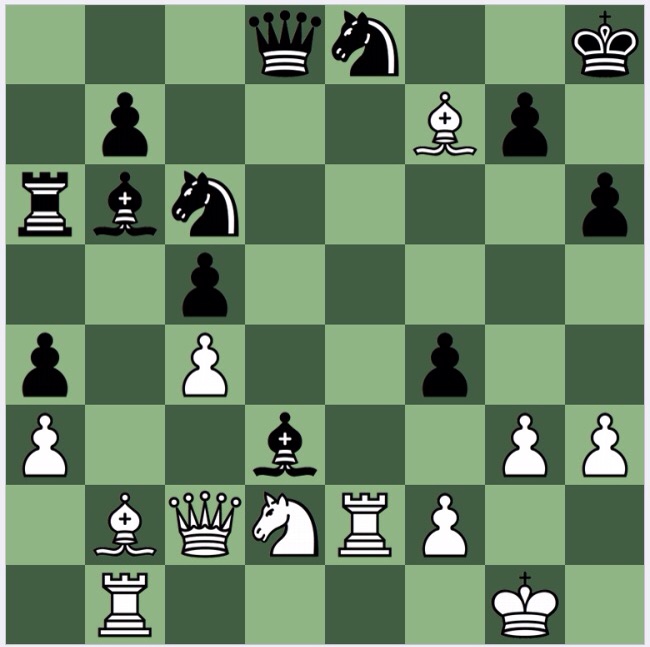
Johnson v Minev, Halle 1963
Solution
Alas, the diagram position in the Teschner book is wrong, omitting the Bf7. I struggled with the book's position before realising that 1 Qd3 Qd3 2 Re8+ is best but insufficient.
Fortunately, Megabase has the game, and showed me what was wrong. Then the same 1 Qd3 is fairly obvious and after 2 Re8+ White is winning.
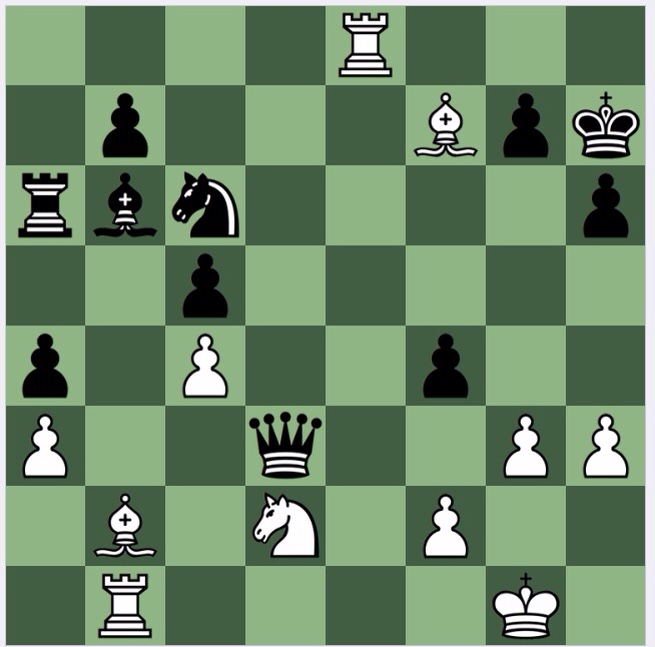
White checks on g8, and if the king retreats, then checks on d5 and then forks with Be4+; if the king advances, it is in a mating net after 4 Re6+.
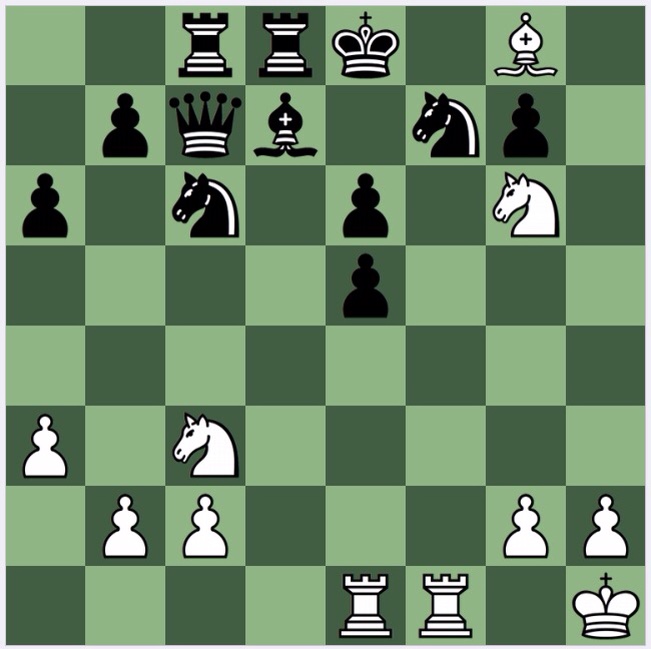
White to play and win
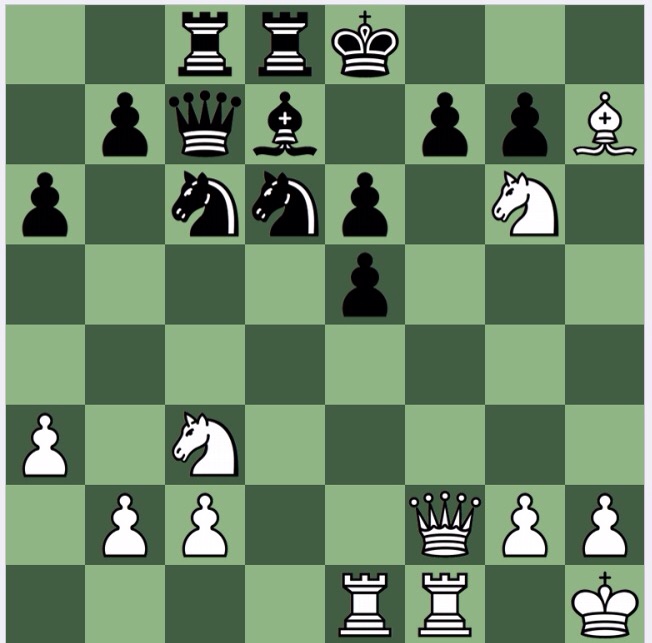
Rusakov v Kalinkin, RSFSR, 1963
Solution
Black is well and truly trussed up, allowing White the time for 'revolution and evolution', to use a phrase from Jacob Aagaard's books on attacking.
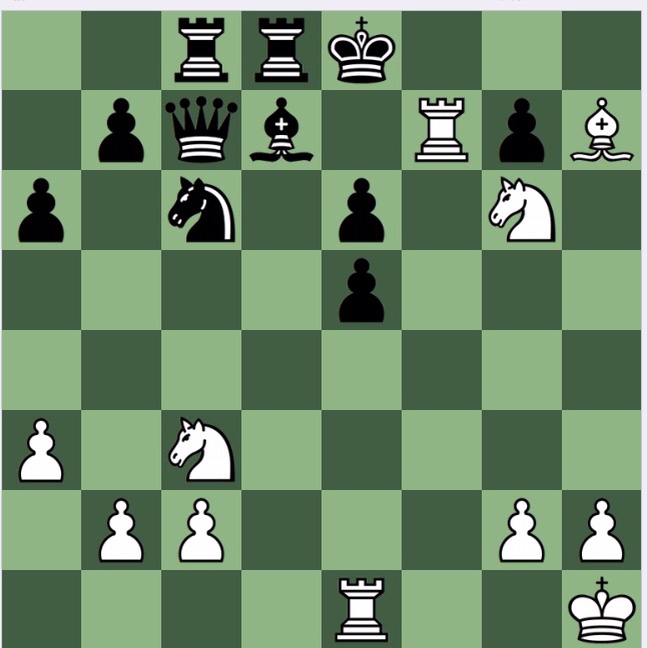
1 Qf7+! Kf7[] 2 Rf7 and if 2…Kf7, 3 Rf1+ and 4 Rf8 mate, or if 2…Qd6, the 'evolution' 3 Rdf1 followed by Rf8+ Qf8 Rf8 mate.
—
I always write my blog posting first, then enter the position into Stockfish on my iPad, so as to be able to include the diagrams. Here, Stockfish surprised me with the even better 2 Bg8! and mate next move. Pretty.
White to play and win
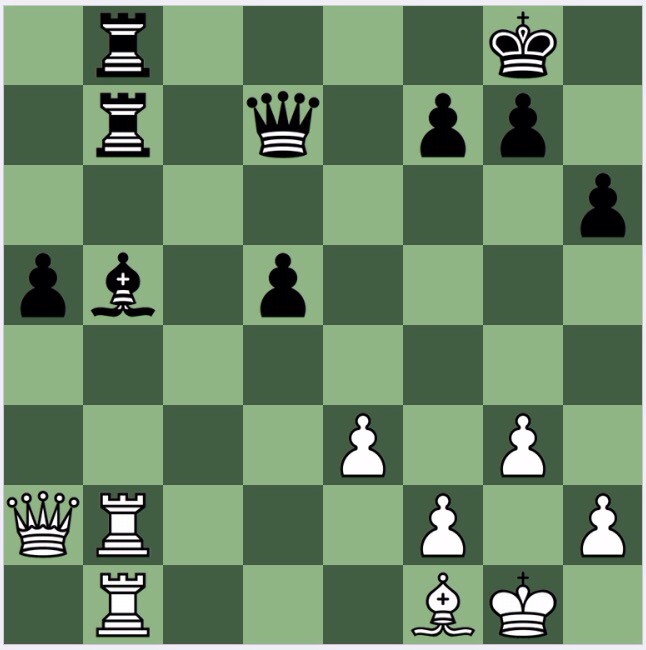
Addison v Steinmeyer, New York 1963
Solution
A rest day today. 1 Rb5! is the first biff to examine, and with the Qd7 LPDO, the pin (after 1…Rb5[]) 2 Qa4 is equally obvious. If 2…R5b7 then white exchanges queens and then picks up the now LPDO Rb8.
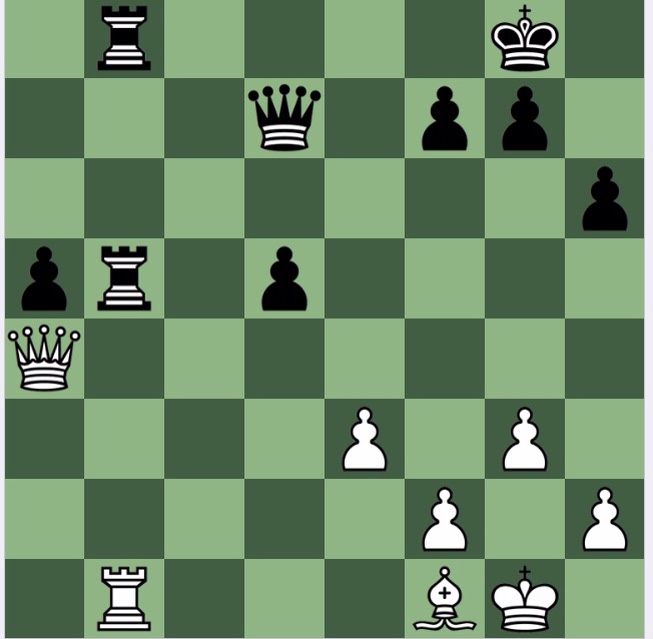
Black to play and win
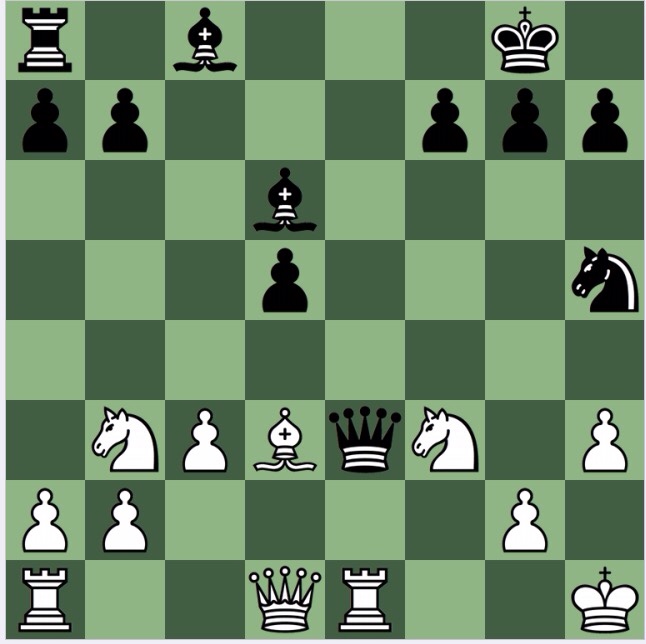
Quite similar to yesterday's problem. A forced mate, with not many variations.
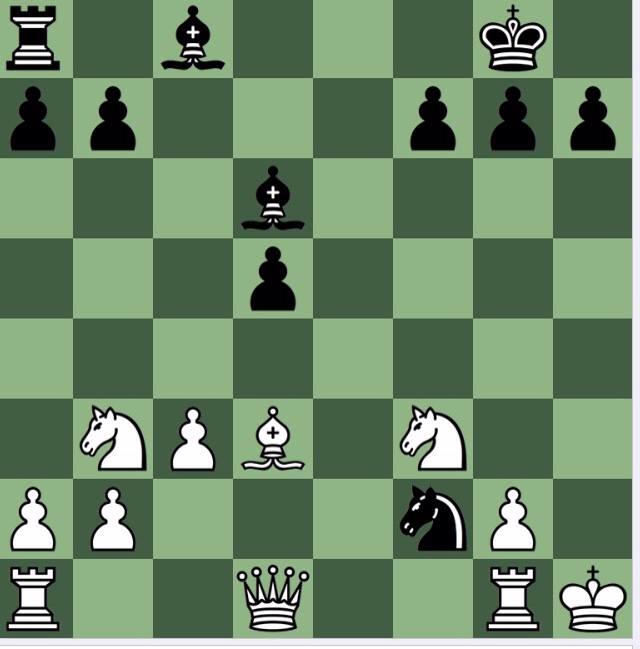
1…Ng3+ 2 Kh2[] Ne4+
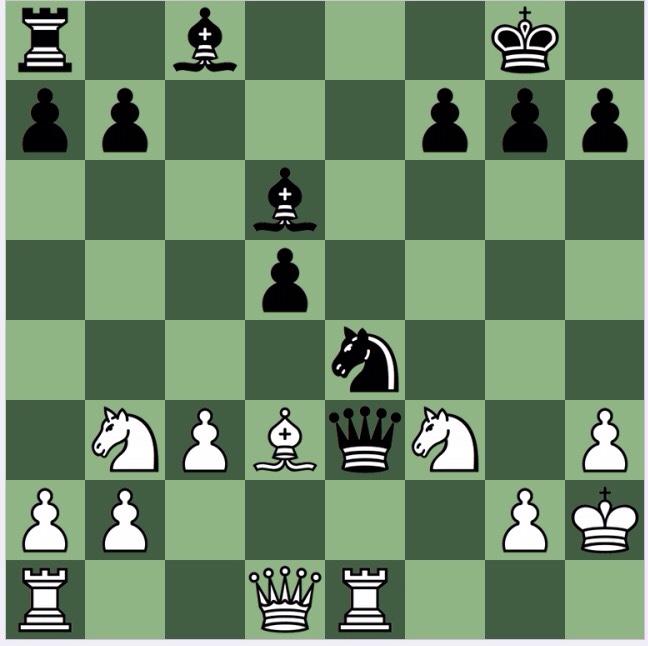
If 3 g3 then 3…Qf2+ and 4 …Ng3 mate, so 3 Kh1 instead. Then we have the standard smothered mate by 3…Nf2+, 4…Nh3+, 5…Qg1+ and 6…Nf2 mate.
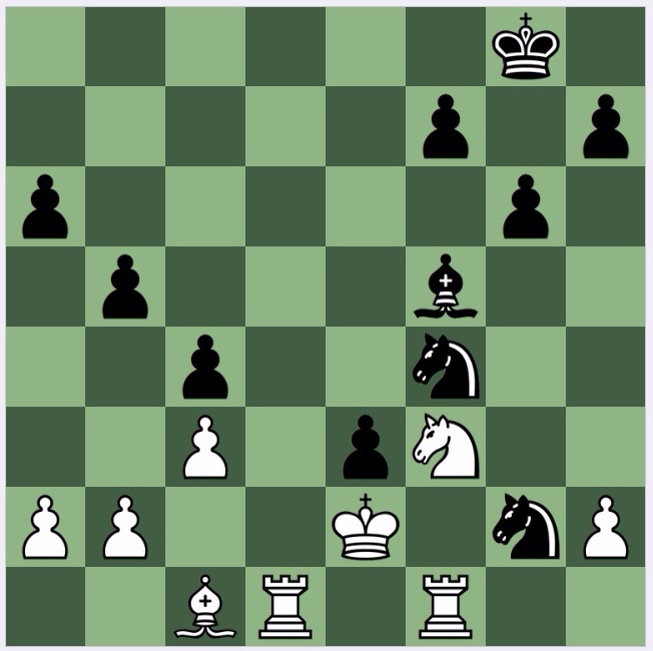
Black to play and win
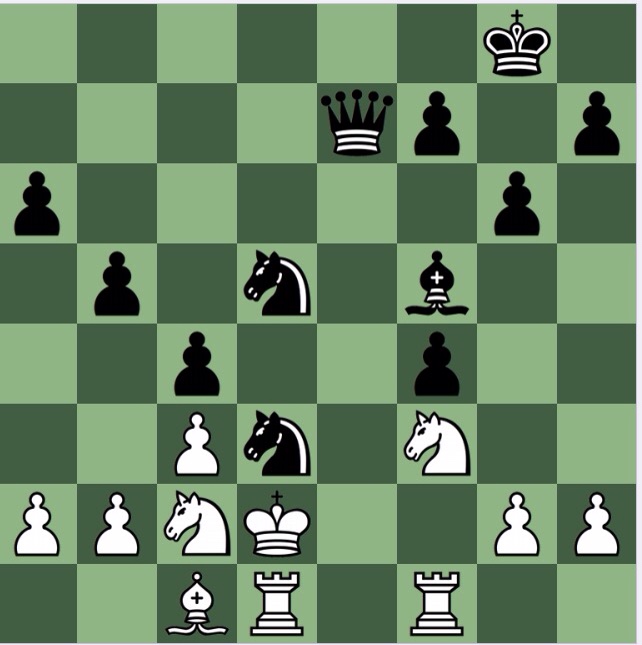
Rösch v Fiolka, Rosenberg 1962
Solution
A forced mate in five, with only one minor diversion.
1..Qe3+ 2 Ne3[] fe+ 3 Ke2 (3 Kc2 Ne1 mate)
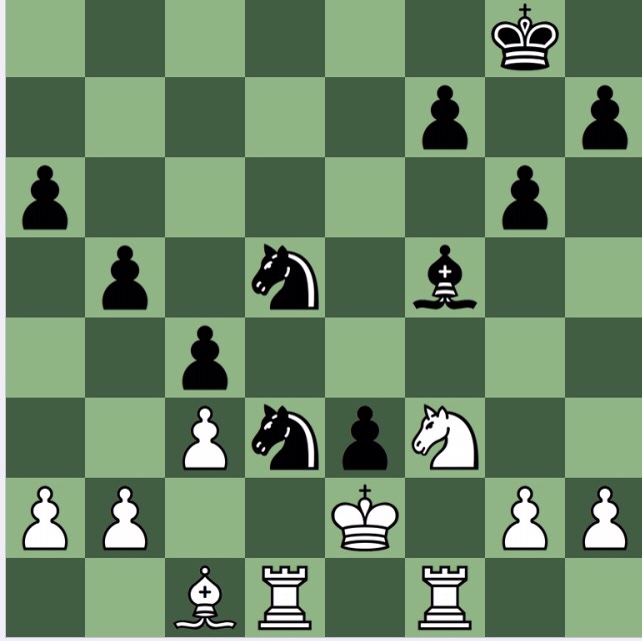
3…N3f4+ 4 Ke1[] Ng2+[] 5 Ke2[] Ndf4 mate.
Black to play and win
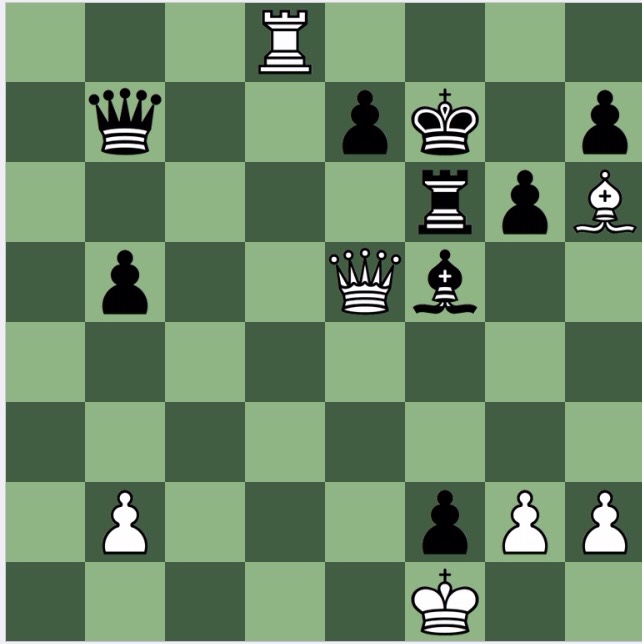
Baseler v Dr Müller Landau 1962
Solution
Not too hard, main issue to work out the order of moves, particularly the choice between 1…Bd3+ and 1…Qg2+. There is the threat of Rf8 mate, so one or other biff is necessary.
Looking at 1…Qg2+?? first, it loses: 2 Kg2 Bh3+ 3 Kg3! 1-0 (3…Rf3+ 4 Kh4 g5+ 5 Kg5). So, instead 1…Bd3+[] 2 Rd3[] Qg2+ 3Kg2 f1(Q)+ with the important point that this forks the king and the LPDO Rd3.
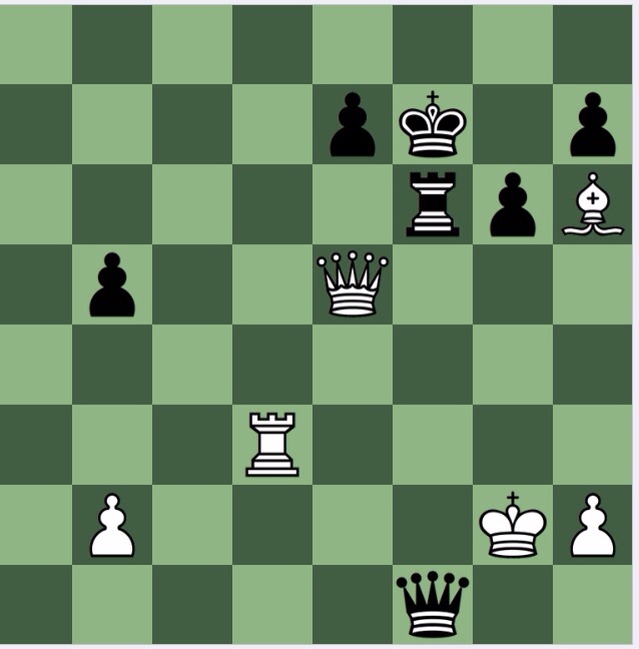
Black to play: evaluate 1…f4+ 2 Ke4
Pilskalnieti v Berzinsh, Riga, 1962
Solution
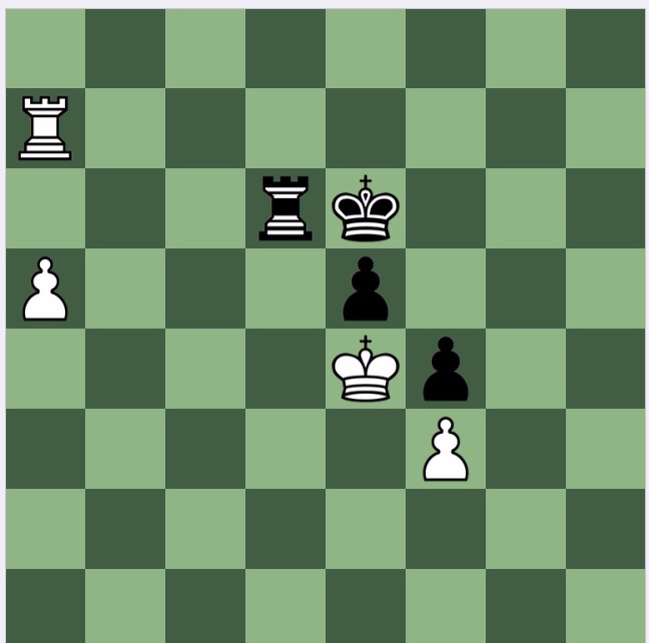
1…f4 is fine, after white should play 2 Ke2, with a probable draw. 2 Ke4 is a losing blunder after 2…Rd6!
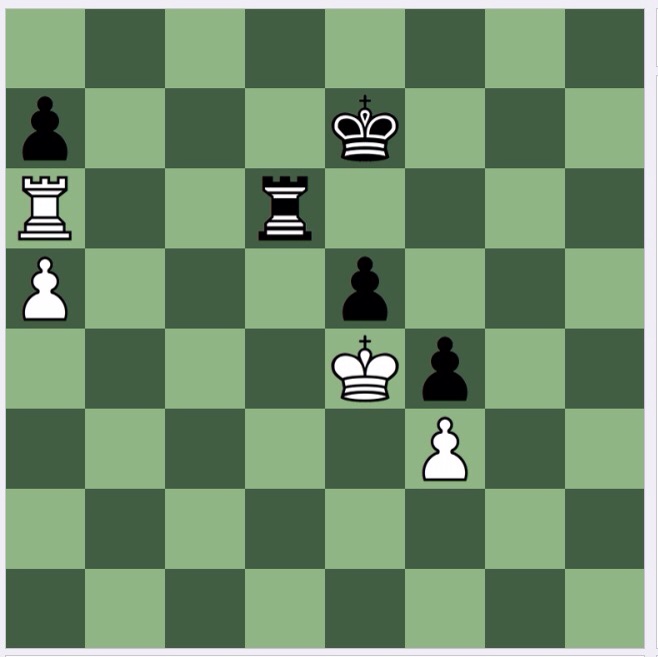
If the rooks and exchanged, the white king is eventually pushed back, and black will shoulder white's king away from the defence of the f3 pawn. So 3 Ra7+ Ke6 and…white's king is in a mating net.
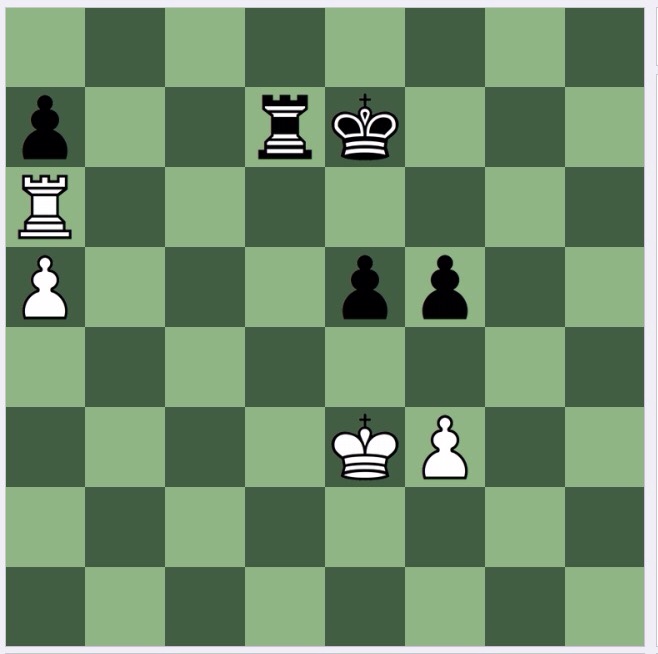
Evaluate the position, with white to move
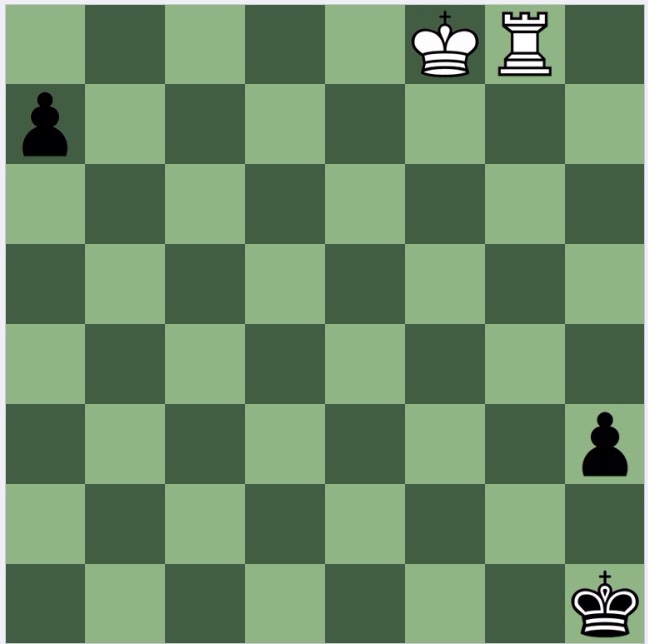
Kamenika v Korne, Riga 1962
Solution
I wonder who finds counting easy? I don't, and have to revert to 'I go there, he goes there, I go there' thinking, more or less.
The position is a bit like one of those Hans Rinck puzzles where the king moves faster than it would seem possible, due to the tricks of the geometry of the chess board.
Here, the geometrical trick is that the square e5 is just as near a1 as is c5. So after three moves each we reach:
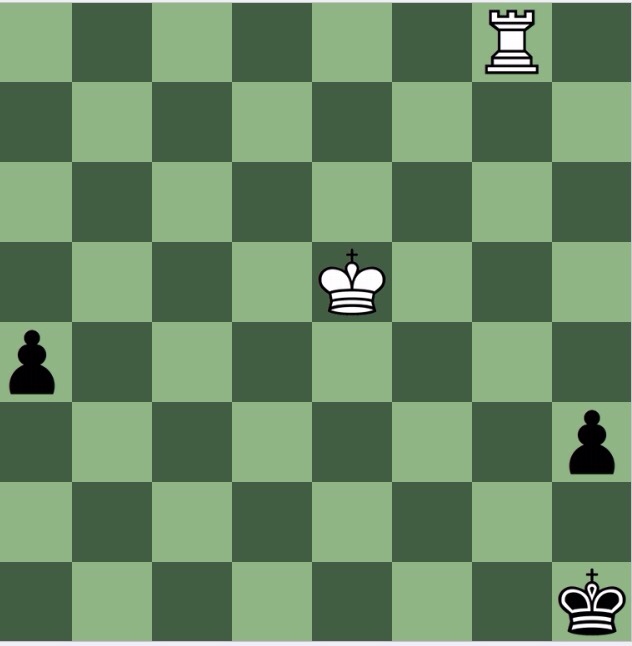
Then, either white grabs the a pawn with check, or black is forced to promote to a N. I will only give a diagrams and let the reader navigate between them.
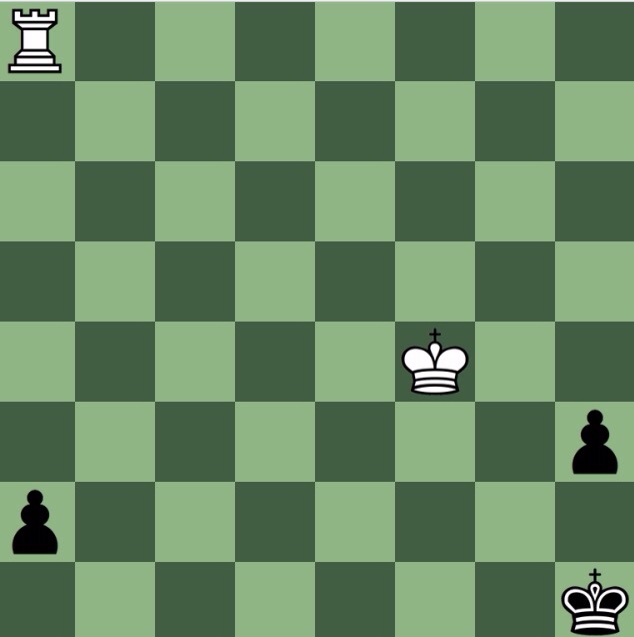
White captures the a pawn
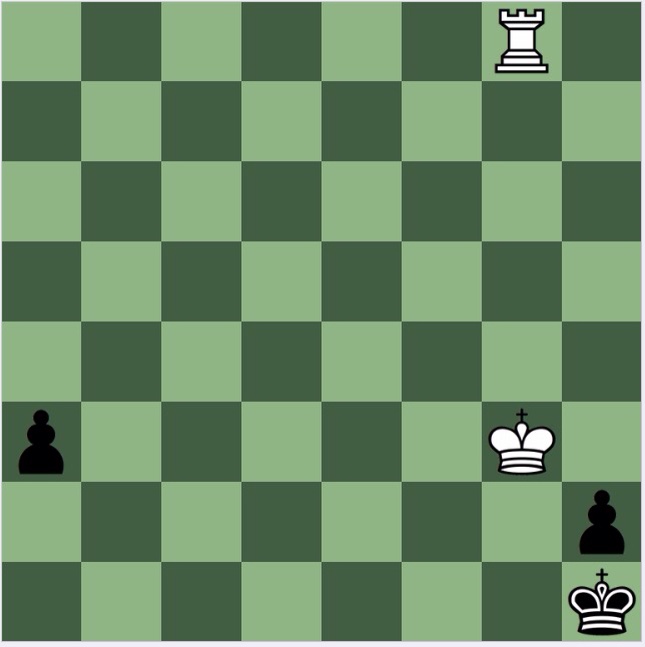
Black has to promote to a N
White rounds up the a pawn, and due to the then threat of Ra1 mate, black must under promote.
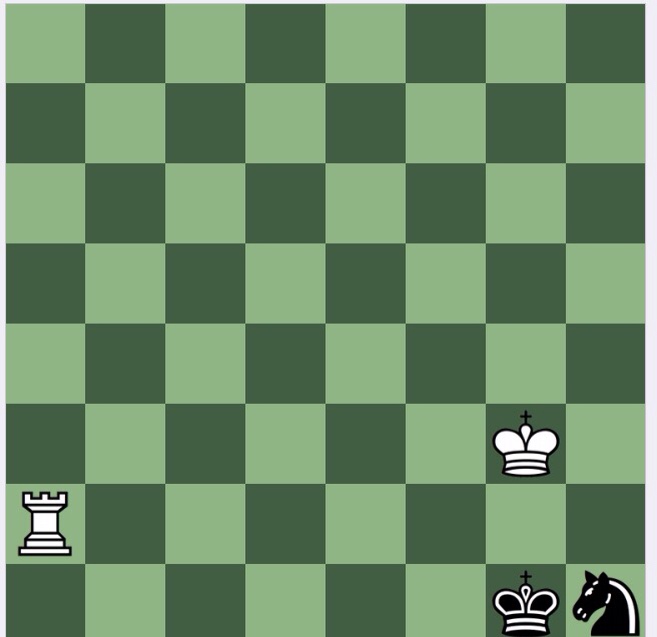
But the N must move, and is lost.
Short answer: I don’t know.
Long answer: I hope to find out. Thank you, to my friend Paresh, for asking me the second question, which has sent me on a happy journey trying to find out.
None of my, ahem, 561 chess books (good job Jane doesn’t read my blog) explains why, though to be truthful I have only looked at a handful, those few dealing with chess history and tidbits. So, soon, 561 will become 562 since I have ordered Harold JR Murray’s 1913 opus A History of Chess. (and 562 will become at least 564 before we go away on holiday in August)
When I was asked, my (incorrect, as it turns out) guess was ‘during the 15th century’, around the time the Queen’s move was changed, changing her from the weakest to the strongest piece on the board.
I previously blogged about the depiction of chess in the 2013 BBC series The White Queen. That blog shows (I) the chess board was correctly, coloured, but (II) the board was set up wrongly, with a black square in the right hand corner.
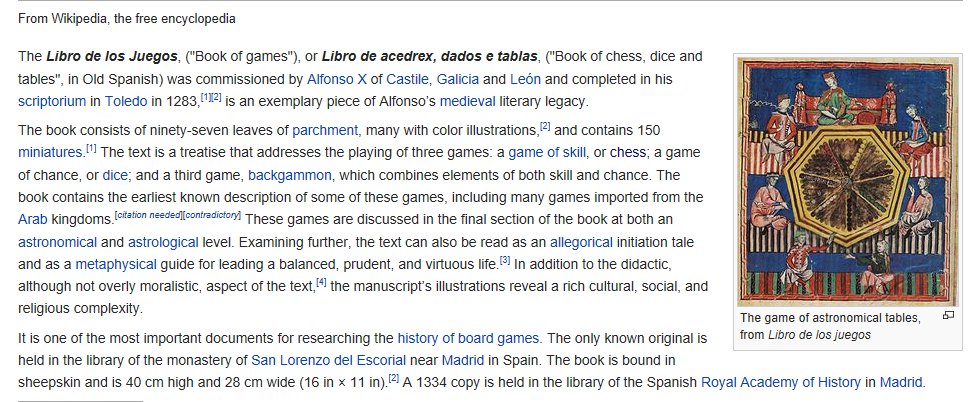
However, the coloured chess board goes back at least a further two hundred years. The Libro de los juegos, a key 1283 document about the history of games, shows (II) a black and white board; (II) white in the right hand corner.
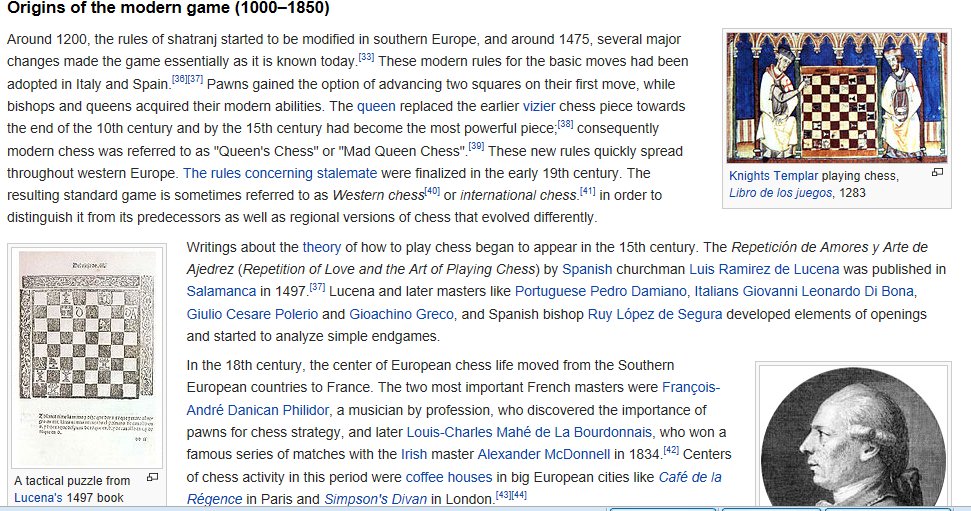
The diagram in the left hand corner of the above picture is from the fifteenth century. Luis Ramírez de Lucena c 1465-c 1530, Spain, wrote the first surviving printed book on chess, wrote it, and the diagram correctly shows the white right hand corner. (It, and another position I have seen- on the Wikipedia page for Lucena, both show white at the top of the board; nowadays, white is ubiquitously shown at the bottom)
(Another meander: the Lucena position, a key basic tool of rook and pawn endings, is named after him, but whether or not he knew it, is unknown. It was first published one hundred years after his death).
Below is another position from Libro de juegos, again correctly set up.
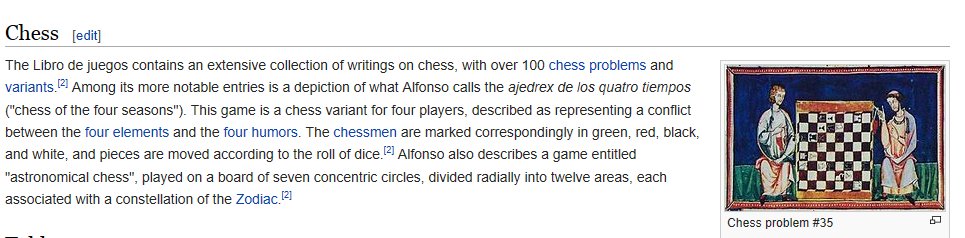
The following extract from wikipedia gives some detail about the book.
Two modern forms of chess, Xiangqi and Shogi (Chinese and Japanese chess) both use monochrome boards.
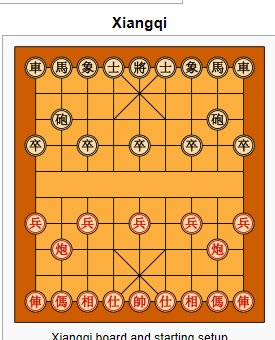
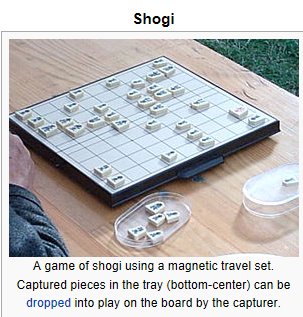
So, subject to what Murray’s book says (I was tempted to download it onto my Kindle, but how can one do that to a 1913 book on history?- so will have to wait) my guess is that when the Indian game of chaturanga (played on a monochrome board) and moved to Persia, becoming shatranj, maybe then it became bi-coloured. Having said that, the various websites I have found on Shatranj show monochrome boards, so the colouring might have been a European addition.
If I find out the answer, I will either update this blog posting, or add a further one. Perhaps one of my readers will know, and will post a reply.
PS Paresh actually asked me another question, ‘does it matter’.
Short answer. It matters a LOT.
Longer answer: I am sure I am not alone in instantly seeing that boards are set upwrongly in the movies, on adverts, in shop displays. Googling ‘chess boards set up wrongly’ shows a posting on Chessbase of eleven movie scenes with the chessboard set up wrongly, but there are more.
 allanbeardsworth