Black to play and win
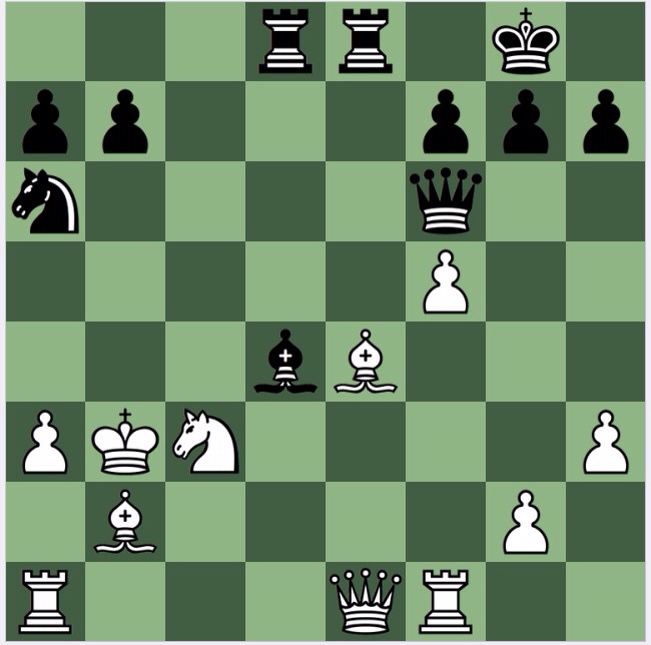
M Bileden v W Heidenfeld 1935
Solution
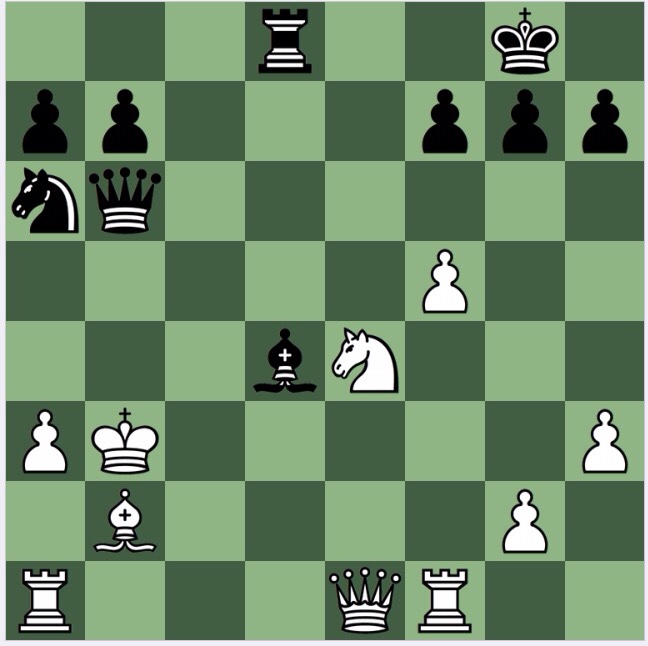
Reitstein's rubric says that black played 1…Nc5+ and went on to win, but he missed a better move. With that clue, it isn't too hard to examine all biffs and find 1…Re4! when white's best is 2 Ne4 (2 Qe4+ loses the queen to the Nc5+ fork). Then 2…Qb6+ drives the white king forward, since if it goes backwards, 3…Qb2+ is a ruinous check. So, 3 Qc4 Qb2 and 4…b5 mate or similar follows.
 Posted with Blogsy
Black to play
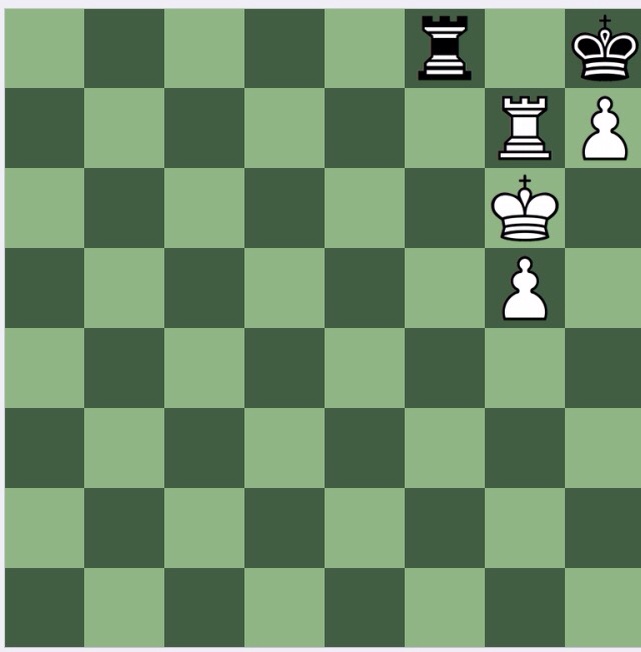
White calculated 1…Ra8 2 Rg8+ Rg8[] 3 hg(Q)+ Kg8[] 4 Kf6 Kf8 5 g6 Kg8 6 g7 and the pawn promotes. What did he miss?
PJ Foley v A Van Tets 1991
Solution
Like buses, easy problems come in threes, since the last two puzzles were also easy. Today, 1..Rf6+! and it is stalemate.
Comment
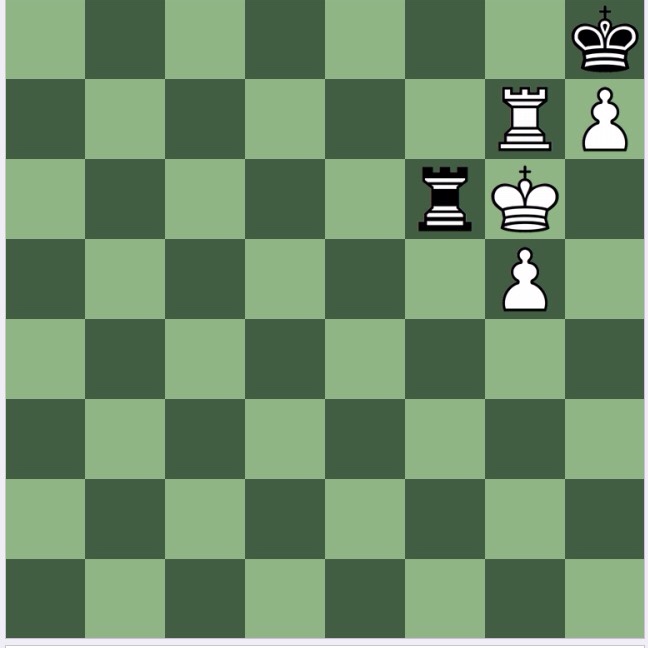
In the initial position, white had just played 1 h6-h7. It is not entirely trivial to work out how to win instead, playing against an engine. I have just done so, and there are some interesting lines.
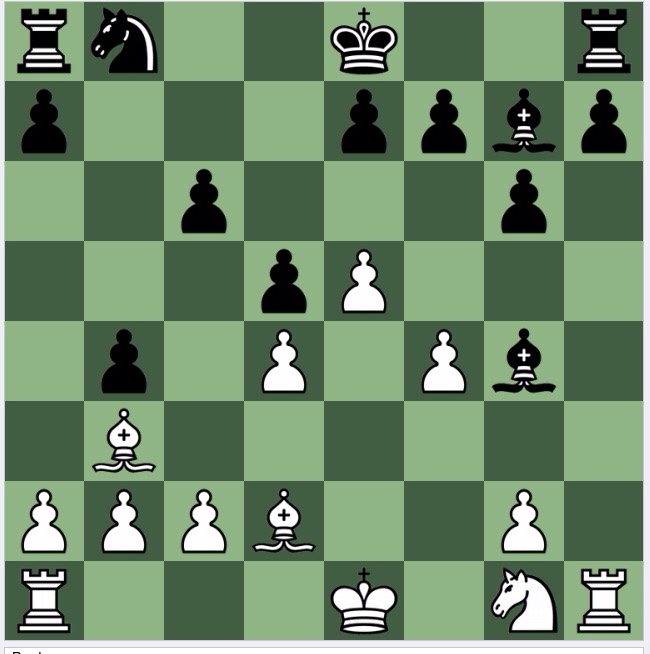
Black to play and win
White played 1 Bb4 here: should he have?
HE Price v D Friedgood 1976
Solution
Another rest day. 1…a5! is an obvious biff, and once the bishop moves, 2…a4 traps the white squared bishop.
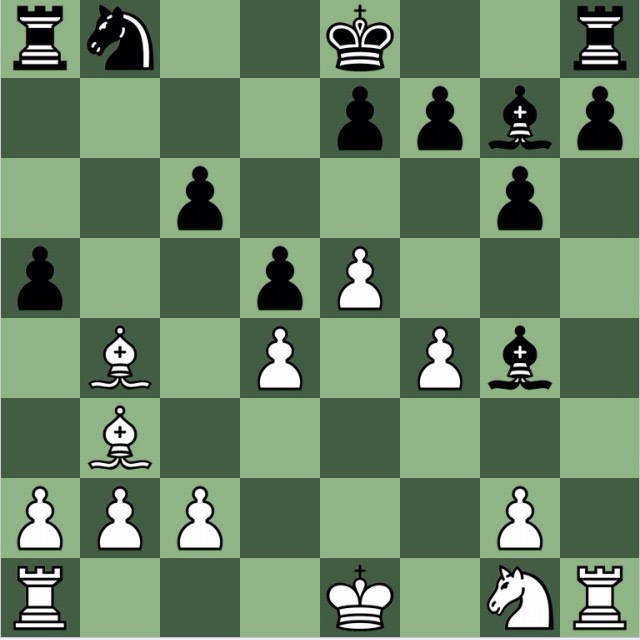
Black to play and win
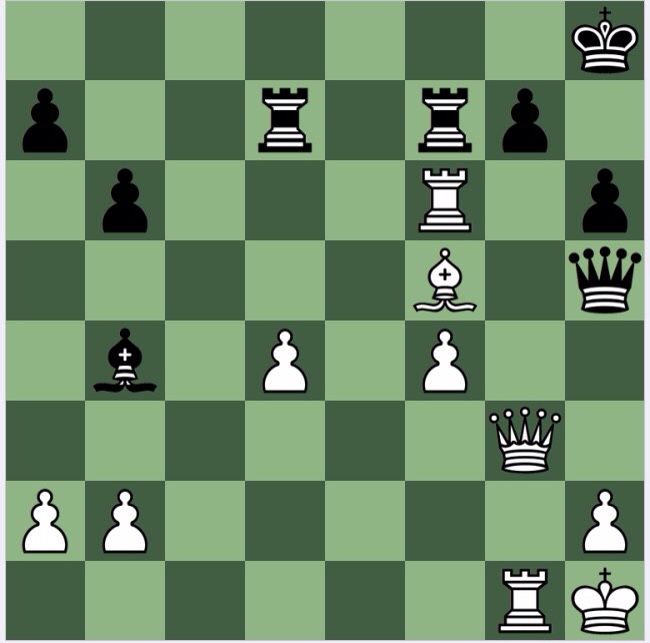
BE Siegheim v H Duhan 1911
Solution
A rest day today: 1…Rf6 2 Bd7[] Qd5+! and 3… Qd7 wins a piece.
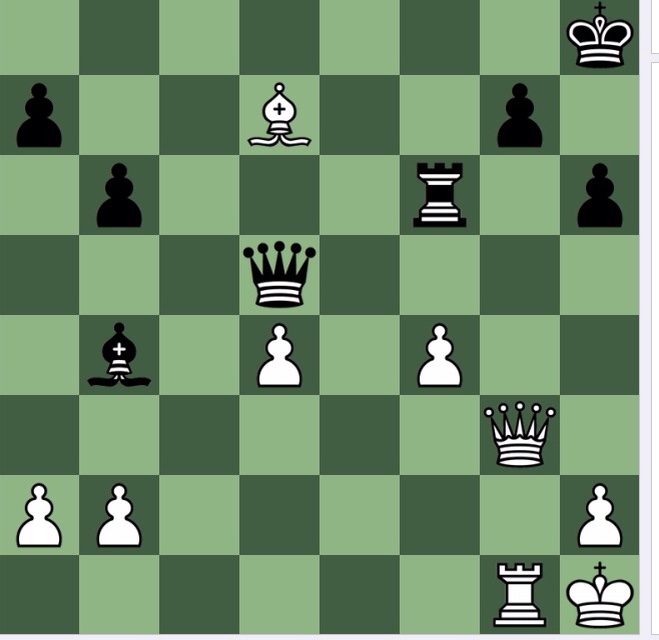
Black to play and win
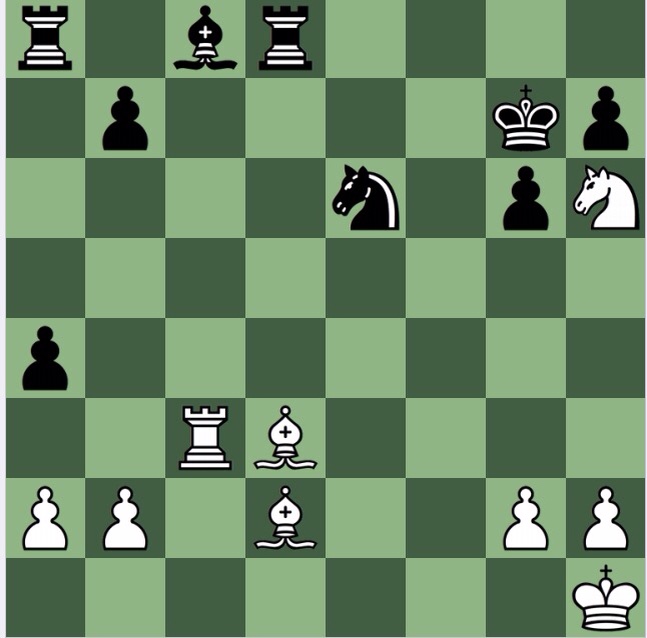
E Erwee v S Bhawoodien 1995
Solution
Funny thing, memory. I bought this book (Reitstein's second collection of chess puzzles from South Africa) in 2008, and dipped into it then. One puzzle I looked at then was this one, which I had marked as 'x' as not having found the game continuation, 1…Nc5!, and instead scribbling the question 'does 1…b5 win?‘.
Now, in 2014, I instantly saw 1….Nc5!, seeing that white's pieces are uncoordinated, pinned, and helpless, due ultimately to the jump check Rd8-d1, and also the Bd2 being tied to the Nh6. After 2 Rc5 Rd3 3 Rc2 black's best is the quiet 3…Bd7.
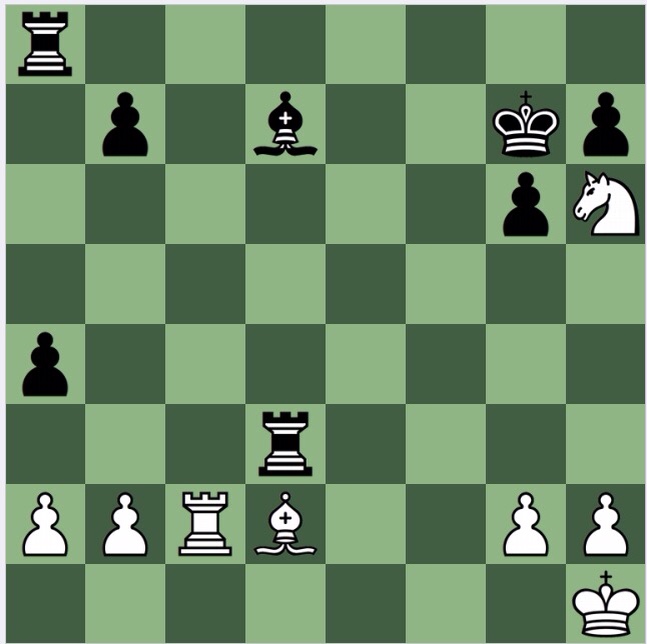
White might try 4h3, but 4…Rc8 decides.
Black to play and win
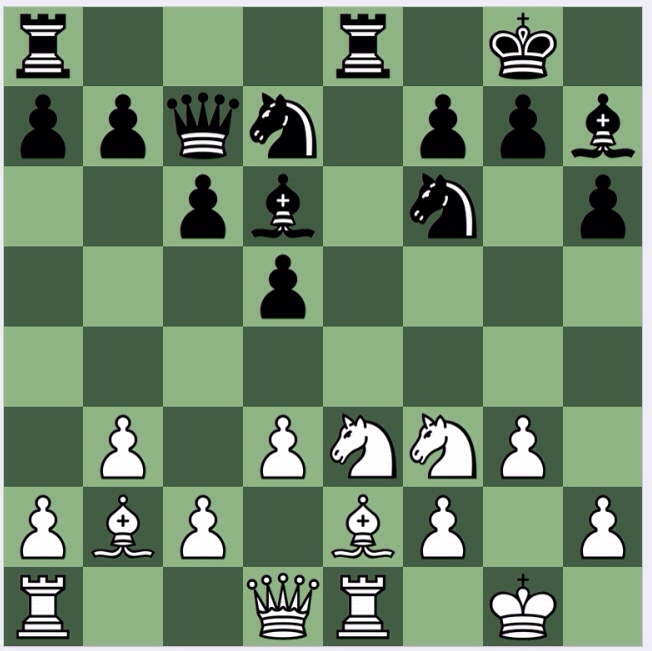
N Scott v MJ Bennett 1974
Solution
I enjoyed this one, because I improved on the game continuation, and on Reitstein's analysis. In the game black played the natural 1…Bg3! which gives him an advantage, but black had better. First, 1…Bg3.
If white doesn't take the bishop, then he is a pawn down, with a ruined K-side. So 2 hg Re3!
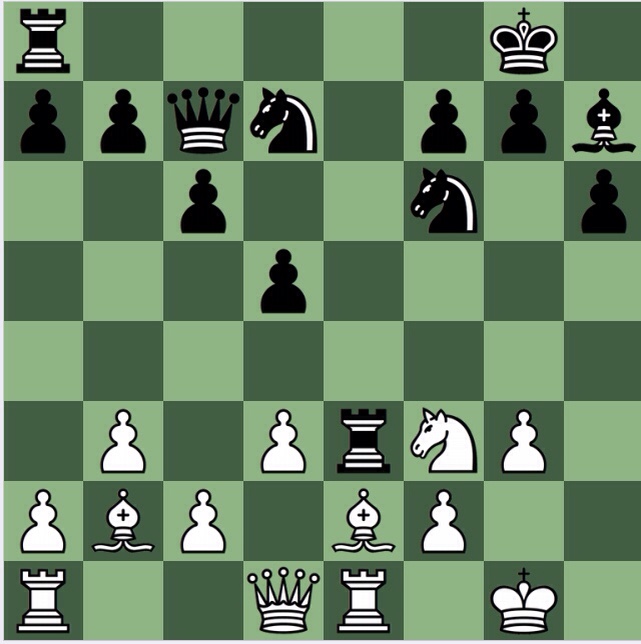
If white plays in the game, and captures on e3, then it is all over, in similar fashion to what I show later. However, 3 Qd2! is a better defence. True, black is better, being a pawn up and with good development, but the game goes on.
There is one cute tactic worth mentioning. If black plays the natural 3…Rae8, then what?
White to play: what is his best defence?
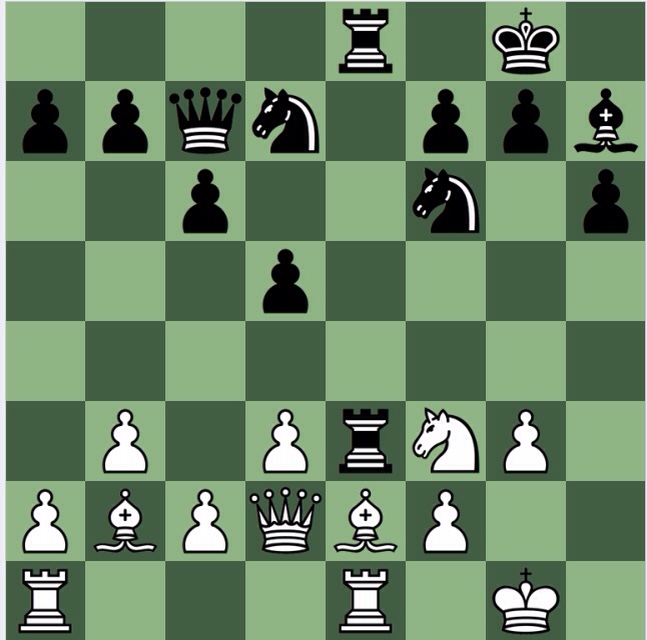
Solution
White has the lovely 4 Bf1! which doesn't drop a piece after 4…Rf3: it is worth working out why before reading on.
Solution
White plays 5 Re8+! Ne8[] 6 Qe2 hitting two LPDOs, so the Ne8 falls, and the game goes on.
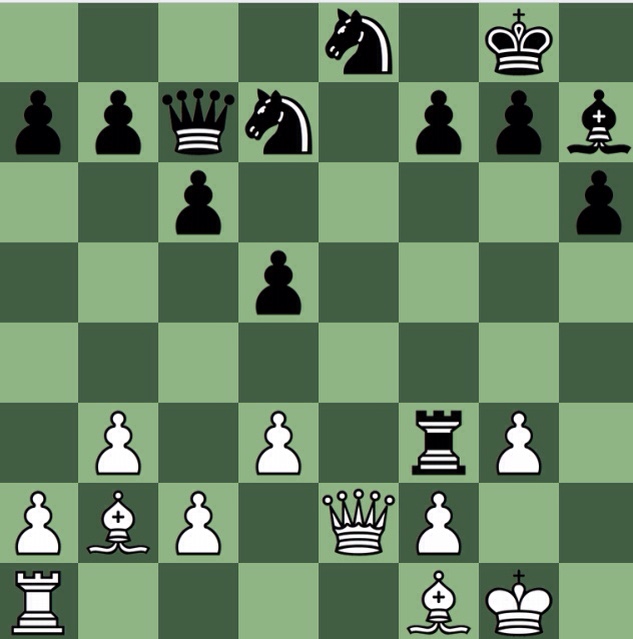
Back to the original position:
Black to play and win
Solution
I saw the defence 2 Qd2 (or other ways of declining to take on e3) and instead reversed the move order.
1…Re3! is far stronger.
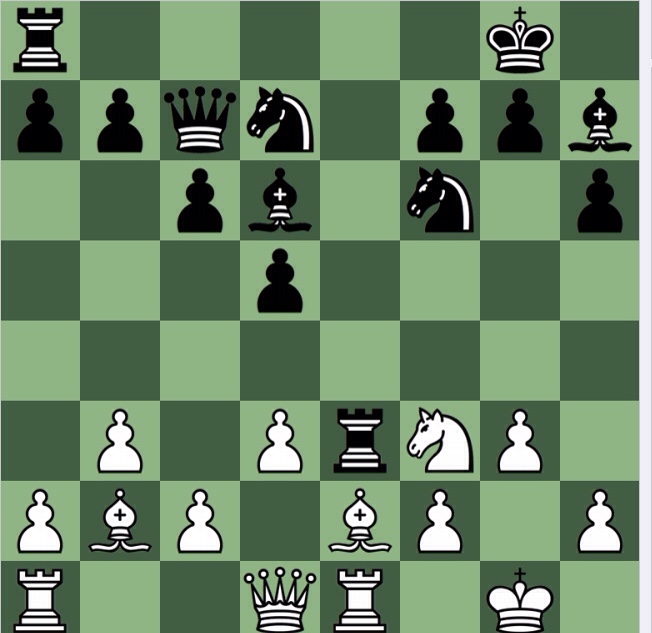
Now, the rook has to be taken, so white's pawns are shattered, 2 fe Bg3!
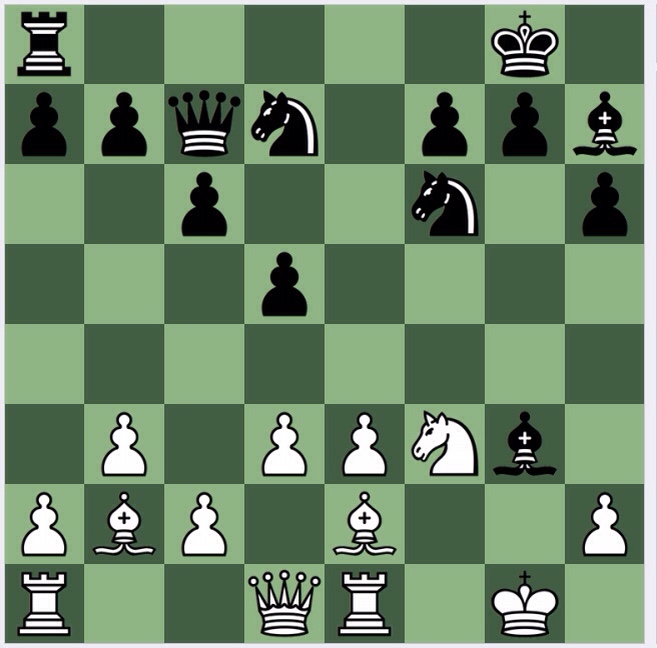
If 3 Rf1 declining the bishop, then 3…Ng4 brings more pieces to the party. If white defends the Pe3/ def eds against the Ne3 knight fork by 4 Qd2 then 4…Bh2+ and black has ample compensation. There is no quick 0-1 but a slow build up of pieces by black will do the trick.
So, 3 hg Qg3+ 4 Kh1 Ng4 and it is gruesome. One line is 5 Rf1 Qh3+! (To deprive the rook of the square g1, from where it hits g7, as does the Bb2) 6 Kg1 Ne3 and black wins white's queen, due to the threat of mate on g2
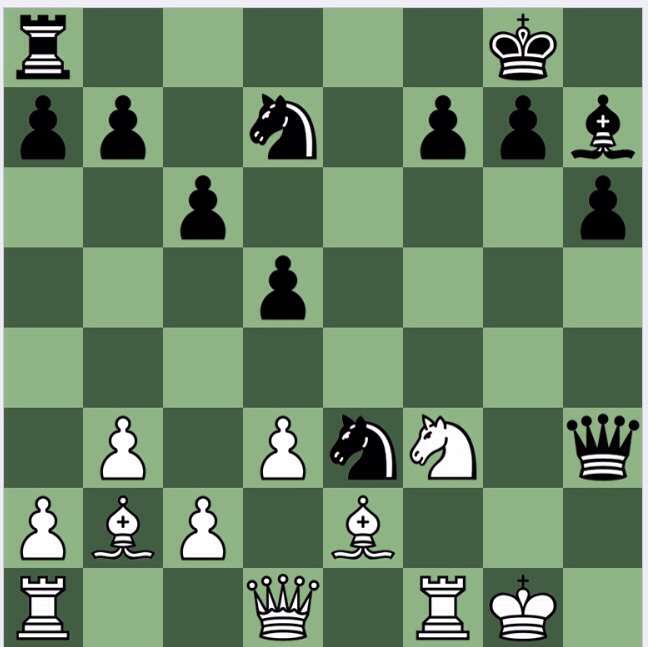
White to play and win
G Michelakis v J Van den Berg 1998
Solution
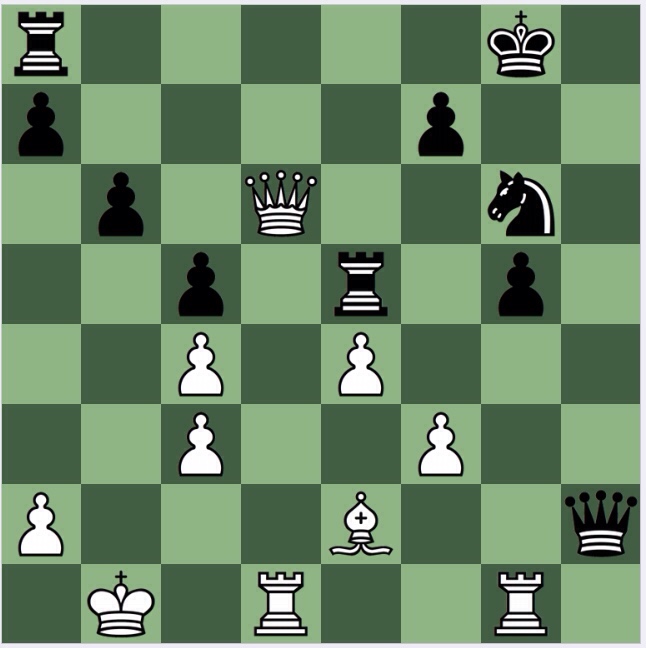
This puzzle is both easy and hard. Easy to find the first move, 1 Rg5! which is practically 'forced'. It exploits the pin of the Re5 (there is a jump biff Qd6* LPDO qh2 in the initial position) but then black has many replies.
The easy one to calculate, and one which has to be calculated, is 1…Qe2, taking the bishop and threatening to take the now LPDO Rd1. But 2 Rg6+ fg[] 3 Qg6+ Kf8 4 Qf6+ and Iif 4….Ke8, 5 Qe5+ and the attack continues, or if 4…Kg8, 5 Rg1+ and mates.
Another credible defence is 1…Qf4, when again 2 Rg6+ fg[] 3 Qg6+ Kf8, and Reitstein says 4 Rh1, and wins, but Stockfish tells me 4 Rg1 is even stronger: I am not sure why, and know in such a position humans can't play as 'accurately' as engines.
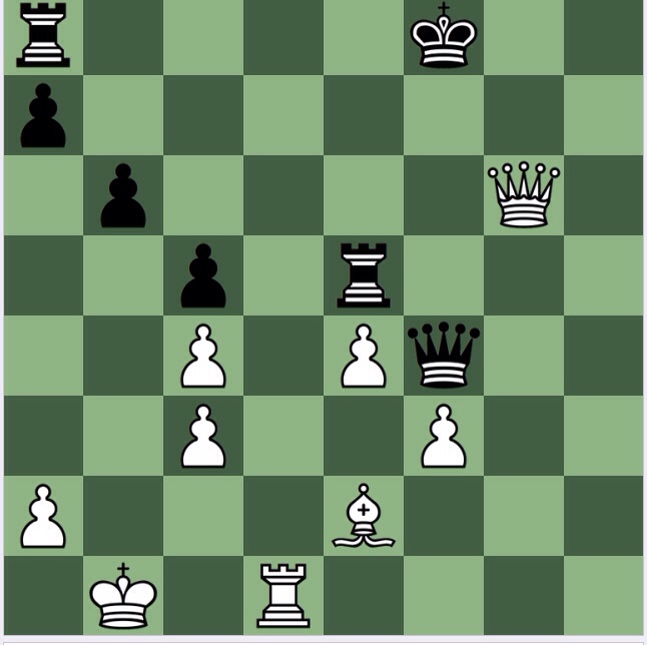
I thought the toughest defence was 1…Qh8, keeping guard on the Re5, which is also followed by 2 Rg6+ fg.
Now what?
White to play and win
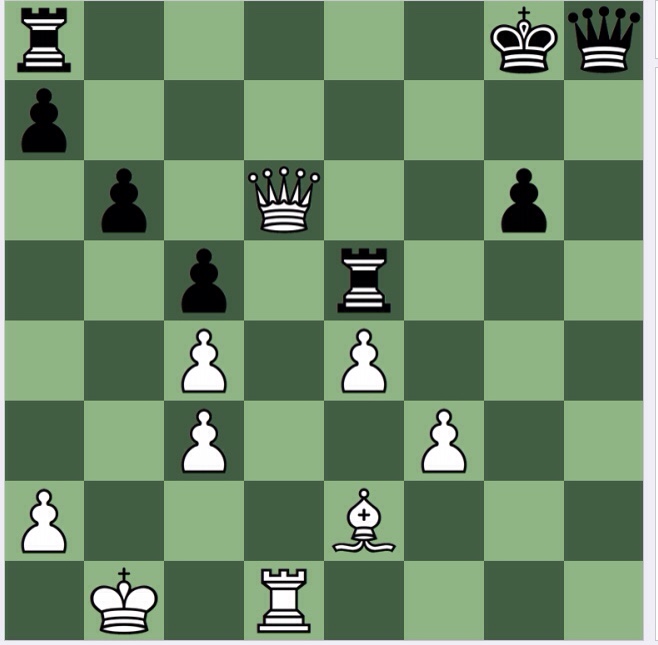
Solution
The natural 3 Qg6+? throws everything away: white has perhaps a slight advantage in the ending, but no more. 3 Rg1 apparently wins, but the engine line is hard to fathom after 3…g5 4 f4 Qh2! and to my mind, it is just unclear, certainly in a practical game: it is a mess. But by reversing the move order and playing 3 f4! everything falls into place. As well as biffing the Re5, the move prevents …g5, so that Rg1 comes with extra force.
Thanks to @Boltonchessclub, who tweeted me to point out this fantastic game:
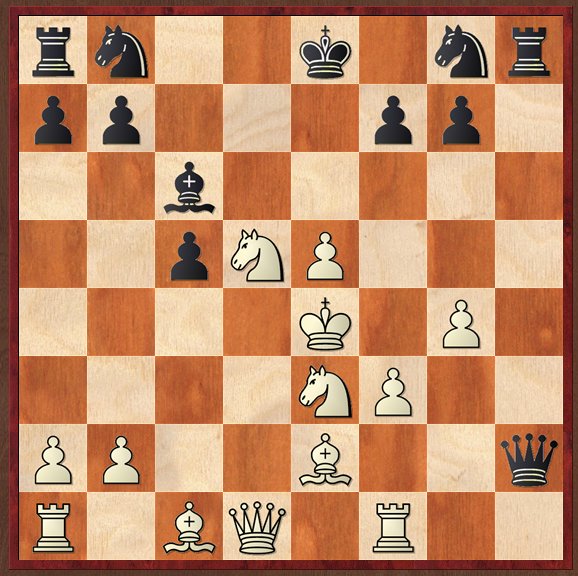
Naiditsch, A v Ankit, R, Qatar Masters 26/11/14
I have lightly annotated the game on my blog cloud database. If you wish to have a go at the puzzle, read the rest of this blog before looking at the game file.
The diagram below shows white's king's walk.
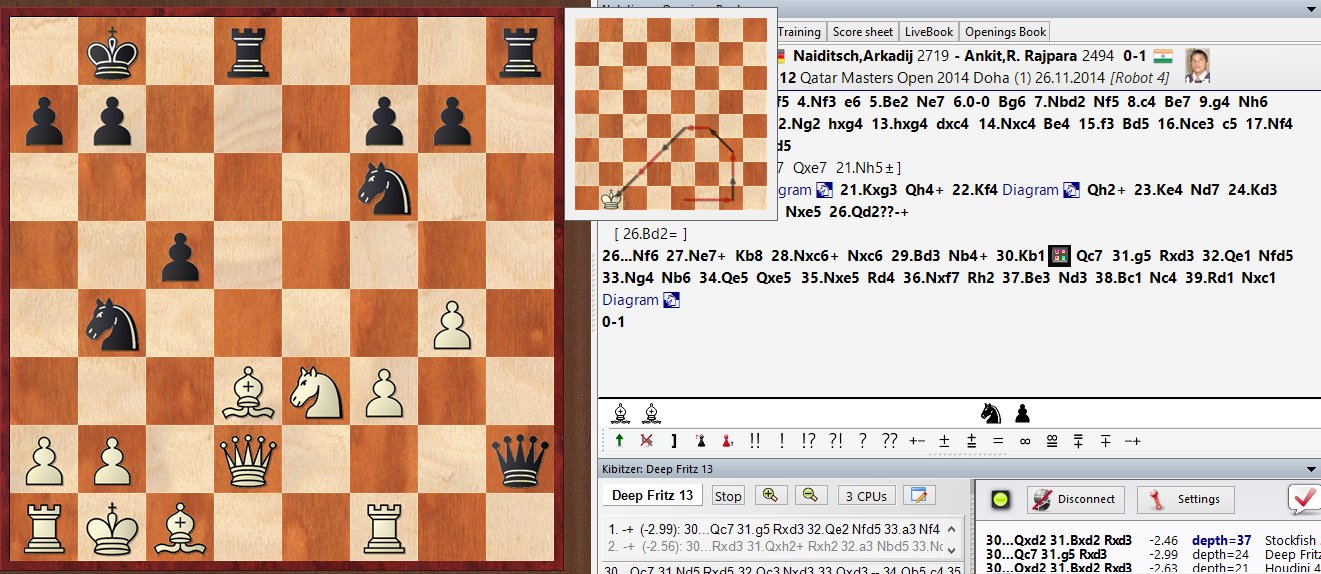
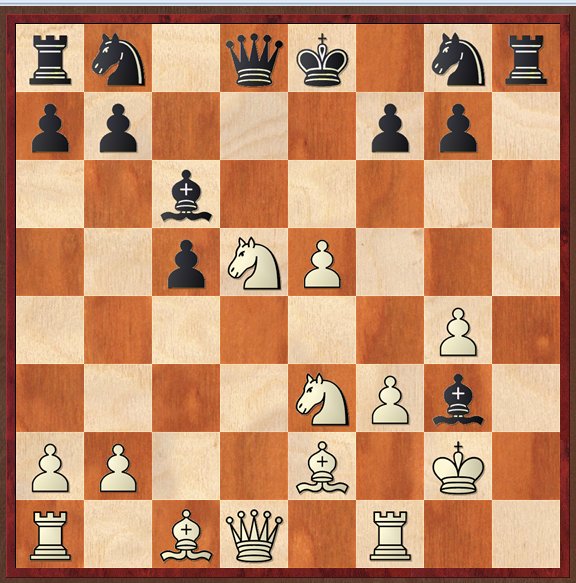
Below is a critical position.
Questions
What was black's last move (note, it wasn't a capture);
What did white play?;
What are my engine's two top choices for white?
Solution
Bh4-g3;
Kg3 (the easiest question)
Nf6+!, with the idea of exchanging queens before taking the Bg3; and its first preference:
Nf5! and the tactics after Be5 2 Bc4 g6 3 Re1! Nd7 4 Bf4! apparently favour white.
There is definitely a new kid on the block. The brand new GM Samuel Sevian has already won the St Louis GM tournament, with one round to go, with 7/8 (conceding two draws), and in style.
His latest is:
White to play
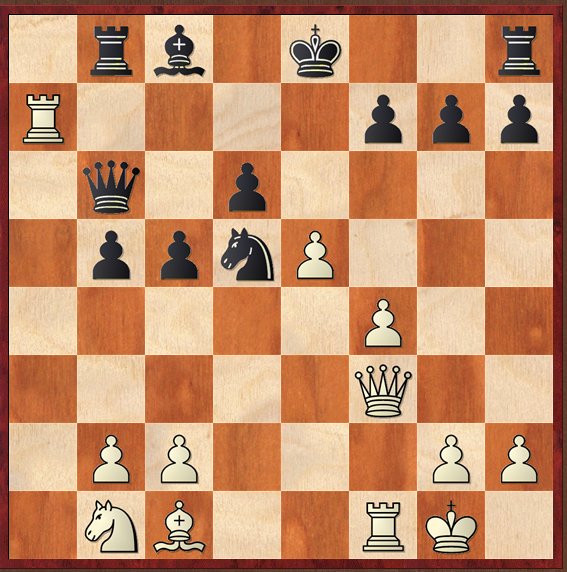
Sevian S v Ashwin, J 24/11/14
White smashed through with 1 Rf7!!. Objectively, the resultant position might just about be equal, but the rest of the game is a tour de force in terms of attacking with the initiative/ attacking before the defender can coordinate his pieces.
The game is on my Chessbase 13 blog cloud.
White to play and win
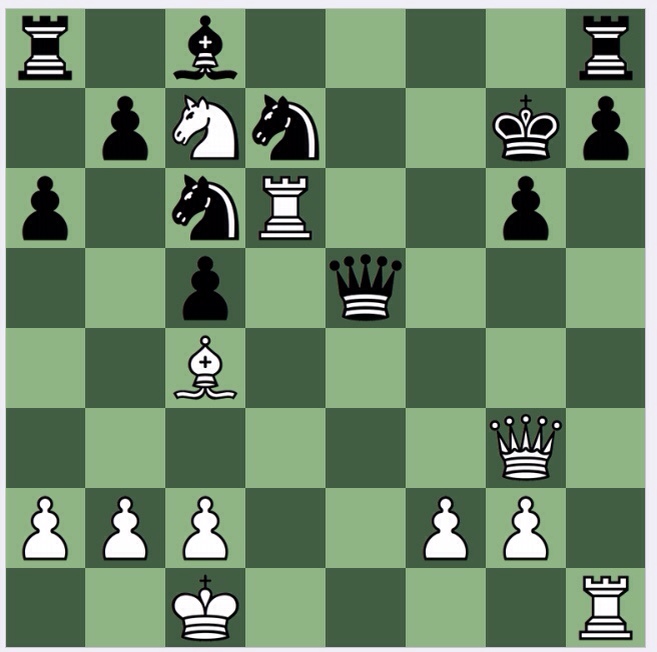
L Pierce v R Hutchins 1938
Solution
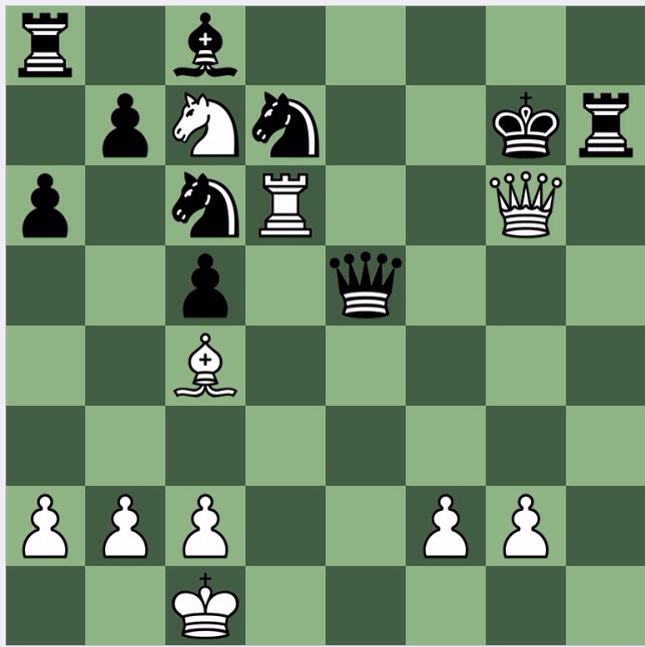
The first move is obvious, 1 Rh7+, after which 1….Rh7 is forced. Then it is a calculation exercise.
2 Qg6+? Kf8 (2…Kh8?? 3 Qg8 mate) 3 Qg8+ Ke7[] 4 Re6+ picks up the queen, and, at the end, the Ra8 is LPDO.
2 Rg6+ is similar, when 2…Kf8[] (2…Kh8?? 3 Rg8 mate) 3 Rg8+ Ke7[] 4 Re8+ has the same effect.
 allanbeardsworth