Peter Leko 'deserved' to win today, playing a speculative knight sacrifice which so nearly came to working.
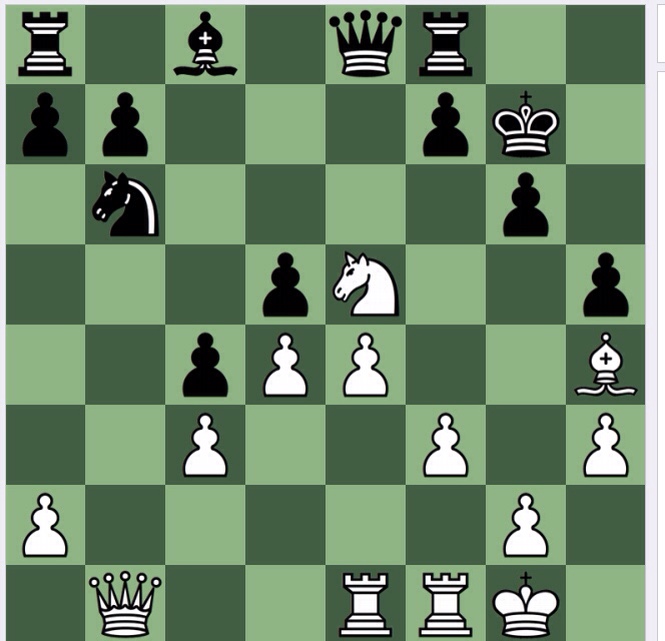
Position after 19…h5 (threatening to trap the knight by f6) and 20 e4!? (permitting f6, which was played)
I have lightly annotated the game (whilst watching the ending of Anand-Carlsen).
My analysis is here. It isn't the last word on the game, but might be interesting nevertheless. Peter played a classic attack on the black squares, with opposite coloured bishops, and just failed to see some winning opportunities.
 Posted with Blogsy
Black to play and win
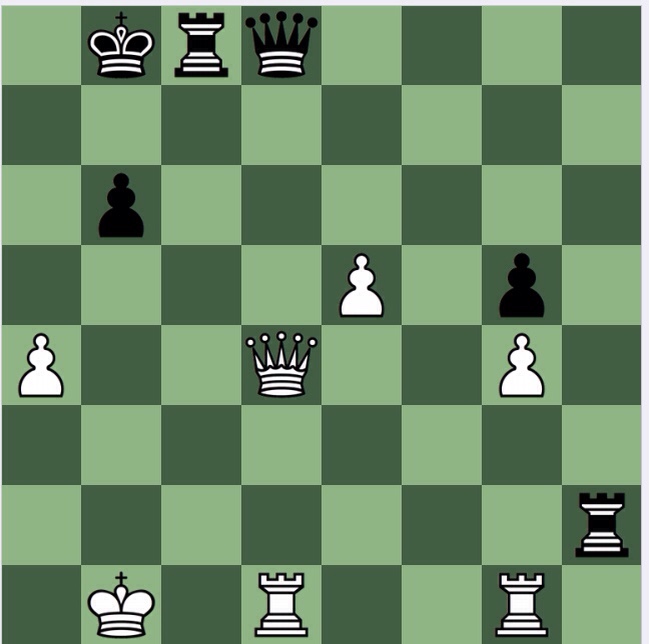
Morozevich- Inarkiev Tashir, Tigran Petrosian Memorial, 8/11/14
Solution
This game is ongoing as I blog, black having just played his 41st move, missing a forced win.
Inarkiev played 41…Qc7, missing the examine all biffs 41…Rc1+! which exploits the fact that the Rd1 is tied to defending the Qd4, so that 42 Kc1 is forced, after which 42…Qc7+ mates.


Nice to have beaten Chessvibes in breaking this. It is doubly nice since my tweet was sent one minute precisely before the twelfth anniversary of my mother's death. I always do just what I want to on the 8th November, never working, and yet again have had a lovely relaxing day. Each year I do something different and today, amongst other things, I have been watching game 1 of the Carlsen-Anand world championships in Sochi, and also today's action in Tashir, at the Petrosian memorial.
As I send this blog, Levon Aronian has just forced a perpetual after a really interesting sacrificial attack by none other than Peter Leko; Moro's game is stil in play (it is white to move after 41…Qc7) and Magnus has a slight advantage (as Jonathan says, safer king, better pawns, more active pieces, and he is Magnus) at move 41 against Vishy. It has been a great start at Sochi and a good day's play at Sochi.
White to play and win
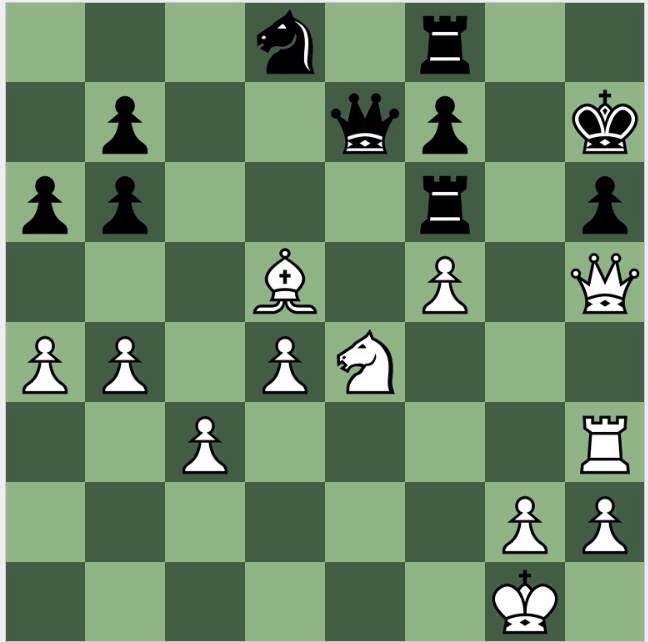
HE Price v J Vogel 1966
Solution
This one took me a while: in British unit of measurement terms, the time to boil, brew and drink a cup of tea. Alas, for a while I didn't attack the problem methodically, but tried to make the startling (startlingly bad) 1 Qh6 work, and then playing the slow 1 g4 (which Stockfish shows as +9), but is slow, until returning to Purdy basics, and seeing that black's Queen is LPDO, and that the Queen is tied to defending the Rf6. That was all that was needed to find the slight sidewards move 1 Qg5! when it is all over. White threatens 2 Nf6+ and if 1…Re6 white has various wins, including 2 f6 threatening the queen, threatening Qg7 mate, and threatening Rh6 mate.
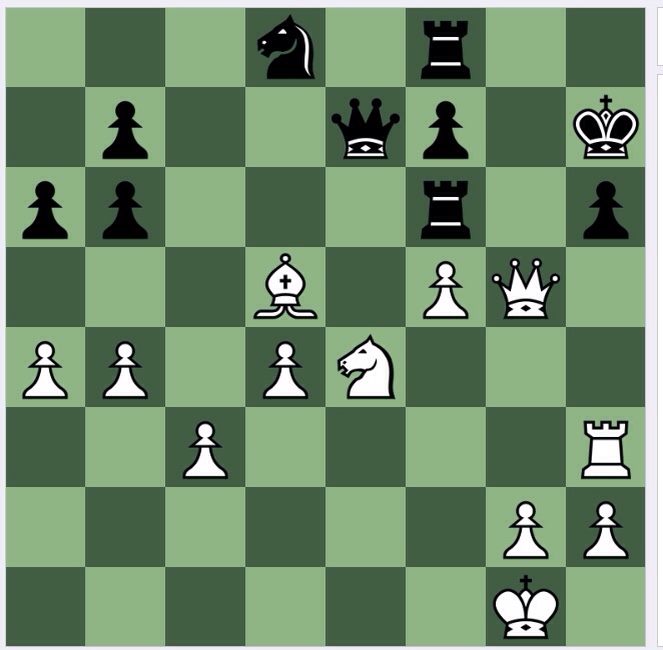
A nice puzzle
My favourite chess vlogger (not a word I use often, in fact, the first time I have used it) is GM Alex Yermolinsky. His series on ICC 'What every Russian schoolboy knows' has been consistently very good and often superb.
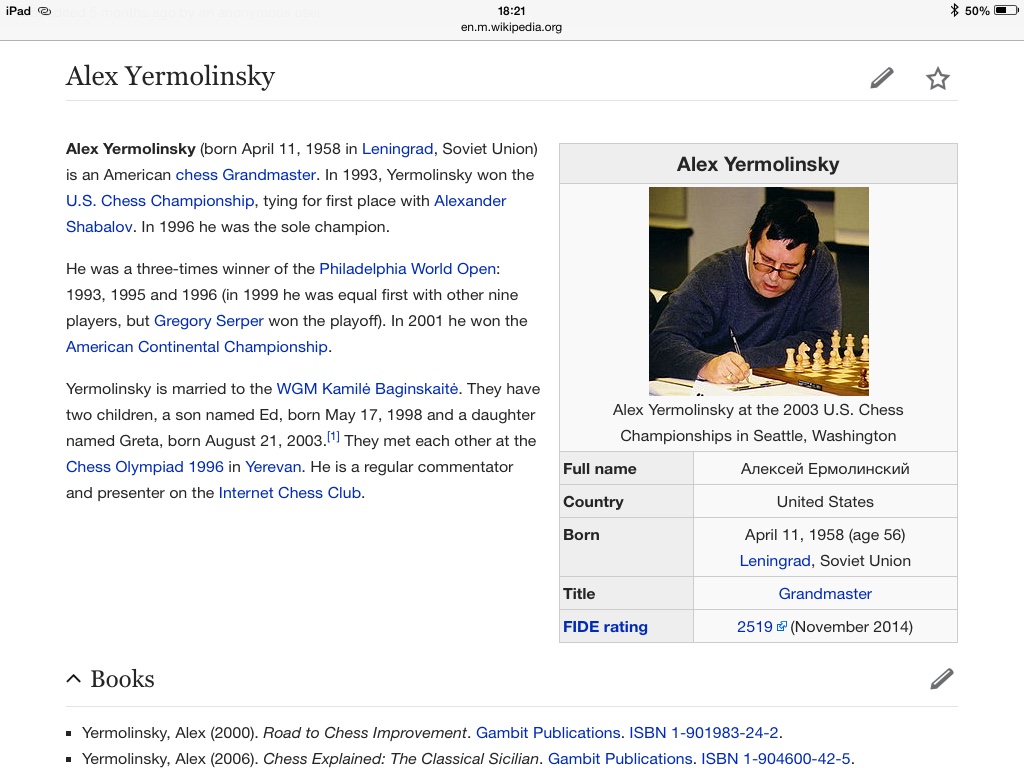
Note the word has: Alex wrote to me recently to say that he has parted company with ICC. I hope the website will continue to make the series available for readers through their archive. I heartily recommend them, particularly the endgame ones.
A few weeks ago, Alex had recorded one of his best videos, looking at certain aspects of R+3P v R+2P, starting with some aspects of a recent Aronian-Carlsen game 0-1 but mainly concentrating on a similar ending Can-Laurusas from the 2014 Tromsø Olympiad. (the video entitled ”they're all good chess players”, 9/28/14)
As white, how would you proceed?
As black, how would you defend?
What 'should' the result be?
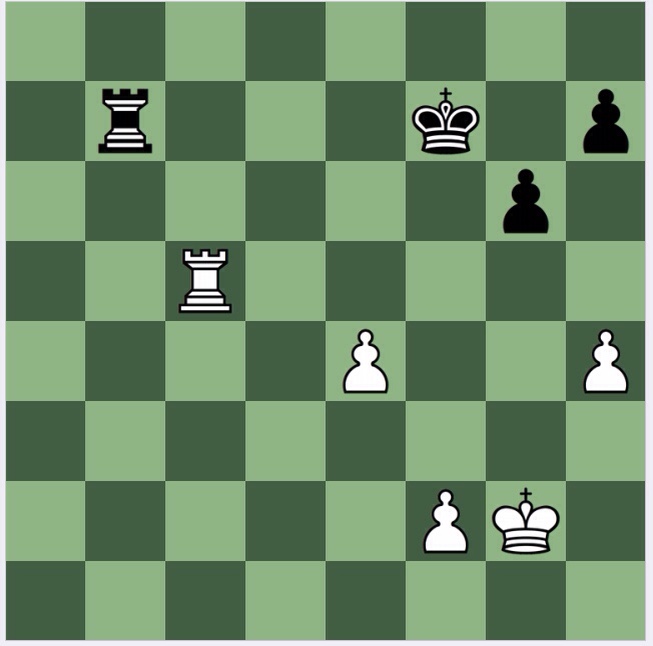
Can won the game, which Alex covers in detail. His video is replete in insightful comments and in tactics: some cute mating tactics and potassium cyanide make the video a joy to watch.
I found one comment particularly illuminating, when he explained how easily the above pawn structure can arise, for instance from 4v3 endings where the side with three pawns has a pawn on f4 (white). For instance, in this position, which I have made up, how might white try to make progress? I have taken the rooks off, to concentrate just on the pawns, but imagine each side had a sensibly placed rook on the board.
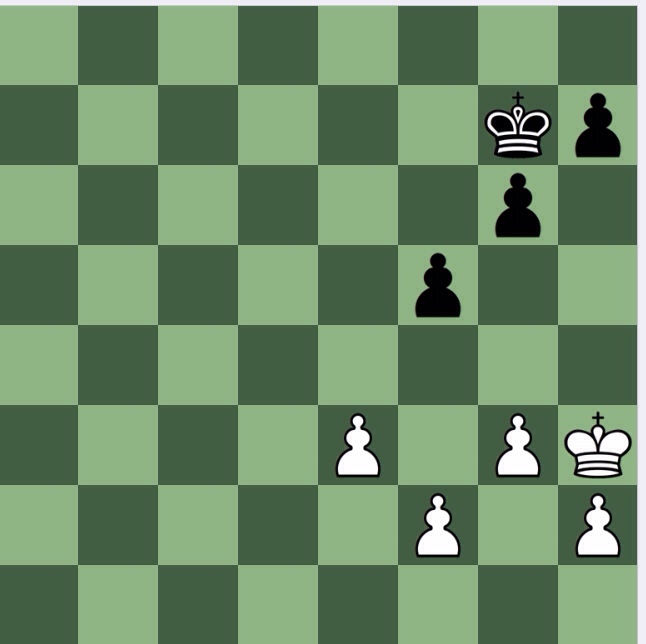
Before watching Alex's video, I might stupidly as white have played e3-e4, especially if my king were at d3: but swapping off my extra offside pawn is, I now realise, entirely the wrong thing to do. Maybe I wouldn't have played e3-e4, but if I didn't, I think I would have played aimlessly, just hoping something came up. Now, in such positions, I would try g3-g4! getting the pawn structure in the diagram at the start. And as black, I might well play h7-h5 here to prevent white's pawn break.
The over-riding lesson from Alex's lesson is that white's plan comprises (i) fiddle around, or more professionally, 'do not hurry': black's defensive task is dour, and making it more painful by not hurrying can cause a mistake. We have all been there; (ii) try to create two connected e and f passed pawns, by playing h5, and hoping black will exchange on e5; (iii) if black doesn't exchange, try to make the Pg6 into a weakness, but (iv) there are some tactical reasons for not rushing to exchange h5*g6.
Later, in his analysis, we get positions like the following:
Black to play
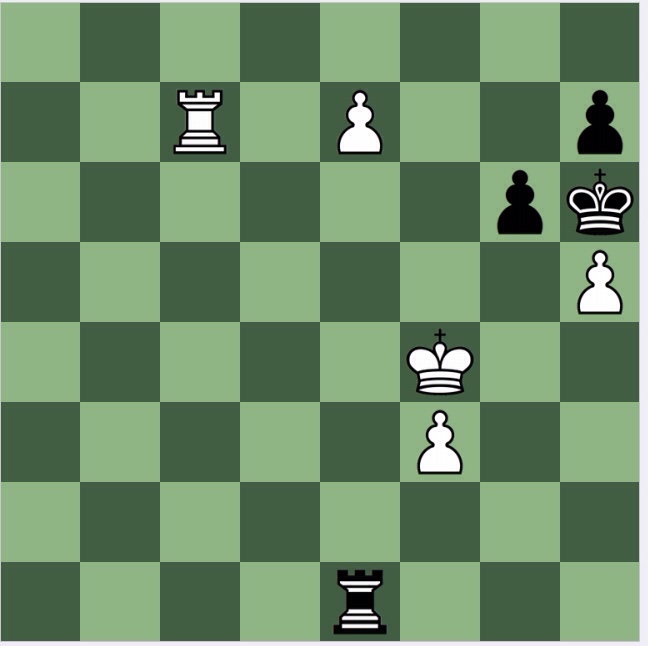
If 1…Kh5 2 e8(Q)! and 3 Rh7 mate. In several of Alex's lines this mating trick occurs: and it is significant that after white plays h4-h5 he is happy to keep the pawn there, and is in no rush to swap on g6. This tension and delay has profound tactical implications.
Purdy's potassium cyanide also occurs, out of the blue.
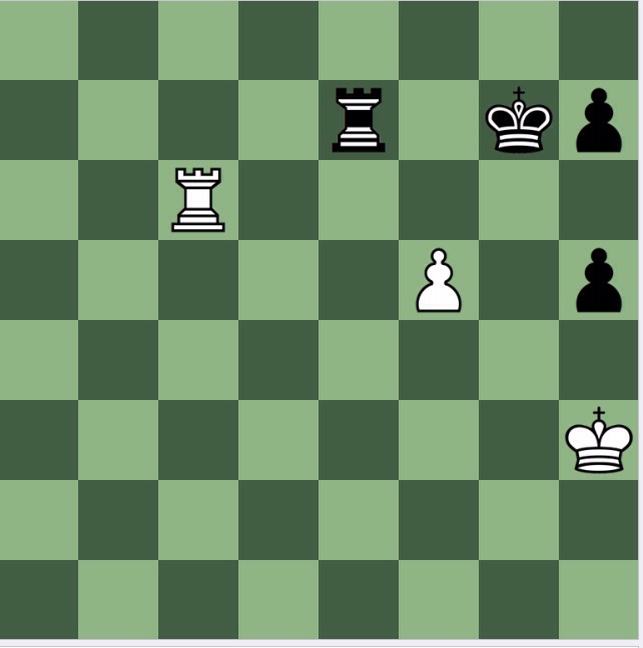
Alex ends by suggesting there was a narrow line to draw, but also invites his audience to write to him with further suggestions since he felt there might be further aspects. I looked at it, and wrote to Alex suggesting a possible winning line with a manoeuvre relying on different again tactics.
Alas, Alex won't be commenting on my analysis, so I may not know the ultimate conclusion on the ending. I have therefore posted my present analysis here for my readers. I would suggest ICC members watch Alex's video first but they might choose just to look at my analysis. It would be great if readers could post comments and confirm, improve or destroy my analysis.
My conclusions?
i) I am not a strong enough player to know what I am talking about. As a child, I should have listened to my trainer (shame is, I never had one) and studied the endgame. Only now, as a past my sell by date player, do I appreciate endgames;
ii) It is close to a draw. In one of Alex's lines, black can probably get to a R+fp+hp v R ending. One awful shame of Alex leaving ICC is that he mentions on his video that he might cover this ending is future 'Russian schoolboy'; one of his lines results in a QvR ending but the engines show a long line of checks whereby the LPDO R drops off, before black can create a fortress;
iii) It just might be a win. My analysis gives one attempt (see my suggested 49 Rc7+ and a subsequent Rc4 rather than Alex's 49 f4) against Alex's suggestion of a best defence. I'm not confident it is a win, since I know that all rook endings are drawn, and if I have more time one day I will look at it afresh, but before then a reader might be able to comment. I hope so.
White to play: what is his best approach?
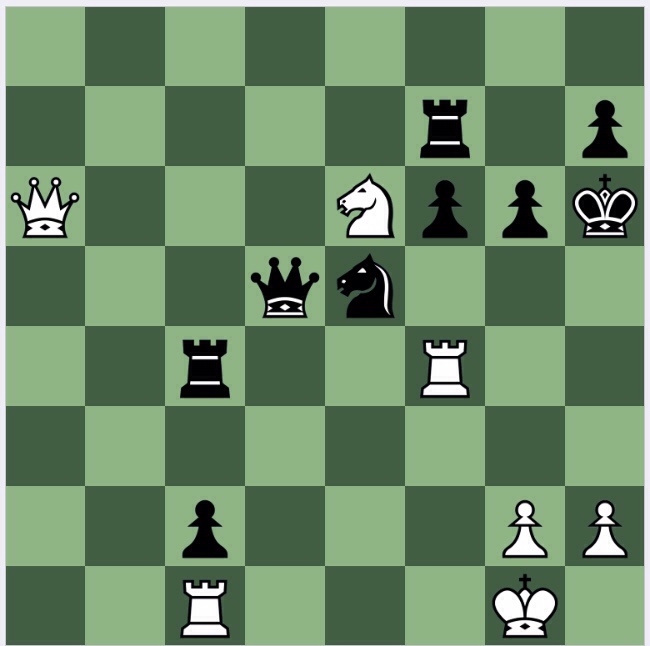
G De Marigny v F Korostenski 1977
Solution
Not much of a puzzle today. Black's c2 pawn is dominating, his pieces well centralised, and white's only trick is the threat of Rh4 mate if it were possible…but the c4 rook prevents it. So, simplify, and hope. 1 Qc4 Qc4 (1…Nc4 2 Rh4+ Qh5 is no different) 2 Rc4 Nc4 3 Rc2 and hope that the ending is drawn.
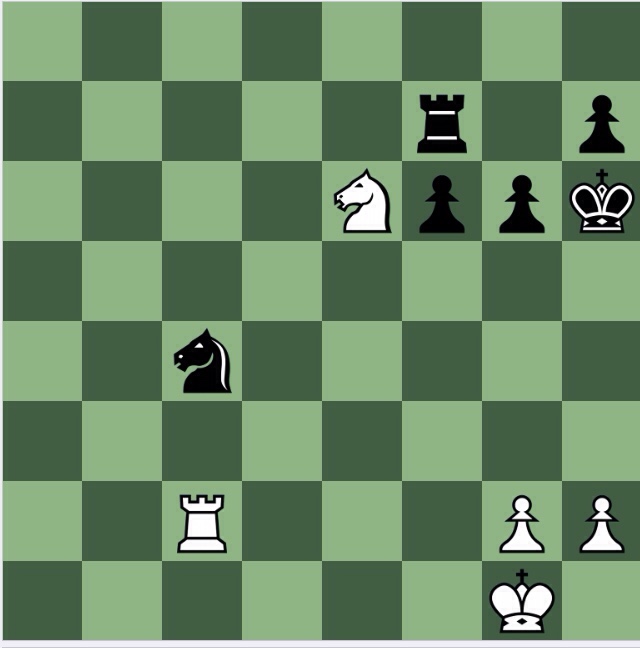
White to play: how to defend?
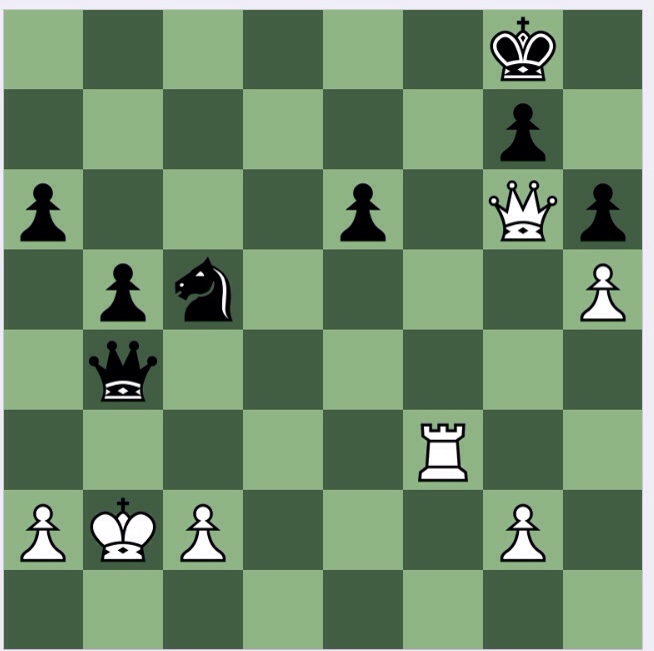
M Keserovic v S Hirschowitz 1995
Solution
Such positions are tricky to calculate, and in the game, white chose 1 Rb3?? which loses. 1…Na4+ and 2 Ka1 (2 Kc1? Qe1 mate) 2…Qe1+
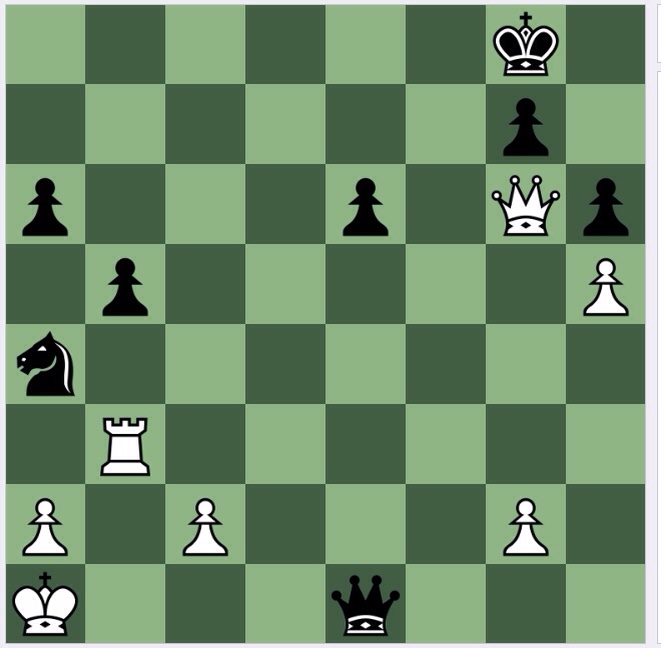
And it is mate after 3 Rb1[] Qc3+ and 4…Qb2+.
If instead either 1 Ka1 or 1 Kc1, it is a draw after 1…Qe1+ 2 Kb2 Na4+ 3 Ka3! and black needs to take care, but all there is is perpetual check.
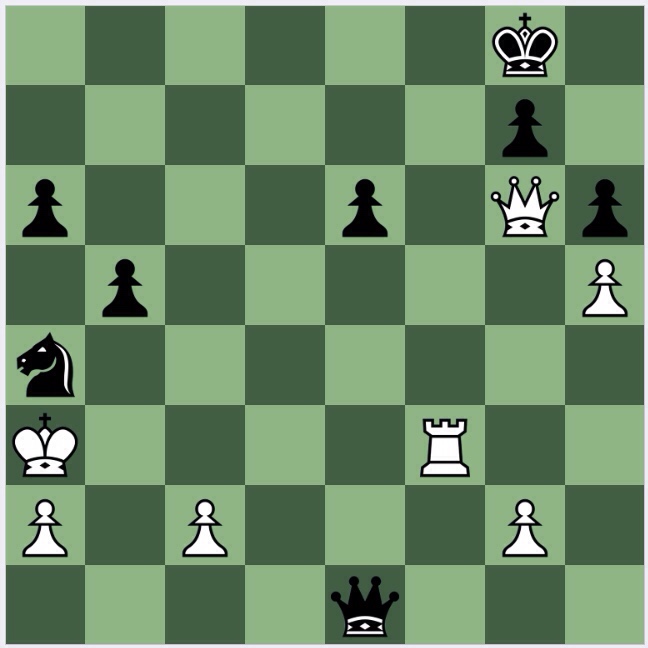
White to play and win
…after Black plays …Kc7 here.
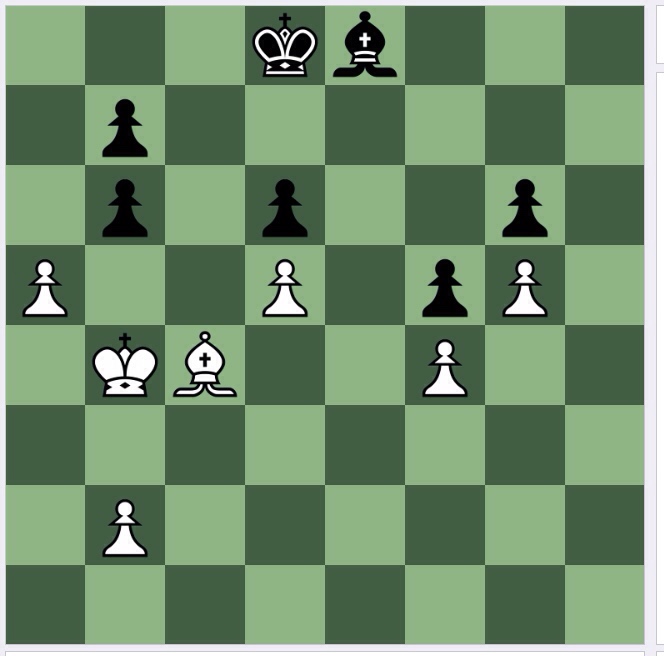
D Friedgood v CC De Villiers 1975
Solution
Black could have drawn easily by playing …ba 2 Ka5 Kc7, but the change of move order, 1…Kc7 is fatal. 2 a6! squashes black: creating white square weaknesses which White is able to exploit. 2 a6 threatens to push to a7, so the pawn must be taken, or black could play Kb8, when white captures on b7. The result is the same.
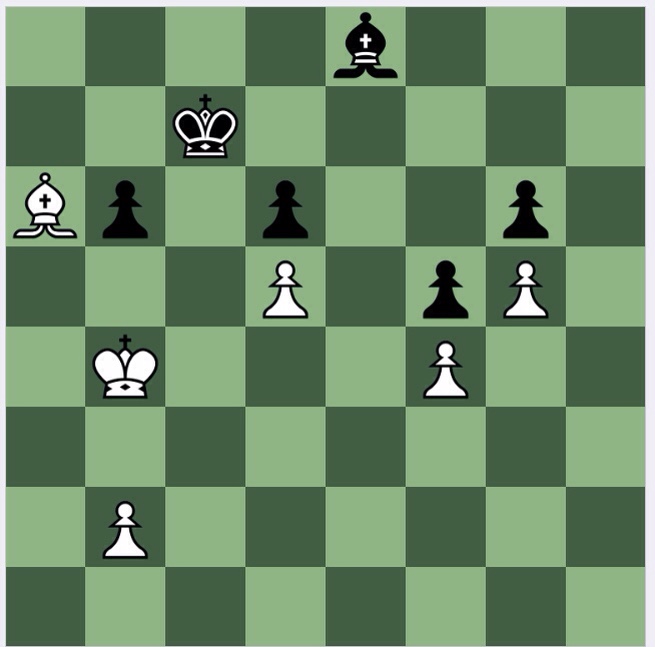
White wins by gaining control of the a4-e8 diagonal, Bb5, lodging the bishop firmly on c6, and then advancing his king. Black's bishop is zugzwanged, having to defend against white's bishop hitting g6.
My current bedtime reading is 'My Chess' by Hans Ree. It is a collection of short articles from Hans' life in chess. I am only a short way into it, but I can already tell that it is a book that I will love. Since it is a light read with no games, no diagrams, no analysis, it is ideal last thing at night reading.
Some of his articles have anecdotes from games. He doesn't give the game scores or positions, just alludes to, and those which take my fancy I then have to look up. One of which is Ljubojevic – Browne, Avro 1972.
Hans writes that one of the kibitzers was the Dutch musician Misha Mengelberg.
After the game finished in a draw, Misha asked the players 'what would have happened if black had played …? (I have omitted the move, to make it into a puzzle). The players initially paid no heed to the amateur kibitzer, but after some thought realised that black had missed a win.
Black to play and win

Consider this ending, and looking at the game continuation, where did black miss a win?
(Complexity: fiendish, despite, or maybe because of, the reduced material).
I suggest readers have a go at solving the above, before reading on, where I will make the problem somewhat easier.
Black to play and win
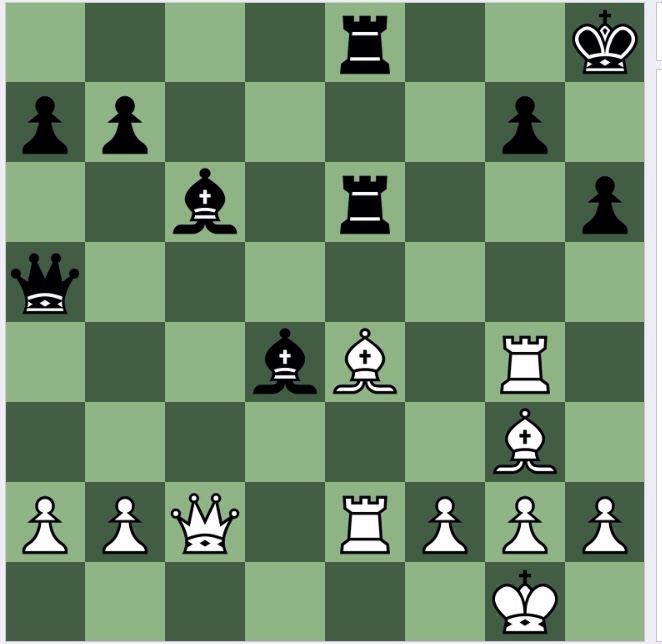
D Cawdrey v PJ Foley 1995
Solution
Examine all biffs and examine all nets quickly lead to exchanging on e4 followed by Qe1+, mating. So 1…Be4 2 Rge4 Re4 3 Re4 Qe1+ and 4 Re1 Re1 mate.
White to play and win
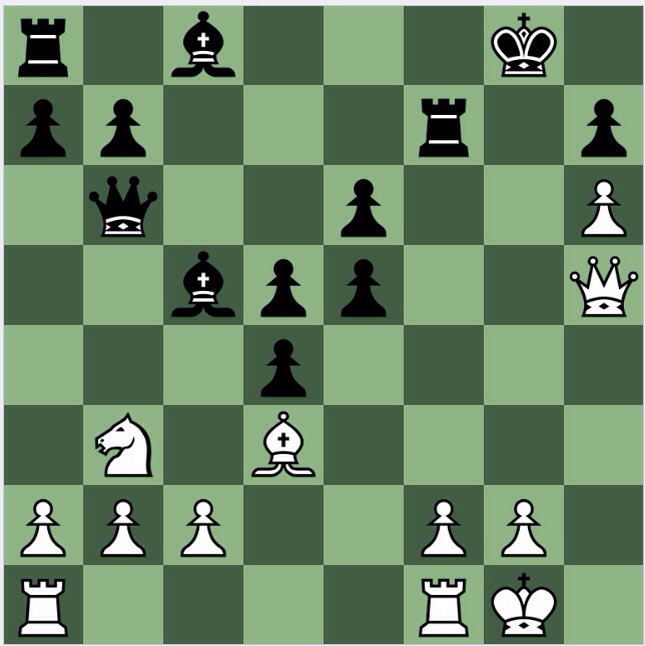
AA Ponelis v H Joffe 1985
Solution
Reitstein's rubric says that white played the natural 1 Qg5+, missing a winning move. So it is fairly easy for the reader of his books to consider 1 Bh7+!
If the rook is taken, it drops off after 2 Qg6+ Kf8 3 Qh7, since 2…Kh8 is mated by 3 Qe8+ and 4 Qf8mate.
Since 1…Kh8 loses the rook and is mated next move, black's 'best' is 1..Kf8 when the bishop withdraws and the pawn advances.
 allanbeardsworth