Checking into Playchess last night, bereft of chess on a World Championship rest day, I had a quick look at the decisive games in the day's play in the Ukranian championship. Chucky lost what appeared to me to be a messy game where he threw away too much, though I haven't analysed the game.
Instead, my eye was caught my Eljanov- Kuzubov which was a classic KID in Bronstein style.
Black to play and win
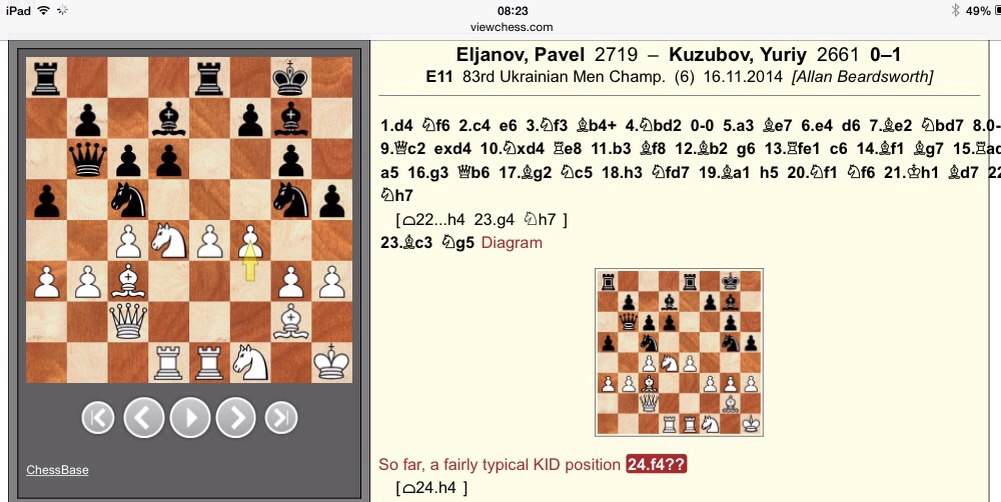
The first move in the diagram position is 'obvious', but calculating it through to a conclusion is not easy. In fact, there are several waves of tactics. I have analysed the game and posted it below (thanks to the wonderful one click facility of Chessbase12: as a child of the 1960s, I still think it wonderful that from my home here in Manchester I can watch games in Lvov, Ukraine, and then analyse and post them for all to see- miraculous, really).
http://www.viewchess.com/cbreader/2014/11/16/Game24898875.html
 Posted with Blogsy
White to play and win
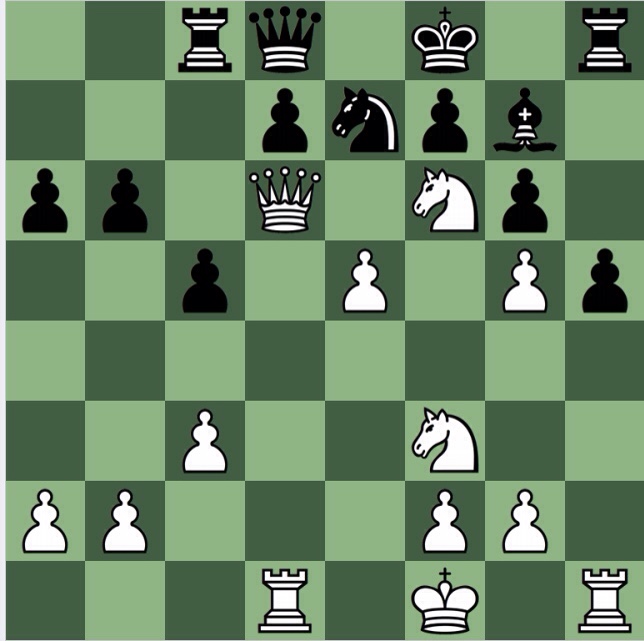
M Levitt v C Danisa 1995
Solution
Not the best of puzzles today, since most sensible things win. The prosaic 1 Nd7+ forces 1…Ke8 (1…Kg8 drops the queen to 2 Nf6+) when 2 Nf6+ Bf6[] 3 Qd8+ Rd8[] 4 gf Nc6 5 Ng5! wins.
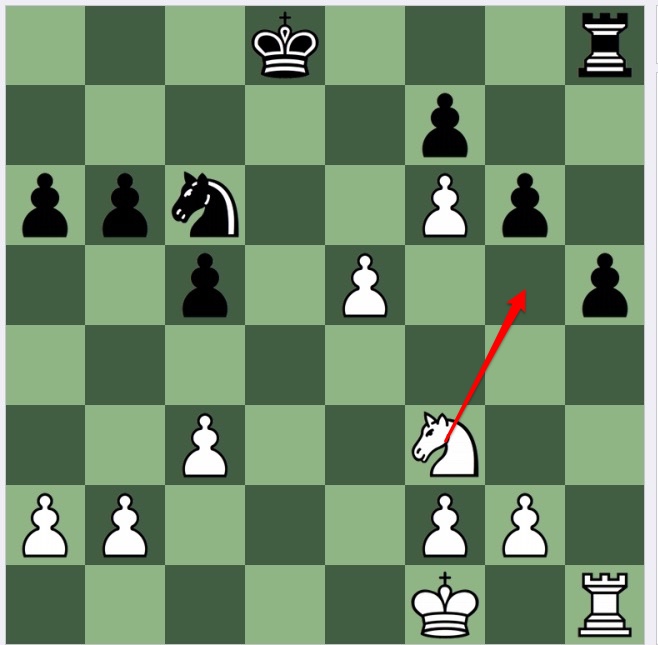
5 Ng5 is just a small tictac relying on the trick 5…Ne5 6 f4 and black collapses, so that black has to do something else, when 6 f4 follows, and white is a pawn up with a dominant position.
However, this is prosaic. So, instead 1 e6! which hardly needs calculation, since it provides a space for the Nf3 to jump into e5. If 1…Rc6 biffing the Q, then white now wins the black Q by the previous Nd7+/Nf6+ manoeuvre.
Iin the game black played 1…Bf6 2 gf fe but resigned after 3 Ne5.
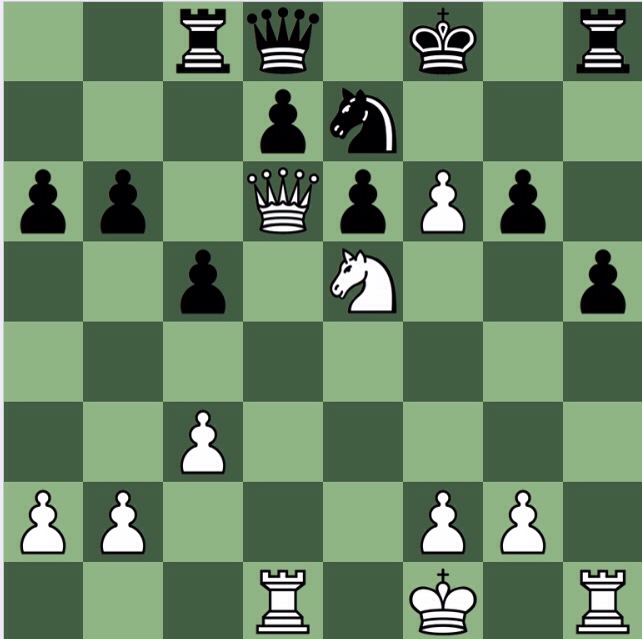
White to play and win
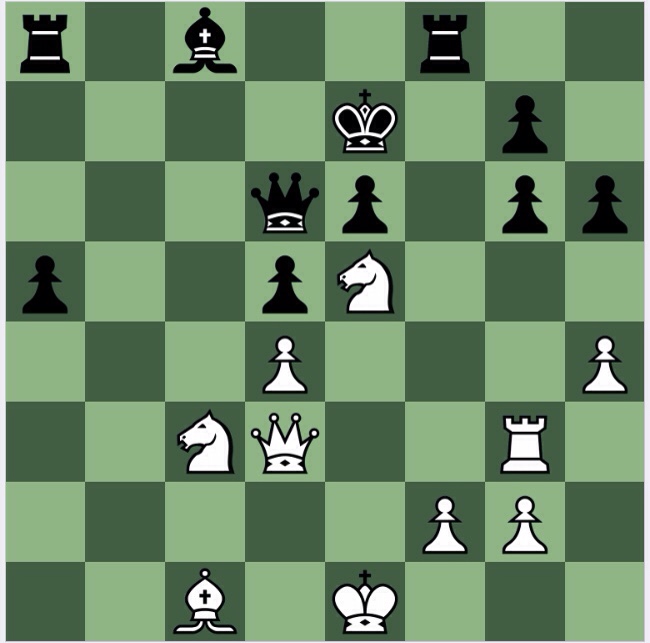
M Kolnik v D Lewis 1957
Solution
Not too hard again today (peek preview-there are some tough ones coming in the next few days): 1 Ba3! wins the queen, since if 1…Ba3 2 Nd5+. Examine all biffs wins again.
White to play and win
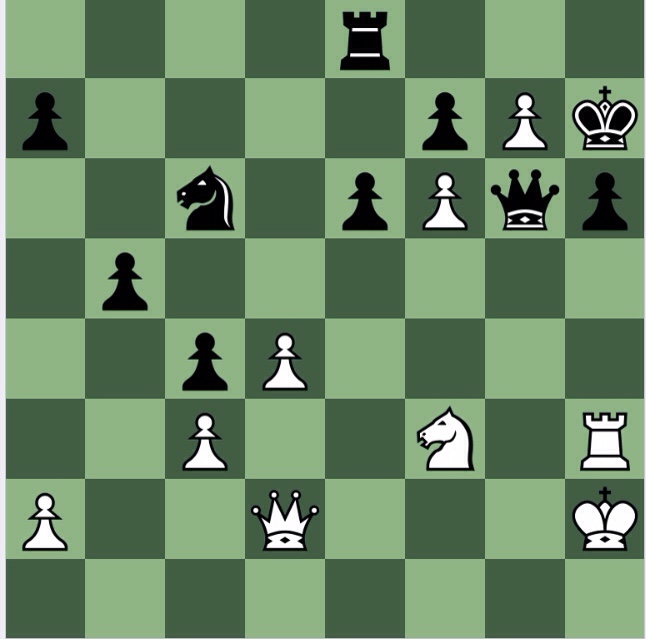
D Morschel v G Boulle 1974
Solution
A nice one, which took me one standard British unit of time: not solving it on inspection, I had to go away and make a cup of tea, and whilst sipping it, the solution came to me. 1 Ng5+ Kg8[] 2 Ne4! threatening 3 Rh6 (or 3 Qh6) with mate on h8 to follow, and defending the Pf6. So 2…Kh7[] to defend h6 (or 2…h5, same answer) 3 Nd6! hitting the Re8- as so often in chess, the combination wouldn't work if in the initial position the rook was on d8- small difference, big effect) and after the rook moves somewhere, 4 Nf7! and h6 falls.
The improvement of the knight, dancing from f3-g5-e4-d6-f7 made me smile.
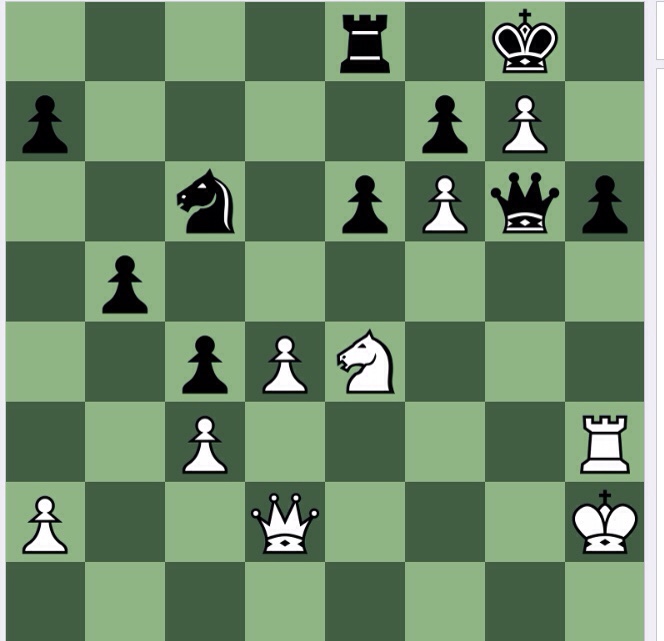
White to play and win – mate in 5
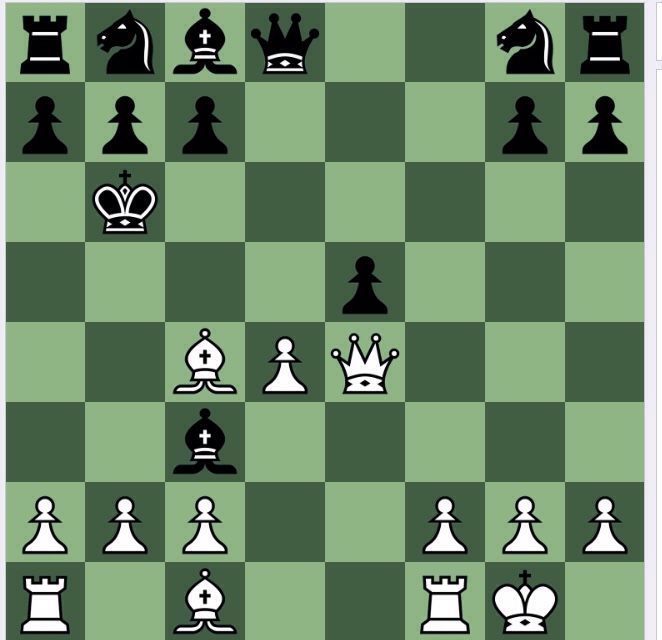
JC Archer v EFG Schrader 1935
Solution
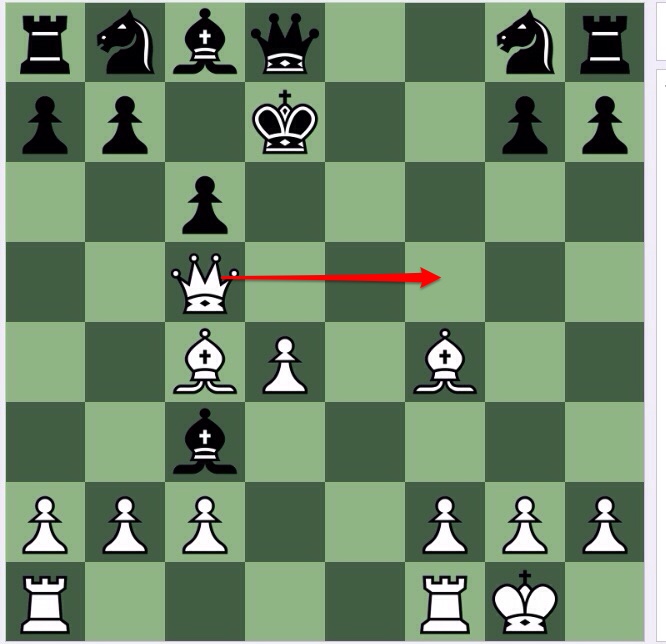
A nice calculation exercise, but not too hard, in this fairly standard position (I imagine many of my readers can identify the opening, the Two Knight's defence with 4….d5 and 5….Nd5- well I presume that was the opening, and would be surprised if it wasn't).
1 Qe5! (in the game, white played 1 bc, which of course many would play, not knowing there was a solution) 1…c6[] (White was threatening Qc5 mate and Qb5 mate) 2 Qc5+ Kc7[] 3 Bf4+ Kd7[] and now the only hard move to see, 4 Qf5+! with mate next move, 5 Qf7 mate.
White to play and win
SJ Steel v CG Willenberg 2005
Solution
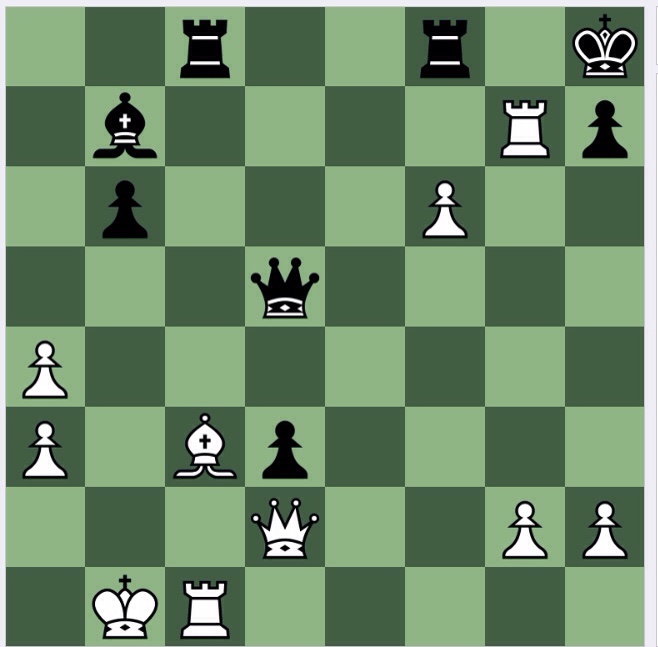
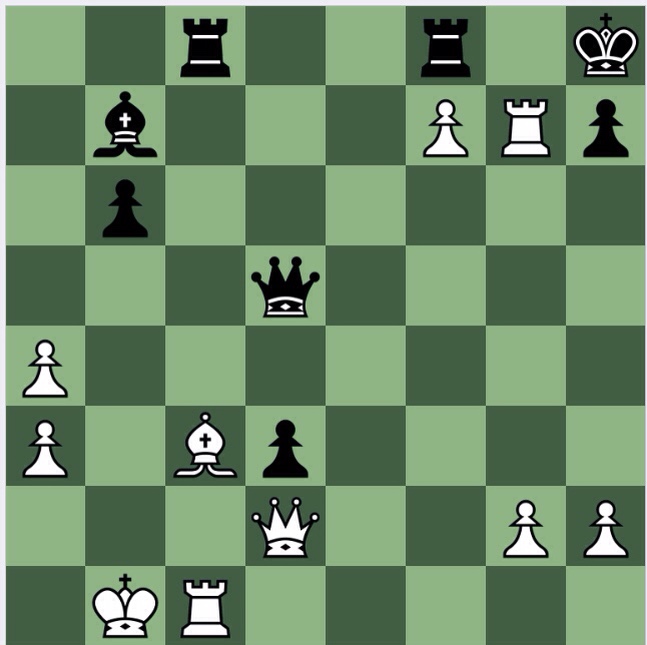
Not too hard today: 1 f7! is obviously super-strong, and 1 Rb7! is also overwhelming. The former is somewhat better in that the latter permits 1…Rf7 when black can grovel on.
White to play and win
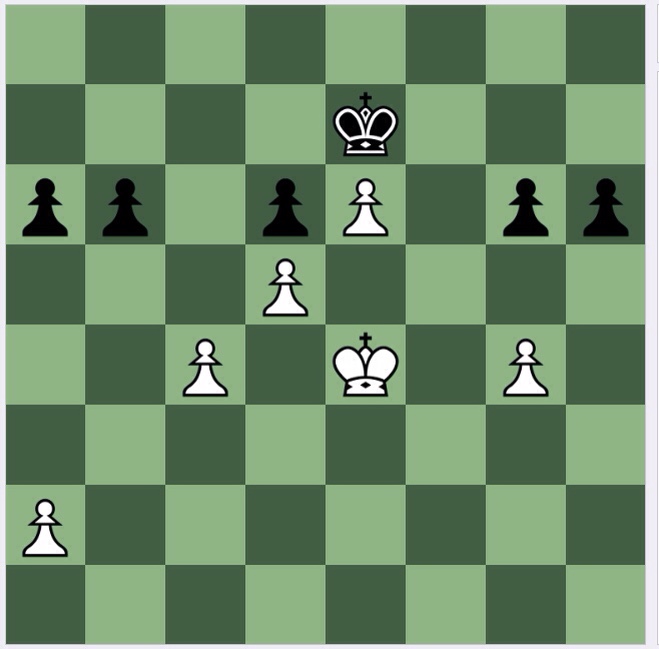
Black plays Kf6 in this position; a blunder, why?
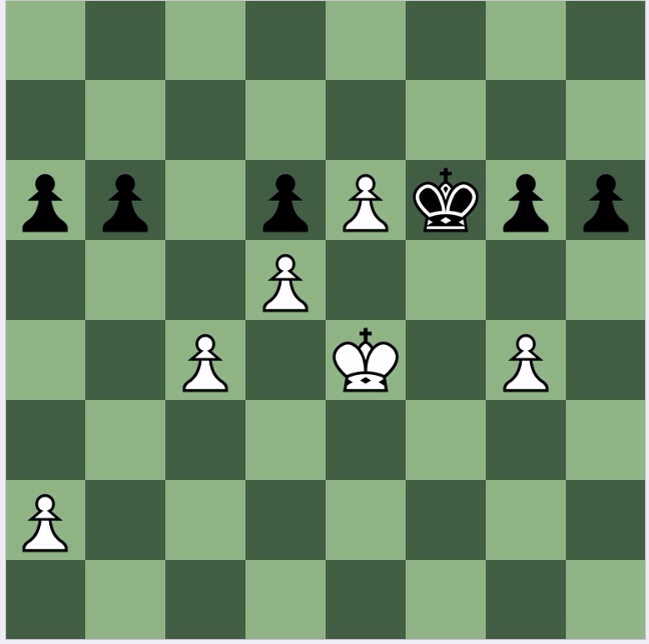
D Isaacson v R Morris 1963
Solution
I think anyone can forgive black for playing the natural Kf6, and forgive white for replying (as he did) with Kd4, after which black retreated his king, never to return to f6, and a draw was soon agreed. Black should instead have just oscillated with his King between e7 and e8, and white can make no progress. If he were to move his king too far to the queenside to try to effect a breakthrough then the h pawn will promote, and white can't precede his king excursion with g5, since black would reply with h5, creating a defended passer.
But after 1…Kf6?? White has 2 g5+! forcing 2…hg. White then triangulates with his king, only playing Kg4 when Black's king is on f6, so the g pawns fall, and then it is trivial. White can also block the queen side with tempo, if needed.
Quite pretty, and a useful reminder of how tricky pawn endings can be.
White to play and win
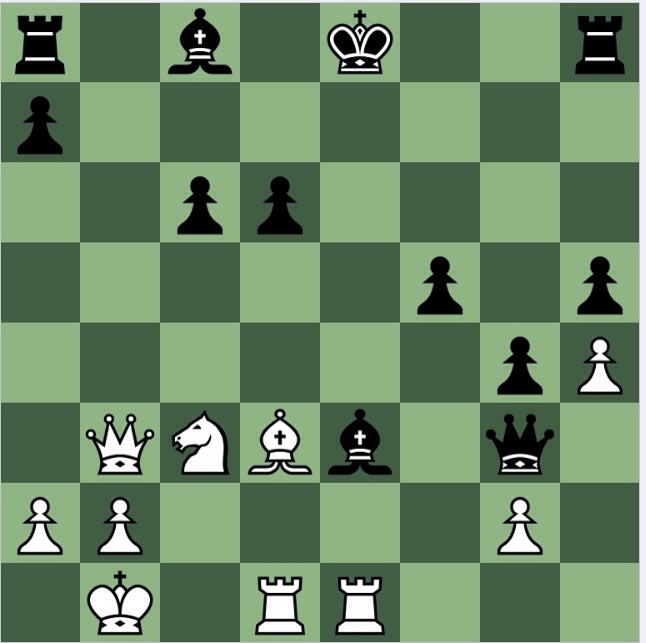
E Kromhout v J Wilkin 2004
Solution
I got the correct idea, choosing 1 Re3+ Qe3 2 Nd5, which wins a piece, and should win the game comfortably (black's king is exposed, and he only has two pawns for the piece) but far better is to reverse the move order and play 1 Nd5! which wins far more neatly.
The main line is the same: if the Knight is captured, 2 Re3+! followed by 3 Bb5+ wins the queen. But if black doesn't play ball, say by 1…Be6, then white wins a piece nevertheless with 2 Nc7+ Kd7 3 Qe6+ Kc7 4 Re3, with an attack to boot.
Black to play and win
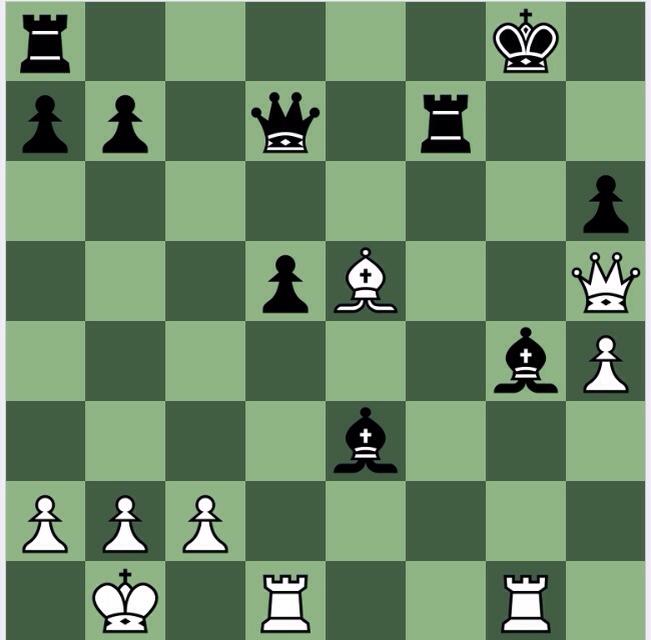
L Fox v S Lewis 1965
Solution
I think the puzzle is fairly straightforward, perhaps because black appears to be in dire straits, so desperate measures are needed. After rejecting my first thought, 1…Bg5, I saw that my second, 1…Rg7 was sufficient: just a little bit of calculation was needed to see that black emerges material up in much simplified positions, no matter what white plays.
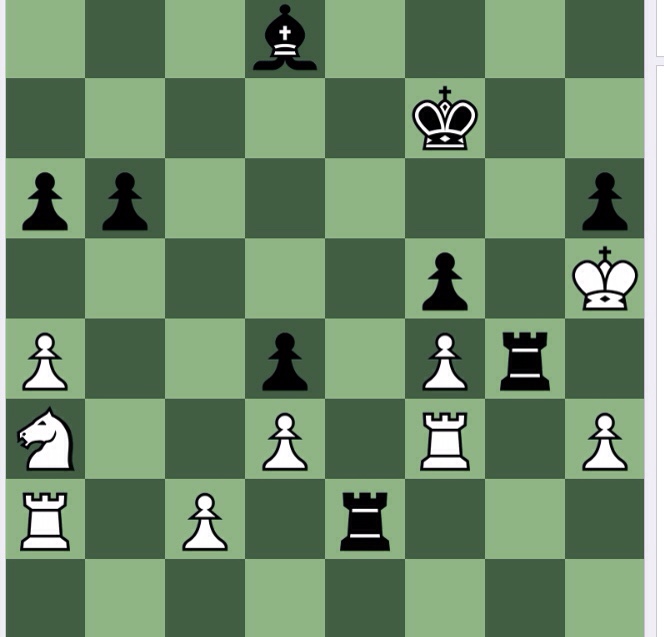
Black to play and win
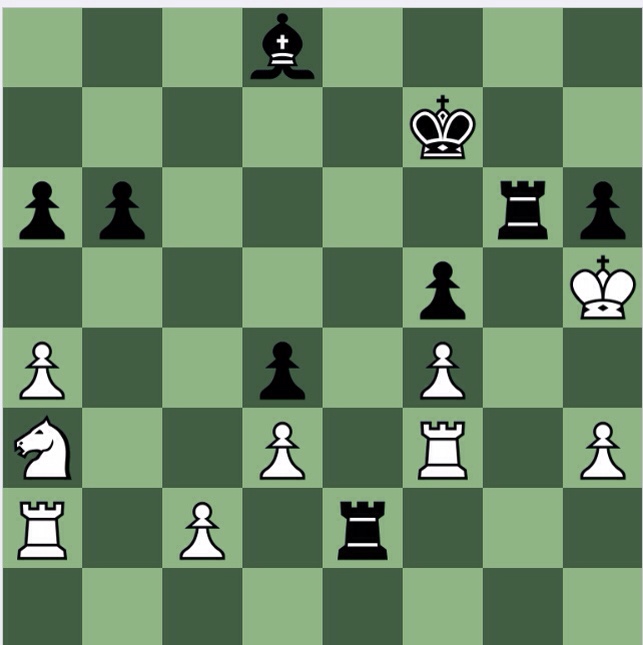
(A really tough puzzle, today)
B Samuel v W Kobese 2000
Solution
When I got this second book by Leonard Reitstein on South African puzzles in 2008, I dipped into it, and for some reason (probably no other reason than simple chance of where I opened the book) I had landed on this page. My annotations show I failed to solve this puzzle at that time, despite Leonard giving the clue that black found a problem like move to force his opponent's instant resignation.
Cut to 2014, and with my first glance at the position, I presumed it was something based on Re8, Rg5+, Re8-h8 mate; but saw that Na3-c4-e5+ might be a big spanner in the works. So I left the position, as one which needed proper thought.
Fortunately the solution came to me on second examination. It doesn't fit neatly into any of the Purdy maxims, except to the extent that it is obvious that white's king is in a (mating) net; but it is not obvious, unless you see it, that 1…Rg4!! succeeds in netting the king. If the rook isn't taken, then Rh4 mate; and if it is, then Rh2 mate.
Full marks to Black for finding such a lovely move in a game. I doubt I would have done so.
 allanbeardsworth