White to play and win
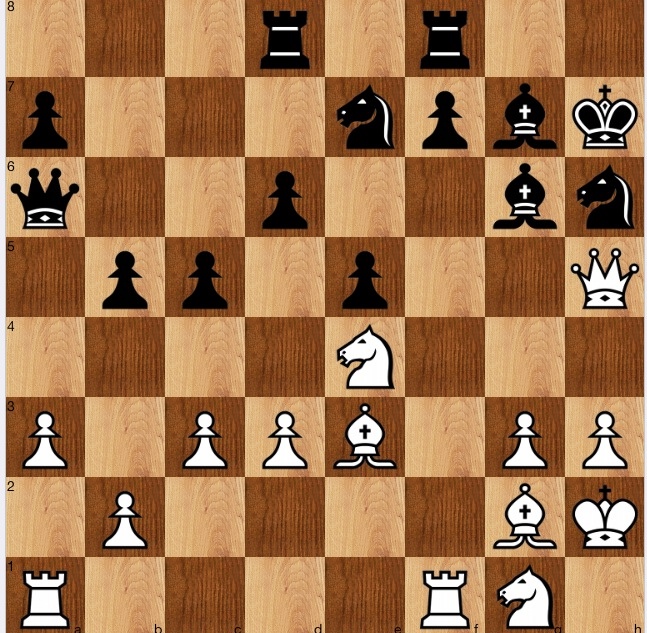
K O'Sullivan v G Boulle 1981
Solution
I took longer than I should on this one, getting distracted by false ideas such as sacing the queen. Once I refocused, and became calmer, it was straightforward. Examine all biffs means that 1 Nf6+ has to be examined, when 1…Kh8 is forced, since 1…Bf6 loses a piece (since the Bg7 is tied to defending h6) to 2 Qh6+ and 3 Rf6, 1-0. So, (1..Kh8) 2 Qh4 and as soon as you see that 2…Nf5 is met by 3 Rf5! Bf5 4 Bh6, the rest is easy: 2…Ng8 3 Ng8 and 4 Bh6 similarly wins a piece.
 Posted with Blogsy
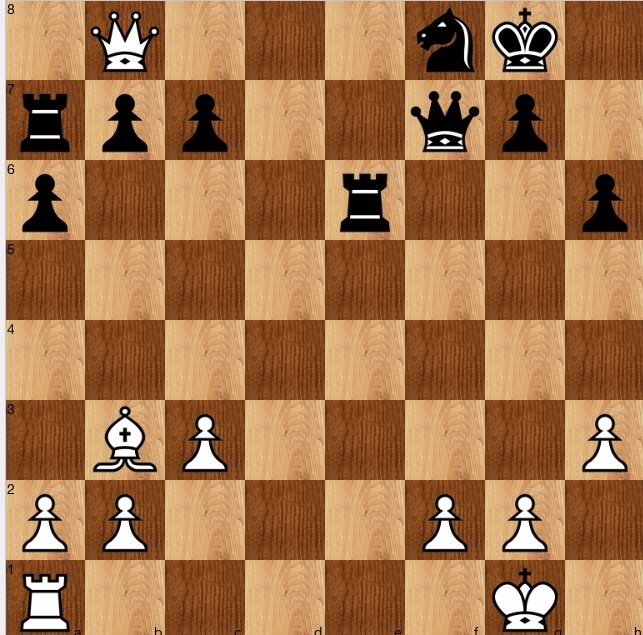
White to play and win
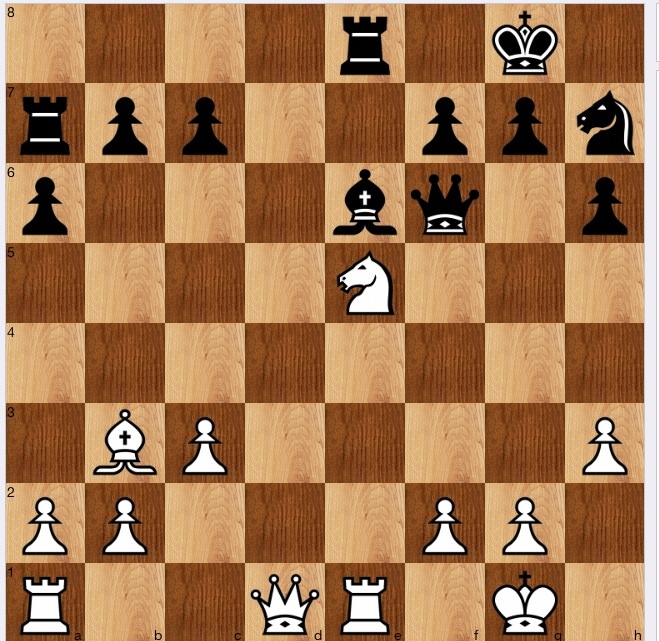
G Sax v B Rogulj, Slovenian team championship, 2003;
Position seen in Malcolm Pein's Daily Telegraph column
Solution
1 Nf7! is an obvious biff, but does it win? I find such tactics hard to compute, given that black has several variations. In Kotovian tree terms (from Think Like a Grandmaster) there are a thicket of variations, not just a single branch.
In my initial assessment of the position, I noted that the Ra7 is a LPDO, but thought it might not be relevant to the solution, though if white were to get Qd4+ or Qc5+ in, so Black king at f6 or f8, then the tactic works. The other Purdy motif to note is that the Re8 is LPDO and vulnerable to a jump check by the Re1.
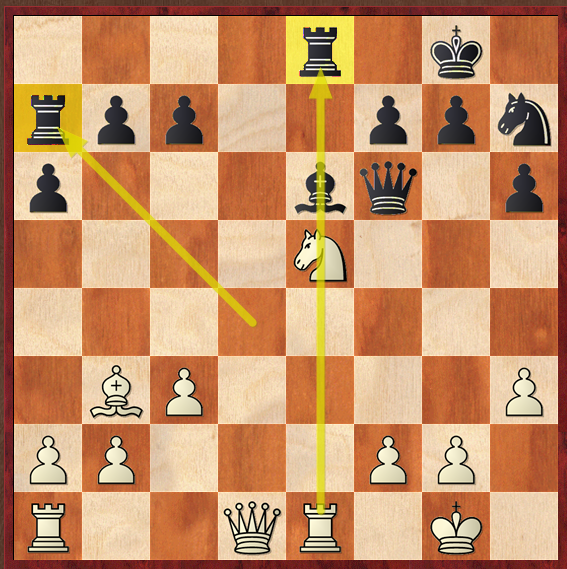
LPDOs and jump check
So, 1….Bf7?? is clearly bad, since the Bb3 then pins the Bf7, so that the Re8 is LPDO- so 2 Re8+ wins trivially.
Black therefore has three defences worth considering: 1…Kf7, 1…Qf7 and 1…Bb3. In practice the number of possibilities, with no immediately obvious solution, might make me fritter away my advantage, playing something poor like 1 Ng4 (with the idea of 2 Qd4) but all this would do is improve black's pieces: and likewise 1 Qd4 just improves black's rook, connecting and removing two LPDO rooks after 1…Ra8.
1…Kf7
The easier one for me to visualise. 2 Re6 Re6[] 3 Qd7+ Qe7 Be6+ Kf6 and now 5 Qd4+! and the LPDO falls off. Nice.
1…Qf7
Harder, but even nicer: 2 Re6 Re6[] 3 Qd8+ Nf8[] 4 Qb8! and the Ra7 is trapped. This was the game continuation, 1-0.
1…Bb3
This was, but perhaps shouldn't have been, the hardest for me to visualise. 2 Re8+ Kf7 (2…Nf8? 3 Qb3+ 1-0) 3 Qd7+ (the move it took me a while to see, blinded by the fact that when the bishop is on e6, this move isn't possible) and 4 ab 1-0.
White to play and win
Faced with the threat of Qh7+, black played 1….Nh8 in this position. With what result?
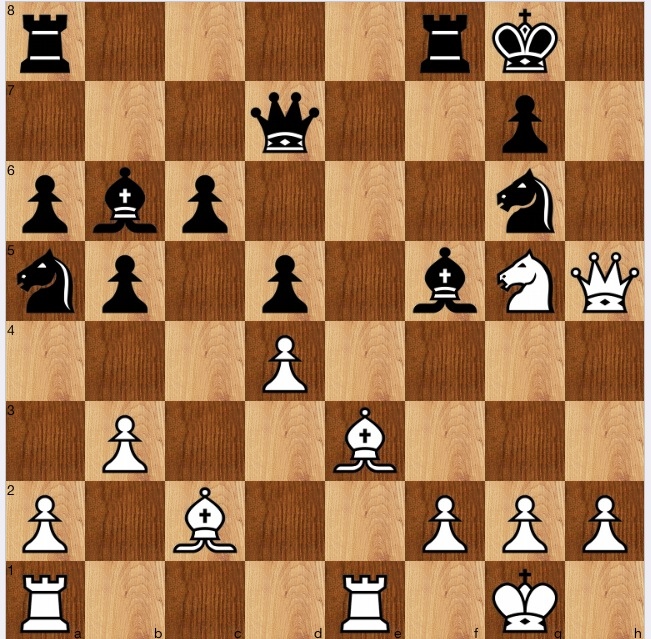
C White v W Robbertse 1976
Solution
A rest day today: 1 Qh7+! is obvious (if it weren't, consider all biffs) and 1…Bh7[] 2 Bh7 mate.
Black to play and win
(a good puzzle today)
-(a) solve the puzzle;
-(b) how does white win after 1…Bd8??
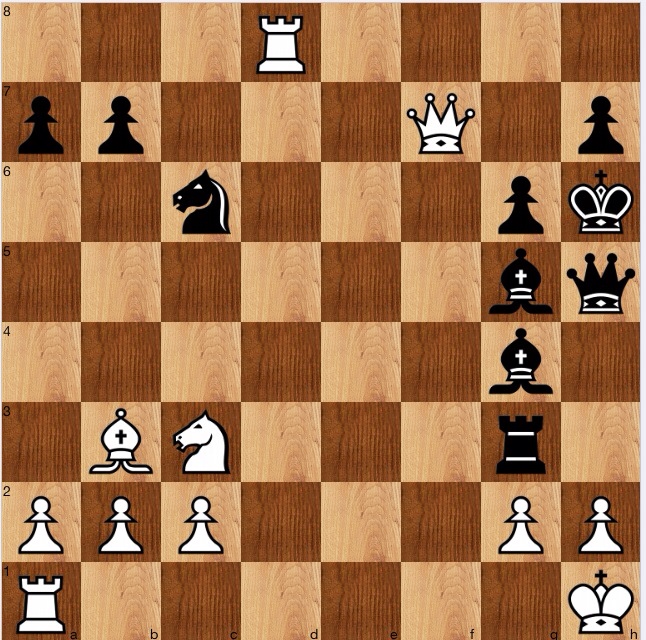
BP Donnelly v P Kroom 1971
Solution
This one took me a while, but when I saw it, it gave me a smile of satisfaction.
Firstly, 1…Bd8?? loses nicely to 2 Qf8+ Kg5 [] 3 Ne4+ Kh4[] 4 g3 mate. Pretty.
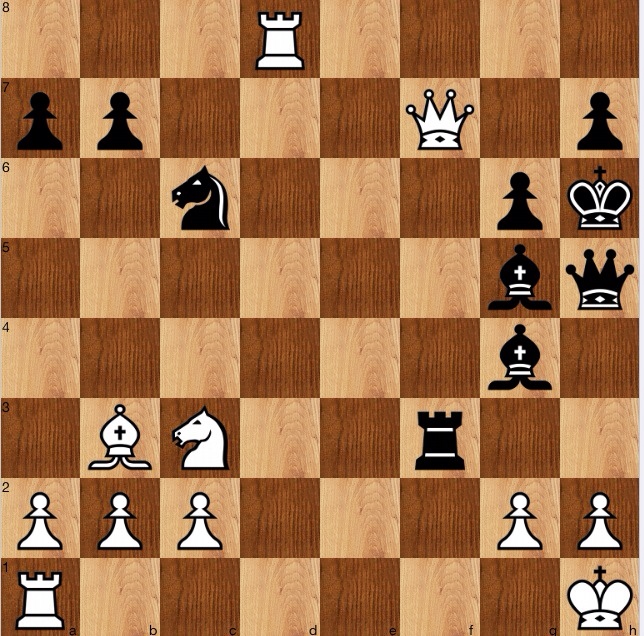
My attempt at the solution started with thinking that black needed to make luft for his king: so 1…Qh2+??, which I couldn't make work, so it had to be something else, and moving the Bg5 didn't help, even to e7, which prevents Qf8+. So, examine all biffs and 1…Rf3! comes to mind, and, once seen, is 'obvious'. White can't take the rook (e.g. 2 gf Bf3+ 3 Kg1 Qg4+ etc) and so must move his queen, after which the Rd8 can be taken.
Very nice.
A friend of mine passed me the score of a game he played for comment. It was pleased at a slow pace, two or three days per move, not in old fashioned correspondence style, but through an app.
For amusement, I have reviewed it with my annotations attached.
http://www.viewchess.com/cbreader/2014/2/19/Game390663296.html
As regular readers of my chess blogs will either know of suspect, the late CJS Purdy is arguably my favourite writer. He was in my view a fine annotator of games: in one of his books, he gives the following guidance to others on how to review a game:
Purdy on how to review a chess game. Fine Art, 4, pg 144:
What was the losing move?
33 g4??: until then, the game had been a bit of yo-yo, but after black responded well to 33 g4, activating his bishop, the game was over.
How was the position just before that?
If white has played 33 d7!, black would be better, but the game would not be over.
What were the games crises?
There were several: both sides missed chances.
Did the winner miss anything?
Yes: one error was not to protect his king, by castling when he could. Secondly, he should have activated his Bd6 earlier: on d6 it is little more than a pawn, whilst on c5 it comes to life.
What of the opening?
White missed his chance after 5…Bd6, and then when white fianchettoed, his loss of a pawn (after Pd4*Pc5) gave black too much.
On my next visit to my alma mater, this statue is a must-see.
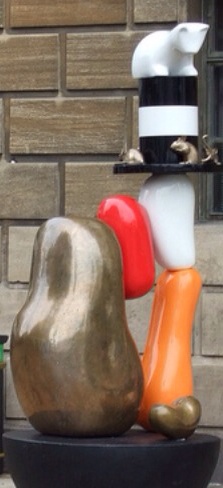
Why?
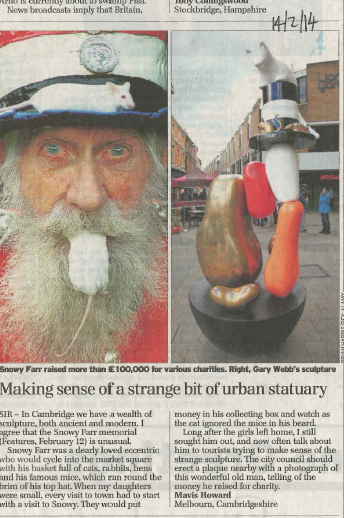
My attention was drawn to it by these letters in a recent Daily Telegraph.
Seeing Snowy took me back thirty years. I knew instantly where to find my picture of him, in a scrapbook I have kept about my time in Cambridge.
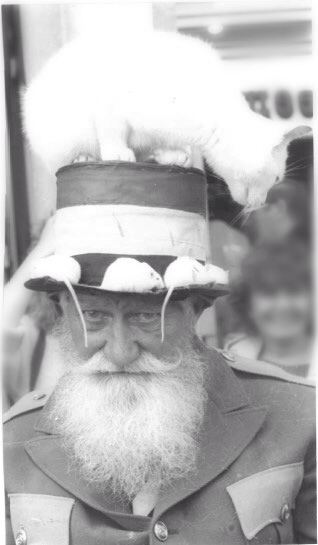
I can't remember much of the engineering I learnt there, but I will always remember Snowy.
Black to play and win
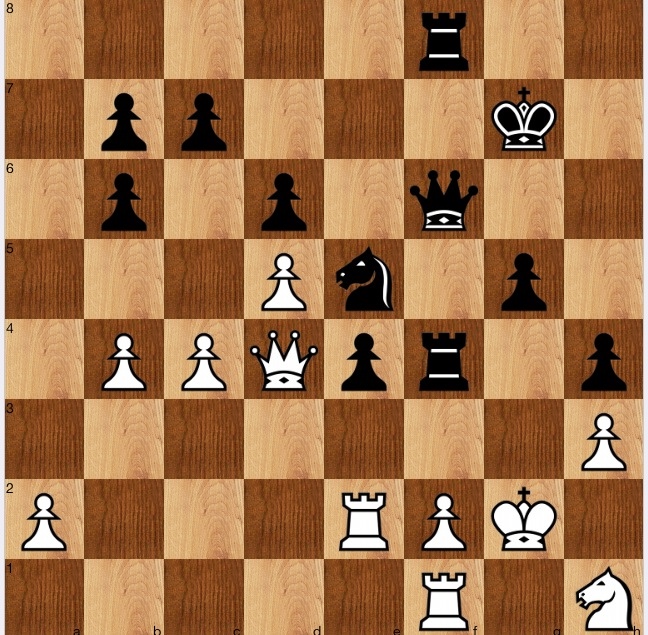
A Bock v CAL Bull 1899
Solution
CJS Purdy recommends that his readers look for jump checks and one of these is 1…Q(jump)f3+: if the queen can get to f3, the check may well be ruinous. So 1…Rg4+! and 2 hg (2 Kh2 Nf3mate) Qf3+ and 3 …Qe2 wins.
In fact, black has even stronger: 2…h3+! and if 3 Kh3 Qf3+ 4 Ng3 Rh8 mate.
White to play and win
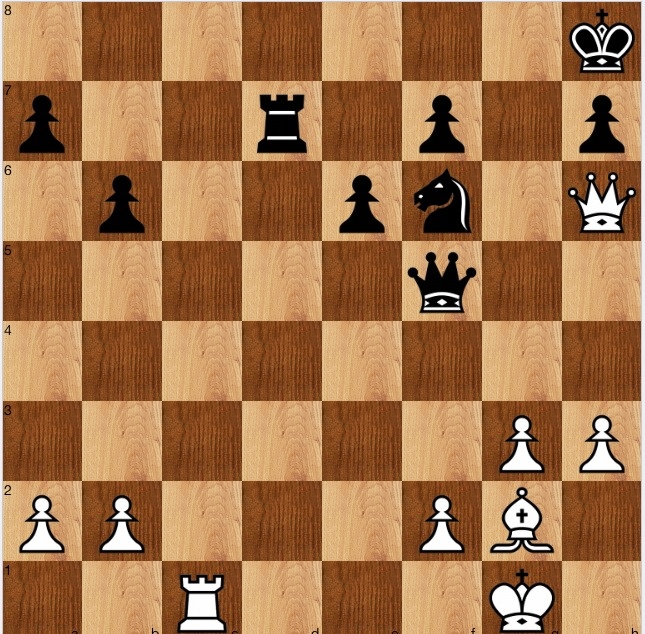
W Heidenfeld v J. Wolpert 1959
Solution
After seeing that 1 Rc8+ doesn't work! since 1…Ng8 defends everything, the biff 1 Be4! comes to mind. The bishop can't be captured (1…Qe4 2 Qf6+ Kg8 3 Rc8+ and mates; 1…Ne4 2 Qf8 mate) so either 1…Qe5, when 2 Rc8+ Ng8 3 Qh7mate. Instead, black can grovel with 1…Ng8 when 2 Qh4 Rd4 3 Bf5 wins the exchange.
White to play and win
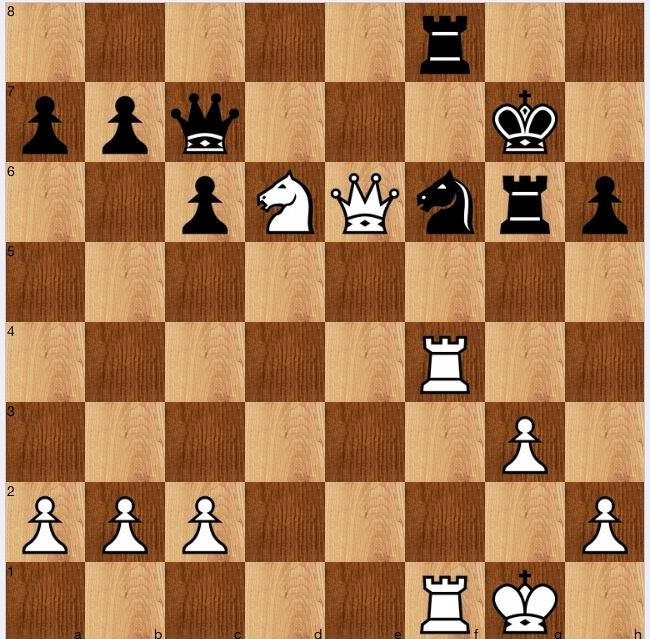
D Friedgood v DNL Levy 1978
Solution
I solved this one by 'inspection': immediately seeing that the black queen and king are in forking distance, so that exchanging everything on f6 can be followed by Ne8+. So 1 Rf6 Rf6 2 Rf6 Rf6 3 Qf6+ Kf6 4 Ne8+ and 5 Nc7, and the knight can't be captured (or, if it scurries to a8, and the king follows it, white will queen one of the king side pawns).
Black to play: one king move loses, one draws, one wins: which?
(Alas: cooked: worth looking at for a while, but two moves draw: it is worth looking at, since the draw after the better defence is not obvious)
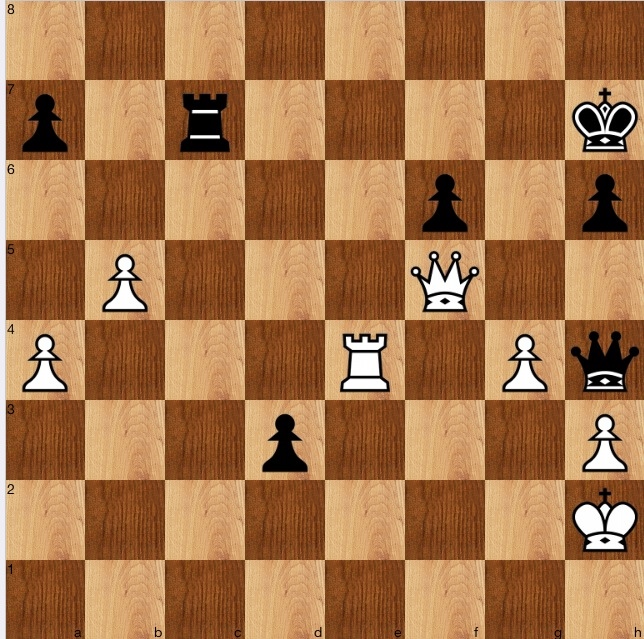
K Hill v WND Gregory 1974
Solution
1…Kg8??
Loses, because of 2 Qg6+ and 3 Re8 mate, whether black plays 2…Kf8/h8 or 2…Rg7.
1…Kh8
This is given by Reitstein as winning, his line being 2 Re8+ Kg7 3 g5 Qg5 'and black's e3 (sic) pawn is too strong. (I have checked the initial position with the pawn instead on e3, but the problem still doesn't 'work').
However, 3 g5? is poor, and instead 3 Re3 holds the balance; and so does 2 g5! To make it worse, the move I thought of, 2 Qf4! also draws: I found this move by examining all biffs, noting also that on f4 the queen also looks at c1.
After 2 Qf4, black has to draw by 2…Rc2+ 3 Kg1[] Rc1+! with perpetual check, since 4 Qc1 Qg3+ is also perpetual, one aspect being the Re4 is LPDO: so if white tries to escape with his king to the queen side, he risks being worse.
1…Kg7
This looks to me to be the better try: the king 'looks' safer on g7, though that it is a weak perception. If 2 Qf4? Rc2+ 3 Kg1 d2! and white only has a spite check: 4 Re7+ Kf8 0-1.
However, white has a lovely defence: 2 g5! and black must take the Rc2-Rc1-Rc2 perpetual check.
Comment
Whilst flawed as posed, I enjoyed this puzzle, taking time over it. After a while I saw that white's defence is possible because black's queen is offside, tucked away, and the queen's checking squares are and can be controlled. I was particularly pleased to find the Qf4 solution against 1…Kh8 by applying the Purdy the technique of examining all biffs.
 allanbeardsworth