Not me;
Not my partner Sharon Thorne either- Sharon has jumped from a plane, and, even worse, done stand up comedy at Manchester's Comedy Store; but
Joby Ogwyn, who is certainly, categorically, unequivocally braver than me.


 Posted with Blogsy
White to play and win
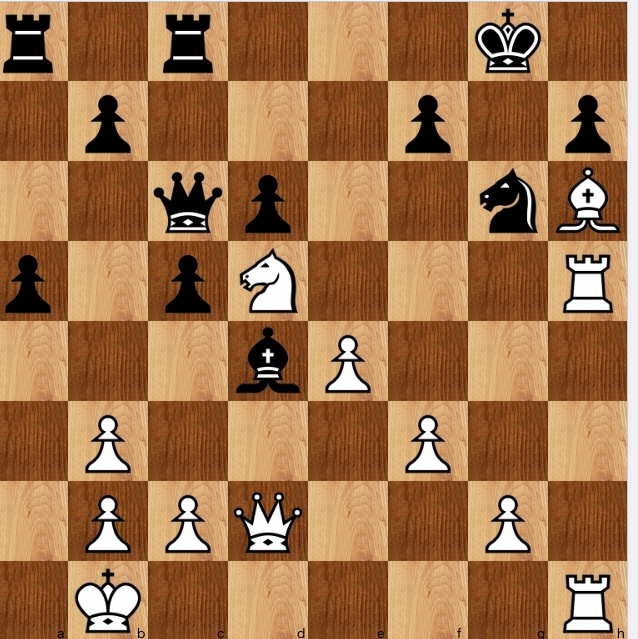
J Tsalicolgou v LQ Barrett 1974
Solution
I messed this one up royally, and annoyed with myself, since (of course) I looked at 1 Qd4! (of course in the sense of Purdy's maxim examine all biffs) but didn't see the follow through 1…cd[] 2 Nf6+ Kh8 3 Bf8! and Rh7 mate. My blind spot was that I solely looked at the Nd5 in terms of e7, attempting to get the K and Q fork.
This one was probably the most annoying for me so far in this book, since it was well within my capacity.
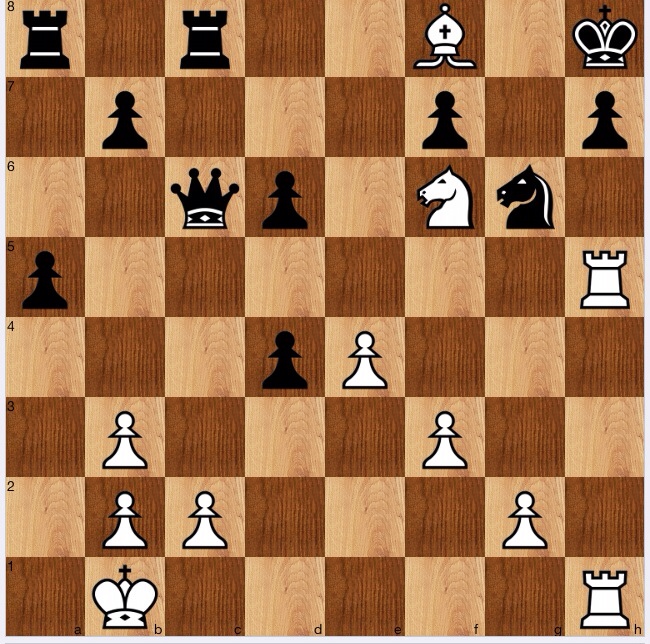
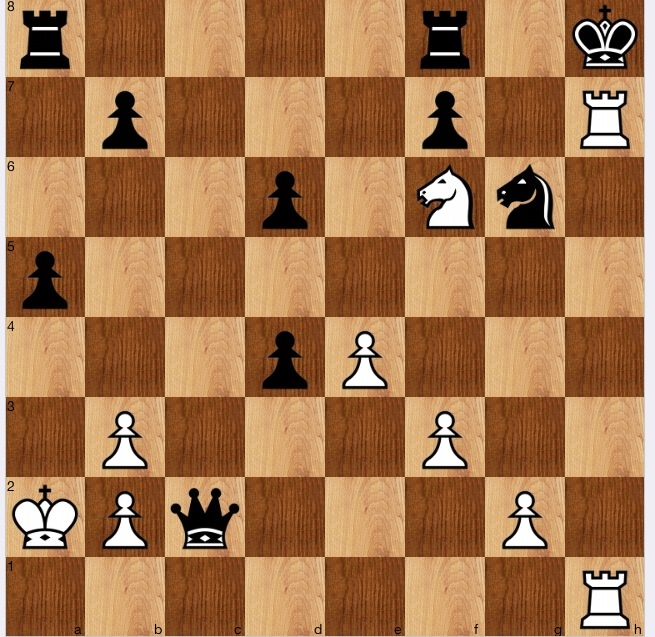
Not that I need a saving grace, the move I chose, the prosaic, 1 Qg5, also wins easily.
Black to play and win
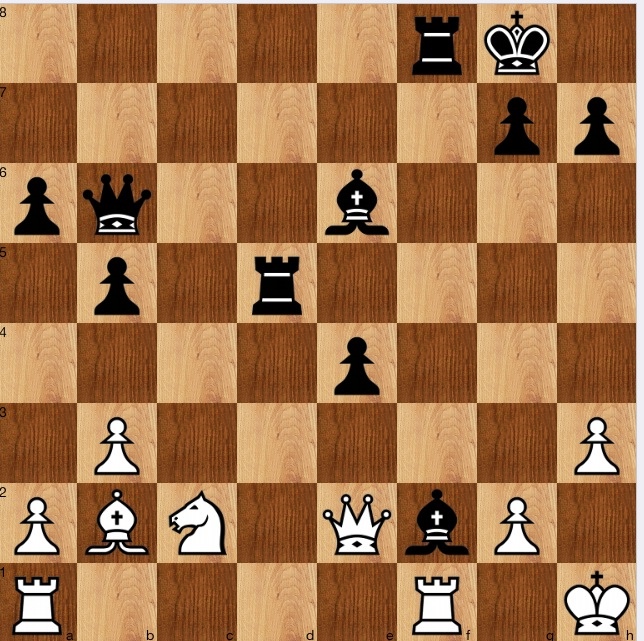
J Breytenbach v M O'Sullivan 1982
Solution
1…Bh3! and if 2 gh (else black has just won a key pawn and opened the h file) 2…Rf3 and it is game over. For instance, 3 Kg2 and 3…Rg5+ (or 3…Qg6+) and mates.
My favourite from the recent Chessbase postings of commercials featuring chess.
The Chessbase article is here:
http://en.chessbase.com/post/chess-in-tv-commercials/5
Chessbase (my daily twicedaily always on site) recently had a posting of many of the TV commercials that feature chess.
Here is one of the funniest ones: though I don't agree with the ads premise that chess isn't exciting…
http://m.youtube.com/watch?v=6ixwKBwfT38
Black to play and win
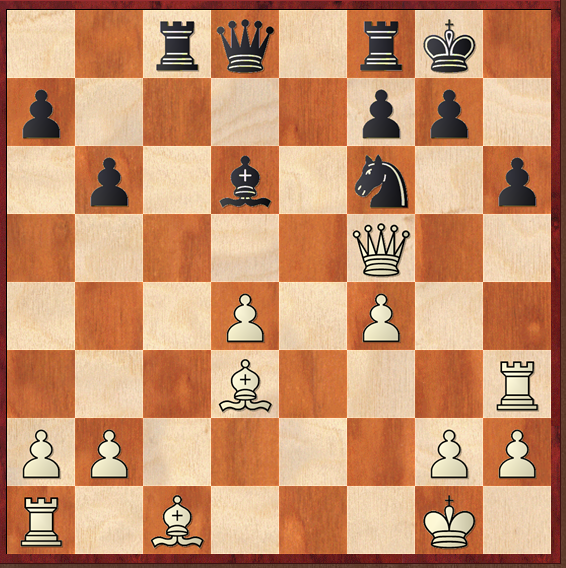
M Blieden v BE Siegheim 1905
Solution
A somewhat flawed problem, but good nevertheless. The motif to spot is that white's queen is in a net, using Purdy language, and so the question is, can it be trapped?
The answer is not quite, but 1…Bc5! is strong anyway. If 2 dc Rc5 and the queen is indeed netted:
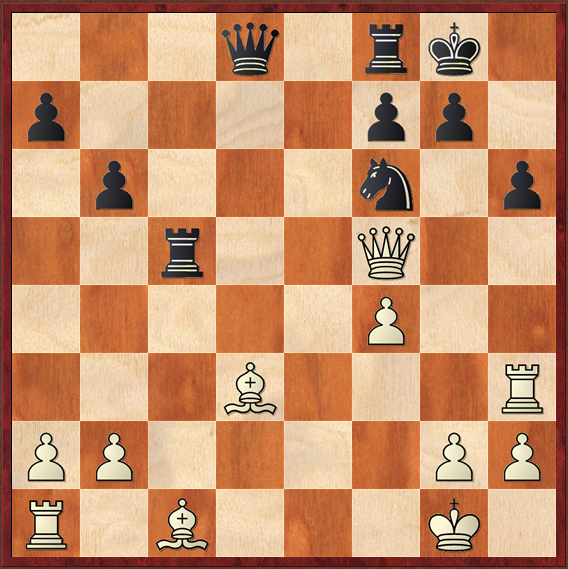
However, better for white is 2 Be3 when 2..Bd4 is more comfortable for black, but he is far from winning.
Black to play and win
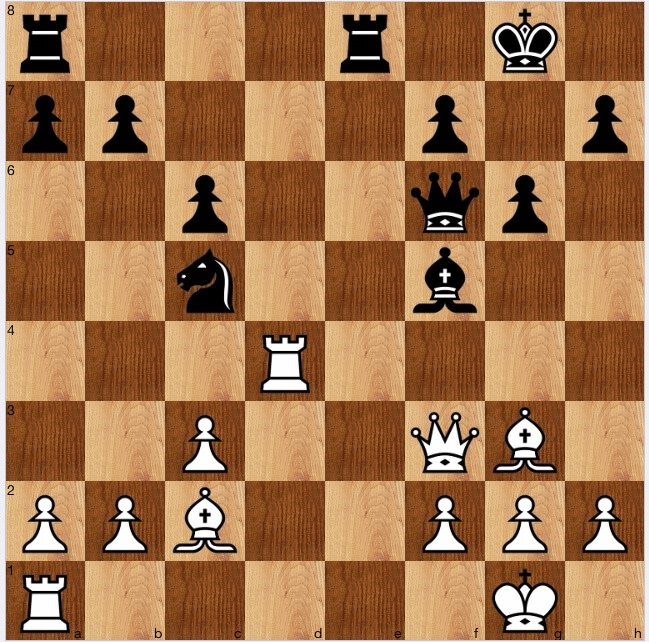
ED Hill v L Wilken 1958
Solution
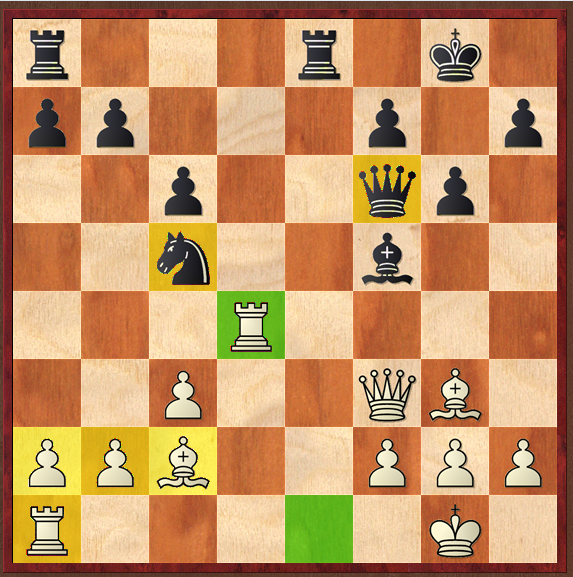
I enjoyed this one. It took me longer than it should, although perhaps it is one of those cases where the solution is only easy once you see it.
When solving problems, there are different units of time:
Instantaneous; which this one wasn't- those you solve more or less instantly;
The standard British unit of Time– the ones you solve in the time it takes to make a cup of tea;
And the longer ones: those that take a dog walk to crack; and, alas
Some I can never solve.
This one took most of a dog walk, but perhaps should have been a cup of tea problem.
Black to play and win
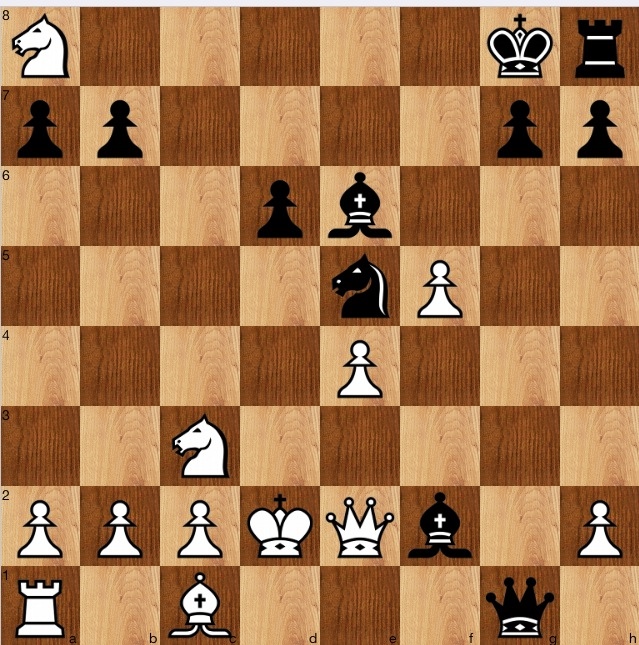
Solution
A few weeks back, I posted a blog of a very similar puzzle, and for anyone who has read that posting, the solution to this problem should be easily attainable.
I played the Philidor as black several years ago in countless blitz games, and on numerous occasions reached positions materially similar to the present problem, which meant I could immediately recognise the solution. In this line, white has sacrificed his white squared bishop on f7, followed up with Nf3-g5+-e6-c7-*Ra8, being met by Qd8-e8-g6-g2 and then an explosion of his minor pieces, Ng4, Bh4, Be6-c4: in blitz, white in my experience normally collapsed quickly, either losing his Rf1 or being mated. So here, the mate was more or less immediately found.
The Heidenfeld-Wolpert game is in Megabase 2012, so the attached game file gives some analysis of the line.
http://www.viewchess.com/cbreader/2014/2/8/Game1870510687.html
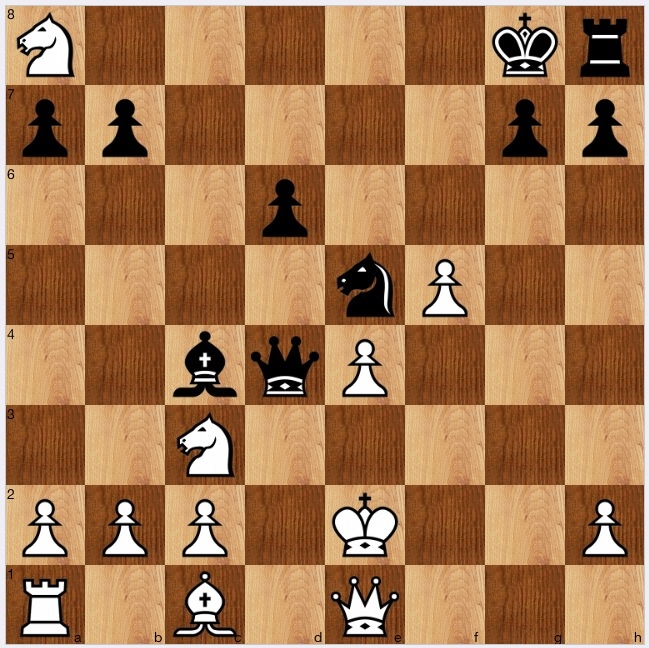
Black to play and win
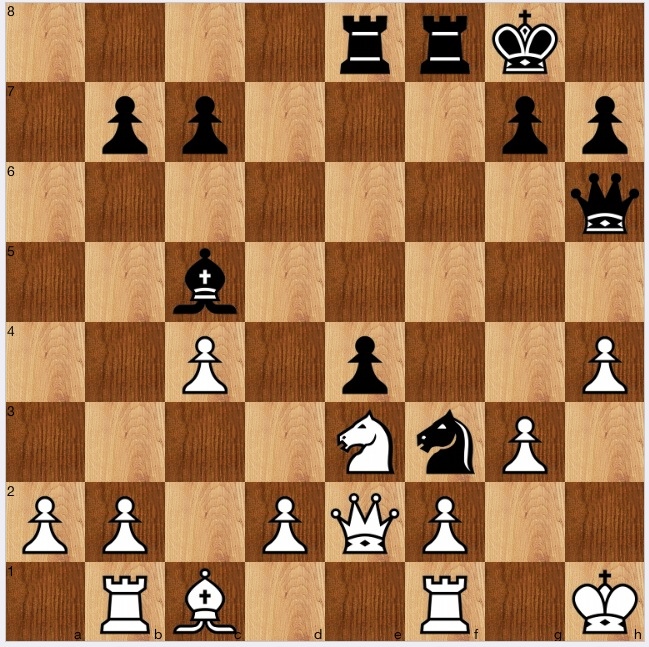
M Kolnik v DA Walker 1971
Solution
I didn't equip myself well on this one. True enough, my solution, 1…Nh4! wins, especially if white takes the knight, but it is messy after 2Ng4!, a defence I didn't even consider. Poor of me.
Doubly poor of me not to look at the rook lift 1…Re5!, which is far stronger, or the even stronger rook lift 1…Rf4!. It was unprofessional of me to find a good move/not look for the toughest defences/not look for stronger moves.
The attached file gives some analysis of relevant lines.
http://www.viewchess.com/cbreader/2014/2/17/Game192202546.html
Black to play and win
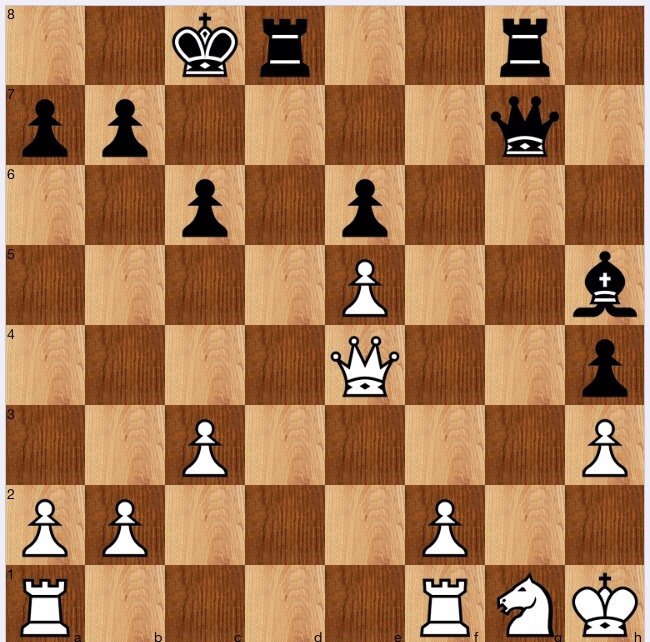
M Rieck v E Bergendorff 1940
Solution
A really tough puzzle, which took me a while to solve. Clearly the aim is to break white's queen's line of sight to g2, but how to do so?
Examining all biffs at first led nowhere: 1…Qg1+??; 1…Rd4??; 1…Qh7?? all need to be looked at, all to no a avail. For a while I focussed on another biff, 1…Bf3+, which forces 2 Qf3, when 2….Rdf8 is met by 3 Qg4, as is 2..Rd3.
Eventually, I saw it: reverse the move order or examine all threats to biff leads to the winning idea 1…Rd3!! which otherwise is really hard to find. Once seen, everything falls into place. The rook clearly can't be taken, the Qe4 being tied to defending g2, and the threat to biff is Bf3+: an examination shows this can't be met.
All the bold items are approaches recommended by CJS Purdy except for reverse the move order, which I learnt somewhere else: trying to understand the merits of Purdy's maxims more, 'reverse' isn't actually needed, since 'examine all threats', if applied properly, reveals the winning move.
 allanbeardsworth